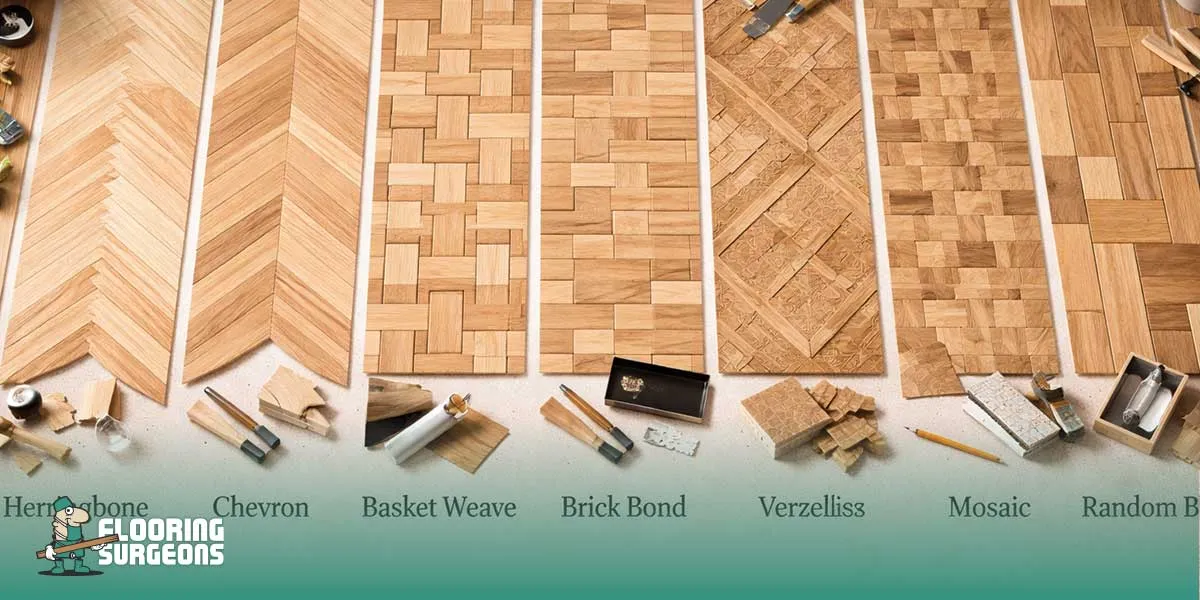


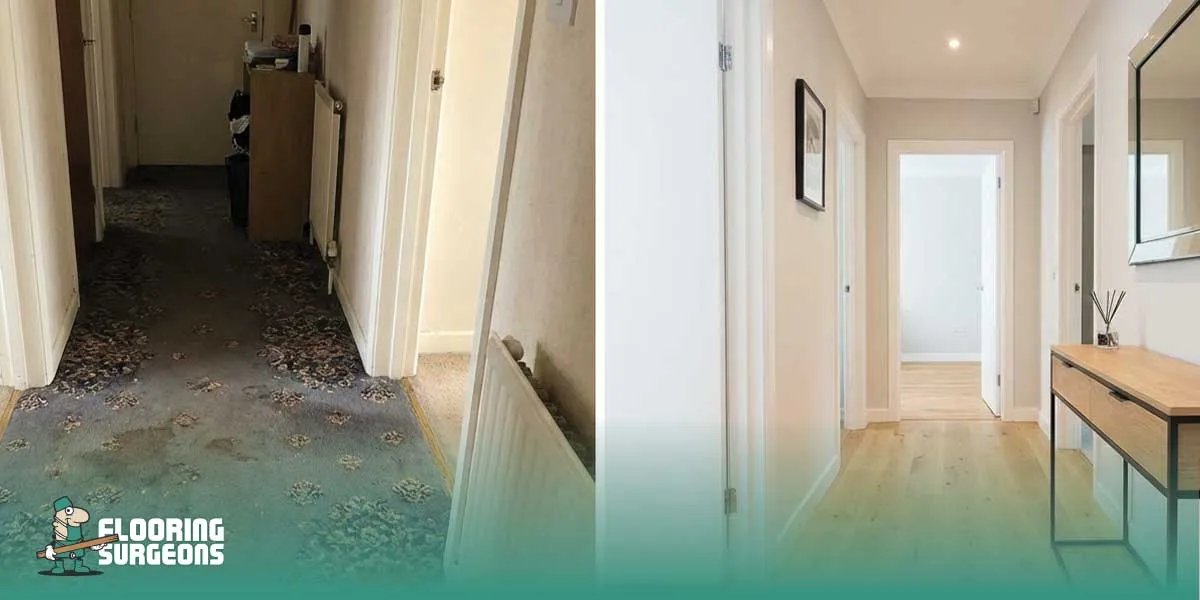
Flooring plays a direct and measurable role in property staging because it shapes a buyer’s first impression the moment they walk into a home. Clean, neutral and well-presented flooring can make a property feel brighter, larger and better maintained, while poor or dated flooring can undermine even the best staging efforts.
You do not always need to replace flooring to achieve this effect. In many cases, improving what is already there through cleaning, repair or minor updates delivers most of the benefit. The goal of flooring in staging is not to show personality or premium finishes but to remove visual distractions and help buyers imagine the space as their own. If you are unsure whether your floors need improving or replacing, Flooring Surgeons can help you assess what will make the biggest difference for staging without overspending. This is where many sellers get it wrong. Flooring choices are often made based on personal taste or renovation trends rather than buyer perception. As a result, money is spent in the wrong places while obvious issues that affect confidence are left untouched.
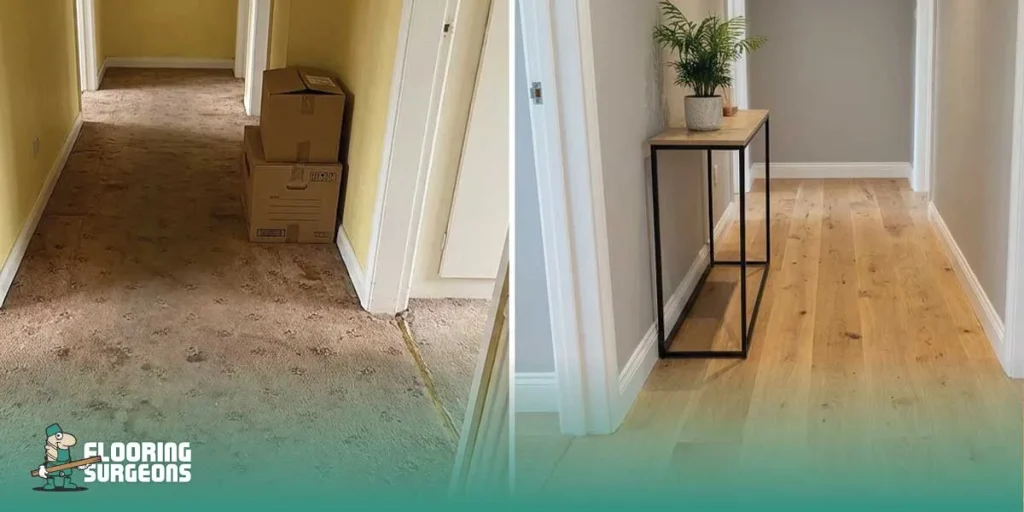
In this article, you will learn how flooring influences buyer perception when it genuinely helps a property sell faster, when it is worth upgrading and when it is not and how to prioritise flooring decisions as part of a staging strategy. If you only wanted a clear answer, flooring matters because it affects how buyers judge the entire property. If you’re going to use it effectively without overspending, the rest of the article will guide you through that decision-making process step by step.
Table of contents
Does Flooring Really Matter in Property Staging
Yes, flooring really does matter in property staging because it directly influences how buyers judge the condition value and livability of a home within seconds of entering. Buyers rarely analyse flooring consciously, but they react to it emotionally. Worn, stained or outdated floors signal neglect and future work, even if the rest of the property is well presented. In contrast, clean, neutral and consistent flooring helps a space feel cared for, move-in ready and easy to live in.
Flooring also affects how rooms are perceived. Light and continuous flooring can make spaces feel larger and brighter, while busy or damaged surfaces break visual flow and distract from staging furniture and layout. Most importantly, flooring sets a baseline for expectations. If floors look tired, buyers often assume other elements may also need attention, which can reduce confidence and increase negotiation pressure. Good flooring does not guarantee a sale, but poor flooring can quietly undermine every other staging effort. This is why flooring matters in property staging, not as a feature to show off but as a foundation that supports the overall impression of the home.

How Flooring Influences Buyer Perception
Flooring influences buyer perception because it provides immediate visual information about care quality and future effort. Buyers make rapid judgments, and flooring is one of the largest uninterrupted surfaces in any room, so it carries disproportionate weight in that process. Clean, well-maintained floors reduce mental friction. Buyers spend less energy noticing defects and more time engaging with layout, light and space. This makes the property feel easier to live in and easier to maintain, which are key emotional triggers in purchase decisions.
Inconsistent or damaged flooring has the opposite effect. It pulls attention away from staging elements and creates doubt. Even minor issues can prompt buyers to mentally calculate cost, inconvenience and disruption, which weakens emotional connection to the home. Neutral flooring also supports imagination. For many sellers, engineered wood flooring can be a practical staging upgrade because it looks neutral, photographs well, and suits a wide range of buyer tastes. Buyers are more likely to project their own lifestyle into a space when the floor does not compete for attention. Strong patterns, bold colours or mismatched materials make a home feel specific rather than adaptable.
Finally, flooring affects trust. When floors look tired, buyers often question what else might be hidden. When floors look solid and well presented, buyers feel reassured, even if finishes are not premium. In property staging, flooring works best when it removes obstacles to confidence rather than trying to impress.
When Flooring Helps a Property Sell Faster
Flooring does not speed up every sale. Its impact depends on condition visibility and buyer expectations for the type of property being sold. In the right situations, flooring removes hesitation and shortens decision time. In the wrong ones, it makes little difference.

When Poor Flooring Creates Buyer Hesitation
Flooring helps a property sell faster when existing floors actively undermine confidence. Visible wear stains, mismatched materials or damage in high traffic areas signal future work. Buyers slow down, ask more questions and negotiate harder. Addressing these issues reduces friction and keeps momentum during viewings. This effect is strongest in entry-level and mid-market homes where buyers expect practicality and minimal immediate work. Improving flooring here often shortens time on market more than cosmetic upgrades elsewhere.
When Neutral Flooring Improves Flow and First Impressions
Flooring also helps sales when it improves visual continuity. Neutral consistent flooring across main living spaces makes rooms feel larger, brighter and easier to understand. Buyers move through the property without interruption, which strengthens first impressions and supports staging furniture rather than competing with it. This is most effective in open plan layouts, hallways and living areas where flooring connects multiple rooms. In these cases, flooring supports faster emotional buy-in rather than acting as a feature itself. Outside of these scenarios, flooring changes rarely accelerate sales. If floors are already clean, neutral and consistent, further upgrades tend to deliver diminishing returns.
Should You Replace Flooring or Improve What You Have
In property staging, the decision to replace flooring or improve what you already have should be driven by impact, not perfection. If you are trying to balance staging impact with return, it helps to understand what flooring adds the most value to a home before you decide where to spend. The goal is to remove objections, not to create a renovation project.

Improve existing flooring when
- The floor is structurally sound but looks tired rather than damaged
- Issues are cosmeti,c such as dull finish, light scratches, or surface marks.
- The flooring is neutral and suits the type of property being sold.
- Cleaning, repairs, or refinishing can noticeably improve the appearance.
- Budget is limited, and flooring is not the main objection buyers raise
In these cases, professional cleaning, minor repairs or refreshing finishes often deliver most of the staging benefit at a fraction of the cost.
Replace flooring when
- Damage is clearly visible during viewings and is hard to ignore
- Flooring is heavily stained, warped, uneven, or mismatched across rooms.
- The material itself works against buyer expectations for the property.
- Repairs would be obvious or nearly as costly as replacement.
- Flooring disrupts visual flow and undermines staging efforts.
Replacement makes sense when the flooring actively holds the property back. It should be a targeted decision focused on key areas rather than a whole-house upgrade. The right choice is rarely about what flooring you prefer. It is about what helps buyers move past the floor and focus on the property itself.
Which Rooms’ Flooring Matters Most in Staging
Not all rooms carry the same weight in a buyer’s decision-making process. When the budget is limited, flooring improvements should focus on areas that buyers notice first and remember most.
The table below shows where flooring has the most significant impact during property staging and where investment delivers the most substantial return.
| Room or area | Impact on buyer perception | Staging priority | Why it matters |
| Entrance and hallway | Very high | High | Sets the first impression and signals overall condition |
| Living room | Very high | High | Main emotional space where buyers imagine daily life |
| Open plan areas | High | High | Flooring continuity affects flow and sense of space |
| Kitchen | Medium | Medium | Buyers focus more on units and layout, but floors still matter |
| Bedrooms | Medium | Medium | Clean neutral flooring supports calm and flexibility |
| Bathrooms | Low | Low | Fixtures matter more than flooring unless damage is visible |
| Utility rooms | Low | Low | Functional spaces rarely influence staging outcomes |
The strongest staging results come from prioritising entrance areas, living spaces and connected zones where flooring is most visible. Improving floors in these areas often delivers more impact than spreading the budget thinly across the entire property. Rooms with lower buyer focus should only be addressed if the flooring issues are apparent enough to distract during viewings. This approach keeps staging efficient and avoids unnecessary spending.
Flooring Mistakes That Undermine Property Staging
Certain flooring decisions quietly undermine staging efforts, even when the rest of the property is well-presented. These mistakes reduce buyer confidence and distract from the overall appeal of the home.
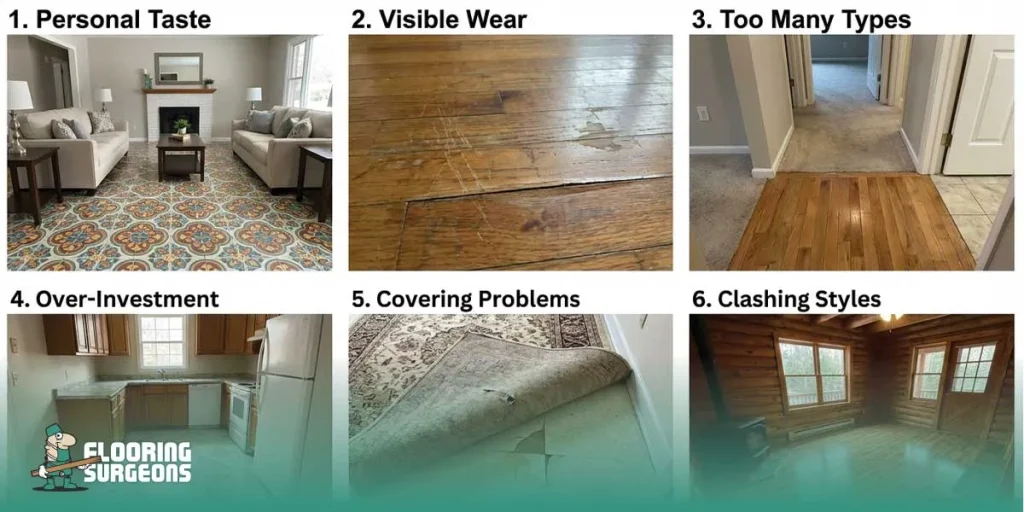
- Prioritising personal taste over buyer appeal
Bold colours, strong patterns or distinctive materials make a property feel specific rather than adaptable and limit buyer imagination. - Ignoring visible wear and damage
Scratches, stains, lifting edges or uneven surfaces signal future work and invite negotiation even if the issues are minor. - Mixing too many flooring types
Frequent changes between rooms break visual flow and make spaces feel smaller and less cohesive. - Over-investing in premium flooring
High-end materials rarely increase staging impact proportionally and can reduce return on investment. - Covering problems instead of fixing them
Rugs or temporary coverings may hide issues briefly, but often raise suspicion during viewings. - Choosing flooring that clashes with the property type
Flooring that feels out of place for the style or price point of the home can create disconnect and doubt.
Avoiding these mistakes helps flooring support staging rather than compete with it. Effective staging is about removing reasons to hesitate, not introducing new ones.
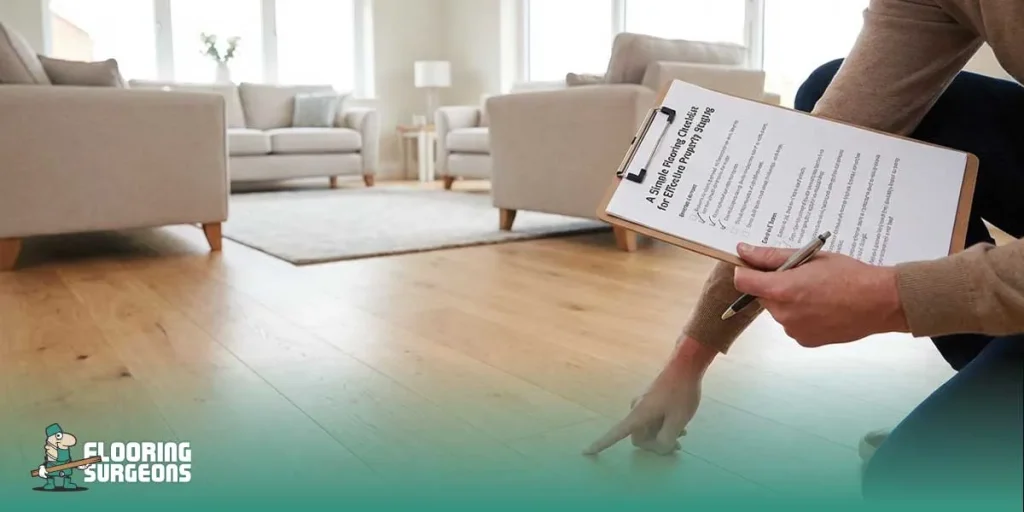
A Simple Flooring Checklist for Effective Property Staging
Use this checklist to make a final decision about flooring without overthinking or overspending. If you can work through these points confidently, you have likely done enough for effective staging.
Your flooring is working for staging if
- Floors look clea,n neutral, and well-maintained at first glance
- There are no noticeable stains, damage, or mismatched areas in key rooms.
- Flooring supports the flow between spaces rather than breaking it.
- Buyers can easily imagine their own furniture and lifestyle in the space.
- Flooring feels appropriate for the property type and price range.
- Attention stays on the home itself, not on what needs fixing.
Flooring may be holding the property back if
- Buyers comment on floors during viewings or raise questions about cost
- Damage or wear is visible in the entrances, living areas, or open plan spaces.
- Flooring changes frequently between rooms without an apparent reason.
- Temporary fixes are being used to hide underlying issues.
- The finish feels dated compared to similar properties on the market.
Final decision check
If improving or replacing flooring removes doubt and helps buyers focus on the property, it is usually worth doing. If the flooring is already neutral, functional and unobtrusive, further changes are unlikely to improve staging results. Effective property staging is not about perfect floors. It is about floors that disappear into the background and allow buyers to see the value of the home itself.

Haniye Ayanmanesh
As an expert writer for Flooring Surgeons, I combine technical SEO knowledge with a practical understanding of flooring, producing content that helps users make confident decisions while supporting long-term organic growth.