

What Is a Herringbone Border? A herringbone border is a framing detail installed around the perimeter of a herringbone floor to create a defined edge between the pattern and the walls.
So, should herringbone flooring have a border? The short answer is: it depends. A border is not a requirement, but it can significantly change the look, feel, and practicality of a space. In larger or more traditional interiors, a border often adds structure and elegance. In modern or smaller rooms, skipping the border can create a cleaner and more open appearance. The right choice comes down to room size, layout, style preference, and installation goals.
In this guide, we’ll walk through both options clearly and help you decide what works best for your space.
Table of contents
What Is a Herringbone Border?
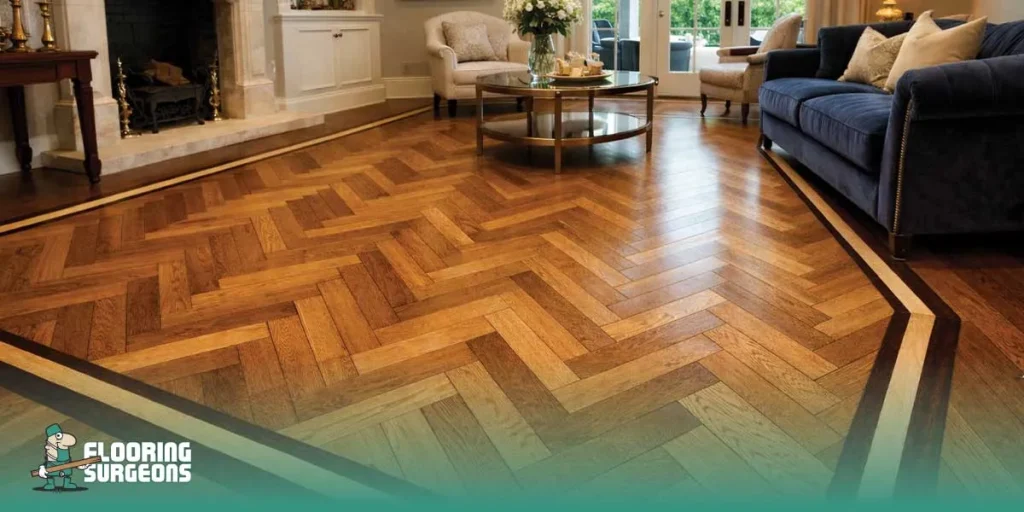
A border is a straight or patterned frame that surrounds a herringbone layout. It visually separates the main pattern from the edges of the room and helps the floor feel intentional and finished.
A herringbone flooring border can be subtle, using the same material and colour, or more decorative with contrast. While borders are common in classic parquet designs, they’re now used in both traditional and contemporary interiors.
This naturally leads to the most common question homeowners ask.
Does Herringbone Flooring Need a Border?
No, herringbone flooring does not need a border to function or look good. Many modern installations intentionally run the pattern directly into the walls.
That said, a border can solve practical challenges. It can hide uneven wall lines, reduce the visibility of small edge cuts, and create a visual boundary in open or irregular rooms. The decision isn’t about right or wrong—it’s about suitability. Understanding the trade-offs makes the choice much easier.
Pros and Cons of Herringbone Flooring With a Border
Adding a border changes both the look and the installation process.
Pros
- Creates a framed, high-end appearance
- Helps conceal perimeter cuts
- Adds structure in large or formal spaces
Cons
- Increases labour time and cost
- Requires precise setting-out
- Can feel visually heavy in small rooms
To make this clearer, here’s a quick comparison.
Border vs No Border: Quick Comparison
| Feature | With Border | Without Border |
| Visual style | Classic, framed | Clean, modern |
| Installation complexity | Higher | Lower |
| Edge finish | Hidden cuts | Visible cuts |
| Best for room size | Medium to large | Small to medium |
| Design flexibility | More decorative | More minimal |
This brings us naturally to the alternative.
Herringbone Flooring Without a Border: When Is It Better?
Skipping the border allows the pattern to flow seamlessly into the room’s edges. This approach works especially well in minimalist interiors and open-plan layouts.
Without a frame, the eye follows the pattern across the full width of the room, which can make spaces feel larger and more continuous. Many homeowners choosing Light Herringbone Flooring prefer this option because it enhances brightness and simplicity.
However, edge accuracy becomes more important, as every cut remains visible.
When Should You Add a Border (and When Not)?
A border is often a good choice when:
- The room is large or symmetrical
- Walls are not perfectly straight
- You want a more traditional or statement look
Avoid a border when:
- The space is small
- The design is modern or minimal
- You want the floor to feel open and uninterrupted
These decisions usually come down to design taste, which leads into style options.
Border Design Options for Herringbone Flooring
There are many herringbone floor border ideas, from single-plank frames to wider double borders or contrasting tones. Some designs subtly match the main floor, while others deliberately stand out.
If you’re still choosing a pattern, it’s also worth understanding how herringbone compares to other layouts, such as herringbone vs chevron, as border styles can differ between the two. Design choices should always support the room rather than overpower it.
Best Materials and Border Width for Herringbone Flooring
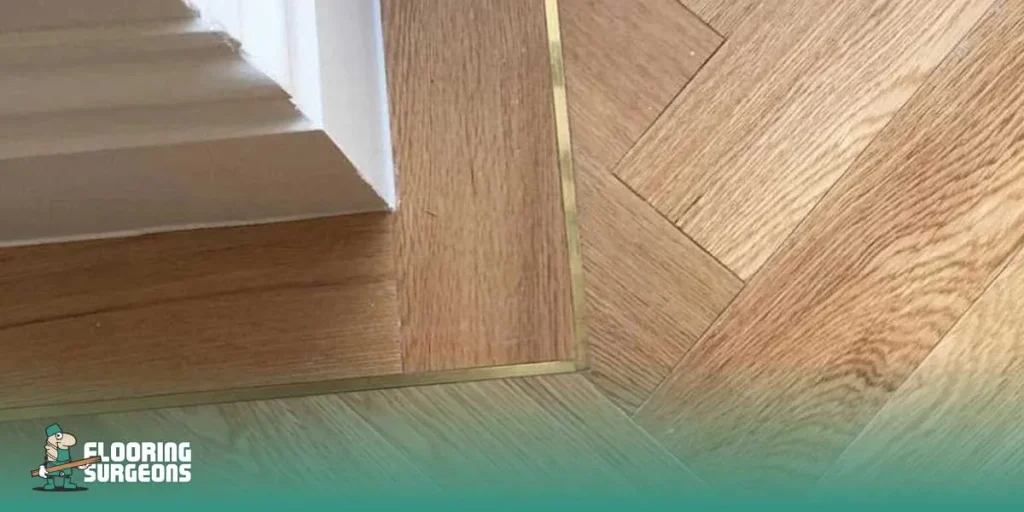
Borders can be made from the same material as the main floor or from a contrasting option. Timber, engineered wood, and LVT all work well when installed correctly.
As a general rule, border width should stay proportional to the room. Narrow borders suit smaller areas, while wider borders work better in spacious rooms. Balance is key—too wide and the floor can feel boxed in.
Material and size choices directly affect installation.
How a Border Affects Herringbone Flooring Installation
Installing a border around a herringbone floor is more than just adding an extra strip of wood it changes the entire installation process. Precision becomes critical because the border acts as a frame, and any misalignment will be very noticeable. This means measuring, marking, and laying the pattern must be done with extreme care before any boards are fixed.
Key technical considerations include:
- Planning the Layout: The first step is to determine the center point of the room and how the herringbone pattern will flow. The border should align symmetrically, which often requires dry-laying several rows before gluing or nailing.
- Border Width & Placement: Wider borders can make the pattern appear more contained, but they also increase the risk of errors. Even small miscalculations in width or placement can throw off the entire layout, especially in rectangular or irregularly shaped rooms.
- Managing Expansion Gaps: All wood flooring expands and contracts with temperature and humidity. A border can help visually mask expansion gaps around the edges, but it must not restrict natural movement. Improper installation can cause lifting, buckling, or visible gaps over time.
- Cutting and Fitting: Borders require precise cuts, often at exact 45° or 90° angles, depending on the pattern. Any irregularity in cutting can disrupt the clean, framed look that makes the border effective.
- Material Considerations: Different materials behave differently. Solid wood may expand more than engineered wood or laminate, so the border must accommodate this. Engineered flooring allows slightly tighter borders because it is more dimensionally stable, while LVT or vinyl borders are easier to cut but require accurate adhesion.
- Time and Labor: Adding a border increases installation time and requires a higher skill level. A professional installer ensures that the pattern lines up perfectly with the border, and that all edge cuts are clean and uniform.
Without a border, installation is simpler and faster. However, edge cuts must still be precise, as there is no framing to hide minor inaccuracies. Skipping the border is often preferable in modern, minimal, or small spaces where a clean, uninterrupted flow is desired.
Bottom line: Adding a border requires planning, precision, and experience, but it creates a polished, framed look that can dramatically enhance the room’s appearance. Whether you choose a border or not, professional installation is key to achieving a flawless finish.
Final Verdict: Should You Choose a Border for Your Herringbone Floor?
There is no universal answer in the herringbone border vs no border debate. Borders enhance structure and elegance, while border-free designs feel modern and open. The best choice depends on your room, your style, and how you want the space to feel. A well-planned design will look intentional either way.
For tailored advice on materials, layout, and expert installation, Flooring Surgeons can help you choose the right solution for your home.

Mina Asgari
I’m an SEO Specialist and Content Strategist focused on sustainable business growth. I design data-driven content strategies by deeply analyzing user intent, search behavior, and SEO best practices, ensuring every piece of content serves a clear purpose for both users and search engines.