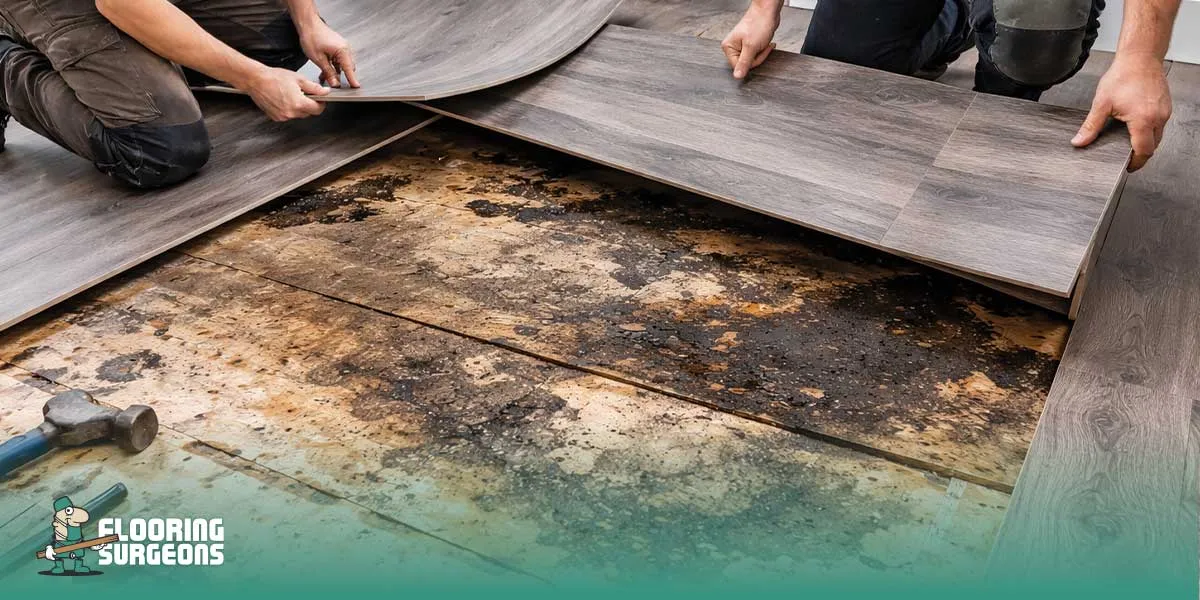



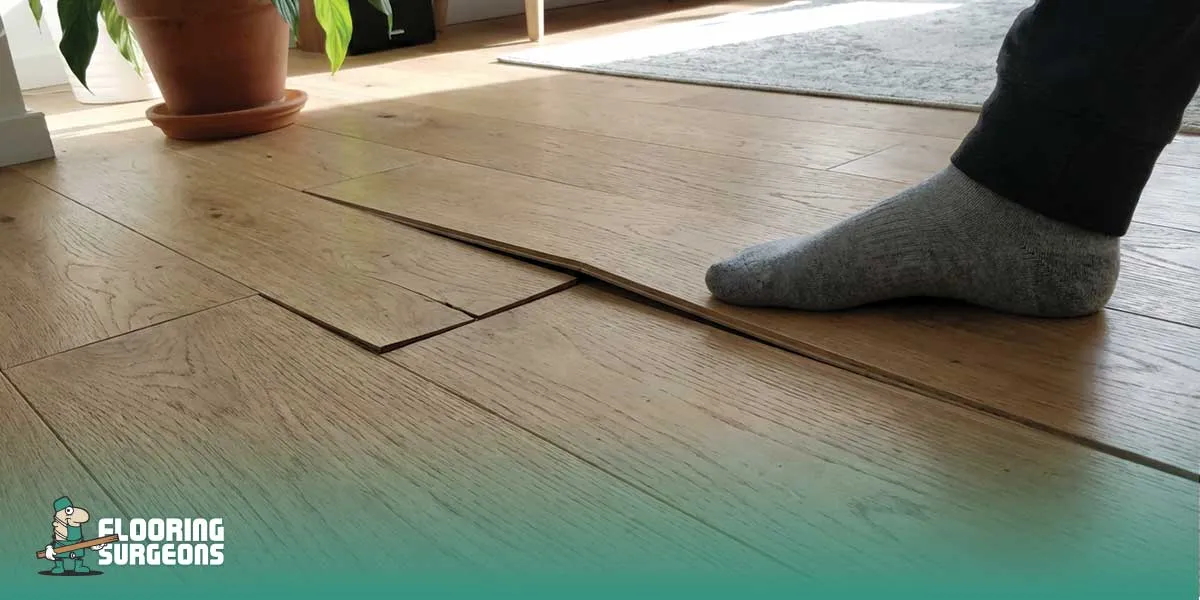
Choosing the right flooring is about more than just appearance. Even high-quality materials can cause problems if the installation is not done correctly. Signs of poor flooring installation range from creaking or movement underfoot to loose or uneven panels, gaps, warping, and even moisture-related issues.
If you notice any of these problems, it is not necessary to wait until the floor completely fails. These are clear indications that the installation was incorrect, affecting both the durability and comfort of your flooring. The type of flooring also plays a role in how these issues appear. Laminate, vinyl, hardwood and LVT all have common installation mistakes that can prevent the floor from performing as expected.
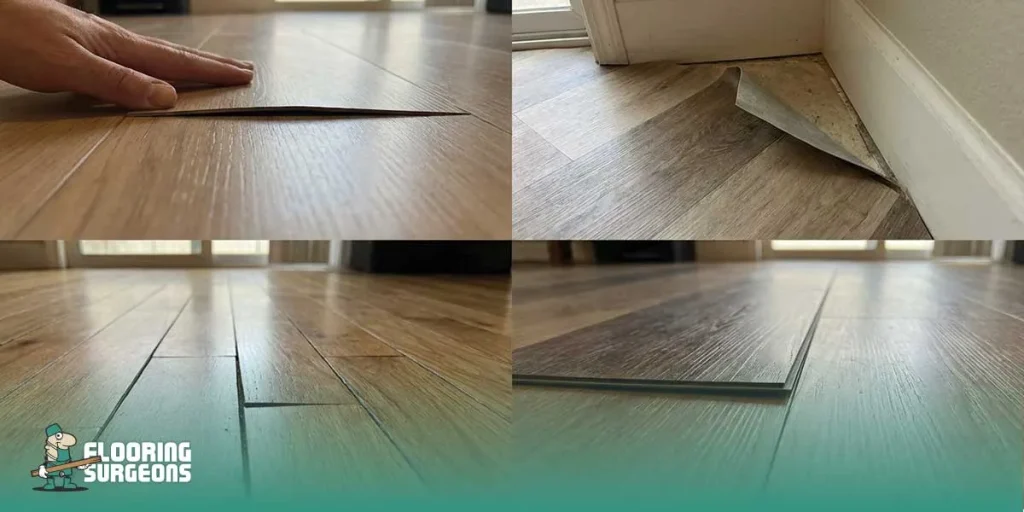
In this article, you will learn how to identify the most common signs of bad flooring installation across different materials, understand the typical problems associated with each type, and discover practical ways to prevent early damage or costly replacements. By reading on, you can ensure that your flooring not only looks good, but also lasts longer and functions as it should.
Table of contents
Early Signs of Bad Flooring Installation You Shouldn’t Ignore
Spotting installation issues early is crucial because small problems can quickly affect the durability, comfort, and maintenance of your floor. Incorrectly installed flooring may shift, creak, or feel uneven, leading to long-term damage that is harder and more expensive to fix.
Understanding these early signs allows you to act before minor defects become serious. For example, gaps appearing between panels, uneven surfaces, or floors that move when walked on are not normal and indicate that the installation did not meet the required standards. These problems are specific to the way the floor was fitted rather than the quality of the material itself. By recognising these issues, you can prevent ongoing discomfort, reduce maintenance challenges, and protect your investment. This section sets the stage for more detailed explanations of common problems with laminate, vinyl, and hardwood floors, showing exactly what to look for and how to spot them before they worsen. According to installation specialists at Flooring Surgeons, early detection of fitting issues can prevent costly repairs and premature floor replacement.
How to Spot Poor Laminate Flooring Installation
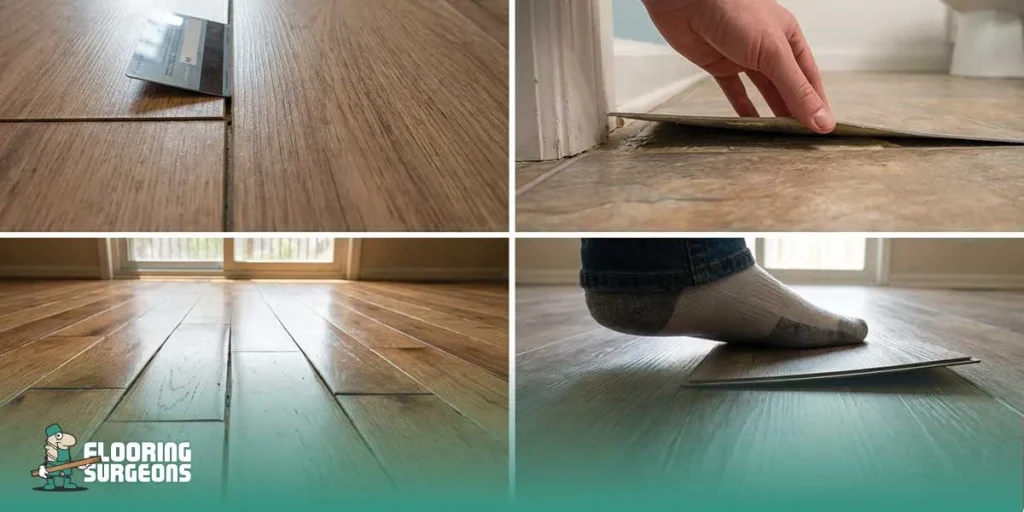
Poor laminate flooring installation is often obvious if you know what to look for. The most common signs include uneven surfaces, gaps between panels, and panels that move or feel loose underfoot.
- Uneven floors can make walking uncomfortable and indicate that the subfloor was not properly prepared.
- Gaps between panels are a sign that the boards were not correctly aligned or that the laminate expanded and contracted due to poor installation.
- Loose or moving panels suggest that the click-lock system was not properly engaged or that the adhesive, where used, was insufficient.
Even if your laminate looks good from a distance, these issues can cause long-term damage and reduce the floor’s lifespan. When issues like gaps or panel movement appear, reviewing whether laminate flooring was installed correctly for the space becomes essential.
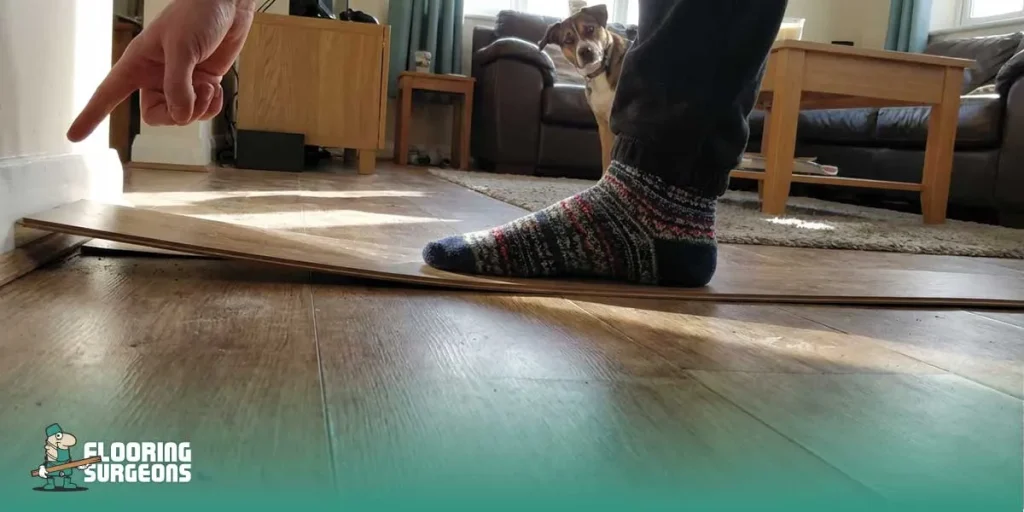
How do you know if laminate flooring is poorly installed?
If your laminate shows gaps, feels uneven, or panels move underfoot, these are clear indicators of poor installation. Early detection allows you to address the problem before it worsens
Common Mistakes in Sheet Vinyl Installation
Sheet vinyl flooring can look smooth at first glance, but poor installation often shows up in subtle ways. The most common mistakes include bubbling or wrinkles, misaligned seams, and lifted or separating edges.
- Bubbles or wrinkles occur when the adhesive is unevenly applied or the sheet is stretched incorrectly during installation.
- Misaligned seams create visible lines that break the flow of the floor and may trap dirt or moisture.
- Lifted or separating edges indicate that the adhesive did not bond properly or the subfloor was not level. These issues can worsen over time and reduce the lifespan of your flooring.
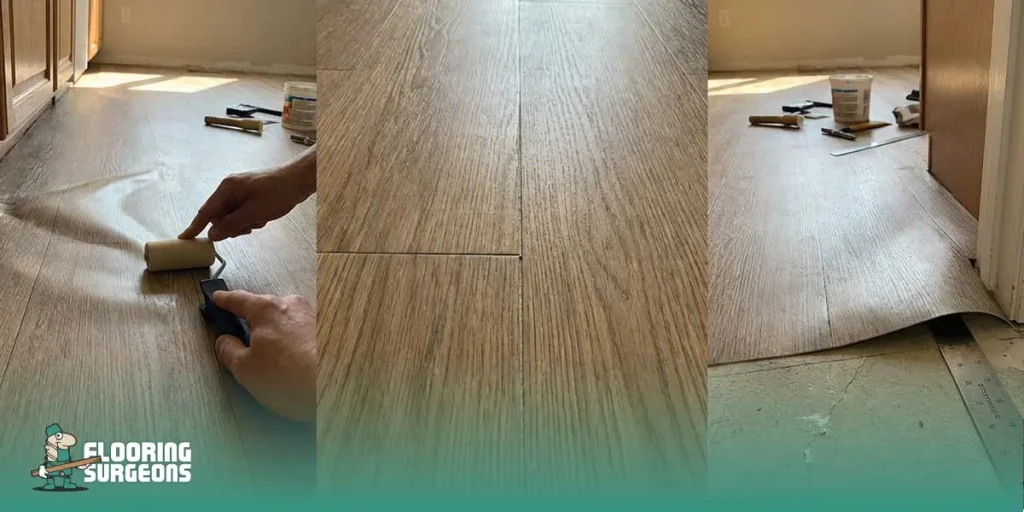
What are the signs of poorly installed sheet vinyl flooring?
If you notice bubbles, uneven seams, or edges that lift, your sheet vinyl is likely poorly installed. Spotting these early can prevent more extensive damage and costly repairs.
Hardwood Floor Installation Issues: What to Look For
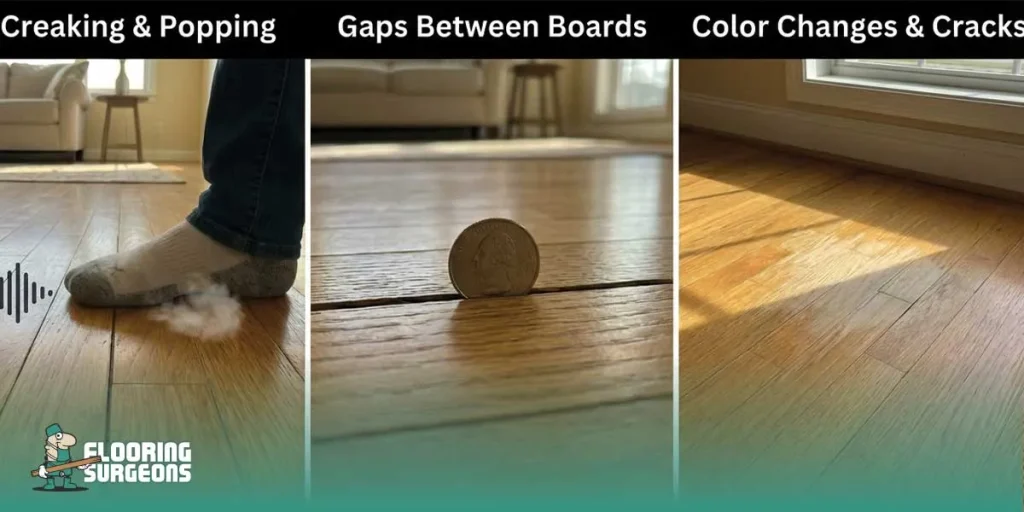
Hardwood floors are durable and visually appealing, but poor installation can compromise their performance. Common signs include creaking or popping sounds, gaps between boards, and unexpected colour changes or cracks.
- Creaking or popping often indicates that the subfloor is uneven or the boards were not properly acclimatised before installation.
- Gaps between boards can appear when wood expands or contracts due to improper spacing during installation or insufficient moisture control.
- Colour changes or cracks usually result from inconsistent sealing, finishing, or subfloor issues rather than the wood itself. With solid wood flooring, proper acclimatisation and precise installation are critical to avoid gaps and long-term movement.
Solid vs Engineered Wood: Installation Sensitivity
| Flooring Type | Installation Sensitivity | Common Issues from Poor Installation | Longevity if Installed Correctly |
| Solid Wood | High needs acclimatisation | Gaps, cupping, warping | Very long |
| Engineered Wood | Moderate — wear layer limits sanding | Creaking, separation, and limited refinishing | Medium to long |
What are the signs of bad hardwood floor installation?
Listen for popping sounds, inspect for gaps, and check for unexpected cracks or colour changes. Early detection can prevent costly repairs and preserve the floor’s lifespan. Many creaking and separation issues are linked to how engineered wood flooring responds to subfloor conditions and installation accuracy.
LVT and Parquet Installation Problems
Luxury Vinyl Tiles (LVT) and parquet flooring are visually striking and durable when installed correctly, but installation errors can lead to long-term problems. Problems such as tile separation often occur when LVT flooring is installed without adequate subfloor preparation.
- Tile or panel separation is a common issue, often caused by insufficient adhesive, temperature fluctuations, or improper acclimatisation of the materials before installation.
- Incorrect pattern alignment can make the floor look uneven and reduce its aesthetic appeal. Misaligned parquet herringbone or chevron patterns are especially noticeable and difficult to fix after installation.
- Poor subfloor preparation has a significant impact on both LVT and parquet floors. Uneven, damp, or unstable subfloors can cause panels to shift, buckle, or create an uneven surface that affects both comfort and longevity.
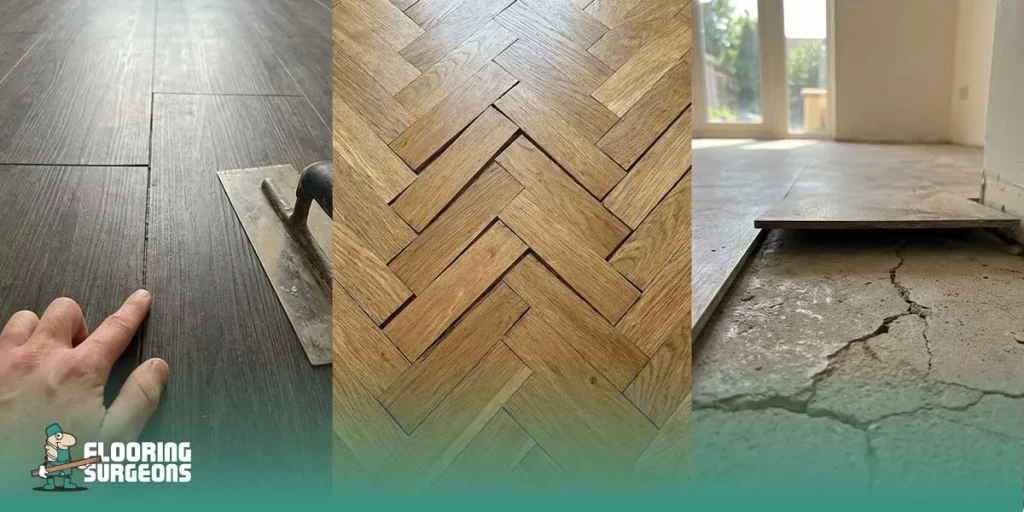
What are the signs of poorly installed LVT or parquet flooring?
Look for lifting tiles, misaligned patterns, and uneven surfaces. These signs indicate installation issues rather than material defects and should be addressed early to avoid costly repairs.
Carpet Fitting Mistakes That Cause Future Damage
Carpet installation may seem straightforward, but even small errors can cause long-term issues affecting durability, appearance, and comfort.
- Loose or rippling carpet occurs when the carpet is not stretched correctly during installation. This leads to movement underfoot, potential tripping hazards, and accelerated wear.
- Insufficient underlay coverage reduces cushioning and insulation, making the carpet feel thin, less comfortable, and more prone to damage. A well-chosen and correctly laid underlay is critical for longevity.
- Incorrect corner and edge fitting can create gaps or folds at the walls, resulting in an uneven appearance and potential unravelling over time. Properly secured edges and corners ensure a neat finish and prevent future issues.
How do you know if carpet has been poorly fitted?
Look for ripples, uneven edges, and exposed or thin underlay. These indicate fitting problems rather than carpet quality issues.
Quick Comparison Table: Common Flooring Installation Issues
| Flooring Type | Typical Installation Mistakes | Common Signs | Why It Matters |
| Laminate | Uneven floor, gaps, loose panels | Panels wobble, gaps visible | Affects durability and comfort |
| Sheet Vinyl | Wrinkles, asymmetric lines, lifting seams | Bubbles, raised edges | Reduces lifespan and usability |
| Hardwood | Creaking, gaps, colour changes, cracks | Noise, uneven surface | Indicates subfloor or installation issues |
| LVT/Parquet | Tile/panel separation, misaligned patterns, poor subfloor | Lifting, misalignment, uneven surface | Aesthetic and structural problems |
| Carpet | Loose/rippling, inadequate underlay, corner/edge errors | Ripples, exposed underlay, uneven edges | Safety, appearance, long-term wear |
How Flooring Installation Errors Affect Longevity and Comfort
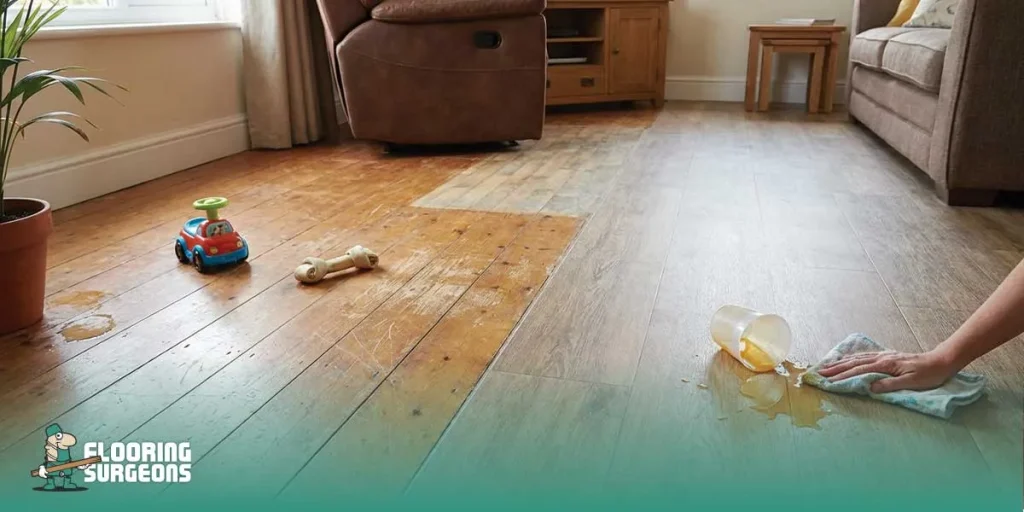
Poor flooring installation doesn’t just look bad — it directly impacts how long your floors last and how comfortable they feel underfoot. Even high-quality materials can fail prematurely if installed incorrectly. For example, gaps between panels or uneven surfaces can cause excessive wear, squeaking, or movement, which not only reduces lifespan but also makes walking or cleaning less comfortable. Maintenance becomes more difficult when installation errors exist. Dust and debris can collect in uneven seams, edges, or lifted areas, and routine cleaning may accelerate damage rather than preserve the floor. Early identification of installation mistakes allows you to address issues before they affect the floor’s long-term performance and your daily experience.
Preventing Poor Flooring Installation: Tips and Best Practices
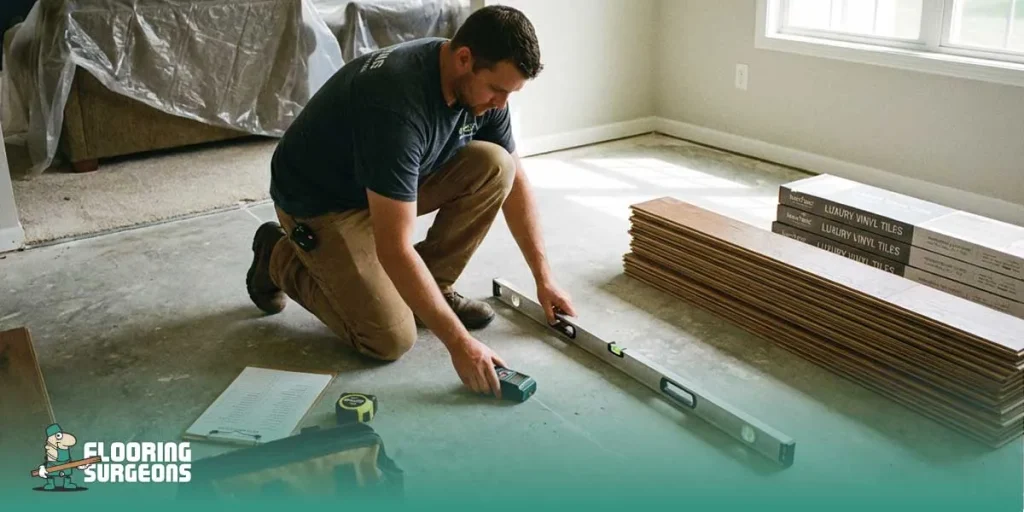
- Hire a professional installer: Experienced installers understand material behaviour and how to prepare surfaces properly. This reduces the risk of gaps, bubbles, or uneven panels.
- Check the subfloor and surface beforehand: Flooring performance depends on a smooth, level, and dry foundation. Inspect for cracks, moisture, or uneven spots before installation to prevent future problems.
- Match the floor type to the space and usage: Different flooring materials have different tolerances. Consider foot traffic, pets, moisture exposure, and furniture placement to choose the right material and installation method.
By following these practices, you minimise long-term problems, reduce maintenance challenges, and ensure your floors are both comfortable and durable.
Impact of Installation Errors on Daily Use and Maintenance
A poorly prepared subfloor can cause movement, cracking, or lifting across nearly all flooring types, often stemming from flooring mistakes that cause long-term problems rather than material failure. Poorly fitted panels can wobble or creak, creating noise and an unstable feel underfoot. Open seams or surface wrinkles trap dust and dirt, making cleaning harder and more time-consuming. Understanding these effects helps homeowners see that installation errors can directly reduce comfort and increase maintenance demands.
How Improper Subfloor Preparation Leads to Long-Term Issues
A poorly prepared subfloor can cause movement, cracking, or lifting across nearly all flooring types. Once installation problems are linked to subfloor damage issues, addressing the cause becomes far more important than fixing the surface symptoms. Moisture issues or uneven surfaces can damage even resilient floors over time.A poorly prepared subfloor can cause movement, cracking, or lifting across nearly all flooring types. Moisture issues or uneven surfaces can damage even resilient floors over time. Including a simple table here can show how each floor type reacts to common subfloor problems:
| Floor Type | Common Subfloor Issue | Resulting Problem |
| Laminate | Uneven subfloor | Gaps, panel movement |
| Sheet Vinyl | Moisture or bumps | Bubbles, wrinkles |
| Solid Wood | Inadequate moisture control | Warping, gaps |
| Engineered Wood | Uneven or soft subfloor | Squeaks, joint failure |
| Carpet | Poor underlay coverage | Waves, loose edges |
| LVT/Parquet | Uneven or unstable subfloor | Tile separation, pattern misalignment |
Short Case Studies for Each Floor Type
- Laminate: In a high-traffic living room, poorly aligned panels created gaps and movement, showing inadequate subfloor preparation.
- Sheet Vinyl: In a kitchen with minor subfloor moisture, bubbling and wrinkles appeared shortly after installation.
- Hardwood: Uneven subfloor and low installation skill caused gaps between boards and a persistent creaking sound.
- LVT/Parquet: Misaligned patterns and tile separation emerged after a few months of use. Pattern misalignment is especially noticeable with parquet flooring, where installation precision directly affects the final appearance.
- Carpet: Loose waves and edge lifting resulted from insufficient underlay and poor corner fitting.
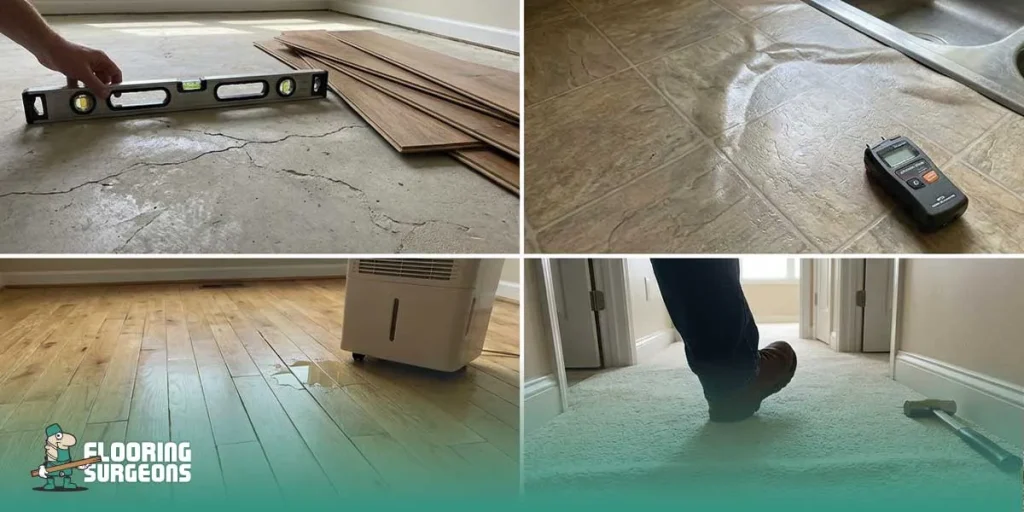
These short examples illustrate real-world consequences of installation errors, making it clear why prevention matters.
Recommendations for Preventing Future Installation Mistakes
- Hire experienced or certified installers and verify their previous work.
- Ensure proper subfloor preparation before installing any type of flooring.
- Choose the right flooring type for the space and expected foot traffic.
- Conduct a post-installation inspection to confirm panels are level, seams are tight, and patterns are aligned.

Haniye Ayanmanesh
As an expert writer for Flooring Surgeons, I combine technical SEO knowledge with a practical understanding of flooring, producing content that helps users make confident decisions while supporting long-term organic growth.