


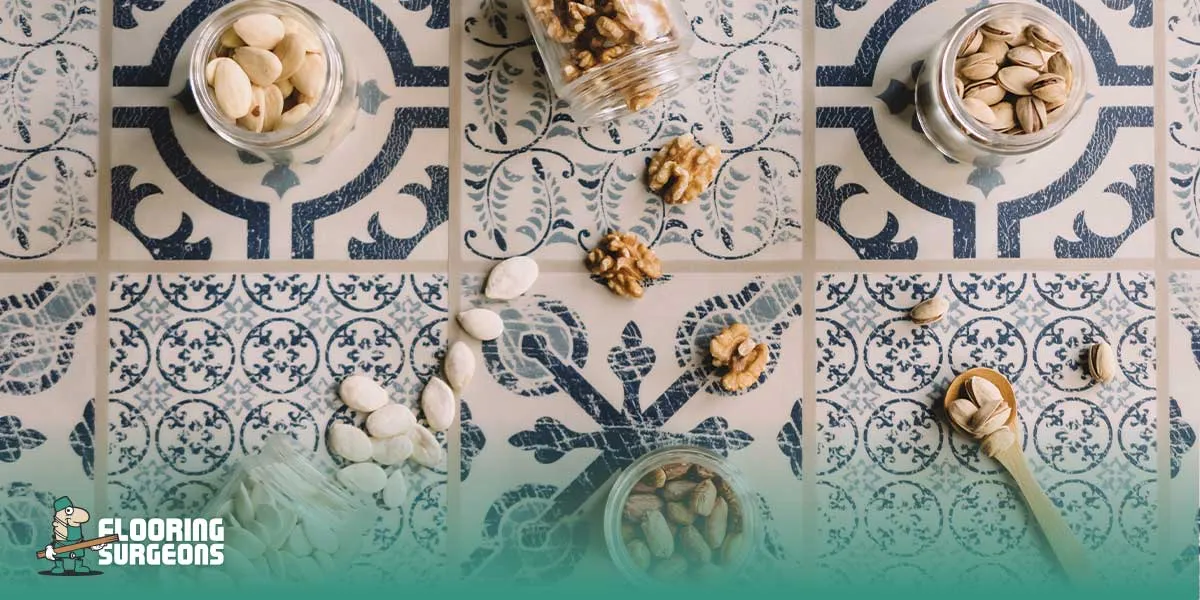
Victorian tiles for the modern home can transform it far more effortlessly than most people expect, adding pattern, structure and a touch of heritage without making the space feel old-fashioned. Suppose you’re exploring Victorian Floor Tiles for Your Modern Space. In that case, the key idea is simple: the right colours, patterns and layouts bring contrast and character to minimalist interiors while still keeping the room clean, contemporary and balanced. In this guide, you’ll see how Victorian tiles fit into today’s design trends, where they work best, and how to choose styles that elevate your home rather than overpower it.
At Flooring Surgeons, we regularly work with homeowners who want patterned floors that feel modern rather than traditional, so this guide focuses on the styles that genuinely work in contemporary UK homes.
Table of contents
Why Victorian Floor Tiles Suit Modern Homes
Victorian tiles work surprisingly well in a modern home because they add structure, contrast and visual rhythm without disrupting the clean, contemporary feel most people want today. Instead of feeling “old-world,” the geometric patterns and balanced symmetry of Victorian designs actually complement minimalist interiors by giving them just enough character to avoid looking flat or empty. That’s the reason Victorian tiles have returned as a significant contemporary trend in 2025–2026 — they bring personality, but in a controlled, design-led way.
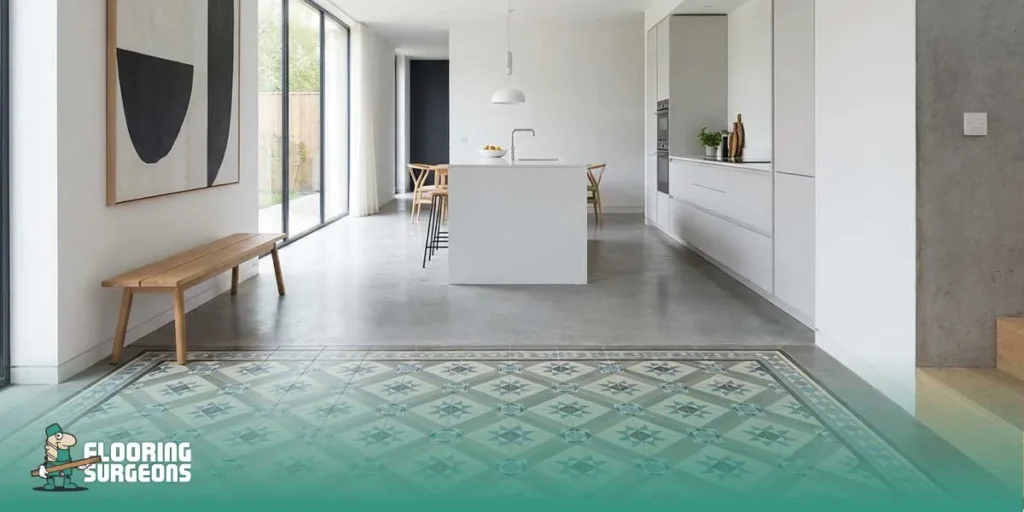
In modern spaces, these tiles act as a focal point: the bold pattern grounds a neutral room, while the restrained colour palettes used today (soft monochromes, warm neutrals, muted blues) keep everything feeling fresh rather than traditional. Unlike heritage homes, where Victorian flooring tends to emphasise period features, in contemporary interiors the tiles play a completely different role: they sharpen the architecture, frame open-plan layouts and bring movement to otherwise simple spaces. It’s this balance — historical pattern used with modern restraint — that makes Victorian tiles one of the few classic design elements that feel genuinely contemporary today.
You can also take a look at our guide on how to style white flooring for more design ideas on pairing patterned tiles with modern, bright interiors.
Key Victorian Tile Styles You Can Use Today (Modern-Friendly Patterns)
Victorian tile styles have become surprisingly versatile in contemporary interiors, mainly when used with clean colour palettes and simple room layouts. Instead of recreating a “period look,” today’s homeowners use Victorian patterns to bring structure, contrast and movement into modern spaces. The key is choosing designs that feel intentional — bold enough to add interest, but refined enough to work with minimalist décor.
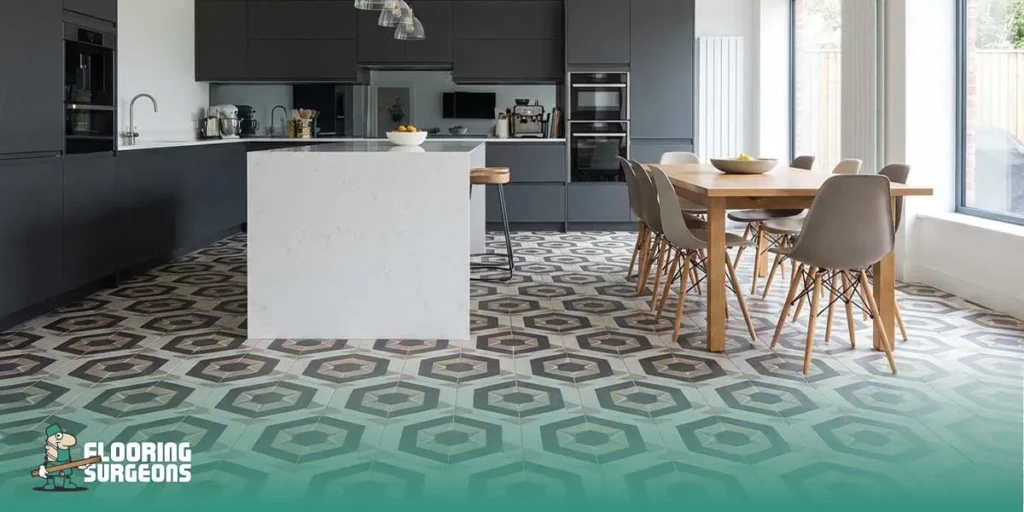
Geometric Victorian Tiles (Bold Modern Geometry)
Geometric Victorian patterns are the most popular choice for contemporary homes because their sharp lines and repeating shapes naturally complement modern architecture. The symmetry creates a sense of order that pairs perfectly with neutral walls, sleek cabinetry and open-plan layouts. When used in restrained colours like charcoal, soft white or muted clay tones, geometric tiles look more design-led than traditional, giving the room a clean but characterful finish.
Checkerboard Victorian Tiles (Timeless but Trending Again)
Checkerboard tiles have made a significant comeback in 2025–2026, especially in modern kitchens and bathrooms. Their simplicity is precisely what makes them contemporary: the pattern is strong enough to create visual interest but minimal enough to stay elegant in small spaces. Pairing a black-and-white checkerboard with matte finishes or a muted gloss instantly updates the look, making it feel fresh rather than retro. It’s the perfect option for homeowners who want a statement floor that still feels calm and balanced.
Border & Framing Tiles for Modern Entryways
Border tiles — once mainly used in period properties — are now being reimagined in modern hallways and entryways. A thin, clean border frames the floor, gives structure to open layouts and creates a polished, design-focused look as soon as you walk in. When combined with soft neutral tones or geometric centre patterns, borders help break up space without overwhelming it, making them ideal for minimalist homes that still need a hint of architectural detail.
If you love patterned flooring but want something warmer or more traditional than tiles, you can explore our herringbone flooring collection for more design-led options.
Modern-Friendly Victorian Tile Styles — At a Glance
| Victorian Tile Style | Best For | Modern Benefit | Why It Works Today |
| Geometric Victorian Tiles | Kitchens, hallways, open-plan spaces | Structured, bold, symmetrical | Enhances modern lines and minimal décor |
| Checkerboard Victorian Tiles | Bathrooms, small kitchens, apartments | Clean contrast, classic minimalism | Trending again due to simplicity + versatility |
| Border & Framing Tiles | Entryways, long hallways, and living room transitions | Adds definition and architectural sharpness | Frames spaces without making them feel busy |
Choosing the Right Victorian Tile Flooring for Modern Interiors
Choosing Victorian tile flooring for a modern home comes down to three things: colour palette, layout, and material. The goal isn’t to recreate a period look — it’s to use Victorian patterns in a way that feels clean, intentional and aligned with contemporary design. The following guide breaks each factor down so you can confidently select tiles that elevate your space without overwhelming it.
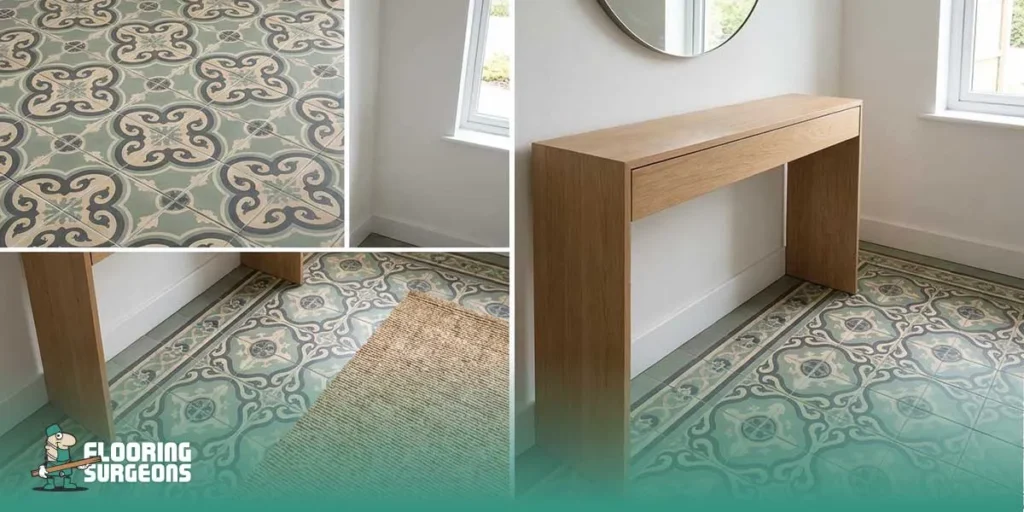
Colour Palettes That Work Best in Contemporary Homes
Victorian tiles traditionally came in strong, saturated tones, but modern interiors benefit from soft, balanced colour palettes that feel calm rather than ornate. These are the 2025–2026 palettes that work best today:
Soft Monochrome
Ideal for minimalist homes, soft monochrome (charcoal, off-white, stone grey) keeps the pattern visible without looking busy. It gives Victorian geometry a modern, architectural edge.
Warm Neutrals
Clay, taupe, sand and warm putty shades add subtle depth and pair well with natural wood, matte black fixtures and warm lighting — perfect for Scandinavian-inspired interiors.
Black & White Modern Sets
Still the most versatile option. A clean black-and-white palette instantly updates classic Victorian motifs, making them feel fresh and editorial rather than vintage.
Tile Size & Layout — What Works in Small vs Large Spaces
Choosing the right Victorian tile flooring also means matching the pattern scale to the room size — something most guides ignore, but it makes a dramatic difference.
Small Spaces (bathrooms, kitchens, entryways)
- Use smaller geometric patterns to add interest without overwhelming the room.
- A checkerboard in compact tiles can visually widen the floor.
- Avoid oversized motifs — they shrink the space by creating large blocks of contrast.
Medium to Large Spaces (hallways, open-plan areas, living rooms)
- Large-format Victorian tiles or broad repeating patterns look more intentional and reduce visual clutter.
- A border tile design works well in long hallways by grounding the space and adding elegant structure.
- Bigger rooms tolerate bolder contrasts, especially when paired with minimalist furnishings.
Material Options — Ceramic, Porcelain, Encaustic
Each material offers a different look and performance level. Here’s a quick, practical breakdown — no unnecessary detail, just what a modern homeowner needs to know.
Ceramic Victorian Tiles
- Most affordable
- Lightweight, ideal for walls or light-use floors
- Best for decorative, low-impact spaces
Use when: You want the look without a high budget.
Porcelain Victorian Tiles
- Extremely durable and water-resistant
- Perfect for bathrooms, kitchens and high-traffic areas
- More consistent colour and finish
Use when: You need long-term performance in modern family homes.
Encaustic (Cement) Victorian Tiles
- Rich, matte, artisanal finish
- Slight colour variation gives a handcrafted look.
- Requires sealing and light maintenance
Use when: You want a premium, design-led finish with natural texture.
Styling Victorian Tiles in Different Areas of Your Home
Styling Victorian tile flooring isn’t about recreating a period house — it’s about using pattern, proportion and colour to elevate modern spaces. Each room benefits from a different approach, so the tiles feel intentional rather than decorative for the sake of it. Here’s how to make Victorian patterns look effortless in the most common areas of a contemporary home.
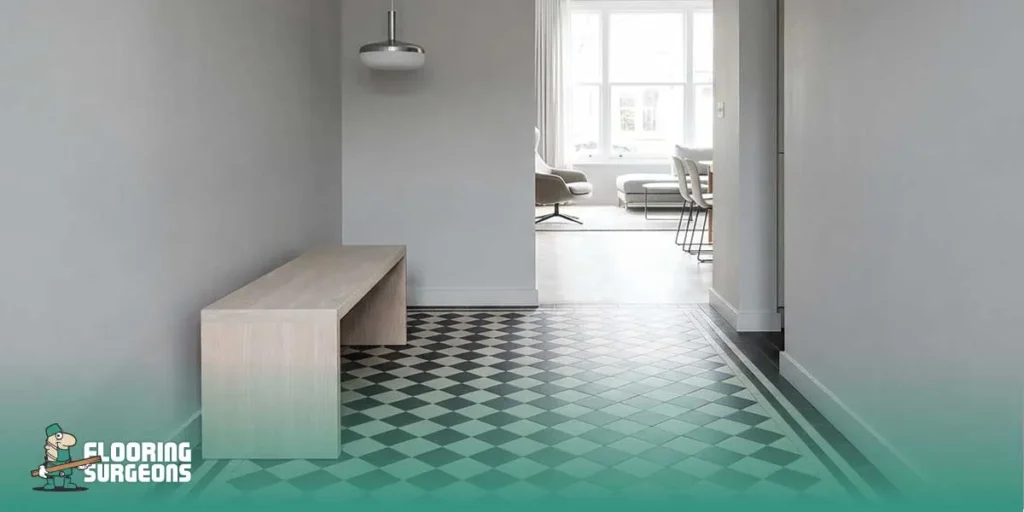
Victorian Tiles for Modern Hallways
In hallways, Victorian tiles have the greatest impact, and in modern homes, the goal is visual flow rather than heavy ornamentation. Choose geometric or checkerboard patterns that guide the eye toward the length of the hallway, creating a sense of movement and structure. Borders work exceptionally well here — not the traditional thick ones, but slim contemporary frames that define the space without crowding it.
Pair with: matte walls, simple lighting and minimalist furniture to keep the look balanced rather than busy.
If you’re considering Victorian tiles for an entryway or hallway, you may also find our guide on the best flooring options for UK hallways helpful.
Victorian Tiles for Contemporary Kitchens
Kitchens benefit from Victorian tiles when the pattern is subtle enough to support the cabinetry rather than compete with it. Soft monochrome palettes, warm neutrals or light geometric repeats sit beautifully beside neutral cabinets, brushed metal hardware and modern worktops. The key is contrast control: let the cabinetry stay clean and minimal, while the floor adds gentle interest. Victorian tiles here work as a grounding element, giving the kitchen character without overwhelming the modern layout.
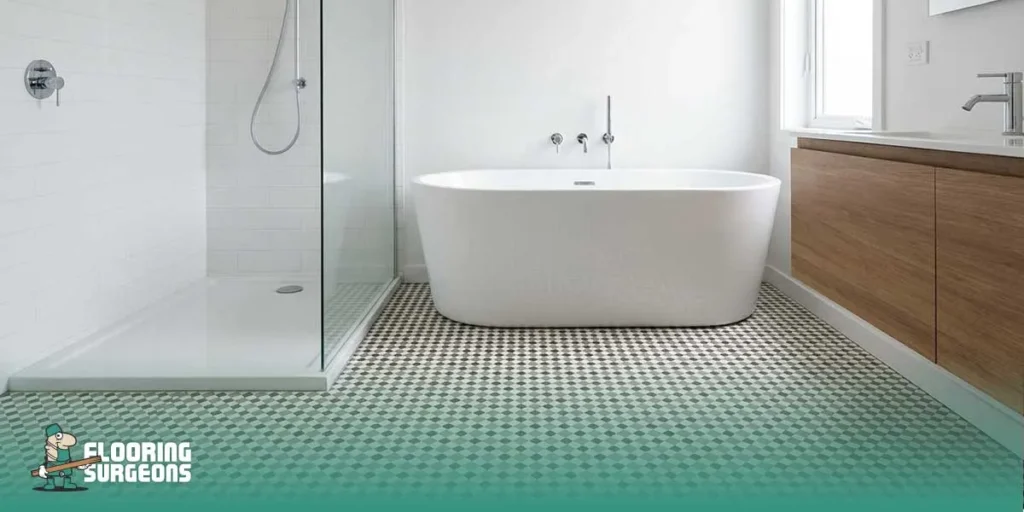
Victorian Bathroom Tiles — Classic Look, Modern Function
Bathrooms are where Victorian tiles feel both classic and practical. Choose porcelain versions for their waterproof and slip-resistant properties, ensuring the look stays beautiful under daily use.
Smaller-scale patterns work best in bathrooms because they introduce detail without making the room feel cramped. A soft geometric floor paired with plain wall tiles keeps the space contemporary while still nodding to Victorian craftsmanship. For a spa-like feel, use muted tones — charcoal, off-white or soft greige — to anchor the room without adding visual weight.
Maintenance Tips for Victorian Tile Flooring (Modern Homes Edition)
Victorian tile maintenance in modern homes is less about heavy scrubbing and more about preserving the clean, contemporary look that patterned floors bring. Because these tiles often sit in busy areas like hallways, kitchens or bathrooms, the goal is to keep colours crisp, grout clean and finishes looking fresh without turning upkeep into a chore.
Matte vs Gloss Cleaning
Matte Victorian tiles hide marks better than gloss tiles, but they trap fine dust more easily. Regular dry sweeping followed by a pH-neutral cleaner keeps the surface smooth and uniform. Gloss tiles, on the other hand, need gentler products and more frequent wiping to avoid streaks or water spots — ideal for homeowners who prefer a polished, reflective look.
Grout Tone Preservation
The quickest way to age Victorian tiles is letting the grout darken unevenly. Modern homes benefit from sealed grout lines, especially when using lighter tones. A simple grout sealer, applied once or twice a year, prevents stains, maintains contrast, and keeps the crisp geometry that makes Victorian patterns stand out.
High-Traffic Hallway Care
Hallways usually take the heaviest beating. A thin, non-slip runner in the winter months protects the tile from grit, while weekly mopping with a neutral cleaner keeps the colour depth even. Avoid harsh abrasives — they dull the pattern over time. With minor, consistent maintenance, high-traffic Victorian floors stay sharp and stylish without requiring deep cleaning.

Haniye Ayanmanesh
As an expert writer for Flooring Surgeons, I combine technical SEO knowledge with a practical understanding of flooring, producing content that helps users make confident decisions while supporting long-term organic growth.