

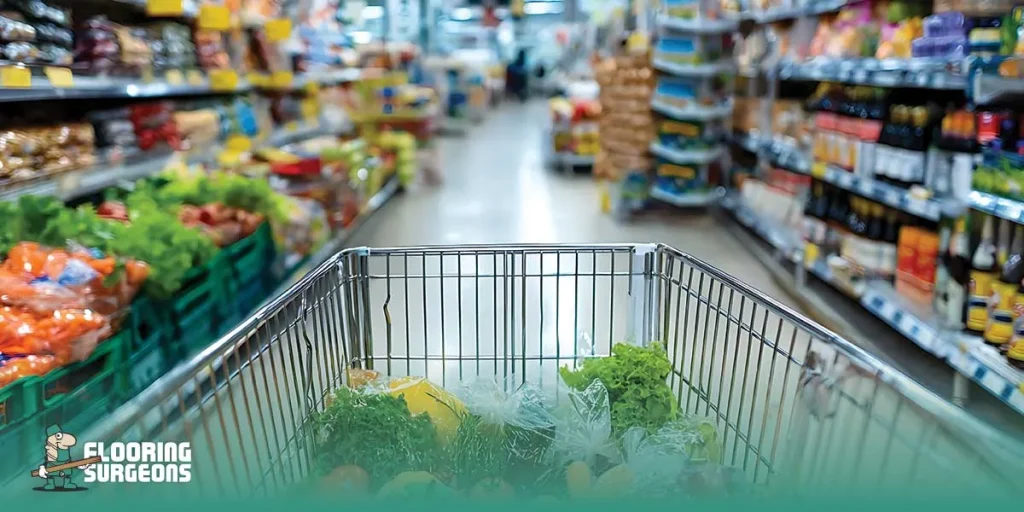
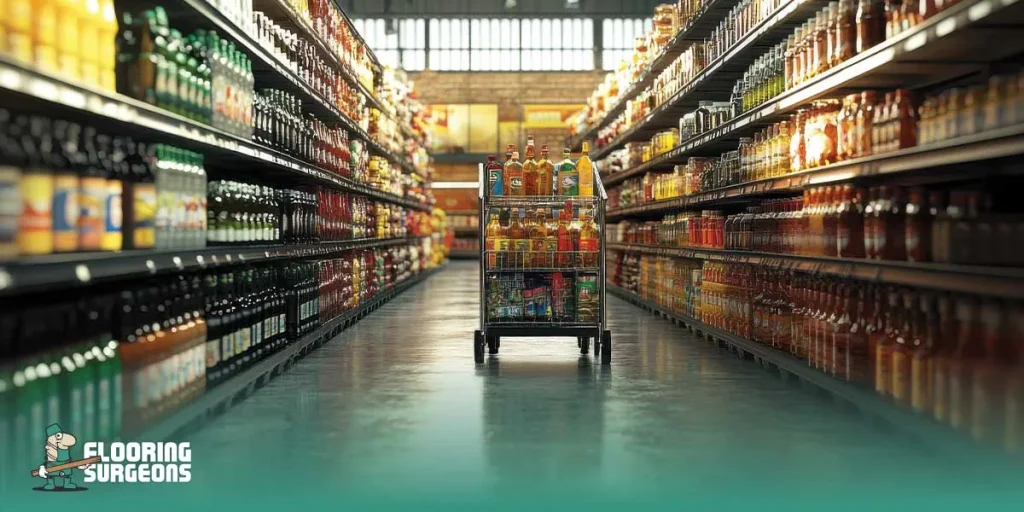
Durability, cleanliness, and safety are the primary requirements of grocery store floors. Supermarket floors are high-traffic areas where customers walk, push trolleys, spill various liquids, and the owners require them to be easily cleanable at all times. So, what are grocery store floors made of? In this article, we’ll tell you what materials are used for grocer floorings, supermarkets, and what benefits do they have.
Table of contents
What Are Supermarket Floors Made Of?
Supermarkets require floors that are heavy-duty to withstand high foot traffic and wheeled trolleys, as well as easy to clean, stains and spills resistant. Some material in common use for this application includes: Supermarket floors are designed to be durable, able to withstand heavy-duty traffic and spills, which means that high-performance flooring materials like the ones mentioned below are more common.
- Epoxy Resin Floors: Supermarket floors are heavy-duty and need a flooring solution that is both durable and easy to clean. Epoxy floors offer all this and much more to areas in supermarkets that demand aesthetics along with strength.
- Vinyl Flooring: Vinyl floors are a popular choice as it offers flexibility and can handle both high foot traffic and incidental spills. This makes it an ideal choice for grocery stores.
- Concrete: Used in warehouse or storage sections of grocery stores, concrete is heavy-duty, strong, and easy to maintain, but requires additional sealing or hardening treatments to increase durability.
- Luxury Vinyl Flooring (LVF): If you are looking for easy installation, affordability, and a flooring solution that is not only easy to maintain but is also durable, then Luxury Vinyl Flooring (LVF) is an excellent choice for customer-facing areas.
Why Durability Matters for Grocery Store Floors
Durability is always a priority when it comes to choosing the right flooring for a grocery store. It must withstand high foot traffic, rolling carts, and accidental spills and be very durable. Epoxy resin is a popular choice for supermarket flooring, for example, because it’s tough and stain-resistant, as well as resistant to spills and scratches.
It’s also important that floors are easy to clean, which is why seamless floors (such as epoxy or Luxury Vinyl Flooring) are a great choice for food-handling areas. Floors need to maintain a sanitary, attractive finish, and cracks and seams can hold dirt and bacteria, making the job of keeping them clean more difficult.
Common Materials Used in Grocery Store Flooring
Here’s a quick breakdown of common materials used for grocery store floors:
| Material | Features | Best For |
| Epoxy Resin Flooring | Durable, easy to clean, resistant to chemicals and stains. | High-traffic areas and food processing zones. |
| Luxury Vinyl Flooring | Cost-effective, easy to install, mimics higher-end finishes. | Customer-facing areas like aisles and checkout zones. |
| Concrete | Highly durable, easy to maintain with added treatment. | Warehouse and storage areas. |
| Vinyl Flooring | Flexible, durable, stain-resistant. | Supermarket aisles and non-food handling spaces. |
How to Choose the Right Flooring for Your Grocery Store
What type of flooring should you choose? Well, what exactly are you looking for? Do you want flooring that can handle high foot traffic in the aisles, or flooring that is durable and easy to clean in your back of house areas?
Luxury Vinyl Flooring is a great choice for areas that need to be accessible to customers, as it is very hard wearing and can come in designs that are aesthetically pleasing. Concrete or epoxy resin floors can be more suitable for areas like storage and warehouse spaces, which need to be durable, hard wearing, and easy to clean.
Wondering how to fix gaps in hardwood floors and whether this type of flooring is right for your space?
Click the link how to fix gaps in hardwood floors now and discover the best methods for filling gaps and enhancing the durability of your hardwood floors.
Flooring for Specific Areas in Grocery Stores
Different sections of a grocery store will have their own specific flooring requirements. Here is a section-by-section analysis of the flooring requirements you should consider.
- Aisles: High-traffic sections, such as supermarket aisles, need a hard-wearing floor surface that can stand up to a constant stream of trolleys and footfall. Luxury Vinyl Flooring is a popular option for supermarket aisles due to its simple installation and long-term durability.
- Checkout Zones: Decorative yet hard-wearing floor coverings are an ideal choice for checkout zones. Luxury Vinyl Flooring or epoxy resin is a suitable choice to create a floor with an attractive, professional finish that’s also practical and hard-wearing.
- Back-of-House Areas: For storage and warehouse areas where heavy equipment, forklifts and potentially harmful chemicals will be in use, epoxy resin or concrete floors are the best choice.
- Food Handling Areas: Hygienic and easy-to-clean floors are a must for butcher shops, bakeries and deli counters. Epoxy resin or cementitious polyurethane flooring with antibacterial additives is a great option.
Maintenance Tips for Grocery Store Floors
Keeping your grocery store floors in the best condition is easy with the right maintenance. Luxury Vinyl Flooring is best cleaned with a regular routine using a neutral cleaner. Epoxy resin and concrete floors benefit from regular sweeping and mopping to keep dirt and grime from building up. Try to avoid using harsh chemicals that could damage the floor finish. In the event that you do notice problems like gaps in your hardwood floors, be sure to have them corrected as soon as possible to avoid further damage. While hardwood flooring is an uncommon sight in grocery stores, Flooring Surgeons can provide professional insight and services if you have it and want to know how to close gaps in hardwood floors or just want to replace the floors entirely.

Conclusion
What are grocery store floors made of? In short, most grocers use Luxury Vinyl Flooring, epoxy resin flooring, concrete flooring and vinyl flooring. We find that this wide variety of flooring caters for almost every space or area in a grocery store. If you’re in need of a flooring solution that has high traffic durability, is low maintenance, or if you want to create an aesthetic for customer-facing areas, we offer several suitable flooring options.
Need help deciding which flooring option is right for your grocery store? Flooring Surgeons will direct you to the best flooring solution for your space and requirements. Get in touch with us for more information.

Mina Asgari
I’m an SEO Specialist and Content Strategist focused on sustainable business growth. I design data-driven content strategies by deeply analyzing user intent, search behavior, and SEO best practices, ensuring every piece of content serves a clear purpose for both users and search engines.