



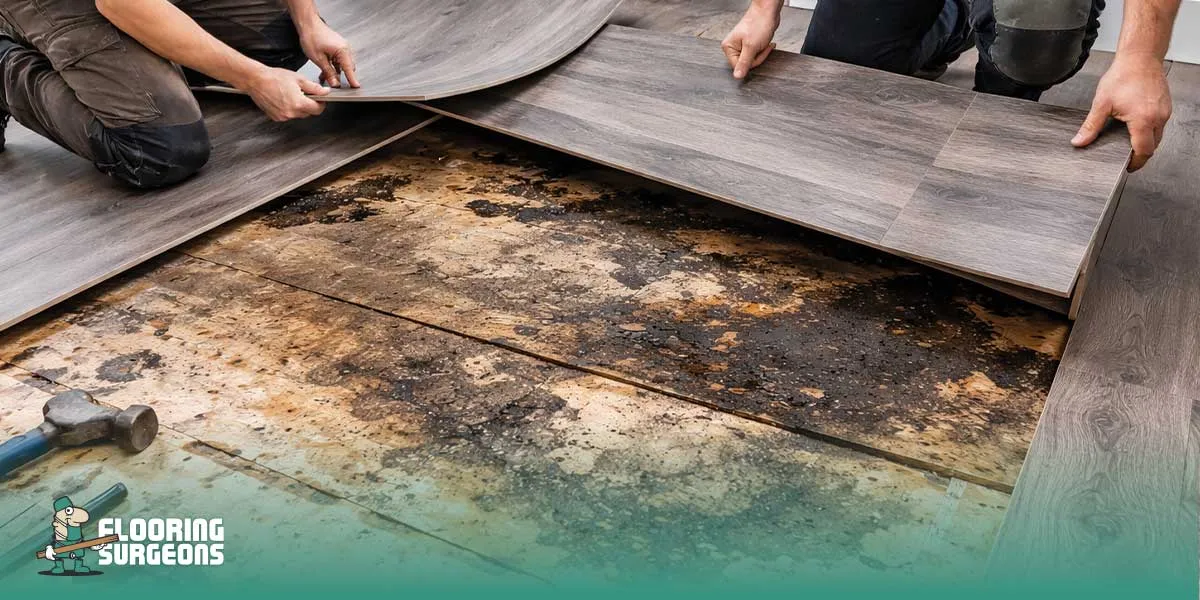
A finished floor only looks perfect if the structure beneath it is correct. When subfloor defects remain hidden underneath, they almost always telegraph through the finished flooring. A vinyl plank floor may begin to separate, wood boards may creak or cup, and tile can crack even though the installation itself looked fine on day one.
Some symptoms can be patched on the surface. A loose board might be tightened or a small gap adjusted. But many flooring failures are structural. When the underlying substrate is uneven, damp, or moving, the real issue cannot be corrected from above. In most cases, the floor has to be lifted so the subfloor can be properly prepared.
This is exactly the type of problem Flooring Surgeons specialise in diagnosing. Their work focuses on subfloor assessment, preparation, and correct flooring installation, because once installers lay the floor over a flawed base, they quickly discover what flooring installers can’t fix once the subfloor is wrong. Understanding these limits helps homeowners recognise when a small repair is possible and when proper subfloor preparation is the only reliable solution.
Table of contents
The Simple Rule: Fix the Subfloor or Expect the Floor to Fail
Most flooring failures follow one simple rule. If the subfloor is not prepared correctly, the finished floor will eventually show the problem. Modern flooring materials are engineered with tight tolerances. They depend on a stable, dry, and flat substrate to perform as intended. When that base is wrong, even a perfectly executed installation cannot fully compensate for it.
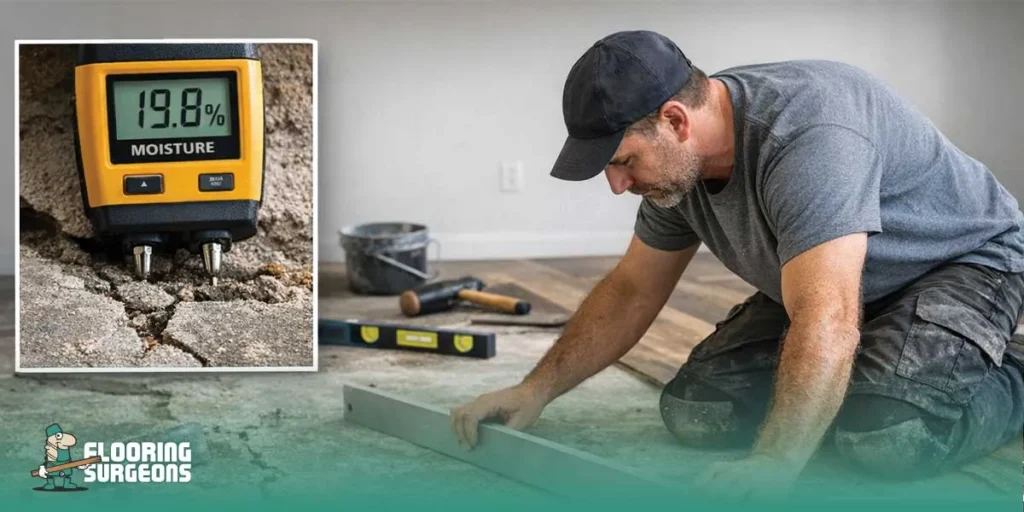
Before any flooring goes down, installers evaluate two different conditions of the subfloor: flatness and level. These terms are often confused, but they mean different things.
Flat refers to how even the surface is across a given distance. A flat subfloor has no significant dips or high spots that create gaps under the flooring system.
Level refers to the horizontal angle of the floor relative to gravity. A floor can be slightly sloped but still perform well if it remains flat.
For most flooring systems such as Luxury Vinyl Plank (LVP), laminate flooring, engineered hardwood, and tile, flatness matters far more than level. Click-lock joints, adhesives, and rigid tile materials rely on full support from the substrate. When voids or ridges exist underneath, stress builds inside the flooring system and failures begin to appear.
Several critical performance factors depend directly on the condition of the subfloor:
- Flatness affects click joints, adhesives, and tile stress. When flooring bridges over dips or rides over high spots, joints loosen, adhesives lose contact, and rigid materials experience concentrated stress.
- Moisture affects wood movement and adhesive bond. Excess moisture in the subfloor can cause wood flooring to expand or cup and can weaken adhesive systems used for vinyl and engineered flooring.
- Movement affects squeaks and cracks. If the subfloor or joists flex under load, that movement transfers upward, producing squeaking floors, cracked grout lines, or shifting boards.
Because of these factors, professional installers focus heavily on subfloor preparation for flooring installation. Once flooring materials are installed over a flawed base, many of the resulting problems cannot be permanently solved from the surface alone.
What Installers Can’t Fix After the Floor Is Down
Once flooring is installed, many problems that originate in the subfloor structure cannot be permanently corrected from the surface. Some post-installation problems do come from poor fitting, but many others originate below the surface. Knowing the difference between a structural issue and the signs of bad flooring installation helps avoid blaming the finish when the real fault is in the subfloor. Installers can sometimes adjust boards, tighten sections, or replace a few pieces. However, when the base beneath the flooring is uneven, damp, or structurally unstable, the symptoms usually return.
This is the point where many homeowners realise the real limitation of installation work. A flooring system can only perform as well as the substrate that supports it. When that base was not properly prepared before installation, several failure patterns begin to appear over time.
The sections below explain the most common subfloor problems after flooring installation and why they cannot be reliably fixed without addressing the underlying structure.
Uneven or Not Flat Subfloors That Cause Movement and Joint Failure
A floor can look perfectly installed on day one and still fail later if the subfloor is not flat. Even small dips or ridges create unsupported areas beneath the flooring system. Modern floating floors such as Luxury Vinyl Plank (LVP) and laminate depend on stable support across the entire surface. When the flooring bridges over low spots, the boards flex slightly with every step.
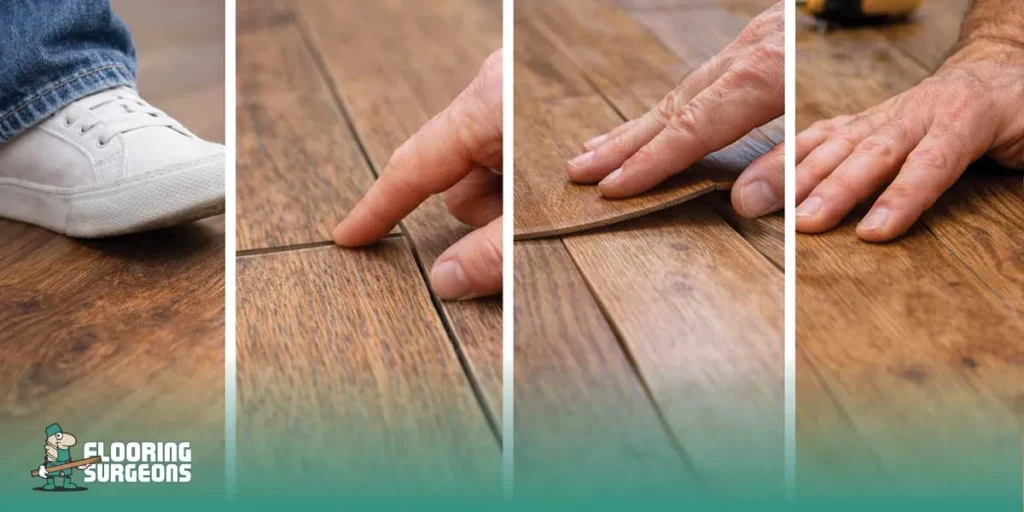
Over time this repeated movement weakens the locking edges. Wood flooring reacts differently but suffers from the same structural issue. High spots create pressure while low areas leave sections unsupported. This uneven support causes boards to shift, creak, or slowly pull apart.
Symptoms that usually indicate uneven subfloor problems
- Hollow spots or bounce when walking across the floor
- Separating seams in laminate or vinyl plank flooring
- Peaking or lipping at joints where boards move out of alignment
- Squeaks that return repeatedly after minor repairs
These problems often appear months after installation, not immediately. Replacing a few boards rarely solves the issue because the underlying void in the subfloor still exists.
Hidden Moisture Problems That Trigger Warping, Cupping, and Adhesive Failure
Moisture trapped inside a subfloor is one of the most common causes of flooring failure caused by subfloor conditions.
The challenge is that moisture problems are often invisible during installation.
What happens when moisture is trapped
When flooring materials are installed over a damp substrate:
- wood flooring may cup, swell, or distort
- adhesives can lose bond strength
- vinyl flooring may trap moisture beneath the surface
Impervious flooring materials such as vinyl make this problem worse because they prevent moisture from escaping upward. Glue-down flooring systems are particularly sensitive. If the moisture limits specified by the adhesive manufacturer are ignored, the bond between flooring and subfloor may weaken over time.
This is why moisture planning must happen before installation begins. Sealers, primers, and damp proof membranes are designed to manage this risk during the preparation stage. This is why moisture planning must happen before installation begins. In cases where the substrate needs moisture control, understanding when a damp proof membrane is needed under a floor helps explain why barriers and primers must be chosen before the flooring goes down.
Subfloor Movement and Poor Fixing That Leads to Squeaks and Cracks
Not all squeaking floors come from the flooring itself. In many homes the sound originates from movement within the structural floor system.
Typical causes include:
- loose subfloor panels
- inadequate fixing to joists
- joists that flex slightly under load
When the structure moves, that movement transfers upward into the finished floor.
Why surface fixes rarely work
Adding screws or nails from above may temporarily quiet the noise, but the root cause often remains beneath the surface.
If the movement occurs between joists and subfloor panels, the sound will usually return after some time. This is why repeated squeaks often indicate structural movement rather than installation error.
Bad Heights, Transitions, and Door Clearances That Were Never Planned
Every flooring system increases the overall build up height of the floor.
This includes:
- underlayments
- adhesives
- the flooring material itself
If this height is not considered before installation, several practical problems appear afterward.
Common clearance issues
- doors scraping against the floor
- appliances that no longer fit beneath worktops
- awkward transitions between rooms
- unsafe step heights near staircases
Trimming doors can sometimes solve the problem, but other constraints such as thresholds, cabinetry, or stair nosings create limits that cannot easily be changed after installation.
Tile and Stone Failures From Deflection and Poor Substrate Stiffness
Tile and natural stone floors behave very differently from floating flooring systems. They require a rigid and stable substrate.
Even small amounts of structural flex can cause problems.
What structural movement causes in tile flooring
When the subfloor moves under load:
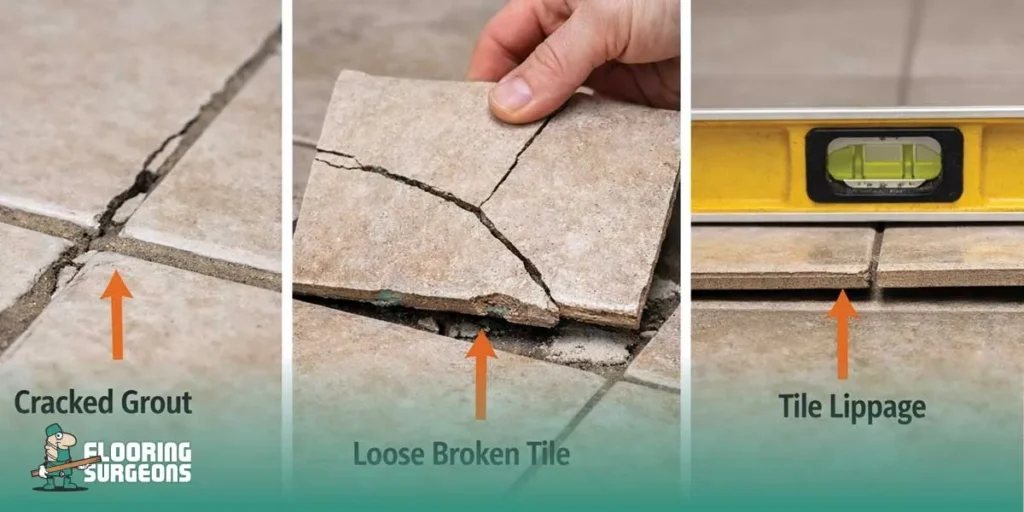
- grout lines begin to crack
- tiles may loosen or fracture
- uneven tiles create visible lippage
Lippage is often blamed on installation technique, but in many cases the subfloor beneath the tiles is uneven or lacks sufficient stiffness. Because tile is rigid, it cannot absorb structural movement. The stress eventually appears on the surface.
Symptom to Cause Table: How to Tell When the Subfloor Is the Real Problem
When flooring problems appear, the visible symptom is often mistaken for an installation issue. In many cases the real cause sits underneath the finished floor. The table below helps identify when a problem is likely coming from the subfloor structure rather than the flooring material itself.
| What you see | Likely subfloor problem | What installers can’t truly fix without removal | What actually fixes it |
| Hollow spots or bounce | Low spots or voids | Click joints keep flexing and loosening | Lift floor, flatten, reinstall |
| Repeating squeaks | Loose subfloor or joist movement | Noise returns after surface fixes | Secure structure, then refit |
| Seams separating | Not flat across spans | Locking edges fatigue | Re-prep to spec, reinstall |
| Tile cracks or loose tiles | Deflection or weak substrate | Grout and tiles fail again | Stiffen substrate, retile |
| Adhesive release | Moisture or contamination | Glue will not bond reliably | Moisture plan, correct primer, reinstall |
Material Specific Failure Modes When the Subfloor Is Wrong
Not every flooring material fails in the same way when the subfloor is wrong. The visible symptoms often depend on the flooring system, but the root cause usually comes back to three conditions: flatness, moisture, and structural movement. Understanding how different floors react helps explain why proper subfloor preparation for flooring installation is critical before installation begins.
Luxury Vinyl Plank and Sheet Vinyl
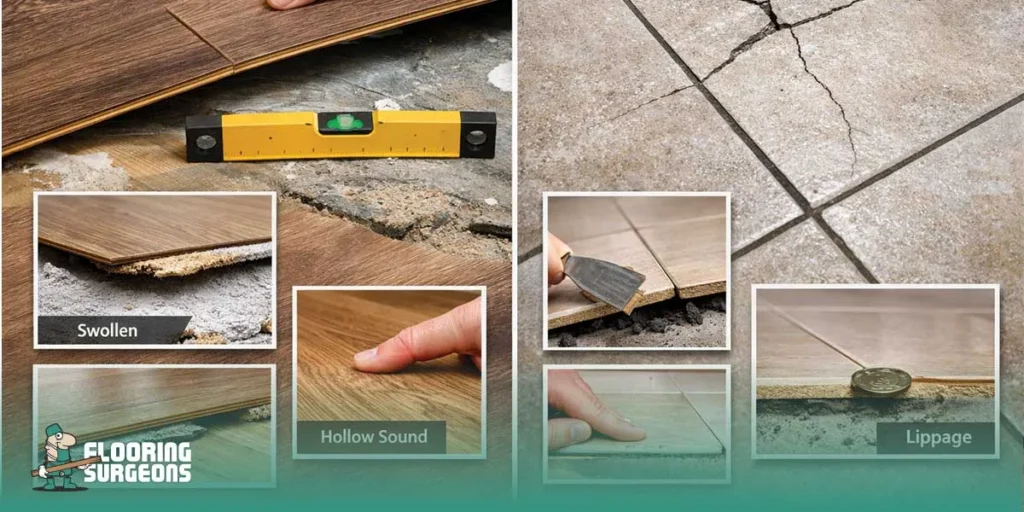
Luxury Vinyl Plank and sheet vinyl are thin and flexible. Because of this, they tend to follow the shape of the surface beneath them. If the substrate is not perfectly flat, imperfections can gradually become visible through the finished floor. This is known in the flooring industry as telegraphing.
Common subfloor-related failures with vinyl flooring include:
- Visible ridges or dips appearing through the surface
- Soft or hollow areas where the plank bridges over a low spot
- Click joint fatigue when planks flex over unsupported sections
Even small subfloor imperfections can affect vinyl flooring because the material cannot mask uneven substrates. Different materials tolerate substrate imperfections differently, which is why product choice matters once subfloor issues have been identified. That is also why many homeowners look at which flooring types work best over uneven floors before deciding what should be installed after preparation.
Engineered Wood and Solid Wood
Wood flooring reacts strongly to moisture and movement coming from the subfloor. When moisture rises through the substrate, wood boards absorb that moisture and expand. Over time this often leads to cupping, where the edges of the boards lift slightly. Movement in the subfloor can also create stress within the floor system.
Typical warning signs include:
- Cupping boards caused by moisture imbalance
- Gapping between boards when movement changes the floor structure
- Recurring creaks when the substrate flexes under load
Expansion gaps and acclimation help manage seasonal movement, but they cannot compensate for an unstable or damp subfloor. Even well-made boards cannot compensate for an unstable base, which is why subfloor condition matters just as much as the choice of engineered wood options.
Laminate Flooring
Laminate flooring is installed as a floating floor system. The planks lock together but rely on the substrate beneath them for full support. If the subfloor is not flat across the span of the room, sections of laminate flooring may flex slightly under foot traffic.
This repeated movement can lead to:
- Separating joints along plank edges
- Hollow-sounding areas when walking across the floor
- Edge swelling if moisture reaches the core material
Underlayments can improve comfort and sound insulation, but they cannot correct a poorly prepared substrate.
Tile and Stone
Tile and natural stone require one of the most stable substrates of any flooring system.
Unlike floating floors, tile is rigid and cannot absorb structural movement. When the subfloor flexes, the stress transfers directly into the tile layer.
Typical results include:
- Cracked grout lines
- Loose or fractured tiles
- Uneven tile edges known as lippage
Crack isolation membranes can help manage minor movement, but they are not designed to compensate for structural deflection. If the substrate lacks stiffness, the tile system will eventually show visible failure.
Why Flooring Surgeons Focus on Subfloor Assessment First
Experienced flooring specialists know that most flooring failures are not caused by the visible surface. This is why Flooring Surgeons begin with subfloor assessment before recommending preparation methods or final flooring installation. They begin underneath. A careful subfloor assessment helps identify moisture risks, structural movement, and flatness problems before the first plank or tile is installed. This approach focuses on prevention rather than repair.
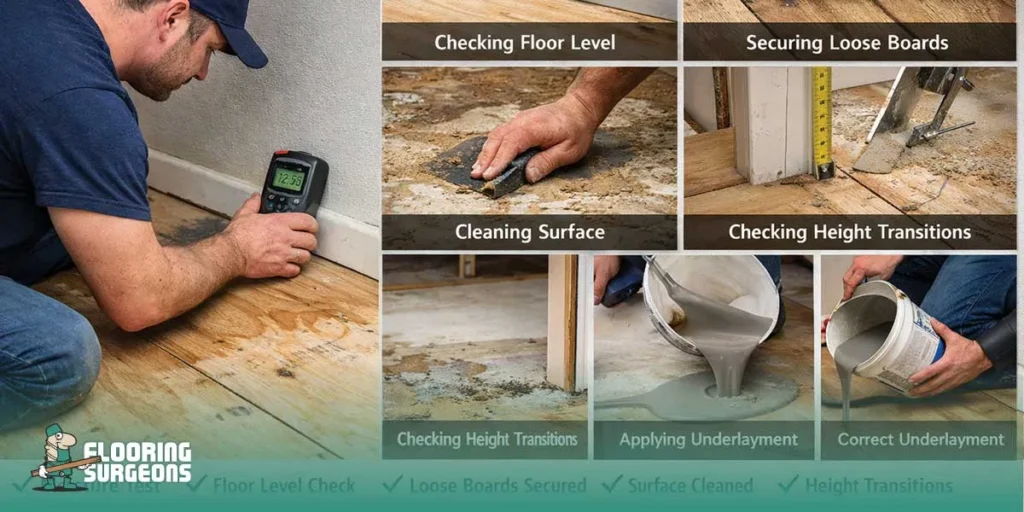
For flooring professionals, proper preparation matters because:
- Correct preparation protects flooring warranties that depend on meeting subfloor standards
- Correct preparation prevents call-backs caused by movement, squeaks, or joint separation
- Correct preparation improves the finished floor, creating a surface that feels solid and stable underfoot
By focusing on the condition of the substrate first, installers reduce the risk of the common problems that appear when a floor is installed over an unprepared base.
Conclusion
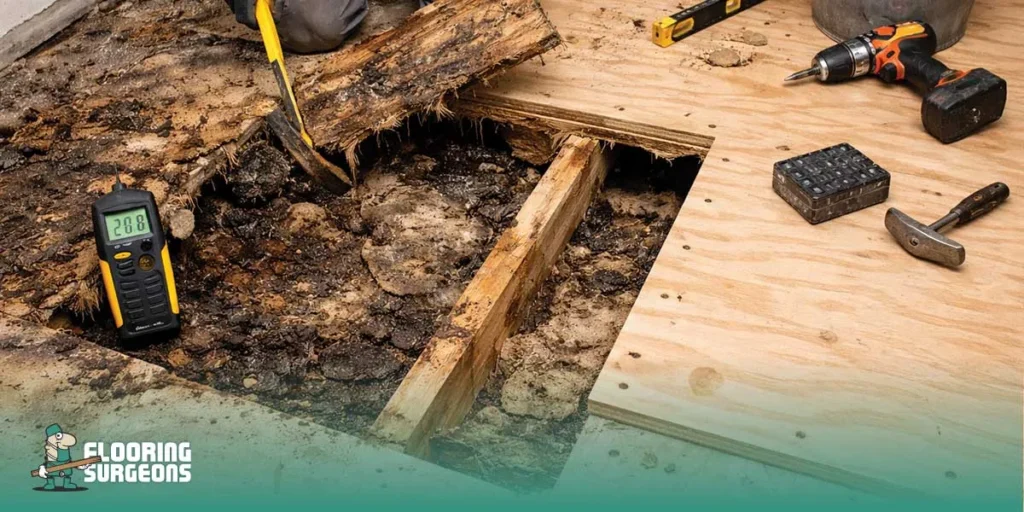
Many flooring problems that appear after installation do not begin in the flooring itself. They start in the subfloor beneath it. Uneven surfaces, trapped moisture, and structural movement create failure patterns that surface repairs cannot fully solve. Understanding these limitations helps explain why professional installers prioritise subfloor assessment and preparation before installation begins. When the base is properly prepared, the flooring system has the stable support it needs to perform for years. If flattening, securing, or drying the existing base cannot restore stability, sections of the subfloor may need to be replaced. In those cases, it helps to understand what to do when a subfloor is damaged before any new flooring is fitted.
Explore expert flooring preparation and installation guidance at Flooring Surgeons.

Haniye Ayanmanesh
As an expert writer for Flooring Surgeons, I combine technical SEO knowledge with a practical understanding of flooring, producing content that helps users make confident decisions while supporting long-term organic growth.