

If you’re looking for flooring that looks great, handles real life, and won’t stress you out during installation, vinyl click flooring is a solid place to start. Vinyl click flooring clicks together without glue or nails, stays tight under daily use, and works well in busy homes with kids, pets, and constant foot traffic. It’s warm, quiet, waterproof in rigid-core formats, and easy to fit even if you’ve never installed flooring before.
But let’s be honest. You’re not here only to find out what vinyl click flooring is. You want to know whether it’s right for your space, your budget, and how you live. Maybe you’ve seen laminate swell after a spill. Perhaps you’re tired of cold floors. Or you just want something simple that doesn’t fall apart after a few winters.

And the truth is this: vinyl click flooring performs better than many people expect. It handles moisture, hides minor subfloor issues, and feels more comfortable underfoot than laminate. It also locks tight enough to reduce gaps that often happen with older tongue-and-groove systems.
Right now, more homeowners across the UK are moving toward vinyl click flooring because it fits the way people live: busy mornings, muddy shoes, pets with no sense of boundaries, and rooms that switch from quiet to chaos in seconds. If that sounds like your home, you’re in the right place.
Before you choose a product, it helps to understand a few quick signals that show whether click vinyl matches your needs. If you want something warm, low-noise, water-safe, and simple to repair later, it’s a good match. If you prefer a floor that can be sanded and refinished over decades, you may need another route. In this guide, you’ll get a clear view of how vinyl click flooring works, where it performs best, what to expect during installation, how to compare quality levels, and how to pick a product that lasts. You’ll also see a few real-home stories that show how it performs in everyday situations, not just showrooms. By the end, you’ll know exactly what vinyl click flooring can do for your home and whether it’s the wise choice for your next project.
Table of contents
How Vinyl Click Flooring Works (Locking System Explained)
Vinyl click flooring uses a built-in mechanical joint that locks planks together without glue or nails. Each plank has two profiles: one side is angled, and the other contains a shaped groove. During installation, you tilt one plank into the next, lower it, and the profiles snap into place. The tension created along the edges keeps the boards tight, which prevents gaps and movement over time.
The locking system does more than hold the floor together. It allows the entire surface to “float” as one piece so that the floor can expand and contract naturally with temperature changes. This is why vinyl click flooring stays flat, stable, and gap-free even in busy homes, and why it installs much faster than traditional tongue-and-groove systems.
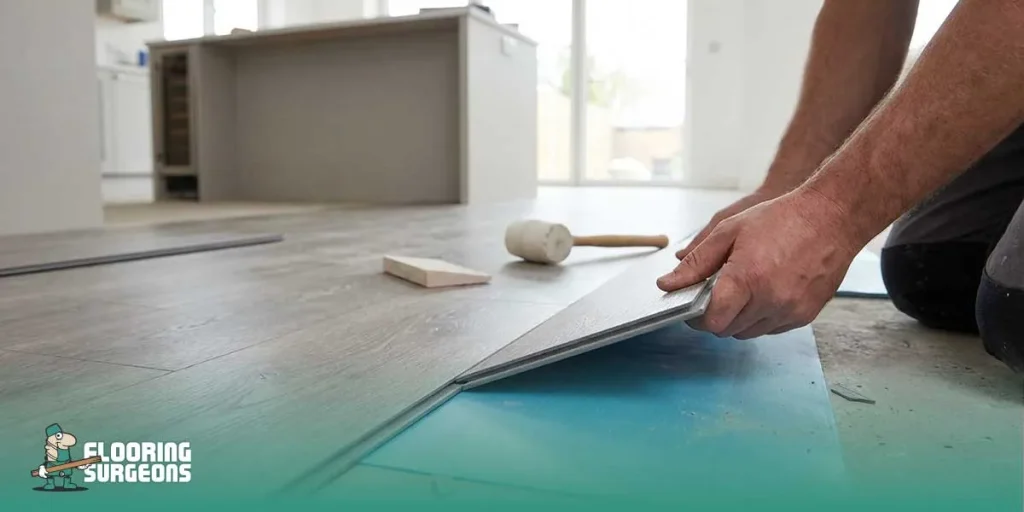
If you want a floor that goes down quickly, stays locked firmly, and adapts well to everyday movement in the room, the click mechanism is what makes vinyl click flooring such a reliable choice.
Vinyl Click Flooring Construction — Core, Wear Layer & Thickness
One reason vinyl click flooring performs so well is its layered construction. Even though brands look similar from the top, what’s inside the plank — especially the core, wear layer, and overall thickness — determines how durable, stable and comfortable the floor feels in real homes.
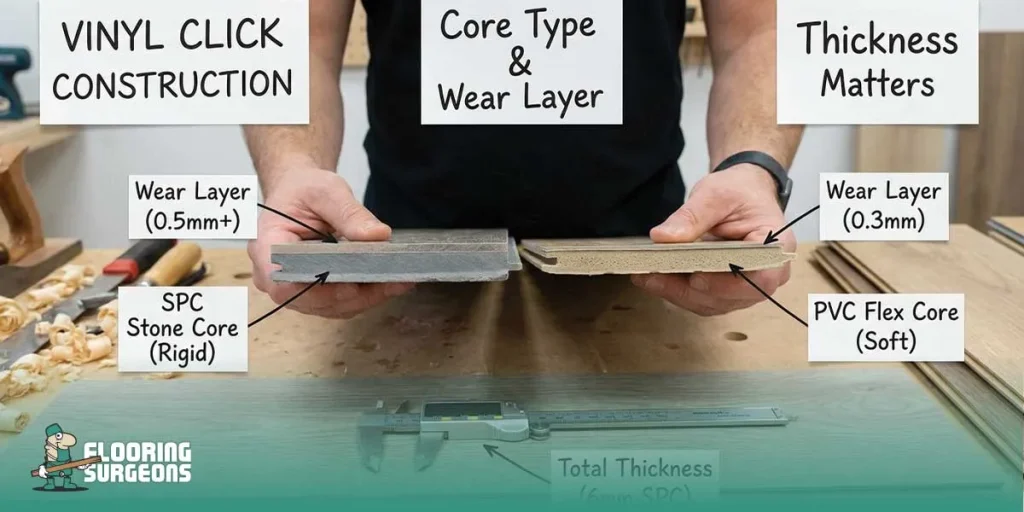
1. Core Type: SPC vs PVC Core
Vinyl click floors come in two main core types, and each behaves differently:
SPC (Stone Plastic Composite):
• Rigid, dense and extremely stable
• Resists dents from furniture and heavy foot traffic
• Ideal for kitchens, hallways and uneven subfloors
SPC feels firmer underfoot but gives you top-tier structure and excellent water resistance.
PVC (Flexible Vinyl Core):
• Softer, more cushioned feel
• Quieter and warmer underfoot
• Better for bedrooms and living spaces
PVC-core click planks flex slightly, which makes them more comfortable but less rigid than SPC.
2. Wear Layer: Your Real Protection
The wear layer is the transparent top coating that protects the design. Thicker wear layers last longer and handle scratches better. Common options include:
• 0.2 mm (light residential)
• 0.3 mm (standard homes)
• 0.5 mm+ (high traffic, rentals, pets)
A thicker wear layer doesn’t change how the floor looks — but it dramatically affects how long it stays looking new.
3. Total Thickness: Stability, Comfort & Sound
Vinyl click flooring ranges from 4 mm to 8 mm+. Thickness affects:
• Comfort — thicker floors feel softer and warmer
• Sound — reduce noise, especially in flats
• Stability — thicker boards lock tighter and flex less
• Subfloor forgiveness — minor imperfections show less on thicker planks
SPC floors tend to be thinner (4–6 mm) because the core is naturally rigid. PVC-core floors are usually thicker (6–8 mm+) due to their flexibility.
Is Vinyl Click Flooring Waterproof? (Real-World Performance)
Most websites say vinyl click flooring is “waterproof,” but that doesn’t tell you how it behaves in real homes — with spills, wet shoes, pets, steam from cooking, or a washing machine leaking at 2 AM. The truth is this: vinyl click flooring is fully waterproof as a material, and the locking system keeps water on the surface long enough for you to clean it, but real-world performance depends on three things — the core, the click strength, and how the room is used.
1. The Plank Itself Is Waterproof
Whether SPC or PVC-core, the plank doesn’t absorb water. So if water sits on top, the material won’t swell, buckle or stain. This is why vinyl click works in:
• kitchens
• utility rooms
• hallways
• ground-floor flats
• basements (with moisture control)
This is a massive advantage over laminate, which can swell within minutes.
2. The Locking System Keeps Water OUT of the Seams
This is the part nobody explains properly. Vinyl click stays water-resistant because of the click joints:
• press tightly together
• don’t leave micro-gaps
• hold intense horizontal pressure
• prevent water from slipping between planks
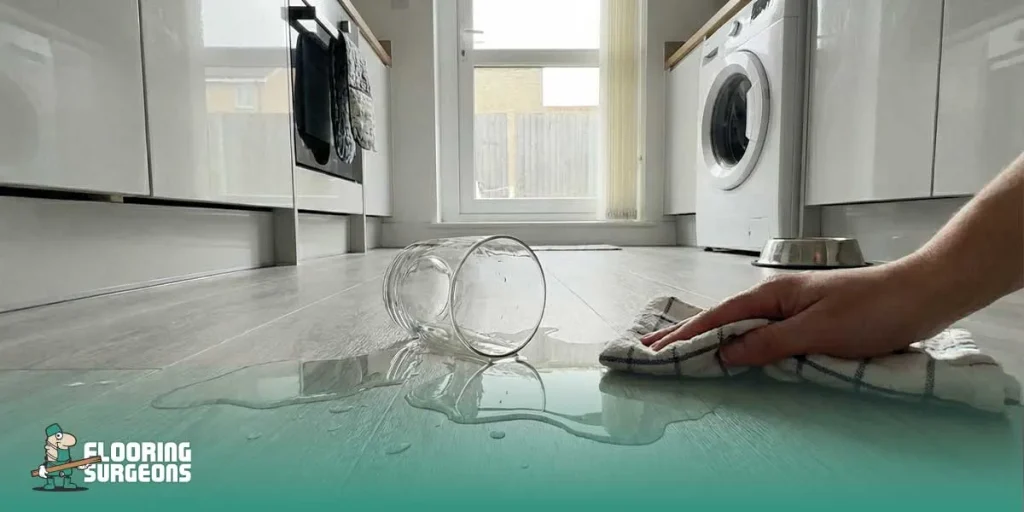
In real homes, this means even if your child spills juice or you drip water coming out of the shower, it sits on top instead of penetrating the floor.
3. What Happens During Real Accidents?
Here is what you can expect:
Small spills (coffee, mop water, wet shoes):
No issue at all. Wipe, and the floor stays perfect.
Large spills (bucket of water, fridge leak):
Still fine, as long as you clean within a reasonable time. The click joints prevent seepage surprisingly well.
Standing water for hours:
Vinyl click survives, but water may eventually reach the edges or the underlay — especially near skirting boards or door thresholds.
Flooding:
No flooring is safe in a full flood. Vinyl click may survive, but the underlay or subfloor won’t.
4. SPC vs PVC Core — Which Performs Better?
SPC click flooring is the top performer for water because it:
• is more complex and more rigid
• forms tighter seams
• doesn’t flex under pressure (reduces joint opening)
PVC-core click floors are still waterproof, but the softer core may allow tiny movement under heavy weight, which in extreme cases can open micro-gaps.
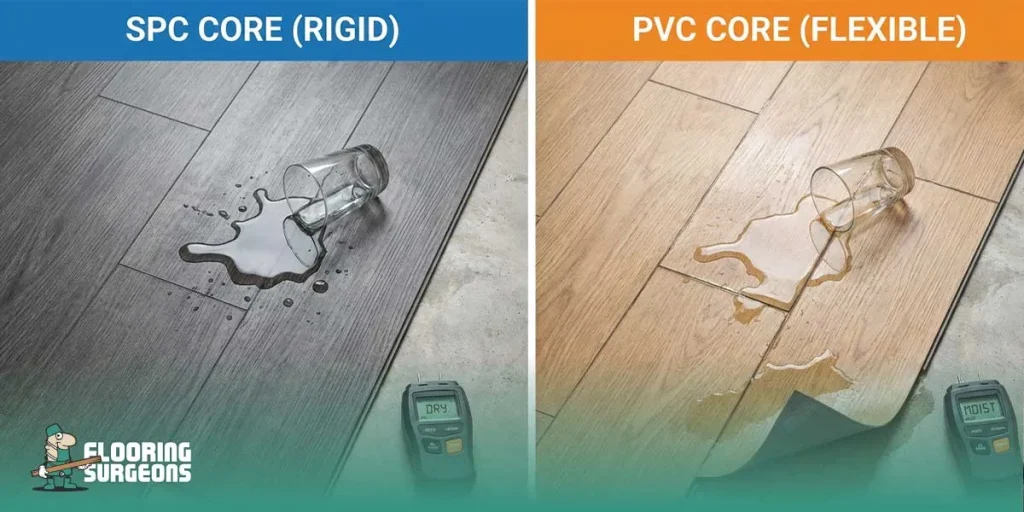
If your priority is maximum water protection → SPC is the safer choice.
5. What Homeowners Should Actually Expect
In day-to-day life, vinyl click flooring behaves as a truly waterproof surface:
• wet footprints don’t stain
• kitchen spills aren’t a problem
• Pets running around after a bath won’t damage the floor
• Weekly mopping is completely safe
You get a realistic level of moisture protection without needing constant maintenance.
6. When Vinyl Click Acts LESS Waterproof
This is where users get confused. Vinyl click is waterproof, but poor installation can reduce protection, such as:
• gaps left due to uneven subfloor
• weak or damaged locking joints
• using the wrong underlay
• clicking planks at the wrong angle
• not leaving proper expansion gaps
In these cases, water can slip underneath — not because the flooring isn’t waterproof, but because the joints weren’t tight.
Vinyl Click Flooring Benefits (Why Homeowners Prefer It)
Homeowners don’t choose vinyl click flooring just because it’s easy to install. The real appeal comes from how well it performs in everyday living — busy kitchens, pets running around, flats with noise concerns, rental properties, and family homes where durability matters more than showroom beauty. Below is a deeper look at the benefits that actually matter in real homes, not just marketing claims.
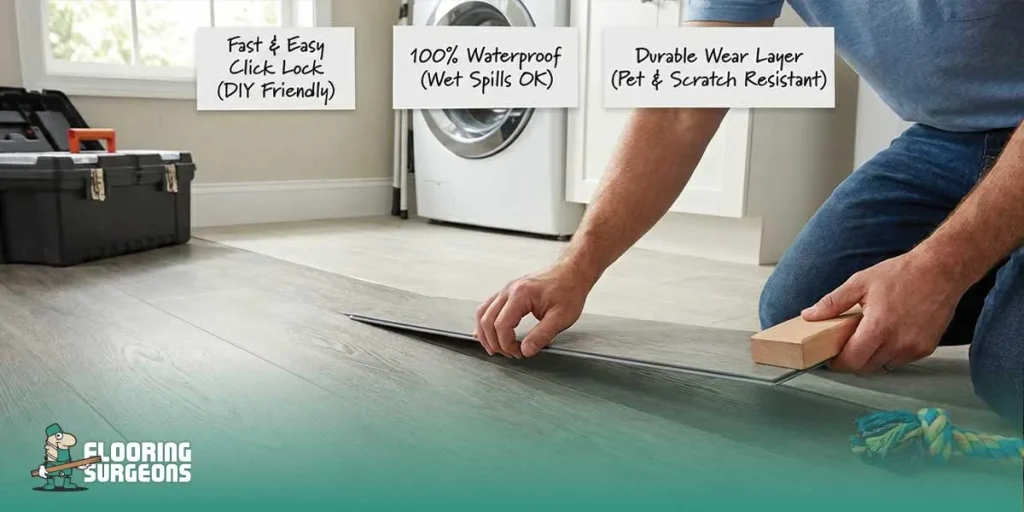
1. Waterproof Performance You Can Rely On
One of the most significant advantages — and the reason vinyl click flooring dominates modern renovations — is that it handles everyday moisture without stress. Spills stay on the surface, steam from cooking doesn’t cause swelling, and wet shoes won’t damage the boards. This gives homeowners practical confidence in kitchens, hallways, laundry rooms, and downstairs living spaces. It removes the constant worry you’d have with laminate or engineered wood.
2. Fast, Clean, Low-Stress Installation
The click system is designed so the planks lock tightly with a simple angle-and-press motion. No adhesive, no curing time, and no specialised equipment. For many homeowners, this means:
• quicker renovations
• the option to install over existing flooring
• minimal disruption to daily life
Even professionals prefer click systems in many projects because the pace is faster and the fitting is more predictable.
3. Realistic Wood and Stone Looks Without the Headache
Modern vinyl click flooring competes with premium wood and tile visuals. High-definition printing, textured finishes, and bevelled edges give the flooring a clean, natural look. The best part? You get the appearance of hardwood or stone without concerns like:
• scratches from chairs
• cold tiles underfoot
• water damage
• yearly sealing or refinishing
It provides the style homeowners want with the practicality life demands.
4. Comfortable Underfoot and Warmer Than Tile
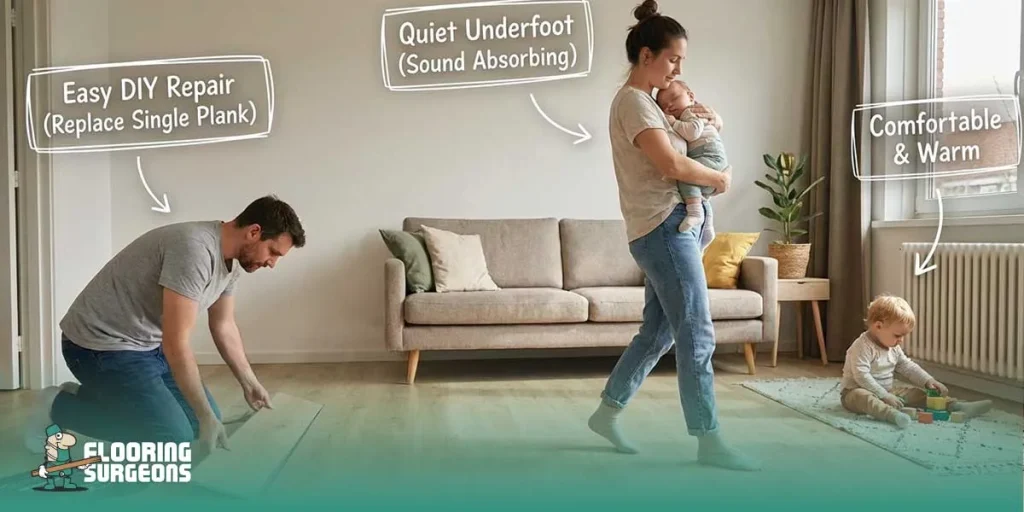
Vinyl click flooring has a slightly softer feel than real tile or stone, especially in SPC and PVC-core ranges. This makes a big difference when standing for long periods — washing dishes, cooking, or getting ready in the morning. Because it’s compatible with underfloor heating and doesn’t feel icy during winter, users experience a warmer, more comfortable space year-round.
5. Excellent Durability for Busy Households
Between pets, kids, heavy furniture, and constant foot traffic, floors need to withstand a lot more than people realise. Vinyl click performs strongly thanks to:
• a tough wear layer
• dent-resistant SPC cores
• scratch-resistant coatings
• stable locking systems that prevent gaps
This durability makes it ideal for modern family homes, rental properties, and commercial-style living spaces.
6. Easy Repairs and Low Maintenance
One of the most underrated benefits is how easily individual planks can be replaced. If a section gets scratched or damaged, you don’t need to rip up the entire room — just unlock the boards from the nearest wall and replace the affected piece. This low-stress repair process keeps long-term costs predictable and prevents flooring from being a financial burden down the line.
Maintenance is just as simple:
• sweeping
• vacuuming
• occasional damp mopping
No polishing, resealing, sanding, or specialist cleaners.
7. Safe for Flats and Upstairs Rooms (Low Noise)
Vinyl click flooring absorbs sound better than laminate or tile. When paired with an acoustic underlay, it:
• reduces impact noise
• softens footsteps
• keeps downstairs neighbours happier
This makes it especially popular in flats and upstairs bedrooms where noise control matters.
8. Works With Imperfect Subfloors
While the subfloor must be reasonably level, vinyl click flooring is far more forgiving than tile or hardwood. Slight imperfections can be softened by the underlay, and you can install it over:
• existing vinyl
• existing tile
• concrete
• prepared wood subfloors
This flexibility saves time and reduces renovation costs significantly.
9. Budget-Friendly Without Feeling “Cheap”
Homeowners appreciate that vinyl click flooring gives them a premium look at a fraction of the cost of hardwood or stone. Installation is cheaper too, and the floor lasts long enough that replacement isn’t a frequent concern. It’s the sweet spot between style, performance, and affordability — one reason it keeps gaining popularity every year.
Where Can You Use Vinyl Click Flooring? (Best Rooms & Conditions)
Vinyl click flooring is one of the few floor types that works in almost every room of a modern home. Its waterproof structure, stable locking system, and strong wear layer make it far more flexible than laminate or wood. But the real advantage comes from how well it performs in real-life conditions: spills, humidity changes, busy mornings, and heavy foot traffic. Below is a clear look at where vinyl click flooring performs best — and why homeowners keep choosing it over other flooring types.
Kitchens: The Most Popular and Practical Choice
Kitchens are where vinyl click flooring shines. Daily spills, heat from appliances, steam, and constant walking won’t damage the planks. The waterproof construction keeps the boards stable, the seams tight, and the surface easy to clean. If you want a floor that handles real family life without stress, the kitchen is the perfect place to use it.
Bathrooms: Only If It’s Properly Rated
Vinyl click can be used in bathrooms only when the product is labelled as fully waterproof (not just water-resistant). Waterproof SPC and rigid-core vinyl ranges perform exceptionally well because:
• they don’t swell
• they don’t absorb moisture
• their click joints stay locked despite humidity
This makes them ideal for family bathrooms, en-suites, and downstairs WCs. For very wet rooms or walk-in showers, use silicone sealing around edges for added protection.
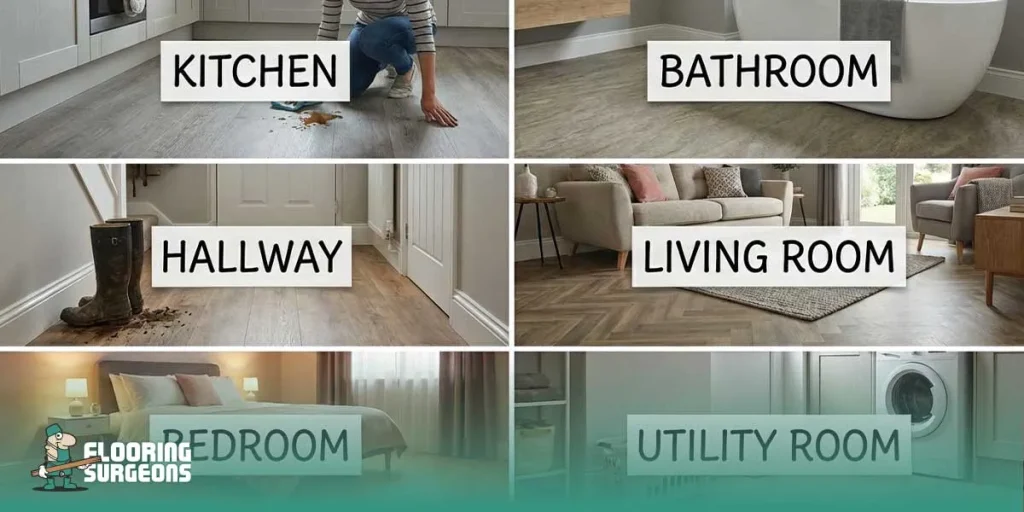
Hallways & Entrances: Built for Heavy Traffic
Hallways are tough on floors due to shoes, grit, moisture, and constant foot traffic. Vinyl click flooring handles it all without scratching or warping. Its durability and stability make it ideal for homes with pets, kids, or frequent guests. Since the flooring doesn’t fade easily, it also works well in bright hallway spaces with natural light.
Living Rooms & Open-Plan Spaces: Warm, Quiet & Low-Maintenance
In living rooms, vinyl click flooring delivers comfort and style without the high upkeep of real wood. It stays warm underfoot, reduces noise when paired with a good underlay, and visually connects open-plan layouts with a clean, modern look. The realistic designs (oak, herringbone, stone) make it perfect for homeowners who want beauty without the maintenance.
Bedrooms: Soft, Quiet & Great for Flats
Vinyl click is an excellent choice for bedrooms because it feels softer and quieter than laminate or tile. It also works exceptionally well in apartments and upstairs rooms where reducing noise matters. The surface stays warm year-round and pairs nicely with rugs and soft furnishings.
Utility Rooms & Laundry Spaces: Resistant to Humidity Swings
These rooms often see mini floods, steam, and frequent temperature changes. Vinyl click flooring handles all of it effortlessly.
To compare vinyl click options with other waterproof surfaces, browse our Luxury Vinyl Flooring (LVT & SPC) collection to see a range of SPC and LVT designs that fit kitchens, living rooms and bathrooms.
Vinyl Click vs Traditional LVT (Which One Is Better?)
Vinyl click flooring and traditional glue-down LVT may look similar on the surface, but they behave very differently once installed. Click flooring is designed for speed, stability, and DIY-friendly fitting, while classic LVT focuses on flexibility, precision, and a seamless finish. The real question isn’t “which is better overall,” but which works better for the way your home is used.
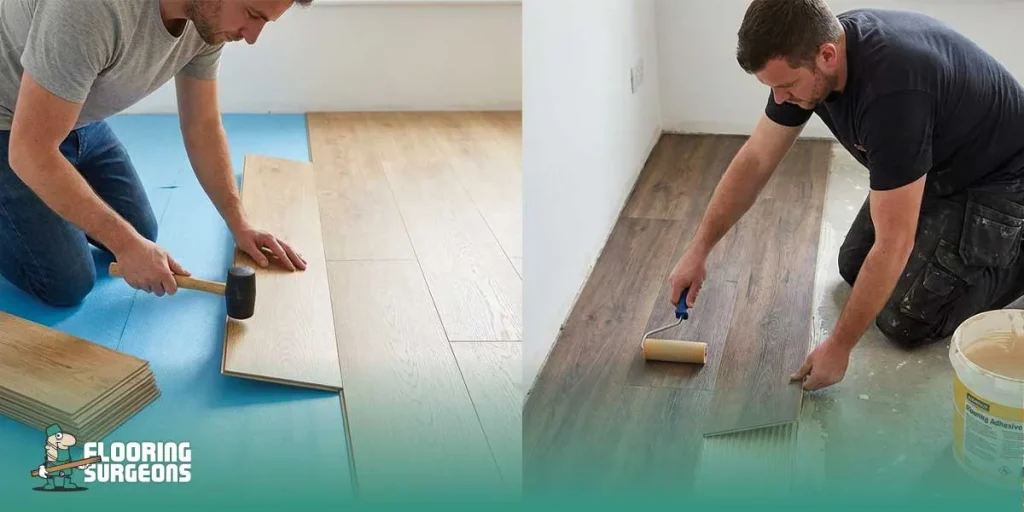
Vinyl click offers a rigid structure (SPC or Rigid PVC core) that holds shape under pressure, making it ideal for uneven subfloors and busy households. Its locking system creates a floating floor that resists movement, moisture, and daily wear. Traditional LVT, on the other hand, is glued directly to the subfloor, which gives it a more authentic, low-profile feel. It’s perfect for areas needing extreme stability, like sunrooms or commercial spaces, because it won’t lift or shift with rapid temperature changes.
When choosing between them, consider how much prep work you’re willing to do, the room conditions, and the final look you prefer. Click flooring wins for convenience and water resistance in most UK homes. Traditional LVT wins for precision, commercial durability, and achieving a seamless, high-end finish. Both are excellent — but they suit different needs.
Vinyl Click vs Laminate — Durability, Cost & Water Resistance Compared
Many homeowners compare vinyl click flooring and laminate because they sit in the same price range, but they perform very differently. Laminate is built with a wood-based core, which makes it vulnerable to moisture. Vinyl click is fully waterproof, so it handles spills, steam, mopping, and humidity changes without swelling or lifting. This alone makes vinyl click a stronger choice for kitchens, bathrooms, utility rooms, and homes with pets.
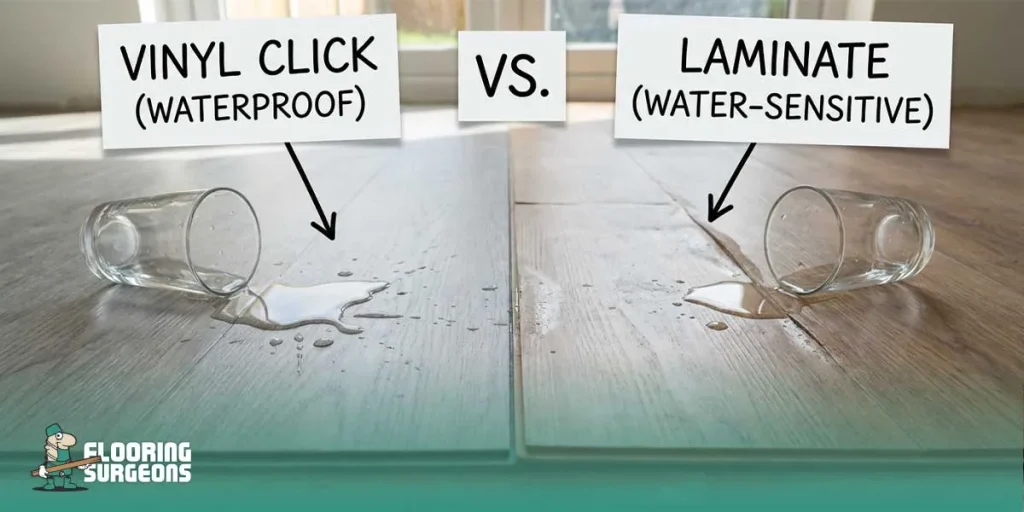
In terms of durability, laminate still offers excellent scratch resistance thanks to its AC-rated wear layer. But vinyl clicks’ rigid core and protective coating hold up better to dents, moisture damage, and real-life accidents. Laminate may chip when hit; vinyl click tends to absorb the impact.
When comparing cost, laminate is usually slightly cheaper upfront. But vinyl click offers better long-term value because it lasts longer in mixed conditions and requires less maintenance. Noise is another factor: vinyl click feels softer and quieter than laminate, especially with the right underlay. If you want a waterproof, low-maintenance floor that feels comfortable underfoot, vinyl click flooring is the more reliable option for most households.
Installation Guide — How to Install Vinyl Click Flooring (Step-by-Step)
Installing vinyl click flooring is one of the easiest DIY flooring projects, thanks to its floating floor design and built-in locking system. But even a simple install can go wrong if the prep work isn’t done correctly. The goal here is to give you a clear, practical guide that matches how professional fitters approach the job in real homes. Before starting your project, many homeowners compare fitting methods across floor types, and guides like how to install laminate flooring help them understand why click systems feel much simpler in practice.
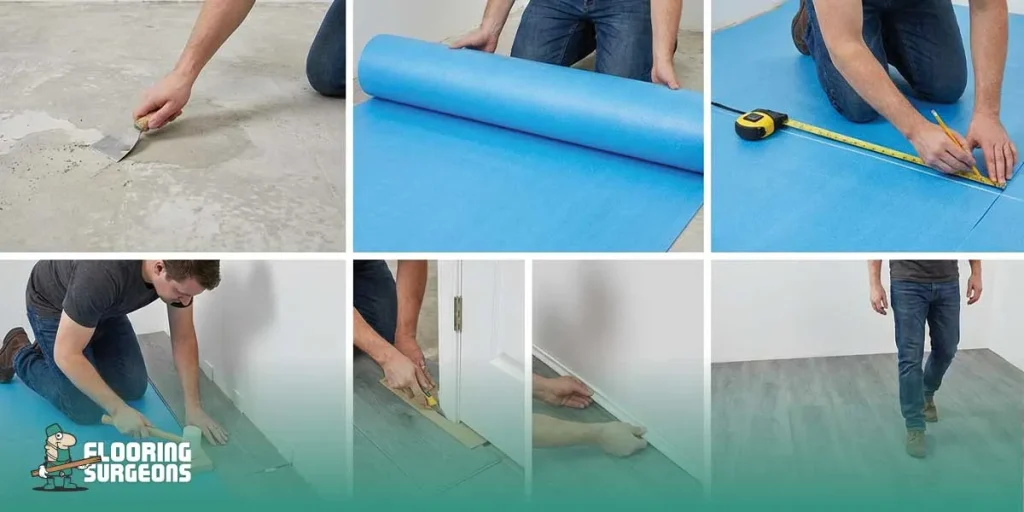
1. Prepare the Subfloor
Start by clearing the room and removing old flooring if needed. The subfloor must be clean, dry, and as level as possible. A rigid click system can tolerate minor imperfections, but dips or bumps will make the joints flex over time. Brush or vacuum away debris, scrape off old adhesive, and repair noticeable uneven spots.
2. Lay Your Underlay
Most vinyl click products work best with a thin, supportive underlay made specifically for rigid-core flooring. This boosts sound reduction, comfort, and insulation. Avoid thick underlays — they allow too much movement and weaken the locking joints.
3. Plan Your Layout
Decide which wall you want to start from. Usually, fitters begin along the longest, straightest wall. Measure the room so you don’t end up with a thin sliver of plank on the opposite side. Pre-planning your cuts makes the final installation much cleaner.
4. Click and Lock the Planks
Place the first row tightly against the wall using spacers for expansion gaps. Angle the next plank into the groove and push down until it clicks firmly. Continue row by row, staggering end joints so the pattern looks natural and stable. When planks won’t fit by hand, use a tapping block — never hammer the joint directly.
5. Cut to Fit Obstacles
For door frames, pipes, or awkward corners, mark your cuts carefully and use a fine-tooth saw or utility knife. Click flooring is forgiving, but clean cuts make the final finish look more professional.
6. Install Skirting or Beading
Once all planks are down, remove the spacers and fit skirting boards or scotia beading to cover the expansion gaps. This step locks in a polished, finished look.
7. Final Checks
Walk across the floor to confirm there are no hollow sounds or lifted joints. If you find a spot that didn’t lock properly, remove that section and refit it — forcing it into place will cause long-term issues.
This method ensures a stable, long-lasting installation that performs the way vinyl click flooring is designed to.
Underlay for Vinyl Click — Do You Need It?
Underlay for vinyl click flooring is one of the most confusing topics for homeowners, mainly because the product is marketed as “easy to install” and “ready to float.” But the truth is that whether you need an underlay depends entirely on the type of vinyl click you’re using, the subfloor condition, and the comfort and acoustic level you expect from the finished floor.
Most rigid-core vinyl click floors already include a built-in backing layer, which gives them a slight cushion and helps the planks stay stable. When that backing is present, adding a thick underlay creates too much movement and puts stress on the locking joints. Over time, this can cause gaps, lifted edges, or a clicking sound as you walk. In these cases, you should only use an ultra-thin, manufacturer-approved underlay designed specifically for SPC or rigid vinyl click — never carpet underlay or anything soft and spongy.
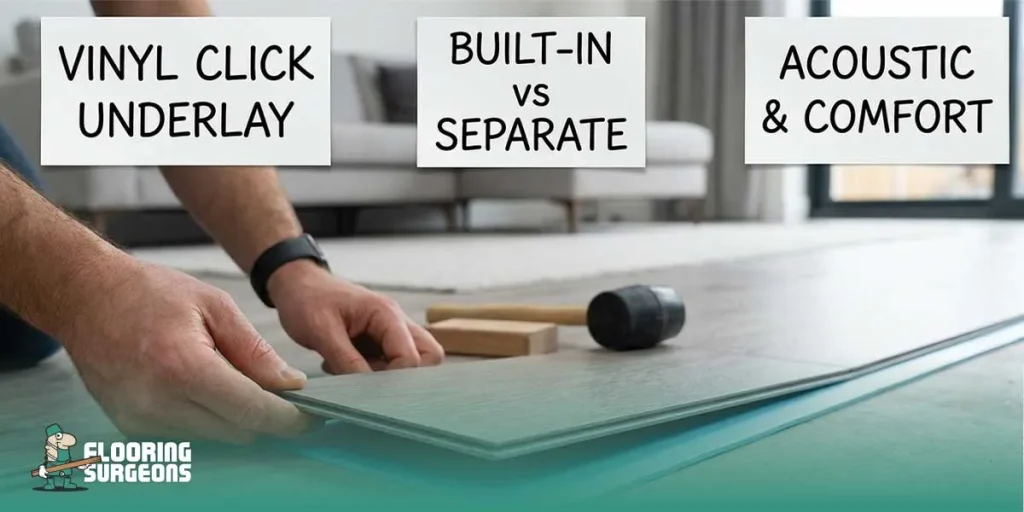
If your product doesn’t have an attached underlay, a suitable vinyl-safe underlay can improve comfort, reduce sound, and help smooth out minor imperfections in the subfloor. It won’t fix major uneven spots, but it does create a more forgiving surface for everyday use, especially in flats where noise transfer matters.
The real deciding factor is your subfloor. If it’s level, firm, and dry, you can often install rigid vinyl click directly. If it’s slightly uneven or you want better acoustic performance, a thin, high-density underlay is helpful. In kitchens, bathrooms, and heavy-use rooms, sticking to manufacturer guidelines is essential because the wrong underlay can reduce waterproof performance. In short, underlay can be helpful — but only the right kind, and only when the product and subfloor allow it.
Vinyl Click Flooring Maintenance & Cleaning
Keeping vinyl click flooring in good condition is simple because the surface is designed to resist scratches, stains, and everyday mess. The key is avoiding harsh chemicals or abrasive pads that can dull the wear layer. A soft brush or vacuum without a beater bar handles dust and grit, while a damp microfibre mop is enough for everyday cleaning. For deeper cleans, pH-neutral floor cleaners made for vinyl flooring work well without damaging the finish.
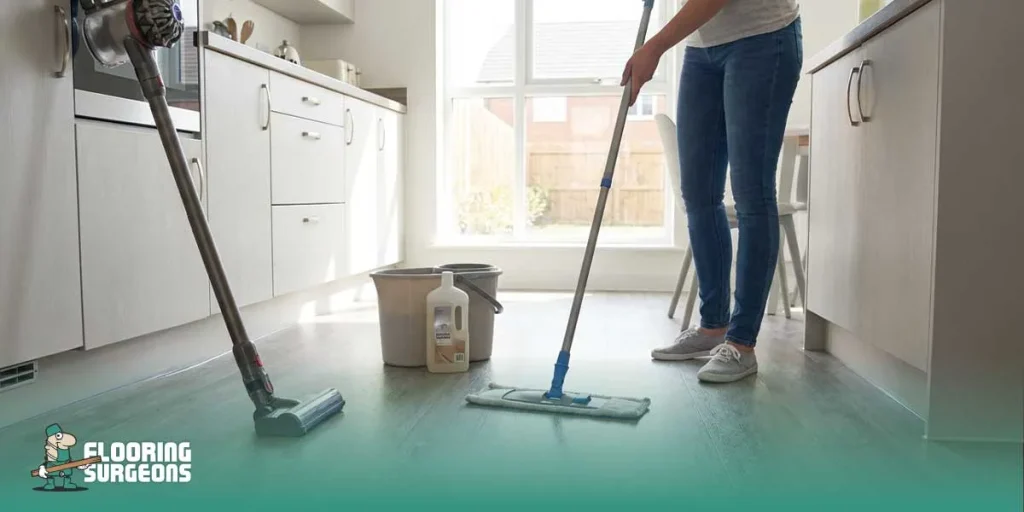
Spills should be wiped quickly so moisture doesn’t sit at the joints, especially in kitchens or bathrooms. Furniture pads under chairs keep friction marks away, and regular sweeping protects the floor from tiny scratches caused by trapped dirt. With these small habits in place, vinyl click stays smooth, clean and attractive with minimal effort.
Cost Breakdown — Material, Installation & Long-Term Value
The cost of vinyl click flooring depends on the core type, wear layer thickness, brand, and whether underlay is included. Installation is usually more affordable than other flooring types because the locking system is designed for quick fitting, but subfloor preparation can add extra cost if there are dips or moisture issues.
Here’s a simple breakdown to give homeowners a clear idea of what contributes to the final price:
| Cost Component | What It Includes | Notes |
| Material Price | Planks, wear layer, built-in underlay (if any) | SPC cores cost more but last longer |
| Installation Cost | Labour, trimming, transitions, door cuts | Lower than glue-down LVT or laminate |
| Subfloor Prep | Levelling compounds, moisture checks, repairs | Needed only if the surface is uneven |
| Long-Term Value | Durability, water resistance, and maintenance savings | Fewer repairs and replacements over time |
Vinyl click tends to offer substantial long-term value because it resists moisture, cleans easily and maintains its appearance longer than many budget laminates. Even if the upfront price feels mid-range, the lifespan and reduced maintenance often make it a better investment.
Pros and Cons of Vinyl Click Flooring (Honest Breakdown)
Vinyl click flooring is a strong choice for modern homes, but like any product, it has advantages and limitations. Here’s a clear, skimmable breakdown.
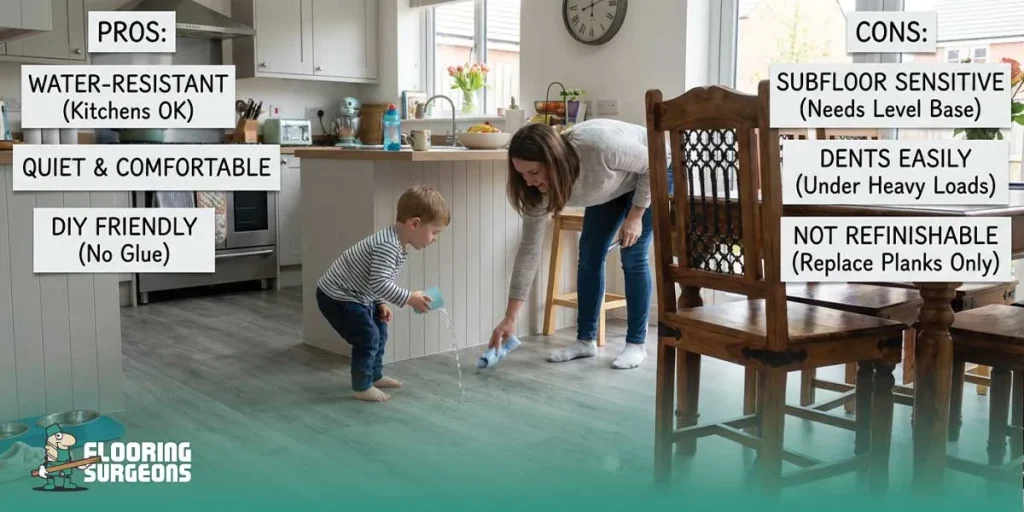
Pros
• Highly water-resistant, making it suitable for kitchens, bathrooms and utility rooms.
• Tight locking system that creates a stable floating surface with minimal movement.
• Quiet and comfortable underfoot when paired with the right underlay.
• Quick installation, even for confident DIYers, with no glue or nails needed.
• Affordable professional fitting thanks to the simple click-together design.
• Realistic designs that closely mimic wood and stone, even in budget lines.
• Low maintenance, needing only simple day-to-day cleaning.
Cons
• Uneven subfloors cause problems, including bounce, hollow spots or joint gaps.
• Cheaper cores dent easily under heavy furniture or concentrated weight.
• Standing water at the edges can cause swelling if the room isn’t managed well.
• Not refinishable, so damaged planks must be replaced rather than restored.
Vinyl click flooring is a dependable option when the product quality matches the room conditions. In everyday homes, it offers a solid balance of durability, comfort and low-effort upkeep — especially for busy families and rental properties. If you’re planning a renovation and want expert guidance on choosing the right specification for your home, the team at Flooring Surgeons can help you compare products based on your room conditions and budget.

Haniye Ayanmanesh
As an expert writer for Flooring Surgeons, I combine technical SEO knowledge with a practical understanding of flooring, producing content that helps users make confident decisions while supporting long-term organic growth.