

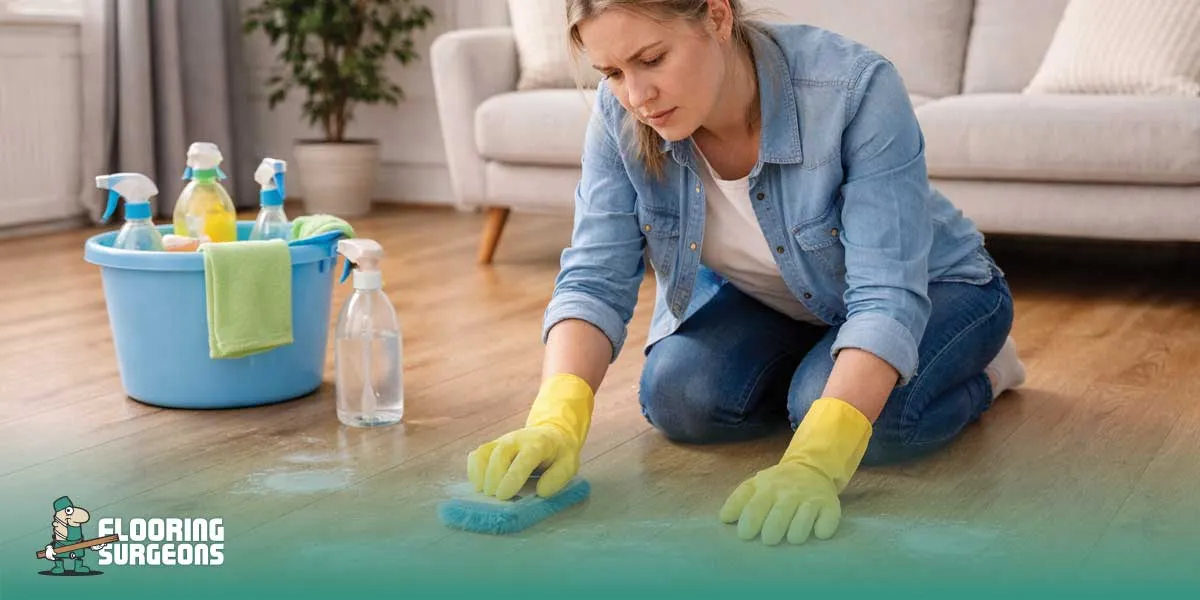
If you’ve noticed white haze on wood floors after cleaning, you’re not alone. Many homeowners and professionals experience this issue, especially on oiled surfaces. This cloudy film, often described as a “white haze” or dull finish can make white haze on hardwood floors look poorly maintained and lose their natural shine. Understanding why this happens after cleaning is the first step toward restoring the floor’s original beauty.
The good news is that in most cases, white haze on hardwood floors is a surface-level issue that can be easily fixed. With the right cleaning methods and proper maintenance, white haze on wood floors is also completely preventable. In this guide, Flooring Surgeons explains the main causes, effective removal methods, and simple prevention tips.
Table of contents
White Haze on Oiled Wood Floors: What Is It?
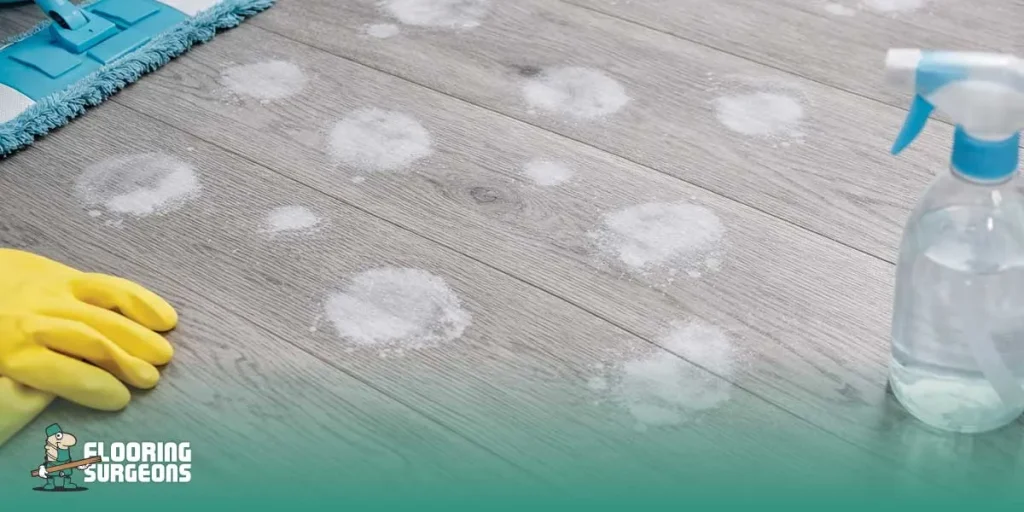
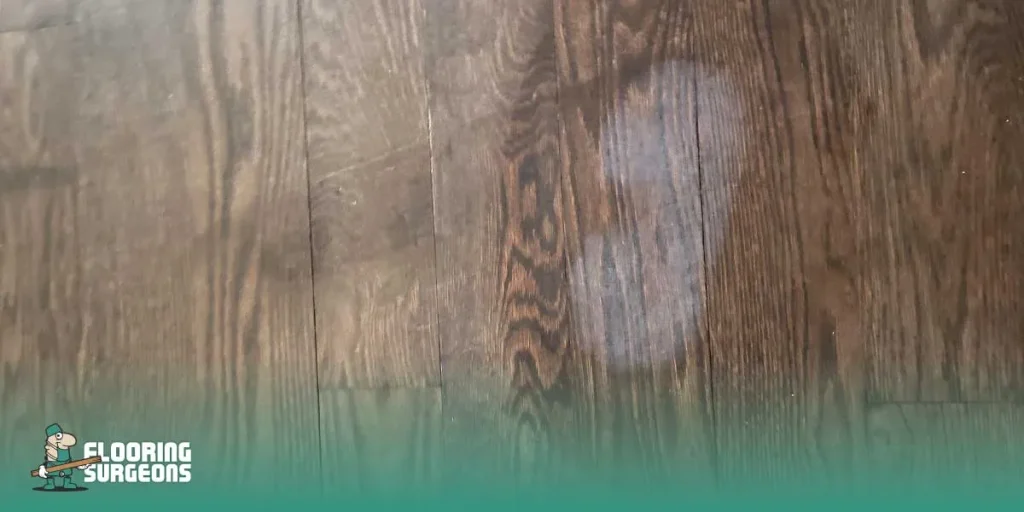
A white haze on oiled wood floors appears as a cloudy, whitish film that covers the surface. It is not usually permanent damage; rather, it’s a result of residue buildup or moisture issues. This haze can dull the natural luster of the wood, making floors look hazy or cloudy even after thorough cleaning. Common signs include:
| Symptom | What it Means |
| Whitish, cloudy film on surface | Residue from cleaners or wax |
| Patchy haze | Uneven moisture absorption or hard water deposits |
| Dull finish | Wax or polish buildup interfering with the wood’s natural sheen |
Main Causes of White Haze After Cleaning
Knowing why your wood floor has a white haze is the first step toward fixing it properly. This cloudy film doesn’t often mean permanent damage, it’s often caused by everyday cleaning habits or environmental factors. The most common reasons include:
Residue from Improper Cleaning Products
Using the wrong cleaners can leave a white haze on oiled wood floors. Products that are too harsh, contain wax, or have incompatible oils can leave a film that appears as a cloudy finish—unlike laminate flooring, which typically requires different, residue-free cleaning solutions.
Excess Moisture or Too Much Water
Water is a common culprit. Wood floor cloudy finish after cleaning often happens when floors are mopped with excessive water. Moisture can penetrate the oil layer, creating a temporary hazy appearance.
Wax, Oil Soap, or Polish Buildup
Over-application of wax or oil soaps can create a residue layer that traps dust and dirt. When this buildup reacts with moisture, it often results in white haze on hardwood, especially after routine cleaning.
Hard Water Mineral Residue
If your cleaning water contains minerals, they can settle on the wood surface and leave a visible white film. This is a common reason for haze on wood floor after cleaning, particularly on oiled finishes that cannot fully repel mineral deposits.
Wrong Cleaning Tools or Methods
Using rough scrubbers, abrasive pads, or steam cleaners can damage the oil layer and make floors appear cloudy. Improper tools are another key cause of white haze on hardwood and uneven haze on wood floor after cleaning.
How to Remove White Haze from Oiled Wood Floors
Most cases of hazy wood floor finish causes are reversible. Here’s how to address them:
Removing Cleaner or Wax Residue
- Use a damp microfiber cloth to gently remove excess residue.
- Apply a specialized wood floor cleaner recommended for oiled surfaces instead of homemade laminate floor cleaners, which may leave residue.
- Wipe dry immediately to prevent further haze.
Fixing Moisture-Related Haze
- Increase ventilation to help the floor dry evenly.
- Avoid water-based cleaners until the haze disappears.
- In stubborn cases, a light application of maintenance oil can restore sheen.
When Professional Help Is Needed
- If the haze persists despite cleaning, floor refinishing or buffing may be required.
- Professionals can safely remove white haze on oiled wood floors without damaging the wood.
How to Prevent White Haze in the Future
Prevention is always better than repair. Follow these tips to keep floors looking clear and shiny:
Best Cleaning Practices for Oiled Wood Floors
- Use cleaners designed for oiled hardwood.
- Mop sparingly; always use a damp, not wet, cloth.
- Dry floors immediately after cleaning.
Cleaning Products and Methods to Avoid
- Avoid harsh chemical cleaners, bleach, or ammonia.
- Don’t use steam mops or abrasive pads.
- Limit excessive waxing or oil soap applications.
This guide from Flooring Surgeons ensures that if you’ve been wondering why does my wood floor have a white haze, you now have clear answers, practical solutions, and prevention strategies. By understanding the causes of white film on wood floors and following proper maintenance, your oiled wood floors can remain beautiful and glossy for years to come.

Mina Asgari
I’m an SEO Specialist and Content Strategist focused on sustainable business growth. I design data-driven content strategies by deeply analyzing user intent, search behavior, and SEO best practices, ensuring every piece of content serves a clear purpose for both users and search engines.