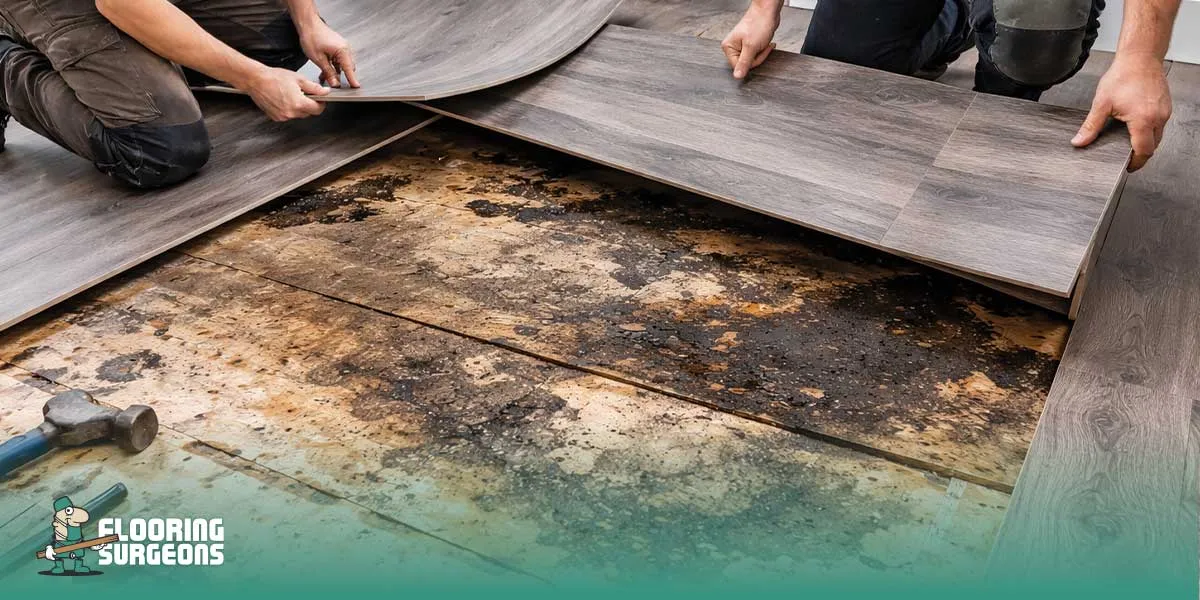



Liability for slip accidents caused by flooring is not automatic, and it is not always assigned to one person. In the UK, responsibility depends on who controls the space, whether the risk was foreseeable, and whether reasonable steps were taken to make the flooring safe. In simple terms, liability usually falls on the party responsible for installing, maintaining, or managing the floor at the time of the accident, but only if negligence can be shown.
This is where confusion often starts. Many people assume that if someone slips, the property owner is immediately at fault. In reality, factors such as the type of property, the condition of the flooring, how it was installed, how it was maintained, and whether warnings or precautions were in place all matter. A slip on a poorly maintained commercial floor is treated very differently from an accident in a private home, and a flooring defect is judged differently from a temporary hazard like a spill. When using online inspiration to narrow your flooring ideas, it can help to check insights from experts like Flooring Surgeons before making a final decision.

This article explains how liability for slip accidents involving flooring is assessed in the UK, when flooring itself contributes to responsibility, and when it does not. You will see how responsibility differs between homes, rental properties, and businesses, and what actually determines fault. If you only wanted a clear answer, liability depends on control, condition, and negligence, not simply on the fact that a slip occurred. If you want to understand how that applies in real situations, the rest of the article breaks it down clearly.
Table of contents
How Liability Works for Slip Accidents in the UK
In the UK, liability for slip accidents is based on whether the person or organisation responsible for the space took reasonable steps to keep it safe. The law does not assume fault just because an accident happened. Instead, it looks at control, duty of care, and whether a foreseeable risk was ignored.
The key question is who had responsibility for the flooring at the time of the accident. This could be a homeowner, a landlord, a business owner, or a property manager. If that party knew, or should reasonably have known, that the flooring posed a slipping risk and failed to address it, liability may arise. This applies whether the risk comes from the flooring material itself, poor installation, lack of maintenance, or surface conditions such as excessive smoothness when wet.
UK liability also depends on context. In public and commercial spaces, the duty of care is higher. Businesses are expected to regularly assess flooring risks, maintain safe surfaces, and provide warnings where hazards cannot be immediately removed. In private homes, the standard is different, and liability is less clear-cut, especially where the visitor is aware of the environment.
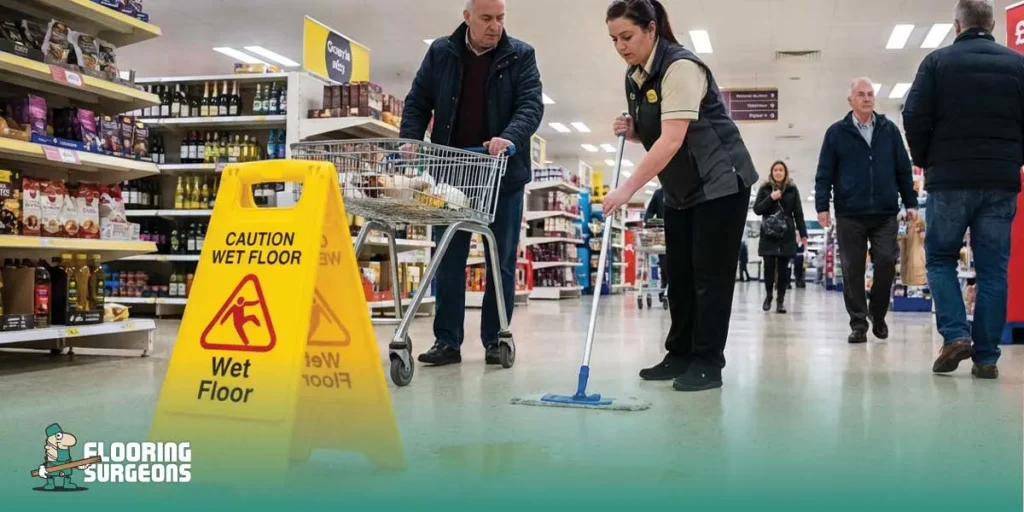
Importantly, not every slippery floor leads to liability. If reasonable precautions were in place, the flooring was suitable for its environment, and the risk was not foreseeable, responsibility may not rest with the property owner or manager. This is why slip accident claims involving flooring are assessed case by case rather than through automatic blame.
Liability Differences Between Homes, Rental Properties, and Businesses
Liability for slip accidents caused by flooring changes significantly depending on the type of property and who controls the space. The table below breaks this down in a clear, scenario-based way, without legal jargon.
| Property type | Who is usually responsible | When liability may apply | When liability is less likely |
| Private home | Homeowner | If the homeowner knew the flooring was unsafe and failed to warn guests or fix a known hazard | If the risk was obvious, temporary, or the visitor accepted normal household conditions |
| Rental property | Landlord or managing agent | If unsafe flooring was present before the tenancy or reported and not repaired | If the tenant caused the issue or failed to report a developing hazard |
| Business premises | Business owner or operator | If the flooring was unsuitable, poorly maintained, or lacked warnings in a public area | If reasonable inspections, maintenance, and warning systems were in place |
| Shared or managed buildings | Property management company | If communal flooring posed a known risk and was not addressed | If the issue arose suddenly and was handled appropriately |
The key difference across these scenarios is control and duty of care. The more public the space and the more people invited to use it, the higher the responsibility to assess and manage flooring risks. In private homes, liability is narrower and more situational. In rental and commercial settings, expectations are higher, and flooring choices, installation quality, and ongoing maintenance carry greater legal weight.
When Flooring Itself Contributes to Slip Accidents
Flooring can contribute directly to slip accidents when its material, installation, or maintenance creates a foreseeable risk. In these cases, liability is more likely to be examined closely, especially if the risk could reasonably have been reduced or avoided.
- Inherently slippery flooring materials
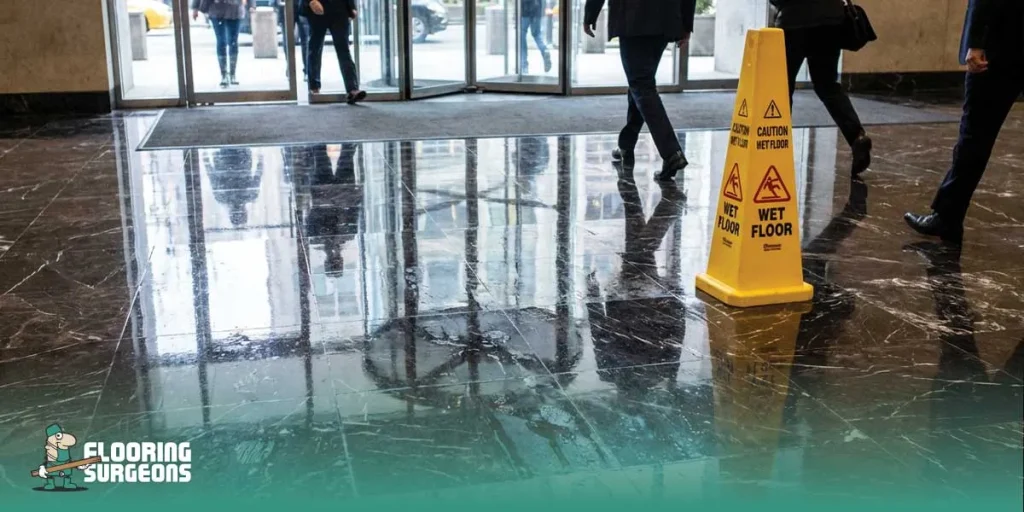
Highly polished stone, glossy tiles, or smooth vinyl can become hazardous when wet or contaminated. If these materials are used in areas prone to moisture without appropriate slip resistance, the flooring choice itself may be questioned. Highly polished stone, glossy tiles, smooth vinyl and some types of solid wood flooring can become hazardous when wet or contaminated. If these materials are used in areas prone to moisture without appropriate slip resistance, the flooring choice itself may be questioned. - Unsuitable flooring for the environment
Flooring that performs safely in dry areas may not be appropriate near entrances, kitchens, bathrooms, or commercial walkways. Installing the wrong type of flooring in a high-risk area increases the likelihood that it will be seen as a contributing factor. - Poor or incorrect installation
Uneven surfaces, loose edges, lifting corners, or incorrect gradients can all increase slipping risk. Installation faults that affect stability or drainage can shift responsibility toward the installer or the party who approved the work. - Worn or degraded surface finishes
Over time, protective finishes can wear down, making floors smoother and more slippery. Failure to monitor and address this wear can turn a previously safe floor into a hazard. - Inadequate cleaning and maintenance
Incorrect cleaning products, residue build-up, or poor maintenance routines can reduce slip resistance. Even suitable flooring can become unsafe if not maintained according to manufacturer guidelines. - Lack of additional safety measures
In areas where slip risk is known, the absence of mats, anti-slip treatments, or clear signage can strengthen the argument that the flooring contributed to the accident.
When flooring contributes to a slip accident, liability often depends on whether the risk was predictable and whether reasonable steps were taken to minimise it. Flooring does not have to be defective to be a problem. It only has to be inappropriate, poorly installed, or badly maintained in the context where it is used.
When Flooring Does Not Automatically Mean Liability
Not every slip accident involving flooring leads to legal responsibility. This is an important distinction, because the law focuses on negligence, not on the mere presence of a slippery surface. Flooring can be involved in an accident without automatically making someone at fault.
- The risk was obvious and expected.
If the flooring type and conditions were clear to a reasonable person, such as a wet entrance on a rainy day or a typical household floor, liability is less likely. People are expected to take basic care in everyday environments. - Reasonable precautions were already in place.
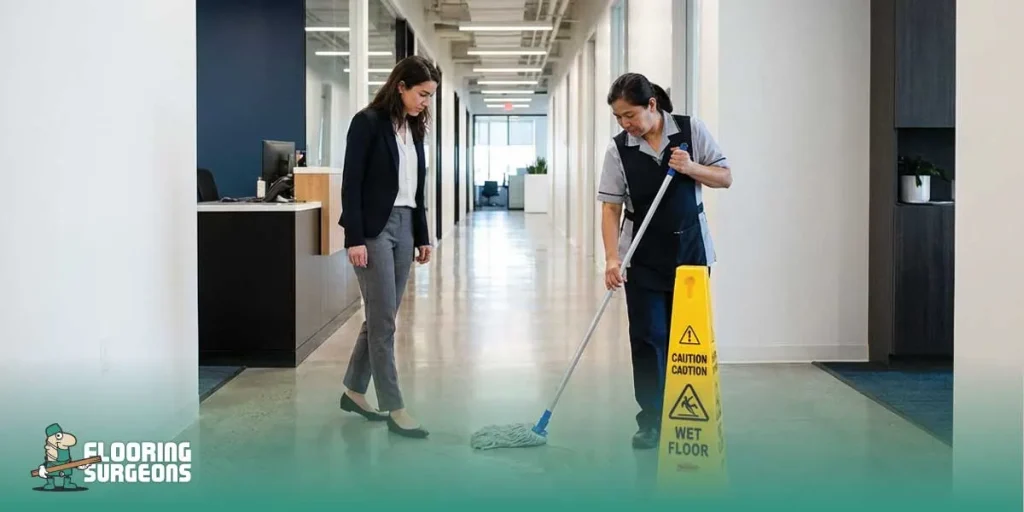
If appropriate flooring was installed, maintained correctly, and supported by sensible safety measures such as mats, signage, or regular inspections, responsibility may not apply even if an accident occurs. - The hazard was temporary and promptly addressed
Spills, tracked-in water, or sudden contamination do not automatically create liability if they were dealt with within a reasonable timeframe. The law recognises that not all risks can be eliminated instantly. - The injured person contributed to the accident.
In some cases, footwear, behaviour, distraction, or ignoring warnings can reduce or remove liability. Flooring does not override personal responsibility where carelessness plays a role. - The flooring was suitable for its intended use.
If the flooring material was appropriate for the location and met normal safety expectations, it is less likely to be seen as negligent, even if it was involved in a fall.
This distinction matters because liability is about failure to act reasonably, not about guaranteeing absolute safety. Flooring becomes a legal issue only when a foreseeable risk was ignored or mishandled. Understanding this helps property owners, landlords, and businesses separate genuine responsibility from situations where an accident alone does not equal fault.
How Proper Flooring Choices Reduce Legal Risk
Choosing and managing flooring correctly can significantly reduce the risk of slip accidents and the likelihood of liability, without turning the space into a clinical or over-engineered environment. The focus is on suitability and foresight rather than perfection.
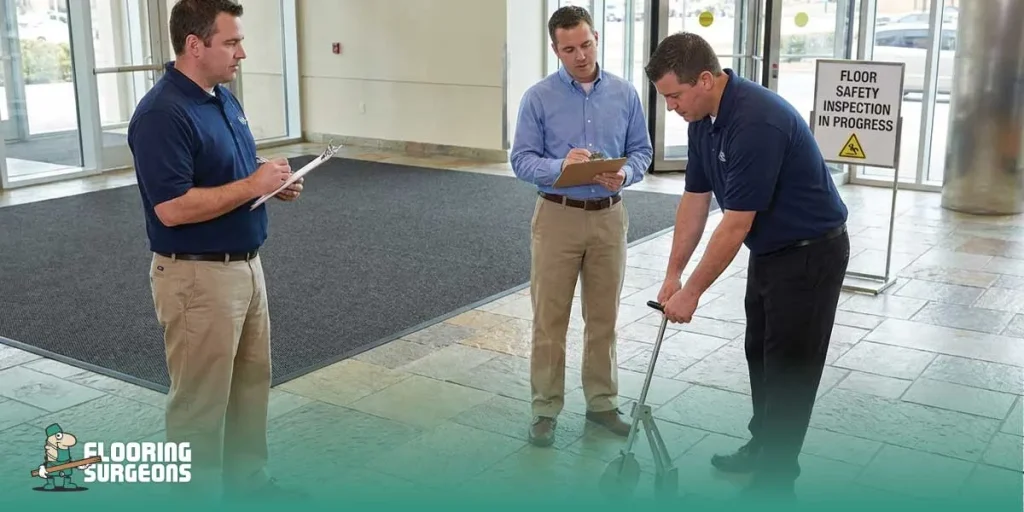
- Selecting flooring appropriate to the area
Flooring should match how the space is used. Areas exposed to moisture, heavy foot traffic, or contamination benefit from materials with higher slip resistance, while low-risk areas allow for more flexibility. - Considering slip resistance at the selection stage
Slip resistance ratings and surface finishes matter, especially in commercial or shared spaces. Choosing flooring with appropriate performance characteristics helps show that risks were considered before installation. - Ensuring correct installation
Even suitable flooring can become hazardous if installed poorly. Level transitions, secure edges, and correct subfloor preparation all reduce slip and trip risks linked to artistry. - Maintaining flooring as it ages
Over time, wear can reduce grip. Regular inspections, timely repairs, and renewing worn finishes help prevent surfaces from becoming more slippery than intended. - Using additional safety measures where needed
Mats, anti-slip treatments, drainage solutions, and clear signage help manage unavoidable risks in entrances, wet areas, and high-traffic zones. - Keeping records of inspections and maintenance
Documenting cleaning routines, inspections, and repairs helps demonstrate that reasonable steps were taken, which can be important if responsibility is later questioned.
Proper flooring choices do not prevent every accident, but they reduce foreseeable risk and support a clear duty of care. In legal terms, this often makes the difference between an unavoidable incident and a preventable failure.
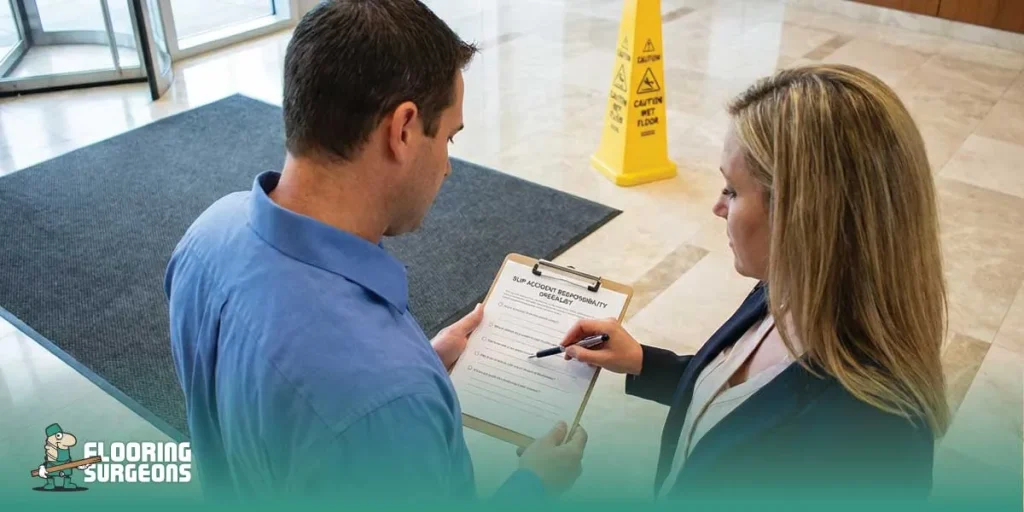
A Simple Checklist to Understand Slip Accident Responsibility
Use the checklist below to quickly assess where responsibility is most likely to sit when a slip accident involves flooring. This is not a legal ruling, but a practical way to understand risk and responsibility. When social media makes wooden floors look effortless, it’s important to balance that with real expectations and find out how long wooden flooring lasts in everyday use.
| Key question | If the answer is yes | If the answer is no |
| Did you control or manage the space where the accident occurred | You may have a duty of care for the flooring | Responsibility may sit with another party |
| Was the flooring known to be slippery, damaged, or unsuitable | Liability is more likely to be considered | Liability is less likely |
| Was the flooring appropriate for the area and its use | Risk is reduced | Risk increases |
| Were reasonable safety measures in place | Responsibility may be limited | Responsibility may increase |
| Was the hazard temporary and addressed promptly | Liability is less likely | Liability is more likely |
| Did the injured person ignore warnings or act carelessly | Liability may be reduced | Liability may rest with the property manager |
This checklist helps clarify whether flooring played a meaningful role in the accident or whether other factors are more relevant. Responsibility is rarely decided by a single detail. It is based on context, control, and whether reasonable steps were taken. If most answers point toward foreseeability and inaction, liability is more likely to be questioned. If they point toward reasonable care and shared responsibility, flooring alone is unlikely to determine fault. If your social media inspiration leans toward clean and simple spaces, understanding minimalist interior design principles can help you choose flooring that supports the overall aesthetic without overwhelming the room.

Haniye Ayanmanesh
As an expert writer for Flooring Surgeons, I combine technical SEO knowledge with a practical understanding of flooring, producing content that helps users make confident decisions while supporting long-term organic growth.