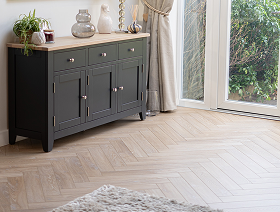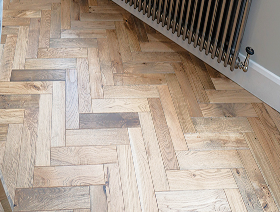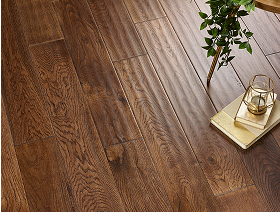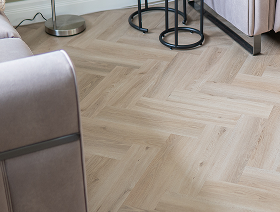
You finally get your new floors installed and love how they look during the day, but when you come home from work that evening, you notice something odd. The colour of your floor looks different. What seemed like a warm, natural tone during the day may look cooler, darker, or even have a yellow tint by night. This is a pretty normal occurrence for most homeowners. So you may be wondering… is something wrong with my floors?
Truthfully, nothing is off! Flooring materials refract light differently, and lighting fixtures in a room can alter how the floor colour and undertones appear. Daylight, warm incandescent bulbs and cool LED lights show different attributes of the same surface.
Table of contents
How Lighting Affects Flooring Colour?
Lighting can affect not only how bright a room feels, but also how flooring colours are perceived psychologically. Dark floors tend to have more depth and feel more dramatic. Lighter floors tend to feel more open and airy. You can read more about this visual impact in our blog post about the psychology of dark flooring vs light flooring.
Undertones factor into this as well. Wood floors (as well as laminate and vinyl) can have warm or cool undertones. Even grey undertones. These can appear more under certain lighting conditions.
Floor finish can play a role as well. Highly glossy finishes reflect more light, which can enhance any colour shift. Matte or textured finishes will generally blend better. For this reason, flooring can sometimes look slightly different at various times of the day.

Natural vs Artificial Light on Flooring
When it comes to light sources, not all affect floors equally. There is a difference between natural sunlight and artificial light. That’s why your floors can look a little different throughout the day.
Natural Daylight and Floor Appearance
Daylight from the sun will typically render floor colours most naturally. However, daylight can change throughout the day. Morning sunlight can feel cooler, while afternoon light can feel warmer and more intense. The direction your windows face and the amount of direct sunlight entering the room can affect how bright or warm your floor appears.

Artificial Lighting and Colour Temperature
Did you know that artificial lighting can affect how the flooring looks? This is because every artificial light source emits a different colour temperature. Lights on the warm side of the spectrum (around 2700K–3000K) will enhance yellow or red tones. Lights on the cool side of the spectrum (around 4000K or higher) can make floors look slightly grey or blue.
That’s why flooring that looks neutral in daylight can look warmer or cooler under your indoor lighting once the sun goes down.
How Different Lighting Affects Flooring Colour
Natural daylight and artificial lighting shift throughout the day, causing your flooring colour to appear different. The difference in colour temperature can bring out certain undertones in your floor. Take a look at the chart below for a general breakdown of how each lighting will impact your flooring.
| Light Type | Colour Temperature | Effect on Flooring | Common Result |
| Natural Daylight | Varies (cool morning, warm afternoon) | Shows true colour and natural undertones | Balanced and realistic appearance |
| Warm Artificial Light | 2700K–3000K | Enhances warm undertones like yellow and red | Floor looks warmer or slightly yellow |
| Cool LED Light | 4000K+ | Highlights cool undertones like blue or grey | Floor may appear cooler or slightly bluish |
| Low / Dim Lighting | Low intensity | Reduces light reflection and depth visibility | Dark floors look deeper and heavier |
Why Different Flooring Materials React Differently to Light
Flooring materials will not all respond to light the same way. Flooring’s texture and overall construction impact light reflection and the visibility of any underlying colour variations. Lighting can cause two different types of flooring to appear slightly off in colour.
Quick Comparison: Flooring Colour In Different Lighting
| Flooring Type | Surface Characteristics | Reaction to Light | Visual Effect |
| Laminate Flooring | Printed design with layered finish | Reflects light unevenly depending on pattern | Colour tones may shift under different lighting |
| Luxury Vinyl Flooring | Smooth surface with protective wear layer | Reflects light more evenly | More consistent colour throughout the day |
| Solid Wood Flooring | Natural grain with organic variation | Absorbs and reflects light differently across planks | Highlights depth, texture, and warmth |
| Engineered Wood Flooring | Layered wood with real wood surface | Similar to solid wood but slightly more controlled | Balanced natural look with subtle variation |
Laminate Flooring Under Different Lighting
Most laminate floors are finished with printed wood‑look textures and multiple-layered coatings. The laminate’s printed texture can cause light to reflect stronger tones, depending on the angle or brightness. Laminate flooring may appear lighter and more neutral in direct sunlight, but it will look warmer under incandescent light.
Luxury Vinyl Flooring and Light Reflection
Luxury vinyl flooring tends to have a more uniform colour construction with a protective wear layer coating the surface. Its surface can evenly distribute light, typically keeping its colour constant throughout the day. However, various lighting temperatures can still highlight nuances in its undertone.
Solid or Engineered Wood Flooring
Wood flooring has natural colour variations due to grain and reacts differently to light. Sunlight can enhance the depth of wood and bring out the natural texture in the wood flooring. Indoor lighting can enhance warm tones found in the wood grain.
Common Flooring Colour Issues in Different Lighting
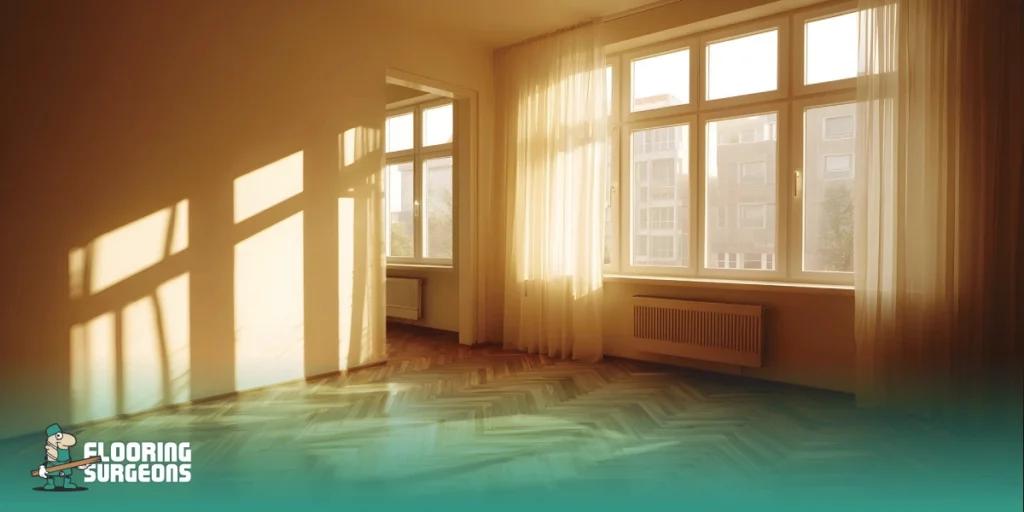
Certain lights can amplify particular undertones in your flooring.
- Grey floors sometimes look blue: many shades of grey have a hint of blue. Cool LED lights or certain types of daylight can bring out this blue, making your floor look a little blue. Many of today’s grey laminate and vinyl come with this effect.
- Floors look more yellow at night: Indoor lighting that’s warm-toned, particularly around 2700K–3000K light bulbs, can cast yellow or golden hues onto flooring. That means flooring that looks fairly neutral in daylight may seem warmer or yellow-tinted by nightfall.
- Dark floors look even darker in low light: Dark floors reflect less light back to your eyes than lighter floors do. If you have a room with minimal natural light, this can sometimes make your floor colour appear deeper and can even make the room feel less bright.
How to Test Flooring Samples Under Different Lighting
One of the best ways to see what your floor will look like is to test your samples at home before installation. What may look great at the showroom may look a little different in your home. This is because no two lighting situations are exactly the same.
Put your sample in the room where the floor will go. Look at it in the morning, at noon, and in the evening too. Natural light can change throughout the day, helping you notice subtle undertones or unexpected colour changes. Finally, look at your sample under the lighting you have in the room where the flooring will be installed. Switch on the overhead lights, lamps, or spotlights you use, and see how your flooring looks at night. Warm lighting can produce warmer tones in flooring, and LED lighting can make some hues look cooler.
You might also try putting the sample against walls, cabinets or furniture. Colours around the flooring affect how it looks. Seeing it in the room will give you a better idea of what the finished floor will look like.
Choosing the Right Flooring for Different Lighting Conditions
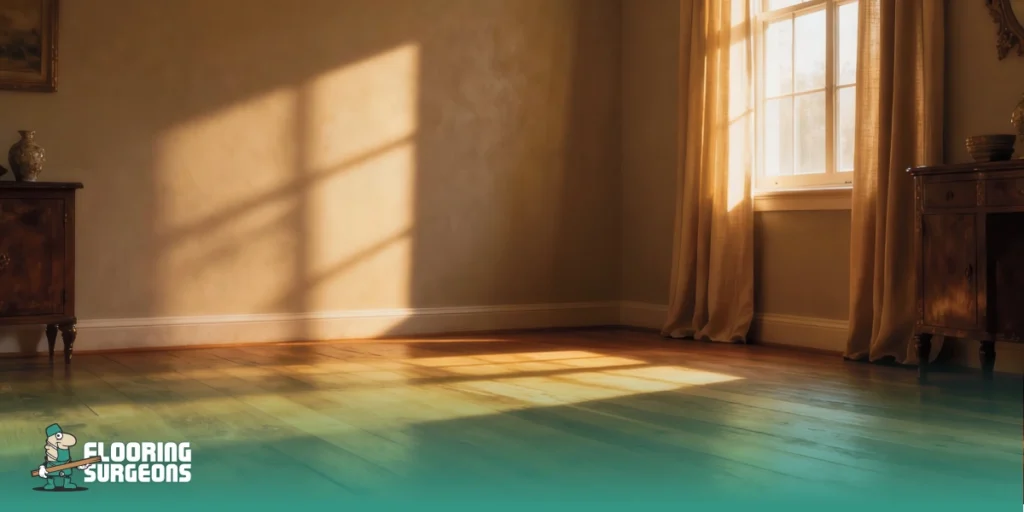
Of course, lighting should also be considered when selecting your flooring colour. Natural light exposure, window orientation, and the type of artificial lighting can all affect how your floor shade looks at different times of day. Spaces with ample natural light make most flooring colours look brighter and more true to tone. Pale shades brighten the sense of openness in the room. Dark colours create greater contrast as natural light moves throughout the room.
Rooms that don’t get much natural sunlight might benefit from a lighter floor, as dark floors can absorb light rather than reflect it. Popular choices include light laminate flooring, which tends to keep spaces from feeling too dark. Neutral floor colours are another smart choice if you have varying light throughout the day. Neutral colours usually transition more easily from daylight to artificial light, helping your floor look less drastically different.

Conclusion
If your floor looks different in natural light, it is most likely normal. Sunlight, or natural daylight, varies throughout the day. Artificial light bulbs also have varying colour temperatures that can make certain tones more prominent. Flooring material can also affect the light reflection. Laminate, luxury vinyl, and hardwood flooring will each react differently, making the colour look slightly different in your home.
To prevent surprises, try flooring samples in the room itself during daylight and nighttime hours. You will get a good idea of what your floor will really look like. Take lighting into consideration before making your final decision. This can help you pick a flooring colour that will look great in every lighting situation. You can explore our flooring collection at Flooring Surgeons to find options that perform beautifully under all lighting conditions.

Ana.Soltanpoor
I’m an SEO Specialist with a strong background in content management and organic search. I build data-driven content strategies by aligning user intent, search behavior, and SEO best practices to ensure every piece of content delivers clarity, relevance, and measurable organic performance.