

Carpet cleaning can kill some fleas, but on its own, it rarely solves a flea infestation completely.
Professional carpet cleaning, especially steam or hot-water extraction, can eliminate adult fleas living near the carpet surface. However, flea eggs and larvae often survive deep in carpet fibres, underlay, and surrounding areas. This is why many people clean their carpets, feel relief for a few days, and then notice fleas coming back. So if your question is whether carpet cleaning helps, the answer is yes. If your question is whether it is enough, the honest answer is usually no. What really matters is the method used, the type of carpet, the severity of the infestation, and whether pets are involved. In this guide, you will see precisely what carpet cleaning can and cannot do, when it works well, when it fails, and what combination actually stops fleas from returning. This way, you can decide quickly whether carpet cleaning alone makes sense for your situation or if a different approach is needed.
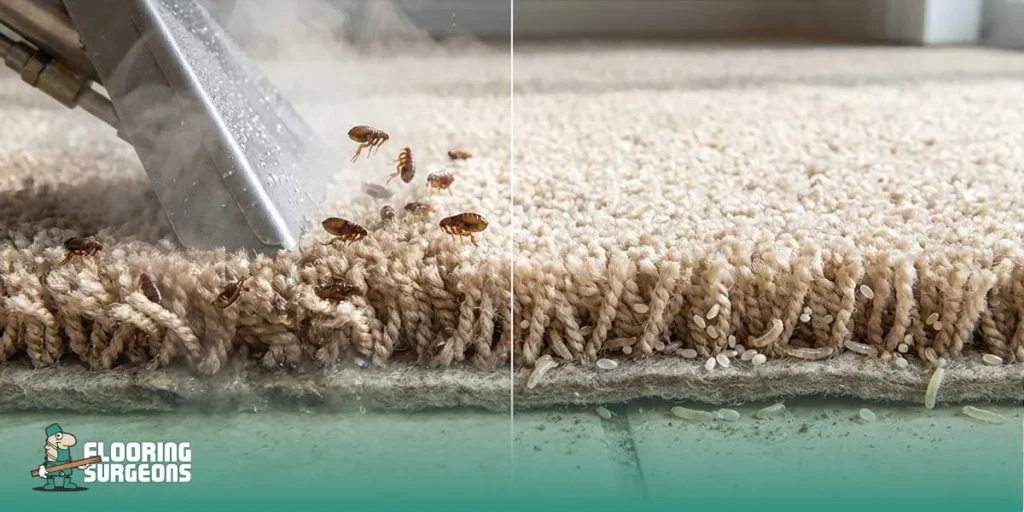
Table of contents
Does Carpet Cleaning Kill Fleas or Just Remove Them?
In practice, carpet cleaning does both, but not at the same level. Carpet cleaning affects fleas in two different ways, depending on where they are. Adult fleas that are active on or near the carpet surface may be killed by heat, moisture, or mechanical action during cleaning. At the same time, a large portion of what happens is simple removal rather than elimination, meaning fleas are lifted out of the carpet instead of being destroyed.
The critical limitation appears below the surface. Flea eggs and larvae are often embedded deeper in carpet fibres, padding, and floor edges. These stages are far less affected by standard carpet cleaning methods. This explains why flea activity can drop immediately after cleaning, yet return once remaining eggs hatch. Carpet cleaning disrupts flea presence and reduces population pressure, but it does not break the flea life cycle on its own.
Where Do Fleas Live in Carpets?
Fleas do not live in one single spot inside a carpet. Their presence is spread across different layers, depending on their life stage. Understanding this is critical to knowing why surface cleaning alone often fails. Flea eggs in carpet are usually not attached to fibres. They fall off pets and settle deep between carpet strands, along edges, and into the underlay. Because eggs are tiny and smooth, they easily slip past surface cleaning and vacuum airflow.
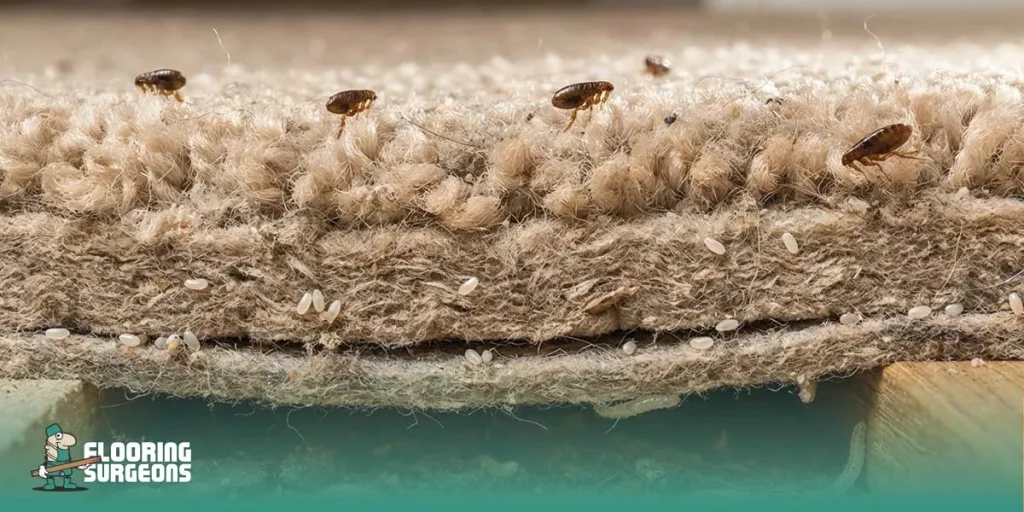
Flea larvae in carpet live even deeper. Larvae avoid light and move downward into carpet padding, cracks near skirting boards, and areas with minimal disturbance. At this stage, they feed on organic debris rather than blood, which makes them harder to target with basic cleaning methods.
This distribution follows the flea life cycle in carpet environments:
- Eggs fall into carpet fibres and padding
- Larvae develop in dark, protected zones below the surface.
- Adult fleas emerge and move upward toward hosts.
The key takeaway is that most of the flea population is hidden below the visible carpet surface. This is why carpets can appear clean while still supporting an active infestation. Carpet cleaning can reduce adult fleas on the surface, but eggs and larvae often remain untouched unless deeper measures are taken. This layered behaviour is the main reason flea problems return after cleaning if the full life cycle is not addressed.
Does Steam Cleaning Kill Fleas and Their Eggs?
Yes, steam cleaning can kill fleas, but it only works under specific conditions. Steam cleaning is effective because fleas are highly sensitive to heat. Adult fleas typically die when exposed to temperatures above 50°C to 55°C, while flea eggs require higher and more prolonged heat exposure to be neutralised. Here is where most people misunderstand the process.
To reliably kill adult fleas, the steam needs to reach at least 60°C at the carpet surface. To affect flea eggs, the temperature must stay above 60°C for several seconds, and the steam must penetrate deep enough into the carpet fibres and padding. Fast passes with a steam cleaner often fail because the heat does not remain long enough in one spot. This explains why results vary so much. When steam is applied slowly, with sufficient heat and moisture, it can kill a significant number of adult fleas and some eggs near the surface. When used quickly or at lower temperatures, steam cleaning mainly disturbs fleas rather than destroying them.
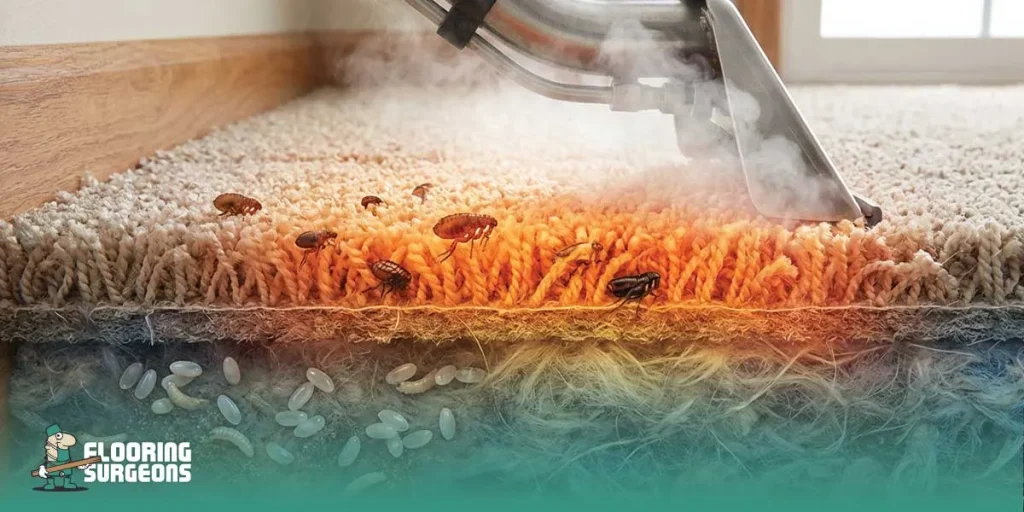
Key limitation: Steam rarely reaches deep carpet padding evenly. Eggs and larvae located below the surface or near edges and skirting areas are often insulated from lethal heat levels. As a result, steam cleaning reduces flea activity but does not consistently eliminate the next generation.
Practical takeaway: Steam cleaning is one of the strongest carpet cleaning methods against fleas, but its success depends on temperature, dwell time, and depth of penetration. Without meeting all three conditions, it weakens infestations rather than ending them.
Hot Water Extraction vs Shampooing for Flea Removal
Both methods are commonly used for carpet cleaning, but they work very differently when it comes to fleas. Understanding those differences helps avoid false expectations and wasted effort.
How each method actually works
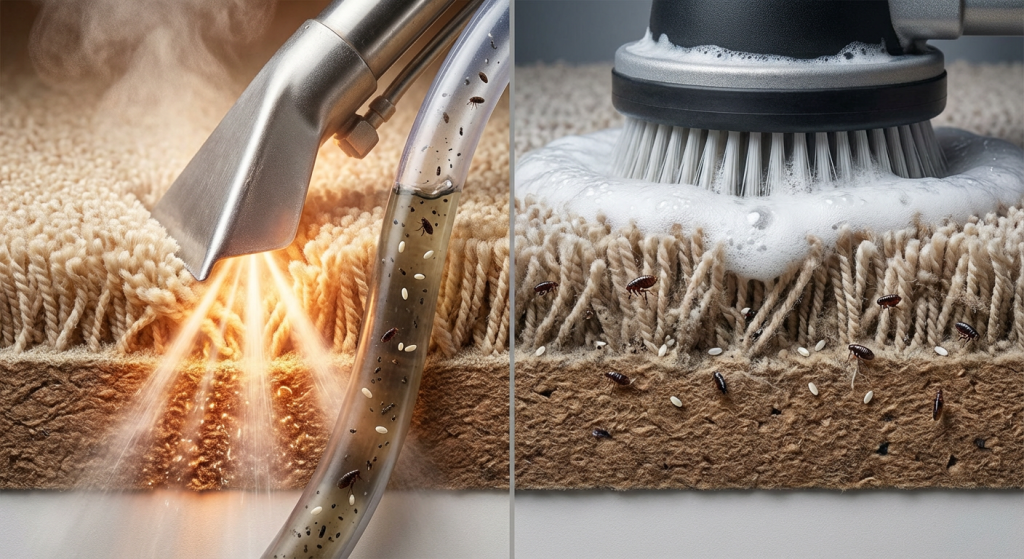
Hot water extraction for fleas relies on high-temperature water injected deep into the carpet, followed by strong suction. This combination targets adult fleas near the surface and flushes out debris, eggs, and larvae that are not tightly embedded. Shampooing carpet fleas focuses on surface agitation and detergent. It loosens dirt and lifts visible fleas, but it does not deliver consistent heat or deep extraction. The result often looks clean while leaving flea stages behind.
Side-by-side comparison
| Factor | Hot Water Extraction | Shampooing |
| Heat level | High and controlled | Low or inconsistent |
| Depth reached | Carpet fibres and partial underlay | Mostly surface only |
| Adult flea impact | High | Moderate |
| Flea eggs impact | Limited but possible near surface | Very low |
| Residue risk | Low when done correctly | Higher, it can attract dirt |
| Reinfestation risk | Lower | Higher |
What this means in real situations
Hot water extraction is the stronger option when fleas are involved because it combines heat, moisture, and removal in one process. It does not solve infestations on its own, but it meaningfully reduces flea pressure inside carpets. Shampooing, on the other hand, mainly improves appearance. It can temporarily reduce visible fleas, but it often leaves eggs and larvae untouched, especially deeper in the carpet. In some cases, leftover shampoo residue can even create a better environment for future flea activity.
If the goal is flea control rather than cosmetic cleaning, hot water extraction is the more effective method. Shampooing should be treated as a surface-level clean, not a flea-focused solution.
Is Vacuuming Enough to Get Rid of Fleas in Carpets?
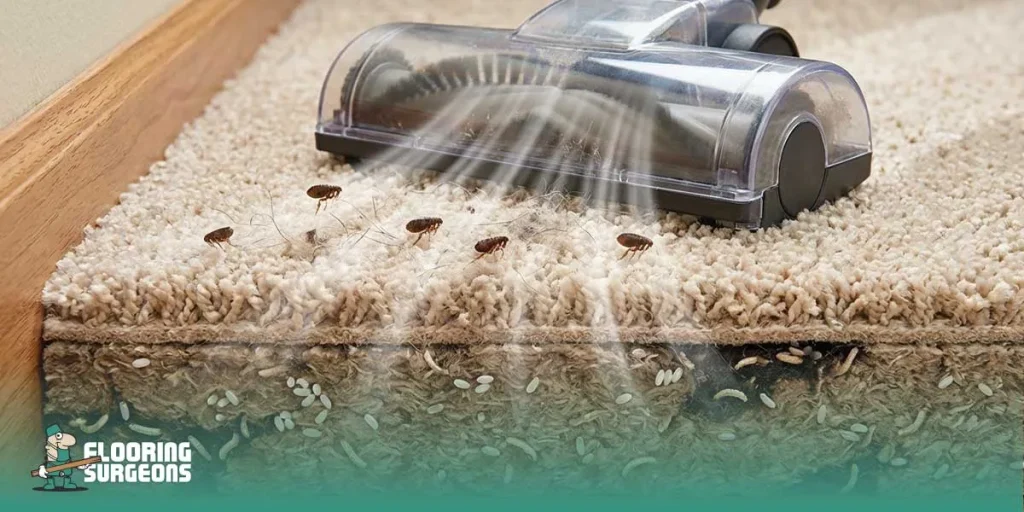
No. Vacuuming helps, but it does not solve a flea problem on its own. Vacuuming fleas from carpet is effective at removing adult fleas, loose eggs, and organic debris from the surface. Strong suction also disrupts flea activity and can reduce numbers quickly, which is why many people see short-term improvement after vacuuming. However, does vacuuming kill fleas? Not reliably. Many fleas survive the process, and eggs and larvae buried deep in carpet fibres, padding, and edges are usually untouched. Vacuuming also does nothing to break the flea life cycle if pets or nearby areas remain untreated.
The most common mistake with vacuuming
The biggest mistake is treating vacuuming as a solution rather than a support step. Vacuuming works best when used frequently and combined with heat-based cleaning or targeted flea treatment. On its own, it creates temporary relief but allows the infestation to rebuild once the remaining eggs hatch. Vacuuming is helpful in reducing surface fleas and improving results from other treatments, but it is not enough to eliminate fleas from carpets by itself.
Why Carpet Cleaning Alone Is Not Enough
Carpet cleaning often feels like the proper response to a flea problem, but it rarely delivers a permanent result. The main reason why carpet cleaning doesn’t kill fleas entirely is that it addresses only part of the environment where fleas survive. Most cleaning methods focus on visible carpet surfaces. Flea eggs and larvae, however, remain protected deep within carpet padding, along edges, and in nearby soft furnishings. When these untouched stages continue to develop, new adult fleas emerge days or weeks later. This is why fleas come back after carpet cleaning, even when the carpets look clean and fresh.
Another overlooked factor is the host. If pets, bedding, or untreated areas are still present, fleas quickly reestablish themselves. Cleaning removes a portion of the problem but leaves the flea life cycle intact.
Key pain point: Carpet cleaning reduces flea activity, but it does not remove the conditions that allow fleas to reproduce and return. Until the full environment is addressed, cleaning alone will always fall short. This is the point where a combined approach becomes necessary, which is covered in the next section.
Fleas in High-Pile vs Low-Pile Carpets
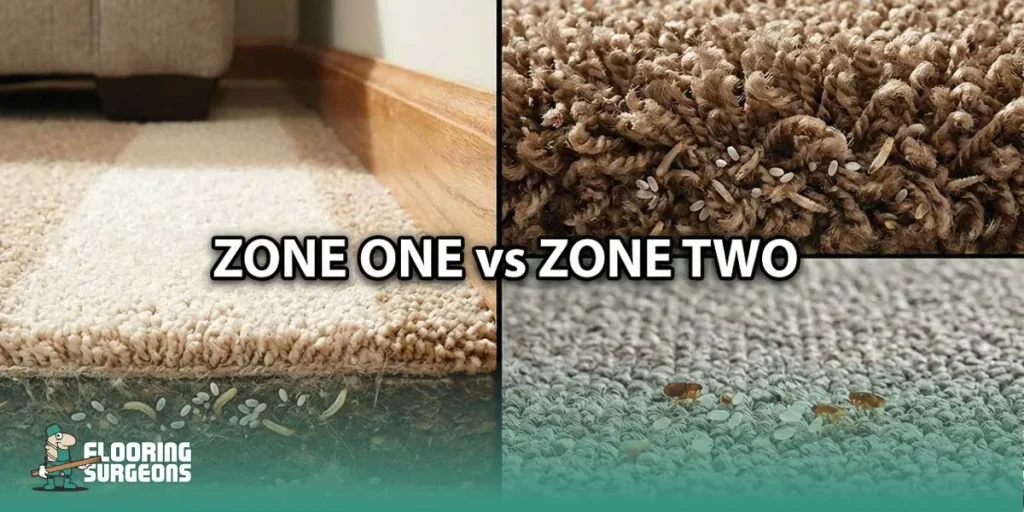
Carpet structure plays a significant role in how easily fleas survive and return. The difference between fleas in high pile carpet, fleas in low pile carpet, and fleas in area rugs explains why the exact cleaning method can work in one home and fail in another.
How carpet type changes flea behaviour
| Carpet Type | Flea Hiding Depth | Cleaning Effectiveness | Reinfestation Risk |
| High-pile carpet | Deep within fibres and padding | Low to moderate | High |
| Low-pile carpet | Closer to the surface | Moderate to high | Medium |
| Area rugs | Variable, often underneath | Moderate | Medium to high |
High-pile carpets provide the most protection from fleas. The long fibres trap eggs and larvae well below the surface, making heat and suction less effective. This is why infestations in thick carpets are more challenging to control fully.
Low-pile carpets limit how deeply fleas can hide. Cleaning methods reach a higher percentage of the infestation, which improves results but still does not guarantee complete removal.
Area rugs behave differently. Fleas often concentrate underneath the carpet or between the carpet and the floor rather than inside the fibres alone. Cleaning the carpet without treating the floor beneath leaves a clear gap. The thicker and more layered the carpet, the harder it is to entirely disrupt flea development. Carpet type directly affects how aggressive the solution needs to be. In homes where flea infestations keep recurring, some homeowners consider switching from thick carpets to Luxury Vinyl flooring, as it does not trap pests, is easier to clean, and leaves fewer hidden areas for eggs and larvae.
Carpet Cleaning and Flea Treatment: The Right Order
The order matters more than the method. Doing the proper steps in the wrong sequence is one of the main reasons flea problems persist. Carpet cleaning and flea treatment work best when cleaning is used to prepare the environment, not replace treatment. Cleaning first removes debris, adult fleas, and surface eggs, allowing treatments to reach deeper and work more effectively.
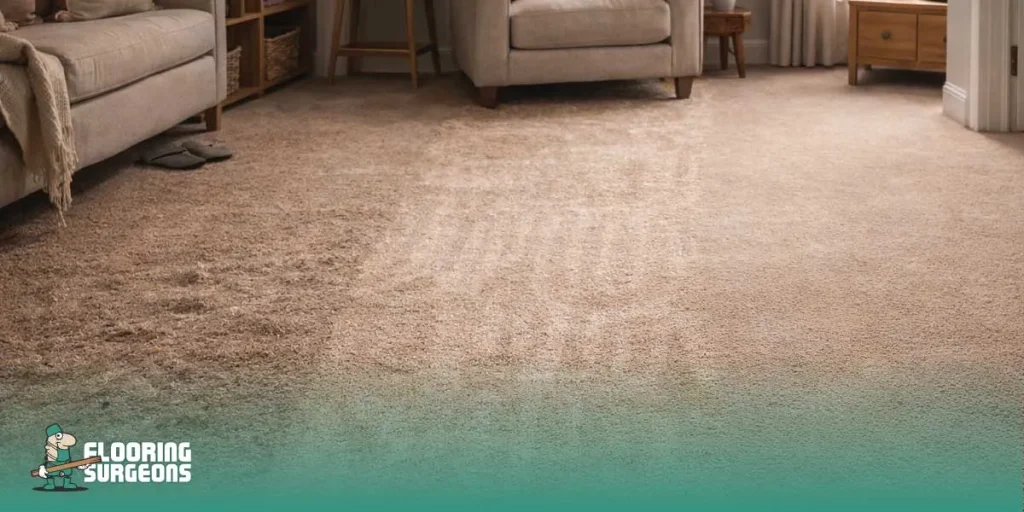
Recommended order for effective results:
- Clean carpets thoroughly using hot water extraction or steam to reduce surface flea activity.
- Allow carpets to fully dry so treatments are not diluted or blocked by moisture.
- Apply professional flea treatment for carpets that targets eggs and larvae below the surface.
- Treat pets and soft furnishings at the same time to avoid reinfestation loops.
Cleaning reduces resistance, treatment breaks the flea life cycle, and treating all related areas prevents reintroduction. If infestations are moderate to severe, combining professional carpet cleaning with targeted flea treatment delivers far more reliable results than either step alone. In more complex cases where carpet cleaning and flea treatment need to be carefully coordinated, Flooring Surgeons can provide practical guidance based on real flooring and carpet conditions rather than generic advice.
What to Do If Fleas Keep Coming Back
When fleas keep coming back after cleaning, the issue is not effort but coverage. Something in the environment is being missed. To permanently get rid of fleas in carpet, the solution must remove both the insects and the conditions that allow them to return.
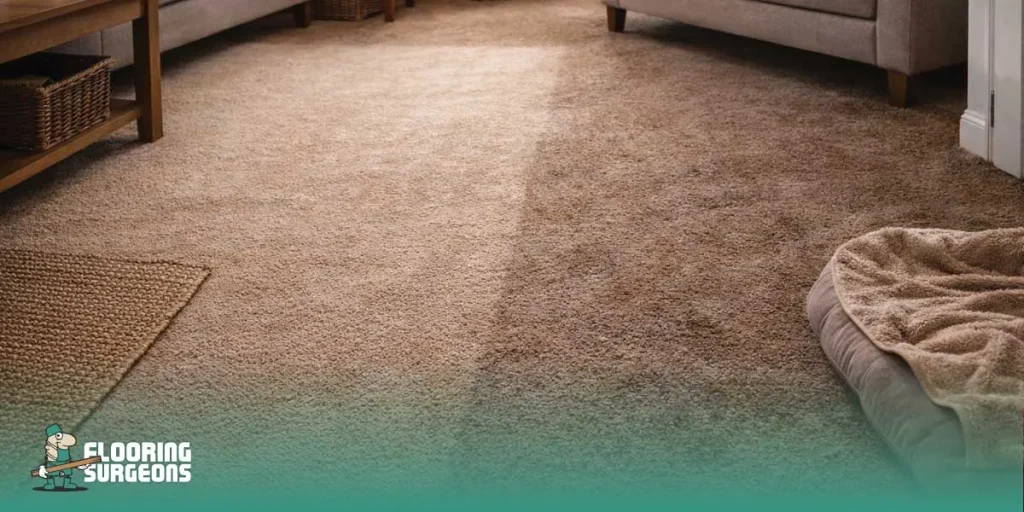
If fleas continue to reappear, check these gaps:
- Eggs and larvae were not treated after cleaning.
- Pets were cleaned once but not maintained consistently.
- Area rugs, furniture bases, or skirting edges were skipped.
- Cleaning frequency dropped before the flea cycle was fully broken.
What actually works long term:
- Combine heat-based carpet cleaning with follow-up flea treatment.
- Repeat vacuuming during the hatching window to disrupt new adults.
- Maintain pet treatment schedules until no new activity is detected.
- Reassess carpet type and infestation depth before repeating the same method.
Fleas return when the life cycle survives. Permanent control comes from timing, consistency, and treating every connected surface, not from repeating carpet cleaning alone. Once flea activity is under control, ongoing care becomes just as important, as proper carpet cleaning and maintenance help prevent future hygiene and pest-related issues.

Haniye Ayanmanesh
As an expert writer for Flooring Surgeons, I combine technical SEO knowledge with a practical understanding of flooring, producing content that helps users make confident decisions while supporting long-term organic growth.