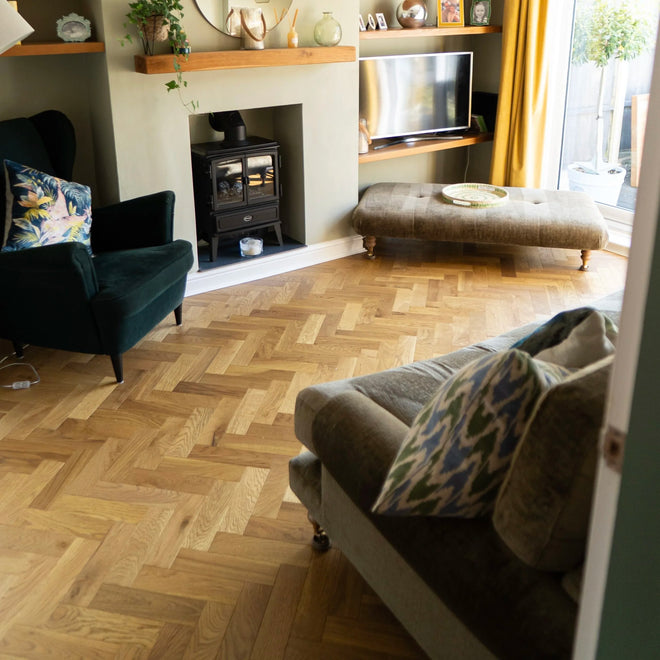
Oak Engineered Flooring with Real Wood Grain and Natural Character
Oak engineered flooring is a popular choice for customers who want the natural character of oak with the practical benefits of engineered construction. Oak is known for its visible grain, warm appearance and versatile look, making it suitable for both modern and traditional interiors.
Unlike flooring that only imitates wood, engineered oak flooring has a real oak surface layer. This gives each board natural variation in grain, tone and texture, helping the floor feel more authentic and less uniform.
Because it is engineered, oak engineered wood flooring features a real oak top layer over a stable multi-layer core. This can offer better dimensional stability than solid oak in suitable indoor spaces. If you are still comparing wider wood flooring options, you can also browse our engineered wood flooring range before choosing the right product for your home.
Why Choose Engineered Oak Flooring?
Engineered oak flooring is often chosen because oak works well across many interior styles. Its grain pattern can add natural detail without making the floor feel too busy, while its tone can sit comfortably with neutral walls, painted furniture, natural textures and darker design accents.
Oak is also a familiar, widely used wood species in flooring, making it a flexible option for long-term interior design. An engineered oak floor can support different room styles over time, especially if you plan to update furniture, wall colours or soft furnishings in the future.
Before choosing, it is important to compare the product specifications rather than relying on appearance alone. Wear layer, board size, surface finish, fitting method and care guidance can all affect how the floor looks and performs after installation.

Oak Grain, Grade and Character: What to Compare Before Ordering
The main appeal of oak engineered wood flooring is its natural grain and character. Some oak floors have a cleaner, more uniform appearance, while others show more knots, colour variation and visible grain detail. This depends on the product grade, cut, finish and overall design of the board.
If you prefer a calmer look, choose an oak floor with a more consistent grain and fewer visible knots. If you want a more natural or rustic appearance, compare products with stronger grain variation and more character marks.
Oak tone is also important, but it should not be judged solely from product images. Oak can look warmer, softer, paler or deeper depending on natural daylight, artificial lighting, wall colour and furniture. Ordering samples is the best way to compare the real grain, tone and finish in your own space.
Engineered Oak Construction: Wear Layer, Core and Finish
With engineered oak wood flooring, the board’s construction matters as much as its surface appearance. The real oak top layer gives the floor its natural look, while the core layers help support stability in suitable indoor conditions.
The wear layer is especially important because it affects how the floor can be maintained over time. Some products may allow future sanding or refinishing, but this depends on the thickness of the wear layer, the board’s construction, and the manufacturer’s guidance.
The surface finish also changes how the floor looks and how it should be cared for. Some finishes create a more natural matte appearance, while others may add more sheen or surface protection. Always check the product details, finish type and care instructions before ordering.

How Engineered Oak Construction Differs from Solid Oak Boards
Both engineered oak and solid oak boards offer the natural look of real oak, but their construction is different. Engineered oak flooring features a real oak surface layer over a multi-layer core, while solid oak is made from a single piece of timber.
Solid oak has a traditional appeal, but it can be more sensitive to temperature and moisture fluctuations. Engineered oak is often chosen when customers want the appearance of oak with a construction that may offer better stability than solid wood in suitable indoor spaces.
The best choice depends on your room, subfloor, fitting method and long-term plans for the floor. If underfloor heating is part of the project, some engineered oak products may be suitable, but this always depends on the product specification and installation guidance.
Choosing Oak Engineered Flooring for Your Home
When choosing oak flooring, it is worth comparing the full product details, not just the colour. Oak can look very different depending on board size, grain variation, finish and the amount of natural light in the room.
What to Check |
Why It Matters |
Oak grade |
Affects the amount of knots, grain variation and natural character. |
Board size |
Changes the scale and overall look of the floor. |
Wear layer |
Helps you understand how the floor can be maintained over time. |
Core construction |
Supports the board’s stability in suitable indoor spaces. |
Surface finish |
Influences texture, sheen, colour depth and everyday care. |
Fitting method |
Helps you plan installation correctly. |
Room suitability |
Confirms whether the product is appropriate for your intended space. |
Care guidance |
Helps protect the oak surface after installation. |
This helps you choose oak engineered flooring based on the product’s actual specifications, not just the shade or product photo.
Order Free Oak Engineered Flooring Samples
Choosing oak engineered flooring is easier when you can compare the grain, tone, texture and finish in your own home. At Flooring Surgeons, you can order free samples before making a final decision.
Place your samples near walls, furniture, doors and windows to see how each oak floor looks in your space. Oak can look different throughout the day, especially under warm, cool or direct daylight.
Before ordering, compare the product’s oak grade, board size, wear layer, finish, fitting method and care instructions. This helps you choose an oak engineered floor that suits both your interior style and practical needs.