





Room Visualiser
Try our floors in your home
0
0











Yes, 12mm herringbone flooring offers greater stability, reduced movement and improved durability compared to thinner boards. The increased thickness helps the herringbone pattern remain aligned and perform better over time, especially in larger or high-traffic spaces.
Yes, the added thickness creates a more solid and grounded feel when walking. It absorbs impact more effectively than thinner flooring, making it more comfortable for everyday living and prolonged standing.
Yes, thicker boards naturally reduce sound transmission. 12mm herringbone flooring helps minimise footstep noise and vibration, which is particularly beneficial in apartments and multi-storey homes.
Yes, it is well suited to high-traffic residential and commercial spaces. Its stronger core and locking system are designed to handle frequent use without compromising structural integrity or appearance.
No, while proper preparation is always important, 12mm boards are more tolerant of minor subfloor imperfections. Their rigidity helps prevent flexing and joint stress caused by small uneven areas.
For most living spaces, yes. The combination of stability, comfort, sound reduction and long-term durability makes 12mm herringbone flooring a cost-effective choice over time, particularly when compared to thinner alternatives that may require earlier replacement.
If you are looking for a herringbone floor that delivers visual impact alongside long-term reliability, 12mm Herringbone Flooring stands out as a high-performance option. Thickness at this level is not a technical detail for specialists only; it directly influences stability, comfort underfoot and how well the floor holds its shape over time. In practical use, this construction provides stronger pattern integrity, reduced movement at joints and a quieter, more solid feel compared to thinner alternatives. These qualities make it especially well-suited to modern homes, open-plan layouts and spaces where durability matters just as much as design.
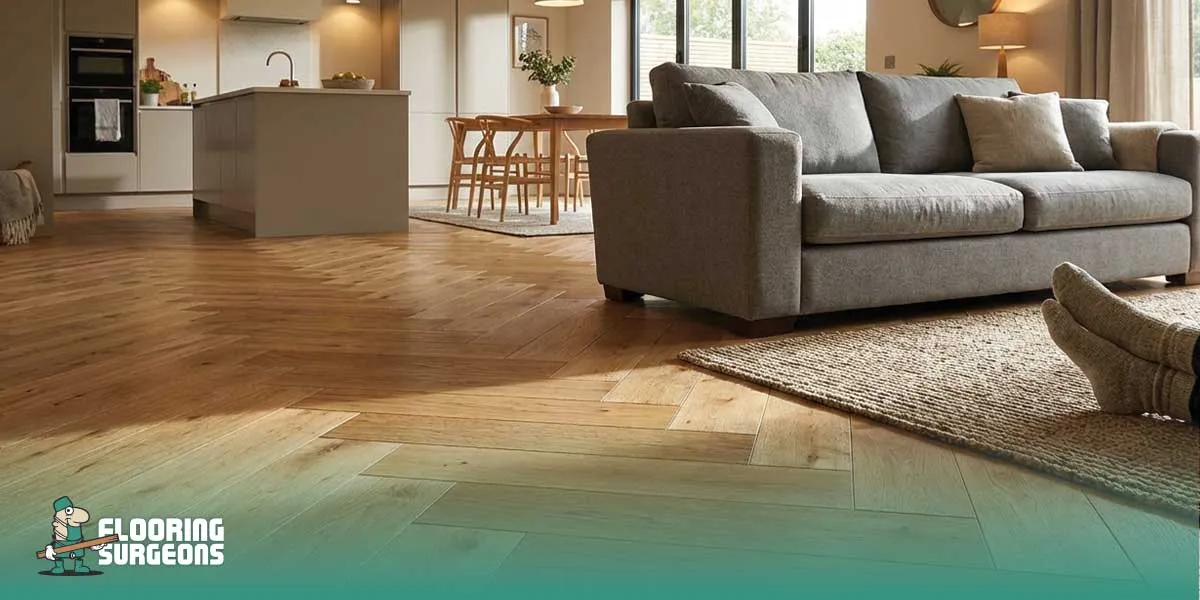
Because herringbone layouts place greater stress on joints than straight planks, material strength becomes essential. A thicker core helps maintain clean lines and precise alignment, which is why installers and designers often specify this format when both aesthetics and performance are non-negotiable. That said, thickness alone does not determine suitability. Room size, subfloor condition and daily use all affect whether this option offers genuine value. Understanding how it performs in real-world settings helps clarify when it is the right investment and when a thinner board may be sufficient.
12mm Herringbone Flooring refers to boards manufactured with a full plank thickness of twelve millimetres, installed in the traditional zigzag layout. This measurement includes the complete structure of the board, from the decorative surface to the structural core, and plays a key role in how the floor behaves after installation. Herringbone patterns rely on shorter boards laid at opposing angles, which creates continuous lateral pressure across the surface. A thicker plank provides the rigidity needed to support this layout, keeping the pattern stable and visually consistent, particularly in larger or high-use areas.
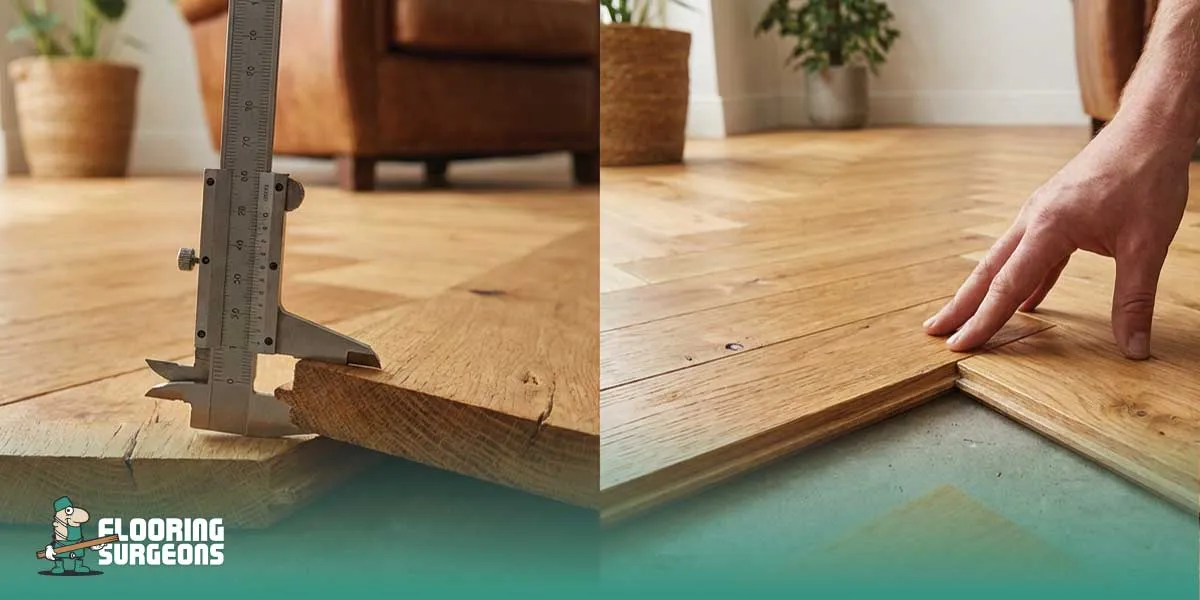
Compared with thinner options, boards at this thickness feel more substantial underfoot, absorb sound more effectively and handle slight subfloor inconsistencies with greater tolerance. While thinner herringbone floors may suit compact or low-traffic spaces, they demand stricter installation conditions to avoid movement or joint stress.
The herringbone layout is one of the most structurally demanding floor designs. Boards interact at multiple angles, meaning pressure is distributed across a wider network of joints. This is where 12mm Herringbone Flooring offers a clear functional advantage. Increased thickness allows the floor to behave as a unified surface rather than individual planks. This reduces stress concentration at locking points and helps the pattern remain aligned as the floor responds to daily use and temperature variation.
Stability is critical in herringbone installations because any weakness is quickly transferred across the layout. Thicker boards have denser cores that limit flexing and prevent micro-movement, helping the pattern remain tight and balanced over time. This becomes particularly important in open-plan rooms, where expansion and contraction are more noticeable. A more rigid plank distributes weight evenly, lowering the risk of gaps or pattern distortion developing.
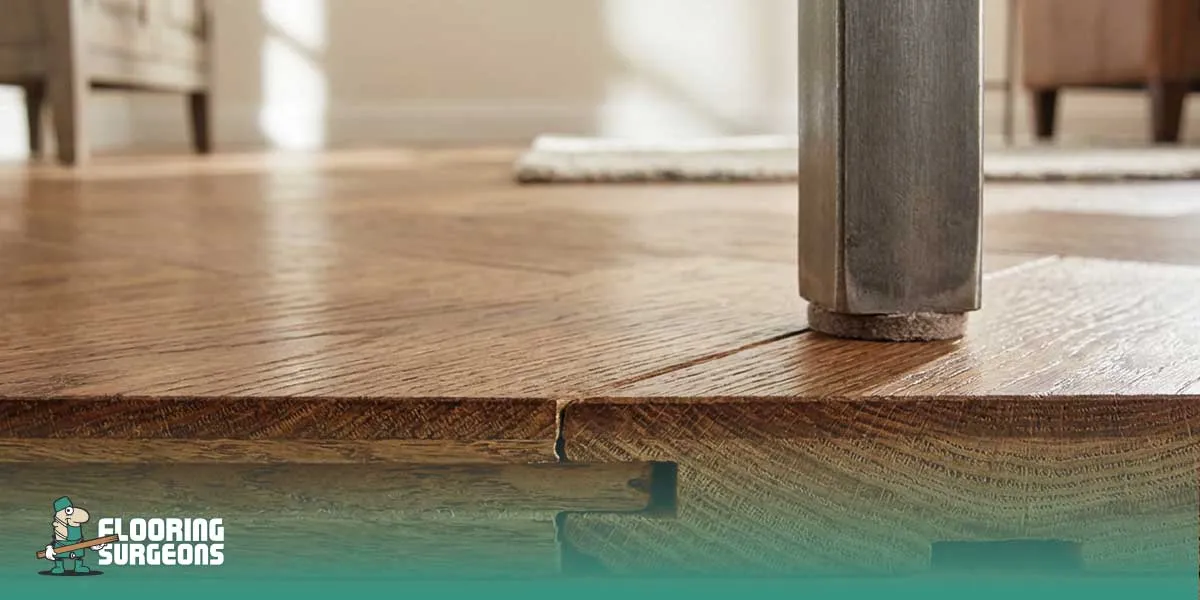
Herringbone layouts place greater demand on locking mechanisms than straight plank installations. Thicker boards allow for deeper, stronger locking profiles, creating more secure joints with improved resistance to separation or edge lift. Over time, this translates into better performance under furniture weight, frequent foot traffic and everyday impact, preserving both the structural integrity and appearance of the floor.
When comparing 8mm and 12mm Herringbone Flooring, the key differences lie in performance rather than appearance. Both thicknesses can achieve the same visual style, but they respond very differently to real-life conditions.
| Feature | 8mm | 12mm |
| Stability | Moderate | Very high |
| Sound absorption | Low | High |
| Lifespan | Shorter | Long-term |
An 8mm option may work in small rooms with minimal foot traffic or strict height limitations, provided the subfloor is perfectly prepared. However, it is more sensitive to movement and sound transfer. Thicker boards offer a more solid feel, quieter performance and greater resilience, making them better suited to living areas, apartments and spaces designed for long-term use.
Comfort underfoot is one of the most immediate differences noticed with 12mm Herringbone Flooring. The added mass of the board absorbs impact more effectively, creating a grounded, stable feel when walking or standing for extended periods. Acoustically, thicker boards reduce vibration and soften footfall noise. This is particularly valuable in multi-storey homes and open interiors, where sound can otherwise travel easily between spaces.
Thanks to its strength and comfort, this flooring format performs best in areas where both visual definition and durability are required.
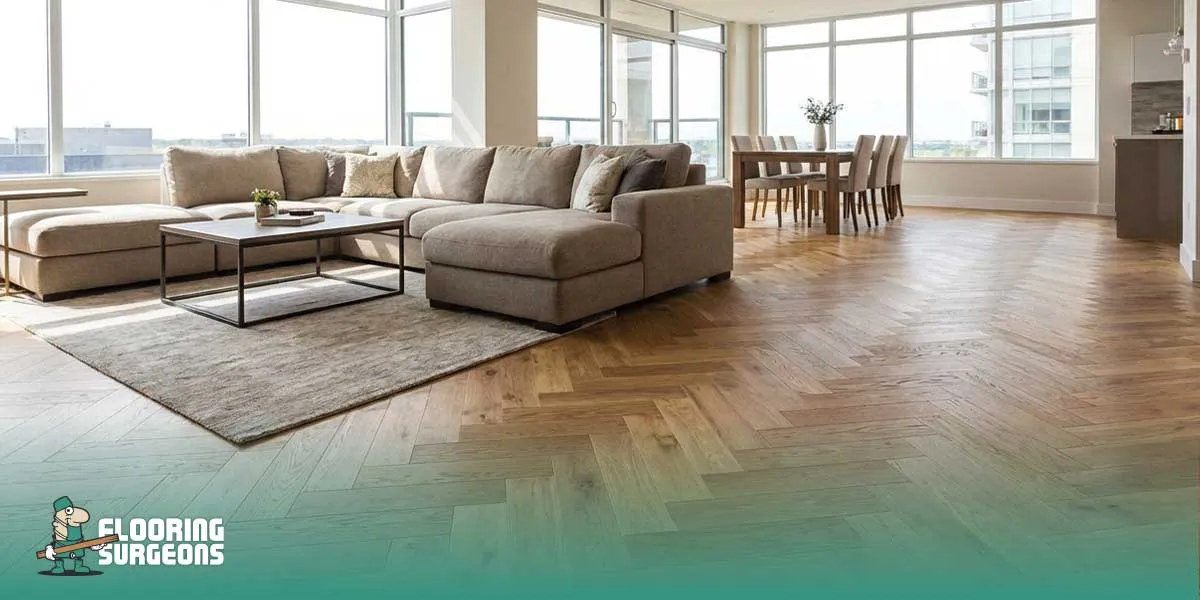
Larger living areas place ongoing stress on flooring through movement, furniture weight and temperature change. Thicker boards help maintain pattern precision while delivering a premium feel suited to central living zones.
Sound reduction is often a priority in shared buildings. The additional thickness helps minimise impact noise, improving acoustic comfort on upper floors.
Retail spaces, offices and studios benefit from the structural reliability of 12mm Herringbone Flooring, which is better equipped to handle constant use while retaining its appearance.
From an installation perspective, thicker boards offer practical benefits. They are more forgiving of minor subfloor variations and less likely to reflect small imperfections through the finished surface. Deeper locking profiles improve connection strength, reducing the risk of joint movement both during and after installation. This results in a cleaner finish and a floor that remains stable as conditions change.
Choosing 12mm Herringbone Flooring is as much about long-term planning as immediate appearance. Its construction supports evolving lifestyles, from increased foot traffic to changing furniture layouts, without compromising performance.
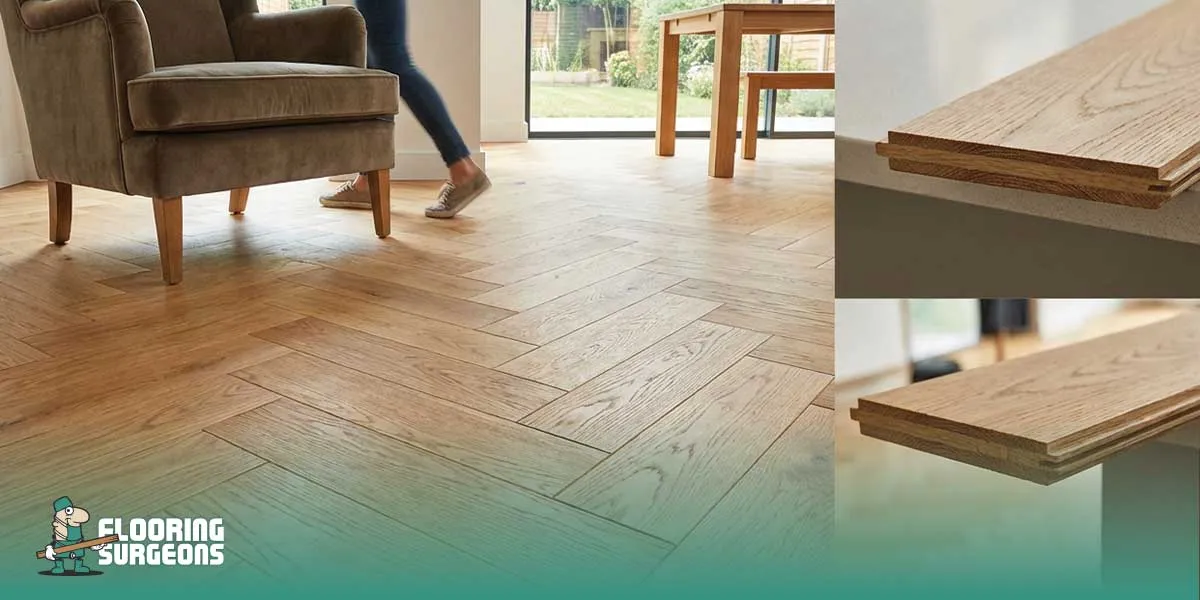
Herringbone remains a timeless design language within interior architecture, and pairing it with a robust core ensures that aesthetic longevity is matched by structural reliability. Many professionals, including specialists at Flooring Surgeons, view this thickness as a future-ready solution for modern interiors. For homeowners seeking a floor that balances design integrity, comfort and durability, this approach offers confidence well beyond initial installation, especially when compared with lighter alternatives commonly used in standard Herringbone Flooring systems.


