

Room Visualiser
Try our floors in your home
0
0





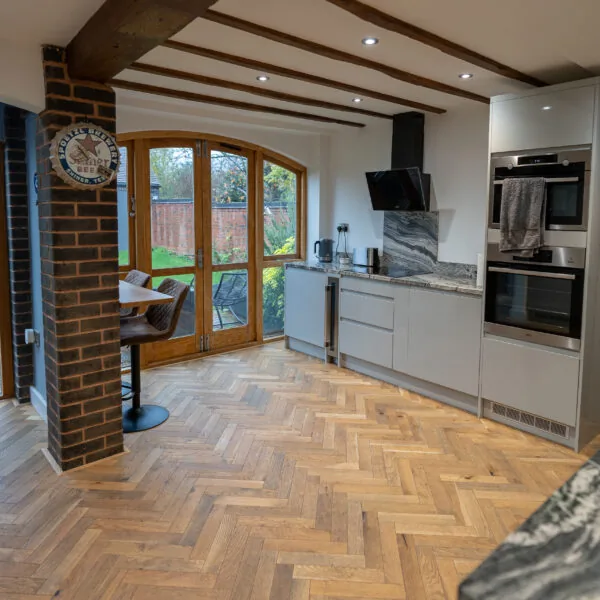



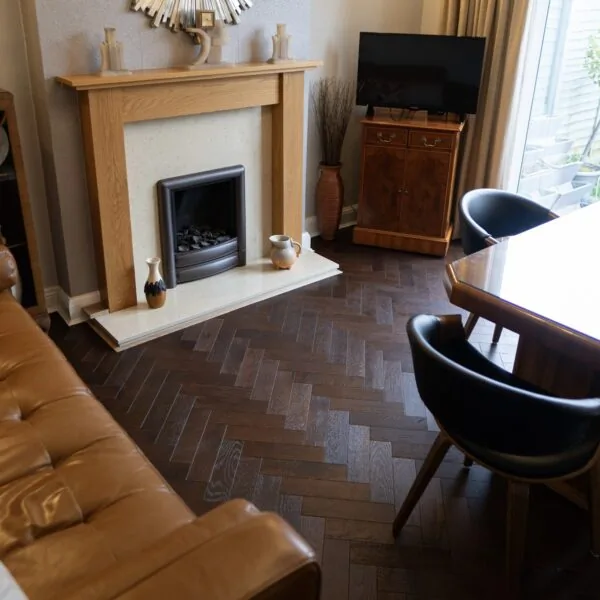

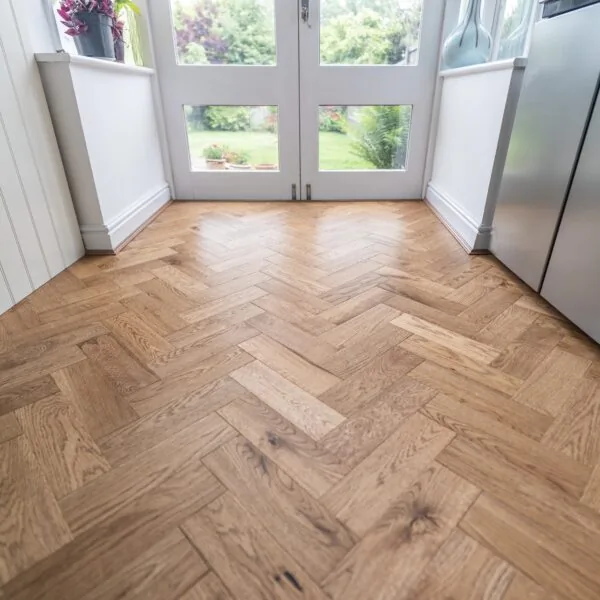
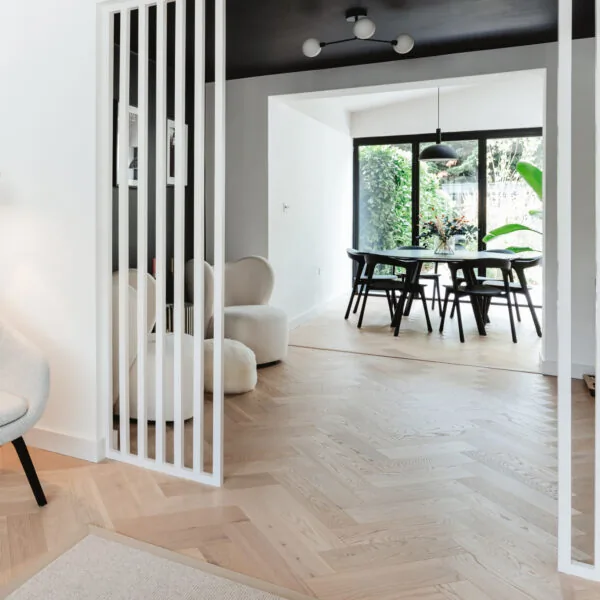





Yes, herringbone flooring is durable, stylish, and suitable for high-traffic staircases.
Engineered herringbone with a non-slip finish offers the best safety.
Yes, with anti-slip coatings, textured finishes, or stair nosing.
Absolutely—engineered wood provides stability and moisture resistance.
It is designed to handle heavy daily use, especially with quality finishes.
Costs vary by material and labour but are higher than standard flooring due to precision cutting.
Sweep regularly, wipe spills quickly, and use recommended cleaning solutions.
Yes, many homeowners use the same pattern for a seamless look.
Yes, it’s ideal for retail, offices, and hospitality due to its durability.
Bold finishes, oak and walnut tones, and contrasting stair risers are trending.
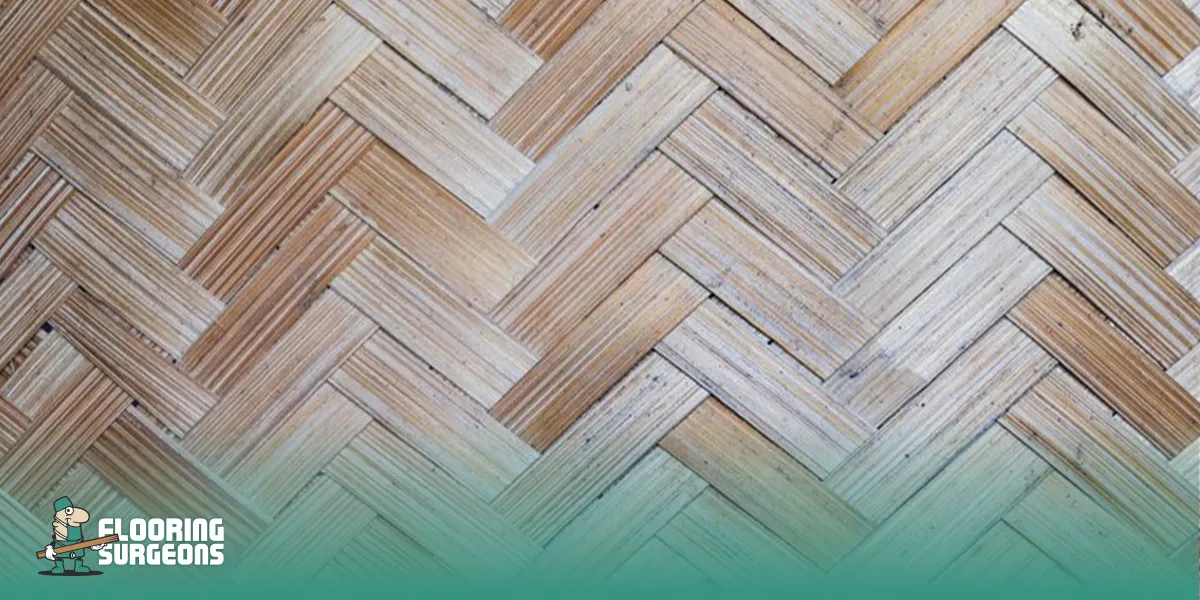
Its interlocking geometry provides each step with a structured grip and a subtle visual rhythm that enhances safety and design. Unlike plain boards, the short, opposing planks of a herringbone layout resist warping and stay firm against vertical pressure — a key factor in areas where movement and sound can quickly expose poor installation.
So yes, herringbone does work on stairs — but only when cut, aligned, and installed with precision. It’s not just a style choice; it’s a test of craftsmanship.
Few designs can transform stairs the way herringbone does. The angular “V” pattern gives motion to something otherwise static — turning each step into part of a flowing design story.
In older or classic homes, herringbone on stairs echoes the heritage geometry once seen in grand entrances and galleries, bringing back a sense of traditional joinery and bespoke detail. In modern interiors, it becomes a sculptural statement — light interacts differently with every plank, creating shadows and highlights that make the stairwell feel deeper and more dimensional.
For that reason, designers often use engineered oak herringbone for stair treads — it offers both the natural warmth of timber and the precision fit needed for angled surfaces. A matte finish with light brushing enhances the grain and provides traction without losing elegance.
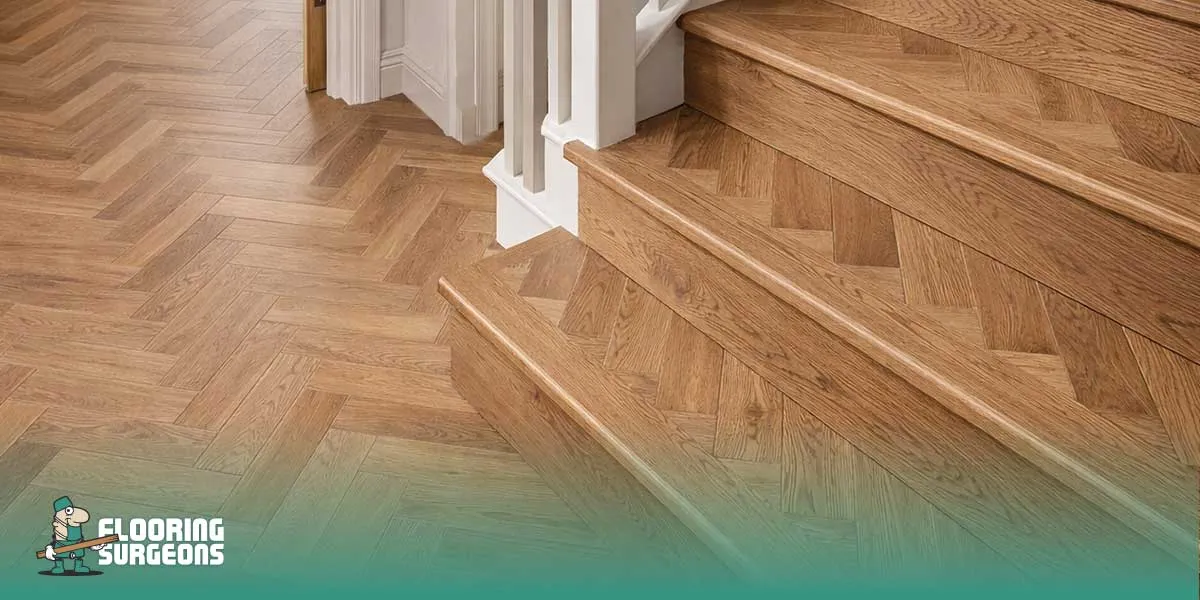
Seamless Flow Between Staircase and Floors
Continuity matters — but not just visually. When the same herringbone pattern continues from your hallway onto the stairs, it does more than match colour or tone. It gives a psychological sense of coherence, guiding the eye upward in a natural rhythm that feels calm and balanced.
Technically, this approach also simplifies transitions: using the same engineered herringbone planks for floors and stairs ensures consistent thickness, nosing alignment, and colour tone throughout the home.
To make the effect seamless, the stair edges should be custom-trimmed with matching stair nosings — either in solid oak or colour-matched laminate. This not only ties the look together but also strengthens the edges for long-term durability.
When installed correctly, the result isn’t just a staircase that connects floors — it elevates the entire design, both literally and visually. Discover expert craftsmanship and precision installation at Flooring Surgeons.
Expert Note (Real-World Insight):
If you’re planning to install herringbone on stairs, avoid narrow planks under 70 mm — they can distort the pattern and make the tread look busy. The ideal choice is wide-format engineered herringbone (100–120 mm wide) for a balanced, contemporary appearance that feels proportional to the stair’s size.
Not every herringbone plank is suitable for stair use. Stairs face more wear, more angles, and more temperature variation than flat floors. That means material choice isn’t just about style — it’s about how the floor performs under constant movement and contact. Here’s how the most common types compare in real use.
Engineered herringbone has become the go-to choice for stair installations — and for good reason. Its cross-layered structure provides dimensional stability, preventing warping or expansion with changes in temperature or humidity. This is especially important for stairs, which often experience airflow and light from open hallways and windows.
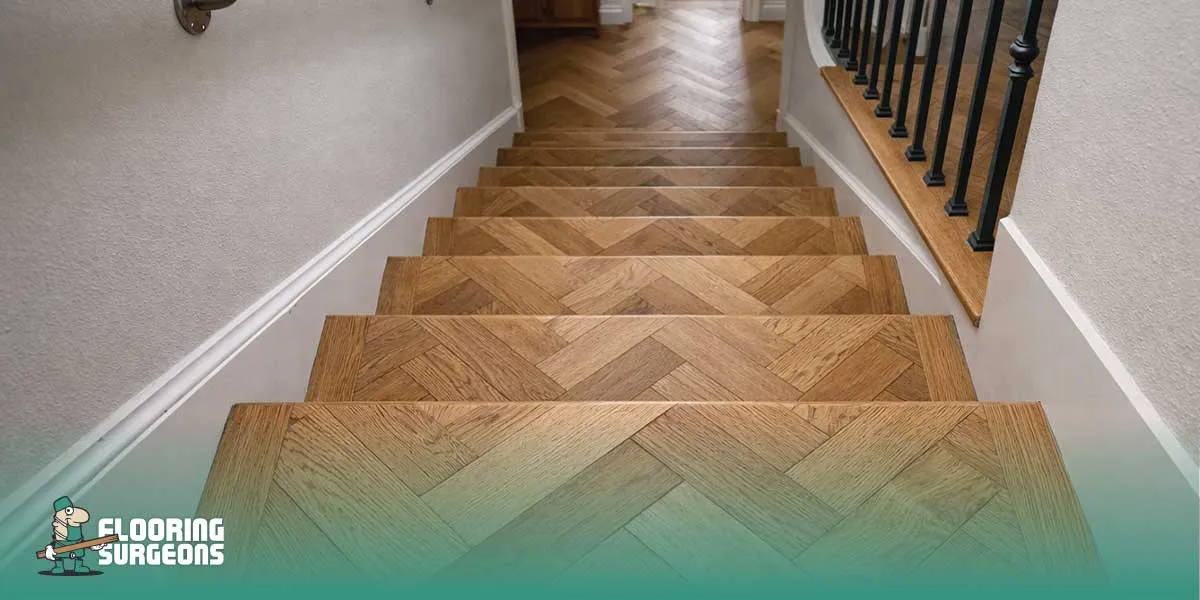
Unlike solid wood, engineered herringbone can handle minor substructure flex and remains secure under constant foot pressure. The surface veneer is real hardwood, so you still get authentic grain and tone — but with a more forgiving, moisture-resistant core.
Another advantage is its lighter weight, making it safer and easier to install on steep or narrow staircases. For most projects, 14–15mm engineered oak herringbone delivers the ideal balance between performance, longevity, and visual quality.
Both solid and engineered herringbone flooring can look stunning on stairs, but they behave differently over time.
| Feature | Solid Wood Herringbone | Engineered Herringbone |
| Structure | Single piece of hardwood | Multi-layered with a hardwood top |
| Durability | Extremely durable but sensitive to humidity | Highly stable, resists expansion |
| Maintenance | Can be sanded/refinished multiple times | Can be refinished 1–2 times |
| Installation | Heavier, requires precise cutting and adhesive | Easier to install, lighter for stair use |
| Cost | Higher initial cost | More affordable, similar look |
| Best For | Heritage or premium homes with a stable climate | Modern homes or high-traffic stairs |
In short:
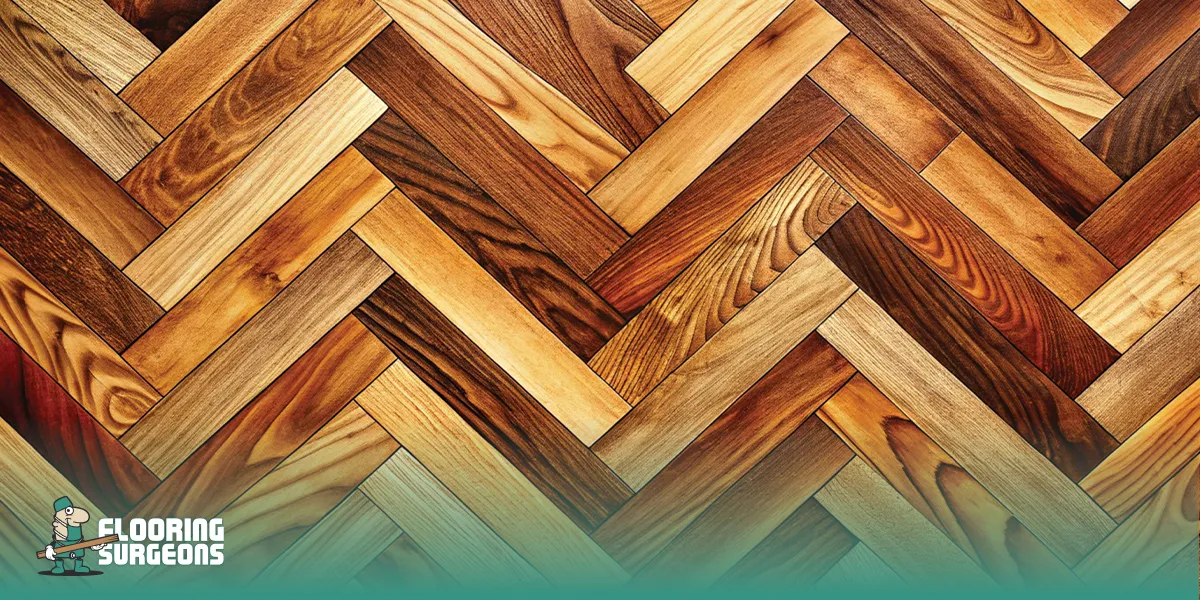
When it comes to premium wood types, oak and walnut dominate stair design — each with a distinct personality and performance.
Both species are available in engineered formats, giving you the look and feel of solid hardwood with the structural stability that stairs demand.
Expert Tip:
If your goal is a continuous look from the hallway to the staircase, order the same herringbone flooring in plank and stair tread formats from a single batch. This ensures perfect colour tone and grain alignment — a subtle detail that dramatically elevates the final result.
Stairs are where flooring is truly tested — every step must balance safety, comfort, and sound control. Herringbone stair flooring, when installed with the right materials and finishes, provides subtle yet powerful advantages that many homeowners overlook. From improved grip to quieter movement, it transforms daily function into effortless flow.
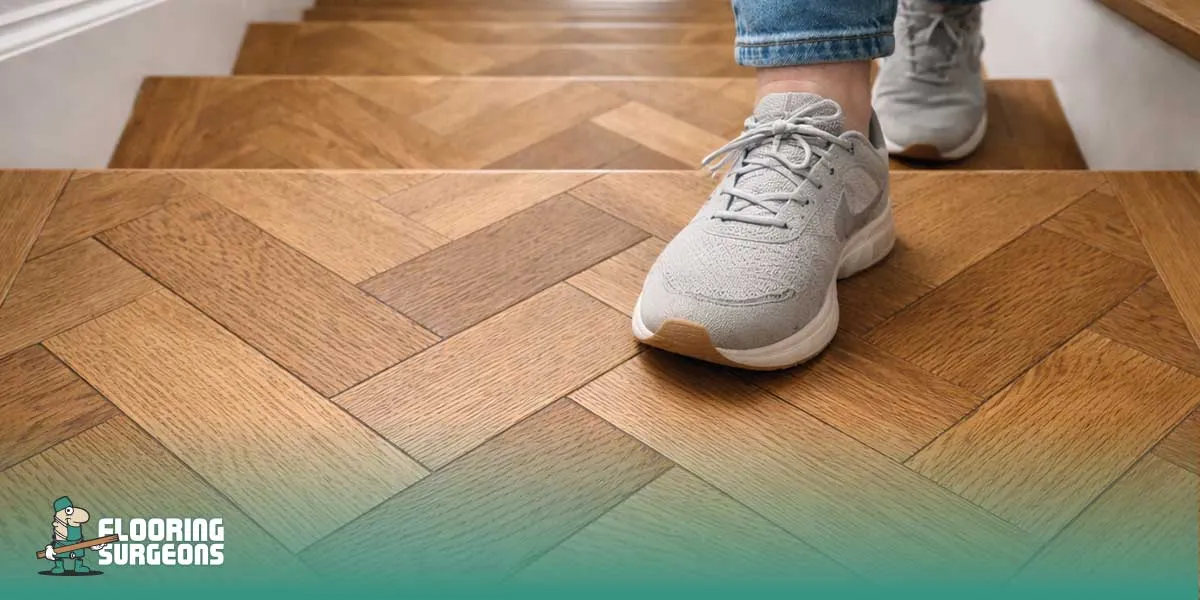
Wood stairs can be beautiful — but only when they’re safe. That’s why professional installers often enhance herringbone stair treads with anti-slip coatings and brushed surface treatments.
Herringbone’s interlocking pattern also enhances safety: the alternating plank angles create micro-edges that subtly resist sliding, unlike long, straight boards, which can act like ramps. This makes engineered herringbone stairs an excellent choice for family homes or high-traffic staircases.
For maximum safety, aim for a slip-resistance rating of R9–R10 on finished treads — the same level recommended for public indoor stairs.
One of the least discussed — but most appreciated — benefits of engineered herringbone stairs is their acoustic control. Stairs are natural amplifiers: every step can echo through hollow spaces. The dense, multi-layered core of engineered herringbone flooring absorbs vibration, reducing echo.
Adding an acoustic underlay or flexible adhesive beneath the stair treads further softens impact noise, making footsteps quieter and less sharp — a noticeable improvement in multi-level homes or apartments.
For solid wood stairs, a high-quality felt or cork isolator between the tread and substructure can deliver a similar result while preserving the authentic timber resonance.
Combined with the compact, interlocking plank pattern of herringbone, these acoustic solutions prevent the “hollow step” sound that often plagues cheaper installations — creating a staircase that feels solid, stable, and acoustically calm.
Expert Tip:
If your staircase is close to bedrooms or living areas, consider pairing engineered oak herringbone with a sound-reducing underlay and brushed matte finish. The combination enhances grip, minimises noise, and maintains visual continuity across floors.
Staircases are high-impact zones — every step concentrates weight, friction, and motion far more than any flat floor. That’s why durability is critical. A well-installed herringbone stair floor doesn’t just look refined; it withstands years of daily contact, vibration, and cleaning cycles without losing structure or finish. With the right material choice and care routine, a piece of furniture becomes one of the most reliable parts of the home.
Herringbone flooring performs exceptionally well on stairs due to its short planks and alternating grain direction. These two design features evenly distribute stress across the tread, preventing warping or cupping common in longer boards.
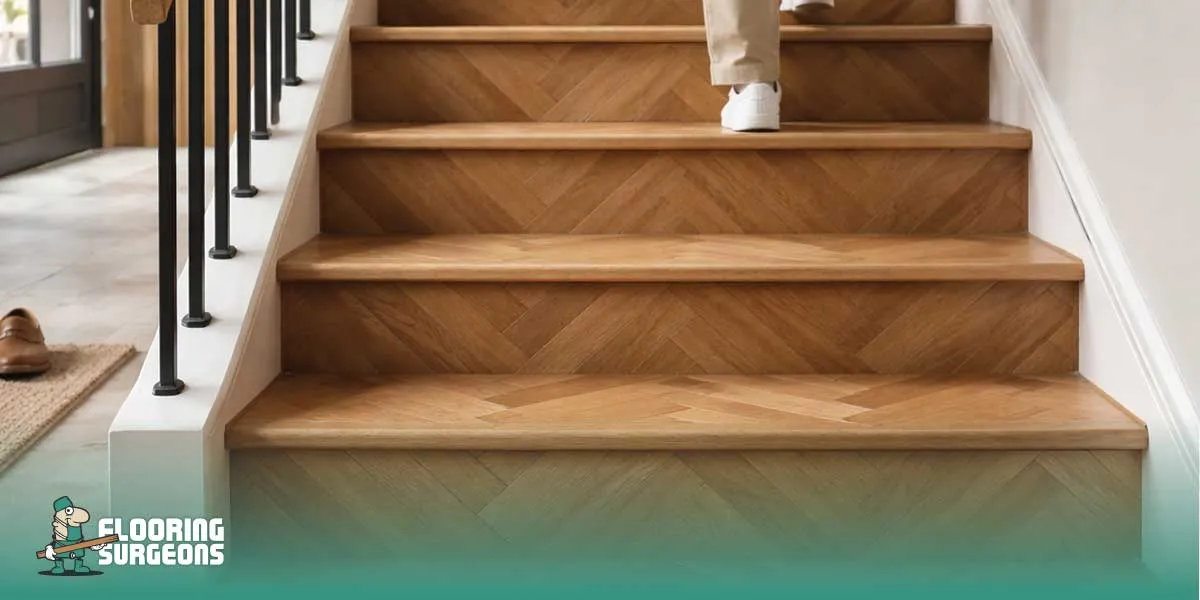
In both homes and commercial interiors — from offices to boutique staircases — engineered herringbone offers outstanding dimensional stability. Its layered core absorbs impact while maintaining precise geometry, even under constant use.
For even greater resilience:
The result is a staircase that not only passes the test of time but also looks better as it ages, developing a natural patina rather than visible damage.
Maintenance doesn’t need to be complicated — consistency is what matters most. Wooden herringbone stairs benefit from simple, routine care:
To prevent scuffs, add felt pads to furniture at landings, and place anti-slip mats on entry steps. Avoid silicone-based polishes or harsh detergents, as they can leave a residue that reduces traction.
Properly maintained, a high-quality engineered or solid oak herringbone staircase can last 30–40 years, with only periodic refinishing required to restore its appearance. It’s an investment not only in design but in longevity.
Expert Tip:
For households with pets or frequent stair use, consider a satin or brushed finish rather than gloss — it hides micro-scratches far better and provides subtle texture for improved grip.
In commercial environments, staircases are more than transitions — they’re statements of brand identity and visitor experience. Whether in boutique offices, high-end restaurants, or retail spaces, herringbone stair flooring delivers a rare balance of durability, safety, and refined aesthetics. Its structured geometry performs exceptionally well under daily traffic while maintaining a tailored, professional look that elevates the entire interior.
Modern offices and retail stores demand flooring that communicates design integrity yet withstands constant movement. Engineered herringbone meets both expectations — offering the visual sophistication of solid wood with the technical strength needed for commercial use.
Choosing commercial-grade lacquered finishes (rated AC4 or higher) enhances scratch and impact resistance, while anti-slip nosings and acoustic underlays ensure both comfort and compliance with safety standards.
The result: a professional staircase that looks custom-designed yet performs like industrial flooring.
In restaurants, hotels, and lounges, flooring has to achieve something more subtle — create atmosphere while enduring high footfall, spills, and frequent cleaning. Herringbone’s angled pattern reflects light in multiple directions, giving staircases visual depth even under dim ambient lighting.
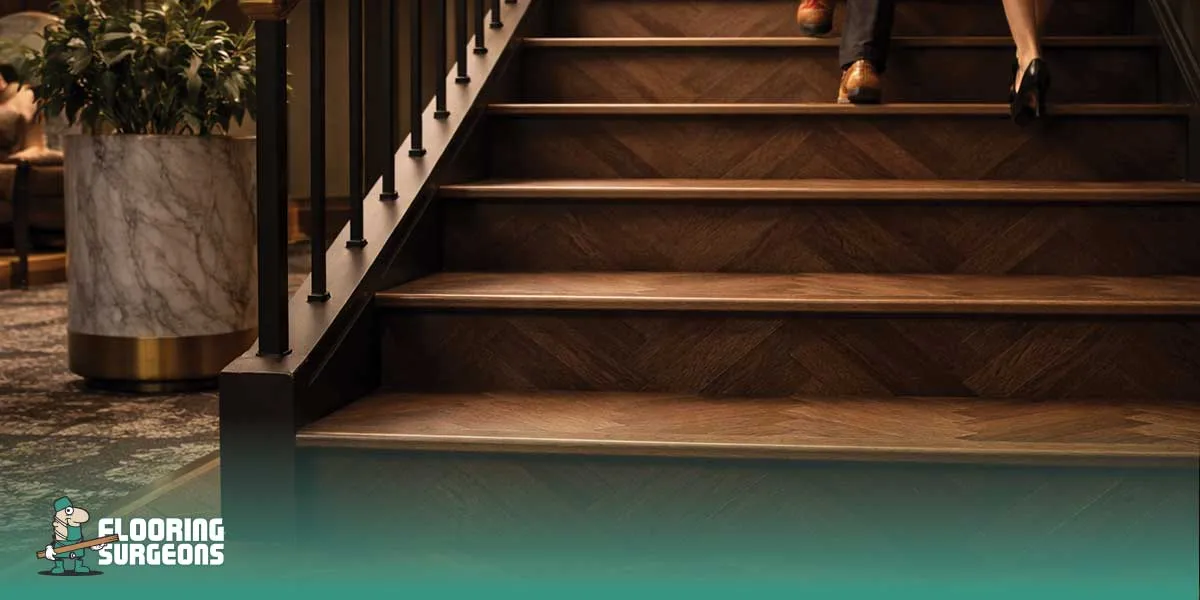
Engineered herringbone also handles temperature and moisture changes typical of commercial HVAC systems, maintaining stability even in air-conditioned interiors or near kitchen zones. Combined with professional sealing and regular maintenance, it provides the ideal blend of long-term resilience and boutique-level style.
Herringbone stairs in hospitality settings don’t just meet safety codes — they create a tactile, welcoming transition that reinforces the brand’s sense of quality and care.
Expert Tip:
When specifying herringbone for commercial stairs, request planks with a wear layer of 4–6mm and a commercial-grade surface finish. This combination ensures the aesthetic of real wood while meeting traffic durability standards (EN 13329 / AC4+).
Discover stair flooring that blends craftsmanship, comfort, and continuity. Explore our full range of engineered and solid herringbone options explicitly designed for staircases. Order free samples to see how each tone works with your interior, or request a no-obligation quote from our experts for tailored advice on installation, durability, and matching your existing floors.