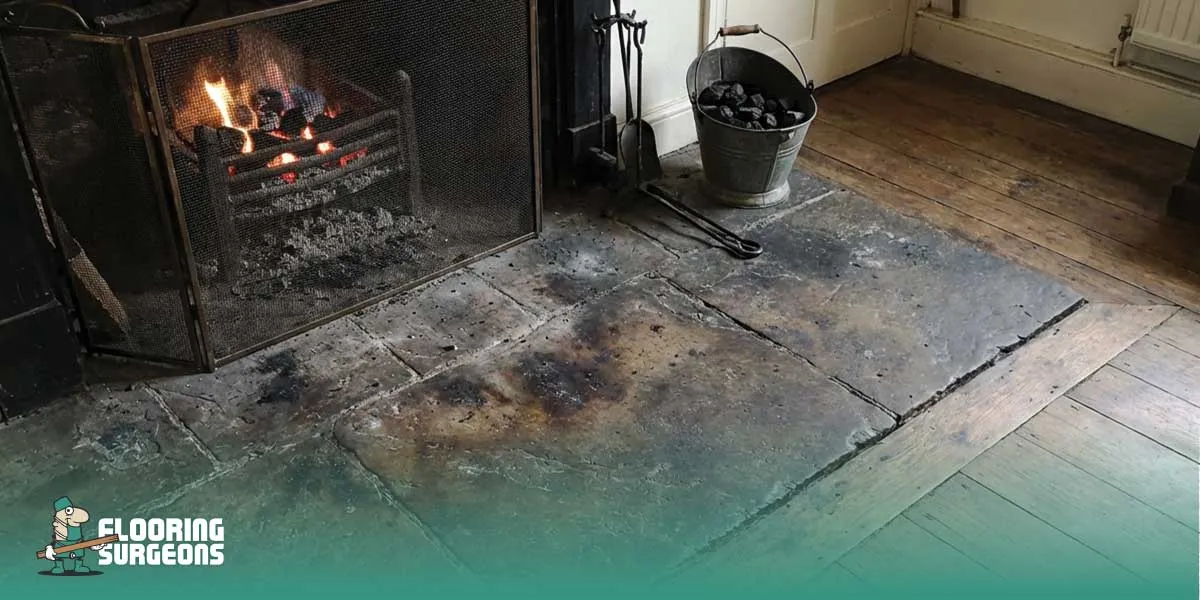
When it comes to UK homes with traditional coal fireplaces, the safest and most reliable flooring solutions are non-combustible materials such as stone, tile, or properly detailed hearth-based flooring systems. These options handle heat, sparks, and ash far better than most modern floor finishes. That does not mean other materials are always impossible, but it does mean flooring choice needs more care than in homes with modern or decorative fireplaces.
The key issue is not style, but heat and fire exposure. Traditional coal fireplaces produce higher surface temperatures, open flames, and stray embers. Flooring that works perfectly well elsewhere in the home can become a risk or a maintenance problem when placed too close to an active open fire. This is why some popular flooring types that look good online are simply not suitable in real UK living rooms with working coal fires.
Many homeowners feel unsure because advice online often focuses on appearance rather than safety. Some sources suggest flooring ideas without clearly explaining what should be avoided, what needs protection, or how traditional fireplaces change the rules entirely. As a result, people are left wondering whether wood is safe, whether modern alternatives can cope with heat, or whether only stone and tile are acceptable.
In this article, you will find clear, practical guidance on which flooring solutions work best with traditional coal fireplaces, which options should be avoided, and how to balance safety, durability, and appearance in a UK home. If you only wanted a direct answer, you already have it. If you’re going to understand your options properly and avoid costly mistakes, the rest of the article will walk you through them step by step.
Table of contents
What Flooring Works Safely with Traditional Coal Fireplaces
Not all flooring materials can safely cope with the heat, sparks and ash produced by a traditional coal fireplace. The safest options are those that are non-combustible, heat-resistant, and stable under temperature changes.
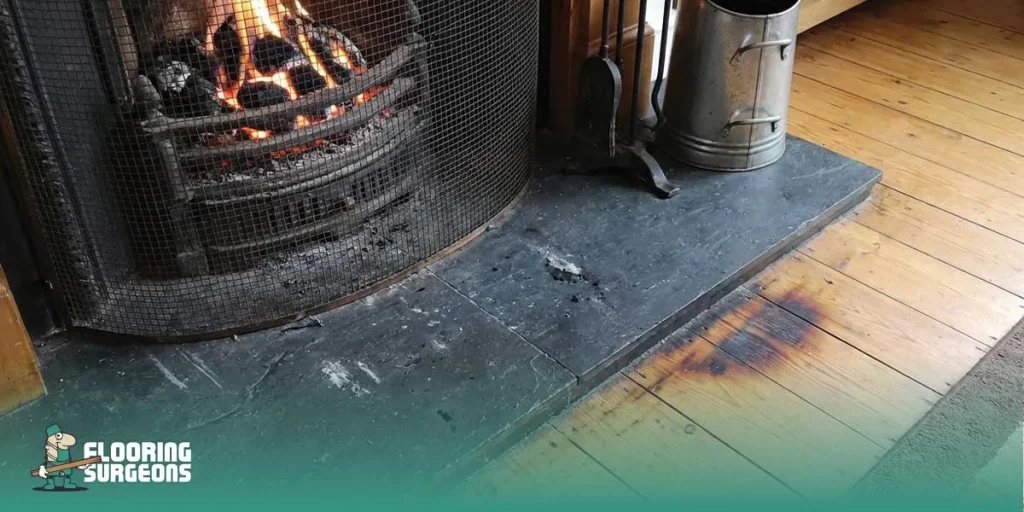
The table below gives a clear overview of which flooring types are generally suitable and which are not in UK homes with traditional coal fireplaces.
| Flooring type | Safe to use near coal fireplaces | Reason |
| Natural stone | Yes | Non-combustible, highly heat-resistant, and durable |
| Ceramic or porcelain tiles | Yes | Designed to withstand high temperatures and sparks |
| Slate flooring | Yes | Excellent heat tolerance and traditional appearance |
| Quarry tiles | Yes | Common in older UK homes and very fire-resistant |
| Solid wood flooring | Limited | Requires proper hearth separation and heat protection |
| Engineered wood | Usually no | Heat can damage layers and adhesives |
| Laminate flooring | No | Not heat-resistant and easily damaged by embers |
| Luxury vinyl flooring LVT | No | Can soften, deform, or discolour with heat |
| Carpet | No | High fire risk and unsuitable near open flames |
The key takeaway is simple. Flooring near a traditional coal fireplace must prioritise fire safety and heat resistance first. Other materials may work elsewhere in the home, but around an open fire, they often introduce unnecessary risk or long-term damage. If your goal is a safe, practical solution, stone and tile-based flooring supported by a properly sized hearth remains the most reliable choice. Other options should be considered only with clear separation and additional protection, as explained in detail in the rest of this article.
Why Flooring Choice Matters More in Homes with Open Fires
Flooring choice matters far more in homes with open fires because traditional coal fireplaces behave very differently from modern enclosed or decorative fireplaces. The difference is not subtle, and it directly affects how flooring materials perform over time. Open fires produce exposed flames, higher surface temperatures and unpredictable heat patterns. Hot ash sparks and embers can escape the firebox and land on the surrounding floor. This creates direct heat contact that many modern flooring materials are simply not designed to withstand.
Modern fireplaces, by contrast, are usually sealed or controlled systems. Heat is contained, directed upwards, and regulated. Flooring near these installations is rarely exposed to direct flame or hot debris, which is why a wider range of materials can be used safely. Another key difference is heat fluctuation. Traditional coal fires heat up and cool down unevenly. Flooring materials expand and contract in response to these changes. Materials that rely on adhesives, layered construction, or synthetic components often struggle under repeated thermal stress. Much of the confusion around fireplaces and flooring comes from common flooring myths that overlook heat safety and real-world performance.
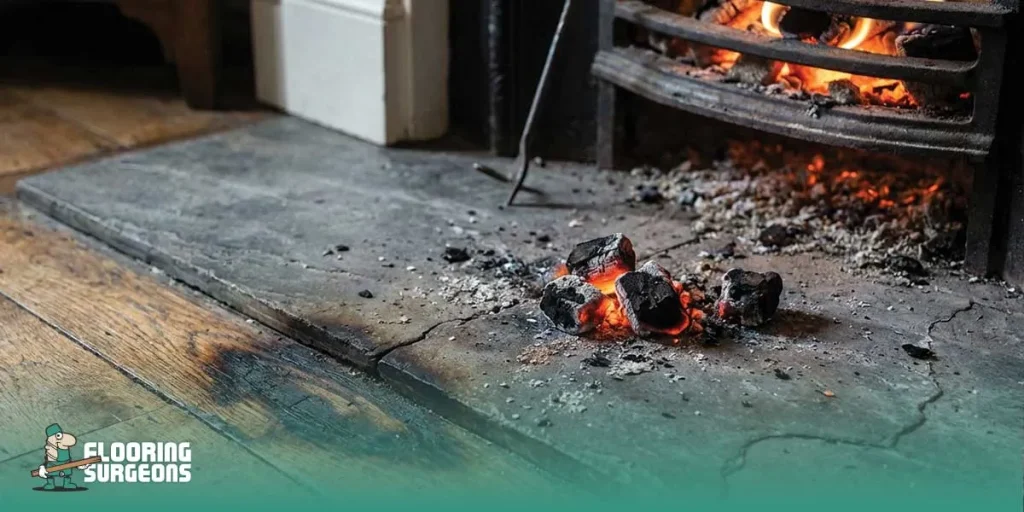
In UK homes, especially in older properties, open fires are often used regularly rather than purely as decorative features. This repeated exposure increases the risk of wear, making safety and durability far more important than style alone. This is why advice that works for modern fireplaces does not automatically apply to traditional coal fires. Choosing flooring for these homes requires a more cautious approach that prioritises heat resistance, fire safety, and long-term performance over visual trends.
Best Flooring Options for Homes with Coal Fireplaces
The best flooring options for homes with traditional coal fireplaces are materials that combine heat resistance, fire safety, and long-term durability. These options have a proven track record in UK homes and cope well with the realities of open fires. Not all timber products behave the same, and knowing the different types of wooden flooring helps avoid unsuitable choices near heat sources.
Natural stone flooring
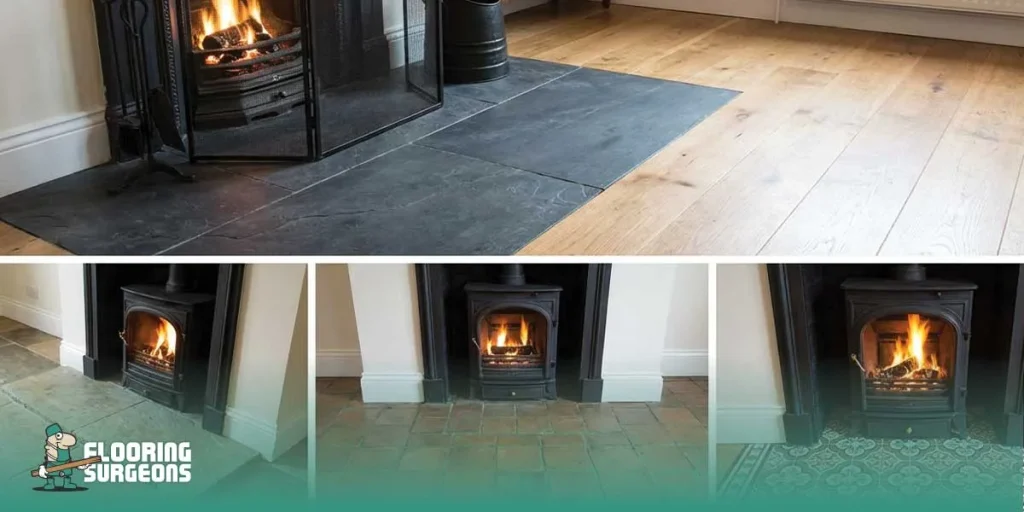
Stone is one of the safest and most reliable choices near coal fireplaces. It is non-combustible, handles high temperatures without damage, and does not react to sparks or embers. From a durability perspective, stone wears slowly and suits both traditional and contemporary interiors.
Slate flooring
Slate performs particularly well around open fires due to its excellent heat tolerance and natural grip. It copes with ash and debris without marking easily and fits naturally into older UK properties where fireplaces are still actively used.
Ceramic or porcelain tiles
These tiles are designed to withstand heat and are resistant to burning or scorching. They are easy to clean around fireplaces and maintain their appearance even with repeated exposure to ash and temperature changes.
Quarry tiles
A traditional option commonly found in older British homes. Quarry tiles are highly durable, fire-resistant, and well-suited to hearth areas where coal fires are in regular use.
Solid wood with proper separation
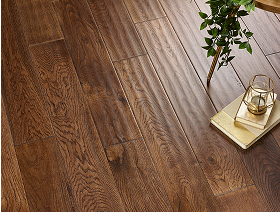
Solid wood can work in rooms with coal fireplaces if it is kept at a safe distance and properly protected by a compliant hearth. It should never be installed directly adjacent to an open fire, but can be used elsewhere in the room without compromising safety. Solid wood flooring remains one of the few timber based options that can work in rooms with coal fireplaces when correctly separated by a compliant hearth and installed with heat considerations in mind.
The common thread across these options is performance before appearance. Materials that tolerate heat sparks and movement without degrading will consistently outperform softer or synthetic alternatives in homes with traditional coal fireplaces.
Flooring Types to Avoid Near Traditional Fireplaces
Certain flooring materials perform poorly near traditional coal fireplaces and can create safety risks or long-term damage. These options are best avoided in areas close to an open fire. Despite its versatility, luxury vinyl flooring is not recommended near traditional fireplaces due to its low heat tolerance and risk of deformation.
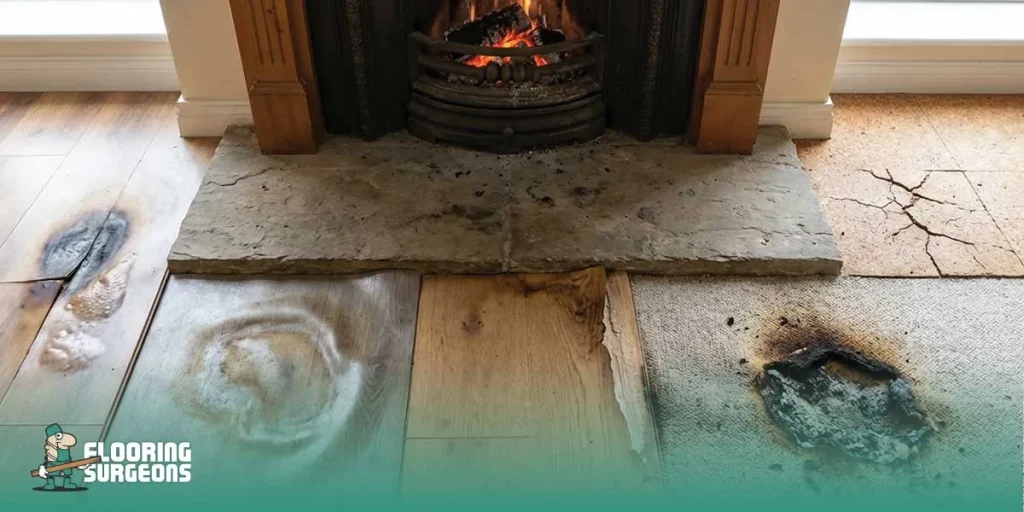
- Laminate flooring: Laminate is not heat-resistant and can scorch, warp, or delaminate when exposed to hot ash or embers. Even brief contact can cause permanent damage.
- Luxury vinyl flooring LVT: LVT contains synthetic materials that can soften, deform or discolour under high temperatures. It is particularly vulnerable to stray embers from open fires.
- Engineered wood flooring: Layered construction and adhesives can fail under repeated heat exposure. Engineered Flooring is far less tolerant of temperature fluctuations than solid wood.
- Carpet and carpet tiles: Soft floor coverings pose a clear fire risk near open flames and are easily damaged by ash sparks and heat.
- Cork flooring: Cork is sensitive to heat and can scorch or dry out near a fireplace, leading to cracking and surface damage.
- Rubber or resin-based flooring: These materials are not designed for direct heat exposure and can emit odours or degrade when subjected to high temperatures.
Avoiding these materials near traditional fireplaces reduces fire risk and prevents premature flooring failure. Even if they appear suitable elsewhere in the home, they are rarely appropriate around an active coal fire. Materials like laminate flooring may perform well elsewhere in the home, but are not designed to cope with the heat and sparks produced by open coal fires.
Stone Tile, Wood and Alternative Flooring Compared
The table below compares common flooring materials based on how they perform in UK homes with traditional coal fireplaces. The focus is on safety, heat resistance, durability and suitability rather than appearance. Cost is often a deciding factor, and understanding the differences between wood flooring and tiles helps balance budget considerations with safety near open fires.
| Flooring material | Heat resistance | Fire safety | Durability near open fires | Overall suitability |
| Natural stone | Excellent | Very high | Excellent | Highly suitable |
| Slate | Excellent | Very high | Excellent | Highly suitable |
| Ceramic tiles | Very good | High | Very good | Suitable |
| Porcelain tiles | Very good | High | Very good | Suitable |
| Quarry tiles | Excellent | Very high | Excellent | Highly suitable |
| Solid wood | Moderate | Medium | Moderate | Suitable for separation |
| Engineered wood | Low to moderate | Low | Low | Generally unsuitable |
| Laminate | Low | Very low | Poor | Not suitable |
| Luxury vinyl LVT | Low | Very low | Poor | Not suitable |
| Carpet | Very low | Very low | Poor | Not suitable |
The key difference between these materials is how they respond to direct heat sparks and temperature changes. Stone and tile-based flooring consistently perform best because they are non-combustible and stable under thermal stress. Wood-based flooring can work only when kept at a safe distance and properly protected by a compliant hearth. Synthetic and layered materials perform poorly and introduce unnecessary risk near traditional coal fireplaces. This comparison helps narrow options quickly so homeowners can focus on materials that offer both safety and long-term reliability rather than just visual appeal.
Heat Safety Maintenance and UK Home Considerations
Choosing flooring for a home with a traditional coal fireplace is not just about material type. Real-world performance depends on how the fireplace is used, how the home is built, and how the floor is maintained over time. Heat safety starts with distance and protection. UK regulations and good practice require a properly sized hearth that extends beyond the fire opening. This protects surrounding flooring from sparks and radiant heat, reducing the risk of scorching or long-term damage. Even heat-resistant flooring performs better when the hearth does its job properly. In rental properties, additional UK flooring requirements may apply, particularly where fireplaces are present, and safety standards must be met.
Maintenance is another practical factor often overlooked. Open fires produce ash, soot and fine debris that settle on nearby floors. Smooth hard surfaces, such as stone and tile, are far easier to clean and do not trap residue. Softer or layered materials tend to stain, mark, or degrade more quickly in these conditions. Older UK homes also behave differently from modern builds. Many have suspended timber floors, natural ventilation and greater movement. Flooring materials need to cope with both heat from the fire and subtle seasonal changes in temperature and humidity. Rigid non-combustible materials handle this far better than synthetic or adhesive-based products.
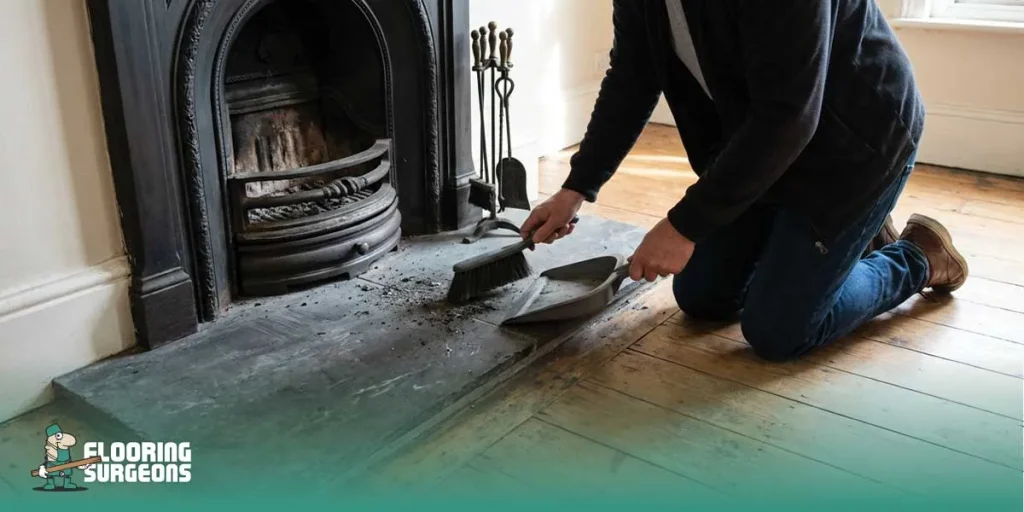
Usage patterns matter too. A fireplace used occasionally for atmosphere places far less stress on surrounding flooring than one used regularly for heating. Homes where coal fires are lit frequently should prioritise durability and safety over flexibility or appearance. Finally, repairs and future changes should be considered. Flooring near an open fire is more likely to need attention over time. Choosing materials that can be cleaned, repaired or replaced locally without disturbing the whole floor makes long-term ownership simpler and more cost-effective.
These practical considerations turn a theoretically suitable flooring option into one that actually works in everyday life in a UK home with a traditional coal fireplace. Many homeowners benefit from professional guidance when choosing flooring for homes with traditional coal fireplaces. The team at Flooring Surgeons can help assess safety, suitability, and long-term performance before any installation decisions are made.
A Simple Checklist for Choosing the Right Flooring
The right flooring choice for a UK home with a traditional coal fireplace becomes clear if you can answer the points below honestly.
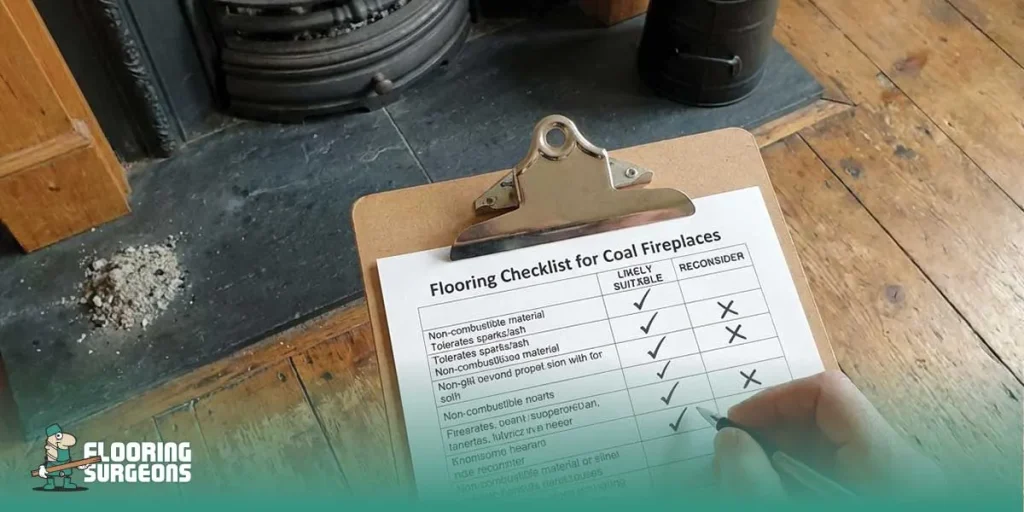
Your flooring choice is likely suitable if:
- The material is non-combustible or highly heat-resistant.
- It can tolerate stray sparks, ash, and high surface temperatures.
- A compliant hearth is in place to protect the surrounding flooring.
- The flooring does not rely on adhesives or layered construction near the fire.
- Cleaning ash, soot, and debris is straightforward.
- The material has a proven track record in homes with open fires.
You should reconsider your choice if:
- The flooring can scorch, melt or deform when exposed to heat.
- It is sensitive to temperature changes or moisture.
- It requires constant maintenance to prevent visible damage.
- It poses a fire risk near open flames.
- It is chosen mainly for appearance rather than performance.
- It has limited durability in high-heat environments.
If most of your answers fall into the first list, your flooring choice is safe and practical. If several points from the second list apply, it is worth reassessing before committing. This checklist is not about limiting design choices. It is about ensuring that safety, durability and everyday usability come first in a home with a traditional coal fireplace.

Haniye Ayanmanesh
As an expert writer for Flooring Surgeons, I combine technical SEO knowledge with a practical understanding of flooring, producing content that helps users make confident decisions while supporting long-term organic growth.