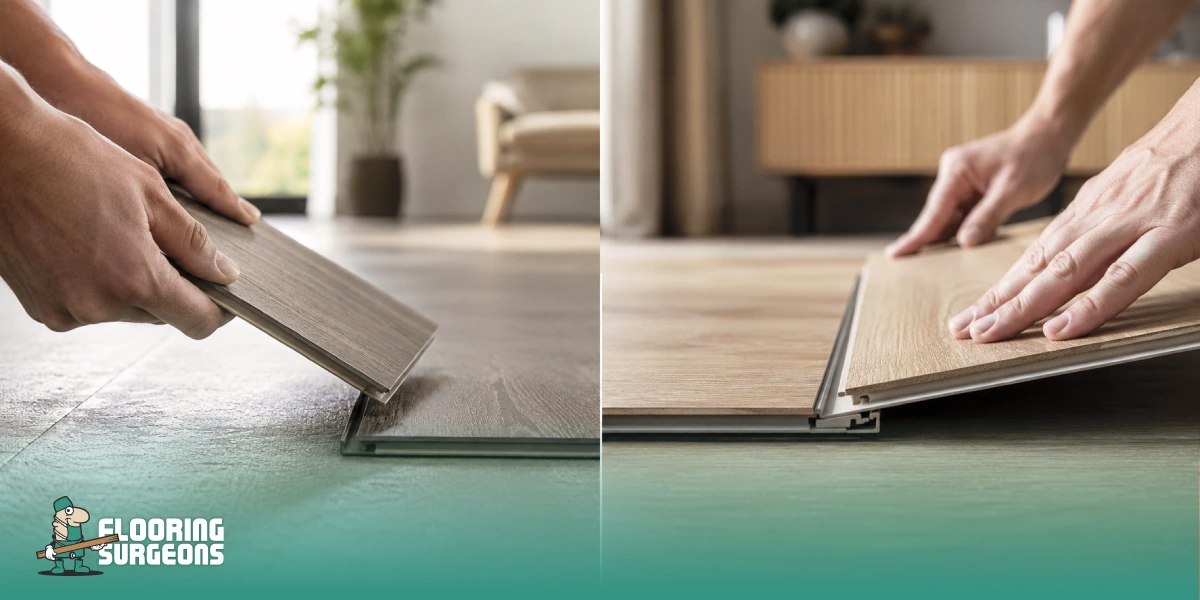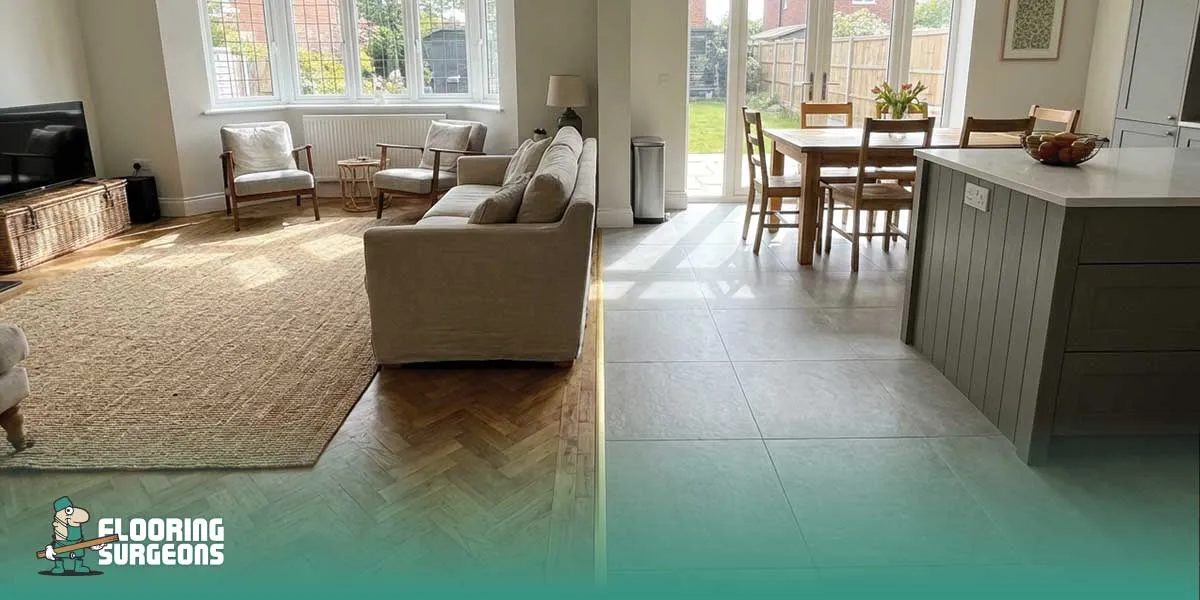
You can define different zones in a space without building walls, and flooring is one of the most effective ways to do it. By changing the type of flooring, its direction, pattern, or even creating subtle boundaries, you can clearly signal where one area ends and another begins, all without blocking light or breaking the openness of the room.
However, this approach only works when it’s done with intention. Using flooring to create zones is not just a design choice; it affects how people move through a space, how areas are actually used, and how comfortable the room feels day to day. In the right setting, zoning with flooring brings clarity and flow. In the wrong one, it can make a space feel fragmented, smaller, or visually restless. This is why two open-plan homes with similar layouts can feel completely different. The flooring isn’t just separating areas, it’s guiding behaviour, defining movement paths, and shaping how the space functions as a whole.
If all you needed was a clear answer, you already have it:
flooring can define zones without walls, but only when it respects how the space is used. If you want to understand when this approach works, when it doesn’t, and how to avoid the mistakes that undermine open-plan spaces, the rest of this article breaks it down step by step.
Table of contents
What Does “Zoning” Mean in Open Plan Interiors?
Zoning in open plan interiors means organising a single open space into clearly defined functional areas without using physical walls. Instead of separating rooms with partitions, zoning relies on visual and functional cues to show how each part of the space is meant to be used.
In practical terms, zoning helps people instantly understand where to cook, eat, work or relax, even though everything sits within one continuous area. When zoning works well, the space feels organised and intuitive. When it does not, open-plan layouts can feel confusing, cluttered, or uncomfortable to use. Flooring plays a key role here because it is always present underfoot. Unlike furniture, it does not move. Unlike lighting, it does not depend on the time of day. This makes flooring one of the clearest signals the brain uses to recognise boundaries between zones.
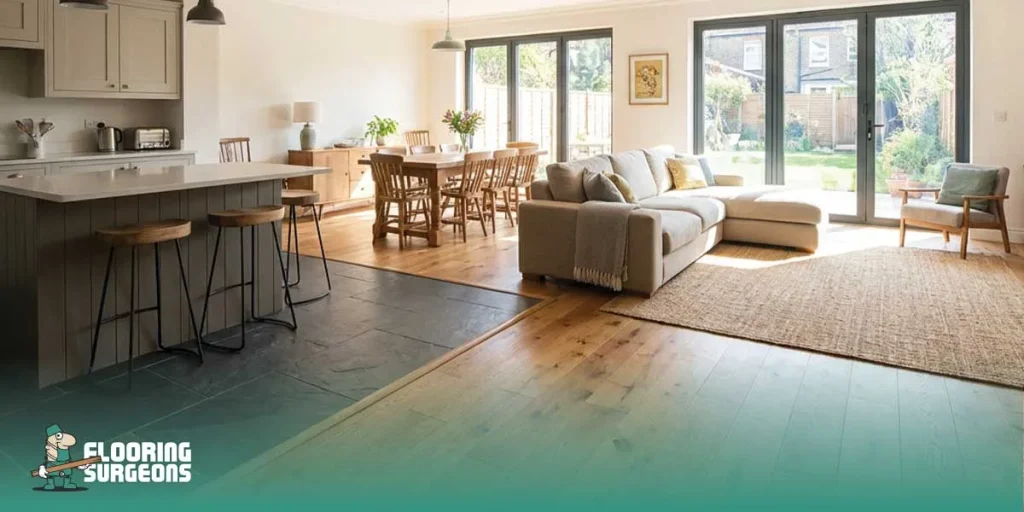
Why Flooring Is One of the Most Effective Tools for Zoning
Flooring works so well for zoning because it defines space without interrupting it. A change in flooring material, direction, pattern or finish can mark a transition between areas while keeping the space visually open and connected.
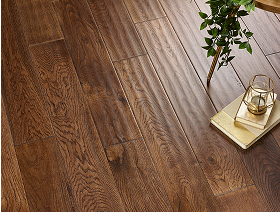
In open-plan homes, engineered wood flooring are often used to support zoning without compromising long-term stability. Another reason flooring is effective is that it aligns with how people naturally move through a space. As people walk, their eyes and feet register changes in surface, direction and texture. These subtle shifts communicate that they are entering a different zone, even if the space has no walls or doors. Most importantly, flooring-based zoning is permanent and consistent. Furniture layouts change and decorative elements come and go, but flooring establishes long-term structure. When done correctly, it supports daily use, improves flow, and prevents open plan spaces from feeling undefined or chaotic.
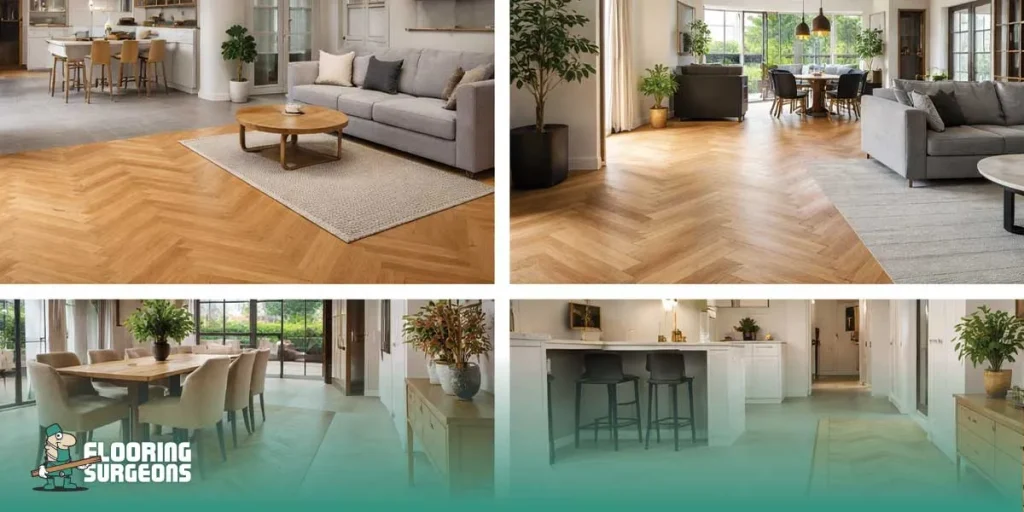
Common Flooring-Based Zoning Methods
There are a few reliable ways to use flooring to create zones in open-plan spaces. These methods work because they create clear visual cues while keeping the space open and connected. The key is using them deliberately rather than decoratively.
Using Different Flooring Materials
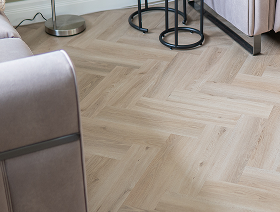
Using different flooring materials is the most direct way to define zones. For example, timber or laminate in a living area and tile or vinyl in a kitchen immediately signal a change in function. Luxury vinyl flooring are often used where subtle transitions are needed between high-use areas.
This method works best when each material suits the activity of that zone. If the materials clash visually or feel disconnected, the space can feel broken rather than organised. Successful zoning with materials relies on balance, not contrast for its own sake.
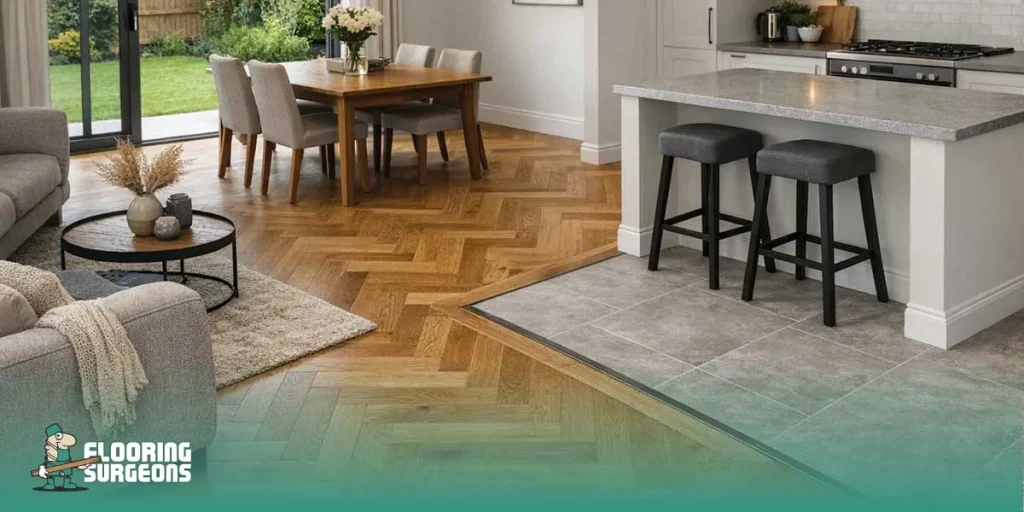
Changing Flooring Direction
Running the same flooring in different directions is a subtle but effective zoning technique. It keeps material continuity while still creating a clear shift between areas. This works particularly well in open-plan living and dining spaces, where a change in board direction can guide movement and visually anchor each zone without introducing new materials or colours.
Mixing Patterns and Layouts
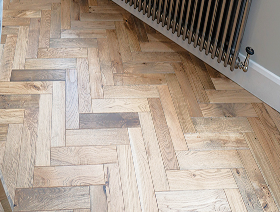
Patterns such as herringbone, chevron or block layouts can be used to highlight specific areas within a larger space. A patterned section can define a dining or seating zone while surrounding areas remain more neutral. Patterned zones such as herringbone flooring are commonly used to visually anchor dining or seating areas. This approach requires restraint. Too many patterns or overly complex layouts can overwhelm the space and distract from its function. Patterned zoning works best when it supports the room’s natural focal points.
Using Flooring Borders and Breaks
Borders and breaks act as visual thresholds between zones. These can be subtle changes in plank width, inlay details, or narrow transition strips that signal a shift in use. When done well, borders create structure without drawing attention to themselves. When overused, they can fragment the space and interrupt flow. Borders should mark transitions, not dominate them.
How People Actually Move Through Zoned Spaces
Most zoning advice focuses on how spaces look. What actually determines whether zoning works is how people move through the space.
In open plan interiors, movement usually follows predictable paths. People walk from entrances to seating areas, from kitchens to dining spaces, and between frequently used zones. Flooring that supports these circulation paths feels natural. Flooring that cuts across them feels disruptive.
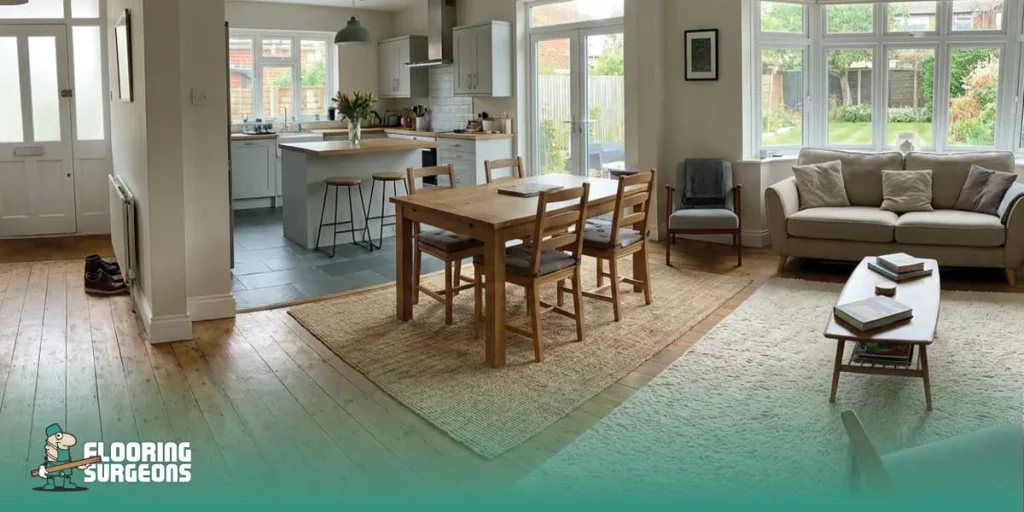
Well-planned flooring zoning does three things:
- It aligns zones with natural walking routes.
- It avoids forcing people to cross visual boundaries repeatedly.
- It allows movement to flow without hesitation or confusion.
When zoning ignores movement, people instinctively avoid certain areas or treat the entire space as a single, undefined zone. This is why some open plan layouts feel awkward, even though they look well-designed on paper.
Zoning Mistakes That Make Open Spaces Feel Smaller
Zoning is often used to improve clarity, but when done incorrectly, it has the opposite effect. Some Zoning is often used to improve clarity, but when done incorrectly, it has the opposite effect. Some flooring choices visually shrink open spaces rather than organise them. The most common mistakes are:
- Too many flooring changes within a single sightline
- Strong contrasts that interrupt visual flow
- Borders are placed where people naturally walk through
- Patterns that compete rather than guide the eye
These issues fragment the space rather than creating zones. Instead of reading the room as a single open area with clear functions, the eye keeps stopping and resetting. This makes even large spaces feel busy and constrained.
How Flooring Zones Influence How a Room Is Used
Flooring zones do more than just visually separate areas. They influence behaviour and usage without people realising it. This is one reason why many designers rarely follow trends when defining zones in open-plan spaces.
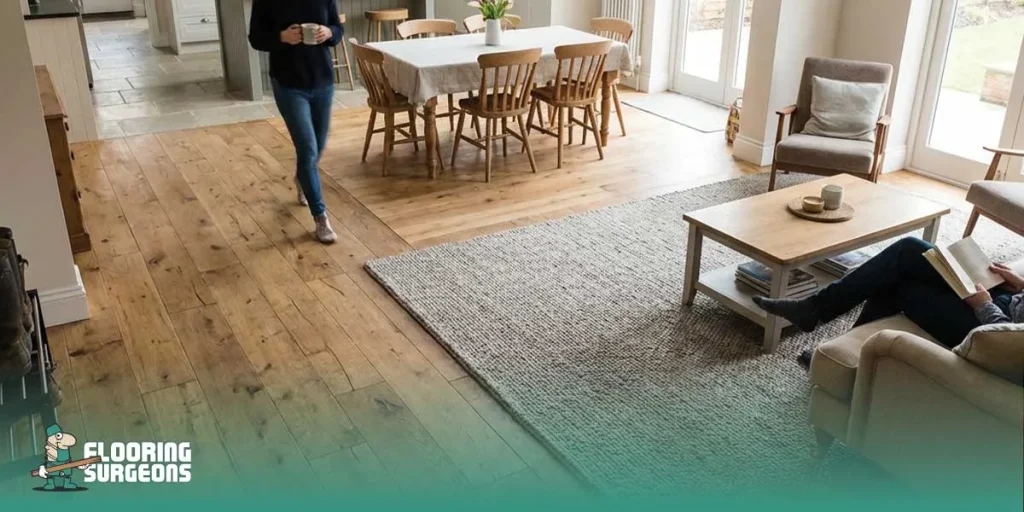
Over time, people adapt their use of a space based on flooring cues. Certain areas become places to pause, others become pathways, and some zones are subconsciously avoided. Flooring zones often determine:
- Where furniture naturally settles
- Where people choose to walk rather than linger
- How flexible or fixed a space feels in daily use
This behavioural effect is why zoning decisions should be based on function first, not decoration. When flooring zones align with how people actually live, the space feels intuitive and comfortable. When they do not, the room becomes increasingly difficult to use well.
Flooring Transitions Where Zoning Usually Fails
Most zoning problems happen at transitions rather than within zones themselves. Transitions are where the brain decides whether two areas belong together. Zoning usually fails when transitions are:
- Too abrupt for the size of the space
- Placed in high-traffic circulation paths
- Treated as decorative features instead of functional boundaries
Successful transitions are often subtle. They signal a change without demanding attention. When transitions visually dominate, they interrupt the flow and weaken the purpose of zoning altogether. In open-plan interiors, the best transitions are felt more than seen.
What Happens to Flooring Zones Over Time
Flooring zones do not stay static. As a space is used, walked through and rearranged, zoning decisions either prove themselves or slowly start to work against the room. Over time, three things usually happen:
- High traffic paths become more visually dominant than intended.
- Some zones lose their purpose as furniture layouts change.
- Transitions become more noticeable as materials age at different rates.
Zones that were created purely for visual effect tend to break down first. Zones that were aligned with real use patterns usually age well and continue to make sense years later. A key long-term issue is uneven ageing. Over time, uneven wear and movement can increase floor joint visibility, especially where zoning transitions were poorly planned. Different flooring materials and layouts do not wear at the same rate. When zoning ignores this, contrast increases in an unplanned way, and the space can start to feel disjointed rather than structured.
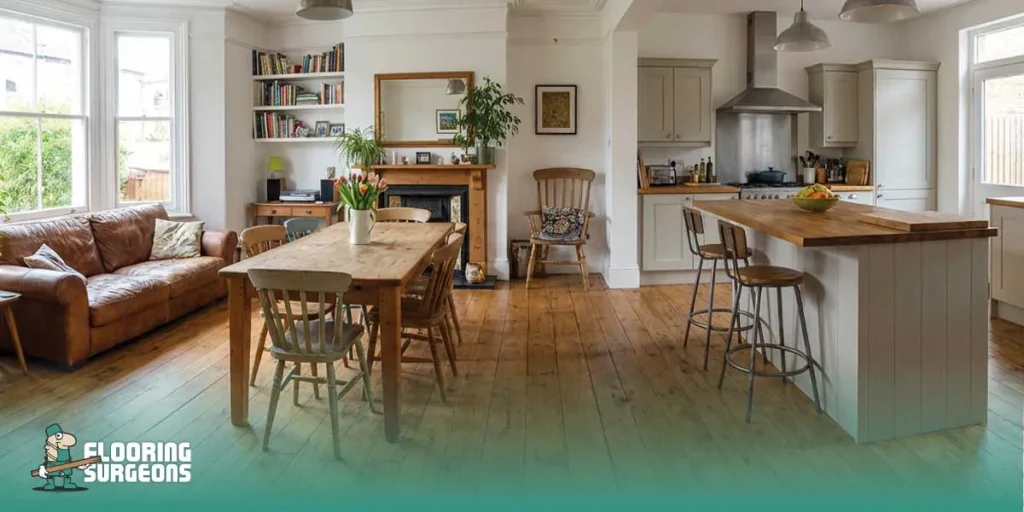
When Flooring Zoning Is a Bad Idea
Zoning with flooring is not always the right solution. In some spaces, it creates more problems than it solves. Flooring zoning is often a bad idea when:
- The space is small and has limited sightlines.
- Movement paths cut directly through multiple zones.
- The layout is likely to change frequently.
- The zones have overlapping functions.
In these cases, zoning can create visual noise and restrict flexibility. A single continuous floor often works better, allowing furniture, lighting, and layout to define use.
How Flooring Professionals Decide Where Zones Should Begin and End
Professionals do not start zoning by looking at patterns or materials. They start by understanding how the space works. In some cases, what appears to be a zoning failure is actually caused by flooring manufacturing defects that only become apparent after installation. Key factors considered include:
- Primary circulation routes
- Fixed elements such as kitchens and staircases
- Natural stopping points in movement
- Sightlines from main entry points
Zones are placed where people naturally slow down or change direction, not where a pattern simply looks good. This is what separates deliberate zoning from decorative zoning. Professionals also limit the number of zones. Fewer, well-placed zones are almost always more effective than many small ones.
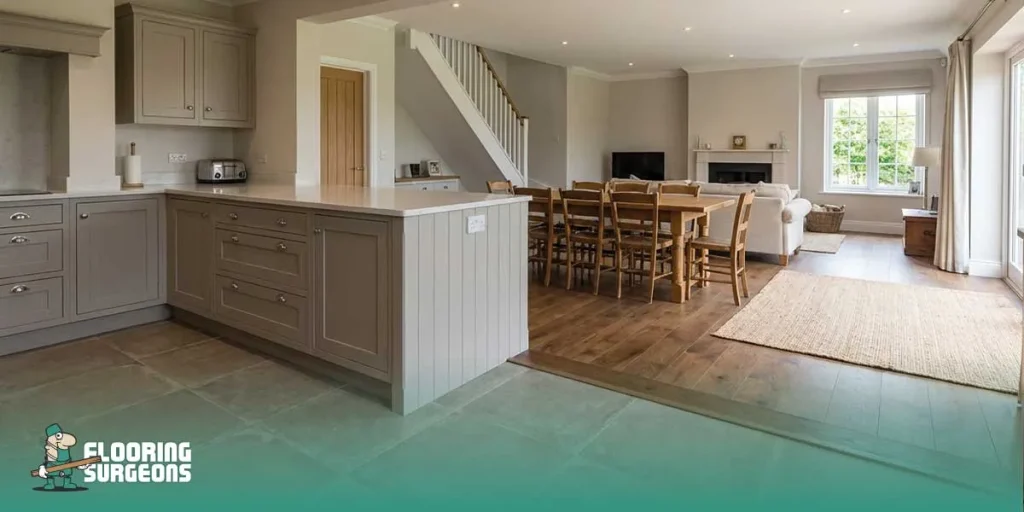
Real World Zoning Scenarios And Why Some Work
The success of zoning depends heavily on context. Similar techniques can produce very different results in different homes.
| Scenario | Why It Works or Fails |
| Living and dining in one open space | Works when zones align with furniture and movement |
| Kitchen and walkway combined | Fails when transitions sit directly in traffic paths |
| Large open plan with multiple functions | Works when zones are broad and simple |
| Small open-plan flat | Often fails due to visual fragmentation |
The key difference is not the flooring choice itself but how closely zoning supports real use of the space.
Questions to Ask Before Using Flooring to Create Zones
Before committing to flooring-based zoning, these questions help avoid common mistakes:
- Where do people walk most often in this space?
- Which areas are used daily, and which are occasional
- Will furniture layouts stay fixed or change?
- Will different materials age at similar rates
- Does zoning improve clarity or add complexity?
If these questions cannot be answered clearly, flooring zoning may not be the right approach. This approach reflects how zoning decisions are assessed at Flooring Surgeons, with a focus on long-term use rather than surface appearance.

Haniye Ayanmanesh
As an expert writer for Flooring Surgeons, I combine technical SEO knowledge with a practical understanding of flooring, producing content that helps users make confident decisions while supporting long-term organic growth.