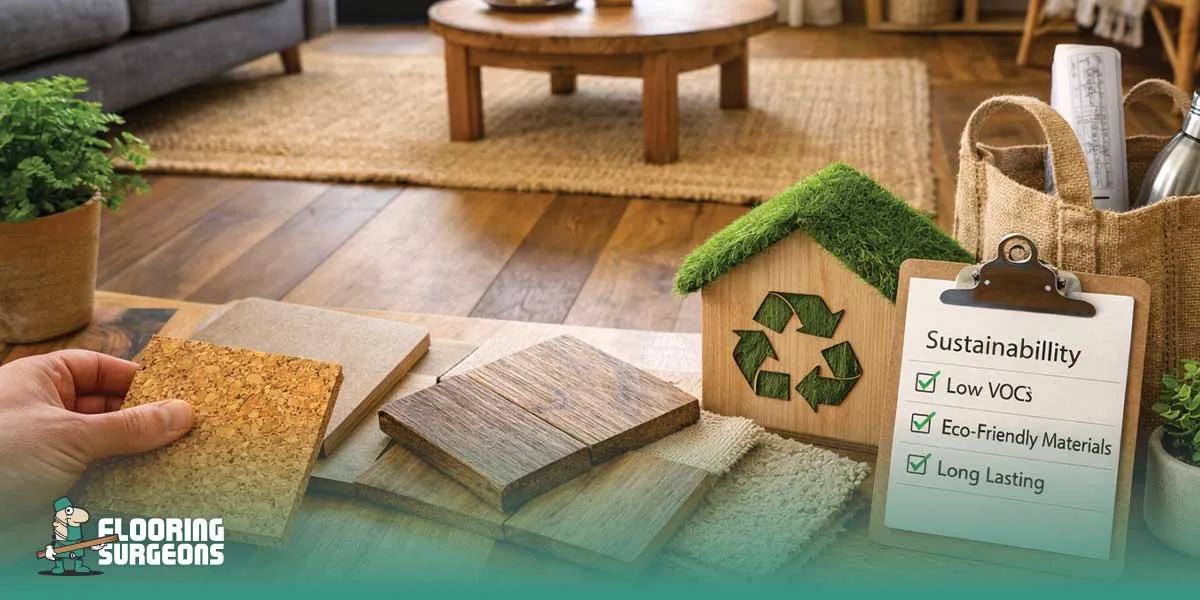
Why Flooring Is the Foundation of a Sustainable Space? Sustainability in interior design is the practice of selecting materials and design strategies that minimise environmental impact, reduce carbon footprint, improve indoor air quality, and extend the lifecycle of interior elements through responsible sourcing and low-VOC emissions.
In practical terms, sustainability in interior design is not just about aesthetics or decor choices; it is about the performance of materials over time. Because flooring covers the largest surface area in most spaces and undergoes the highest daily wear, sustainable flooring plays a critical role in reducing lifecycle waste, lowering VOC emissions, and ensuring healthier indoor environments through eco-friendly materials designed for long-term durability.
Table of contents
Core Principles of Sustainable Interior Design
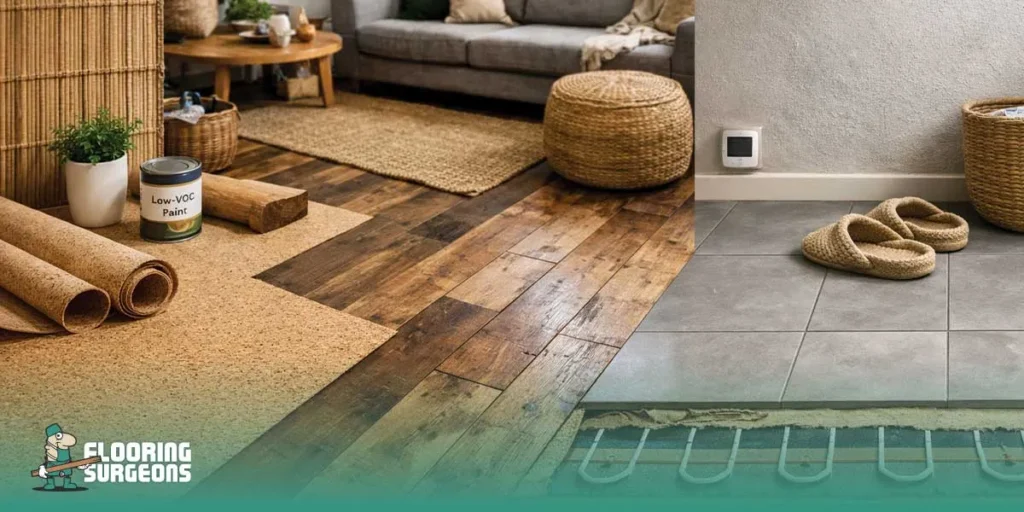
Green interior design principles focus on reducing environmental impact while improving long-term performance and indoor health. At their core, these principles prioritise eco-conscious materials, responsible production methods, and design strategies that extend the usable lifecycle of interior elements. In practice, sustainable design decisions must balance durability, resource efficiency, and indoor air quality, with flooring often serving as the most material-intensive and impact-sensitive component of a space. Below are the core principles of sustainable interior design, with practical flooring applications:
- Responsible material sourcing
This involves selecting materials harvested or manufactured through ethical and environmentally responsible processes. In flooring, this means choosing FSC-certified hardwood, responsibly sourced bamboo, or reclaimed wood that reduces deforestation and lowers overall carbon footprint.
- Renewable and recycled resources
Sustainable interiors prioritise rapidly renewable or recycled inputs to minimise resource depletion. Examples in flooring include bamboo (a fast-growing renewable resource), cork harvested without harming trees, and recycled tile or composite flooring made from post-consumer waste.
- Durability and long lifecycle
A truly sustainable material is one that does not require frequent replacement. High-quality engineered hardwood or durable luxury vinyl with extended wear layers can significantly reduce lifecycle waste and long-term environmental impact compared to short-lifespan alternatives.
- Low-VOC and non-toxic finishes
Protecting indoor air quality is essential in sustainable design. Flooring products with low-VOC adhesives, non-toxic sealants, and certified emission standards help reduce harmful off-gassing and create healthier indoor environments.
- Energy efficiency
Sustainable design considers how materials interact with energy use. Certain flooring types, such as cork or insulated underlayment systems, improve thermal performance, helping regulate indoor temperatures and reduce overall energy consumption.
When these principles are applied strategically, especially at the flooring level, they transform sustainability from a decorative concept into a measurable, performance-driven design decision with lasting environmental and health benefits.
Why Flooring Plays a Critical Role in Sustainable Interior Design
When evaluating sustainability in interior design, flooring has one of the greatest measurable impacts due to its sheer surface area and material volume. In most residential and commercial spaces, flooring represents the largest continuous material installation, meaning its carbon footprint, manufacturing process, and lifecycle performance directly influence the interior’s overall environmental impact.
Unlike decorative elements that can be updated with minimal waste, flooring replacement cycles are resource-intensive. Conventional flooring materials often need to be replaced every 8–12 years due to wear, moisture damage, or declining performance. Each replacement cycle generates additional manufacturing demand, transportation emissions, adhesive use, and demolition waste. Over time, this significantly increases flooring lifecycle impact and contributes to landfill accumulation.
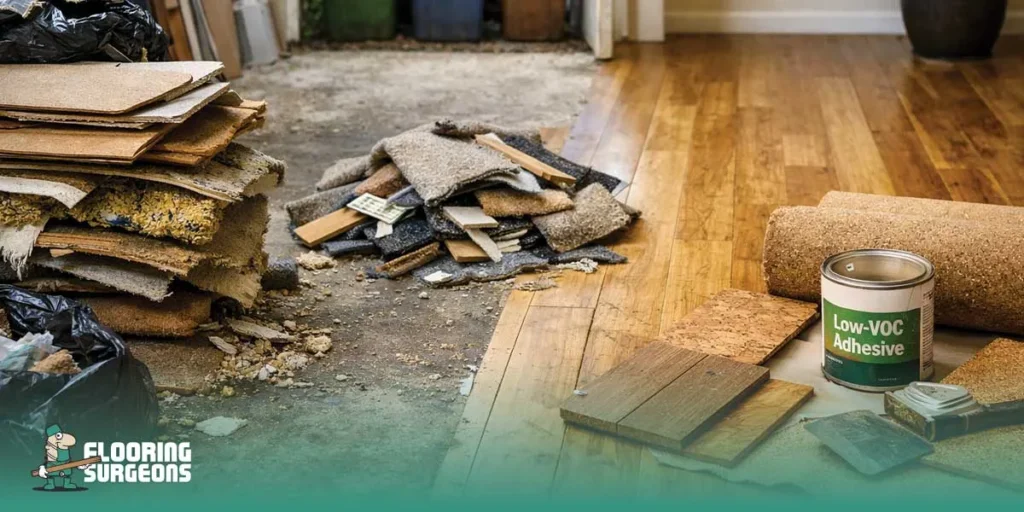
Waste generation is another critical factor. Sustainability doesn’t end at installation; responsible flooring disposal in the UK plays a measurable role in reducing landfill pressure when materials eventually need to be replaced. Many traditional flooring products are difficult to recycle due to composite layers, chemical finishes, or high-VOC adhesives. In contrast, sustainable flooring options are designed with durability, recyclability, and low-emission performance in mind.
Durable flooring solutions reduce the frequency of replacement, while low-VOC flooring minimises indoor air pollution during and after installation. The environmental impact of flooring isn’t a single number; it’s the sum of sourcing, emissions, lifespan, and what ends up in landfill when the floor is replaced. Below is a simplified comparison illustrating how material choice changes long-term sustainability outcomes:
| Factor | Conventional Flooring | Sustainable Flooring |
| Lifespan | Short | Extended |
| VOC Levels | High | Low |
| Recyclability | Limited | High |
Because flooring sits at the intersection of material volume, longevity, and indoor air quality, it becomes the foundation of sustainable interior strategy. Choosing certified, durable, low-emission flooring is not just a design preference; it is a structural sustainability decision that can reduce environmental impact for decades while improving long-term performance and indoor health.
Best Eco-Friendly Flooring Options for Sustainable Interiors
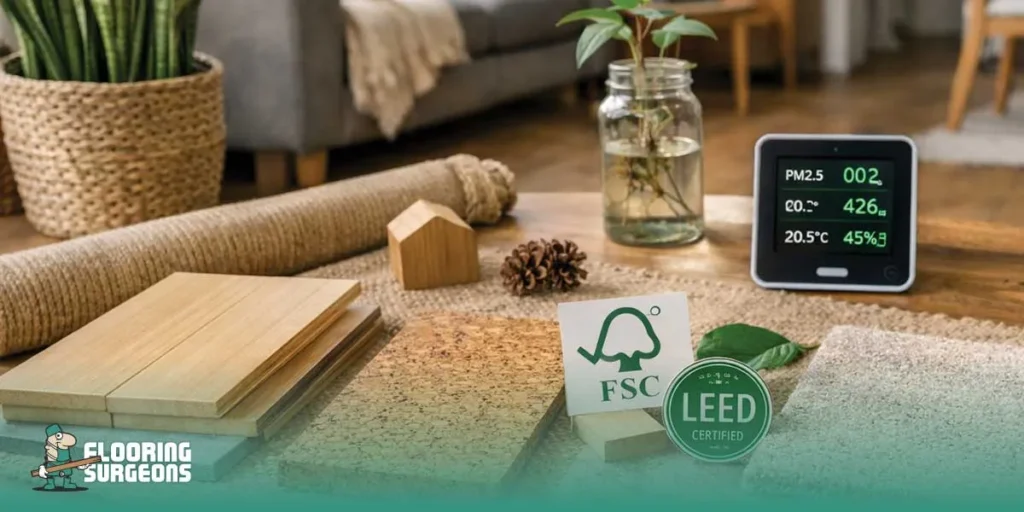
Selecting the right flooring material is one of the most important decisions in sustainable interior design. For homeowners evaluating eco-friendly flooring solutions for UK homes, performance over time often matters more than the initial sustainability claim. Because flooring directly affects lifecycle durability, indoor air quality, and long-term environmental impact, choosing verified eco-friendly materials can significantly reduce waste generation and carbon footprint over time. Below are the most effective sustainable flooring options, evaluated on performance and lifecycle.
Bamboo Flooring
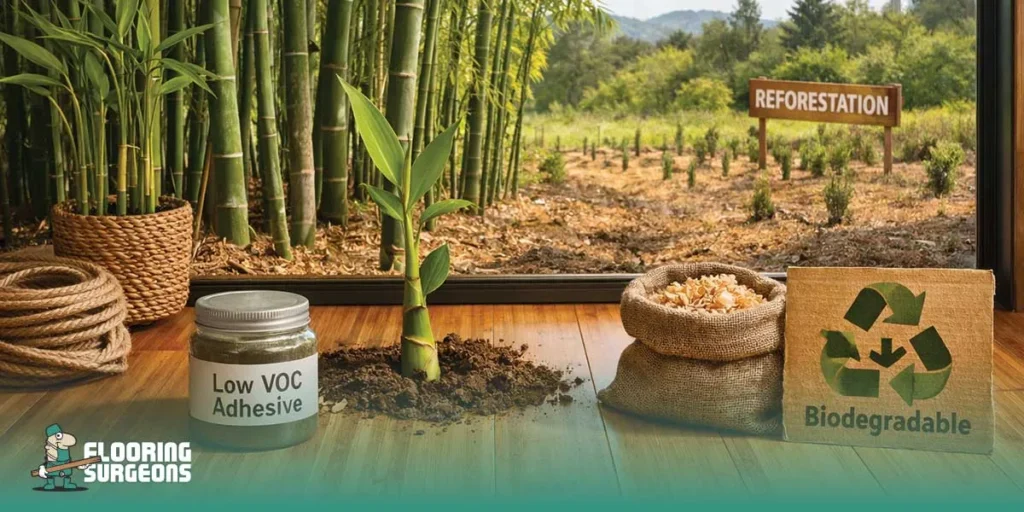
Bamboo flooring is a rapidly renewable flooring material made from fast-growing grass species that regenerate within a few years. Its sustainability profile depends on responsible harvesting and low-emission manufacturing processes. For a detailed breakdown of bamboo flooring sustainability, including pros and long-term performance considerations, see our complete guide to bamboo flooring.
Environmental Benefits:
- Derived from a fast-growing renewable resource
- Lower harvesting cycle compared to traditional hardwood
- Strong carbon absorption during the growth phase
- Potential biodegradable material under proper conditions
In terms of bamboo flooring sustainability, strand-woven bamboo offers high density and strong lifecycle durability when properly manufactured. However, environmental performance varies based on adhesives and finishing treatments used during production.
Durability & Lifespan
High-quality bamboo flooring can last 20+ years when installed correctly. Strand-woven versions provide enhanced hardness comparable to traditional hardwood, reducing replacement cycles and overall flooring lifecycle impact.
Best Applications
- Living rooms
- Bedrooms
- Light-to-moderate commercial spaces
Limitations
- Sensitive to excessive moisture
- Sustainability depends on low-VOC adhesives and responsible sourcing.
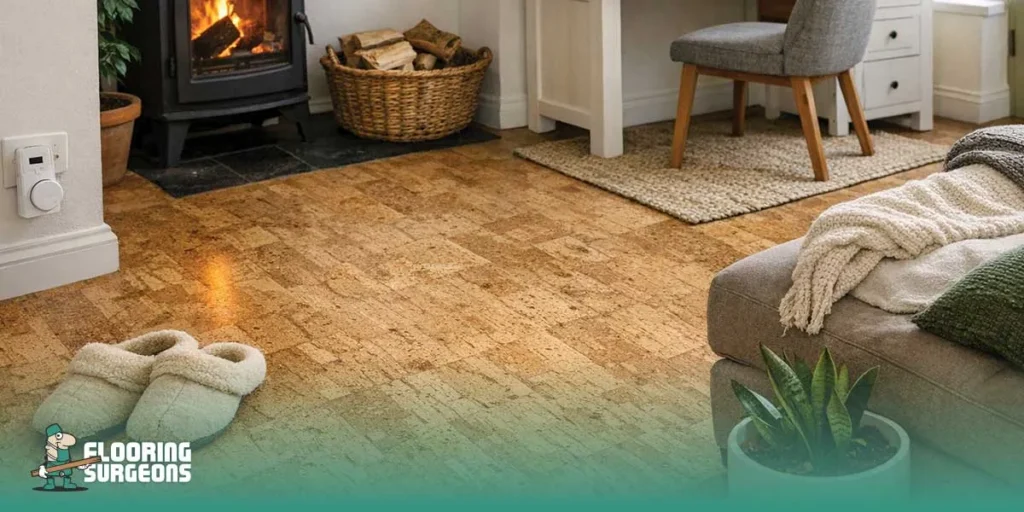
Cork Flooring
Cork flooring is made from the bark of cork oak trees, harvested without cutting down the tree, making it one of the most regenerative flooring options available.
Environmental Benefits:
- Harvested without tree removal
- Renewable resource with repeated harvesting cycles
- Naturally insulating, reducing energy consumption.
- Biodegradable potential under controlled disposal conditions
Among the benefits of cork flooring, its thermal insulation and acoustic absorption stand out. Cork contributes to energy efficiency while improving indoor comfort and reducing heating demand.
Durability & Lifespan
With proper sealing, cork flooring can last 15–25 years. Its natural elasticity helps resist impact damage, contributing to long lifecycle durability.
Best Applications
- Residential interiors
- Bedrooms and offices
- Areas requiring thermal comfort
Limitations
- Can dent under heavy furniture if not maintained
- Requires proper sealing against moisture
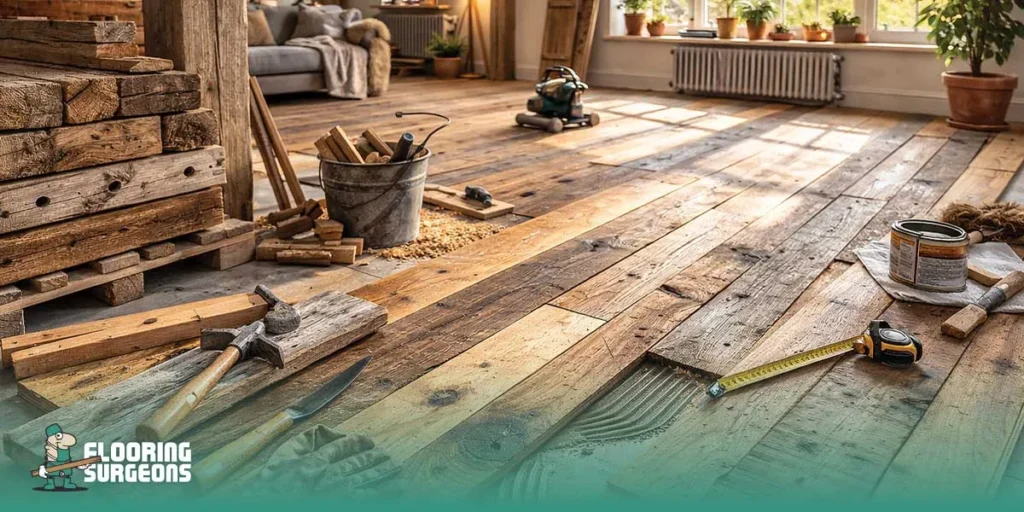
Reclaimed Wood Flooring
Reclaimed wood flooring is produced from salvaged timber recovered from old buildings, barns, and industrial structures, reducing demand for newly harvested wood.
Environmental Benefits:
- Eliminates the need for new tree harvesting
- Reduces landfill waste
- Preserves embodied carbon within existing wood
- Supports circular material use
Reclaimed wood flooring is one of the most direct ways to reduce environmental impact in interior projects. Extending the usable lifecycle of existing materials minimises the extraction of raw materials. In many sustainable interiors, responsibly sourced engineered wood flooring offers a smarter use of timber resources while maintaining structural stability and long-term durability.
Durability & Lifespan
Because reclaimed wood often comes from old-growth timber, it can offer superior density and structural stability. With proper refinishing, it can last decades.
Best Applications
- Residential renovations
- Sustainable commercial interiors
- Design-forward projects emphasising authenticity
Limitations
- Requires professional inspection and preparation
- Higher upfront cost
Recycled Tile & Stone
Recycled flooring materials, such as reclaimed stone or recycled-content ceramic tiles, are manufactured from post-consumer or post-industrial waste, reducing demand for raw materials.
Environmental Benefits:
- Diverts waste from landfills
- Reduces the extraction of new raw materials
- High lifecycle durability
- Often fully recyclable at the end of life.
Recycled tile and stone solutions offer long service life with minimal maintenance. Their density and resilience contribute to durable flooring solutions that require infrequent replacement.
Durability & Lifespan
Properly installed recycled tile or stone can last 30+ years, significantly lowering replacement cycles and flooring lifecycle impact.
Best Applications
- Kitchens
- Bathrooms
- High-traffic commercial spaces
Limitations
- Energy-intensive manufacturing (varies by producer)
- Requires professional installation
Low-VOC Luxury Vinyl Flooring
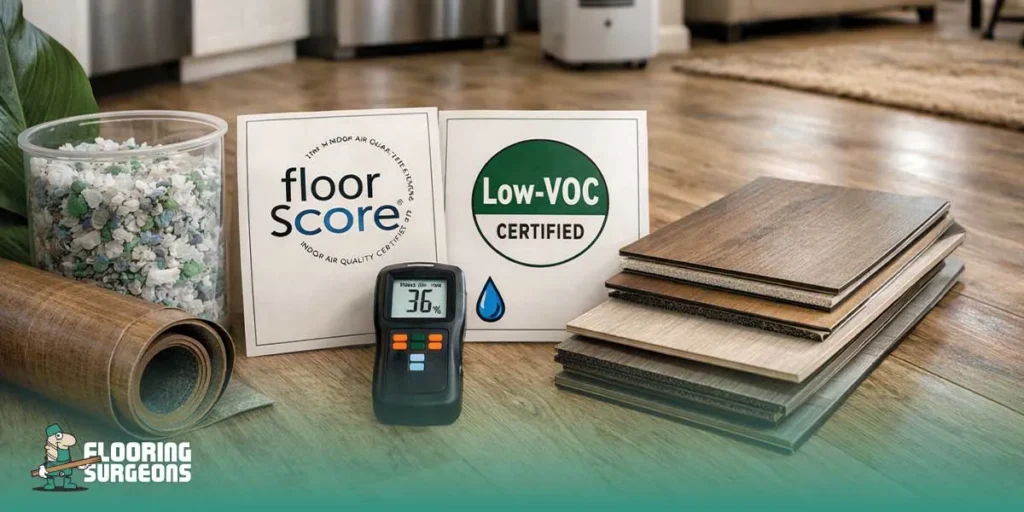
Low-VOC luxury vinyl flooring is a modern, resilient flooring option designed to reduce indoor emissions while maintaining performance and durability. Sustainable vinyl flooring performance depends on certified low-emission manufacturing and recyclable core technology. When manufactured to certified standards, low-emission luxury vinyl flooring can deliver moisture resistance, extended wear performance, and reduced replacement frequency compared to short-lifespan alternatives.
Environmental Benefits:
- Reduced VOC emissions, improving indoor air quality
- Long lifecycle durability compared to traditional vinyl
- Water resistance extends the usable lifespan.
- Some products incorporate recycled content.
While vinyl has historically faced sustainability concerns, advancements in sustainable vinyl flooring now prioritise low-emission production and extended durability. When certified for low-VOC standards, these products can significantly reduce indoor air contamination during installation and long-term use.
Durability & Lifespan
High-quality low-VOC luxury vinyl can last 20–25 years in residential settings. Its wear-layer technology supports heavy use without frequent replacement.
Best Applications
- Kitchens
- Basements
- High-moisture areas
- Commercial environments
Limitations
- Not biodegradable
- Environmental performance varies by manufacturer.
Choosing between these sustainable flooring options requires evaluating lifecycle durability, indoor air quality impact, sourcing transparency, and long-term replacement frequency. A truly sustainable interior is not defined by trend-driven material selection but by measurable performance, reduced environmental impact, and materials engineered for longevity.
Is Sustainable Flooring Worth the Investment?
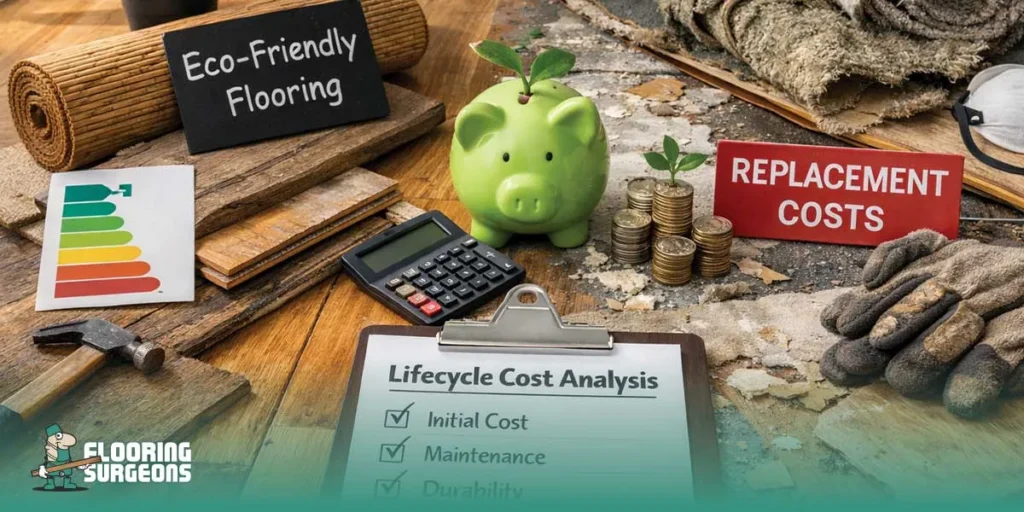
One of the most important factors in sustainable flooring ROI is reduced replacement frequency. Conventional flooring materials may need to be replaced within a decade due to wear, moisture damage, or surface degradation. In contrast, durable, sustainable flooring options such as high-quality bamboo, reclaimed wood, or certified low-VOC luxury vinyl last 20 years or more. Fewer replacements mean lower demolition costs, reduced material waste, and minimised installation labour over time.
Maintenance savings also contribute significantly to long-term flooring investment performance. Many sustainable materials are designed for resilience, requiring fewer harsh chemical cleaners and less frequent refinishing. This not only reduces ongoing maintenance costs but also limits indoor air contamination and environmental harm associated with cleaning products.
Beyond operational savings, the impact on property value should not be overlooked. Beyond material sourcing, the way flooring choices influence EPC ratings can shape long-term energy efficiency and overall property value. Buyers increasingly prioritise healthy indoor environments and eco-conscious construction choices. Flooring solutions that support low emissions, responsible sourcing, and durability can strengthen market appeal and improve resale positioning.
Rather than focusing solely on purchase price, evaluating the total cost of ownership provides a more accurate framework. In practice, evaluating sustainable flooring requires balancing durability, emissions, and long-term value, factors we assess daily when advising clients at Flooring Surgeons. When assessed across lifespan, maintenance efficiency, and long-term performance, sustainable flooring often proves to be a financially and environmentally sound investment.
Emerging Sustainable Flooring Trends
If you’re thinking about upgrading your floors, sustainability in 2025 isn’t just about “eco-friendly.” It’s about measurable impact, smarter materials, and long-term performance. Here’s what’s actually changing in the flooring industry right now:
Circular Economy Flooring
This is where flooring is designed to be reused, recycled, or disassembled instead of dumped. Instead of ripping out an entire floor and sending it to a landfill, modular systems and recyclable cores allow materials to be reused in production. That means lower waste, lower raw material extraction, and a dramatically reduced lifecycle footprint. If sustainability matters to you in the long term, circular flooring materials are becoming the smarter choice.
Carbon-Neutral Materials
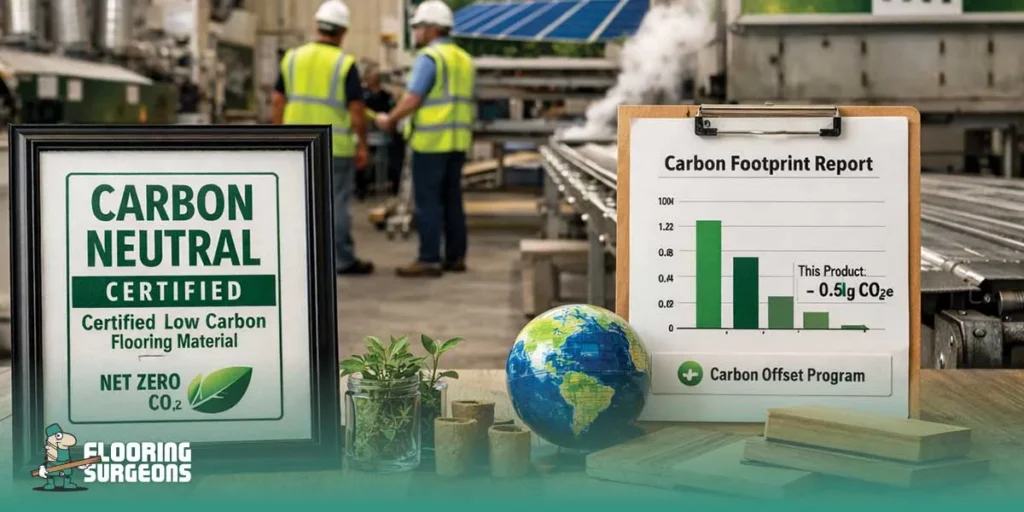
Manufacturers are now tracking and publishing carbon data. Some flooring products are produced using low-emission manufacturing processes or offset programs that reduce overall carbon footprint. In practical terms, that means your flooring decision can now be tied to real environmental numbers, not just marketing language. This is especially relevant for commercial spaces and environmentally conscious homeowners.
Biodegradable Flooring
Natural materials like cork and certain bio-based composites are gaining attention for their biodegradability. They don’t just last long; they also break down more safely at the end of life under controlled conditions. That’s a major shift from synthetic materials that remain in landfills for decades.
Smart Material Certifications
Consumers are becoming more sceptical and smarter. Third-party certifications for low-VOC emissions, responsible sourcing, and indoor air quality are no longer optional. They’re expected. If a flooring product can’t verify its environmental claims, buyers are moving on. Sustainable flooring trends 2025 aren’t about aesthetics. They’re about accountability. If you’re investing in new floors, the question is no longer “Is this green?”
It’s:
- How long will it last?
- What’s its lifecycle impact?
- Can it be recycled?
- Does it protect indoor air quality?
The brands and installers that can answer those questions clearly are the ones leading the next phase of sustainable design.
Create a Healthier Space with Sustainable Flooring
Sustainability isn’t a trend you add at the end of a project. It starts from the ground up. Because flooring carries the highest material impact in any interior, the right choice doesn’t just change how a space looks; it changes how it performs for years. Air quality. Maintenance. Replacement cycles. Waste. All of it begins at the surface you walk on every day. If you’re weighing your options, the most important step isn’t choosing the “greenest” label. It’s understanding how each material behaves over time, in your climate, under your usage, within your budget.
That’s where real expertise matters. At Flooring Surgeons, sustainability isn’t treated as a marketing feature. It’s evaluated through lifecycle durability, verified sourcing, and long-term performance. We focus on flooring that holds up, structurally and environmentally,c so your decision today doesn’t become waste tomorrow.

Haniye Ayanmanesh
As an expert writer for Flooring Surgeons, I combine technical SEO knowledge with a practical understanding of flooring, producing content that helps users make confident decisions while supporting long-term organic growth.