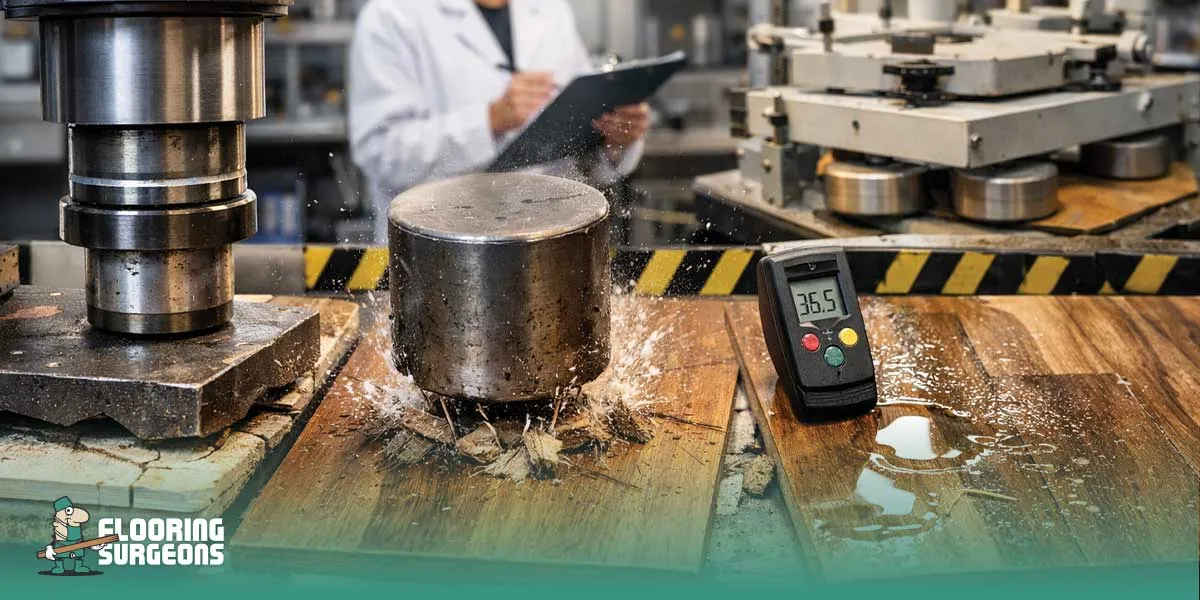
Flooring stress tests are controlled laboratory procedures designed to measure how flooring materials respond to pressure, impact, moisture, and wear over time. These tests simulate years of real-world use in accelerated conditions, helping manufacturers and professionals evaluate durability, structural integrity, and long-term performance before installation.
Table of contents
What Are Flooring Stress Tests?
Flooring laboratory testing refers to a series of standardised procedures used to evaluate how different flooring materials perform under simulated real-world conditions. These tests assess durability, wear resistance, structural strength, and environmental stability. Standards such as ASTM and ISO ensure consistency, allowing professionals to compare materials objectively and predict long-term performance in residential or commercial environments.
Common Types of Flooring Durability Tests
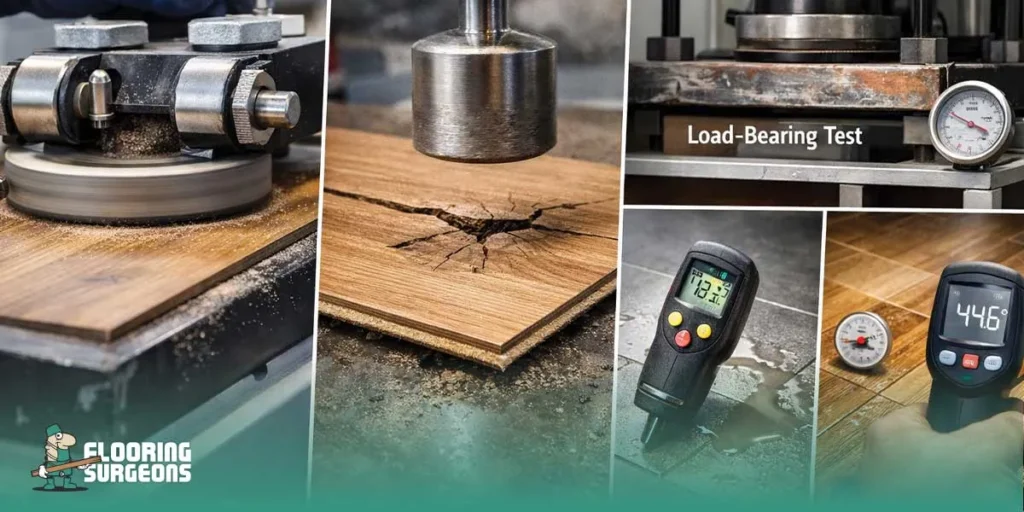
- Abrasion Resistance Testing: Measures how well a surface withstands wear from foot traffic. Critical for high-traffic areas like hallways and retail spaces. Abrasion resistance testing becomes especially important when selecting flooring designed for high-traffic areas, where constant footfall can quickly reveal weaknesses in surface durability.
- Impact Testing: Evaluates resistance to dropped objects or sudden force, essential for kitchens and commercial environments.
- Load-Bearing Tests: Determines how much weight flooring can support without deformation, relevant for heavy furniture or equipment.
- Moisture Penetration Tests: Assesses how water exposure affects swelling, warping, or delamination, especially important for basements and bathrooms.
- Thermal Expansion Testing: Measures how flooring reacts to temperature changes, which can cause expansion, contraction, or buckling.
Why this matters: These tests directly relate to real-world installation conditions. For example, poor abrasion resistance translates to visible wear within months in busy areas, while failed moisture tests often lead to costly replacements.
Why Flooring Products Fail Under Stress
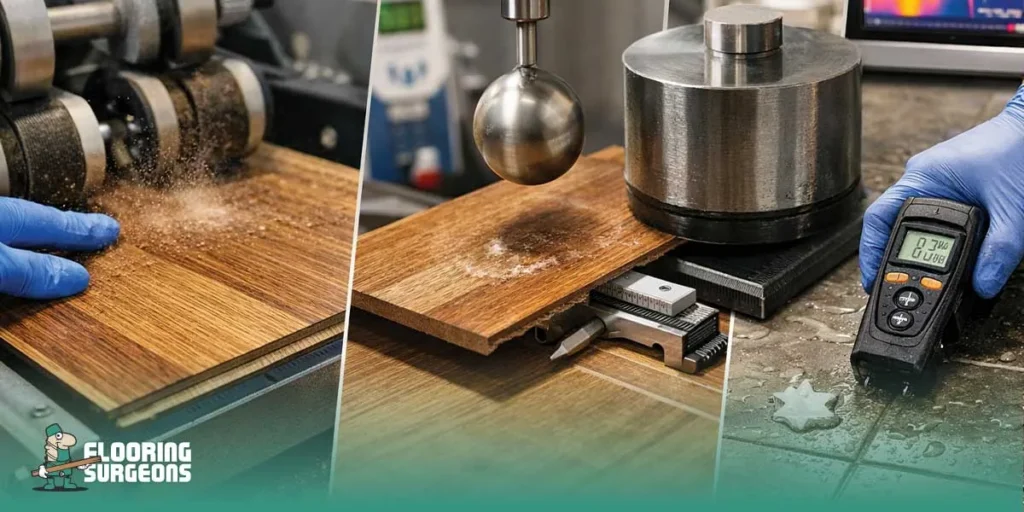
Understanding flooring failure modes is essential if you want to choose materials that actually last. Most common flooring problems do not originate from a single weakness but from the interaction between material limitations, environmental conditions, and installation quality. Laboratory tests reveal potential weaknesses, but real-world failures show where systems break down. While some failures are caused by genuine manufacturing defects in flooring materials, most issues arise from environmental conditions, installation quality, and subfloor preparation.
Common Flooring Failure Modes
| Failure Type | Cause | Affected Flooring | Preventable? |
| Cracking | Structural movement or poor subfloor | Tile, Hardwood | Yes |
| Delamination | Adhesive failure or moisture ingress | Vinyl, Laminate | Yes |
| Warping | Humidity imbalance and moisture exposure | Hardwood | Yes |
| Surface Wear | Low abrasion resistance or thin coating | Vinyl, Laminate | Partially |
| Buckling | Expansion pressure without spacing | Hardwood, Laminate | Yes |
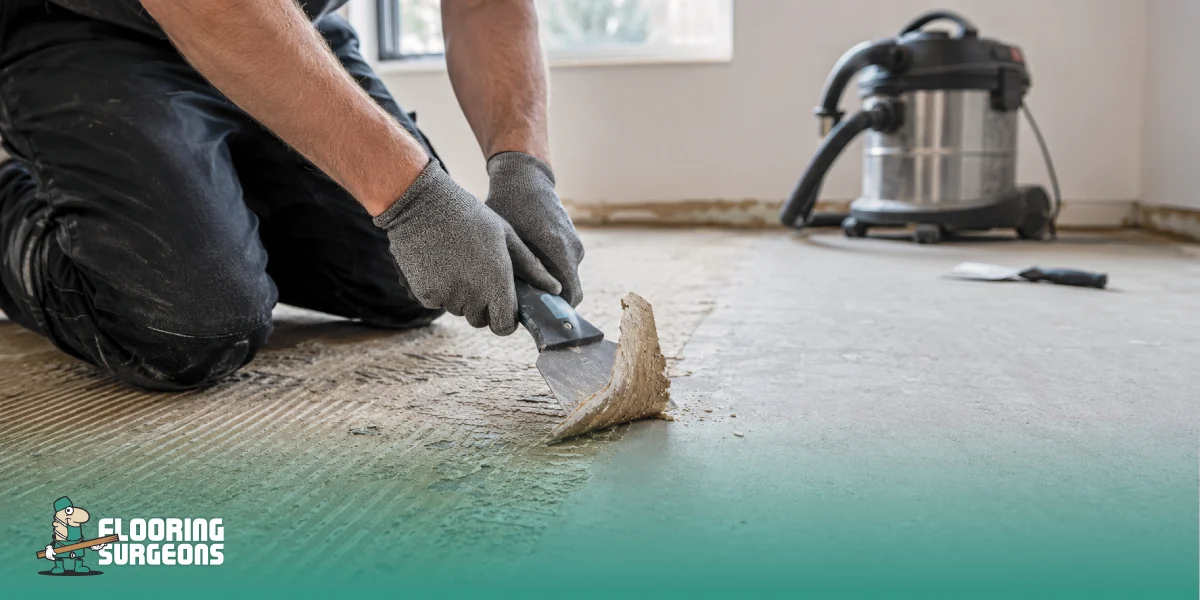
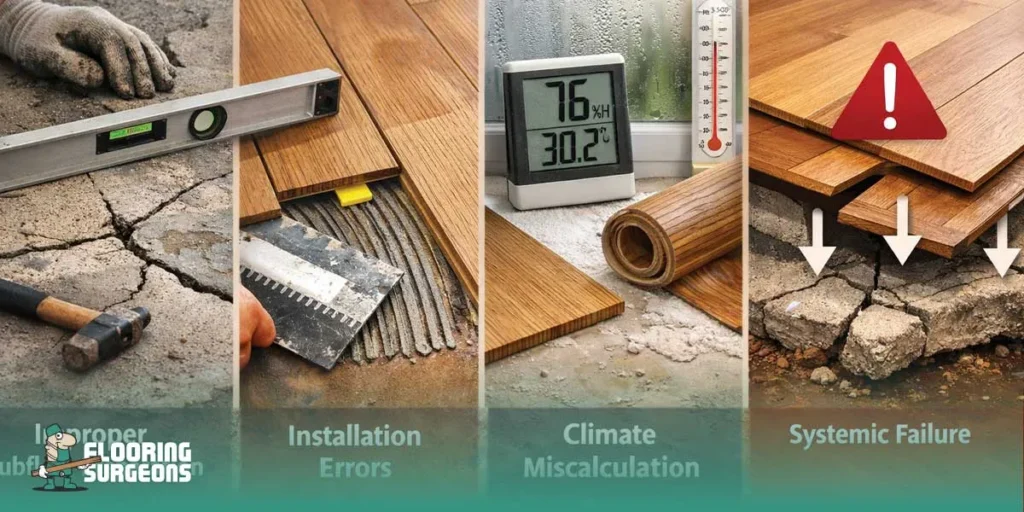
The real failures often begin before the flooring is even installed. In many cases, failures are not caused by the material itself but by poor subfloor preparation, which creates uneven stress across the entire floor system.
- Improper subfloor preparation
Uneven or weak subfloors create stress points that lead to cracking and movement. - Installation errors
Incorrect spacing, poor adhesive use, or rushed fitting compromises even high-end materials. - Climate miscalculation
Ignoring humidity levels and seasonal expansion leads to long-term instability.
Why this matters in practice: Flooring is not just a product. It is a system. If one layer fails, the entire installation is compromised. This is exactly where professional evaluation becomes more valuable than simply choosing a “high-quality” material. Most flooring failures are due to system issues rather than product defects. Subfloor condition, installation accuracy, and environmental factors determine long-term performance. Even durable materials fail when these variables are ignored.
Lead bridge: This is why at Flooring Surgeons, failure analysis is part of our recommendation process, not an afterthought.
Stress Test Performance by Flooring Type
This is where the discussion moves from general knowledge to material-specific performance. Not all flooring behaves the same under stress, and understanding these differences is what separates informed buyers from costly mistakes.
Hardwood Flooring
Hardwood durability is heavily influenced by moisture behaviour. Wood is a hygroscopic material, meaning it absorbs and releases moisture in response to environmental conditions.
- How moisture causes failure
When humidity increases, wood expands. When it decreases, wood contracts. This repeated movement leads to cupping, warping, or cracking under stress conditions. - Oak vs Maple performance
- Oak has better dimensional stability due to its grain structure, making it more resistant to expansion-related stress.
- Maple is denser but less forgiving, often showing visible stress faster when moisture levels fluctuate.
- Stress test insight
Laboratory moisture tests often underestimate real-world fluctuations, especially in climates with seasonal variation.
Understanding the performance differences between oak and maple flooring is essential, as each reacts differently to moisture exposure, pressure, and environmental changes.
Professional insight: Hardwood performance is not just about species selection. It is about acclimation, moisture barriers, and installation precision. Proper installation and moisture control are critical, something our certified installers at Flooring Surgeons prioritise in every project.
In moisture-sensitive installations, using a proper moisture barrier beneath the flooring can significantly reduce the risk of swelling, warping, and long-term structural damage.
Luxury Vinyl (LVP)
Vinyl flooring durability is often misunderstood due to marketing claims. While LVP performs well in waterproof vinyl stress tests, its true durability depends on a single critical factor.
- Wear layer thickness explained.
The wear layer is the protective surface measured in mil. It determines resistance to scratches, dents, and long-term wear. - 12 mil vs 20 mil comparison
- 12 mil is suitable for residential use with moderate traffic
- 20 mil and above provides significantly higher abrasion resistance and is considered commercial-grade flooring
- Stress test reality
LVP excels in moisture testing but can fail under abrasion if the wear layer is insufficient for the environment.“Waterproof” does not mean “indestructible”. Performance must be matched to traffic load and usage.
Laminate Flooring
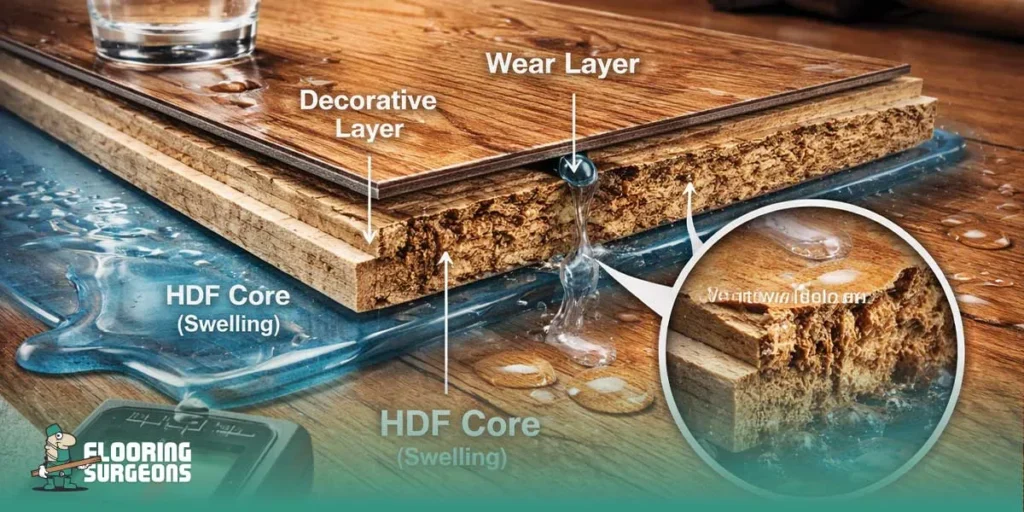
To understand why laminate flooring fails under stress, it is important to examine its construction at its core, particularly the role of the HDF layer. Laminate performance is defined by its core structure, not just its surface design.
- HDF core performance
High-Density Fiberboard provides structural strength but is vulnerable to moisture penetration. - Common failure mode
During laminate swelling tests, water entering through joints causes the laminate to expand. This damage is usually irreversible. - Critical factor
Core density determines how well the laminate resists pressure and moisture, making it more important than brand selection alone.
Higher-density cores perform better under load and resist deformation more effectively under stress.
What Laboratory Tests Don’t Tell You
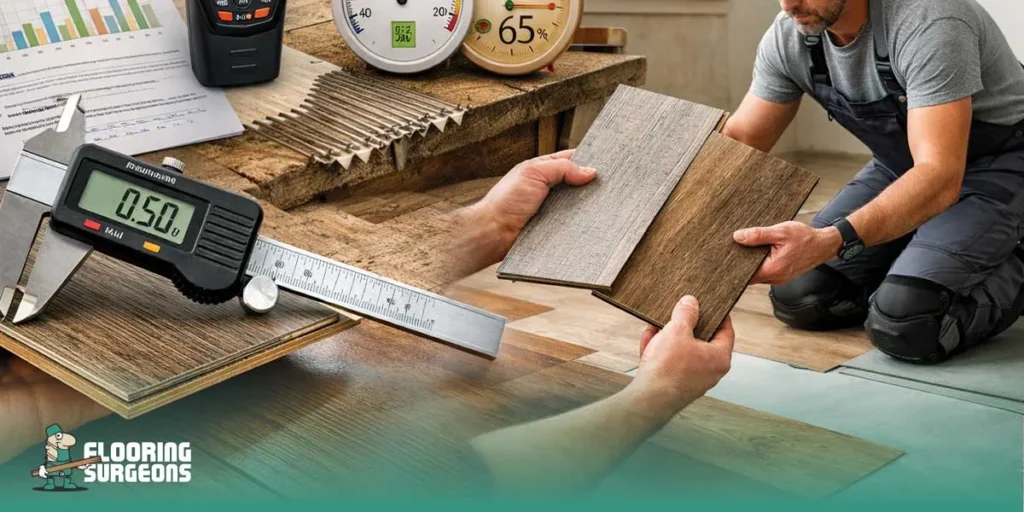
Laboratory testing creates controlled conditions. Real-world environments do not.
- Tests assume ideal installation conditions.
- Subfloor imperfections are rarely simulated.
- Environmental fluctuations are simplified.
This creates a gap between lab performance and real-world flooring performance. A product that passes all flooring durability tests can still fail within months if installed incorrectly or used in the wrong environment.
Even the highest-rated flooring can fail if improperly installed. That’s why Flooring Surgeons combines material science knowledge with expert installation. In many cases, subfloor preparation has a greater impact on performance than the material itself. This is the layer most buyers never consider, yet it is often the root cause of failure. This constant movement is driven by how flooring responds to moisture-related expansion and shrinkage, which is one of the main reasons hardwood fails under stress.
Lead bridge: If you want predictable performance, you need both the right material and the right installation strategy.
How to Choose Flooring That Won’t Fail
Choosing durable flooring is not about selecting the most expensive option. It is about aligning material performance with real-world conditions.
- Check wear layer thickness for vinyl flooring.
- Review ASTM and ISO flooring test results.
- Ask about subfloor preparation standards.
- Consider climate factors such as humidity and temperature.
- Choose certified installers with proven experience.
Each of these steps directly reduces the risk of flooring failure modes identified earlier. Skipping even one increases long-term risk. If you are comparing materials, our practical guides to vinyl and laminate flooring offer deeper insight into the durability and performance differences between the two.
Why Flooring Surgeons’ Approach Reduces Flooring Failures
Most flooring providers focus on selling products. We focus on preventing failure.
- We analyse flooring durability tests and real-world performance data.
- We match materials to specific environmental and usage conditions.
- We assess and prepare subfloors before installation.
- We apply installation methods that align with material behaviour.
This approach turns flooring from a product decision into a performance system.

Haniye Ayanmanesh
As an expert writer for Flooring Surgeons, I combine technical SEO knowledge with a practical understanding of flooring, producing content that helps users make confident decisions while supporting long-term organic growth.