Imagine walking around your house during the day, knowing that every step you take charges some unseen technology under your feet. At night, those stored footsteps automatically turn on hallway lights, kitchen pendants, or bedside lamps without needing grid power. Floors that store energy use piezoelectric tiles or electromagnetic generators beneath conventional flooring materials to harvest energy from footsteps. That energy is stored during the day and used to light your home after dark. Scientists first developed the technology in lab settings during the early 2010s. Companies started selling viable consumer systems around 2018. Floors with average residential foot traffic produce about 5–10 watts per square meter, enough energy to power LED bulbs for multiple hours each night. Although costly, energy-harvesting floors are feasible when paired with extremely low-wattage lighting. Learn how energy-storing floors work at night, what you need to install them, and if they’re worth installing in your home.
Table of contents
How Energy-Storing Floors Capture and Release Power
Kinetic energy floors operate in two modes. First, they collect energy throughout the day from footsteps. Second, they release this energy overnight to power LED lights in your home.
Daytime Energy Capture
As you walk across piezoelectric tiles, they slightly compress and generate small voltage pulses (usually 2–5 volts per step). With electromagnetic units, coils-and-magnets assemblies create current as the floor deflects. Either setup connects to a DC converter and a lithium-ion battery pack mounted in a utility closet or basement.
Nighttime Discharge for Lighting
When it gets dark out, the battery switches from charging to discharging mode via a programmable controller. It pumps stored DC electricity either through an inverter (when your lights need AC power) or directly into LED fixtures connected to the system. You could store 100–200 watt-hours of electricity on a 20-square-foot patch of floor in a busy hallway. That means you could power five 10-watt LED bulbs for 2–4 hours every night.
Smart Integration
Newer systems integrate with home automation hubs (Home Assistant, Google Home, Apple HomeKit) so you can program when lights turn on, how bright they should get and check how much battery power you have left from your phone.
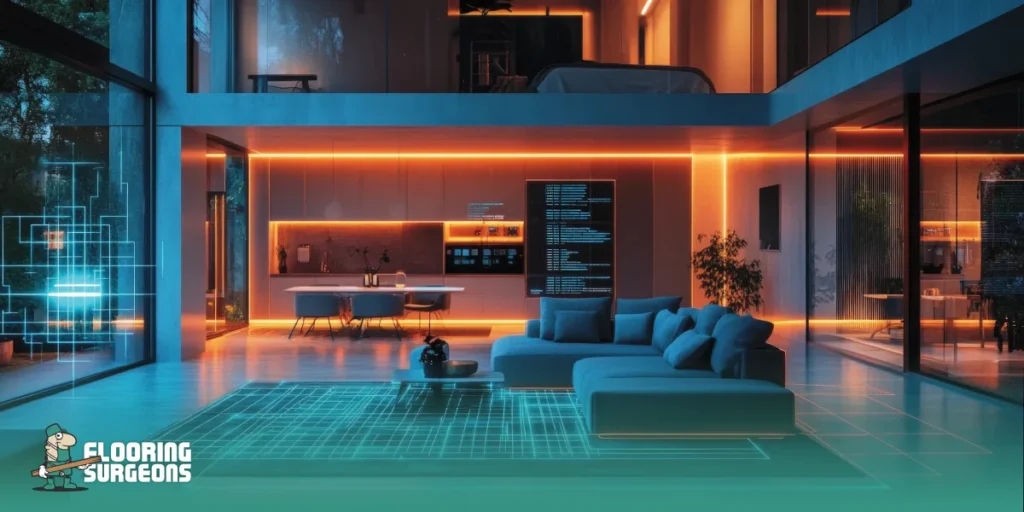
Powering Home Lighting at Night: What to Expect
Kinetic energy floors make the most sense, powering low-power task lighting—not your entire home. Brightness is determined by foot traffic, floor space, and the efficiency of the storage system. Here’s what you can expect.
Which Lights Can Run on Floor Energy?
- LED bulbs (5–15 watts): wall sconces in hallways, nightstands, strip lights under cabinets
- Low-voltage accent lighting: stair lights, toe kick lighting, closet lights
- Night lights, motion sensor lamps: bathrooms, baby rooms, front door
Don’t power high-wattage light fixtures, like ceiling fans with lights or large chandeliers, unless you have a very large floor plan or are combining them with solar/grid power.
Hours of Illumination Per Night
- Light Use (2–4 people, ~50 steps/day): 1–2 hours of on time per day
- Medium Use (family of 4, ~200 steps/day): 3–5 hours
- Heavy Use (busy kitchen/hallway, 500+ steps/day): 6–8 hours
Best Rooms for Night Lighting
- Hallways & Stairs: Used throughout the day, but require lighting in the evening for safety: High traffic during the day and used for task lighting in the evening around counters / sink
- Entryway: A high-traffic area that can sense when you arrive home after dark and turn on to welcome you
Installation Requirements and Compatibility
Energy-storing floors can be laid down over concrete slabs or plywood subfloors. Because the tiles are only 10–15 mm thick, adjustments such as trimming door jambs or adding transition strips may be necessary. Wiring is taken from the floor up to a central battery/inverter unit, then to your selected light fixtures.
Flooring compatibility:
- Engineered Flooring: should be fine as a surface layer above piezoelectric tiles; dimensional stability means it can handle the small amount of flex without cracking
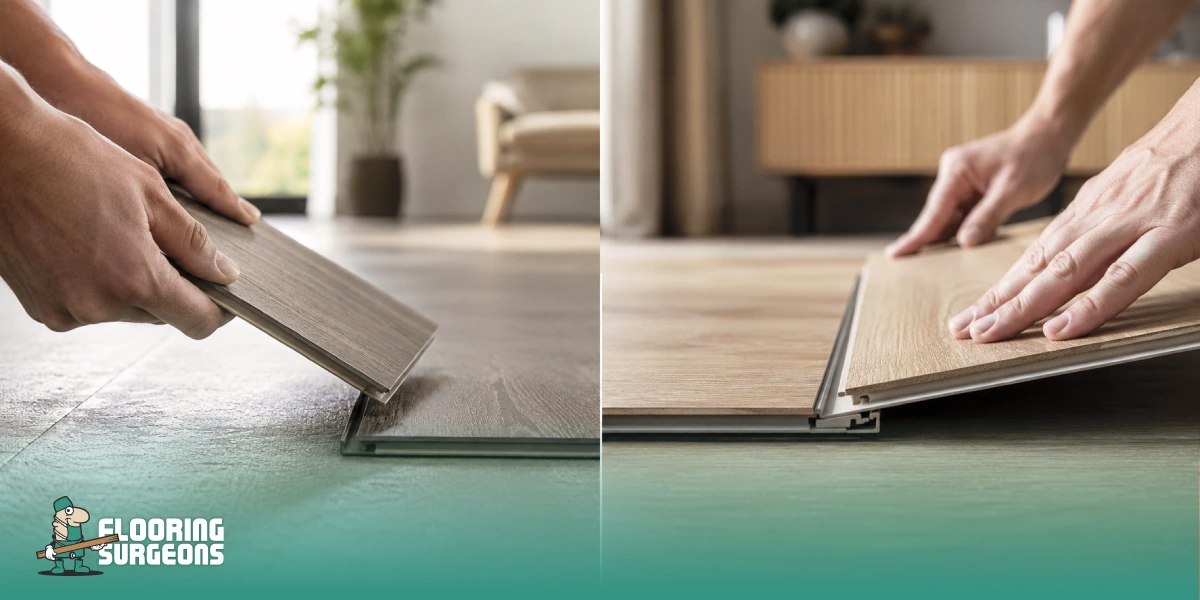
- Laminate Flooring: should also be fine; the added benefit of the click-lock system makes removal of tiles easier, should you need access to the piezoelectric tiles down the road.
The Cost of Energy-Storing Floors
Energy-storing floors are considered high-end. Before you make the investment, you should know exactly what you’re getting into, the costs, long-term savings, and if the numbers add up for you. Below is a chart showing average costs for a typical 20 m² residential installation. This should cover enough floor space for a hallway, kitchen or entrance area.
| Component | Cost (USD) | Notes |
| Piezoelectric tiles (per m²) | 400–400–400–600 | Covers material + sensors |
| Battery pack (5 kWh) | 1,500–2,500 | Lithium-ion, 10-year lifespan |
| Inverter & controller | 800–1,200 | Smart-home integration included |
| Professional installation (20 m²) | 2,000–3,500 | Electrical + flooring labor |
| Total (20 m² system) | 12,000–17,000 | — |
| Annual lighting savings | 50–120 | Assumes 3–5 hours/night, $0.15/kWh |
| Simple payback | 100–340 years | Without incentives |
Reality check: Floors that store energy seldom recoup their costs via electricity savings alone. They may be worthwhile if:
- You’re renovating anyway and want off-grid emergency lighting.
- You can get local rebates or green-building credits to cover 30–50% of the costs.
- You like novelty value or green building statements.
How Long Do Energy-Storing Floors Last?
The longevity of energy-storing floors depends on the care of tiles and batteries.
- Tiles: Rated for 15–20 years; piezo crystals will slowly lose their charge-carrying capability, at about 1% efficiency per year.
- Battery pack: Replacement required every 8–10 years (3,000 – 5,000 total charge cycles).
- Cleaning: Sweep and wet-mop as usual. Do not use steam cleaners directly over tile seams.
- Monitoring: Applications should be monitored monthly for error codes or sudden capacity decreases.
Tiles and modules may be replaced individually if a tile fails. Simply lift the surrounding floor (easy with click-lock laminate floors) and plug in the new module without re-wiring your floor.
if you have radiant heat already in place, consult your installer. Some energy-storing tiles produce a small amount of heat on their own, so you may need to recalibrate your thermostat settings (Refer to Which Type of Flooring is Best for Underfloor Heating? for more info on flooring compatibility)
Is Energy-Storing Flooring Eco-Friendly?
After examining maintenance, it’s time to consider the environmental impact of energy-storing floors. They lower your carbon footprint, but they don’t come without environmental impact. Considerations:
Pros:
- Decreases demand placed on the grid for lighting by ~10–20% in an average household
- Works well with solar panels. Run household appliances on daytime solar energy, then use energy stored in the floor to power your lights in the evening.
- Lithium-ion batteries can be recycled through your local e-waste recycling centre.
Cons:
- Piezoelectric ceramics require energy to produce
- Shipping adds to the carbon footprint of the heavy tile system.
- Battery production requires mining resources (cobalt, lithium)
If you use electricity from fossil fuel sources, you will offset ~50–100 kg of CO₂ annually. If you’re already using grid power from renewable sources, your environmental benefits will be negligible.
Comparison with Other Home Energy Solutions
Energy-storing floors will compete with existing residential energy technologies in some markets. Compare floors in terms of price, power output, and usage with solar panels, batteries, and micro-wind turbines.
| Technology | Upfront Cost | Daily Output | Best Use Case |
| Energy-storing floors | 12,000–17,000 | 100–200 Wh | Night lighting in high-traffic areas |
| Rooftop solar (3 kW) | 9,000–12,000 | 12–15 kWh | Whole-home power |
| Home battery (Tesla Powerwall) | 11,000–14,000 | Stores 13.5 kWh | Backup power + load shifting |
| Micro-wind turbine | 4,000–8,000 | 200–500 Wh | Rural properties with consistent wind |
Verdict: Solar + battery delivers far more energy per dollar. Choose energy-storing floors only if you want a unique, integrated solution for specific rooms and are willing to accept the long payback period.
Conclusion
Energy-storing floors can also be used to light up your home at night. The electricity generated by walking across your floors during the day is stored, then used to light your LED bulbs or low-voltage lights after dark. One suitable-sized box (around 20 square metres) in a high-traffic area, such as a hallway or kitchen, can provide 3–5 hours of light per evening. With installation costs ranging from 12,000 to 17,000, it will take you well over 100 years to recoup your costs through reductions in your electricity bill alone.
Consider energy-storing floors if you’re already renovating, want emergency lights in case the power goes out, or are installing them for environmental reasons rather than for a return on your investment. You should also combine energy-storing floors with solar panels. If you do decide to go ahead with energy-storing floors, install them in areas where you walk the most and where you need lights at night. Entrance ways, stairs and kitchens are ideal spots. Flooring Surgeons can help you determine if energy-storing floors are right for you.

Ana.Soltanpoor
I’m an SEO Specialist with a strong background in content management and organic search. I build data-driven content strategies by aligning user intent, search behavior, and SEO best practices to ensure every piece of content delivers clarity, relevance, and measurable organic performance.