Selecting a new floor isn’t just about picking what you like on install day. Some floorings can turn into costly headaches that are messy to remove when you come to renovate, repair damage, or simply change style. Learn why flooring replacement difficulty should be considered before you purchase.
We discuss the types of flooring that are hardest to replace down the road, why tile, natural stone, glue-down hardwood, sheet vinyl and wall-to-wall carpet cause issues and what repairable flooring types may be easier to change out later.
Table of contents
What Makes a Flooring Type Difficult to Remove or Replace?
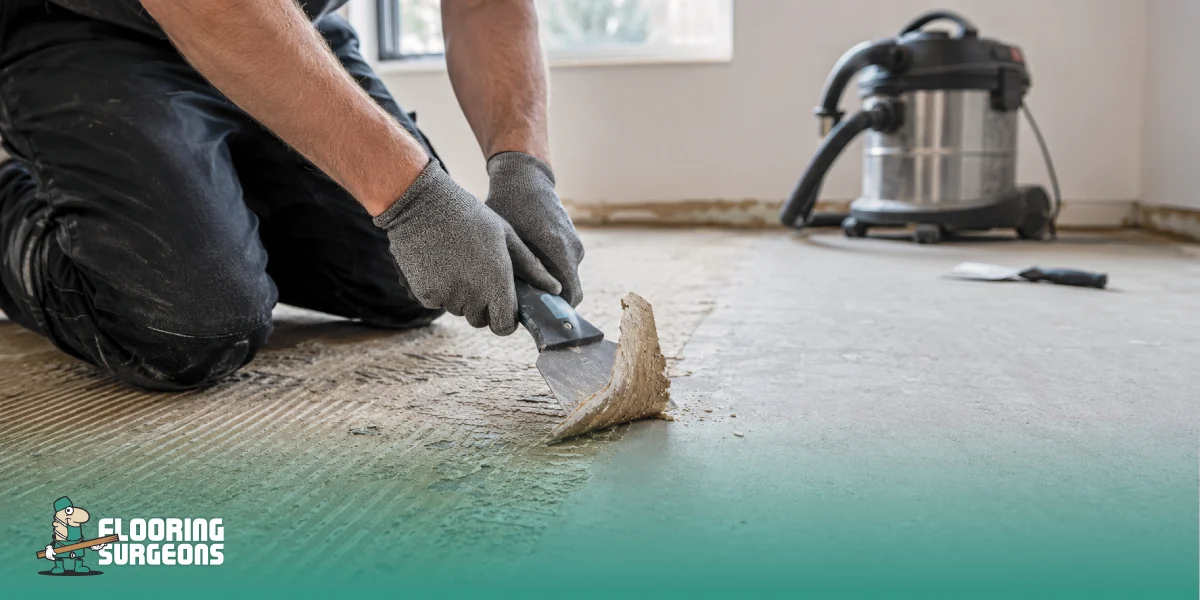
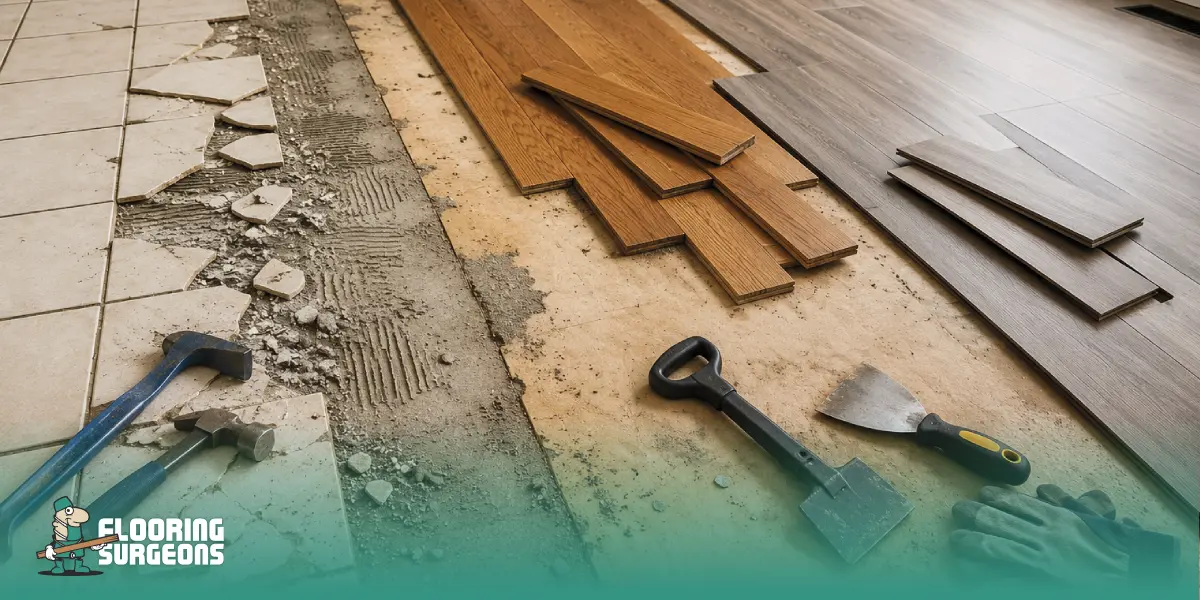
Flooring replacement difficulty is often determined by how it was installed, rather than what it’s made out of. Flooring that’s glued down with durable adhesive, mortar or grout can be harder to remove than floating floors.
That is why glue-down hardwood removal can be a bigger job than removing laminate or vinyl plank flooring. Damage to the subfloor, outdated patterns, and removing entire rooms rather than just a damaged plank can also make future floor updates difficult. Consider whether you will want to replace your flooring in the future. You might want to renovate and sell the house, or change the room’s decor style.
Hardest Flooring to Replace: 5 Flooring Types to Think Twice About
Some floors are attractive, resilient and highly functional. But these characteristics do not always make flooring easy to pull up should the need arise. Conversely, the hardest flooring to replace is often glued-down, hard to match, or unable to be repaired in small areas.
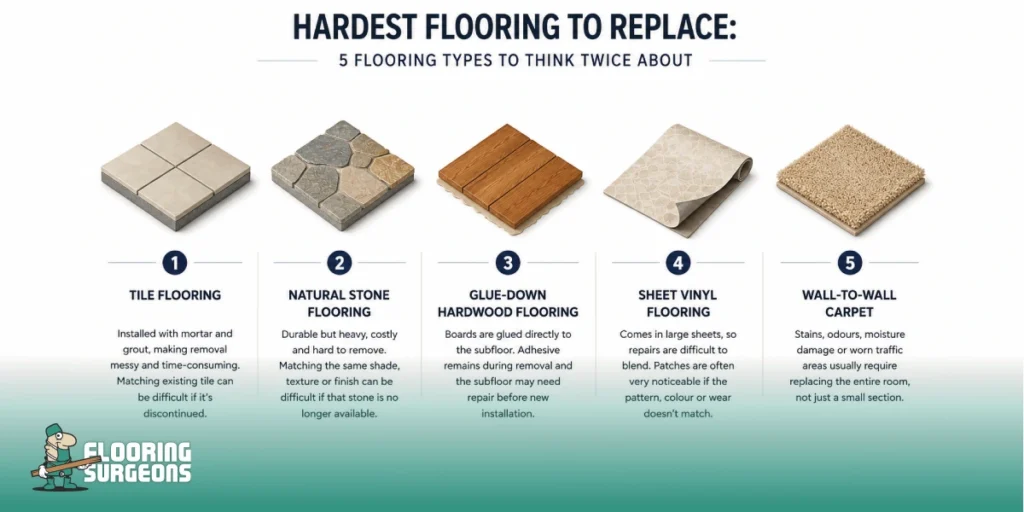
1. Tile Flooring
Replacing tile flooring is often one of the messiest jobs. Tile is typically installed with mortar and grout, so it will take time to remove and may damage your subfloor. Another problem you may encounter is matching your existing tile. If it’s discontinued, you may be left with an uneven floor if you replace only a section of tile.
2. Natural Stone Flooring
Natural stone is durable but heavy, costly and hard to remove. Damage to even a small area may be hard to fix because matching the same shade/texture/finish can be difficult if that stone batch is no longer available.
3. Glue-Down Hardwood Flooring
Removing glue-down hardwood can be tricky because the boards are glued directly to the subfloor. The adhesive will likely remain on the floor during removal. Areas of the subfloor may require repair before a new floor installation.
4. Sheet Vinyl Flooring
Sheet vinyl repair is not always easy. Sometimes holes and damaged areas can occur in the middle of the room, rather conveniently. Sheet vinyl flooring differs from plank flooring because it comes in large sheets. Patching one spot will seem very apparent if it doesn’t match the pattern, colour or wear.
5. Wall-to-Wall Carpet
Wall-to-wall carpet is often easier to take up than tile or stone, but replacing carpet can also be very inconvenient. Stains, odours, moisture damage, or worn traffic patterns often require replacing an entire room rather than just a small damaged area.
Tile and stone are not always flooring types to avoid, but they should be considered more carefully if the potential costs of replacement or repair and/or renovation flexibility are concerns.
Quick Comparison: Flooring Replacement Difficulty by Type
The easiest way to compare flooring replacement difficulty is to consider how it is installed, how easy it is to match when adding more later, and whether damaged areas can be replaced with sections around them.
| Flooring Type | Replacement Difficulty | Main Reason |
| Natural Stone | Very Hard | Heavy, expensive, and hard to match |
| Tile Flooring | Very Hard | Mortar, grout, and subfloor damage risk |
| Glue-Down Hardwood | Hard | Adhesive removal and possible subfloor repair |
| Sheet Vinyl | Medium to Hard | Difficult to patch cleanly |
| Wall-to-Wall Carpet | Medium | Often replaced in larger sections |
| Laminate Flooring | Easier | Floating installation in many cases |
| Luxury Vinyl Flooring | Easier | Plank-based and repair-friendly options |
| Engineered Flooring | Medium | Depends on the installation method |
If you’re a homeowner who desires one of the easiest flooring to replace, consider Laminate Flooring installed as a floating floor. Of course, it’s not ideal for every room. But when you compare it to tile, stone, or glued-down floors, swapping out laminate can simplify future upgrades.
Easiest Flooring to Replace and Repair Later
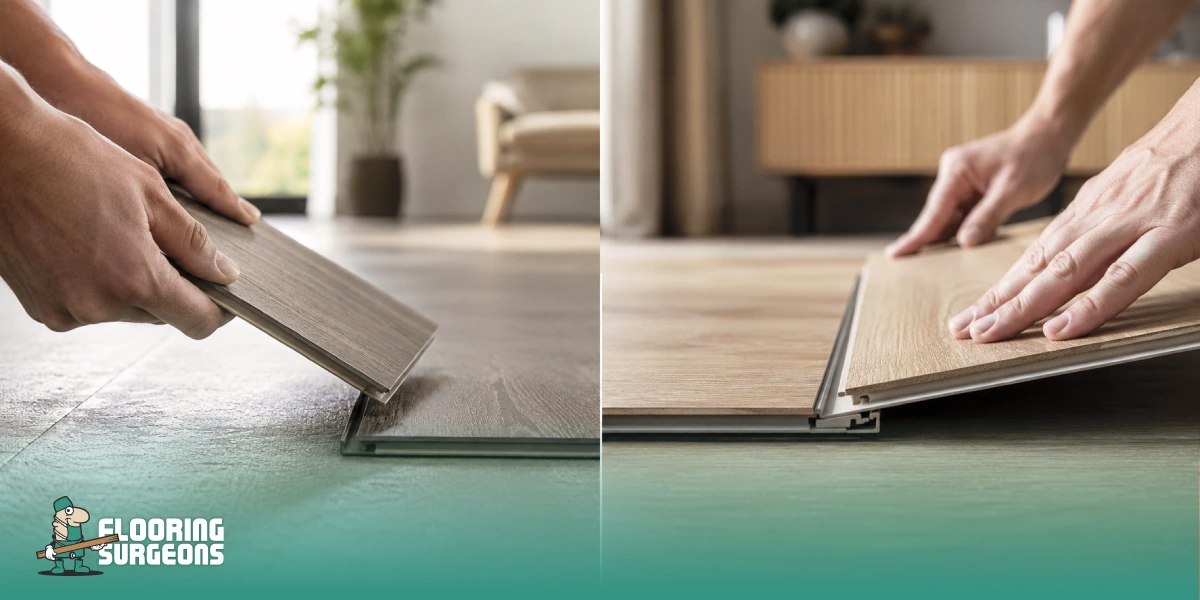
Not all floors cause headaches during renovation. Materials installed in separate planks, tiles, or click-lock systems are often easier to pull up, making it more practical to fix in the future.
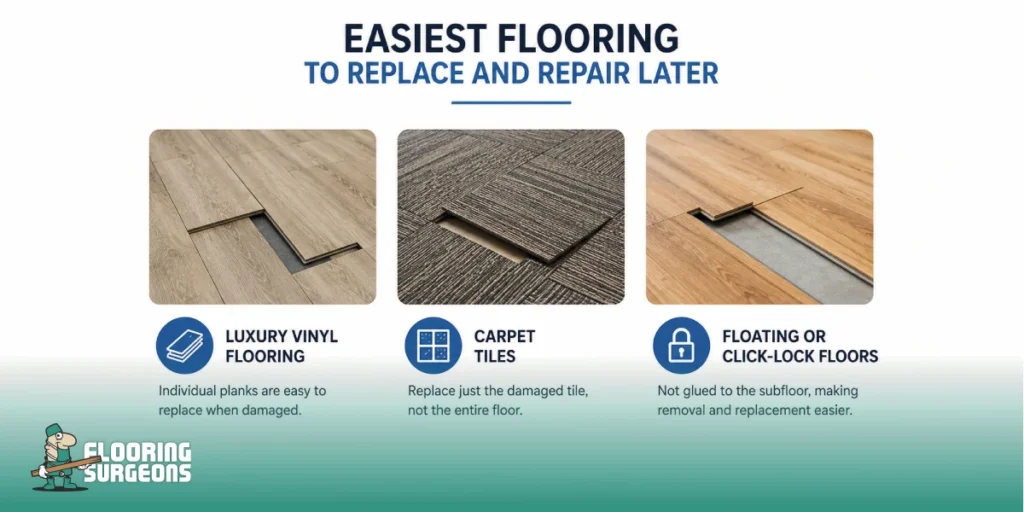
Luxury Vinyl Flooring
Luxury Vinyl Flooring is one of the better repairable flooring options for kitchens, bathrooms, rental homes, and high-traffic family rooms. Repairing vinyl plank flooring is generally easier than repairing sheet vinyl, tile, or glued-down wood if the damage is localised to a small area.
Carpet Tiles
Carpet tiles may be preferable to wall-to-wall carpet if you worry about replacement down the road. Should one become stained or damaged, you may be able to replace just that tile rather than the whole room’s floor.
Floating or Click-Lock Floors
Floating floors are easier to replace because they aren’t glued to the subfloor. This may include certain laminate flooring, vinyl flooring, and engineered flooring options, depending on the specific product and installation.
Best Flooring for Future Replacement: What Should You Choose?
Factors that determine the best flooring for future replacement include the room it is in, your lifestyle, and the probability you will remodel in the future. Kitchens, bathrooms, and high-traffic areas with kids benefit from water-resistant flooring that can be replaced piece by piece over time easily.
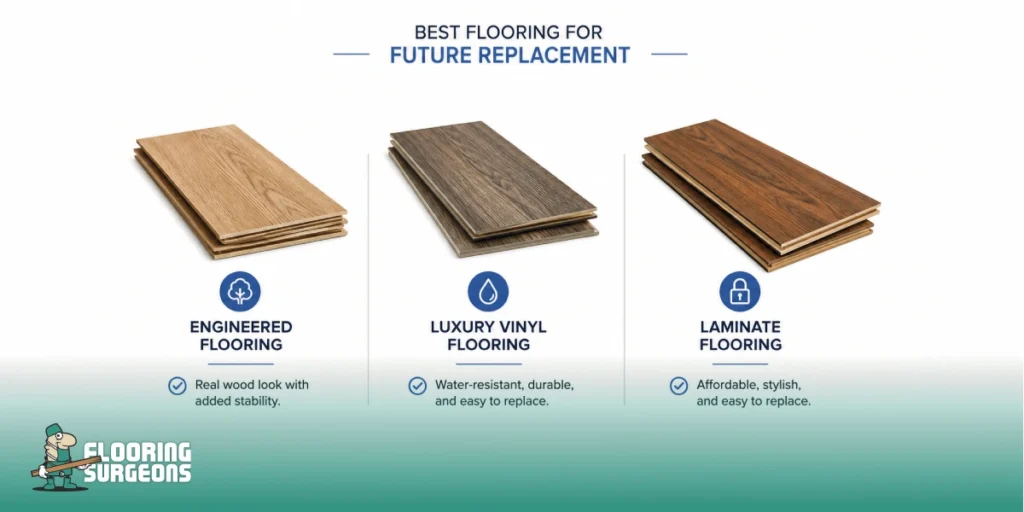
Engineered Flooring can be a good choice if you desire a real wood appearance with more flexibility than standard wood. Engineered wood tends to have good replacement options when installed properly. Engineered flooring provides a natural look with more stability than solid wood flooring.
Luxury vinyl and laminate floors can be good options for rental properties, family homes, or anywhere you have pets/high traffic as well. Ultimately, you just want flooring that matches your style now without hindering repairs or removal in the future.
Common Flooring Mistakes That Make Replacement Harder
The root of many flooring replacement problems lies in choices made before the floor is ever installed. Opting for a material simply because it looks good “right now,” without regard for future repair or removal costs, is a common flooring mistake homeowners make.
Common mistakes include:
- Installing glued floors in rooms that might be renovated or redesigned later.
- Installing flooring without first checking the subfloor condition.
- Failing to order extra planks/tiles/boards that you can use if future repairs become necessary.
- Choosing a colour/pattern that you might have trouble matching if repairs become necessary.
- Always lay flooring in one continuous pattern. Consider future replacement by having separate flooring pieces.
Final Thoughts
When considering ease of replacement, think twice before installing tile, natural stone, glue-down hardwood, sheet vinyl, or wall-to-wall carpet. All of these can be great flooring choices, but can often be more difficult to take up, repair or replace should you need to do so down the road.
Laminate flooring, luxury vinyl and some engineered floors may have longer-term flexibility. At Flooring Surgeons, we can compare flooring by style, taking future maintenance, repairs, and replacement into account, not just how they appear on the day they are installed.

Ana.Soltanpoor
I’m an SEO Specialist with a strong background in content management and organic search. I build data-driven content strategies by aligning user intent, search behavior, and SEO best practices to ensure every piece of content delivers clarity, relevance, and measurable organic performance.