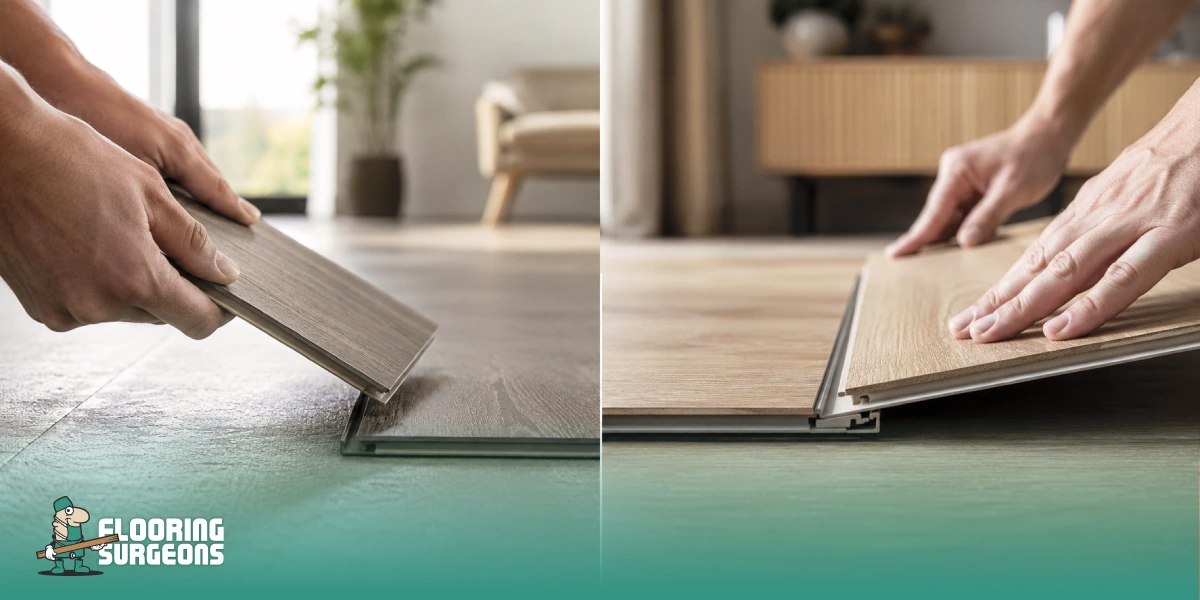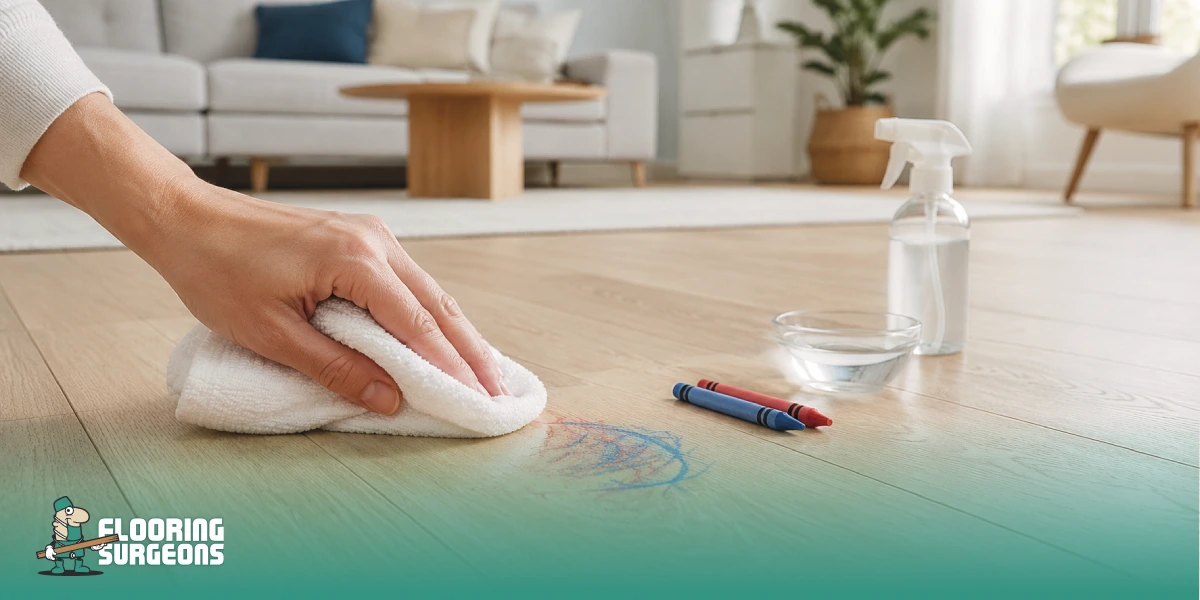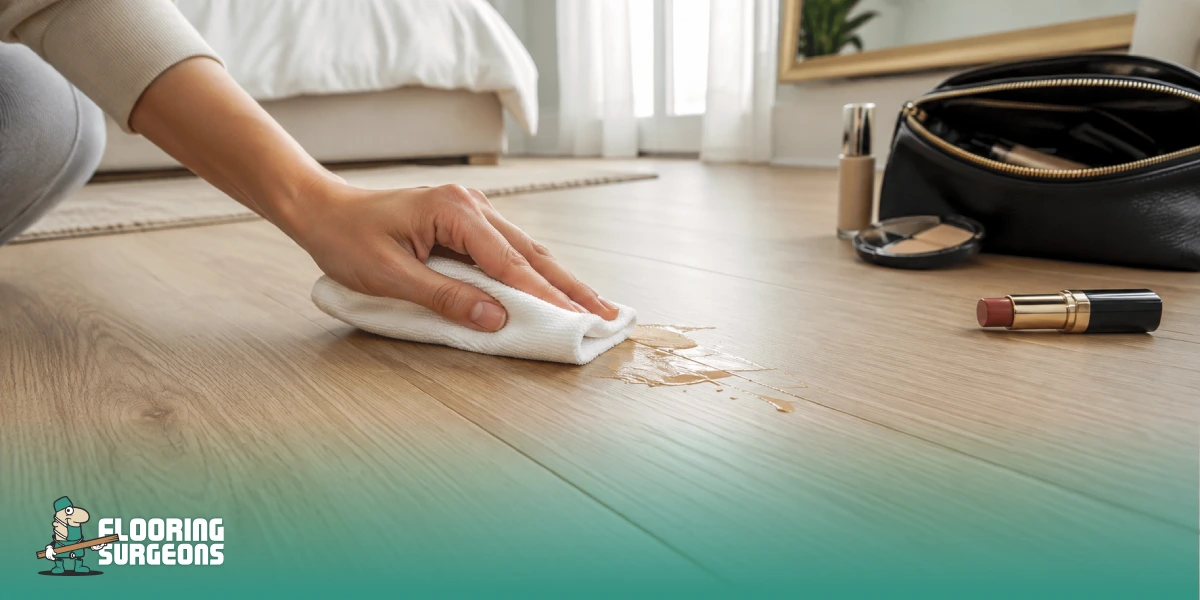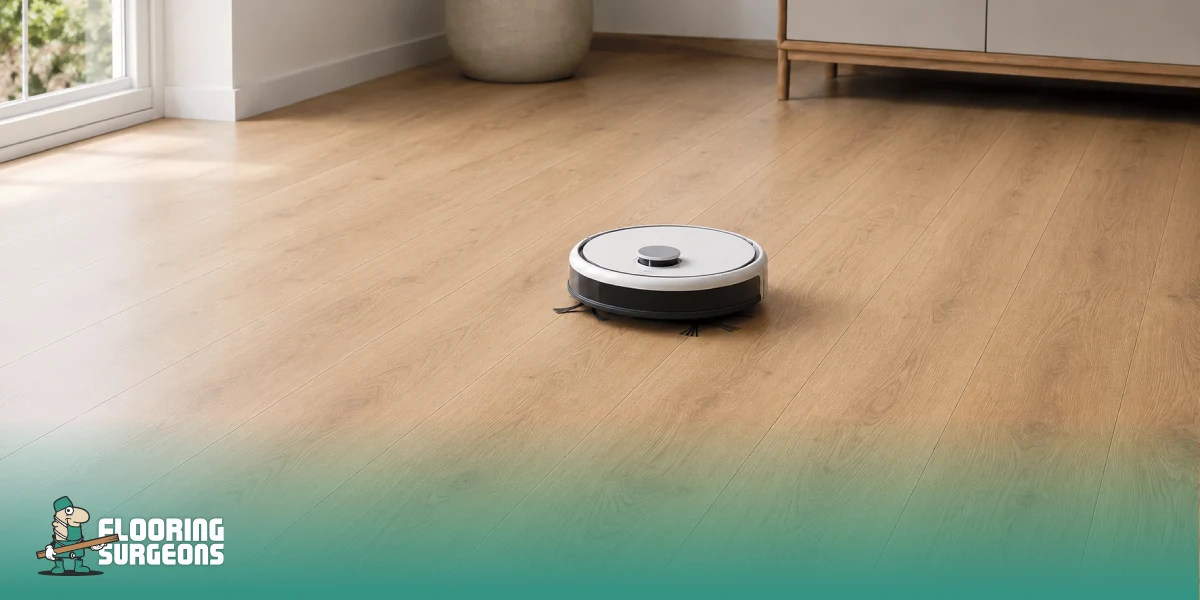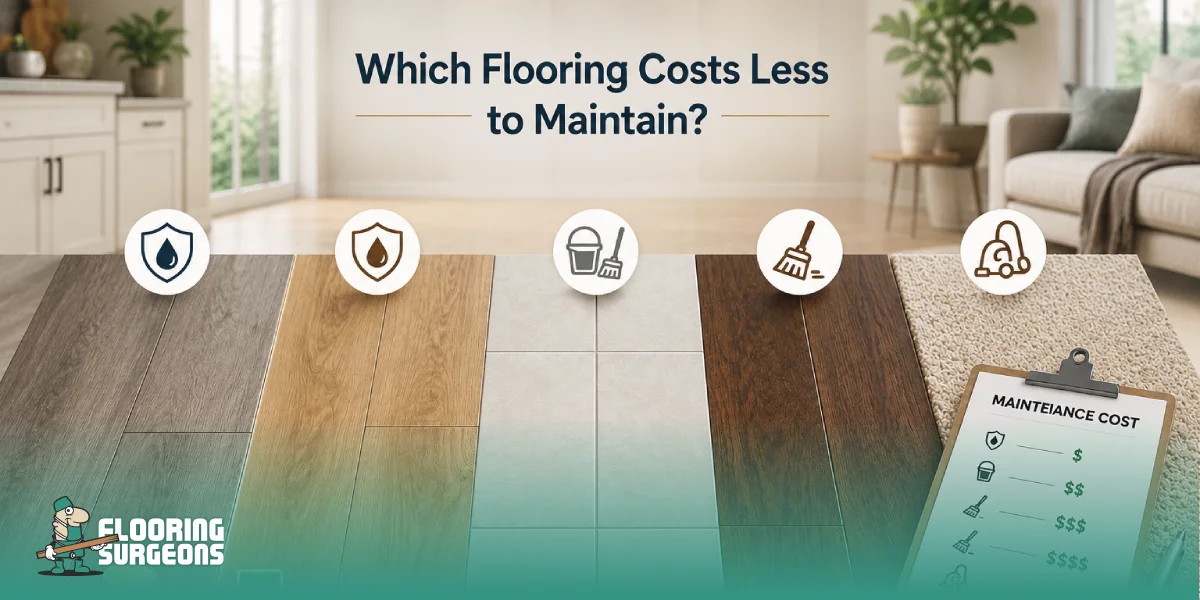
The least expensive floor at the time of purchase may not always be the least expensive floor to live with. Ongoing maintenance, such as deep cleaning, sealing/polishing, refinishing, or even early replacement, can drive up the cost of certain flooring materials over time. So, which flooring type costs the least to maintain over time? In most households, luxury vinyl is one of the easiest flooring materials to maintain. It’s simple to clean, water-resistant, durable, and won’t require sanding, sealing or refinishing. Laminate is another low-maintenance floor for dry surfaces. Keep reading as we break down the costs of maintaining vinyl, laminate, tile, hardwood, and carpet flooring.
Table of contents
Quick Answer: Luxury Vinyl Is Usually the Lowest Maintenance Flooring
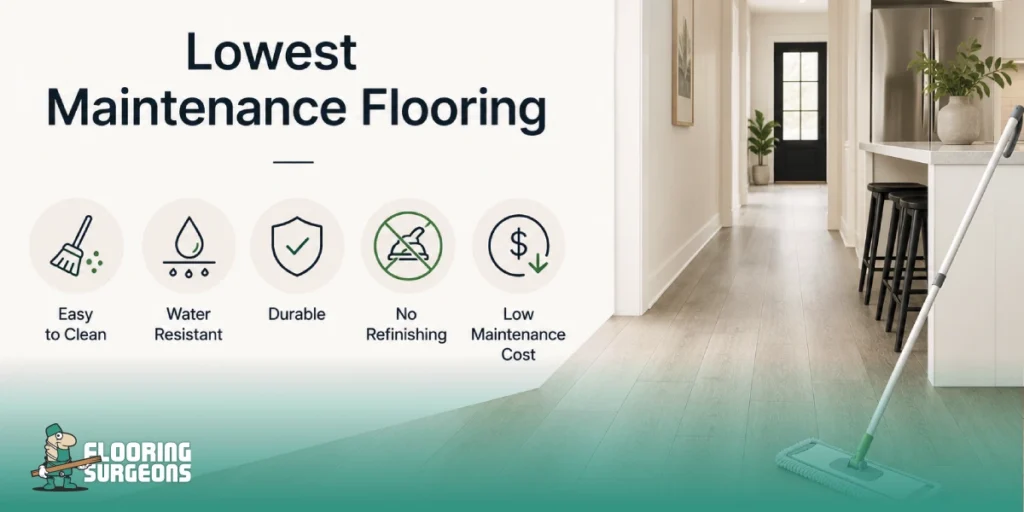
Luxury vinyl is usually the lowest-maintenance flooring for most homes. It’s durable, water-resistant, and easy to clean. Plus, it has few, if any, long-term maintenance needs. You won’t have to sand, polish, or refinish it like you would with hardwood. You normally won’t have to deep clean it, treat stains, or replace it as often as carpet in high-traffic areas.
Luxury Vinyl Flooring may offer the optimal mix of daily convenience and value for most families. Cleaning the surface of Luxury Vinyl Flooring is easy with routine sweeping and occasional mopping. This means vinyl flooring maintenance costs are often lower than those of other common flooring alternatives.
However, the right flooring option for your space may still vary. While laminate can be a budget-friendly choice for rooms with no moisture, luxury vinyl may be ideal in kitchen areas, bathrooms, high-traffic hallways, and busy households, offering the best flooring for long-term value if maintenance is your top concern.
Flooring Maintenance Cost Comparison by Type
Finding the cheapest flooring to maintain requires more than comparing purchase prices. True long-term costs are determined by how frequently the floor will need vacuuming or cleaning, repairs, stain treatment, refinishing, resealing, or replacement. The table below provides a basic flooring maintenance cost comparison of the most common flooring types.
| Flooring Type | Maintenance Cost Level | Common Long-Term Costs | Best Use | Verdict |
| Luxury Vinyl | Low | Basic cleaning, occasional plank replacement | Kitchens, bathrooms, busy homes | Best overall for low upkeep |
| Laminate | Low to Medium | Cleaning, possible board replacement if water damaged | Dry rooms, bedrooms, living rooms | Good budget-friendly option |
| Tile | Low to Medium | Grout cleaning, possible resealing | Bathrooms, kitchens | Durable, but grout needs care |
| Hardwood | Medium to High | Polishing, scratch repair, refinishing | Premium living spaces | Beautiful, but costlier to maintain |
| Carpet | Medium to High | Vacuuming, deep cleaning, stain removal, replacement | Bedrooms, low-traffic rooms | Cheap upfront, higher upkeep over time |
Luxury vinyl typically has the lowest maintenance cost. This is because it eliminates many of the higher costs associated with wood, carpet, or stone floors. Laminate can also hold its own in dry areas; however, water damage can increase laminate flooring maintenance costs if it’s used in the wrong room.
Why Upfront Price Is Not the Same as Long-Term Maintenance Cost
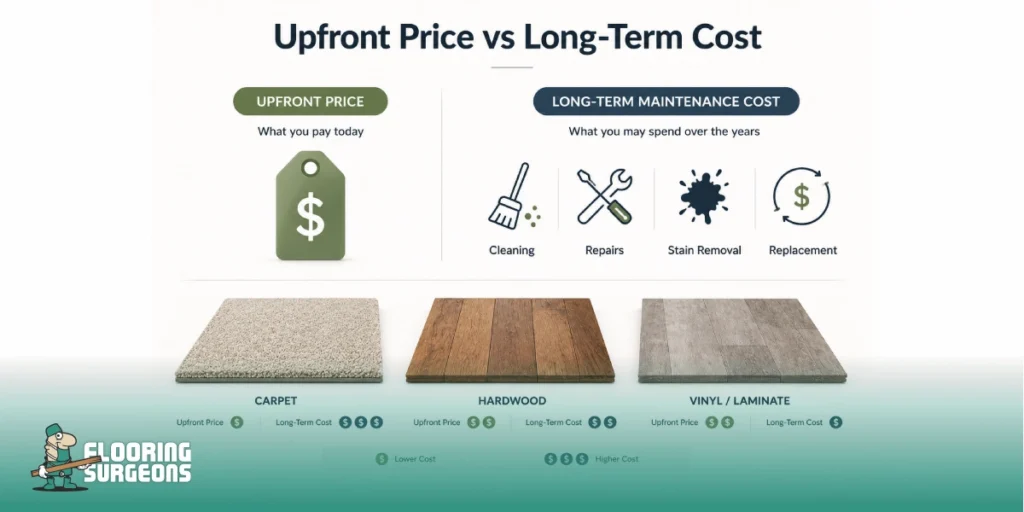
Just because flooring is inexpensive on day one doesn’t mean it will be cheap in the years of cleaning, maintenance, and wear it takes to finish. Flooring maintenance costs should be evaluated separately from the flooring installation price.
Take carpets, for instance. While carpets might be inexpensive to install, the overall maintenance cost could be higher due to daily vacuuming, periodic deep cleaning, stain removal, and replacement in high-traffic areas, which wear out faster. Hardwood can make your home feel warmer and increase your home’s value. But hardwood floor maintenance costs could be higher because you may have to invest in polishing, repairing scratches or surface damage, and refinishing over time.
Day to day, vinyl and laminate flooring is generally much easier to deal with. Regular cleaning is often all that is required, rather than special products or methods. If you want the best flooring for long-term value as a homeowner, it isn’t always the material with the lowest price tag that’s best. Instead, it is the floor that remains easy to live with, hard-wearing and cheap to maintain for many years.
Best Low-Maintenance Flooring Options Ranked
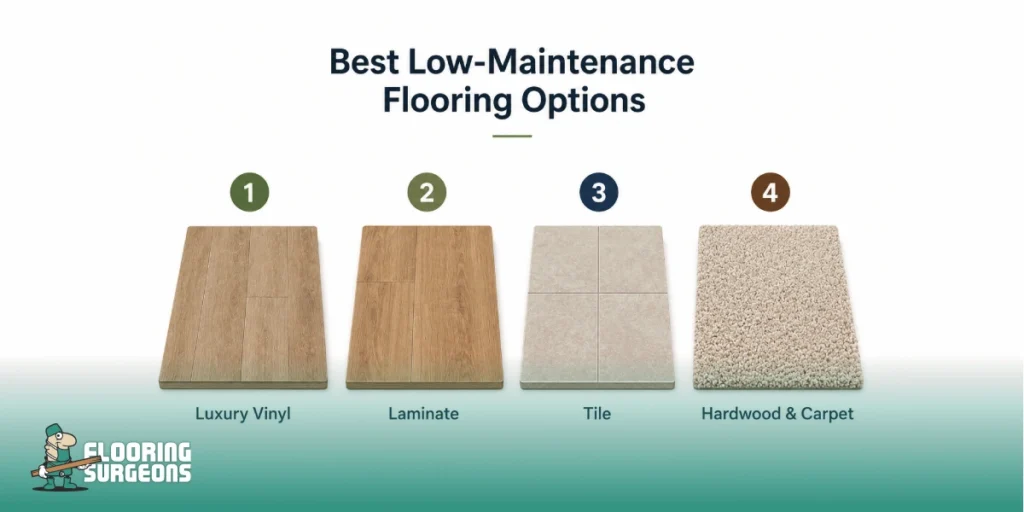
Floor maintenance is not created equal. Some floors require little more than sweeping and mopping. Others need regular sealing, special care, or annual professional maintenance. Discover the best low-maintenance flooring options, listed by overall longevity.
1. Luxury Vinyl Flooring
Luxury vinyl will often be the most durable low-maintenance flooring for homeowners who desire maximum durability without the upkeep of hardwood flooring or carpet. It stands up to daily wear quite nicely, typically fares better against moisture than other choices and never needs sanding, sealing or refinishing.
Maintenance of luxury vinyl floors is easy as well. Sweeping and occasional mopping should keep it clean. Since vinyl lasts so long without showing wear, there is less long-term maintenance cost, making it great for families with kids or pets, and high-traffic homes.
2. Laminate Flooring
Laminate is also a great option if you have dry spaces like bedrooms, dining rooms and living rooms. It’s easy to clean, typically inexpensive, and can mimic the appearance of wood without all the upkeep.
If moisture will not be an issue in your rooms, affordable Laminate Flooring options that will perform well with minimal upkeep. Water is the enemy of laminate. Using it in an inappropriate room or cleaning it with too much water will increase your laminate flooring maintenance costs by requiring the replacement of boards that become damaged.
3. Tile Flooring
The tile is water-resistant and tough, making it a great choice for kitchens, bathrooms, and utility rooms. The surface is typically easy to wipe clean and can look good for years to come.
However, tile flooring maintenance costs can increase when grout lines become stained, cracked, or difficult to clean. Tile floors may also require occasional resealing, depending on the material used. Tile is durable and usually low maintenance, but it’s not always as easy as luxury vinyl.
4. Hardwood and Carpet Flooring
Hardwood and carpet are both stylish options, but neither one is typically the cheapest flooring to maintain. Hardwood gives your home a luxurious feel, but it will eventually need polishing and repairs. Scratches and damaged areas will need to be refinished. Because of this, hardwood floor maintenance can cost more than vinyl, laminate, or tile floors.
Carpeting feels cosy underfoot, making it ideal for bedrooms. However, it requires more frequent cleaning. Stains, embedded dust, deep cleaning frequency, and accelerated wear in high-traffic spaces all add to overall carpet maintenance costs. If low maintenance is your top concern, these surfaces typically demand more care than vinyl or laminate.
Best Waterproof Low-Maintenance Flooring for Kitchens and Bathrooms
The greatest maintenance issues in kitchens and bathrooms stem from humidity, spills, and water damage. For this reason, choosing a waterproof, low-maintenance flooring option is crucial in these rooms more than in dry areas like bedrooms or living rooms.
Tile can be a good option because it is water-resistant and durable, lasting for decades. However, the grout lines can trap dirt and potentially require additional maintenance in the future. Laminate may be suitable for certain kitchens if you purchase a moisture-resistant option. However, laminate is often less forgiving if liquid seeps into the seams.
While waterproof flooring may come in many forms, Waterproof Luxury Vinyl is typically one of the best options for homeowners looking for a middle-of-the-road product. It mitigates concerns about water damage and makes cleaning easier.
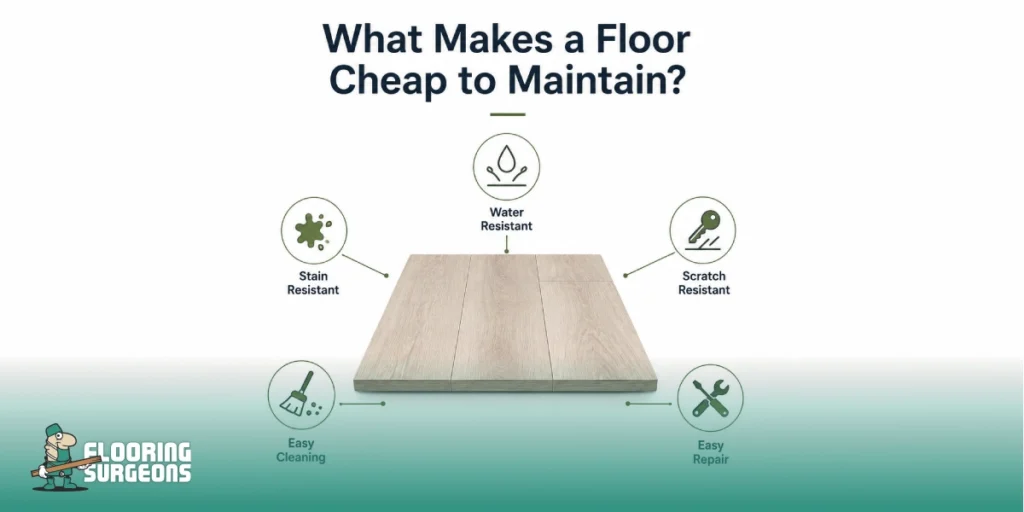
What Makes a Floor Cheap to Maintain?
Flooring with low maintenance requirements is flooring that can remain clean, durable, and functional without the need for frequent maintenance by a specialist. Floors that are easiest to maintain generally have surfaces that are stain-resistant, water-resistant, scratch-resistant and resistant to daily wear and tear. They can also be easily maintained by sweeping and light damp mopping rather than deep cleaning, sealing, sanding, and refinishing.
Repairability cost is also a consideration. If a single damaged plank or tile can be replaced without refinishing the entire floor, lifetime maintenance costs are greatly reduced. This is part of the reason why vinyl flooring and some laminate floors can be good options in high-traffic households.
Maintenance isn’t only about money; it’s about time, too. Knowing how flooring choices affect weekly cleaning time can help you select the floor that works with your everyday life. Life happens: kids, pets, heavy traffic. Factoring in your lifestyle will allow you to pick the perfect floor. Typically, the floors that cost the least to maintain are those that decrease cleaning time and prevent future surprise costs.
Vinyl vs Laminate: Which Is Better for Long-Term Maintenance?
Vinyl and laminate floors offer homeowners a low-cost floor with minimal maintenance requirements. However, they don’t age quite the same way. Vinyl typically comes out ahead in spaces that see spills, moisture, pets or high traffic. Its stronger water resistance helps keep vinyl flooring maintenance costs low by reducing the risk of swelling, staining, or water-related damage.
Even in dry areas like bedrooms, dining rooms and living rooms, laminate can make sense. It’s easy to clean up and sometimes gives the most realistic wood appearance for your money. However, if water seeps into the joints, your laminate flooring maintenance costs may increase due to the need to replace boards.
When faced with having to choose between these two options, take a moment to review the differences between vinyl flooring and laminate flooring. Vinyl will typically be the better long-term option for wet areas or high-traffic rooms. Laminate will often offer better bang for your buck with dry rooms on a budget.
Final Verdict: Which Flooring Type Costs the Least to Maintain Over Time?
When considering lifetime maintenance costs, luxury vinyl is typically the least expensive flooring option for the average household. Vinyl holds up well to moisture, is easy to clean, and requires no sanding, sealing or refinishing. Laminate is another good budget-friendly choice for dry areas, and tile can be ideal in wet areas when the grout is maintained.
If you’re looking for the cheapest flooring to maintain without compromising durability or aesthetics, consider how it will hold up in your home. Flooring Surgeons offers a variety of practical, easy-care floors to compare and select the one that will provide the most value for your home down the road.

Ana.Soltanpoor
I’m an SEO Specialist with a strong background in content management and organic search. I build data-driven content strategies by aligning user intent, search behavior, and SEO best practices to ensure every piece of content delivers clarity, relevance, and measurable organic performance.