

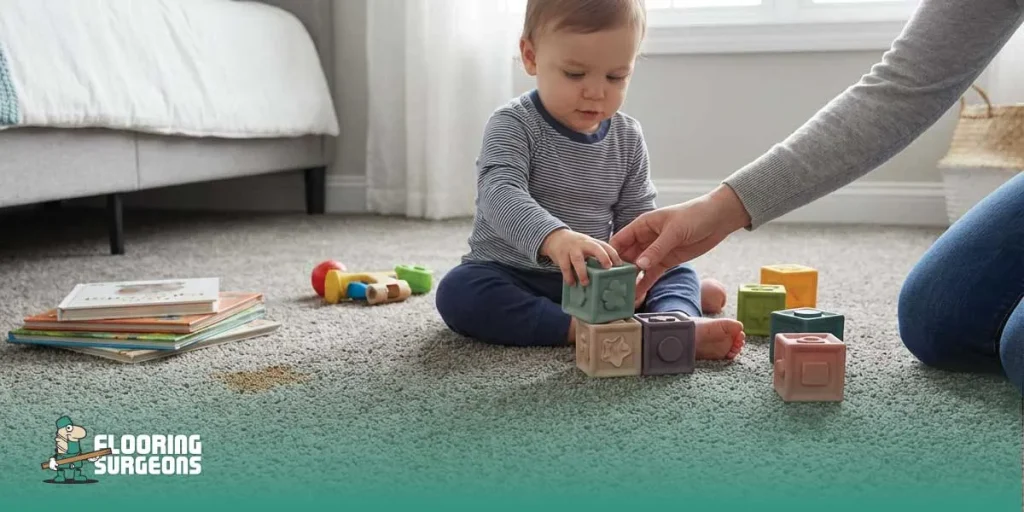
The best Carpet for Kids’ rooms is one that keeps children safe, feels soft underfoot, and can handle daily mess without becoming a maintenance problem. For most families, that means choosing a low to medium pile carpet, made from a durable, stain-resistant material, with a surface that’s easy to clean and comfortable for sitting, crawling, and play. Ultra-soft or deep carpets may look appealing, but they often trap dirt, show wear quickly, and are harder to maintain in real family homes.
Safety and practicality matter more than style alone. A good kids’ bedroom carpet should reduce slip risk, soften falls, absorb noise, and cope with spills, toys, and constant foot traffic. Colour choice also plays a role — not just visually, but in how well marks and everyday dirt are hidden. These factors become even more critical in busy UK homes, where outdoor grit, school shoes, and changing seasons put extra stress on flooring.
This guide breaks down exactly what parents should look for, from carpet materials and pile types to safety, durability, and common mistakes, so you can make a confident choice without overthinking it. If you want a carpet that works for your child and your household routine, the details that follow are where the real difference is made.
Table of contents
What Makes a Carpet Suitable for a Child’s Room?
When parents ask for the best carpet for kids’ rooms, they’re usually not asking about trends. They’re asking how to keep their child safe, comfortable, and their sanity intact. This is where the real decision-making happens. A carpet that looks nice in a showroom can fail fast once toys, spills, and daily life kick in.
Let’s break this down in a way that actually helps you choose.
- Safety Comes First, Always
A child’s room is a play space, not just a bedroom. That means floors need to cushion falls and reduce slips. The safest carpets for kids’ rooms have a low to medium pile. They’re soft enough to break a tumble, but firm enough that feet don’t sink in and twist. Very deep or shaggy carpets feel cosy at first, but they increase trip risk and are harder for kids to move on, especially toddlers.
Another safety detail parents miss is grip. A carpet that sits flat and stable, paired with proper underlay, reduces movement underfoot. That matters more than extreme softness.
- Soft Enough for Play, Firm Enough for Real Life
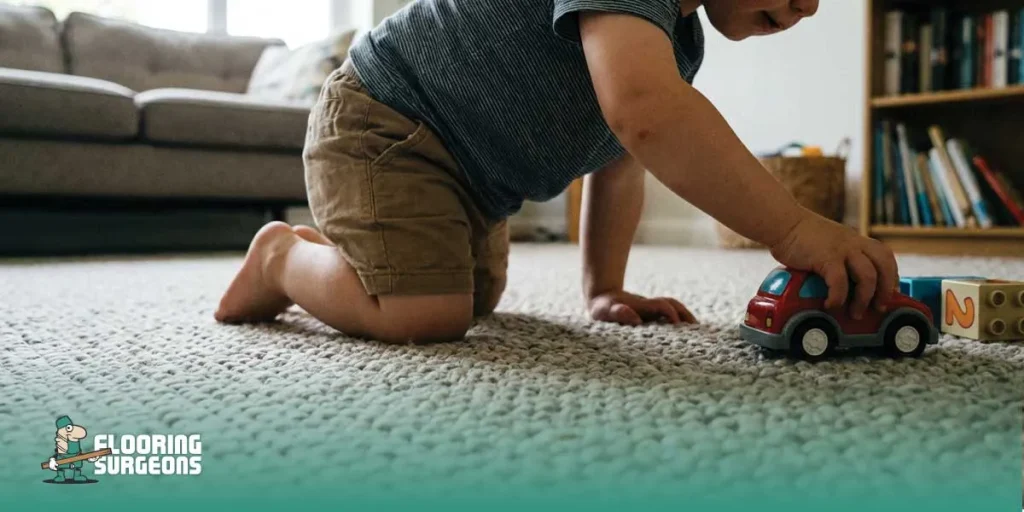
Kids sit, crawl, roll, and build worlds on the floor—comfort matters. But ultra-plush carpets often trade comfort for practicality. A dense, resilient fibre gives a better balance. It feels comfortable for playtime and holds its shape once everyone stands up again. In busy UK homes, this balance makes a noticeable difference after a year or two of use.
- Easy to Clean Beats “Luxury” Every Time
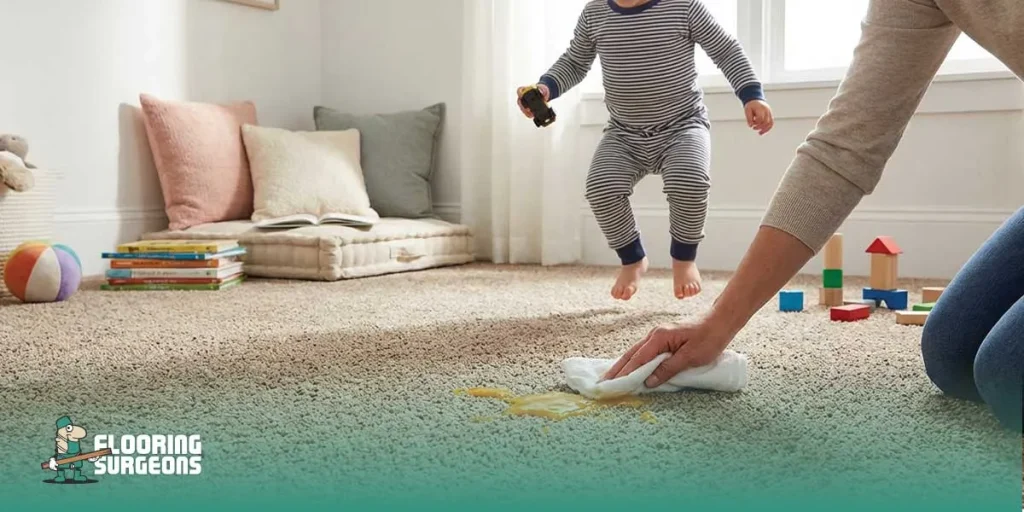
Spills are not accidents in kids’ rooms. They’re guaranteed. The best carpet for a child’s room is one that forgives you when juice, paint, or snack crumbs hit the floor.
Look for:
- Stain-resistant fibres that don’t absorb liquid instantly.
- Carpets that clean well with regular vacuuming.
- Textures that don’t trap crumbs deep down.
Natural fibres can work, but they need more care. Many families prefer modern synthetic carpets because they handle messes with less stress.
- Durability Matters More Than You Think
Children don’t walk lightly. They jump, drag toys, and pace when they can’t sleep. A suitable kids’ room carpet needs good wear resistance, not just softness. Dense construction and twist in the fibre help carpets bounce back instead of flattening in walk paths.
A quick check: if a carpet feels soft because it’s loose, not because it’s dense, it won’t age well.
- Noise and Comfort for the Whole House
Carpet plays a significant role in noise control. In family homes, especially with bedrooms upstairs, carpet helps absorb sound and reduce echo. This isn’t just about peace and quiet. It helps kids sleep better, too.
A quality underlay paired with the right carpet can cut impact noise far more than parents expect.
- A Fast Way to Spot the Right Choice
If you want a quick filter before shopping, ask these questions:
- Does it feel soft but spring back quickly?
- Is the pile low to medium, not deep?
- Can it handle stains without panic?
- Will it still look decent after heavy use?
If the answer is yes to all four, you’re on the right track.
Is Carpet the Best Flooring Choice for Kids’ Bedrooms?
In most family homes, yes. But not for the reasons competitors usually give. Parents don’t really compare carpet to other floors in terms of looks. The real comparison happens in their head around safety, comfort, noise, and how forgiving the floor is when real life happens.
Let’s line that up properly.
Carpet vs Hard Flooring: What Actually Matters for Kids
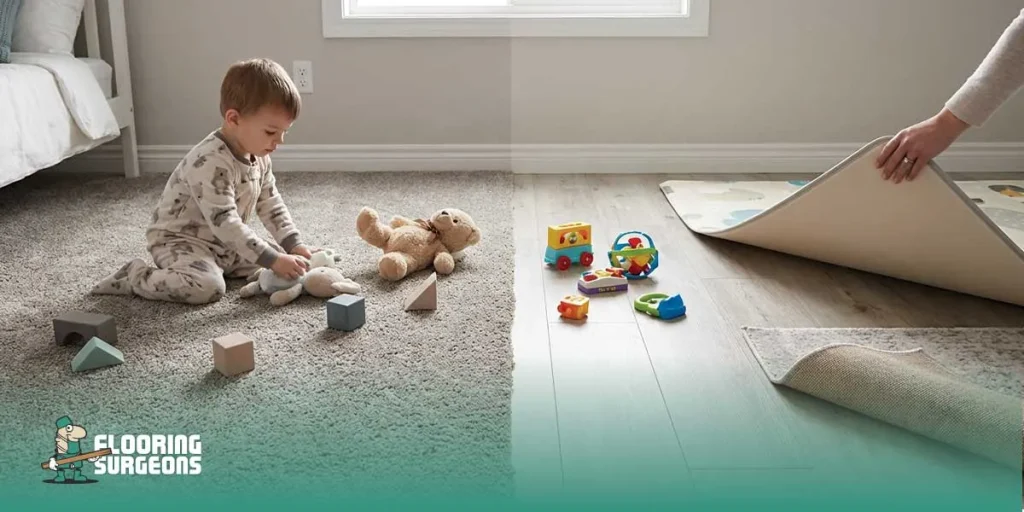
Hard floors like wood, laminate, or vinyl look tidy and feel easier to clean. On paper, they sound practical. In a child’s bedroom, though, they introduce trade-offs that many parents only notice later. Some parents also consider vinyl click flooring for bedrooms, but in children’s rooms, it often needs rugs to match the comfort and impact protection carpet provides.
Carpet wins in three areas that matter daily:
- Impact safety: falls are softer, especially for toddlers and younger kids.
- Warmth: kids sit and play on the floor. Carpet stays warmer than hard surfaces.
- Noise control: footsteps, toys, and jumping don’t echo through the house.
Hard floors need rugs to compensate for all three. Rugs move, curl, and become another thing to manage.
- What About Allergies and Hygiene?
This is where many parents hesitate. Carpet has a reputation problem. The reality is more balanced:
- Modern carpets trap dust rather than letting it circulate in the air.
- Regular vacuuming removes allergens more effectively than wiping hard floors, where dust gets redistributed.
- Low-pile, dense carpets are far easier to keep clean than older, fluffy styles.
If allergies are a concern, carpet choice and maintenance matter more than carpet vs no carpet.
- Durability Under Real Use
Kids’ bedrooms are high-wear zones in disguise. Cars get pushed. Chairs scrape. Kids pace, jump, and drag things across the floor. Carpet absorbs that abuse. Hard floors show it. Scratches, dents, and impact marks are permanent on wood or laminate. Carpet hides wear far better and feel less “damaged” over time.
When Carpet Might Not Be the Best Choice
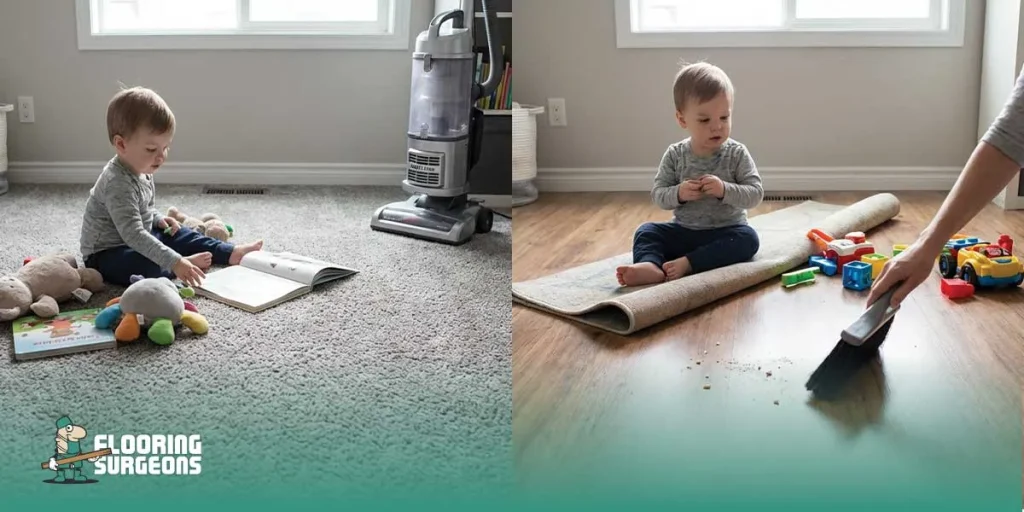
Carpet isn’t perfect for every situation. It may not be ideal if:
- The room doubles as a craft space with frequent paint or glue use.
- There’s a strong preference for minimal cleaning effort.
- The child has severe allergies, a nd carpet care won’t be consistent.
In those cases, hard flooring with a large, well-fitted rug can work, but it’s usually a compromise, not a clear win. In most UK family homes, carpet remains the most forgiving, comfortable, and child-friendly flooring for bedrooms. Parents who choose hard floors often add rugs later. Parents who choose the right carpet rarely regret it. The key isn’t choosing carpet blindly. It’s choosing the correct type of carpet for how kids actually live, not how a room looks on day one.
Best Carpet Materials for Kids’ Rooms
When parents ask “what’s the best carpet for a kids’ room?” they’re usually really asking which material survives spills, play, and daily wear without becoming a headache. The material matters more than colour or pattern, and each option behaves very differently in a child’s bedroom. Many parents looking for softer, safer floors start by exploring cosy bedroom flooring ideas that balance comfort, warmth, and everyday practicality.
Below is a clear, no-nonsense breakdown based on real family use, not showroom promises.
Nylon Carpets for Children’s Bedrooms
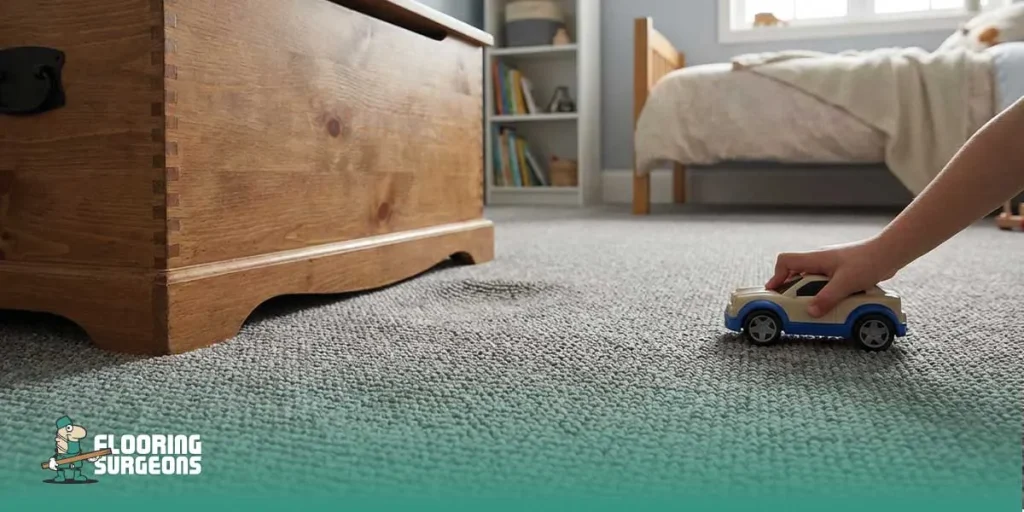
If you want the safest all-round choice, nylon carpet usually comes out on top. Nylon is tough, flexible, and very good at bouncing back after compression. That matters in kids’ rooms where furniture gets moved, toys get dragged, and the same spots get walked on all day.
Why parents choose nylon:
- Handles heavy foot traffic without flattening quickly
- Resists crushing from beds, desks, and chairs
- Easier to clean after spills compared to natural fibres
- Keeps its appearance longer than most synthetics
The trade-off is price. Nylon carpets for kids’ bedrooms tend to cost a bit more upfront, but they usually last longer, which often makes them a better value over time.
Polyester Carpets for Kids Rooms
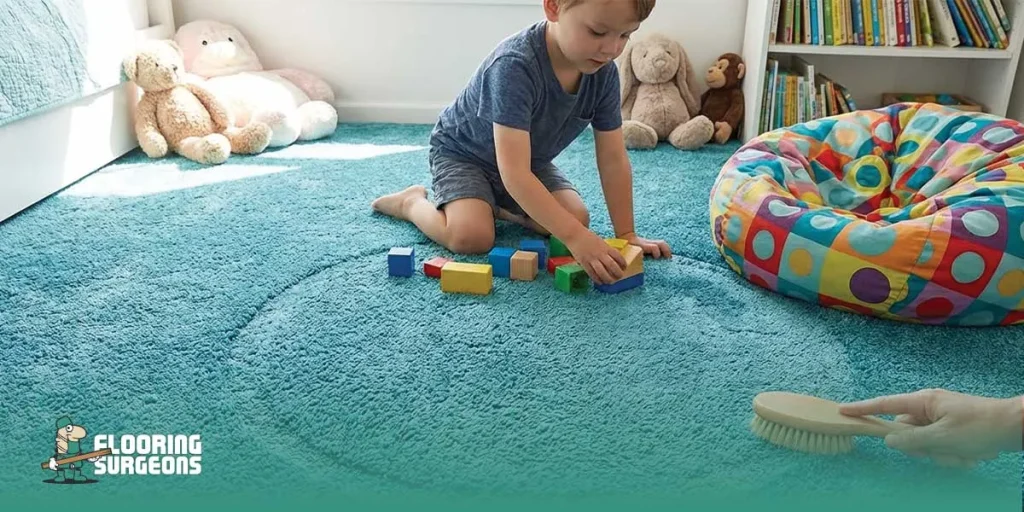
Polyester carpets are popular because they’re soft, colourful, and more budget-friendly. They feel great underfoot, which is why many parents like them for younger children who play on the floor a lot. Polyester also has good stain resistance, especially against food and drink spills.
Where polyester works well:
- Low to medium traffic kids’ bedrooms
- Rooms where softness is a priority
- Homes are watching the budget closely
Where it falls short:
- Fibres flatten faster under constant pressure
- Wear shows sooner in busy play zones.
- Not as resilient as nylon long-term.
Polyester carpets can be a good option, but they’re best matched with realistic expectations about lifespan in active kids’ rooms.
Wool Carpets — Are They Practical for Kids?
Wool carpet often sounds like the premium, “healthy home” option, and in some cases, it is. Wool is naturally insulating, breathable, and comfortable. It also regulates temperature well, which can make bedrooms feel cosy year-round.
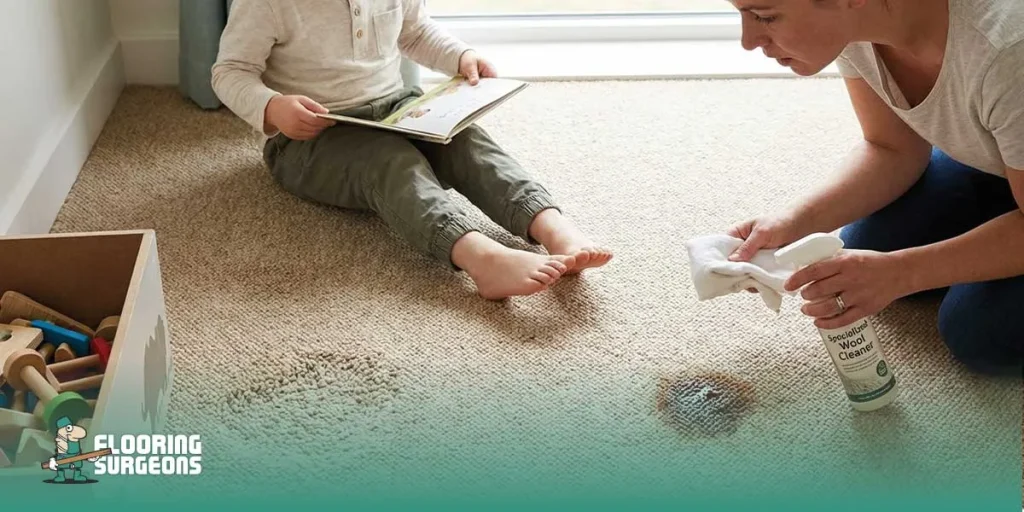
That said, wool is not always the most practical choice for kids’ bedrooms. Things parents often underestimate:
- Wool stains more easily than synthetic fibres
- Requires quicker clean-up and more careful maintenance
- Higher upfront cost
- Can show wear faster in high-play areas
Wool carpets can work in older children’s bedrooms or calmer spaces, but in busy, toy-filled rooms, many families find wool too high-maintenance.
Quick Comparison: Carpet Materials for Kids’ Rooms
| Carpet Material | Comfort & Softness | Durability for Kids | Stain Resistance | Maintenance Level | Best For |
| Nylon | Medium–High | Very High | High | Low–Medium | Active kids’ bedrooms, long-term use |
| Polyester | High | Medium | High | Low | Younger kids, budget-friendly rooms |
| Wool | High | Medium | Medium–Low | High | Older kids, lower-traffic bedrooms |
How to Choose Between Them
A simple rule parents find helpful:
- Busy room, rough play, long-term durability → Nylon
- Softer feel, lighter use, tighter budget → Polyester
- Natural fibre, calm space, higher upkeep OK → Wool
Installers consistently see the fewest regrets when the carpet material matches how the child actually uses the room, not how the room is meant to look. In kids’ bedrooms, practicality almost always beats “premium” on paper.
Best Carpet Pile Types for Kids’ Rooms
Pile type has a direct impact on how a child’s bedroom feels, how easy it is to clean, and how well the carpet holds up to daily play. Many parents focus only on softness, but in real homes, pile height and density determine whether a rug stays manageable or becomes a constant source of frustration.
In kids’ rooms, the right pile should clean quickly, feel comfortable for sitting and playing, and avoid trapping crumbs, dust, and toy marks. A poor pile choice usually shows problems within months, not years.
Low Pile vs Medium Pile Carpet for Children
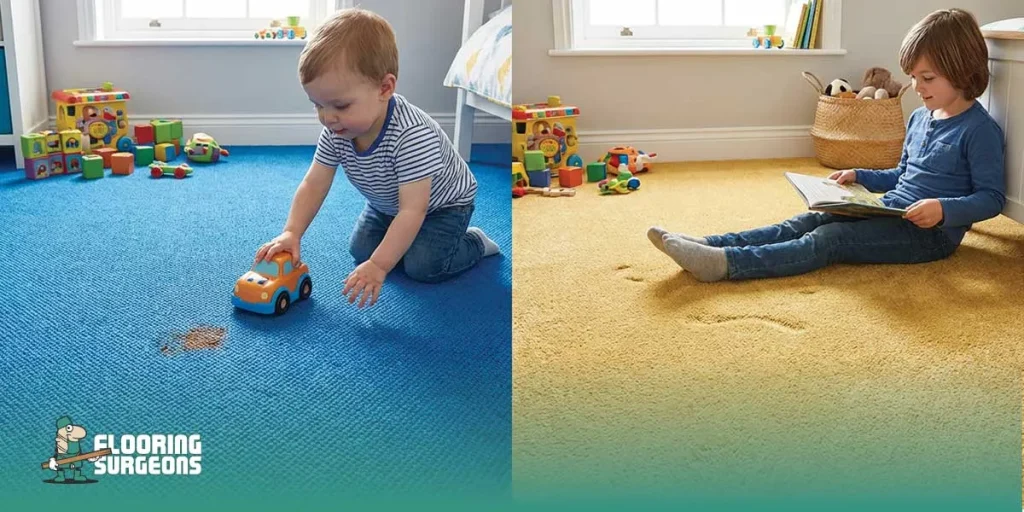
Low-pile carpets are the most practical option for younger children and play-heavy bedrooms. The shorter fibres sit closer to the backing, which limits how deeply dirt and crumbs can settle. This makes everyday cleaning faster and helps carpets look tidy even after active use.
Medium pile carpets offer a noticeable step up in comfort without sacrificing too much control. They work well for school-age children who still spend time on the floor but no longer crawl or drag toys constantly. The pile is soft enough to feel cosy while remaining easy to maintain with regular vacuuming.
The difference usually comes down to lifestyle—low pile suits high-energy, mess-prone rooms. Medium pile suits calmer spaces where comfort matters more, but practicality still counts.
Why Deep Pile Isn’t Always Kid-Friendly
Deep pile carpets often look appealing at first because they feel soft and luxurious underfoot. In children’s bedrooms, though, that softness comes with trade-offs that many parents don’t expect.
Because the fibres are longer and looser, deep pile carpets hold onto dirt, crumbs, and dust far more easily. Spills sink in faster, toy marks linger, and vacuuming takes more effort to achieve the same result. In rooms where children run, jump, or are learning to walk, the extra softness can also reduce stability.
This doesn’t mean deep-pile carpets are low quality. It simply means they don’t align well with the way kids actually use their rooms day to day.
Quick Comparison: Carpet Pile Types for Kids’ Bedrooms
| Carpet Pile Type | Cleaning Effort | Comfort Level | Everyday Practicality |
| Low-pile carpet | Very easy | Moderate | Best for toddlers and play-focused rooms |
| Medium pile carpet | Easy | Comfortable balance | Ideal for growing children |
| Deep pile carpet | Harder | Very soft | Often impractical for kids’ bedrooms |
In homes with children, most long-term complaints come from deep-pile carpets. Not because they wear out quickly, but because parents underestimate how much extra effort they require to keep clean once real life kicks in.
Safety First — How Carpet Helps Protect Children
Safety is one of the biggest reasons parents choose carpet for a child’s room, but it’s rarely explained properly. In real homes, carpet doesn’t just feel soft. It actively reduces risk in the places where kids fall, slip, or misjudge their balance.
How Carpet Reduces Slips in Children’s Bedrooms
Hard floors become slippery the moment socks, smooth soles, or quick turns are involved. Carpet adds natural grip underfoot, which helps children keep their footing when they run, spin, or change direction suddenly. This matters most in bedrooms that double as play areas, where movement is constant and unpredictable.
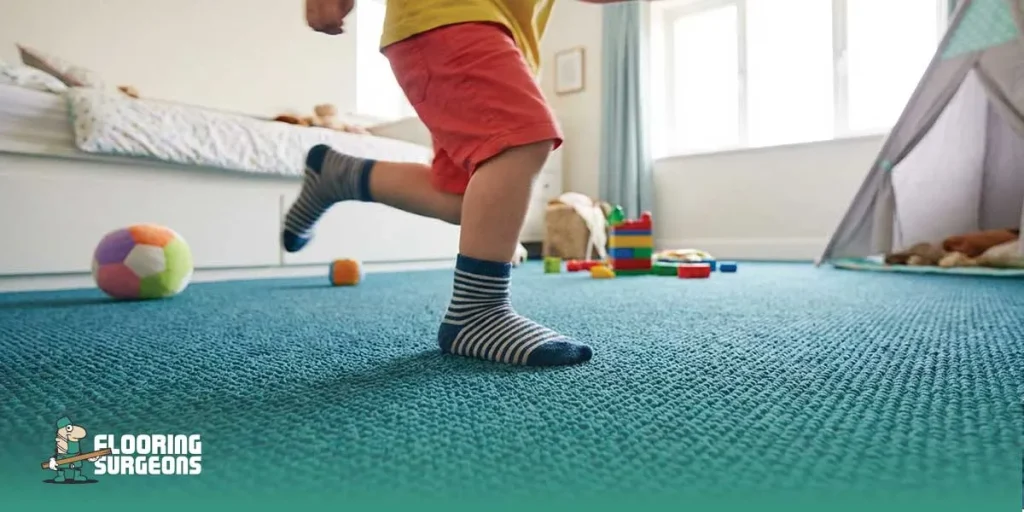
Even a low or medium pile carpet provides enough friction to reduce sliding without restricting movement. That balance is why carpet is still widely used in children’s spaces, despite the popularity of hard flooring elsewhere in the home.
Carpet vs Hard Flooring for Fall Impact Protection
Falls are unavoidable. What matters is how hard the landing is. Carpet acts as a shock absorber. It softens impact when children trip, lose balance, or tumble off furniture. While it won’t prevent every injury, it significantly reduces the force compared to laminate, vinyl, or hardwood.
This protection is especially valuable in:
- Bedrooms where kids jump between the bed and the floor
- Play corners with building blocks or toys.
- Rooms shared by younger siblings
Parents often underestimate how often minor falls happen until the floor underneath is hard.
Why Carpet Is Safer Around Beds and Furniture
Beds are one of the most common fall points in kids’ rooms. Children roll, climb, and jump, often without thinking about distance or height. Carpet cushions these moments, reducing head, knee, and elbow impact when a fall happens next to the bed. The same applies around desks, storage units, and toy chests. Carpet doesn’t eliminate risk, but it lowers the severity of everyday bumps that add up over time.
Carpeted Stairs and Landings Improve Child Safety
If a child’s bedroom connects to a landing or staircase, carpet plays an even bigger safety role. Carpeted stairs provide better grip than hard surfaces and slow momentum during slips. This is one of the reasons many installers still recommend carpet for family staircases, even in homes with hard flooring elsewhere.
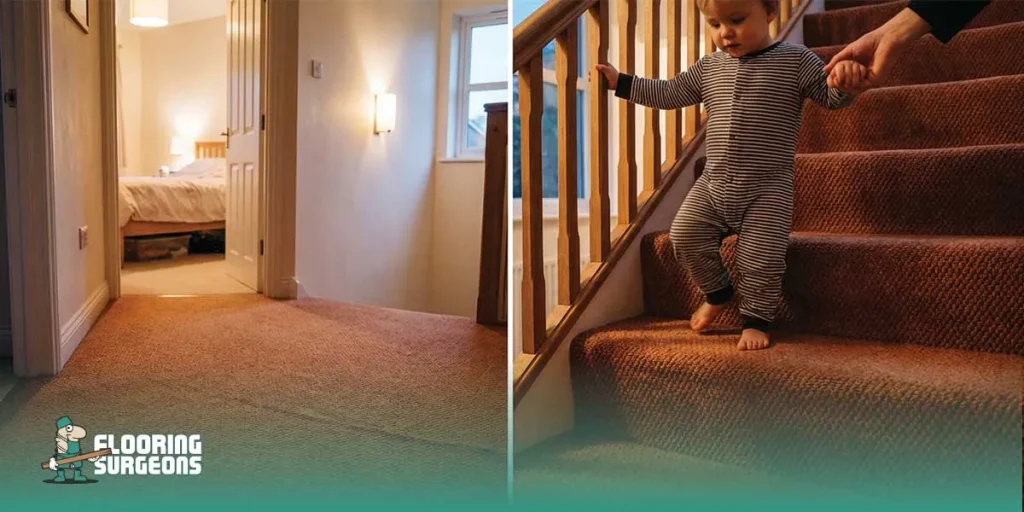
In upstairs bedrooms, carpet also creates a safer transition between rooms, especially at night when children move around in low light. In family homes, carpet isn’t chosen because it’s old-fashioned. It’s preferred because it consistently reduces slips and softens falls in the exact places where children lose balance most often. That practical safety benefit is something hard floors simply can’t replicate.
Best Carpet for Toddlers vs Older Children
Kids don’t use their rooms the same way at every age. A carpet that works perfectly for a toddler can be frustrating or impractical for an older child. This is where most buying guides fail. They talk about “kids” as one group, when in reality, age changes everything: movement, mess, safety risks, and how the room is used day to day.
Best Carpet Choices for Toddlers (Ages 1–4)
For toddlers, the floor is not just something they walk on. It’s where they crawl, sit, fall, play, and sometimes even nap. At this stage, impact protection and hygiene matter more than appearance.
The best carpet for toddlers usually has:
- A low to medium pile that cushions falls without feeling unstable
- Dense fibres that don’t trap crumbs and dust deep inside
- Strong stain resistance, because spills are constant
- A surface that vacuums clean quickly, even with frequent messes
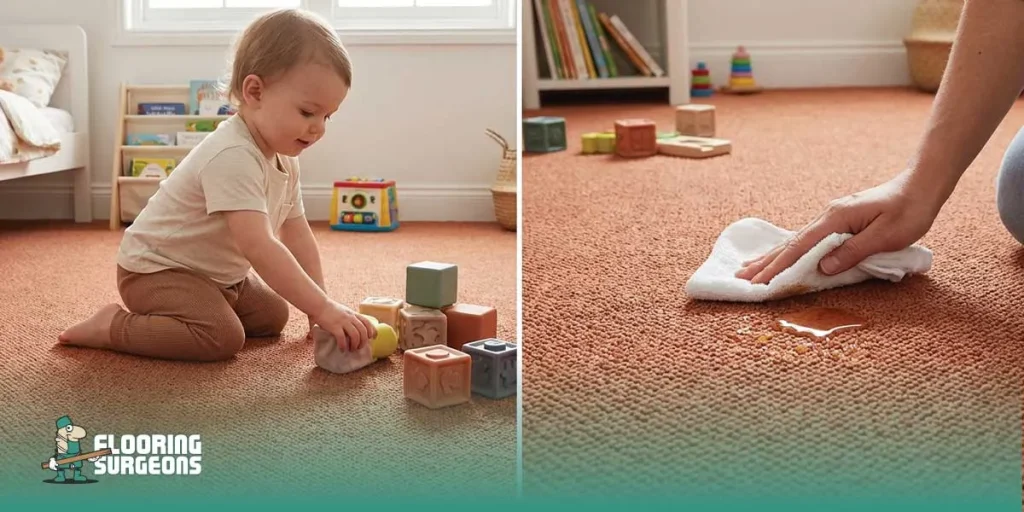
Very deep or loose pile carpets are a poor fit here. They make walking harder for new movers and hold onto food, dirt, and allergens far more than parents expect.
In practical terms, a toddler-friendly carpet should feel soft enough for sitting and falling, but firm enough to support balance and easy cleaning.
Best Carpet Choices for Preschool and Primary School Children (Ages 5–10)
As children grow, the room starts to change its purpose. There’s less crawling and more walking, sitting, drawing, and playing on the floor with toys. At this stage, durability and comfort need to balance out.
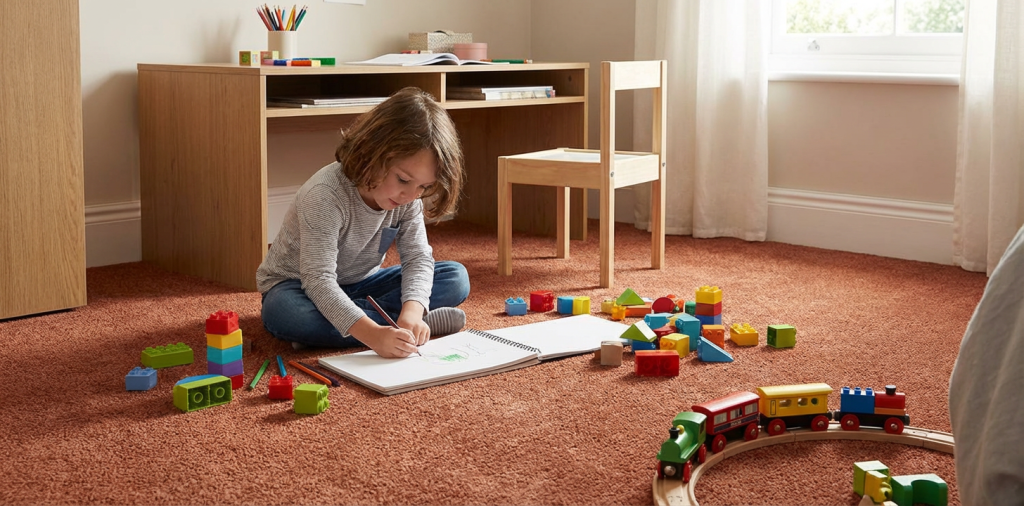
Carpets that work well for this age group typically:
- Use a medium pile for comfort without deep fibre issues
- Hide everyday wear from constant foot traffic.
- Resist flattening where children sit or play repeatedly.
- Stay comfortable for floor play without becoming hard to maintain
This is also the age where appearance matters a bit more. The carpet still needs to perform, but it should also cope with more prolonged use and visible wear.
Best Carpet Choices for Older Children and Teens (Ages 11+)
For older children and teenagers, the bedroom becomes less of a play space and more of a personal retreat. Mess is usually more controlled, and falls are far less frequent. Here, comfort, noise control, and durability take priority.
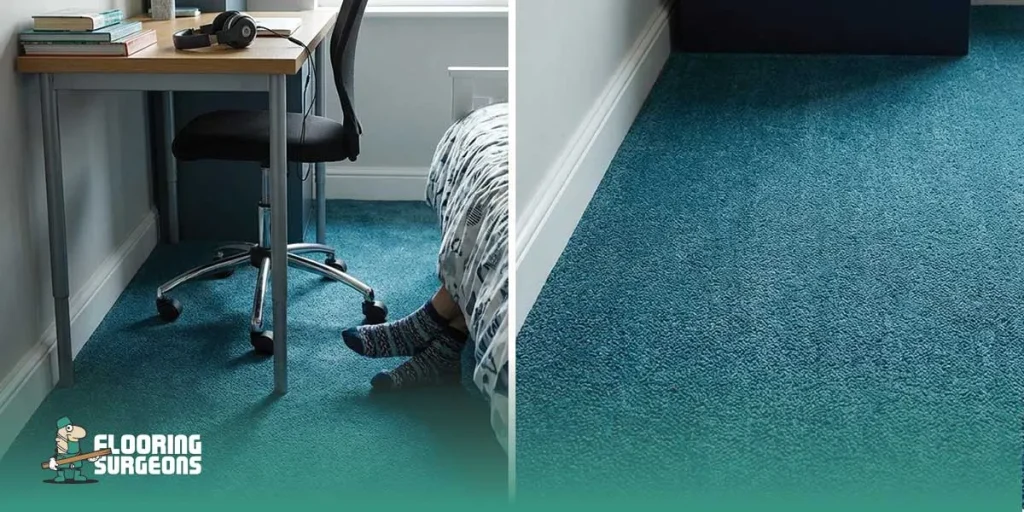
Carpets for this age group can:
- Use medium pile or slightly plusher textures
- Focus more on sound absorption and warmth.
- Handle heavier furniture like desks and beds without crushing easily.
That said, very deep pile carpets can still cause problems, especially under desk chairs or in high-traffic paths. Comfort is essential, but practicality still matters.
Quick Age-Based Carpet Comparison
| Child’s Age | What Matters Most | Carpet Features That Work Best |
| Toddlers (1–4) | Safety, hygiene, and easy cleaning | Low–medium pile, dense fibres, stain resistance |
| Young children (5–10) | Durability + comfort | Medium pile, good recovery, easy maintenance |
| Older children (11+) | Comfort, noise reduction | Medium to slightly plush pile, strong fibre resilience |
The biggest mistakes happen when parents buy carpet for how the room looks now, not how the child will use it over the next few years. Choosing a pile and material that matches the child’s current age usually leads to earlier replacement than expected.
Stain Resistance & Easy Cleaning for Family Homes
This is the part parents actually care about once the room is in use. In kids’ bedrooms, stains don’t come from accidents alone. They come from everyday life: juice cups, felt pens, snack crumbs, muddy socks, and the odd “I forgot to tell you” moment.
What really matters for stain resistance is how the fibre behaves, not just whether the carpet claims to be “stain resistant” on the label.
Carpets that work best in family homes usually have:
- Solution-dyed fibres, where colour runs through the fibre, not just on the surface
- A tight, dense construction that stops spills from soaking down quickly
- Fibres that release dirt during vacuuming instead of holding onto it
This is why nylon and modern polyester carpets tend to outperform older materials in busy homes. They don’t just resist stains better; they recover faster after cleaning and don’t show patchy marks as easily.
If a carpet needs specialist products or delicate handling to stay clean, it’s probably not a good fit for a child’s room.
Carpet Colours That Actually Work in Kids’ Bedrooms
Colour choice affects how often a kid’s room looks “messy,” even when it’s clean. Many parents are drawn to light creams or bold patterns, then regret it once daily life kicks in.
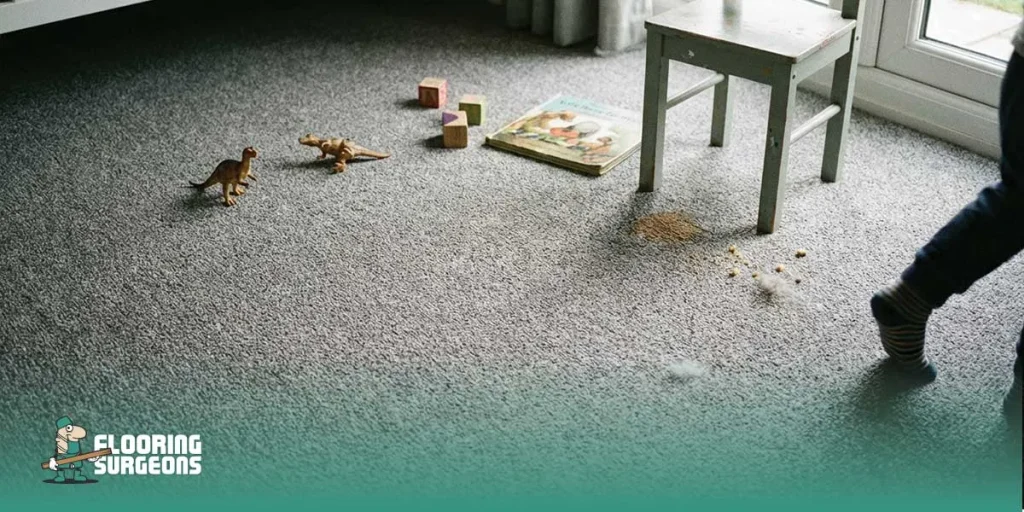
The most practical carpet colours for kids’ bedrooms sit in the middle ground:
- Mid-tone greys, warm taupes, and soft beiges hide everyday marks better
- Flecked or lightly textured colours disguise crumbs, lint, and minor stains
- Muted tones age better as the child grows, without feeling babyish.
Very light carpets show everything. Very dark carpets highlight dust, fluff, and pet hair. Bright novelty colours look fun at first, but date quickly and limit how the room can change later.
A proper mindset shift for parents:
The best carpet colour isn’t the one that looks perfect on day one. It’s the one that still looks acceptable on day 300 without constant cleaning.
Allergies, Dust & Indoor Air Quality in Kids’ Rooms
This is where misinformation is common, so clarity matters. Carpet itself isn’t the enemy for allergies. Poor cleaning habits and the wrong pile type are. In children’s bedrooms, carpets can actually help indoor air quality when chosen and maintained correctly. They trap airborne dust instead of letting it circulate, as long as that dust is removed regularly.
For allergy-conscious families, look for:
- Low to medium pile carpets, which are easier to vacuum thoroughly
- Dense fibres that don’t let dust sink too deep
- Carpets compatible with HEPA-filter vacuums
Deep, loose-pile carpets are more likely to hold onto allergens and are harder to clean thoroughly. This doesn’t mean carpet should be avoided. It means pile height and maintenance matter more than material alone. In real homes, allergy issues are more often linked to infrequent vacuuming and high-pile carpets than to carpet itself. A well-chosen, regularly cleaned carpet is usually safer than a hard floor layered with rugs that never get properly cleaned.
Common Carpet Mistakes Parents Make in Kids’ Rooms
Most issues parents face with carpet in children’s bedrooms come from small decision mistakes made early on. These show up months later, once the room is being used every day.
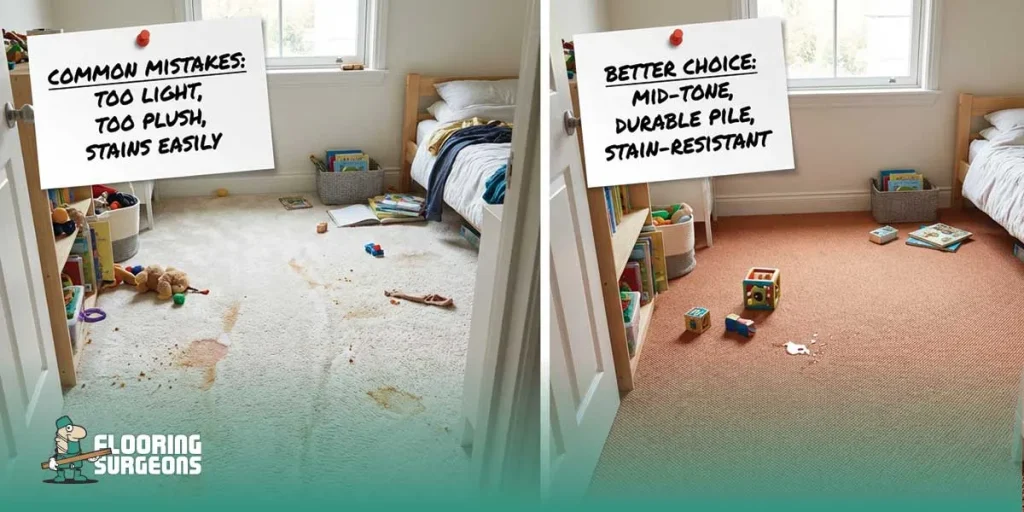
The most common mistakes parents make include:
- Choosing carpet based only on softness
Deep, plush carpets feel great at first, but they flatten quickly, trap crumbs, and are harder to clean in active kids’ rooms. - Picking very light carpet colours
Pale shades look calm in showrooms but highlight spills, wear paths, and stains far sooner than expected. - Ignoring real wear patterns
Kids use the same areas repeatedly. Low-density carpets wear unevenly and start to look patchy around beds, doors, and play zones. - Overlooking stain resistance
Assuming “all carpets clean the same” often leads to frustration. Some fibres hold stains or need specialist products, which isn’t ideal for family homes. - Buying only for the child’s current age
Carpets chosen for toddlers often feel impractical or worn once children get older. Neutral, durable options usually last longer across stages. - Avoiding carpet due to allergy concerns without alternatives
Hard floors with loose rugs often trap more dust and are cleaned less thoroughly than fitted carpet in bedrooms.
A simple guideline that prevents most of these issues:
Choose carpet based on daily use, cleaning reality, and long-term wear, not how it looks in an empty or perfectly styled room.
How Long Does Carpet Last in a Child’s Bedroom?
The lifespan of carpet in a child’s bedroom depends far more on material, pile type, and daily use than on brand names or price tags. Kids’ rooms are high-wear environments, even when they don’t look like it at first.
In real family homes, carpet in a child’s bedroom typically lasts:
- 5–7 years for lower-density or budget carpets
- 7–10 years for good-quality synthetic carpets with proper stain protection
- 10+ years for high-density nylon or well-maintained wool in calmer rooms
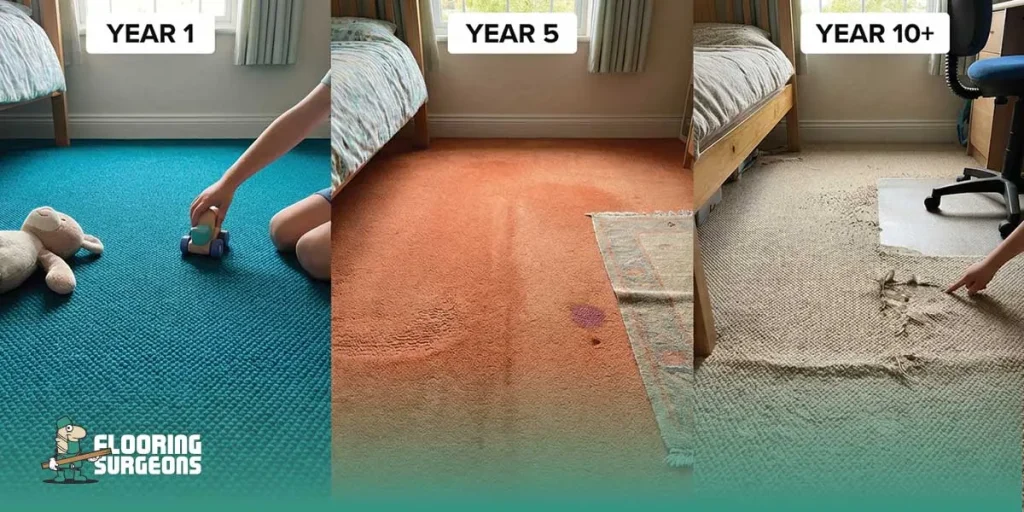
What shortens carpet lifespan most is repeated pressure in the same spots. Areas beside the bed, near doors, and around play zones wear first. Spills and over-cleaning can also break down fibres faster than everyday use. Choosing a slightly more durable carpet often works out cheaper long term. Replacing a worn carpet after four or five years usually costs more overall than installing a mid-range option that lasts close to a decade with basic care.
A helpful way to think about value is not “how long should carpet last”, but how many years of low-stress use you expect before it looks tired. In kids’ bedrooms, durability and easy cleaning usually outweigh premium finishes.
Final Advice From Flooring Professionals for Kids’ Rooms
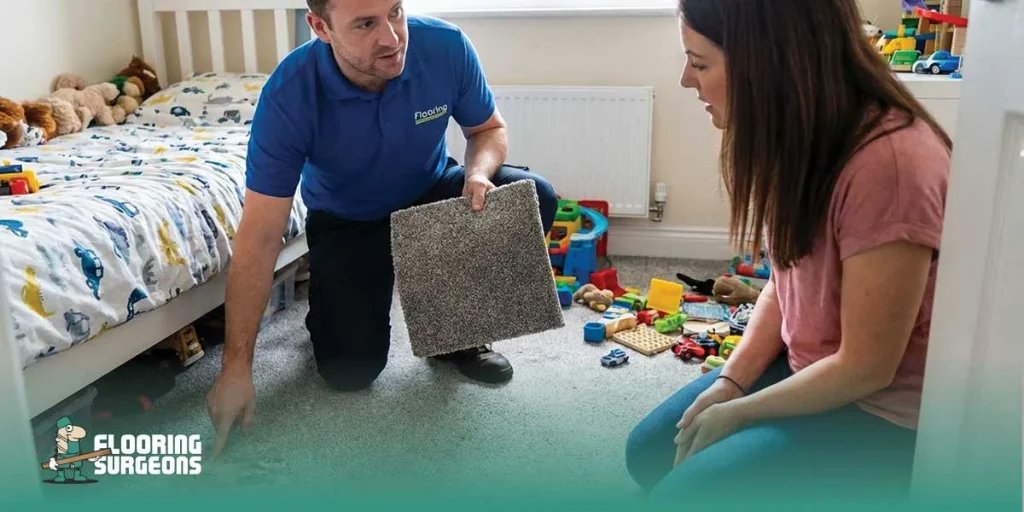
Installers and flooring specialists tend to agree on one thing: carpets fail early in kids’ rooms because of usage patterns, not because parents chose the “wrong” product on paper. Based on what installers at Flooring Surgeons see in real family homes, carpets chosen for kids’ rooms perform best when durability and everyday cleaning are prioritised over showroom softness.
Based on what professionals see in real homes:
- Prioritise durability and cleanability over extreme softness
- Choose medium pile and good density for balanced comfort and wear.
- Pick colours that forgive stains and traffic, not just look nice on day one.
- Think about how the room will be used two or five years from now, not just now.
- Accept that some wear is normal, but uneven wear is a warning sign.
The carpets that perform best in children’s bedrooms aren’t the most expensive or the trendiest. They’re the ones chosen with daily life in mind and installed with realistic expectations. These are the issues flooring professionals see repeatedly when carpets wear out faster than expected—not because parents made careless choices, but because everyday habits and long-term use weren’t fully considered at the start.
Best Carpet for Kids’ Room (Quick Checklist)
- Choose a durable fibre like nylon or high-quality polyester that handles daily wear.
- Go for low to medium pile to reduce trips, flattening, and trapped dirt.
- Pick stain-resistant carpets that clean easily without special products.
- Select forgiving colours that hide spills, marks, and wear paths.
- Prioritise safety and comfort, especially around beds, play areas, and stairs.

Haniye Ayanmanesh
As an expert writer for Flooring Surgeons, I combine technical SEO knowledge with a practical understanding of flooring, producing content that helps users make confident decisions while supporting long-term organic growth.