

Yes, you can glue down vinyl plank flooring, but only in specific situations, and not every vinyl plank is designed for it. Whether glue-down is a good idea depends on the type of vinyl plank, the subfloor condition, room size, and how the floor needs to perform long-term. In many homes, glueing vinyl planks improves stability and reduces movement, but in others, it creates repair and maintenance problems.
This guide explains when vinyl plank flooring can be glued down safely, when floating or click-lock installation works better, and what installers see go wrong when the wrong method is chosen, so you can make the right decision before installation, not after problems appear.
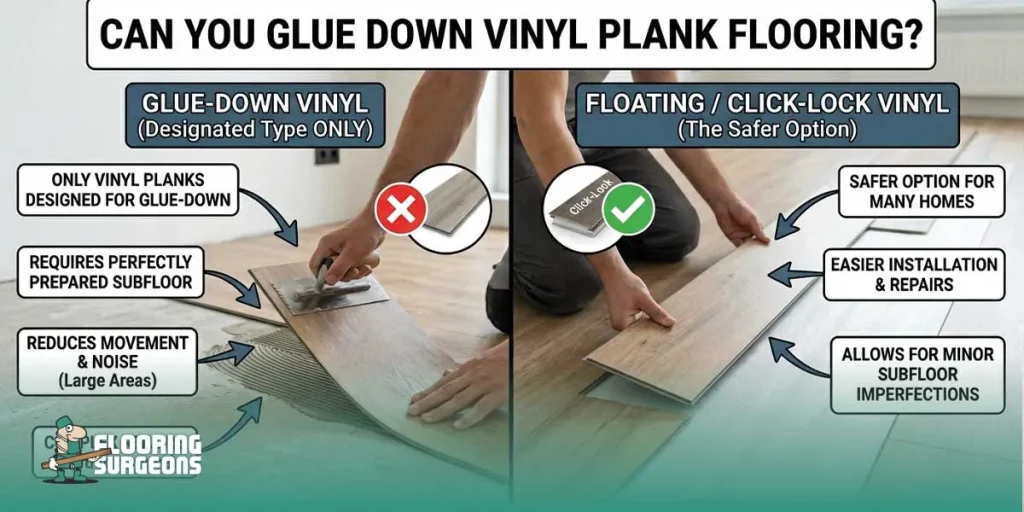
Table of contents
Can You Glue Down Vinyl Plank Flooring? (Quick Answer)
- Only vinyl planks designed for glue-down installation can be glued
- Glue-down vinyl works best on perfectly prepared subfloors.
- It reduces movement and noise in large or high-traffic areas.
- Repairs are more complex compared to floating vinyl plank flooring.
- In many homes, floating or click-lock vinyl is the safer option.
Most vinyl click flooring products are engineered to float, and glueing them down interferes with how the locking system is designed to work.
What Is Glue-Down Vinyl Plank Flooring?
Glue-down vinyl plank flooring is a type of vinyl plank designed to be fully bonded to the subfloor using adhesive, rather than floating or clicking together. These planks are often referred to as dry-back vinyl planks, meaning they have a flat backing that relies entirely on glue for stability.
Unlike floating vinyl plank flooring, glue-down vinyl does not move once installed. Each plank is fixed in place, which creates a firmer feel underfoot and reduces movement, shifting, or hollow sounds. This is one reason glue-down vinyl plank flooring is commonly used in commercial spaces and high-traffic areas, where long-term stability matters more than easy removal.
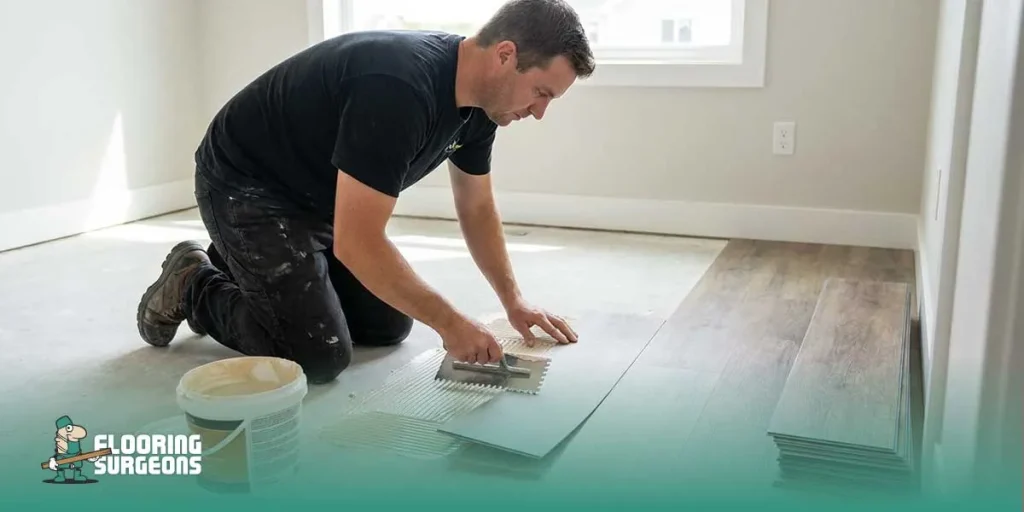
The structure of glue-down vinyl plank flooring makes subfloor quality critical. Because the planks sit directly against the surface below, any unevenness, debris, or moisture issues can affect adhesion and show through over time. Installers often say that with glue-down vinyl, the floor performs only as well as the subfloor beneath it.
It’s also important to understand what glue-down vinyl plank flooring is not. It is not interchangeable with click-lock vinyl planks, and it should not be used as a workaround to make floating vinyl feel more solid. Each installation method is engineered for a specific purpose, and mixing them usually creates problems rather than solves them.
In short, glue-down vinyl plank flooring is a permanent installation method built for stability, reduced movement, and durability, but only when the product, adhesive, and subfloor preparation are all correct.
Glue-Down vs Floating Vinyl Plank Flooring
Choosing between glue-down vinyl plank flooring and floating vinyl plank flooring isn’t about preference; it’s about how the floor needs to behave once people actually start walking on it. These two installation methods perform very differently over time, especially in terms of movement, noise, and repair flexibility.
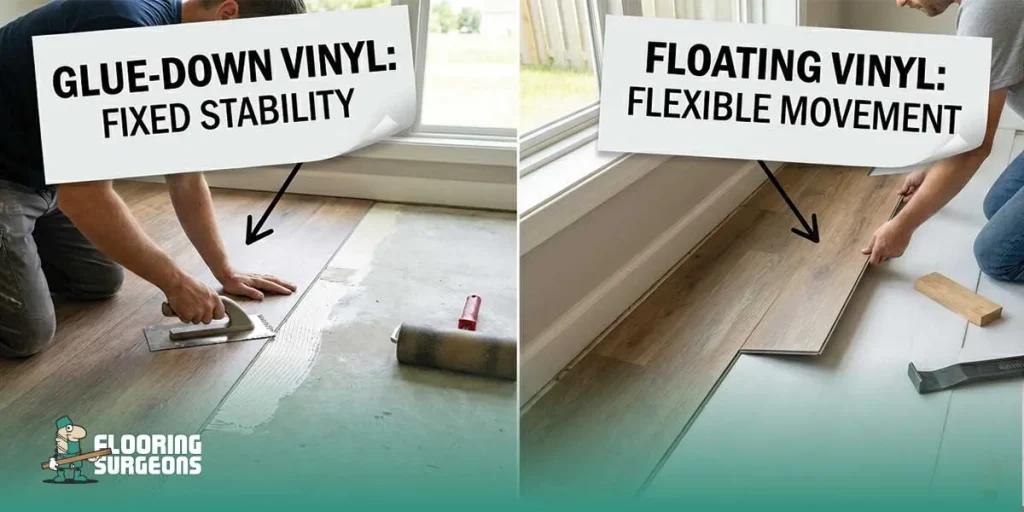
Stability and Movement — Fixed vs Flexible Floors
Glue-down vinyl plank flooring is fully bonded to the subfloor, which means movement is almost eliminated. Once installed correctly, the planks stay in place, feel firm underfoot, and do not shift with foot traffic. This makes glue-down vinyl a strong option for large rooms, long corridors, or spaces with constant use.
Floating vinyl plank flooring is designed to move as a single surface. The planks lock together but are not attached to the subfloor, allowing natural expansion and contraction. This flexibility helps floating floors cope with temperature changes and minor subfloor imperfections, but it also means slight movement is normal, especially in larger areas.
In short:
- Glue-down vinyl prioritises stability
- Floating vinyl prioritises flexibility
Neither is better by default; the right choice depends on the space and conditions. Many modern vinyl planks use rigid core vinyl flooring construction, which is designed to float and should not be glued to the subfloor.
Noise and Comfort Underfoot — Solid Feel vs Softer Response
Glue-down vinyl plank flooring usually feels more solid and quieter underfoot. Because the planks are bonded directly to the subfloor, there is less bounce and fewer hollow sounds when walking across the floor. This is why glue-down vinyl is often preferred in commercial environments or busy households where sound control matters.
Floating vinyl plank flooring can feel slightly softer, but it may produce hollow or tapping noises, especially on uneven subfloors or without proper underlay. In upstairs rooms, flats, or areas where impact noise matters, this difference becomes noticeable.
The trade-off is simple:
- Glue-down vinyl = firmer feel, reduced noise
- Floating vinyl = more cushioning, but potential sound issues
Installation and Repair Differences — Permanent vs Replaceable
Glue-down vinyl plank flooring is a permanent installation. Once the adhesive sets, removing or replacing individual planks is complex and often damages the surrounding area. Repairs usually involve cutting out sections and rebonding, which requires skill and time.
Floating vinyl plank flooring is far easier to repair or replace. Individual planks can often be unlocked and swapped without disturbing the rest of the floor. This makes floating vinyl a safer option for homes where future changes, repairs, or access to the subfloor may be needed.
From a long-term ownership perspective:
- Glue-down vinyl trades repair flexibility for stability
- Floating vinyl trades stability for easier maintenance and changes
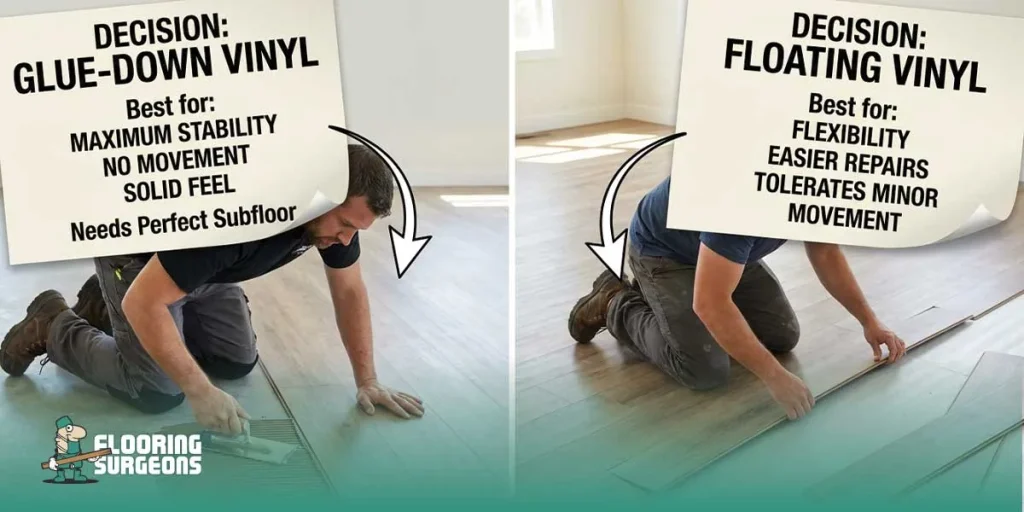
Glue-down vinyl plank flooring works best when you need maximum stability, reduced movement, and a solid feel, and the subfloor is perfectly prepared. Floating vinyl plank flooring makes more sense when flexibility, more straightforward repairs, and tolerance for minor movement are more important.
Pros and Cons of Glue-Down Vinyl Plank Flooring
Glue-down vinyl plank flooring can be the right solution in the right conditions, and a costly mistake in the wrong ones. Understanding the real advantages and trade-offs helps avoid choosing it for the wrong reasons.
Pros of Glue-Down Vinyl Plank Flooring — Where It Performs Best
- Maximum stability underfoot
Because glue-down vinyl plank flooring is fully bonded to the subfloor, it feels solid and does not shift or flex. This makes it well-suited to large rooms, long hallways, and high-traffic areas. - Reduced movement and noise
Glueing vinyl planks down eliminates most hollow sounds and bounce. Footsteps feel quieter and more controlled compared to floating vinyl plank flooring, especially on well-prepared subfloors. - Better performance in commercial-style spaces
In shops, offices, or busy households, glue-down vinyl plank flooring handles constant use without separating or drifting over time. - No expansion gaps needed
Since the floor does not float, perimeter expansion gaps are not required in the same way, which can create a cleaner finish in wide or open layouts.
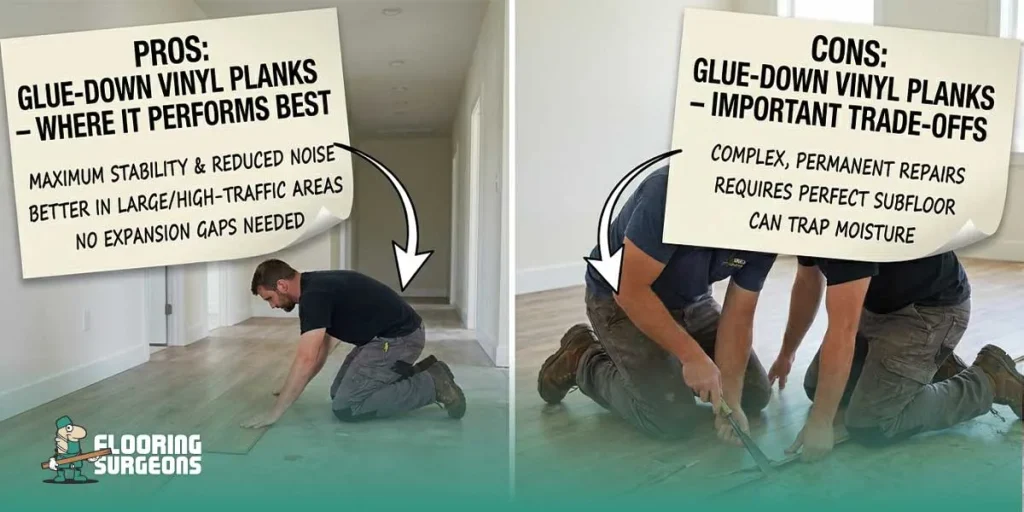
Cons of Glue-Down Vinyl Plank Flooring — Where Problems Start
- Repairs are complex and disruptive.e
Once glued, individual vinyl planks are hard to remove without damage. Replacing a single damaged plank often affects surrounding areas and usually requires professional work. - Subfloor preparation must be perfect.t
Glue-down vinyl plank flooring exposes every flaw beneath it. Any unevenness, debris, or moisture issues can cause poor adhesion and visible defects over time. - Not suitable for all vinyl plank types
Many click-lock or floating vinyl planks are not designed to be glued. Using adhesive on the wrong product can lead to expansion issues and premature failure. - Permanent installation limits flexibility
Changing layouts, accessing the subfloor, or updating the floor later is far more complex compared to floating vinyl plank flooring. - Higher installation risk if done incorrectly
Incorrect adhesive choice, poor spread rate, or rushed installation often leads to lifting, gapping, or bond failure that cannot be fixed easily.
When Glue-Down Vinyl Plank Flooring Makes Sense
Glue-down vinyl plank flooring only makes sense in situations where movement control and long-term stability matter more than flexibility. If those conditions are not present, floating vinyl often performs better with fewer risks.
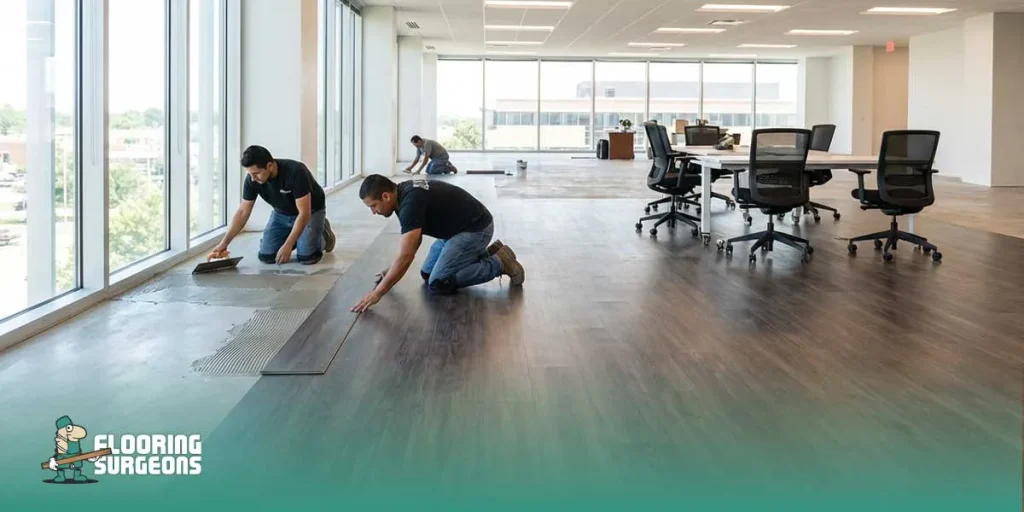
High-Traffic Areas Where Movement Becomes a Problem
In spaces with constant foot traffic, floating vinyl plank flooring can gradually shift or separate, especially over large surface areas. Glue-down vinyl plank flooring eliminates this issue by fixing each plank in place.
This makes glue-down installation a strong choice for:
- Busy commercial spaces
- Long corridors or open-plan layouts
- Homes with continuous daily use across the same walk paths
Here, reduced movement is not a preference — it’s a requirement.
Commercial and Semi-Commercial Environments
Glue-down vinyl plank flooring is commonly used in retail, offices, and mixed-use buildings because it stays stable under repeated stress. Trolleys, rolling chairs, and heavy footfall place pressure on joints in floating floors over time.
In these environments:
- Stability outweighs ease of repair
- Firm underfoot feel is expected.
- Floor failure disrupts operations, not just appearance.
That trade-off makes glue-down vinyl the safer option.
Large Areas Where Floating Floors Reach Their Limits
Floating vinyl plank flooring performs well in small to medium rooms, but very large areas amplify movement. Expansion, contraction, and flex become harder to control as the floor size increases.
Glue-down vinyl plank flooring works better when:
- Rooms exceed typical residential sizes
- There are a few natural breaks or doorways.
- A continuous surface is required without a transition strip.
In these cases, bonding the floor prevents long-term shifting issues.
Spaces With Temperature Variation
Rooms exposed to uneven or fluctuating temperatures place extra stress on floating floors. Sunlight through large windows, underfloor heating zones, or mixed-use spaces can cause expansion differences across the surface.
Glue-down vinyl plank flooring reduces visible movement in:
- Areas with intense sunlight exposure
- Commercial buildings with varied heating patterns
- Spaces where temperature control is inconsistent
The key is that the subfloor must still be properly prepared — glue does not fix poor conditions.
Decision rule installers actually use
Glue-down vinyl plank flooring makes sense when:
- The area is large, busy, or commercial
- Floor movement would be unacceptable.
- Long-term stability matters more than easy repairs.
- The subfloor can be prepared to a high standard.
If those boxes are not clearly ticked, floating vinyl plank flooring is usually the safer and more forgiving choice.
When Floating or Click-Lock Vinyl Is the Better Option
Floating or click-lock vinyl plank flooring is often the better option when flexibility, easier maintenance, and tolerance for movement matter more than absolute rigidity. In many residential settings, these advantages outweigh the benefits of glue-down installation.
Homes Where Future Repairs or Changes Are Likely
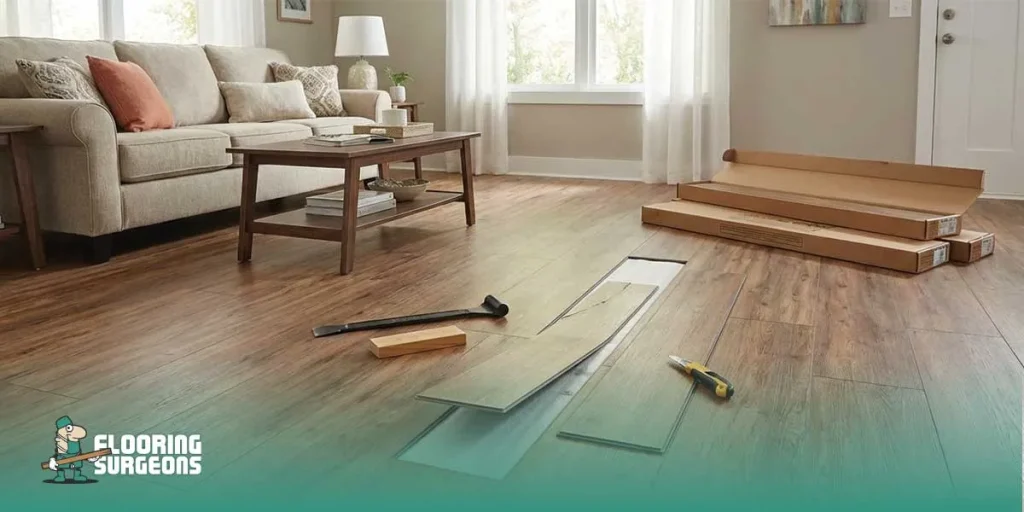
Floating vinyl plank flooring is designed to be removable and replaceable. If a plank gets damaged, access is usually possible without cutting or rebonding large sections of the floor.
Floating or click-lock vinyl makes more sense when:
- You want the option to replace individual planks
- Future renovations or layout changes are likely.
- Access to the subfloor may be needed late.r
In contrast, glue-down vinyl turns even minor repairs into disruptive jobs.
Subfloors That Are Not Perfectly Flat
Glue-down vinyl plank flooring exposes every subfloor flaw. Floating vinyl is more forgiving because it bridges minor imperfections rather than bonding directly to them.
Click-lock vinyl performs better when:
- The subfloor has slight unevenness
- Complete levelling is difficult or costly.
- The existing floor cannot be stripped entirely or smoothed.
In real homes, this flexibility prevents installation issues that glue-down floors often amplify.
Upstairs Rooms and Residential Living Spaces
In many homes, especially upstairs rooms and bedrooms, ease of installation and noise control through underlay matter more than total rigidity.
Floating vinyl plank flooring is often preferred because:
- It can be installed with an acoustic underlay
- It provides slight cushioning underfoot.
- It avoids permanent bonding to structural floors.
This makes click-lock vinyl a safer option in flats, family homes, and multi-level properties.
Areas With Changing Conditions
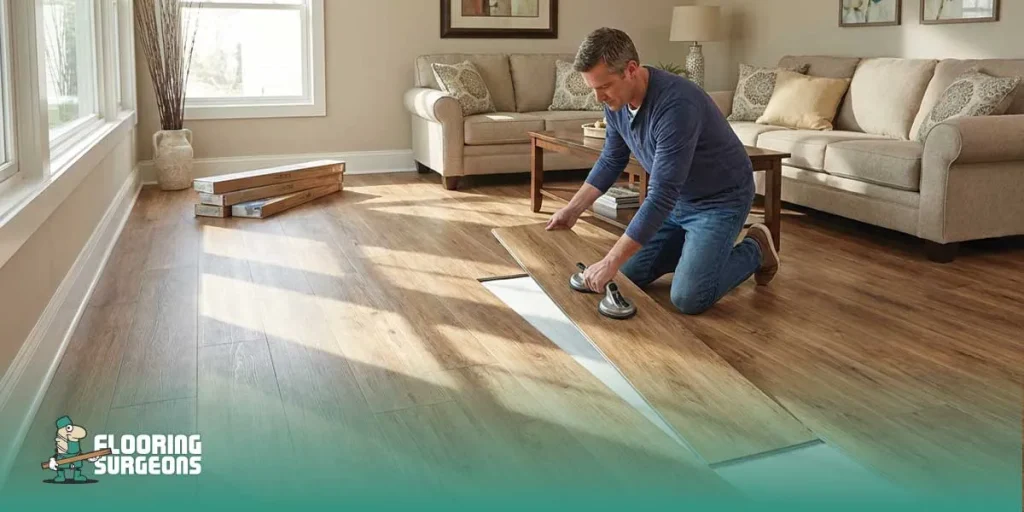
Floating vinyl plank flooring is designed to expand and contract as a single surface. This makes it better suited to spaces where temperature and humidity change over time.
Floating or click-lock vinyl works well in:
- Residential homes with seasonal changes
- Rooms are exposed to varying sunlight.
- Properties without strict environmental control
Glue-down vinyl can struggle in these conditions if uneven movement is restricted.
Decision rule installers rely on
Floating or click-lock vinyl plank flooring is the better option when:
- Repair flexibility matters
- Subfloor conditions are less than perfect.
- The space is residential, not commercial.
- Long-term adaptability is more important than maximum rigidity.
If stability at all costs is not required, floating vinyl usually delivers fewer long-term headaches.
Subfloor Requirements for Glue-Down Vinyl Plank Flooring
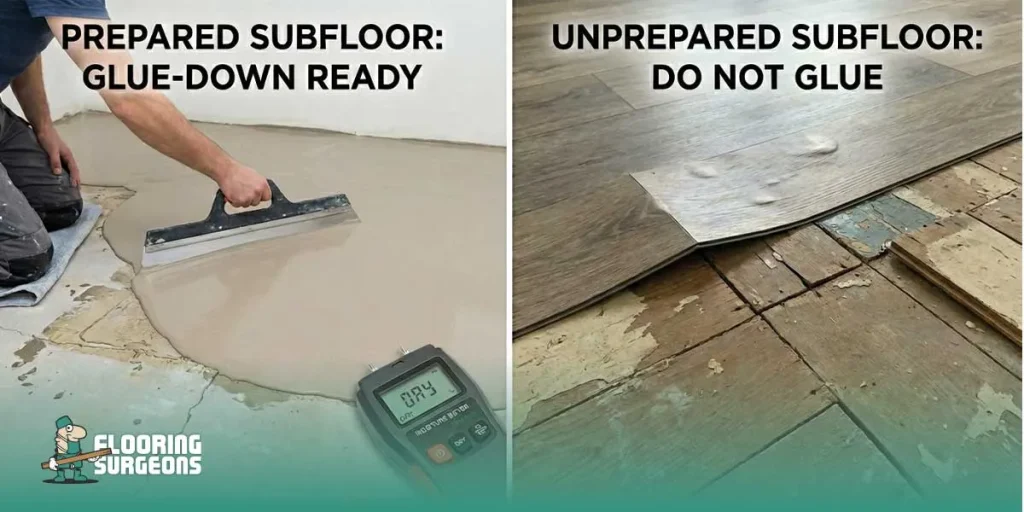
Glue-down vinyl plank flooring only performs well when the subfloor is close to perfect. Because the planks are fully bonded, there is no tolerance for unevenness, moisture issues, or surface contamination. Most glue-down failures trace back to subfloor problems, not the vinyl itself.
Subfloor Conditions That Must Be Met
| Subfloor Requirement | Why It Matters for Glue-Down Vinyl | What Happens If Ignored |
| Flatness and level | Glue-down vinyl follows the subfloor exactly | Lipping, visible ridges, and uneven wear |
| Clean and dust-free surface | Adhesive needs complete contact to bond properly | Planks lift, edges curl, adhesive fails |
| Dry and moisture-stable | Moisture weakens adhesive over time | Bond failure, bubbling, or plank movement |
| Smooth finish | Surface texture telegraphs through vinyl | Visible imperfections and shadowing |
| Structurally sound base | Movement below breaks the adhesive bond | Gapping, cracking, or loose planks |
Why Glue-Down Vinyl Is Unforgiving
Unlike floating vinyl plank flooring, glue-down vinyl cannot bridge imperfections. Any minor defect becomes a permanent part of the finished floor. Installers often say glue-down floors succeed or fail before the first plank is laid, because surface prep does the real work.
This means:
- Levelling compounds are often required
- Old adhesive residue must be entirely removed.
- Cracks and joints need proper treatment.
Skipping or rushing these steps usually leads to visible problems that cannot be fixed later without removing sections of the floor.
Subfloor Types and Real-World Expectations
- Concrete subfloors must be dry, smooth, and tested for moisture before installation.
- Wood subfloors must be rigid, securely fixed, and free from flex or bounce.
- Existing floors often need complete preparation rather than partial patching.
Glue-down vinyl plank flooring does not hide problems — it highlights them.
An installer rule that saves money later
If the subfloor is not suitable for leaving exposed, it is not suitable for glue-down vinyl plank flooring. Floating vinyl may tolerate minor flaws, but glue-down will not.
Common Problems With Glue-Down Vinyl Plank Flooring
Most issues with glue-down vinyl plank flooring don’t come from the product itself — they come from subfloor prep, adhesive behaviour, or environmental conditions. Installers tend to see the same failures repeated across different homes and projects.
Adhesive Failure and Plank Lifting
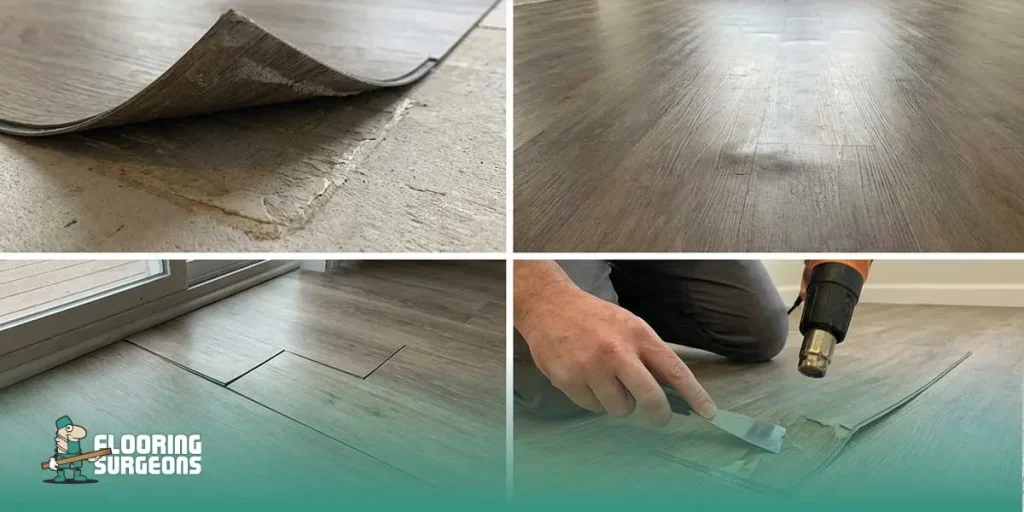
When glue-down vinyl planks start lifting at the edges or corners, the cause is almost always below the surface. Dust, old adhesive residue, or uneven moisture levels prevent complete bonding. Once adhesion is compromised, traffic and temperature changes can quickly spread the problem.
Visible Subfloor Imperfections
Glue-down vinyl follows the subfloor exactly. Small ridges, trowel marks, or patched areas that looked “good enough” before installation often become visible once the planks settle. This is one of the most common complaints after installation — and one of the hardest to fix without removal.
Gapping or Edge Curling Over Time
Gaps or curling usually appear where temperature or humidity changes are uneven. Because glue-down vinyl is fixed in place, it cannot expand and contract freely like floating vinyl plank flooring. Poor acclimatisation or unstable indoor conditions make this problem more likely.
Noise and Hollow Spots
A properly installed glue-down vinyl floor should feel solid and quiet. Clicking sounds or hollow areas usually indicate inconsistent adhesive coverage. These spots tend to worsen under foot traffic and are often noticeable only after the floor has been in use for a while.
Difficult Repairs After Installation
One downside installers regularly highlight is repair complexity. Individual plank replacement is possible, but it requires heat, careful removal, and precise rebonding. This makes early installation mistakes far more costly than with floating or click-lock vinyl.
Installer Insight (Real-World Pattern)
When glue-down vinyl plank flooring fails early, it’s rarely because the vinyl was low quality. It’s because the subfloor was treated as “acceptable” instead of “perfect.” Installers see the same issues repeat when preparation is rushed or when environmental conditions are underestimated.
Is Glue-Down Vinyl Plank Flooring Harder to Repair or Replace?
Yes, glue-down vinyl plank flooring is harder to repair or replace than floating or click-lock systems, and that’s a trade-off installers flag early.
With glue-down installation, each plank is bonded directly to the subfloor. This creates a solid, stable floor, but it also means damaged planks cannot simply be unclipped and swapped out. Removal usually involves heat to soften the adhesive, careful lifting to avoid damaging surrounding planks, and reapplying adhesive before the replacement is set.
Repairs are still possible, but they are:
- More time-consuming
- More technique-dependent
- Less forgiving if the original adhesive coverage was inconsistent
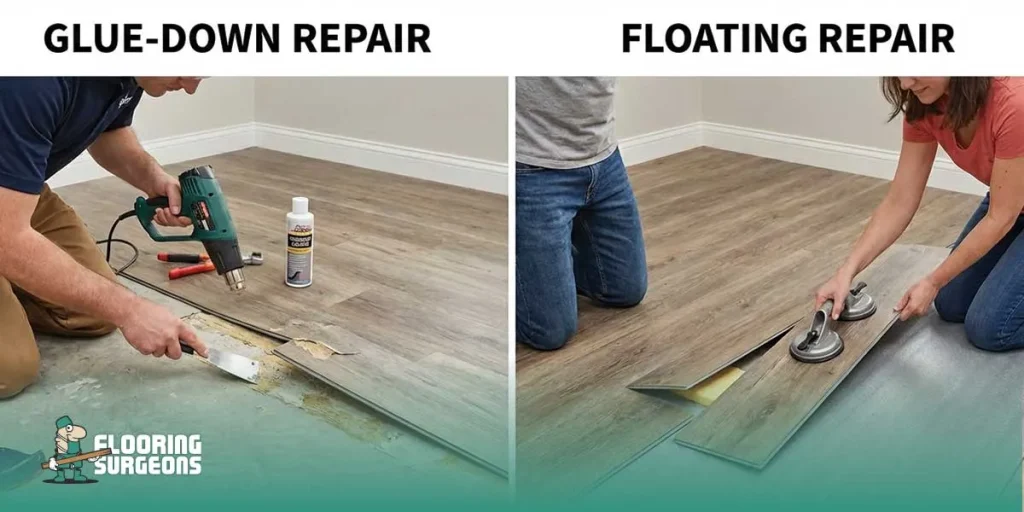
In high-traffic areas, repeated repairs can also leave subtle visual differences if replacement planks don’t align perfectly with surrounding sections.
From an installer’s perspective, glue-down vinyl works best when:
- The layout is final and unlikely to change
- The risk of individual plank damage is low.
- Long-term stability matters more than easy replacement.
If frequent repairs or future layout changes are expected, floating vinyl plank flooring is usually the more practical option.
Final Advice From Professional Vinyl Flooring Installers
Glue-down vinyl plank flooring isn’t a beginner shortcut; it’s a deliberate installation choice that works exceptionally well in the right conditions and poorly when misapplied.
Installers consistently recommend glue-down vinyl when:
- Subfloors are perfectly flat and stable
- Foot traffic is heavy, and movement must be minimised.
- Large, open areas need a seamless, solid feel.
- Temperature fluctuations make floating floors unreliable.

Where projects go wrong is not material quality, but decision-making. Glue-down vinyl fails early when subfloor prep is rushed, adhesives are misused, or environmental conditions are ignored. A well-installed glue-down vinyl floor feels solid, quiet, and durable for years. A poorly planned one becomes difficult to repair and expensive to correct. These are the issues installers see repeatedly when floors underperform, not because glue-down vinyl is flawed, but because it was chosen for the wrong space or installed without respecting its limitations. Understanding whether glue-down installation is right for your space often starts with choosing the correct vinyl plank flooring options, as different LVT systems are engineered for very different installation methods.
From years of on-site installation experience, Flooring Surgeons consistently see glue-down vinyl perform best when subfloor preparation and usage conditions are properly matched from the start.

Haniye Ayanmanesh
As an expert writer for Flooring Surgeons, I combine technical SEO knowledge with a practical understanding of flooring, producing content that helps users make confident decisions while supporting long-term organic growth.