

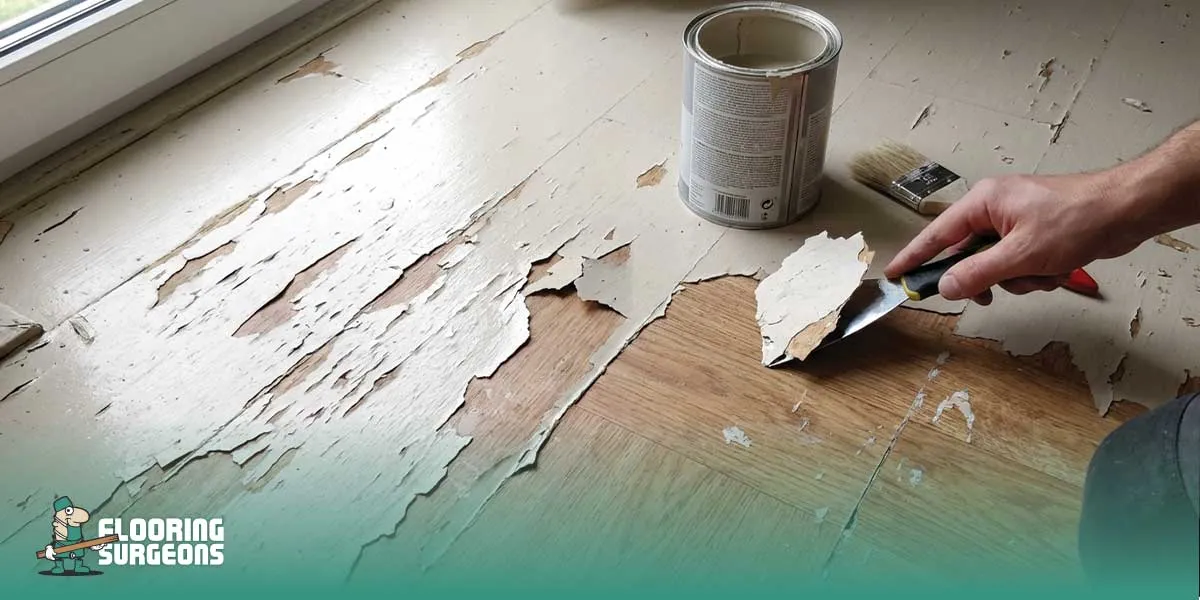
Yes, you can paint laminate flooring, but in most cases, it’s not a good idea. Painting laminate floors is usually a temporary, high-risk solution that often leads to peeling paint, visible wear, and a floor that looks worse than before within a short period of time. The reason is simple: laminate flooring is not designed to absorb or hold paint, and its protective surface layer actively resists adhesion.
That said, there are specific situations where people still choose to paint laminate flooring, such as rental properties, short-term renovations, or preparing a home for sale. When done with realistic expectations and the right preparation, painted laminate can look acceptable for a limited time, but it will never perform like a properly finished floor.

In this article, we’ll take an honest, practical look at:
- Why is laminate flooring difficult to paint in the first place
- What actually happens to painted laminate over time
- How to paint laminate flooring, only if you fully understand the risks
- and which modern alternatives usually deliver better results with less long-term regret
If you were only looking for a quick answer, you already have it. If you want to make the right decision and avoid costly mistakes, the rest of this guide will help you do exactly that.
Table of contents
Why Laminate Flooring Is Difficult to Paint
Painting laminate flooring is difficult, not because of poor technique, but because of how laminate flooring is engineered. Unlike real wood, laminate is a layered, synthetic product designed to resist wear, moisture, and surface damage. Those same features that make laminate durable are exactly what make it incompatible with paint. To understand the problem properly, you need to look at the structure of laminate flooring and how paint normally adheres to surfaces.

What the Laminate Wear Layer Is Made Of
The top layer of laminate flooring is known as the wear layer. This layer is not wood. It is a transparent, factory-applied coating made primarily from melamine resin and aluminium oxide. The durability of this wear layer is measured using the laminate AC rating, which indicates how resistant the surface is to abrasion and daily foot traffic.
This wear layer is engineered to do several things:
- resist scratches and abrasion
- repel moisture and spills
- prevent staining
- reduce surface friction from foot traffic
From a durability standpoint, this is excellent. From a painting standpoint, it is a problem. Paint needs a surface that allows mechanical or chemical bonding. The laminate wear layer is intentionally non-porous and chemically resistant. There is nothing for the paint to soak into, and very little for it to grip onto, even after light sanding. This is why painted laminate often looks fine at first, then begins to fail under normal use.
Why Paint Struggles to Bond to Laminate Surfaces
Paint adhesion relies on one of two things: absorption into a porous surface or strong bonding to a textured one. Laminate provides neither. Even when the surface is sanded, you are not exposing natural wood. You are only roughening a plastic-based coating. The paint ends up sitting on top of the surface rather than becoming part of it.
As a result:
- Paint is more likely to chip rather than wear evenly
- High-traffic areas show damage quickly
- Moisture from cleaning or spills can lift the paint
- edges and joints fail first due to movement
Another critical issue is that laminate flooring is a floating floor. The boards expand and contract slightly with temperature and humidity changes. Paint does not move with the floor in the same way. This constant micro-movement weakens adhesion over time, even if the initial finish looks smooth. This is why painted laminate floors rarely age gracefully. The failure is not sudden, but it is almost inevitable.
What Actually Happens After You Paint Laminate Flooring
Painted laminate flooring often looks better than expected at first. The surface appears uniform, the colour change feels dramatic, and small cosmetic flaws seem hidden. This early result is what leads many people to believe the process has worked. The real test, however, begins once the floor is used normally.

Short-Term Appearance vs Long-Term Performance
In the first few weeks, painted laminate can look clean and even, especially in rooms with limited foot traffic. At this stage, the paint has not yet been exposed to repeated friction, movement, or cleaning. Over time, performance and appearance begin to separate. Because the paint sits on top of the laminate rather than bonding with it, normal use gradually breaks down the finish. What starts as light scuffing often turns into visible wear patterns that cannot be blended or repaired easily.
Chipping, Peeling, and Wear in High-Traffic Areas
High-traffic zones such as hallways, kitchens, and areas near doors fail first. The paint does not wear evenly like a factory finish. Instead, it chips at edges, peels in thin layers, and exposes the original laminate underneath. Once this happens, the damage becomes highly noticeable. Touch-up paint rarely blends in, and repeated repairs often make the surface look patchy rather than refreshed.
How Moisture and Cleaning Affect Painted Laminate
Moisture is one of the biggest enemies of painted laminate flooring. Moisture is one of the biggest enemies of painted laminate flooring, and the same conditions that cause paint failure can also lead to laminate flooring bubbling over time. Even small amounts of water from mopping or spills can work their way under the paint layer. Over time, this weakens adhesion and accelerates peeling. Routine cleaning makes the problem worse. Most floor cleaners, even mild ones, gradually soften the paint film. Combined with foot traffic and floor movement, this leads to a finish that degrades faster with each cleaning cycle. This is why painted laminate rarely improves with age. It typically reaches a visual breaking point where replacement or covering becomes the only realistic option.
How to Paint Laminate Flooring (Only If You Fully Understand the Risks)
If you are determined to paint laminate flooring despite the risks, the outcome depends far less on the paint itself and far more on preparation, product selection, and patience. Most failures happen because people rush this process or follow advice meant for wood, not laminate. This is not a standard painting job. It is a compromise, and every step needs to reflect that reality.

Surface Preparation Mistakes to Avoid
The most common mistake is aggressive sanding. Sanding laminate does not reveal fresh wood. It only damages the protective wear layer, weakening the floor without meaningfully improving paint adhesion.
Other critical mistakes include:
- skipping degreasing and leaving residue from cleaners or polish
- sanding unevenly, which creates visible texture after painting
- painting over floating joints, which crack as the floor moves
The goal is light surface dulling, not abrasion.
Best Primers for Laminate Flooring (and Why Most Fail)
Most primers fail because they are designed for porous surfaces like wood or drywall. Laminate is neither. Standard primers may appear to work initially, but they do not form a strong bond with melamine-based surfaces. Over time, they lose grip under foot traffic and moisture.
Only high-adhesion bonding primers designed for slick, non-porous surfaces offer any chance of short-term success, and even those are not permanent solutions.
Paint Types That Last the Longest on Laminate
Wall paint is the fastest way to ruin a painted laminate floor. It is not formulated for abrasion or movement. Floor-specific paints with added hardeners perform better, especially those designed for concrete or commercial floors. Even then, durability is limited and highly dependent on traffic levels and sealing.
Sealing and Curing Time (Often Ignored)
Sealing is not optional. Without a protective topcoat, paint failure accelerates dramatically. Equally important is curing time. Walking on the floor too soon, placing furniture early, or cleaning before full cure compromises the finish before it ever has a chance to stabilise. Many painted laminate floors fail within weeks simply because this step is rushed.
Comparison Table: What Actually Works vs What Fails
| Step | Common Choice | Why It Fails | Better Option | Realistic Outcome |
| Surface prep | Heavy sanding | Cannot bond to the melamine surface | Light scuff + thorough degreasing | Slightly improved grip only |
| Primer | Standard wood primer | Cannot bond to melamine surface | High-adhesion bonding primer | Short-term adhesion |
| Paint | Interior wall paint | No abrasion resistance | Floor paint with hardener | Limited durability |
| Sealer | Skipped or single coat | Paint wears rapidly | Multiple coats of floor-grade sealer | Slower visible failure |
| Curing | 24 to 48 hours | Paint not fully hardened | 7 to 14 days minimum | Reduced early damage |
Common Mistakes That Ruin Painted Laminate Floors
Most painted laminate floors fail not because painting is impossible, but because of a few critical mistakes that quietly undermine the result. These issues often appear weeks or months later, when fixing them is no longer practical.

- Over-sanding the wear layer
Laminate does not contain refinishable wood beneath the surface. Heavy sanding only destroys the protective wear layer, weakens the board, and creates uneven texture. This damage does not improve paint adhesion and often makes long-term failure happen faster. - Using wall paint instead of floor paint
Wall paint is designed for static, low-contact surfaces. On floors, it breaks down quickly under friction, pressure, and cleaning. Even if it looks fine at first, it lacks the hardness and flexibility needed for foot traffic and will chip or scuff rapidly. - Skipping expansion gaps
Laminate flooring is a floating system that expands and contracts with temperature and humidity. Painting over expansion gaps or sealing boards tightly against walls prevents natural movement. When the floor shifts, the paint cracks first, especially at edges and transitions. Laminate flooring relies on controlled movement, which is why laminate expansion gaps should never be painted over or sealed. - Painting floating joints
Each laminate plank moves slightly against the next. When painting bridges, these joints create rigid connections that cannot flex. The result is cracking along plank edges, peeling paint lines, and visible joint outlines that become more obvious over time.
These mistakes are difficult to reverse once the floor is in use. Avoiding them does not guarantee success, but making any one of them almost guarantees visible failure.
How Long Does Painted Laminate Flooring Really Last?
The lifespan of painted laminate flooring is almost always shorter than people expect. While some projects appear successful at first, durability depends heavily on how the space is used and who uses it. There is no scenario where painted laminate performs like a factory-finished floor.

- Low-traffic vs high-traffic rooms
In low-traffic areas such as spare bedrooms or home offices, painted laminate may hold up visually for several months and sometimes up to a year with careful use. In high-traffic spaces like hallways, kitchens, and living areas, visible wear often appears within weeks. Repeated friction causes uneven fading, chipping at edges, and peeling along plank seams. - Pets, kids, and furniture impact
Homes with pets, children, or frequently moved furniture experience a much faster breakdown. Claws, dropped objects, chair legs, and toy movement create point pressure that painted surfaces cannot absorb. Once the paint film is breached, damage spreads quickly and cannot be blended or repaired cleanly. - Realistic lifespan expectations
Even under ideal conditions, painted laminate should be viewed as a short-term cosmetic fix. Most painted floors reach a visual and functional breaking point between six months and two years. At that stage, repainting rarely improves the result, and replacement or covering becomes the only practical option.
Painted laminate does not fail suddenly. It wears gradually, then reaches a point where deterioration becomes impossible to ignore.
When Painting Laminate Flooring Might Make Sense
Painting laminate flooring is rarely the best option, but there are limited situations where it can be a practical compromise. The key is understanding what you are gaining and what you are sacrificing in each scenario.
Decision Table: When Painting Laminate Is (and Is Not) Reasonable
| Scenario | Why People Consider Painting | What Actually Works | Key Risks to Accept | Is It Sensible? |
| Rental properties | Low budget and no permission for replacement | Basic visual improvement for a short period | Faster wear, potential landlord disputes, and limited durability | Sometimes, if expectations are low |
| Temporary visual refresh | Quick cosmetic change without major renovation | Short-term improvement in low-traffic rooms | Chipping, uneven wear, repainting needed | Only as a stopgap |
| Preparing a home for sale | Improving appearance for photos and viewings | Better first impression during inspections | Paint failure if the sale is delayed | Occasionally, if the timing is right |
How to Read This Table Correctly
Painting laminate flooring should only be considered when:
- The goal is visual improvement, not durability
- The time frame is clearly limited
- Replacement or overlay is not possible
If the floor needs to last, perform well under daily use, or add long-term value, painting laminate is almost never the right decision.
Better Alternatives to Painting Laminate Flooring
If the goal is to improve how a laminate floor looks without creating future problems, there are several alternatives that consistently outperform painting. Most of them cost slightly more upfront but save time, money, and frustration in the long run.

Replacing Damaged Boards
If the laminate floor is structurally sound and only a few boards are worn, scratched, or discoloured, selective replacement is often the smartest option.
- Maintains the original factory finish and durability
- Avoids adhesion and peeling issues entirely
- Works best when spare boards or matching stock is available
This approach preserves the integrity of the floor rather than masking problems on the surface.
Installing Click-Lock Vinyl Over Laminate
Click-lock vinyl flooring can often be installed directly over existing laminate, provided the subfloor is flat and stable.
- No demolition required in most cases
- Significantly more resistant to moisture and wear
- Softer underfoot and quieter than laminate
This option is especially effective for kitchens, living rooms, and rental properties where durability matters.
LVT and Hybrid Flooring Overlays
Luxury vinyl tile and hybrid flooring systems combine durability with realistic visuals. They are designed to handle daily wear far better than painted laminate. For better durability and moisture resistance, many homeowners choose luxury vinyl flooring instead of painted laminate.
- High resistance to scratches, moisture, and foot traffic
- More stable under temperature changes
- Adds real functional value rather than cosmetic improvement
For homeowners planning to stay long-term, this is often the most cost-effective solution over time.
Peel-and-Stick Solutions (Pros and Cons)
Peel-and-stick products appeal because of their low cost and fast installation, but they come with trade-offs.
Pros
- Minimal preparation
- Low upfront cost
- Suitable for very short-term use
Cons
- Limited lifespan
- Susceptible to lifting and shifting
- Can leave adhesive residue that complicates future flooring work
This option only makes sense when permanence and performance are not priorities.

Is Painting Laminate Flooring Worth It? Our Honest Recommendation
Painting laminate flooring is rarely a smart long-term decision. While it can provide a temporary visual improvement in specific situations, it does not add durability, value, or reliability to the floor. In many cases, exploring modern laminate flooring options is a more reliable solution than trying to repaint an existing floor.
If the goal is a short-term cosmetic fix with low expectations, painting may be acceptable. If the goal is a floor that lasts, performs well, and ages gracefully, alternatives such as board replacement, vinyl overlays, or modern hybrid flooring are almost always the better choice.
The most important takeaway is simple: laminate flooring problems are best solved structurally, not cosmetically. Painting treats the symptom, not the cause. For expert advice on choosing the right flooring solution, the team at Flooring Surgeons can help you avoid costly mistakes.

Haniye Ayanmanesh
As an expert writer for Flooring Surgeons, I combine technical SEO knowledge with a practical understanding of flooring, producing content that helps users make confident decisions while supporting long-term organic growth.