

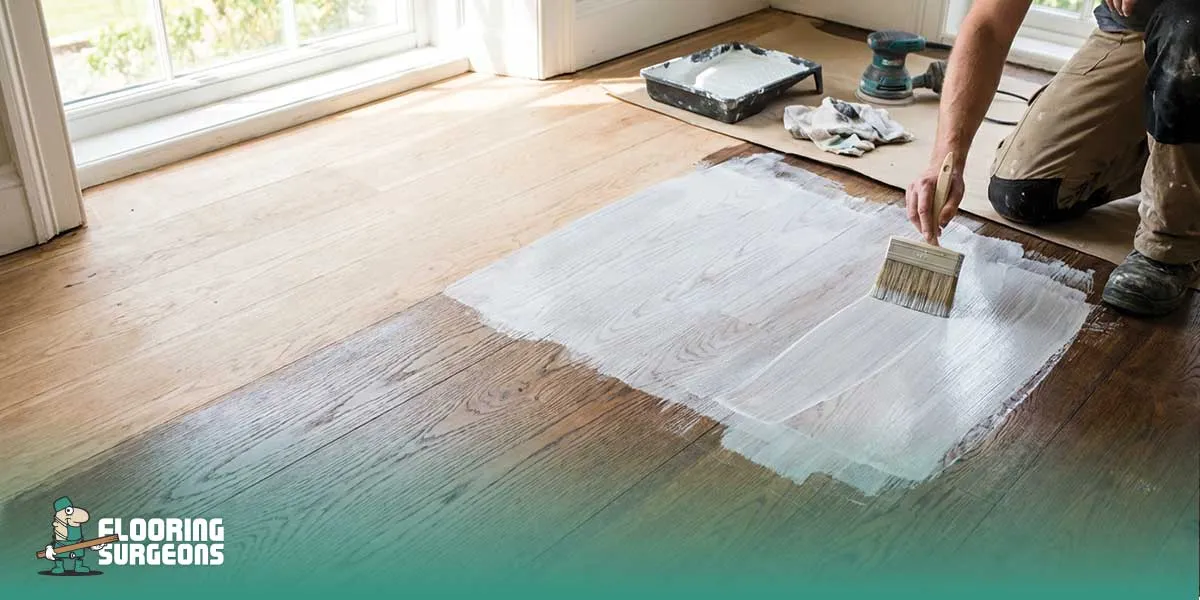
Yes, you can whitewash hardwood floors, and when it’s done correctly, it gives older timber a softer, brighter look without covering the natural grain.
If you’ve been wondering whether your floor is the right type for whitewashing, how tricky the process is, or whether it will suit your home, you’re not alone. I work with homeowners across the UK who want to lighten dark boards or refresh rooms that feel heavy, and this question comes up all the time. In practice, whitewashing works on most solid hardwood floors, and it can look striking in both modern and period homes.
Before you grab a brush, it helps to know what actually changes the result. Wood species, sanding quality, stain type, and topcoat all affect how even and long-lasting the finish will be. Some floors soak up the stain quickly, some stay patchy unless prepped well, and some engineered boards need extra care.
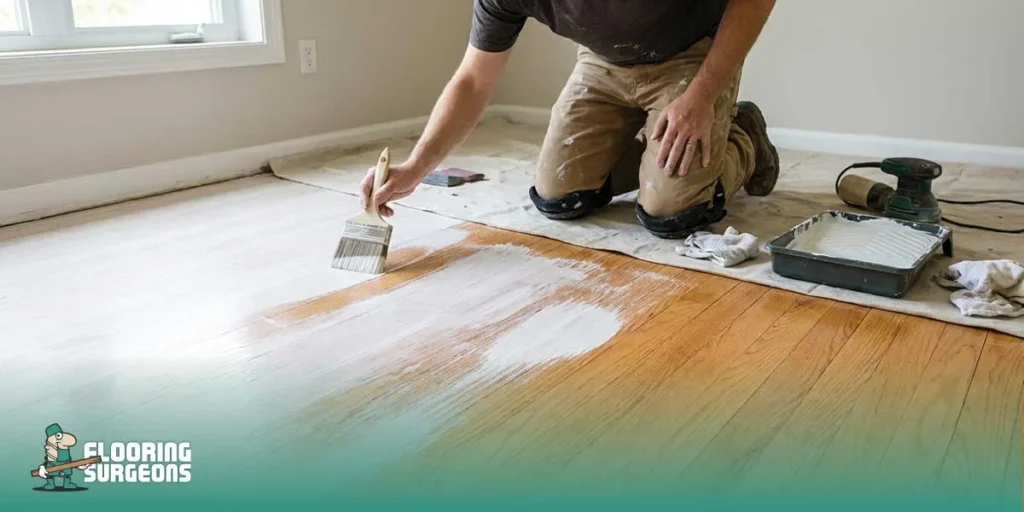
This guide walks you through what works, what doesn’t, and how to avoid the common problems people encounter when trying to achieve that soft, washed look. You’ll also find simple checks to see if your floor is a good match, plus step-by-step tips for whitewashing hardwood floors, so you can decide whether to DIY or call in a pro. Before you seal, read our best hardwood floor finish guide to choose the best topcoat and avoid yellowing.
Table of contents
Can You Whitewash Hardwood Floors?
Yes, you can whitewash hardwood floors, and the result can look clean, soft and bright when the timber is adequately prepped. The look works best on open-grain woods, especially oak, because the grain absorbs the wash evenly, keeping that natural, textured finish. Maple and other tight-grain species tend to resist staining, so the result is often lighter and less consistent.
Before applying any whitewash, the floor needs a full sandback to bare wood, a quick patch test to check how the stain behaves, and a suitable topcoat to prevent the finish from yellowing. Keep the room dry during the process, as moisture can make the wash look patchy or cause the boards to lift slightly.
Pros and Cons of Whitewashing Hardwood Floors
Whitewashing hardwood floors has become a go-to choice for homeowners who want a brighter, softer look without hiding the natural character of timber. Before choosing this finish, it helps to know exactly where it performs well and where it can cause problems later.
Why People Choose Whitewashed Hardwood Floors
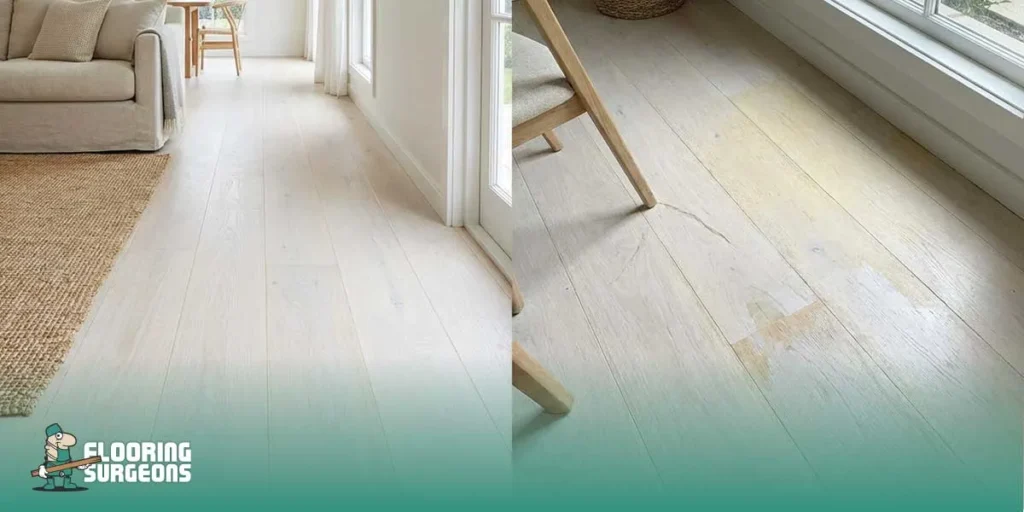
Whitewashed hardwood floors create a clean, Scandinavian-style look that instantly brightens a room. They work exceptionally well in smaller or low-light spaces, making the area feel more open and airy. The wash also softens dark grain lines, giving older floors a calmer, more modern appearance. Many people pick this style because it keeps the natural wood visible, just with a lighter, fresher tone that suits modern interiors.
Downsides of Whitewashed Hardwood Floors
Although whitewashed hardwood floors look great, they come with a few issues worth knowing. Some finishes can turn slightly yellow over time, especially in sunny rooms or when the wrong topcoat is used. Application mistakes show quickly, and patchiness is difficult to fix once the stain dries. Because the floor is lighter, everyday marks and scratches become more visible, meaning it needs a bit more upkeep. And if the timber is naturally dark, achieving an even whitewashed finish is harder and often requires testing before committing.
Which Wood Types Work Best for Whitewashing Hardwood Floors
Not all timber reacts the same to a whitewash stain. Some woods absorb colour beautifully, while others resist pigment or turn patchy. Here’s what you can expect from the most common flooring species.
Whitewashing Oak Hardwood Floors — oak whitewash results (best choice)
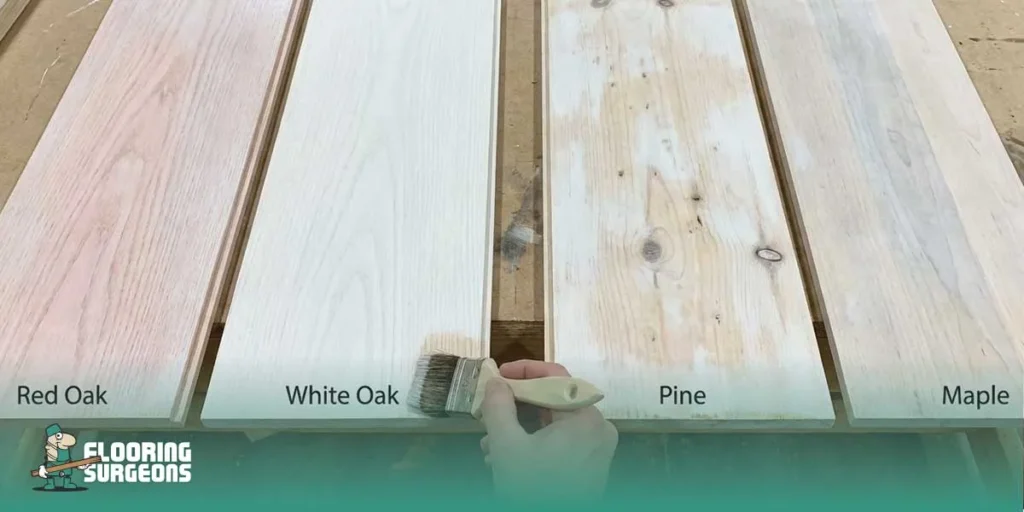
Oak delivers the most consistent and predictable whitewash finish. It’s open grain accepts the stain evenly, the natural texture still shows through, and the final tone stays bright without turning muddy. Whether you’re working with red oak or white oak, this species gives the cleanest Scandinavian-style result and needs the least correction.
Whitewashing Pine Hardwood Floors (good but can look blotchy)
Pine can look beautiful when whitewashed, but it’s naturally softer and more absorbent, which can cause stains to soak unevenly. Knots may darken, and some boards might take on a patchy look if applied directly. Using a wood pre-conditioner usually fixes this, helping the wash sit more evenly across the surface. Pine works well when you want a rustic, beachy feel rather than a perfectly smooth Scandinavian look.
Whitewashing Maple Hardwood Floors
Maple is dense, smooth, and difficult to stain evenly, making a classic whitewash finish more challenging. It tends to resist pigment, sometimes leaving a slightly patchy or grey outcome instead of crisp white. If you’re set on whitewashing maple, light sanding and test samples are essential before committing to the entire floor. Some homeowners choose a tinted topcoat rather than a direct stain to achieve a softer, more controlled lighting effect.
Whitewashing Engineered Hardwood Floors
You can whitewash engineered hardwood, but the result depends on the veneer thickness. A thin veneer can’t handle heavy sanding, which is required to prep the surface for whitewash. Floors with a 3 mm veneer or thicker usually work well, as they allow sanding without risking damage. Always test a small area first, because different manufacturers use different factory finishes that may react differently to stain or tinted sealers. If you prefer engineered boards, check our engineered wood flooring collection to find products that suit a light finish.
Methods: How to Whitewash Hardwood Floors (Step-by-Step)
Whitewashing hardwood floors isn’t complicated, but every method behaves differently depending on the wood species, the stain you choose, and the finish you want. Here’s a clear, practical breakdown you can follow before committing to a full-room application.
Method 1: Whitewash Stain for Hardwood Floors (Safest Method)
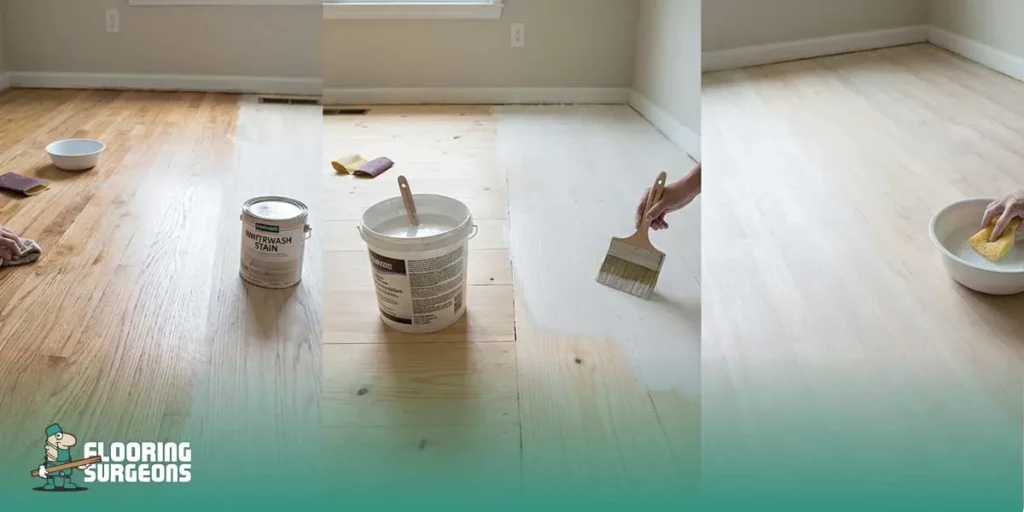
Using a dedicated whitewash stain is the safest and most predictable way to whitewash hardwood floors. It gives you good control over colour depth, keeps the wood grain visible, and works on most species.
Steps
• Sand the floor lightly until the previous finish is removed.
• Vacuum and wipe thoroughly so no dust affects the stain.
• Apply a thin, even coat of whitewash stain along the grain.
• Let it dry, then add a second coat if you want more brightness.
• Finish with a clear water-based sealer to stop yellowing.
Common mistakes
• Applying thick coats (causes streaks and uneven patches).
• Not wiping excess stain quickly.
• Forgetting to test dryness before sealing.
Best for: oak, pine with pre-conditioner, engineered floors with a thick veneer.
Method 2: Diluted Paint for Whitewashed Hardwood Floors
This method uses white paint mixed with water for a lighter, washed effect. It’s cheaper, but also riskier because paint can hide grain or create cloudy patches if applied unevenly.
When it works
• For rustic or farmhouse interiors.
• When you want a softer, chalky finish.
• On older floors where grain visibility is less important.
Risks to consider
• Too much dilution → patchy tone.
• Too much paint → grain disappears.
• Can peel if not sealed properly.
Soap-Wash Whitewashed Floors (Scandi Style)
Soap-wash is a traditional Scandinavian method that gives wood a pale, matte, very natural look. It doesn’t create an opaque white; instead, it gently softens the colour.
How it works
• Sand to bare wood.
• Mix wood soap with warm water.
• Apply multiple thin coats over several days.
• Buff lightly between coats.
Best for: European softwoods, clean Scandinavian interiors, lighter oak.
Note: It needs regular re-soaping to maintain the pale tone.
No-Sanding Whitewash Techniques
You can whitewash without sanding, but only in limited cases. These products behave more like tinted sealers than stains.
When it works
• Floors already in good condition.
• Light colour correction rather than dramatic whitening.
When it fails
• Old or damaged floors.
• Maple or dark woods (absorption problems).
• Factory-finished engineered floors with strong UV coatings.
Rule of thumb: If you want a crisp, bright whitewashed look, sanding is almost always required.
Do’s and Don’ts Before You Start Whitewashing Hardwood Floors
Good preparation is what separates a smooth, even whitewash from a patchy, uneven one. These quick checks reduce the risk of streaking or colour issues.
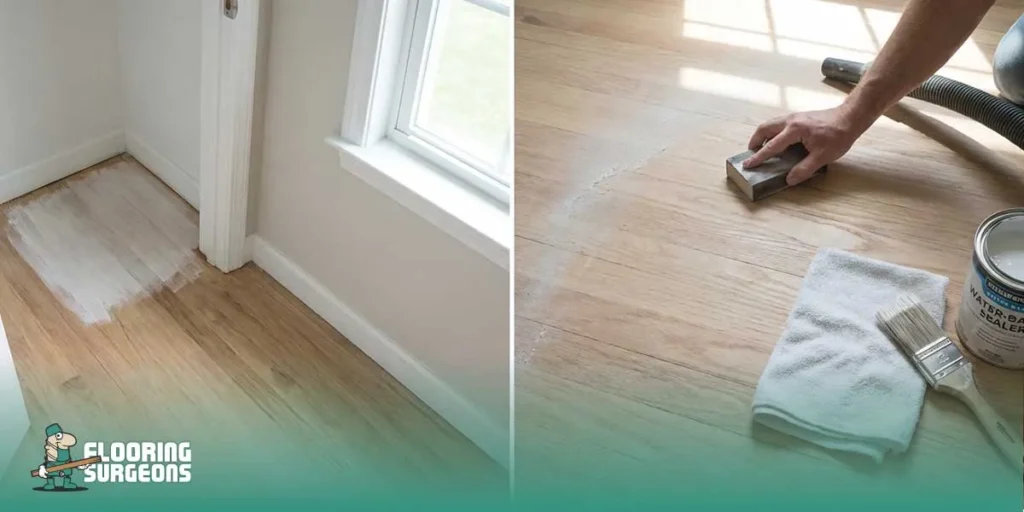
Do: Test Whitewash on a Hidden Spot
Always test your stain or paint mix before applying it to the entire room. Hardwood species react differently, and minor adjustments early save big problems later.
Do: Sand Hardwood Floors Evenly Before Whitewashing
Uneven sanding leads to uneven absorption. Spend extra time on corners and edges so the whitewash settles consistently across the floor.
Do: Clean Dust Thoroughly Before Applying Whitewash
Even a small amount of dust can create texture spots or prevent the stain from bonding properly. Vacuum, wipe, and check again with a dry cloth.
Don’t Apply Thick Whitewash Layers
Thick coats cause streaking, sticky drying, and peeling after sealing. Thin, even layers always give better control and colour depth.
Don’t Skip the Final Sealer on Whitewashed Floors
A good water-based sealer keeps the whitewash from yellowing and protects it from daily wear. Skipping the sealer is the most common cause of patchiness and colour change.
Common Mistakes That Ruin Whitewashed Hardwood Floors
Whitewashing hardwood floors looks simple, but a few minor errors can ruin the finish in a hurry. If you want an even, bright, long-lasting result, avoid these common issues that catch most homeowners out.
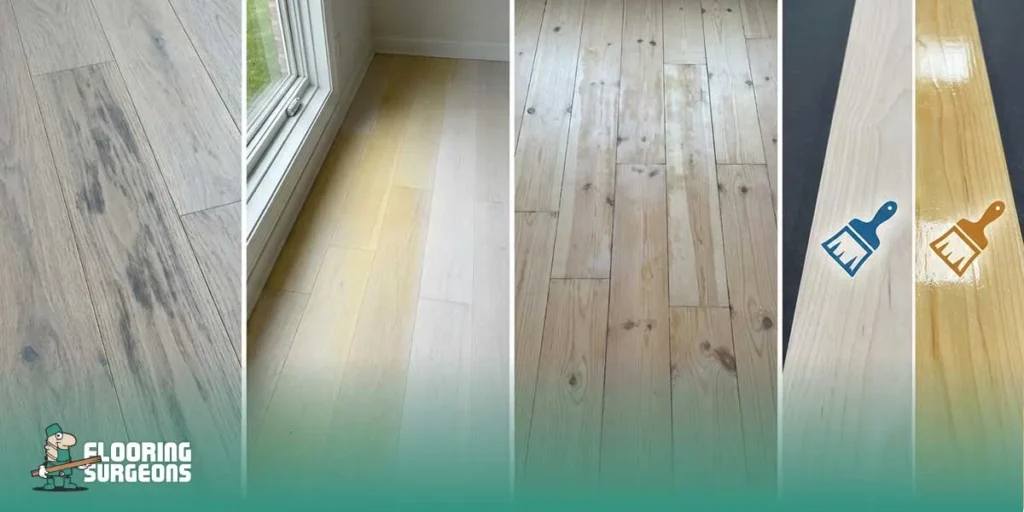
Grey Patches on Whitewashed Hardwood Floors — grey stains in whitewashed floors
Grey blotches usually mean the wood wasn’t sanded evenly or dust settled before staining. More complex parts of the grain absorb less pigment, while softer areas soak up more, leaving a patchy grey tone.
How to avoid it:
• Sand with the same grit across the whole room.
• Vacuum twice, then wipe with a damp cloth.
• Test the stain on two or three boards before complete application.
Yellowing on Whitewashed Hardwood Floors
A bright, whitewashed floor turning yellow after a few months is one of the most frustrating problems. The cause is almost always the wrong topcoat or an oil-based product reacting with UV light.
Main triggers:
• Oil-based polyurethane
• High-gloss finishes
• Sun-exposed rooms without UV protection
Fix:
Always seal whitewashed floors with a water-based, non-yellowing matte finish.
Uneven Absorption in Whitewashed Hardwood Floors
Whitewash won’t sit evenly if the surface prep wasn’t proper. Woods like pine and maple are especially prone to blotching.
Why does it happen:
• Poor sanding
• No preconditioner on softwood
• Applying too much product in one go
Prevention:
• Use a wood conditioner on pine.
• Apply thin coats and wipe quickly.
• Sand 100% of the surface, including corners.
Choosing the Wrong Topcoat for Whitewashed Hardwood Floors
Your topcoat has more impact on the final look than most people realise. Pick the wrong product, and you get yellowing, peeling, streaks or a shine that ruins the Scandinavian look.
Topcoat breakdown:
• Water-based polyurethane: Best for clarity and non-yellowing.
• Lacquer: Hard-wearing but can add a slight sheen.
• Matte finish sealers: Perfect for a natural, chalky, Scandi appearance.
• Oil-based products: Avoid altogether — they turn whitewash yellow.
How to Protect and Maintain Whitewashed Hardwood Floors
Whitewashed hardwood floors stay bright only if you look after them properly. The finish is thinner and lighter than standard stains, so it shows wear faster. These simple habits help you keep the colour clear and prevent yellowing or dull patches.
How to Wash Whitewashed Hardwood Floors (Safe Cleaning Routine)
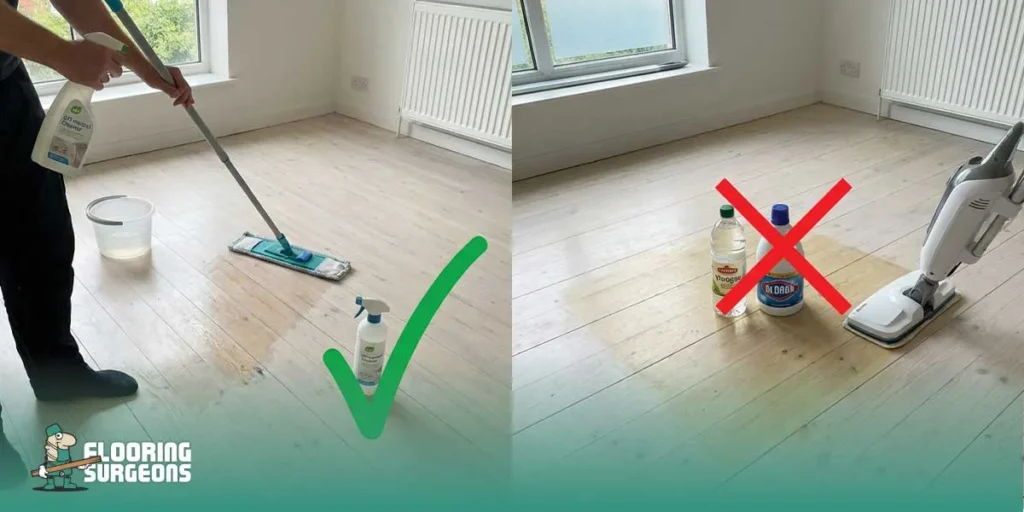
Whitewashed floors need gentle cleaning. Harsh products can strip the pigment or turn the finish uneven.
Use:
• A damp microfibre mop
• pH-neutral wood floor cleaner
• Warm water only (never hot)
Avoid:
• Bleach
• Vinegar
• Abrasive powders
• Steam mops (cause moisture issues)
Keep mopping lightly. Too much water seeps between the boards, breaking down the whitewash over time.
Best Cleaning Products for Whitewashed Hardwood Floors
Choose cleaners explicitly made for sealed hardwood. Anything alkaline, acidic or oily can distort the whitewash tone.
Good options include:
• pH-neutral spray cleaners
• Water-based wooden floor soaps
• Non-residue formulas designed for matte finishes
If your floor has a matte Scandi-style seal, choose cleaners marked matte-safe to avoid unwanted shine.
How Often You Should Renew the Topcoat on Whitewashed Hardwood Floors
Whitewashed floors rely heavily on their topcoat for protection. If the seal wears down, the white pigment can fade or become patchy.
General UK home guideline:
• Light traffic: refresh every 3–4 years
• Medium traffic: every 2–3 years
• Busy family homes: every 18–24 months
Signs you need a refresh: dull patches, uneven sheen, water sitting on the surface instead of beading.
Most UK refinishers recommend a light sanding followed by a fresh water-based polyurethane coat to bring the floor back to life without losing the whitewash.
Tips to Prevent Yellowing on Whitewashed Hardwood Floors
Yellowing is the number-one complaint. These steps reduce the risk:
• Use only water-based, non-yellowing topcoats
• Add UV-protective window film in bright rooms
• Keep radiators or heaters from blowing directly on the floor
• Avoid oil soaps or wax-based cleaners
• Recoat before the finish wears thin
Whitewashed Floor Inspiration (Real Styles That Work)
If you’re unsure how whitewashed hardwood will look in your home, these proven styles show how flexible and modern the finish can be. Each works well with different lighting, furniture and décor.
Nordic Whitewashed Hardwood Floors
Nordic interiors rely on soft, pale flooring to reflect natural light. Whitewashed oak fits perfectly because it keeps rooms bright without feeling cold.
Works best with:
• Minimal furniture
• Layered neutral textiles
• Matte black or brushed brass accents
• Open-plan living spaces
This look is ideal for UK homes that need more light, especially north-facing rooms.
Coastal Whitewashed Hardwood Floors
If you like a relaxed, airy feel, coastal whitewash works well. The soft white tone balances shades of blue, beige and natural wood.
Perfect for:
• Flats near the coast
• Living rooms with lots of windows
• Homes aiming for a calm, holiday-like vibe
Pair it with linen fabrics, rattan, and light oak furniture.
Farmhouse Modern Whitewashed Floors
This style mixes traditional textures with a fresh, modern white base. The floor adds brightness while the furniture provides warmth.
Good choices include:
• Wide-plank whitewashed oak
• Chunky wooden tables
• Soft taupe or warm grey walls
• Matte finishes to keep the look grounded
Works beautifully in larger UK homes, barn conversions, and open kitchens.
Before/After: Whitewashed Hardwood Floor Transformations
{add a before/after photo placeholder}
Before: darker wood, absorbing light, making the room feel smaller.
After: whitewashed finish, opening up the space, bouncing light and giving a softer, modern look.
This type of transformation is often the reason homeowners choose whitewash instead of replacement.
Summary: Should You Whitewash Your Hardwood Floors?
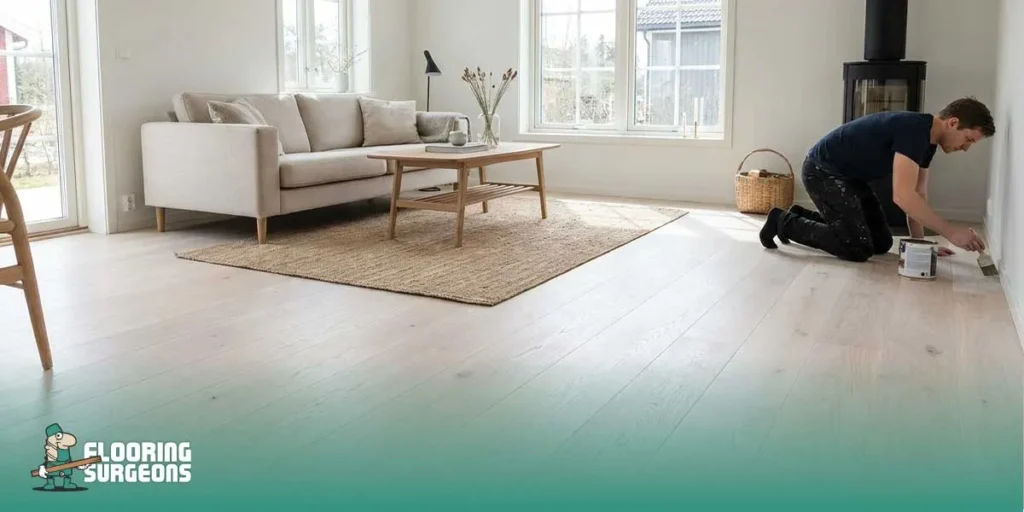
Whitewashed hardwood floors are a wise choice if you want brighter rooms, a softer Scandinavian tone, and a modern look without replacing your timber. The finish works best on oak, looks good in small or low-light spaces, and can be customised with different levels of whiteness. It needs the proper prep and a good topcoat, but when the steps are followed, the results stay clean and fresh for years.
If you’d like personalised advice before starting, feel free to contact Flooring Surgeons; we’re here to help. If you want tailored advice or help choosing materials, feel free to ask.

Haniye Ayanmanesh
As an expert writer for Flooring Surgeons, I combine technical SEO knowledge with a practical understanding of flooring, producing content that helps users make confident decisions while supporting long-term organic growth.