


Interior design costs in the UK vary widely depending on project size, level of service, and materials chosen. Typically, you can expect:
Small or consultation-focused projects: from about £2,000 to £10,000 for basic design services or a single-room refresh.
Mid-range packages or multi-room design: usually around £8,000 to £30,000, especially when the design includes detailed plans, layouts, and specifications of finishes.
Full-home design & project management: often between £30,000 and £60,000+ for end-to-end interior design that includes implementation oversight and procurement.
Luxury and extensive bespoke projects: large-scale or high-end residential designs can exceed £60,000+ depending on scope, custom details, and premium materials.
The average interior design cost ranges from £180 – £450 per hour, or £1,500 – £10,000, with full-home projects priced higher. A complete interior design budget must account for designer fees, material costs, and major components like flooring installation costs, which can significantly impact the overall renovation budget.
Table of contents
Understanding Interior Design Costs in the UK
Interior design pricing in the UK varies depending on project scope, service structure, and material specification. From hourly rates and per-room pricing to upfront retainers and full-home design packages, understanding how costs are structured helps homeowners plan realistic budgets and avoid unexpected increases during renovation.
Average Interior Design Cost (Quick Breakdown)
| Service Type | Average Cost Range (U.K.) |
| Initial Consultation Fee | £150 – £450/hr |
| Interior Designer Cost Per Hour | £180 – £450/hr |
| Flat Fee Pricing (Per Room) | £1,500 – £10,000 |
| Full Home Interior Design Cost | £15,000 – £60,000+ |
| Design Retainer (Upfront) | £1,000 – £5,000 |
This retainer range is commonly applied in professional interior design projects across the UK and will vary depending on the designer’s experience, the scale of the project, and the level of service required.
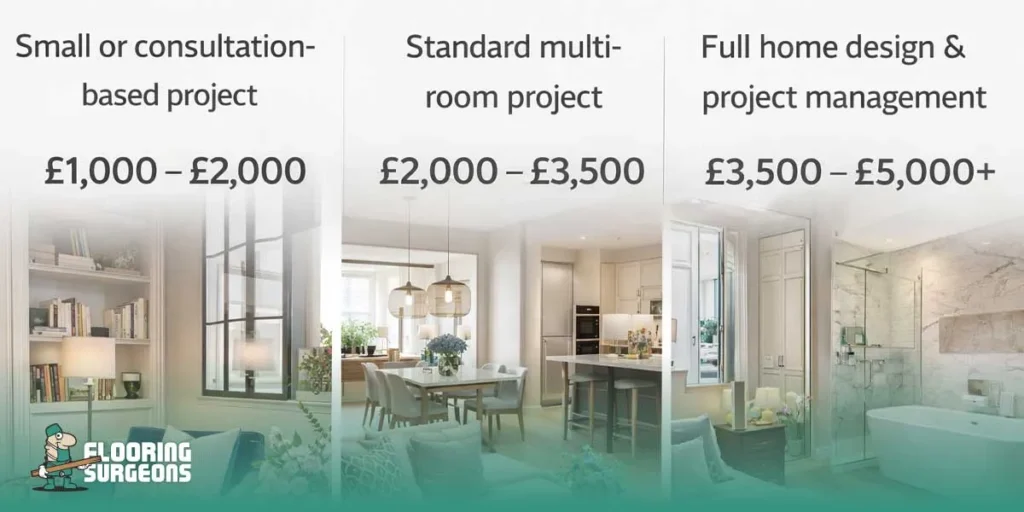
UK Interior Design Retainer Cost Comparison (2026)
This retainer range is commonly applied in professional interior design projects across the UK and will vary depending on the designer’s experience, the scale of the project, and the level of service required.
| Project Type | Typical Retainer (£) |
|---|---|
| Small or consultation-based project | £1,000 – £2,000 |
| Standard multi-room project | £2,000 – £3,500 |
| Full home design & project management | £3,500 – £5,000+ |
The national average interior design cost varies widely depending on project scope, square footage, and material selection. While hourly rates and flat fee pricing determine designer compensation, the total cost range often increases due to finishes, custom elements, and major upgrades such as flooring installation. Higher-end materials and structural changes significantly expand the overall interior design budget.
Interior Designer Pricing Models Explained
Interior designers typically use three main pricing structures: hourly rates, flat fees, or percentage-based pricing. Each model affects your total interior design budget differently, especially when material upgrades or flooring changes are introduced mid-project. Understanding how each structure works helps prevent unexpected cost escalation.
How Much Do Interior Designers Charge Per Hour?
In the UK, interior design hourly rates in 2026 typically range from approximately £180 to £450 per hour. These rates depend on factors such as the designer’s level of experience, the location (e.g., London rates are generally higher), and the complexity of the project. Hourly pricing remains flexible, but if a project expands significantly, clients may find that fixed-fee or package pricing provides better overall value.
Breakdown of Typical UK Interior Design Hourly Rates
- Less-experienced or junior designers: around £180–£250 per hour
- Mid-range professional designers: typically £250–£350 per hour
- Senior or specialist designers (high demand / London): around £350–£450+ per hour
Pros
- Flexible scope adjustments
- Ideal for short design consultations
- No long-term commitment
Cons
- Billable hours can accumulate quickly
- Budget becomes less predictable
- Mid-project material changes increase total hours
Best For
- Small projects
- Design consultation only
- Homeowners who need guidance, not full execution
Strategic Insight:
Hourly pricing may significantly increase total renovation cost if flooring materials, layouts, or finish selections change during the project, as each revision generates additional billable hours.

Is Flat Fee Interior Design More Cost-Effective?
Flat fee interior design packages typically range from $2,000 to $12,000, depending on scope. A fixed design package provides pricing clarity upfront, but cost efficiency depends heavily on how well the project scope is defined.
How It Works
- One fixed price for a defined scope
- Often includes mood boards, layout plans, and sourcing
Risk Factor: Scope Creep
If material selections change, especially flooring type upgrades such as switching from laminate to hardwood, additional revisions may not be included in the original agreement. This can result in contract adjustments or added charges.
Best For
Projects without structural modifications
Clearly defined room makeovers
Clients with stable material decisions
What Percentage Do Interior Designers Charge for a Project?
A percentage-based interior design fee typically ranges from 10% to 20% of the total project cost. This model aligns designer compensation with the total renovation value.
How It Impacts Your Budget
Because the fee scales with total spending, upgrades to flooring materials, cabinetry, or structural elements increase both material costs and the designer’s compensation.
For example:
- Choosing engineered wood over laminate
- Upgrading to premium hardwood flooring
- Expanding flooring replacement across more square footage
All raise the overall project valuation, which directly increases the percentage-based design fee.
Best For
- Full-scale renovations
- High-end remodels
- Large square footage projects
Interior Design Cost Per Room – UK Market (2026)
The cost of interior design per room in the UK varies considerably based on layout complexity, quality of materials, built-in cabinetry, plumbing or electrical alterations, and any flooring replacement. Below is a realistic breakdown of typical UK project costs in 2026 to help you estimate where your renovation budget will be allocated.
Living Room Interior Design Cost
- £2,000 – £10,000
This includes furniture planning, lighting and décor updates, and may involve flooring upgrades — particularly with open-plan living spaces. More extensive projects that include bespoke joinery or architectural changes tend toward the higher end.
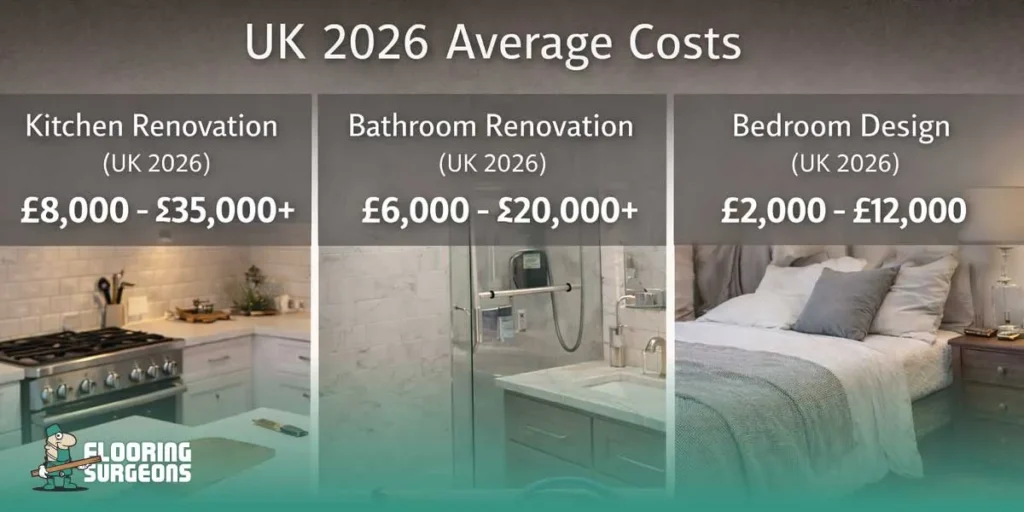
Kitchen Design & Renovation Cost
- £8,000 – £35,000+
Kitchens are one of the most expensive rooms to design due to built-in cabinetry, bespoke countertops, appliance integration, tiling, and potential subfloor or utility changes. Higher-end installations with custom cabinets, engineered stone, and premium appliances push costs above £30,000.
Bathroom Renovation Cost
- £6,000 – £20,000+
Bathroom costs are driven by plumbing works, waterproofing, tiling, fixtures, and floor finishes. Mid-range full refits cost around £8,000–£15,000, while luxury or substantial layout changes can exceed £20,000.
- Bedroom Interior Design Cost
£2,000 – £12,000
Typical bedroom projects include furniture and lighting planning, storage solutions (e.g., fitted wardrobes), and flooring upgrades. The wide range reflects differences between simple refreshes and fully tailored bedroom designs with custom elements.
What Actually Drives Interior Design Costs?
Several core variables determine the final interior design budget. While many homeowners focus on designer fees, the true cost drivers are often tied to materials, structural adjustments, and surface upgrades. Below are the primary factors affecting interior design cost in any renovation project.

- Project Size and Square Footage
Larger spaces naturally increase labour, material costs, and installation time. Expanding square footage affects flooring materials, underlayment requirements, demolition cost, and finishing work. Even a small increase in layout footprint can significantly raise total renovation expenses. - Designer Experience and Fee Structure
More experienced designers command higher hourly rates or percentage-based compensation. However, seasoned professionals may also reduce costly mistakes in material selection or layout planning, indirectly influencing total project efficiency. - Custom Furniture and Built-Ins
Bespoke cabinetry, millwork, and custom installations increase both fabrication and installation costs. Custom elements also extend project timelines, raising labour exposure and potentially affecting adjacent flooring or tile installation adjustments. - Structural Modifications and Layout Changes
Moving walls, adjusting plumbing, or redesigning traffic flow introduces demolition cost, structural reinforcement, and subfloor preparation cost. Structural changes often require partial or full flooring replacement to maintain visual continuity. - Material Quality and Finish Selection
Upgrading from standard materials to premium hardwood flooring, engineered wood, or high-end tile installation dramatically shifts the material cost category. Surface finishes influence durability, lifespan, and long-term maintenance expenses. - Flooring Selection and Subfloor Preparation
Flooring is one of the most cost-sensitive variables in any design project. Choices such as hardwood flooring, luxury vinyl plank, tile, or engineered wood impact not only the material price per square foot but also installation complexity. In many full-home renovations, flooring alone can account for 15–35% of total material costs, particularly when subfloor preparation, levelling, and underlayment upgrades are required. Flooring is one of the most cost-sensitive variables in any design project, not only because of material price per square foot but because the subfloor determines what’s possible.
If levelling, moisture issues, or movement need to be addressed first, both timeline and installation complexity change, and knowing what to do if the subfloor is damaged helps you avoid choosing a finish before the foundation is ready. In many full-home renovations, flooring alone can account for 15–35% of total material costs once preparation, underlayment, and corrective work are included.

How Much Does Flooring Impact Your Interior Design Budget?
Flooring is not just a finishing detail; it is often one of the largest line items in a renovation budget. Depending on material choice and square footage, flooring installation cost can represent 15–35% of total material expenses in a full redesign. Because flooring spans the entire visual plane of a space, it directly affects durability, maintenance cost, spatial perception, and long-term property value. Because “ROI” isn’t one-size-fits-all, the best choice depends on whether you’re optimising for durability, buyer appeal, or low maintenance. In practice, the materials that win on cost-per-year aren’t always the same materials that win on resale perception, which is exactly why understanding what flooring adds the most value to a home can help you choose between premium visuals, practical performance, or the sweet spot in between.
Average Flooring Cost, Lifespan & ROI Comparison (UK 2026)
| Flooring Type | Avg Cost per Sq Ft (Installed) | Estimated Lifespan | Maintenance Level | ROI & Resale Impact |
| Solid Hardwood Flooring | £8 – £18 | 30–60 years | Moderate | Very high resale value; strong long-term ROI |
| Engineered Wood Flooring | £6 – £15 | 20–40 years | Moderate | Strong visual appeal; stable ROI |
| Luxury Vinyl Plank (LVT) | £5 – £12 | 15–25 years | Low | Cost-efficient; good mid-range ROI |
| Laminate Flooring | £4 – £9 | 10–20 years | Low–Moderate | Budget-friendly; moderate resale impact |
| Porcelain / Ceramic Tile | £7 – £20 | 30+ years | Low | High durability; strong resale appeal in kitchens & bathrooms |
| Carpet (Mid-Range Quality) | £4 – £10 | 8–15 years | Moderate | Comfortable option; lower resale impact than hard flooring |
Cost vs Durability Analysis
While laminate flooring cost appears lower upfront, its shorter lifespan may require replacement within 10–15 years. In contrast, Solid hardwood flooring costs per sq ft are higher initially, but its 30+ year lifespan and refinishing potential often deliver a stronger return on investment over time. Luxury vinyl plank pricing offers a middle ground, balancing durability and lower maintenance cost with moderate long-term value.
From a renovation strategy perspective, flooring influences more than material expense:
- Lighting reflection: Lighter hardwood or engineered wood improves brightness and perceived square footage.
- Spatial flow: Continuous flooring across rooms enhances visual cohesion and open-concept design.
- Resale value: Updated flooring is one of the first elements buyers notice, directly impacting property value.
Because flooring affects durability, lifespan, maintenance cycles, and resale value simultaneously, it functions as both a design decision and a financial decision. Laminate can look attractive on day one, but when you compare laminate flooring cost versus lifespan, the real risk is paying twice if replacement becomes necessary within 10–15 years. Evaluating flooring through a cost-per-year lens, rather than just upfront price, often reveals that higher-quality materials deliver superior long-term efficiency within an interior design budget.
Interior Designer vs Flooring Specialist — Who Should You Hire First?
Choosing between an interior designer and a flooring specialist depends on your renovation goals, timeline, and budget efficiency. While designers focus on aesthetics and layout cohesion, flooring professionals influence structural surfaces, durability, and measurable renovation ROI. In many cases, sequencing the right professional first can prevent budget duplication and reduce redesign costs.
Decision-Based Comparison
| Scenario | Priority Goal | Recommended First Step | Why It Matters Financially |
| Full-scale renovation | Layout transformation + material overhaul | Interior Designer (with early flooring consultation) | Design coordination ensures cohesive finishes, but early flooring planning prevents costly material revisions. |
| Budget-conscious refresh | Maximum visual change with limited spend | Flooring Specialist | Flooring upgrade cost often delivers a dramatic transformation without full redesign fees. |
| Preparing to sell a home | Increase appraisal value & buyer appeal | Replace flooring before selling | Updated flooring improves staging impact and can raise perceived home value significantly. |
| Outdated or damaged floors | Improve durability & maintenance | Flooring Specialist | Addressing wear and subfloor issues protects long-term property value. |
| High-end remodel | Luxury finishes + custom features | Designer + Flooring Expert simultaneously | Premium flooring selections increase overall renovation ROI but also affect percentage-based design fees. |
Strategic Insight
Data consistently shows flooring replacement delivers one of the highest visible-impact upgrades per dollar spent. Because floors span every room and influence lighting, spatial perception, and buyer psychology, replacing outdated surfaces often increases home value more efficiently than decorative updates alone. From a resale perspective, updated hardwood flooring, engineered wood, or high-quality tile can positively influence staging outcomes and appraisal value. Buyers tend to evaluate floors immediately upon entering a property, making flooring ROI one of the most measurable, cost-effective upgrades in residential renovations.
From a resale perspective, flooring is doing more than “looking new.” It shapes how bright the space feels, how large rooms photograph, and whether staging looks intentional or improvised, which is why flooring’s role in property staging is often more influential than decor swaps when buyers are quickly scanning a home. When your floors look cohesive and well-finished, the rest of your interior design choices read as higher quality, which can support stronger appraisal value and fewer objections during viewings.
Financial Framing
- Flooring upgrade cost is often lower than full design service fees.
- Replacing flooring before selling can simplify staging and reduce negotiation pressure.
- Coordinating flooring decisions early prevents redesign costs tied to material mismatches.
Rather than viewing flooring contractors as installers, homeowners should consider them strategic renovation partners, especially when the goal is maximising renovation ROI, enhancing property value, or achieving cost-efficient visual transformation.
Smart Budget Allocation: Where Should You Spend More?
Effective renovation budget planning is less about spending more and more, and more about spending in the right categories. The most cost-effective home upgrades prioritise structural and surface elements that influence durability, maintenance cycles, and long-term property value. Below is a strategic framework for allocating your interior design budget intelligently.
- Invest in Structural Elements First (Especially Flooring)
Structural surfaces such as flooring, impact every room visually and functionally. A durable flooring investment, whether hardwood, engineered wood, tile, or high-quality luxury vinyl, affects longevity, resale value, and daily wear performance. Unlike decor, flooring cannot be easily swapped without disruption, demolition, and additional installation costs. Prioritising foundational surfaces reduces the likelihood of future replacement expenses. - Save on Replaceable Decor and Trend-Driven Items
Furniture accents, wall colours, lighting fixtures, and decorative elements can be updated over time at relatively low cost. Allocating a smaller portion of your renovation budget to trend-sensitive pieces provides flexibility without locking capital into short-lived aesthetics. - Choose Durable Materials Over Short-Term Savings
Lower upfront pricing does not always equal better financial strategy. Materials with longer lifespans and lower maintenance costs often produce stronger renovation ROI over time. When evaluating flooring or surface finishes, consider cost-per-year rather than initial purchase price. - Get Accurate Installation Estimates Early
Many renovation budgets expand because installation costs are underestimated. Requesting precise flooring installation estimates early in the design phase prevents scope adjustments later. Accurate planning helps align material selection, square footage calculations, and labour expectations before commitments are finalised.
Strategic Perspective
Interior design is primarily aesthetic. Flooring, however, is structural + aesthetic + financial. It influences spatial perception, lighting reflection, durability, and long-term home value simultaneously. Allocating budget toward foundational surfaces first creates stability in the renovation plan, allowing decorative layers to be adjusted without destabilising the entire project cost structure. This layered allocation strategy strengthens both design integrity and financial efficiency, which is ultimately the goal of smart renovation planning.

Final Thoughts: Plan Your Interior Design Budget Strategically
Interior design costs vary widely, but the real difference between an average renovation and a smart one lies in how the budget is distributed. Designer fees shape vision, décor adds personality, but foundational elements determine long-term performance and value. Flooring, in particular, influences durability, lighting, spatial flow, maintenance costs, and resale potential — all at once.
If you want a practical way to think about your budget, use this decision filter:
→ Will this expense be difficult or expensive to replace later?
If yes, prioritise it. Flooring almost always qualifies.
→ Does this upgrade affect durability, maintenance, and resale value at the same time?
If yes, it’s a structural investment — not just a design choice.
→ Can this element be updated in 2–3 years without demolition?
If yes, it can move lower in your budget priority list.
→ Will this decision influence other costs indirectly?
Flooring often does — it impacts lighting, layout cohesion, material coordination, and even percentage-based design fees.
When renovation planning starts from the ground up, every other decision becomes easier and more controlled. Whether you’re refreshing one room or redesigning your entire home, clarity around flooring costs gives you a stable foundation for the rest of your interior design budget. If you want precise numbers tailored to your space, a focused flooring consultation can help you evaluate materials, square footage, and long-term value before you move forward with larger design commitments. If you want numbers that match your space rather than generic ranges, Flooring Surgeons can help you confirm a flooring estimate early, so your interior renovation planning stays stable as decisions stack up.

Haniye Ayanmanesh
As an expert writer for Flooring Surgeons, I combine technical SEO knowledge with a practical understanding of flooring, producing content that helps users make confident decisions while supporting long-term organic growth.