

Caring for a lacquered wood floor is less about heavy cleaning and more about protecting the finish from everyday damage. Dust, grit, excess moisture, and unsuitable cleaning products are what gradually wear down lacquer, not age alone. With the right routine, lacquered wood floors can stay smooth, even, and resistant to wear for many years without frequent refinishing.
Unlike oiled wood, lacquer creates a sealed protective surface on top of the floor. This makes it more resistant to stains but also more vulnerable to harsh cleaners, excess water, and abrasive tools. Understanding how this surface layer behaves is essential for maintaining the floor’s appearance long term.
In simple terms, proper lacquered wood floor care comes down to four things: regular dry cleaning, minimal moisture, using cleaners made for lacquered finishes, and protecting the surface from grit and scratches. When these basics are followed consistently, the lacquer layer stays intact, the floor looks cleaner for longer, and the need for professional recoating is pushed far down the line. Installation methods like glue-down or click-lock depend heavily on the type of luxury vinyl plank flooring used, as not all vinyl planks are designed to be bonded permanently.
In this guide, you’ll learn exactly how to clean lacquered wood floors properly, how often maintenance is really needed, and which everyday habits quietly cause scratches, dull patches, and early finish failure—so you can avoid them before damage starts.
Table of contents
What Is a Lacquered Wood Floor and Why Does It Matter?
A lacquered wood floor is finished with a clear protective coating that sits on the surface of the wood rather than soaking into it. This lacquer layer seals the floor, making it more resistant to stains and easier to clean than untreated or oiled wood.
Unlike oiled wood floors, which absorb oils and require regular reapplication, lacquered floors rely on the integrity of the surface layer for protection. Once that layer is damaged by grit, excess moisture, or harsh cleaners, the wood underneath is exposed. This is why proper care focuses on preserving the lacquer itself, not just cleaning the floor.
How to Clean Lacquered Wood Floors Properly?
Cleaning lacquered wood floors is about consistency and control, not force. The lacquer layer protects the wood, but it can be worn down by grit, excess water, or abrasive tools. A simple routine done the right way keeps the surface intact and prevents dull patches and scratches from building up over time.
Daily and Weekly Cleaning for Lacquered Floors
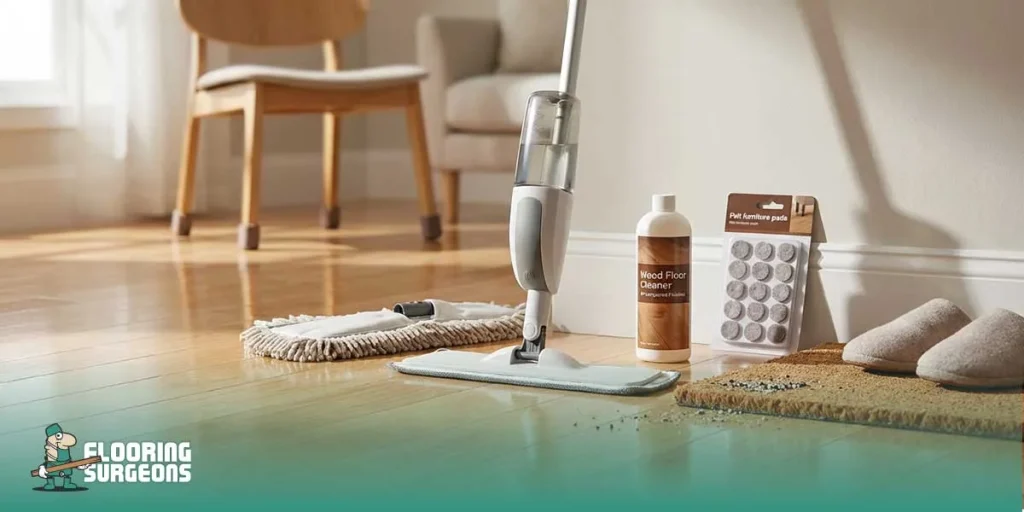
For daily care, dry cleaning is enough. Use a soft broom or a vacuum with a hard-floor setting to remove dust and loose grit before it gets walked across the surface. This step does more to protect the lacquer than occasional deep cleaning.
Weekly cleaning should involve a lightly damp mop, not a wet one. Use clean water or a cleaner specifically made for lacquered wood floors, and wring the mop thoroughly before it touches the floor. Moisture should evaporate within minutes. If water is left sitting on the surface, too much has been used.
Avoid routine overcleaning. Lacquered floors do not benefit from frequent washing, and excessive moisture slowly weakens the finish even if damage is not visible straight away.

Best Way to Remove Dust and Grit Without Scratching
Dust and grit act like fine sandpaper on lacquered wood floors. The safest way to remove them is with soft, non-abrasive tools that lift particles rather than push them across the surface.
Microfibre mops and soft vacuum heads are ideal because they trap grit instead of dragging it. Avoid stiff brushes, rough broom heads, or vacuum attachments designed for carpets. These can create fine surface scratches that dull the lacquer over time.
Pay extra attention to entrances, walkways, and areas near seating. These zones collect grit fastest and are usually where early wear starts. Keeping them clean reduces long-term damage more effectively than aggressive cleaning later.
Best Cleaning Products for Lacquered Wood Floors
Choosing the right cleaning products matters more than how often you clean. Lacquered wood floors rely on a sealed surface layer, and the wrong product can slowly break that layer down, even if damage is not obvious at first. Safe cleaners protect the finish, while unsuitable chemicals cause dullness, streaking, and early wear.
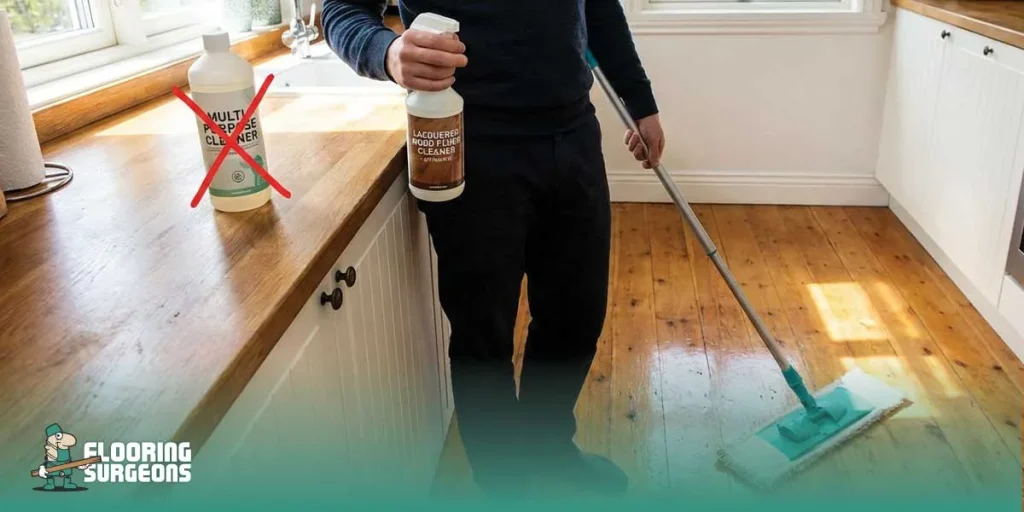
Cleaners That Are Safe for Lacquered Finishes
The safest option for routine cleaning is a cleaner specifically designed for lacquered wood floors. These products are formulated to clean without softening or stripping the lacquer layer. Used sparingly, they remove light dirt and residue while keeping the surface even.
In many cases, plain water is enough when paired with a well-wrung, damp mop. If a cleaner is needed, it should be pH-neutral and labelled as suitable for lacquered or sealed wood flooring. Less product is always better. Overuse leaves residue that attracts dirt and makes floors look dull over time.
Before using any new cleaner across the floor, test it in a small, hidden area. If the finish dries evenly without streaks or a sticky feel, it is generally safe to use as part of regular maintenance.
Products and Chemicals to Avoid
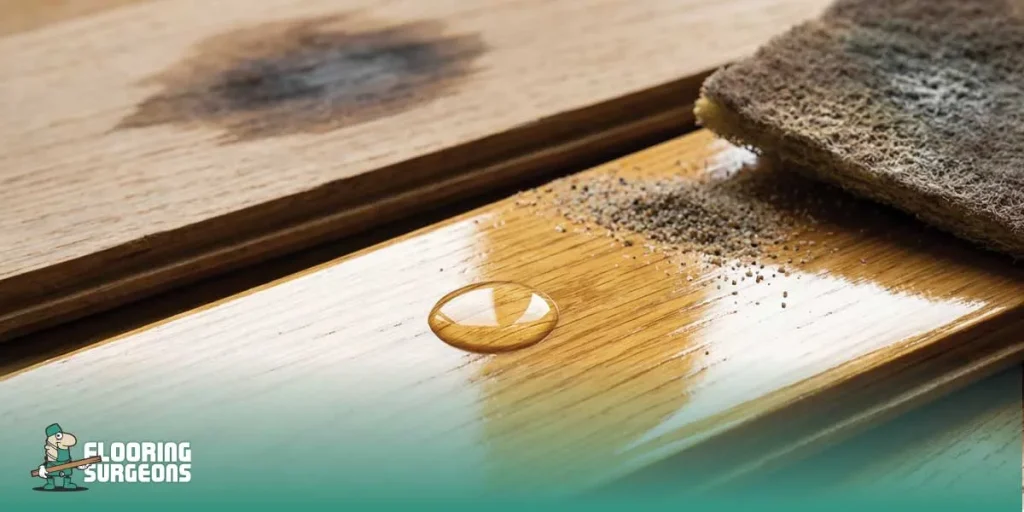
Certain products damage lacquered wood floors gradually rather than immediately, which is why they are often misused. Harsh or abrasive cleaners wear away the protective layer and expose the wood underneath.
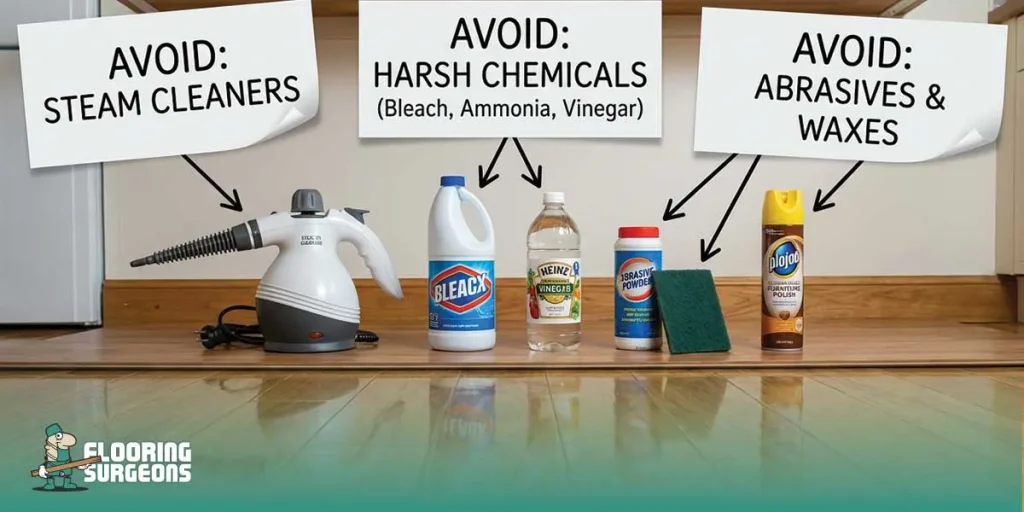
Avoid the following on lacquered wood floors:
- Steam cleaners, which force heat and moisture into the finish
- Ammonia-based or bleach-based cleaners
- Vinegar or acidic solutions, even when diluted
- Abrasive powders, scouring pads, or stiff brushes
- Silicone-based sprays and waxes that leave buildup
These products may make the floor look clean at first, but repeated use leads to dull patches, uneven sheen, and surfaces that trap dirt more easily. Once the lacquer is compromised, cleaning becomes harder and professional treatment is often the only fix.
Common Mistakes That Damage Lacquered Wood Floors
Most damage to lacquered wood floors comes from small habits repeated over time, not single accidents. These mistakes slowly weaken the lacquer layer, making the floor harder to clean and more prone to dull patches and scratches.
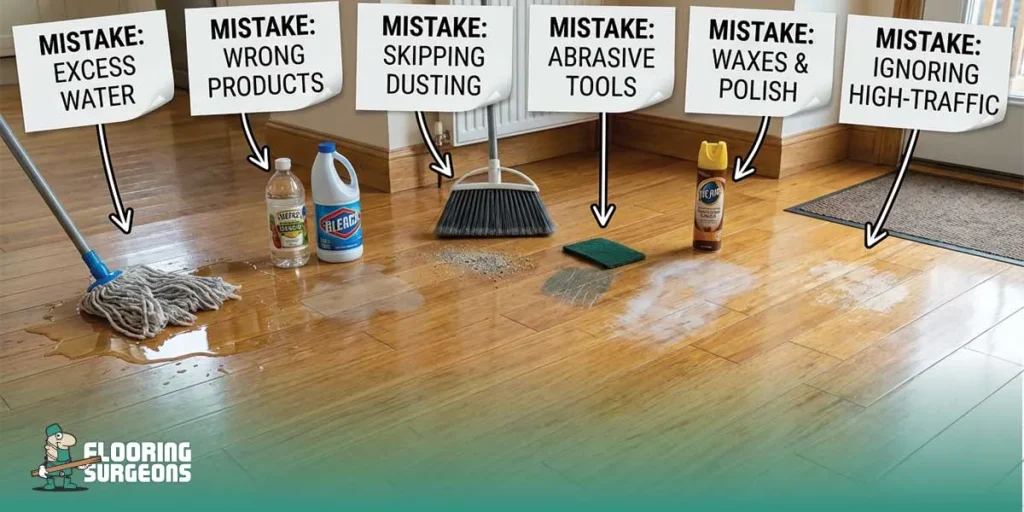
- Using too much water when cleaning
Lacquered wood floors are sealed, but excess moisture still works its way into joints and edges. Wet mopping softens the lacquer over time and can lead to cloudy areas or edge lifting. Floors should dry within minutes, not sit wet. - Cleaning with the wrong products
Ammonia, bleach, vinegar, and general household cleaners break down lacquer gradually. Even if the floor looks fine at first, repeated use strips the protective layer and leaves the surface uneven. This is one of the most common lacquered wood floor care mistakes. - Skipping regular dust and grit removal
Grit acts like fine sandpaper. Walking it across the floor creates micro-scratches that dull the finish. Waiting too long between dry cleans causes more long-term damage than cleaning too often with the right method. - Using abrasive tools or attachments
Stiff brooms, rough mop heads, and carpet-style vacuum attachments scratch lacquered wood floors. These marks are often only visible in certain light, but once they appear, they cannot be cleaned away. - Applying waxes or polish designed for other floors
Waxes and silicone-based polishes sit on top of lacquer instead of bonding with it. They cause buildup, streaking, and uneven shine, making future cleaning harder and sometimes requiring professional removal. - Ignoring high-traffic areas
Entrances, walkways, and areas near seating wear first. Failing to protect or clean these zones regularly leads to patchy wear, even when the rest of the floor looks fine.
Avoiding these mistakes is a core part of proper lacquered wood floor maintenance. Protecting the lacquer layer from daily wear does far more for the floor’s lifespan than aggressive cleaning or occasional deep treatments.
How Often Should You Clean and Maintain Lacquered Floors?
There is no single cleaning schedule that fits every lacquered wood floor. The right frequency depends on foot traffic, shoes, pets, and how much grit the floor is exposed to. Overcleaning and undercleaning can both shorten the life of the lacquer finish.
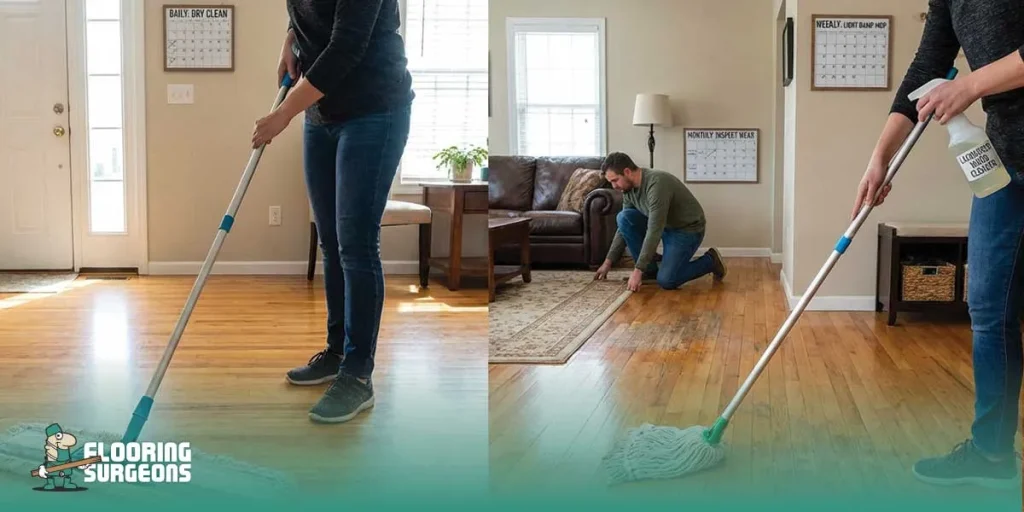
A Practical Cleaning Schedule That Works
Daily or every few days
- Dry clean with a soft broom or vacuum
- Focus on entrances, walkways, and seating areas
- Remove grit before it gets walked across the surface
Once a week
- Lightly damp mop if needed
- Use minimal water and a cleaner made for lacquered wood floors
- Floor should dry within minutes
Occasionally (every few months)
- Inspect high-traffic zones for early wear
- Check for dull patches or residue buildup
- Adjust cleaning habits if these areas look uneven
What Most Homeowners Get Wrong About Frequency
Cleaning more often does not mean better care. Lacquered wood floors do not benefit from frequent wet washing. Excess moisture and repeated chemical use weaken the lacquer layer faster than everyday dust does.
At the same time, waiting too long between dry cleans allows grit to build up. This causes micro-scratches that slowly dull the surface, especially in busy areas.
Let Usage, Not Rules, Set the Schedule
- Homes with shoes and pets need more frequent dry cleaning
- Low-traffic rooms can go longer between cleans
- High-traffic zones should be cleaned more often than the rest of the floor
Proper lacquered wood floor maintenance is about balance. Remove dirt before it damages the finish, but avoid unnecessary washing that wears the lacquer down over time.
How Foot Traffic, Shoes, and Grit Affect Lacquered Floors
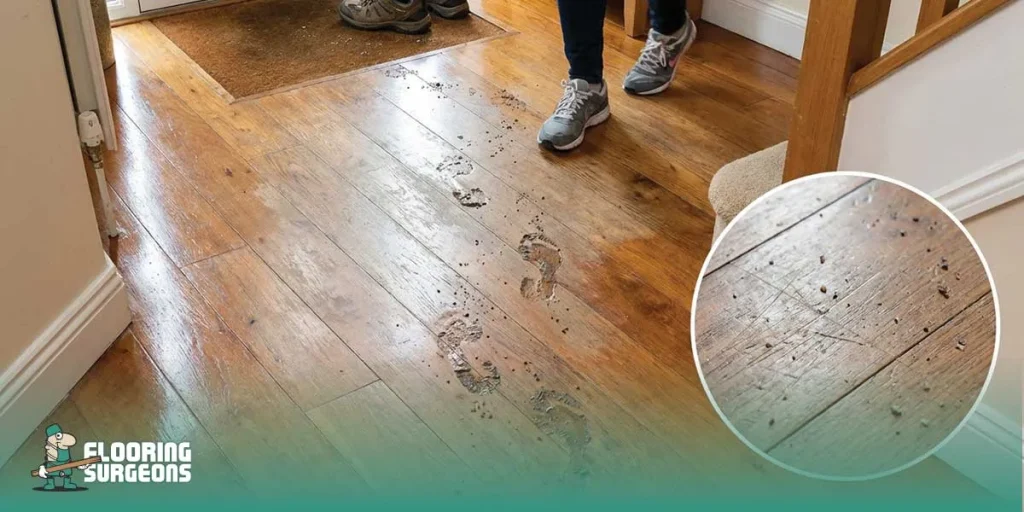
This is where lacquered floors wear out first, not from cleaning, but from what gets walked across them every day. Installers see the same patterns in UK homes again and again.
What Actually Causes the Damage
Grit is the main problem
Tiny particles from pavements and roads act like fine sandpaper. Every step drags them across the lacquer surface, creating micro-scratches that slowly dull the finish.
Shoes accelerate wear
Outdoor shoes bring in grit and apply more pressure to the surface. Heels and rigid soles concentrate force, which speeds up lacquer breakdown in walkways.
Foot traffic is uneven
Damage doesn’t happen everywhere at once. It starts in predictable zones:
- Front doors and porches
- Hallways and stairs
- Sofa edges and coffee table areas
- Kitchen walk paths between sink, hob, and fridge
Foot traffic damage is rarely spread evenly across a room. It usually concentrates in predictable areas:
- Entrances and porches
- Hallways and stairs
- Seating zones near sofas and coffee tables
- Kitchen walk paths between sink, hob, and fridge
These zones experience constant pressure combined with grit, which is why lacquer wear often appears in visible strips rather than across the entire floor. Similar to floating flooring systems, lacquered engineered wood reacts to movement differently than fully bonded surfaces, which is why understanding click-lock flooring construction helps set realistic expectations for long-term wear.
Why This Is More Noticeable in UK Homes
UK living habits and weather make this worse:
- Frequent rain increases grit and fine debris
- Hard pavements mean sharper particles
- Shoes are often worn indoors, especially in busy households
- Smaller room layouts concentrate foot traffic in narrow paths
Installers regularly see floors that look “worn” in strips, not across the whole room. That pattern almost always matches foot traffic routes.
Simple Ways to Reduce Wear (That Actually Work)
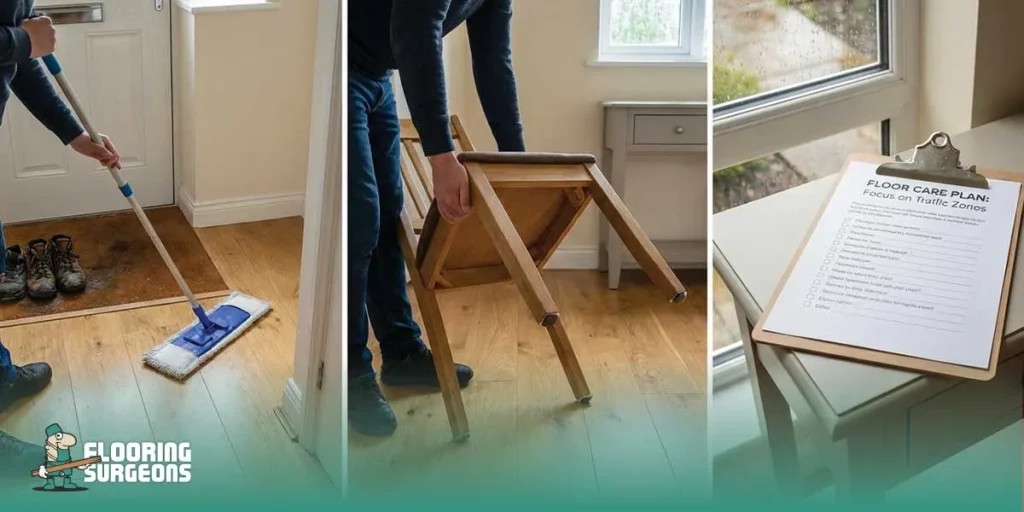
- Place proper door mats at every entrance
- Dry clean high-traffic areas more often than the rest of the floor
- Avoid dragging furniture across the surface
- Rotate rugs in seating areas to spread wear evenly
You don’t need to clean the whole floor more often. Focus on the zones that take the abuse.
Installer Insight You Won’t Hear Often
From years of fitting and maintaining lacquered wood floors, one thing is clear: floors fail where habits stay the same. When homeowners adjust how they manage shoes, entrances, and grit, lacquered floors last years longer with less visible wear. This practical approach is why installers at Flooring Surgeons focus on traffic control just as much as cleaning routines.
Caring for Lacquered Wood Floors in UK Homes
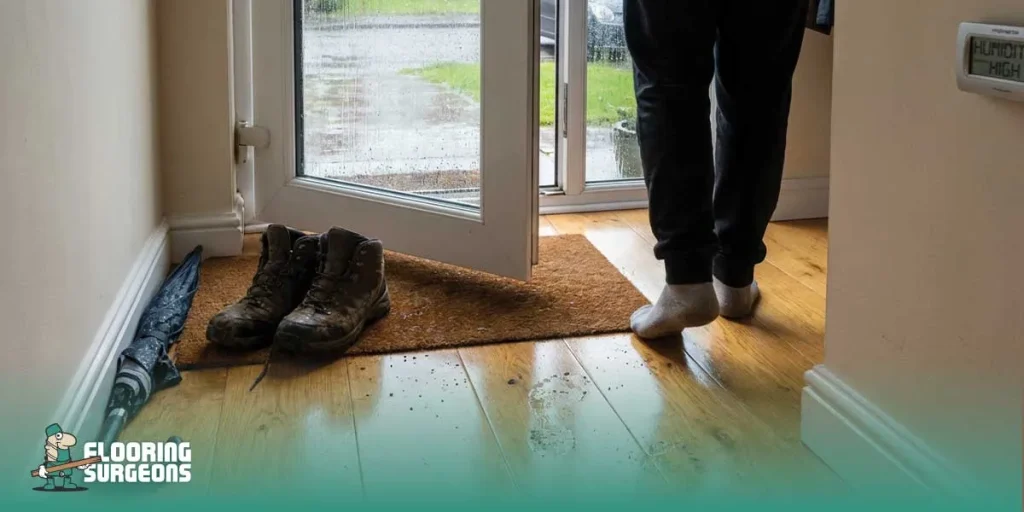
Caring for lacquered wood floors in the UK comes with a few specific challenges. Humidity, outdoor footwear, narrow entrances, and wet weather all put extra pressure on the lacquer finish. Ignoring these factors is one of the fastest ways lacquered wood floors lose their appearance.
Why UK Homes Need a Different Approach
Lacquered wood floor care in the UK is less about deep cleaning and more about controlling moisture and grit before they reach the surface. Installers regularly see damage caused by everyday habits rather than poor products.
Common UK Factors That Affect Lacquered Wood Floors
| UK Factor | How It Affects Lacquered Wood Floors | What Actually Helps |
| Humidity | High indoor humidity softens the lacquer layer over time, making it more prone to dulling and marks | Keep rooms well ventilated and avoid excessive wet cleaning |
| Wearing shoes indoors | Shoes bring in grit and apply extra pressure to the lacquer surface | Encourage shoe-free areas or indoor footwear |
| Entrances and hallways | Grit and moisture concentrate in narrow entry points | Use proper entrance mats and dry clean these areas more often |
| Wet UK weather | Rain increases fine debris and moisture tracked inside | Clean entrances daily during wet periods to protect the finish |
Practical UK-Specific Care Tips
- Dry clean entrance areas more frequently than other rooms
- Avoid leaving damp shoes, coats, or bags directly on lacquered wood floors
- Use mats both outside and inside doors to trap grit early
- Allow floors to dry fully after cleaning, especially during colder months
These small adjustments make a noticeable difference. In many UK homes, controlling moisture and grit extends the life of the lacquer finish far more than changing cleaning products.
Installer Insight
From a maintenance perspective, most lacquered wood floor problems seen in UK homes are environmental, not material-related. When humidity, shoes, and entrances are managed properly, lacquered wood floor maintenance becomes simpler and far more effective.
Lacquered Solid Wood vs Lacquered Engineered Wood Care
Both solid wood and engineered wood can be finished with lacquer, but they do not behave the same over time. Understanding this difference helps you choose the right care approach and avoid damage that cleaning alone cannot fix.
Lacquered solid wood floors rely on a single, thicker timber layer. The lacquer protects the surface, but the wood beneath can react more to changes in humidity. Excess moisture, poor ventilation, or inconsistent cleaning habits can lead to movement that stresses the lacquer layer at joints and edges.
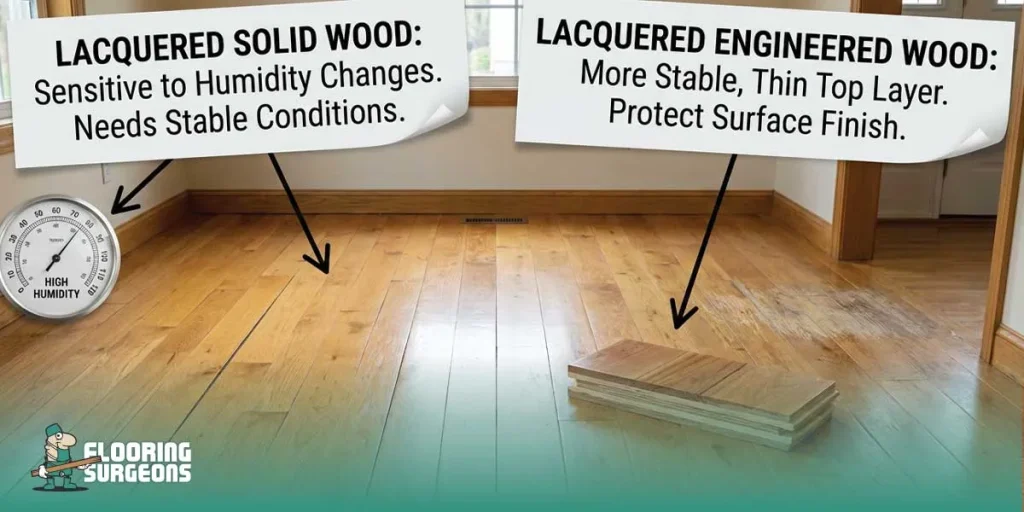
Lacquered engineered wood floors are more dimensionally stable because of their layered construction. They cope better with typical UK humidity changes, but the lacquer still wears in high-traffic areas. Because the top layer is thinner, aggressive sanding or repeated recoating options are more limited. Care principles are the same for both, but expectations differ. Solid wood benefits more from stable indoor conditions, while engineered wood benefits from lighter maintenance and careful protection of the surface finish. Many of the same movement principles discussed in the floating floor pros and cons also apply to lacquered engineered wood floors, particularly in how they respond to foot traffic and seasonal changes.
How to Protect Lacquered Wood Floors Long Term
Long-term protection is about reducing wear before it happens. Once the lacquer layer is compromised, cleaning alone cannot restore it.
Preventing Scratches and Wear
- Remove grit before it gets walked across the floor
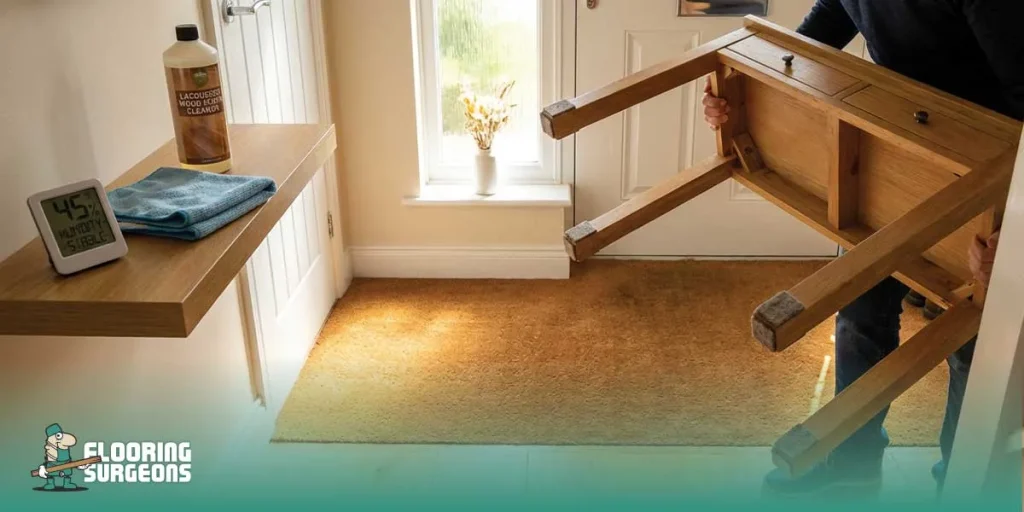
- Use felt pads under furniture legs and replace them regularly
- Lift furniture instead of dragging it
- Focus cleaning on high-traffic zones rather than overcleaning the entire floor
- Avoid rugs with rough backings that rub against the lacquer
Small scratches build up gradually. Preventing them keeps the finish even and delays the need for professional treatment.
When Recoating or Professional Maintenance Is Needed
Lacquered wood floors do not need frequent recoating, but there are clear signs when professional help is required:
- Dull or patchy areas that do not improve after cleaning
- Visible wear paths in entrances or walkways
- A surface that feels rough despite correct maintenance
Recoating works only when the lacquer layer is worn but still intact. Once the finish is breached down to bare wood, more intensive treatment may be needed. This is why early intervention matters.
Final Care Tips From Professional Wood Flooring Installers
- Clean little and often rather than deeply and aggressively
- Treat entrances and walkways as maintenance zones
- Use products made specifically for lacquered wood floors
- Control moisture, not just dirt
- Adjust care routines as seasons and household habits change
From an installer’s perspective, lacquered wood floors last longest when care routines match real use, not ideal conditions. Floors that are protected from grit, moisture, and unnecessary abrasion maintain their finish far longer than those cleaned heavily but lived on without control. These are the issues installers see repeatedly when floors fail earlier than expected — not because of poor materials, but because everyday habits stayed unchanged. From an installer’s perspective, many of the long-term issues seen with lacquered wood floors come down to daily habits rather than material quality — a pattern consistently observed by Flooring Surgeons across real UK homes.

Haniye Ayanmanesh
As an expert writer for Flooring Surgeons, I combine technical SEO knowledge with a practical understanding of flooring, producing content that helps users make confident decisions while supporting long-term organic growth.