


Organic design furniture does more than fill a room. It reshapes how a space feels, flows, and functions. Instead of rigid lines and artificial finishes, organic interiors lean into softness, movement, and materials that echo the natural world. The result is not just visual appeal, but a quieter, more grounded experience of space.
What is often overlooked, however, is that furniture alone cannot achieve this effect. The surrounding surfaces, particularly flooring, play an equally critical role in defining how organic a space truly feels. To understand the full impact of organic design, we need to look beyond furniture and into the structure of the space itself.
Table of contents
What Is Organic Design in Interior Spaces?
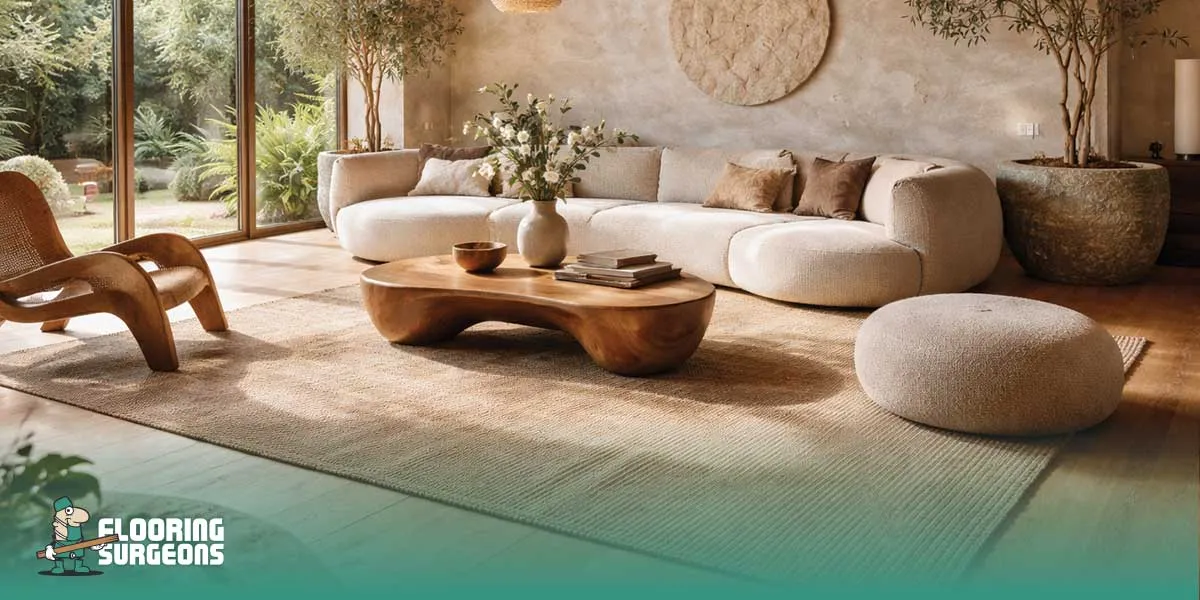
Organic design in interior spaces refers to a design approach that draws inspiration from natural forms, materials, and processes. Rather than imposing structure onto a space, organic design allows it to evolve more naturally, often overlapping with biophilic interior design principles that prioritise comfort, texture, and a closer relationship with the natural world. It prioritises fluid shapes, tactile surfaces, and a strong connection to nature, creating interiors that feel balanced, calm, and inherently human. Rather than imposing structure onto a space, organic design allows it to evolve more naturally. Curved furniture, layered textures, and raw finishes work together to create an environment that feels intuitive rather than engineered.
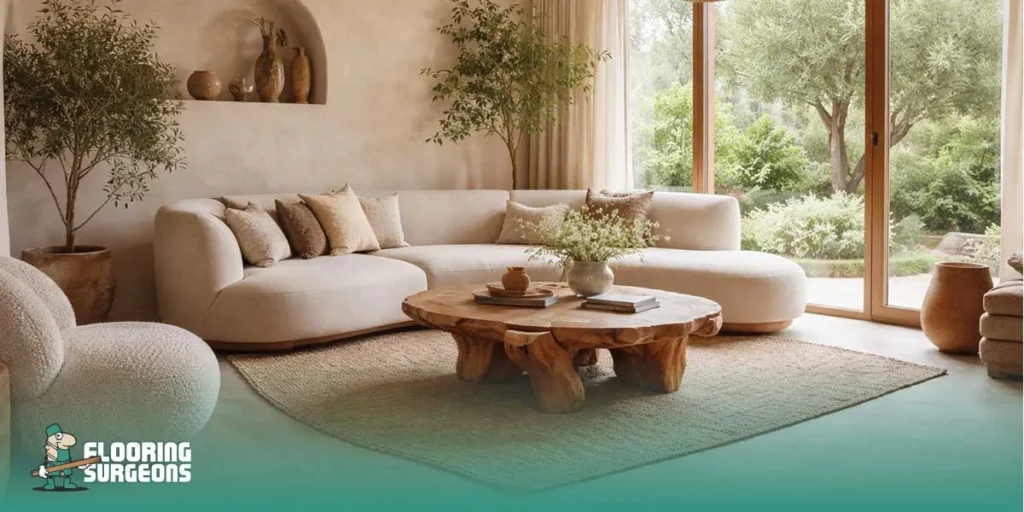
Importantly, this philosophy extends beyond furniture. Surfaces such as flooring, wall finishes, and material transitions must work in harmony to maintain a consistent and authentic organic atmosphere.
Key Characteristics of Organic Design
Organic design is defined by a set of principles that influence both aesthetics and spatial experience:
- Fluid and curved forms
Straight lines are softened or removed entirely in favour of shapes that mirror patterns found in nature. - Natural materials
Wood, stone, clay, and linen dominate, offering authenticity that synthetic materials often fail to replicate. In spaces where authenticity and long-term character matter most, solid timber surfaces often set the benchmark for material richness. - Textural depth
Surfaces are layered and tactile rather than flat or overly polished. - Visual continuity
Elements within the space feel connected, with no harsh transitions between zones or materials. - Subtle imperfection
Irregularities are not flaws but features, reinforcing a more natural and less manufactured aesthetic.
Organic vs Modern Interior Design
While organic and modern interiors may appear similar at first glance, their underlying philosophies and material choices differ significantly.
| Element | Organic Design | Modern Design |
| Shapes | Curved, flowing | Straight, geometric |
| Materials | Natural, raw | Engineered, synthetic |
| Texture | Rich, tactile | Smooth, minimal |
| Atmosphere | Warm, calming | Clean, structured |
| Flooring Role | Integral to spatial identity | Often treated as a backdrop |
In organic interiors, flooring is not a secondary decision. It is a foundational element that supports the entire visual and sensory experience of the space.
How Organic Furniture Shapes Interior Space
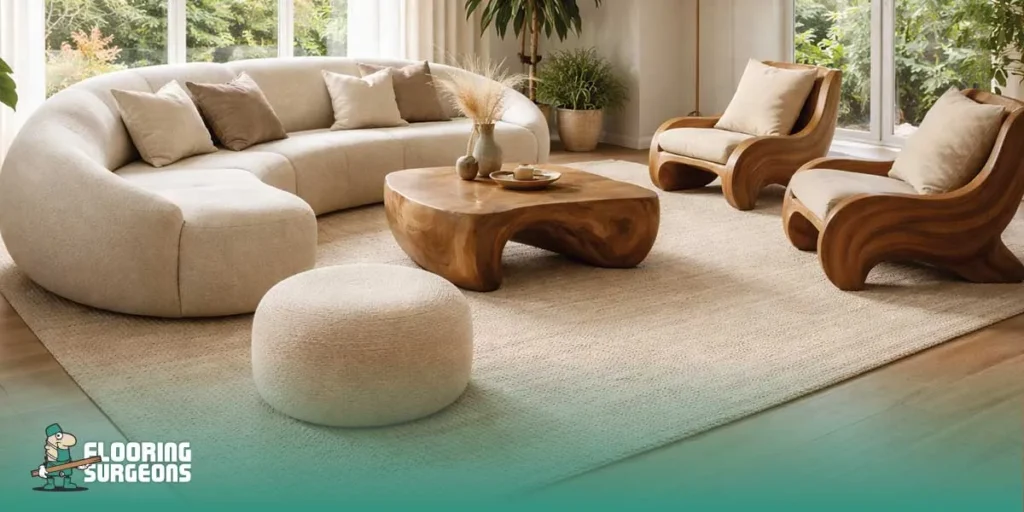
Organic furniture does not simply occupy space. It actively shapes how that space is experienced.
Through its form, scale, and materiality, it influences movement, perception, and emotional response. Unlike rigid furniture, organic pieces guide both the eye and the body in a way that feels more natural and less constrained. This shift has a direct impact on how a room is perceived and used.
Key Spatial Impacts:
- Flow of movement
Curved edges and softened transitions allow movement through a space to feel uninterrupted and intuitive. - Visual softness
Rounded forms reduce visual tension, making interiors feel more open and welcoming. - Psychological comfort
Natural shapes are processed more easily by the brain, contributing to a sense of calm and ease. - Spatial harmony
Furniture works with the proportions of the room rather than imposing strict structure, creating a more balanced environment.
As these effects accumulate, it becomes clear that furniture alone cannot sustain this harmony. The surfaces beneath and around it must support the same principles, otherwise the coherence of the space begins to break down. This is where material choices, particularly flooring, begin to define whether an organic interior truly succeeds or falls short.
Why Materials Matter in Organic Design
Organic design is not defined by shape alone. It is defined by what those shapes are made of. Materials determine how a space is perceived, how it ages, and how it feels to live in. A curved sofa loses its organic integrity if it is wrapped in synthetic finishes. Likewise, a well-designed room can feel disconnected if its surfaces do not share the same material language.
In organic interiors, materials are not decorative. They are structural to the experience. They influence light, texture, temperature, and even sound. More importantly, they create continuity between furniture, flooring, and architectural elements. Without this continuity, the space begins to feel fragmented rather than cohesive.
Natural Materials (wood, stone, linen)
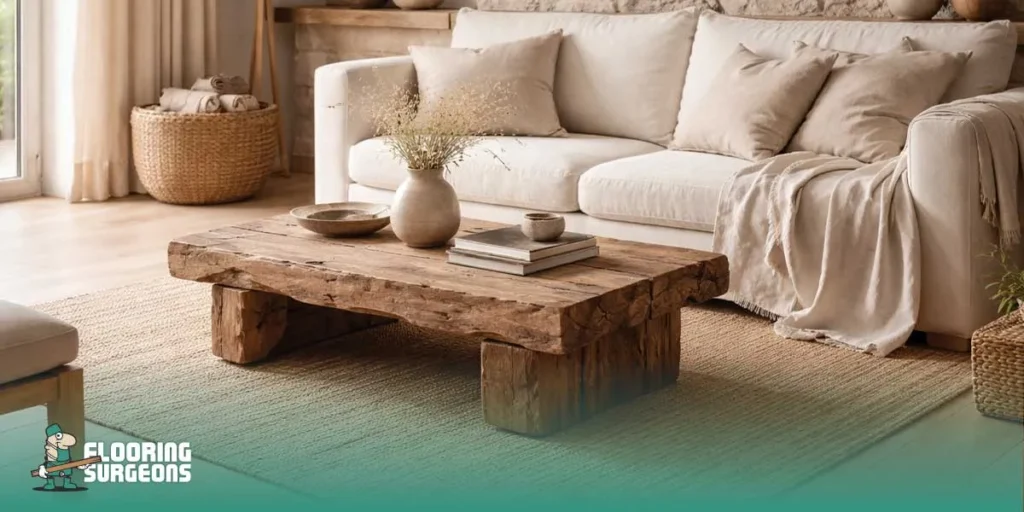
Natural materials form the backbone of any organic interior. They introduce variation, depth, and authenticity that cannot be replicated by artificial alternatives. Each material carries subtle irregularities, which contribute to a more relaxed and grounded atmosphere.
Wood, for instance, brings warmth and softness underfoot and across surfaces. Stone introduces weight and permanence. Linen and other natural fabrics soften the visual field and balance harder elements.
When these materials are used consistently across furniture and flooring, the space begins to feel unified rather than assembled. This is particularly important at floor level, where the largest continuous surface in the room can either reinforce or disrupt the entire design language.
Sustainable and Eco-friendly Choices
Sustainability is not an added feature in organic design. It is a core principle. Choosing eco-friendly materials ensures that the space aligns not only visually with nature, but also ethically. This includes responsibly sourced wood, low-impact manufacturing processes, and materials that age gracefully rather than degrade quickly. From a practical perspective, sustainable materials often perform better over time. They develop character instead of wear, and they require fewer replacements.
Flooring plays a central role here. Selecting sustainable flooring options such as responsibly sourced hardwood or bamboo allows the design to remain consistent from surface to structure. A truly organic space is not only inspired by nature. It respects it at every level of material selection.
The Role of Flooring in Organic Interior Design
In most interiors, flooring is treated as a background element. In organic design, it is the foundation. It is the one surface that connects every piece of furniture, every movement, and every visual transition within the space. If it does not align with the principles of organic design, the entire room loses coherence. Flooring is not just seen. It is experienced continuously, both visually and physically.
Why Flooring Is the Foundation of Organic Spaces
Flooring defines how a space feels before any furniture is introduced. It sets the tone, controls the visual flow, and establishes the base texture of the environment. In an organic interior, this means avoiding harsh contrasts, artificial finishes, and overly polished surfaces.
Instead, the flooring should:
- Support natural colour palettes
- Provide subtle texture rather than high gloss
- Allow smooth visual transitions between zones
- Complement, not compete with, organic furniture
When done correctly, flooring becomes almost invisible in isolation, yet essential to the overall harmony of the space. This is the point where many interiors fail. They combine organic furniture with flooring that contradicts the design language, resulting in a space that feels visually disjointed.
Best Flooring Options for Organic Interiors
Choosing the right flooring is not about trends. It is about compatibility with natural materials, long-term performance, and visual coherence. Below is a practical comparison of the most suitable flooring options for organic interiors:
| Flooring Type | Pros | Cons | Best Use Case |
| Hardwood | Natural look, warm texture | Expensive | Living rooms, open spaces |
| Engineered wood | More stable, مقاومتر | Less authentic than solid wood | Apartments, modern homes |
| Stone | Durable, timeless | Can feel cold underfoot | Minimal, grounded spaces |
| Bamboo | Eco-friendly, sustainable | Sensitive to moisture | Eco-conscious interiors |
For homes that need the look of real wood with greater structural stability, engineered boards often offer the most balanced solution. Each option offers a different balance between aesthetics, performance, and sustainability. The key is selecting one that aligns with both the furniture and the overall spatial intention.
How to Choose the Right Flooring for Organic Design
Selecting flooring for an organic interior requires more than choosing a natural material. It requires understanding how that material interacts with the rest of the space.
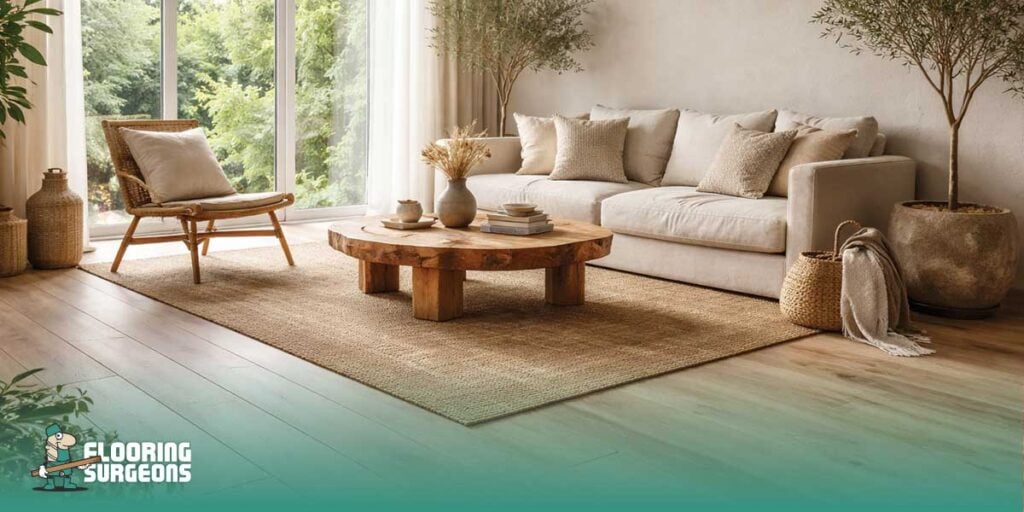
The goal is not to make the floor stand out, but to make everything else feel more connected because of it.
Key Considerations:
- Match tones with furniture
Flooring should sit within the same colour family as key furniture pieces to maintain visual continuity. - Prioritise texture over shine
Matte and lightly textured finishes feel more natural and reduce visual harshness. - Avoid synthetic finishes
High-gloss coatings and artificial textures disrupt the organic feel of the space. - Consider sustainability
Choose materials that are responsibly sourced and designed to age well over time.
A well-chosen floor does not draw attention to itself. Instead, it allows the entire space to feel intentional and complete.
Common Mistakes to Avoid in Organic Interiors
Even well-designed spaces can lose their impact when key principles are overlooked.
These are the most common mistakes that prevent an organic interior from achieving true cohesion:
- Overusing artificial materials
Synthetic elements break the connection to nature and reduce authenticity. - Ignoring flooring harmony
A mismatched floor can undermine even the most carefully selected furniture. - Mixing too many styles
Organic design relies on consistency. Too many influences create visual noise. - Poor lighting choices
Harsh or overly cool lighting disrupts the softness that organic spaces depend on.
Avoiding these mistakes is not about perfection. It is about maintaining a clear and consistent design direction from the ground up.
Organic Design Trends in 2026
Organic design is evolving. It is no longer just about natural shapes and materials, but about how entire spaces function as cohesive, living environments. The shift in 2026 is clear. Interiors are becoming more intentional, more tactile, and more grounded in long-term usability rather than short-term aesthetics. Understanding these trends is essential, not just for design inspiration, but for making informed decisions about materials and flooring that will remain relevant over time.
Warm Minimalism in Organic Interior Design
Minimalism is becoming softer. Instead of stark, empty spaces, warm minimalism introduces natural tones, subtle textures, and carefully selected materials. The focus is still on simplicity, but without sacrificing comfort or depth. Instead of stark, empty spaces, this direction leans towards warm minimalist interiors where natural tones, softer textures, and restrained material choices create simplicity without feeling cold.
In this context, flooring plays a key role. Pale woods, muted stone finishes, and matte surfaces help maintain a clean aesthetic while adding warmth underfoot. Spaces feel open, but not cold. Simple, but not sterile.
Textured Flooring Trends in Organic Interiors
Flat, uniform flooring is being replaced by surfaces with character. Texture is becoming a defining feature in organic interiors. Brushed wood, lightly grained finishes, and natural stone variations introduce subtle visual movement without overwhelming the space. This shift reflects a broader move away from perfection, which is why understanding the role of floor texture in visual warmth becomes especially useful when choosing surfaces that need to feel natural rather than processed.
This shift reflects a broader move away from perfection. Slight irregularities are now seen as desirable, reinforcing authenticity and craftsmanship. For flooring, this means choosing materials that reveal their natural structure rather than hiding it behind heavy processing.
Sustainable Materials in Organic Interior Design
Sustainability is moving from preference to expectation. Homeowners are increasingly prioritising materials that are responsibly sourced, durable, and environmentally conscious. This applies not only to furniture, but to every permanent element within the space.
Flooring decisions are central to this shift. Long-lasting materials such as hardwood and bamboo are favoured not only for their appearance, but for their lifecycle performance. A sustainable space is not just designed to look natural. It is designed to remain functional and relevant for years to come.
Indoor-Outdoor Flow in Organic Interior Design
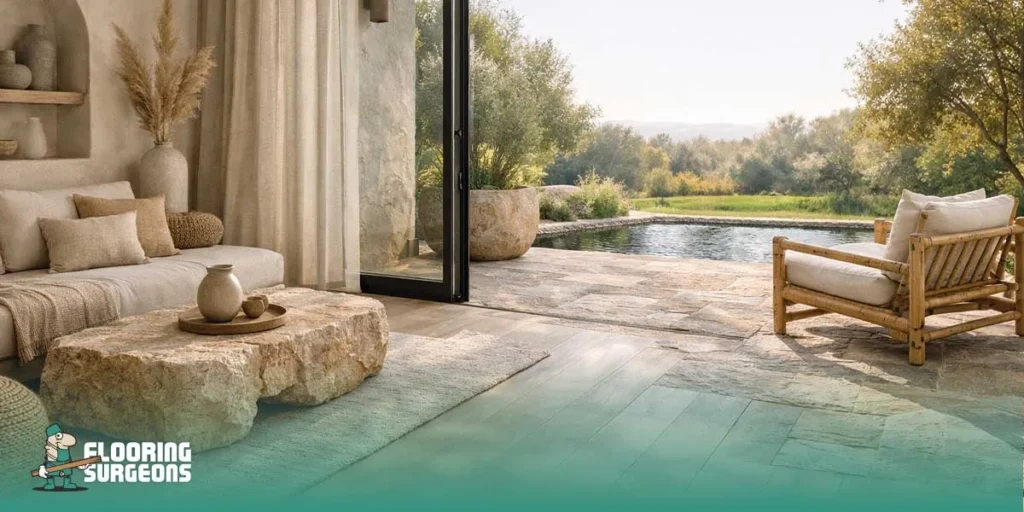
Boundaries between indoor and outdoor spaces are becoming less defined. Organic interiors now extend beyond walls, creating a continuous visual and material flow between inside and outside environments. This approach enhances natural light, improves spatial perception, and strengthens the connection to nature.
Flooring is essential in achieving this continuity. Using compatible materials or tonal consistency across indoor and outdoor surfaces allows spaces to feel larger, calmer, and more integrated. When executed correctly, the transition becomes almost invisible.
Final Thoughts: Creating a Cohesive Organic Space
Organic design is not achieved through furniture alone. It is the result of alignment between form, material, and space. Every element, from the curve of a chair to the surface beneath your feet, contributes to how an interior is experienced. When these elements work together, the space feels effortless. When they do not, even the most carefully selected pieces can feel disconnected.
Flooring, in particular, plays a defining role in this balance. It anchors the design, supports visual continuity, and shapes the overall atmosphere in a way that few other elements can. If you are planning to create or refine an organic interior, it is worth considering not just how your space looks, but how its materials interact at every level.
Choosing the right flooring is not simply a finishing step. It is a foundational decision that influences the success of the entire design.
For those looking to achieve a truly cohesive result, professional guidance can make a significant difference. At Flooring Surgeons, the focus should not simply be on supplying a floor, but on helping homeowners choose materials that support the way a space looks, feels, and functions as a whole.

Haniye Ayanmanesh
As an expert writer for Flooring Surgeons, I combine technical SEO knowledge with a practical understanding of flooring, producing content that helps users make confident decisions while supporting long-term organic growth.