Finding the right flooring for your home can be tricky, especially when you have radiators or heated pipes. Not every floor handles warmth the same way, and choosing the wrong material can lead to warping, gaps, or uncomfortable cold spots. In the UK, homeowners often look for options that are durable, comfortable, and stylish while working well with their heating systems.
In this guide, we’ll explore the best types of UK flooring that work well with radiators and pipes, explain how different materials respond to heat, and offer helpful advice for installation and care.
Table of contents
How Heating Systems Affect Flooring
Heating systems in your home, whether radiators or underfloor heating (UFH), directly affect how flooring performs over time. Different materials react differently to heat, moisture, and expansion, so it’s important to choose floors designed to withstand these conditions.
Radiators and pipes create localised heat zones. Flooring near these areas can expand or contract faster than the rest of the room, which may cause gaps or slight warping if the material isn’t suitable. UFH spreads warmth more uniformly across the floor surface. The most important factor here is thermal conductivity: floors that transfer heat efficiently will feel warm underfoot and preserve performance without damage.
Key Factors That Make Flooring Handle Heat Well
When selecting floors for rooms with radiators or pipes, consider these aspects carefully:
- Thermal Conductivity: Higher conductivity ensures heat spreads efficiently and evenly.
- Material Stability: Some floors expand more than others.
- Thickness & Density: Too-thick or dense materials may slow heat transfer, especially with UFH.
- Moisture Resistance: Waterproof or water-resistant surfaces prevent damage from condensation near pipes.
Best Flooring for Radiators and Underfloor Heating
Not all heating systems affect flooring in the same way. If you’re choosing UK flooring that works well with radiators and pipes, it helps to understand how heat is delivered across the room and how different materials respond over time. Radiators tend to heat the air first, creating warmer spots near walls and cooler areas across the floor. This uneven distribution means flooring near radiators may expand slightly more than the rest of the room.
Underfloor heating, on the other hand, evenly distributes warmth beneath your feet. This creates a consistent temperature across the entire surface, which is generally better for both cosiness and long-term flooring performance.
Materials like Oak Engineered Flooring for heated rooms perform well in both situations, as they are designed to remain stable even when temperatures change.

Comparison Table: Underfloor Heating Compatible Flooring
| Material | Radiator Compatibility | UFH Compatibility | Durability | Notes / Example Products |
| Engineered Flooring | Excellent | Excellent | High | Oak Engineered Flooring for Heated Rooms |
| Laminate Flooring | Good | Good | Medium-High | Waterproof Laminate Flooring for Underfloor Heating |
| Luxury Vinyl Flooring | Excellent | Excellent | High | Stylish, easy to clean |
| Solid Wood Flooring | Moderate | Limited | High | Needs careful monitoring for warping |
| Ceramic / Stone Tiles | Excellent | Excellent | Very High | Hard underfoot, great heat transfer |
Installation Tips for Heat-Resistant Flooring
Even the best flooring won’t perform well if it’s installed the wrong way. When installing radiators and heated pipes, small details can make a noticeable difference in how your floor looks and feels over time.
Leave Space for Natural Movement
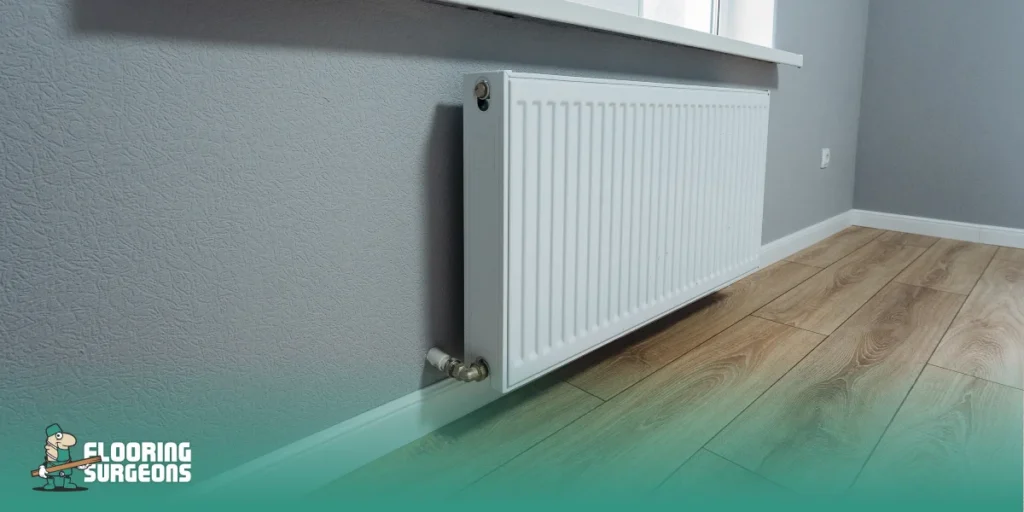
All flooring materials expand and contract with changes in temperature. This becomes more noticeable in rooms with radiators or pipework underneath. To avoid issues like lifting or gaps, always leave proper expansion space around the edges of the room.
Choose the Right Thickness
Thickness plays a bigger role than many people expect. With underfloor heating, thinner boards usually allow heat to transmit more efficiently. Thicker flooring can slow this process, prolonging the time it takes the room to warm up.
Don’t Overlook Underlay
Underlay isn’t simply about comfort—it directly affects heat performance. The wrong type can act as insulation, reducing heat transfer through the floor. That’s why it’s important to choose an underlay designed for heated systems.
If you’re working with engineered wood, it’s worth understanding this properly before installation. The guide Do You Need Underlay for Engineered Wood Flooring? breaks it down simply.
Gradual Heating Makes a Difference
One common mistake is turning the heating on too quickly after installation. Flooring materials need time to settle. A gradual increase in temperature helps prevent stress on the boards and reduces the risk of movement or damage. This is particularly important with underfloor heating systems.
Moisture and Pipe Areas
Areas around pipes or near kitchens and bathrooms can be more exposed to moisture. In these spaces, choosing materials that can handle both heat and humidity is key. This is where options like waterproof laminate or vinyl flooring tend to perform better over time.
Conclusion: Choosing Flooring That Handles Heat Well
Choosing the right UK flooring that works well with radiators and pipes comes down to how materials handle heat, movement, and moisture. Options like engineered flooring for heated rooms offer lasting stability, while laminate flooring for underfloor heating provides a practical and cost-effective alternative.
By focusing on proper installation, the right thickness, and heat compatibility, you can create a floor that not only looks good but also performs reliably for years to come. If you’re selecting flooring for heated spaces, you can explore compatible and durable options at Flooring Surgeons to ensure long-term performance and style.

Ana.Soltanpoor
I’m an SEO Specialist with a strong background in content management and organic search. I build data-driven content strategies by aligning user intent, search behavior, and SEO best practices to ensure every piece of content delivers clarity, relevance, and measurable organic performance.