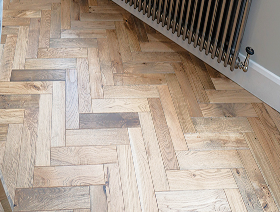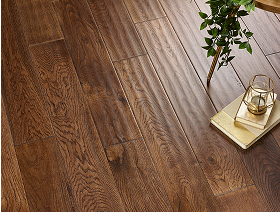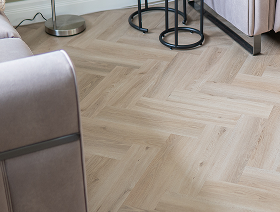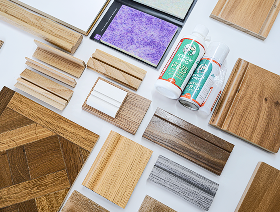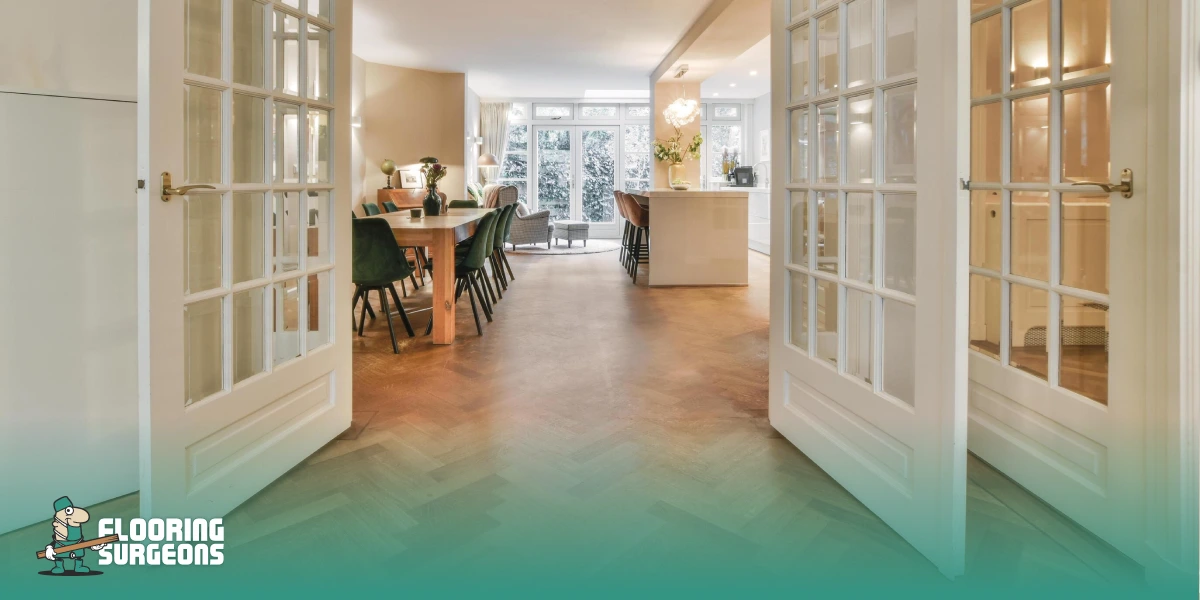
Angular walls and awkward spaces can disrupt even the most stylish home. Off-angle corners, tight hallways, alcoves and broken sightlines can make rooms appear smaller or unbalanced. For this reason, selecting the perfect flooring for oddly shaped rooms in the UK is more important than many people realise. Generally speaking, the ideal flooring for awkward rooms is the type that minimises visual disruption. Good flooring softens strange angles and helps traffic flow smoothly from room to room. On this page, we’ll discuss the different types of flooring that work best for oddly shaped rooms. We’ll talk about materials and layout tricks you can use to open up a room.
Table of contents
What Makes Awkwardly Shaped Rooms Feel Broken?
When rooms have awkward shapes, it can often feel harder to style or furnish because the eye struggles to scan the room. All those angles, sharp corners, alcoves, tight passageways, and broken sightlines can make one room feel like multiple disjointed spaces placed together. If your flooring doesn’t help – by adding unnatural stops or seams, busy patterns, thin boards or different materials where two spaces meet – it can amplify the problem.
A lot of UK houses have unusual layouts that feel even narrower or more cluttered than they are, thanks to this issue. That is part of why flooring can make such a difference. Having a calmer surface with fewer visual interruptions creates a more consistent line for your eye to follow around the room. You’ll often hear similar things when decorating trickier spaces to make a room feel bigger: keep sightlines clear and let the eye travel.
Flooring For Awkward-Shaped Sooms: What Creates Flow Best?
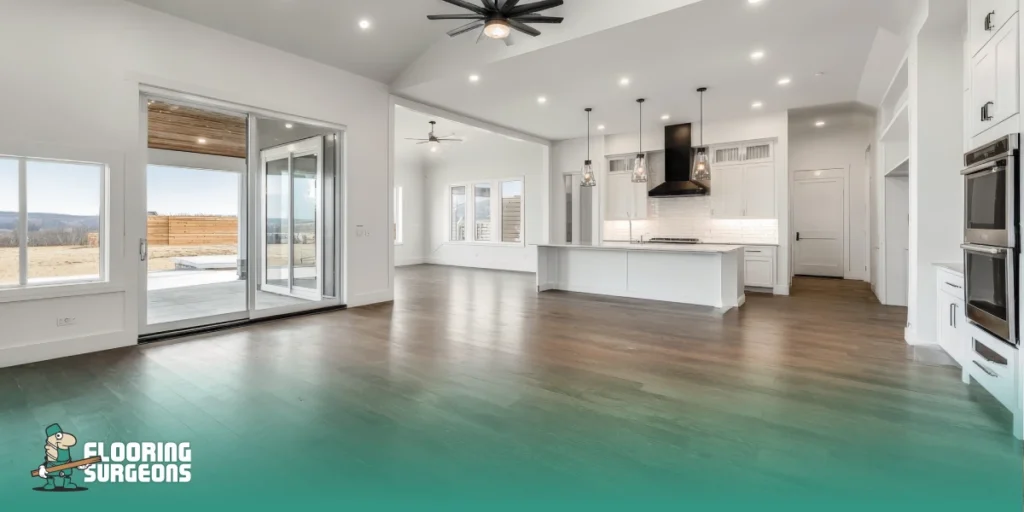
For rooms with unusual layouts, the most effective flooring often minimises visual interruptions. This generally means selecting a floor with a continuous pattern that minimises contrast, and that isn’t too busy.
Continuous flooring that creates flow between rooms
An easy trick for fixing an awkward layout is to keep the flooring the same throughout connected rooms where possible. Your eye will register a single continuous surface rather than a series of flooring changes in material, colour, or texture. The space feels connected rather than chopped up. It works particularly well in UK homes where hallways tend to flow into living rooms, or kitchen-diners open into smaller hallway areas.
Using the same floor finish can also make strange corners less obvious. It diverts attention from every angle and creates a single, clean path through your home.
Wider planks and low-contrast finishes
Floor board size and colour tone can dramatically change the perception of a room. Compared to narrower options, broad planks tend to create a more unified visual field. This makes wider boards ideal for rooms with challenging dimensions. Fewer lines crossing your floor will give the space a cleaner look.
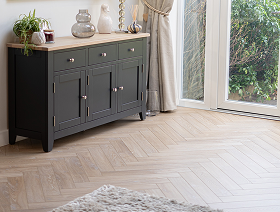
Similarly, low-contrast finishes work well. Light to medium colours, creamy white oak appearances and other natural wood-inspired finishes tend to do well as they bounce light without overwhelming the room.
Fewer thresholds, smoother visual transitions
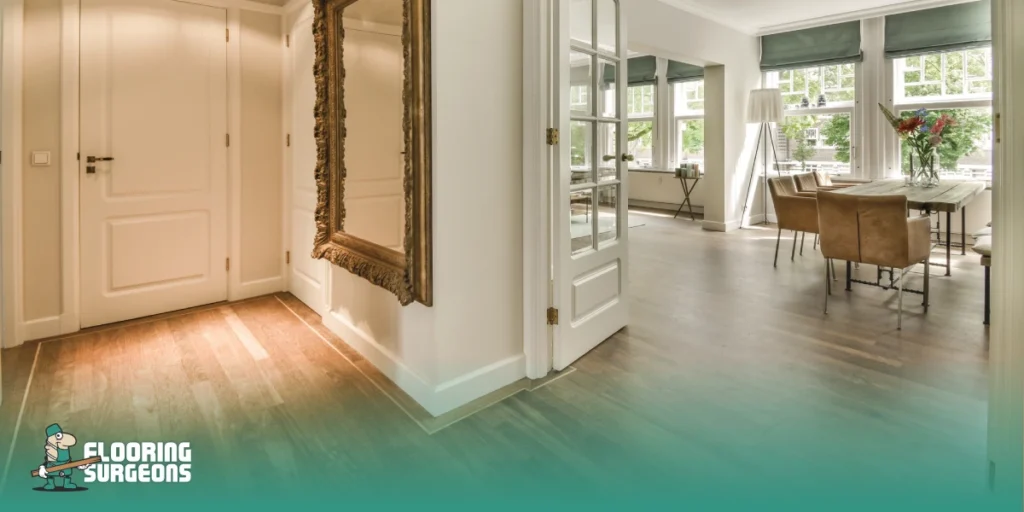
Door thresholds can kill flow pretty quickly, even if your floors are pretty. Every line, step, or interruption that you see is telling your eye to stop. The opposite is usually what cramped spaces need. Having a single flooring surface that flows throughout will make your home feel unified, and your floor plan seem less complicated.
Best Flooring For Awkward Room Layouts in UK Homes
Flooring in UK homes is often selected with fewer steps in mind than decoration.
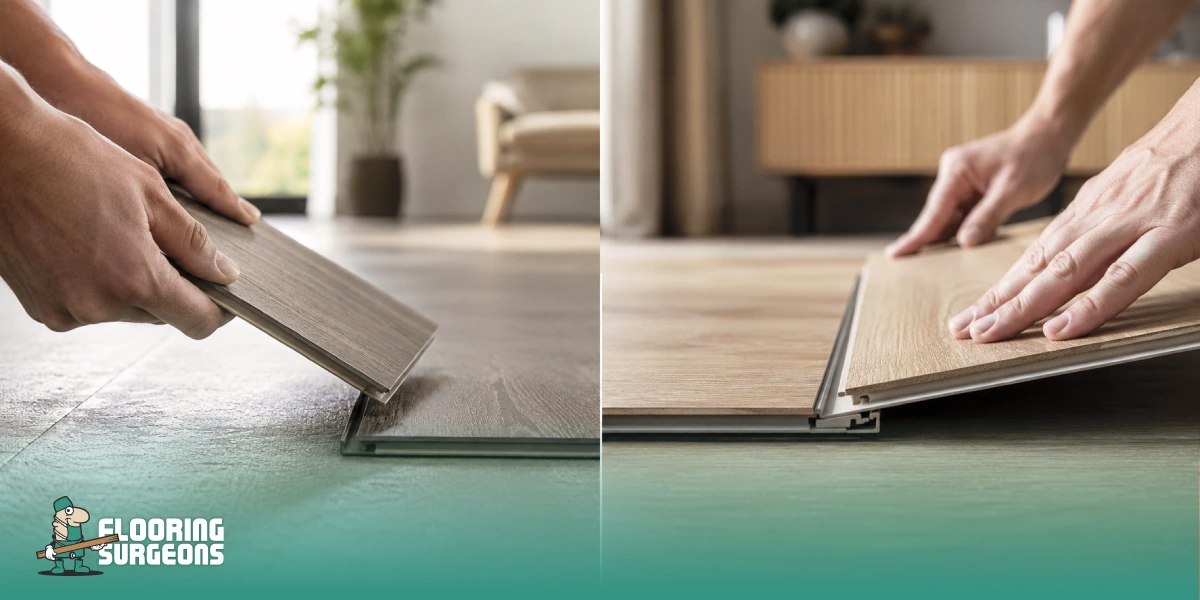
- Luxury Vinyl Flooring can be ideal in homes with open floor plans, joining hallways to kitchens and living rooms. Flooring like this minimises interruptions and works best in spaces where function is just as important as style.
- Engineered Flooring is a solid choice if you’re after a warmer, more natural aesthetic. You can even use lighter colours and wider planks to soften tight angles in your living areas.
- Laminate is another option for those looking to maintain a neat, unified appearance on a budget.
| Room layout issue | Best flooring option | Why it works |
| L-shaped room | Wide plank LVT | keeps the space looking connected |
| Narrow hallway | Laminate or LVT | reduces visual breaks |
| Loft room | Light engineered wood | softens awkward lines |
| Kitchen-diner | LVT | practical and seamless |
How to Choose Oddly Shaped UK Rooms Flooring that Flows Naturally
Picking the perfect flooring for oddly shaped UK rooms isn’t just about picking flooring; it’s about how you use it.
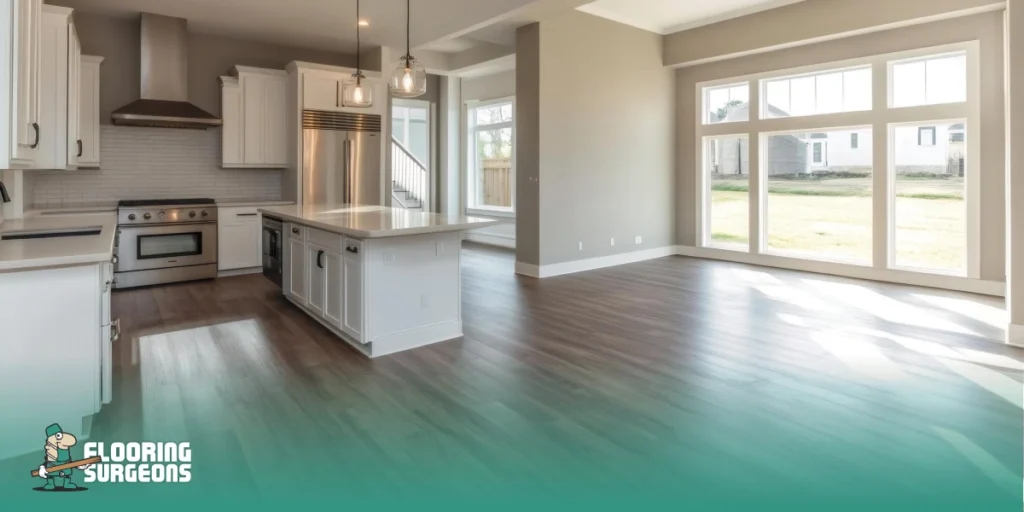
- Follow the longest sightline: Laying flooring along the longest visible axis often improves flow. It makes a room feel more open and less impacted by severe angles.
- Use one direction across connected spaces: Leading lines through connected rooms can help maintain flow. Flooring that continues from room to room creates seamless transitions.
- Avoid layouts that highlight awkward corners: Certain patterns can unintentionally highlight rooms’ bumpiest features. Random patterns or abrupt changes in direction draw more attention to flawed areas. Stick with something simple, unless your space benefits from some visual chaos.
Mistakes to Avoid When Choose Flooring For Oddly Shaped Rooms
Avoid using too many types of flooring in rooms that open up to each other. It makes the layout look choppy and highlights every transition. Busy designs are another enemy of awkwardly shaped rooms. When your floor is already busy, strange angles tend to pop more.
Avoid using flooring to arbitrarily divide the house into sections. If your eyes keep getting caught on stops and starts, your home will feel disjointed. This is also why many homeowners start by asking whether flooring should be the same throughout the house when they want a more seamless result.
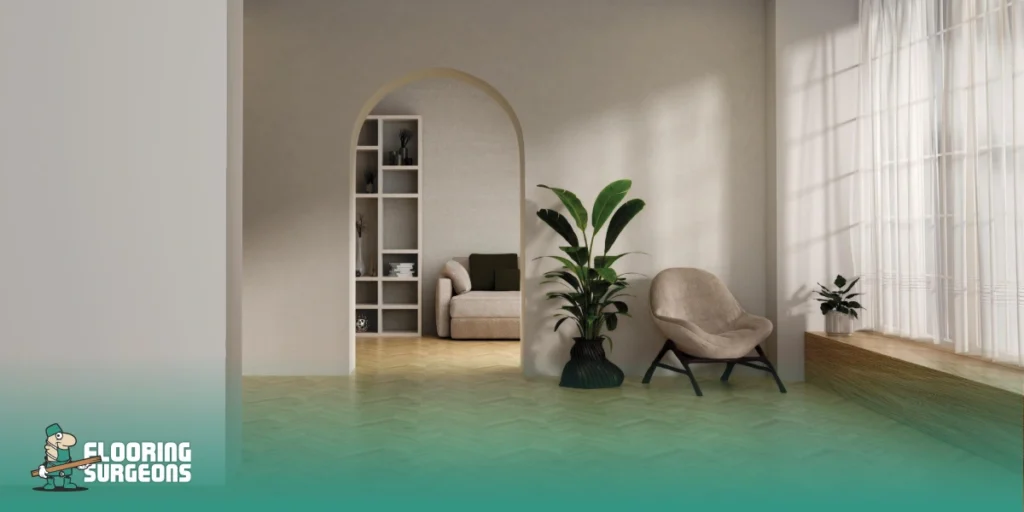
Room-By-Room Flooring for Awkwardly Shaped Rooms
Different room layouts will benefit from slightly different flooring designs. However, the overall style will usually be dictated by a single goal: creating a seamless, serene space.
L-shaped living rooms
Wide-plank flooring can often benefit L-shaped rooms, helping avoid splitting the space. Lighter finishes will also avoid accentuating the corners.
Long narrow hallways
Hallways look best with a simple flooring that has limited contrast. The same principles for smaller rooms often work quite effectively in these layouts. Many of the same ideas used in 10 Tips to Make a Small Room Look Bigger Through Your Flooring can also help awkward spaces feel more open and less visually crowded.
Open-plan kitchen-diners
A continuous flooring style often suits open-plan layouts. Using one flooring throughout your main zones will help avoid the stop-start effect.
Loft rooms and bay-window spaces
Rooms with slopes, alcoves or bays tend to look better with a subtler floor. Neutral tones and a simple finish will help to balance these quirks.
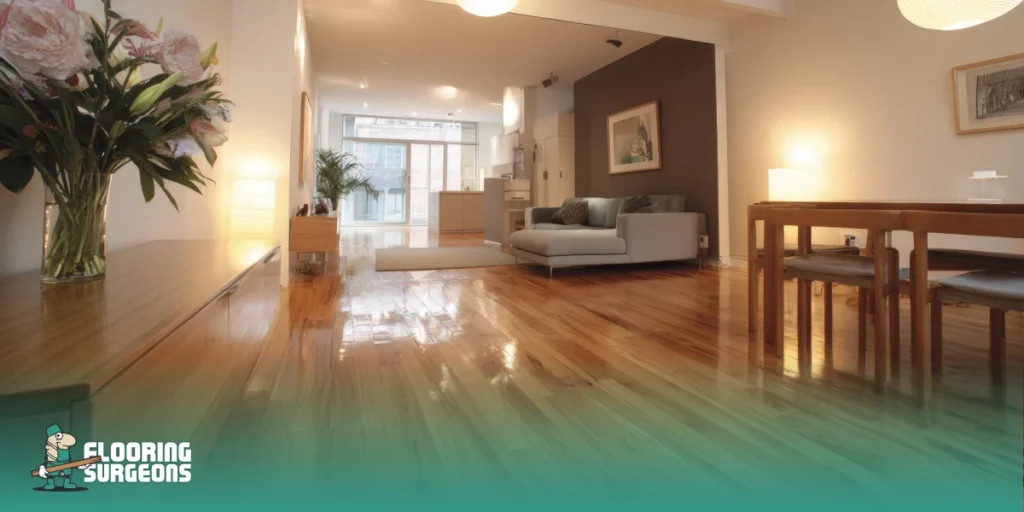
Our Quick Rule of Thumb for Choosing the Right Floor
If your aim is to quickly improve flow, stick with simple, consistent flooring options. Larger boards, lighter shades and minimal distractions usually perform best with odd shapes.
The best flooring for open spaces prioritises a clean look with minimal visual clutter, helping you move freely. In living spaces, flooring with a warmer, more natural appearance can help soften odd angles. If you’re exploring suitable styles, you can browse a range of options at Flooring Surgeons to find flooring that enhances both flow and comfort. Typically, your best bet is the least showy option that leaves the room feeling more relaxing, open and free to move in.

Ana.Soltanpoor
I’m an SEO Specialist with a strong background in content management and organic search. I build data-driven content strategies by aligning user intent, search behavior, and SEO best practices to ensure every piece of content delivers clarity, relevance, and measurable organic performance.