

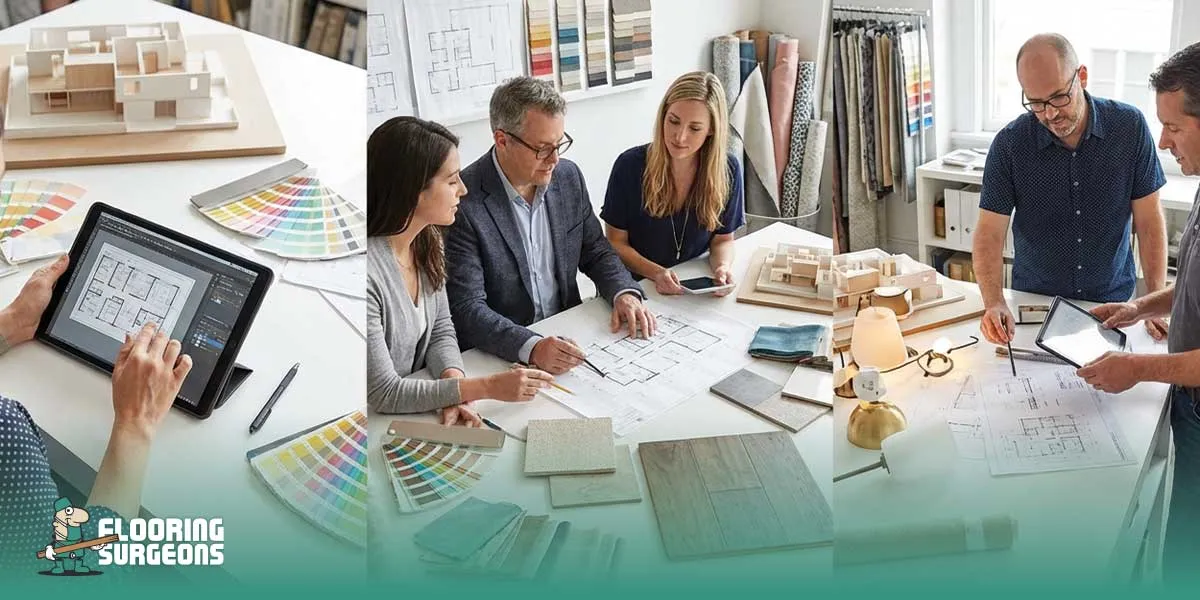
Interior design requires a combination of creative, technical, and interpersonal skills. Designers must understand space planning, colour theory, materials, flooring systems, lighting, and project management while also communicating effectively with clients and contractors to create spaces that are both functional and visually appealing.
Table of contents
Core Skills Required in Interior Design
- Creative thinking and visual design ability
- Spatial awareness and space planning
- Knowledge of materials and finishes
- Understanding flooring systems and surface performance
- Technical drawing and CAD proficiency
- Communication and client management
- Budgeting and project coordination
- Problem-solving skills
Creative Skills in Interior Design
Creative skills are the foundation of successful interior design. Beyond aesthetics, designers must understand how colours, materials, and surfaces interact to shape perception, mood, and spatial experience. These skills directly influence how cohesive and balanced a finished space feels.
Colour Theory and Material Harmony
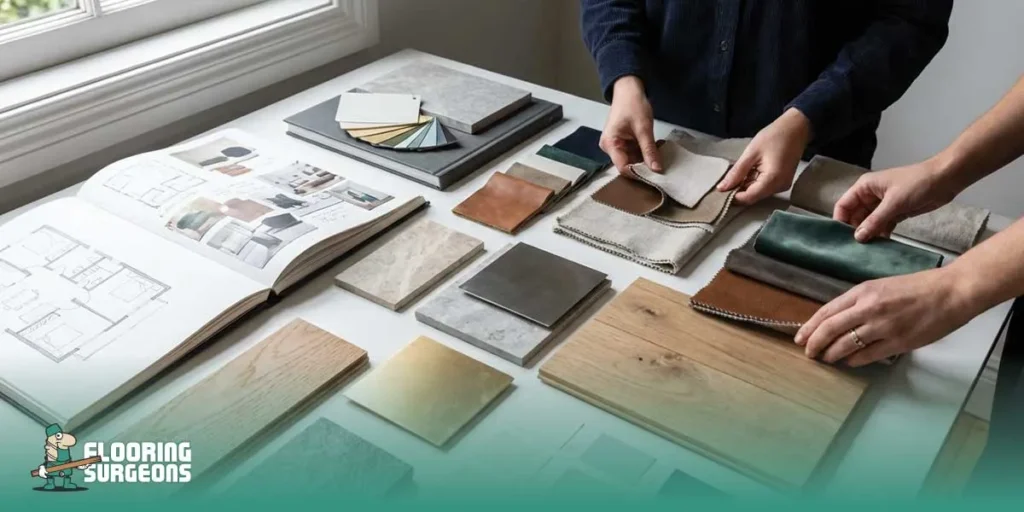
Interior designers must understand how colours influence mood and spatial perception. Knowledge of colour theory allows designers to create contrast, balance, and visual flow within a room.
Equally important is material harmony — the ability to combine wood, stone, tile, vinyl, carpet, metal, and fabric finishes in a way that feels intentional rather than overwhelming. Successful designers know how undertones, reflectivity, and natural versus artificial textures interact within a space.
Texture and Surface Layering
Texture adds depth and dimension to interior spaces. Designers layer soft and hard surfaces to create visual interest and tactile balance. For example, pairing matte flooring with glossy cabinetry or combining textured wall finishes with smooth surfaces creates contrast without clutter.
Understanding how different surfaces respond to light, wear, and daily use is critical. Texture is not only decorative, it also affects durability, maintenance, acoustics, and comfort.
Flooring as a Visual Foundation
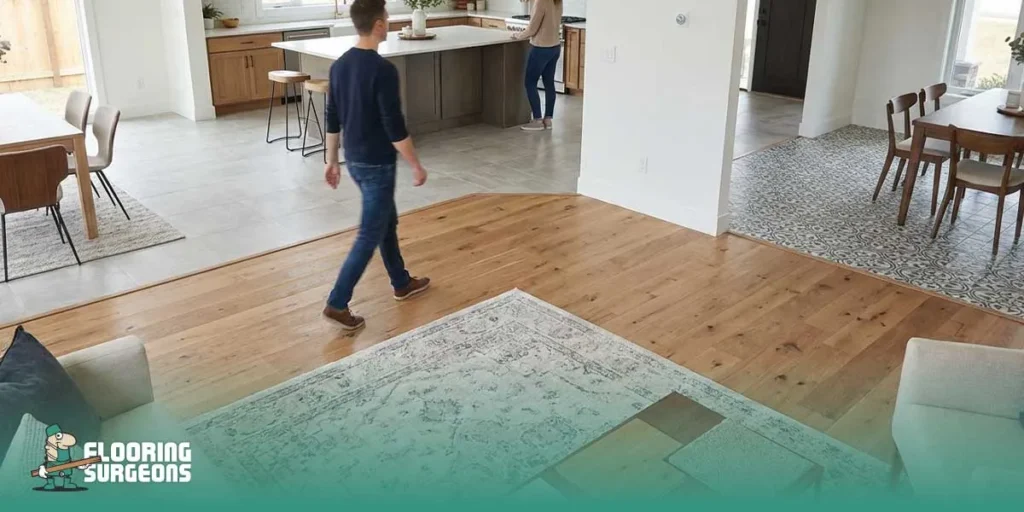
Flooring is the visual foundation of any interior space. It anchors furniture, defines zones, and establishes the overall tone of the design. Because the floor covers the largest continuous surface in most rooms, it has a powerful impact on scale, warmth, and cohesion. Flooring also influences how furniture sits in a room, how zones are defined, and how circulation paths naturally form, especially in open-plan layouts. You can see practical examples in our guide on flooring and furniture placement.
A skilled interior designer understands how the flooring choice influences the entire composition of a room. The colour, pattern, plank size, finish, and material type can either elevate a design or undermine it. For example, wide-plank hardwood can make a space feel expansive, while patterned tile can create focal points and movement. Beyond style, flooring changes how we read a room visually—certain colours, finishes, and plank directions can even make ceilings feel higher or lower. Here’s a deeper look at how flooring influences ceiling height.
More importantly, designers must balance aesthetics with performance. Choosing the right flooring system requires understanding foot traffic, moisture exposure, subfloor conditions, and long-term durability — all of which connect creative vision with practical execution.
Technical Skills Every Interior Designer Must Have
While creativity shapes the vision of a space, technical skills ensure that vision can be built safely, efficiently, and sustainably. Interior designers must understand structural constraints, measurements, compliance standards, and installation requirements to avoid costly mistakes and performance issues.
Space Planning and Measurements
Accurate measurements are the backbone of professional interior design. Designers must calculate room dimensions, ceiling heights, circulation paths, and furniture placement to ensure proper flow and functionality.
Precise space planning also affects flooring layouts. Incorrect measurements can lead to material waste, uneven transitions, awkward cuts, and installation delays. Understanding scale, proportion, and layout alignment is especially critical when working with patterned tile, plank flooring, or large-format materials.
Knowledge of Building Codes
Interior designers must be familiar with local building codes, safety regulations, and accessibility standards. This includes fire resistance requirements, slip resistance ratings, acoustic standards, and commercial compliance rules. For example, certain commercial environments require flooring materials that meet specific durability, fire, or anti-slip classifications. Ignoring these technical standards can result in failed inspections or expensive redesigns.
Understanding Flooring Installation Basics
A strong interior designer understands not just how flooring looks, but how it performs and is installed. This technical awareness prevents structural problems and ensures long-term durability.
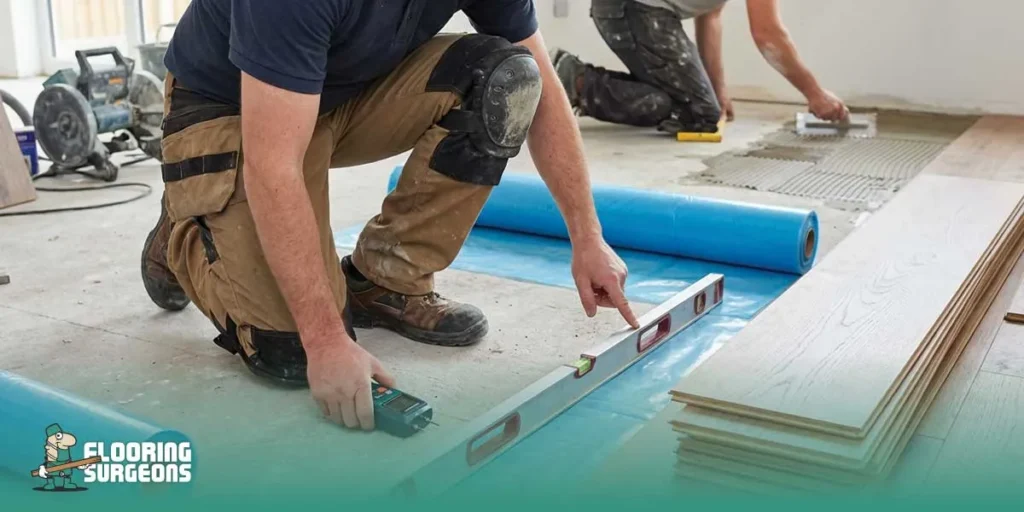
Key areas of knowledge include:
- Subfloor preparation – The subfloor must be clean, level, and structurally sound before installation. Uneven or improperly prepared subfloors can cause cracking, lifting, or premature wear.
- Moisture control – Moisture testing and vapour barriers are critical, particularly for hardwood, laminate, and luxury vinyl. Excess moisture can lead to warping, mould growth, and adhesive failure. In many modern interiors, designers choose more dimensionally stable options like engineered wood flooring to reduce movement caused by humidity changes while maintaining the natural look of real timber.
- Load resistance – Designers must consider how much weight the flooring will tolerate, especially in commercial spaces or areas with heavy furniture and equipment.
- Commercial vs residential flooring requirements – Commercial environments demand higher durability, slip resistance, and maintenance performance compared to residential settings.
Understanding these technical details allows interior designers to collaborate effectively with professional flooring specialists. Partnering with experienced flooring contractors like Flooring Surgeons ensures that creative concepts are supported by proper installation methods, performance testing, and long-term reliability. When design expertise meets flooring execution knowledge, projects are not only beautiful — they are structurally sound and built to last.
Why Flooring Knowledge Is a Critical Interior Design Skill
Flooring is not just a finishing touch; it is one of the most technically demanding and performance-driven elements of any interior project. Because flooring covers the largest surface area in most spaces, it directly affects durability, comfort, acoustics, maintenance, and long-term value.
Interior designers who understand flooring systems can make informed decisions about material compatibility, structural limitations, environmental exposure, and lifecycle performance. Without this knowledge, even the most visually stunning designs can fail prematurely due to wear, moisture issues, or improper specification. A designer with strong flooring expertise knows how to balance aesthetics with performance — ensuring that the selected material not only looks beautiful on installation day, but continues to perform for years.
| Skill | Why It Matters in Flooring | Impact on Interior Design |
| Material Selection | Prevents premature wear | Enhances longevity |
| Moisture Awareness | Avoids floor damage | Maintains aesthetics |
| Acoustic Planning | Controls noise | Improves comfort |
| Traffic Flow Analysis | Determines durability | Supports function |
By understanding these elements, designers can collaborate more effectively with flooring professionals. Working alongside specialists like Flooring Surgeons ensures proper subfloor evaluation, moisture testing, material compatibility, and expert installation — protecting both the design vision and the client’s investment.
Soft Skills Interior Designers Need
In addition to technical and creative expertise, interior designers must develop strong interpersonal and organisational abilities to manage complex projects successfully.
- Client communication
- Negotiation
- Time management
- Adaptability
- Collaboration with flooring contractors
These soft skills are especially important when coordinating with installers, suppliers, and specialists. Clear communication between designers and flooring professionals helps prevent delays, budget overruns, and technical mistakes, ultimately leading to smoother project execution and better results.
How Flooring Expertise Elevates Interior Design Projects
Exceptional interior design goes beyond selecting beautiful finishes; it requires ensuring that every material performs as intended in real-world conditions. Flooring expertise plays a decisive role in turning a design concept into a durable, high-performing space. Partnering with experienced flooring specialists like Flooring Surgeons ensures that every creative vision is reinforced by technically sound, performance-driven flooring solutions.
Professional Floor Consultation
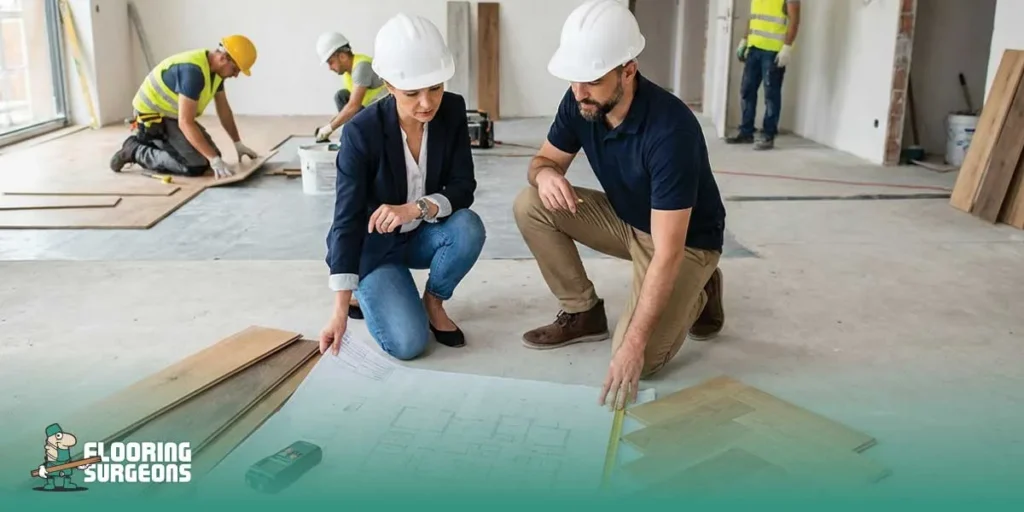
Professional floor consultation helps designers make informed decisions before installation begins. This includes evaluating subfloor conditions, moisture levels, traffic expectations, and environmental exposure. Early consultation reduces costly revisions and ensures the selected flooring aligns with both design intent and technical requirements.
Custom Flooring Solutions
Not every space benefits from a standard flooring approach. Custom flooring solutions allow designers to tailor materials, finishes, patterns, and installation methods to match the functional and aesthetic goals of the project. Whether working on residential renovations or commercial environments, customised specifications ensure the flooring enhances layout flow, zoning, and overall visual cohesion.
Long-Term Performance
A successful interior design project should look just as strong years later as it did on completion day. Flooring expertise supports long-term performance by addressing durability ratings, load resistance, wear layers, moisture barriers, and maintenance planning. When flooring is specified correctly, it reduces callbacks, prevents premature failure, and protects the client’s investment.
Collaboration Between Designers and Flooring Specialists
Collaboration between interior designers and flooring specialists strengthens project outcomes. Designers bring creative direction and spatial vision, while flooring professionals contribute technical execution, installation accuracy, and performance knowledge. This partnership ensures that flooring systems are properly prepared, installed, and finished to meet both aesthetic and structural standards.
Partnering with flooring experts like Flooring Surgeons ensures that every design vision is supported by technically sound flooring solutions.
Common Flooring Mistakes Interior Designers Make
Even experienced designers can overlook technical flooring factors that impact long-term results. Avoiding these common mistakes can significantly improve project durability and client satisfaction.
- Ignoring moisture levels – Failing to test for moisture or install proper vapour barriers can lead to warping, mould growth, and adhesive failure.
- Choosing aesthetics over durability – Selecting materials based solely on appearance may result in premature wear in high-traffic areas. This is also why designers often treat trends cautiously, see why interior designers rarely follow flooring trends, and why.
- Overlooking installation requirements – Certain flooring materials require specific subfloor conditions, acclimation periods, or expansion gaps. Ignoring these details can cause structural problems.
- Not consulting flooring professionals – Skipping expert consultation increases the risk of specification errors, budget overruns, and performance failures.
By understanding these pitfalls and integrating flooring expertise into the design process, interior designers can deliver projects that are not only visually compelling but also technically sound and built to last.

Haniye Ayanmanesh
As an expert writer for Flooring Surgeons, I combine technical SEO knowledge with a practical understanding of flooring, producing content that helps users make confident decisions while supporting long-term organic growth.