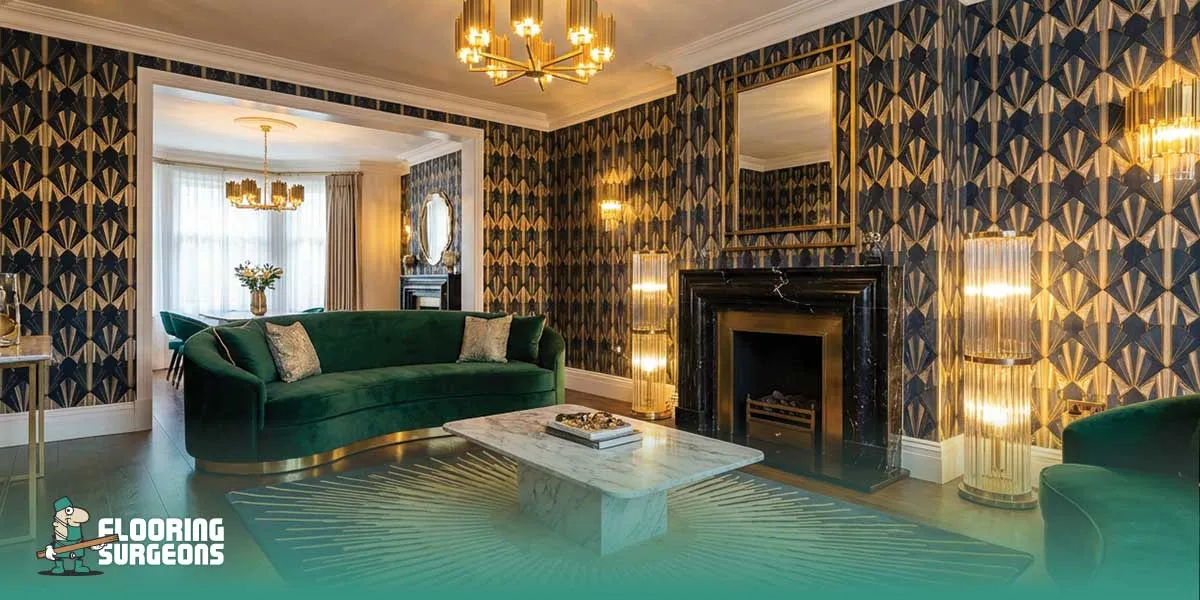
Art Deco is indeed making a comeback, and its revival is becoming increasingly visible in modern interior design. Nearly a century after its rise in the 1920s, the Art Deco design revival continues to influence contemporary spaces through bold geometry, dramatic contrasts, and luxurious materials. What was once a defining aesthetic of early modern architecture is now reappearing in today’s art deco interior design trend, where designers seek a stronger visual identity after years of minimalist interiors.
One of the main reasons Art Deco is making a comeback is a shift in luxury design preferences. Homeowners and designers are moving away from overly simplified spaces and rediscovering styles that offer character, structure, and visual rhythm. This has led to a renewed interest in modern Art Deco interiors, where symmetry, bold patterns, and decorative materials create spaces that feel distinctive rather than neutral. As part of the broader luxury flooring trends shaping contemporary homes, design elements once associated with historic Art Deco architecture are being reinterpreted for modern living.
At the centre of this revival is something that often defines a room’s entire visual composition: the floor. Classic Art Deco interiors were built around striking geometric floor patterns, from intricate parquet layouts to high-contrast marble tile designs. Today, these patterns are returning amid the growing demand for Art Deco flooring and statement surfaces that anchor interior design. Today, in many modern homes, parquet flooring and other geometric floor patterns are no longer just decorative details but a central part of many Art Deco interiors; they are becoming the foundation of the entire design narrative.
Table of contents
What Is Art Deco Design?
Art Deco is a decorative design style that emerged in the early 20th century and became one of the most influential movements in architecture and interior design. Known for its strong geometry, symmetry, and luxurious materials, the style reflects the optimism and technological progress of the 1920s and 1930s. Today, the Art Deco interior design trend is experiencing a renewed wave of popularity as designers seek to bring character, structure, and visual richness back into modern spaces.
Unlike minimalist design styles that focus on simplicity and restraint, Art Deco celebrates bold visual expression. It combines geometric patterns, high-contrast materials, and decorative surfaces to create interiors that feel structured yet luxurious. From architectural details to furniture and decorative elements, the style emphasises balance and precision.
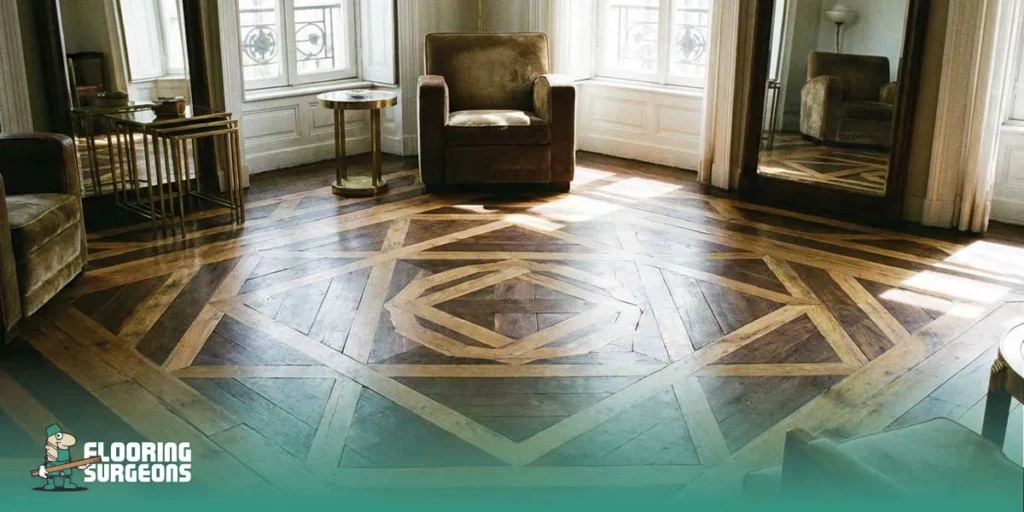
Key Characteristics of Art Deco Design
Art Deco design is defined by a set of distinctive visual characteristics that make the style immediately recognisable. These elements combine structure, luxury, and decorative precision to create interiors that feel both dramatic and balanced. The most recognisable features of Art Deco include:
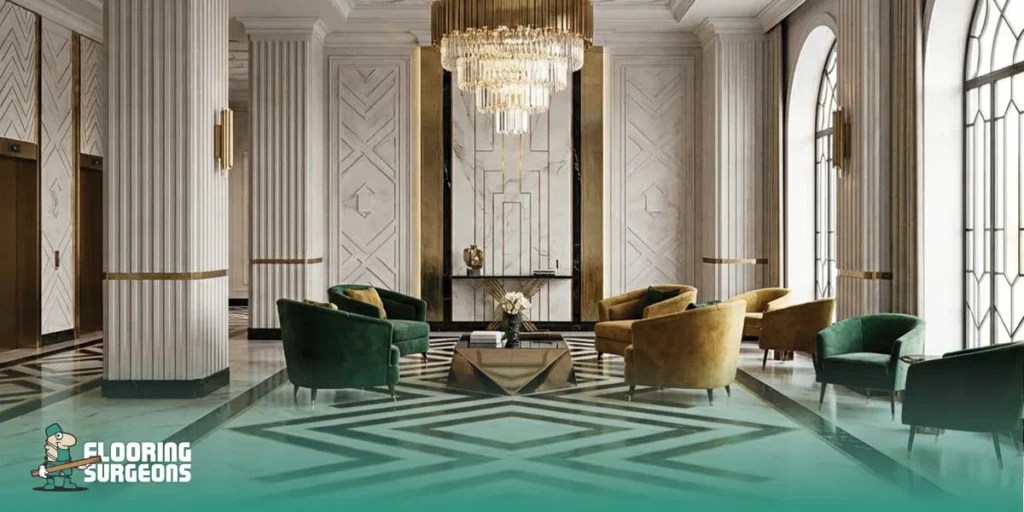
- Geometric patterns: Bold shapes such as chevrons and zigzags define the style, which is why many designers compare chevron vs herringbone flooring when choosing a geometric layout. These patterns frequently appear in Art Deco flooring designs, where parquet layouts or tile compositions create striking geometric surfaces.
- Symmetry: Art Deco interiors rely heavily on symmetry and visual balance. Rooms are often organised around central focal points, with repeating patterns on floors, walls, and ceilings reinforcing the sense of order.
- Luxurious materials: Materials such as marble, polished wood, and terrazzo flooring composition helped create the reflective surfaces typical of Art Deco interiors. Many of these materials are now returning as part of modern luxury flooring trends.
- Bold contrasts: High-contrast colour combinations, especially black and white, deep greens, and metallic accents, are commonly used to emphasise the graphic nature of Art Deco design.
- Metallic accents: Gold, chrome, and brass details add reflective surfaces that enhance the style’s glamorous identity. Together, these elements create interiors where surfaces, patterns, and materials work together to form a cohesive design. In many contemporary spaces inspired by modern Art Deco interiors, flooring patterns once again act as the visual anchor of the entire room.
Key Reasons Behind the Art Deco Revival
Desire for luxury aesthetics
After a decade dominated by minimalism and neutral interiors, many homeowners are now gravitating toward spaces that feel more luxurious and visually rich. Art Deco offers a natural solution because it blends decorative elegance with architectural structure. Materials such as marble, polished wood, brass, and terrazzo instantly elevate a space, which is why they are also becoming central to modern Art Deco flooring designs.
Geometric design trends
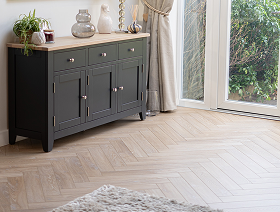
One of the defining characteristics of Art Deco is its use of bold geometry. Today, geometric motifs are appearing across interior design, from wall panelling to furniture silhouettes, but they are especially impactful on surfaces like floors. Geometric flooring patterns, including chevron, herringbone, and parquet layouts, help create movement and visual rhythm throughout a space while reinforcing the structured elegance associated with Art Deco style.
Nostalgia design cycles
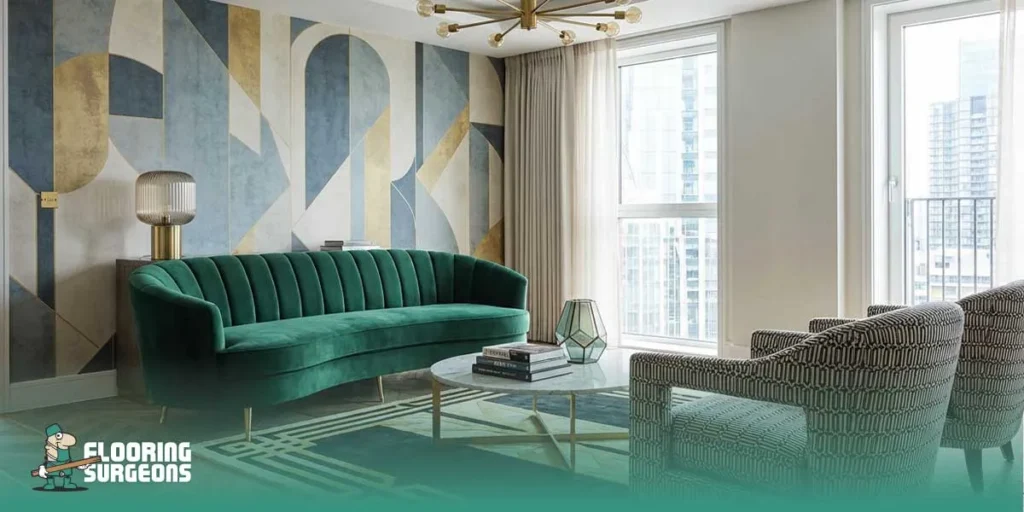
Interior design trends often follow cyclical patterns, with styles from previous decades being reinterpreted for contemporary living. The Art Deco aesthetic of the 1920s and 1930s has resurfaced in this cycle, but in a more modern form. Designers are combining traditional Art Deco patterns with contemporary materials and construction techniques, creating interiors that feel both historic and current.
Social media influence
Platforms like Instagram, Pinterest, and design-focused blogs have played a major role in reviving visually distinctive interior styles. Bold patterns and high-contrast materials photograph extremely well, making modern Art Deco interiors particularly popular online. Pattern-driven spaces, especially those with decorative floors, often go viral, inspiring homeowners to replicate the aesthetic.
Statement interiors replacing minimalist spaces
Another major reason behind the Art Deco comeback is the growing desire for “statement interiors.” Instead of neutral rooms that blend into the background, homeowners are increasingly looking for design elements that immediately capture attention. Flooring has become one of the most effective ways to achieve this. A carefully designed Art Deco geometric floor pattern can instantly define the character of an entire room, making it a powerful design centrepiece rather than just a functional surface.
How Flooring Is Driving the Art Deco Revival
Art Deco interiors have always been defined by a strong visual structure, and one of the most important elements shaping that structure is the floor. Unlike many contemporary interiors, in which flooring serves as a neutral background, Art Deco design treats the floor as a central design feature that organises the entire space. This is one of the key reasons the Art Deco design revival is so closely tied to the growing interest in pattern-driven flooring.
In classic Art Deco interiors from the 1920s and 1930s, floors were rarely plain. Designers used carefully arranged materials and geometric layouts to create surfaces that guided movement through a room while reinforcing symmetry and visual balance. Patterns were not simply decorative details; they helped define the architectural rhythm of the space. Because of this, materials such as marble, parquet wood, and terrazzo became essential elements in many iconic Art Deco interiors.
Today, the return of these design principles is visible in modern homes that embrace Art Deco flooring as a statement feature. Instead of relying on minimalist surfaces, many designers are once again exploring geometric flooring patterns that add depth, contrast, and character to a room. Wood floors arranged in structured layouts, decorative tile compositions, and polished stone surfaces are becoming central to luxury flooring trends, especially in interiors inspired by modern Art Deco design.
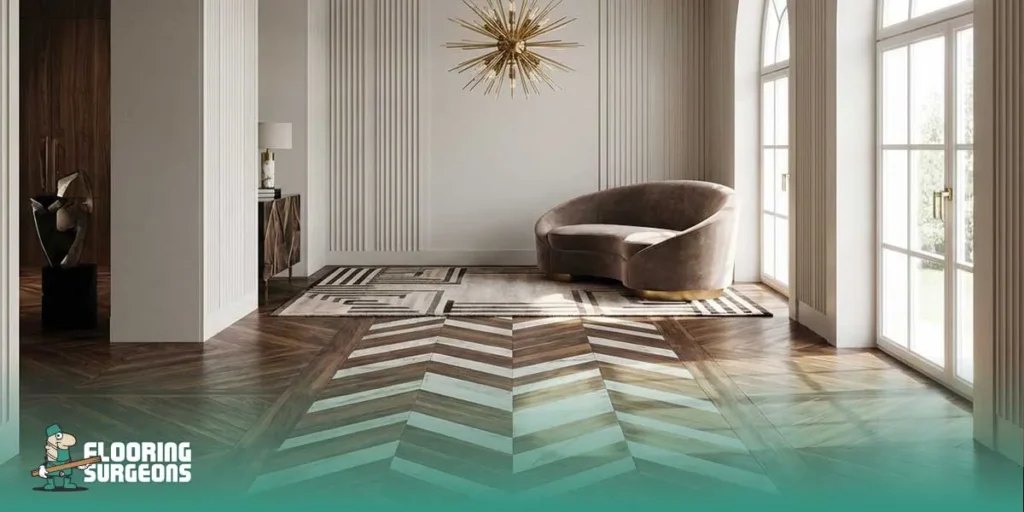
In many cases, the floor serves as the starting point for the entire design concept. Once a geometric pattern or material palette is established on the floor, other design elements such as lighting, furniture, and wall finishes naturally follow its visual rhythm. This is why flooring is increasingly seen not just as a functional surface but as the foundation that defines the identity of an Art Deco-inspired interior.
Geometric Flooring Patterns
One of the most recognisable features of Art Deco interiors is the use of bold geometry. Designers of the early twentieth century used repeating shapes and structured layouts to create visual rhythm across surfaces. While these patterns appeared in architecture and furniture, they were especially powerful when applied to floors.
Geometric layouts allow flooring to guide the eye through a room while reinforcing symmetry, which is a core principle of Art Deco design. Today, many of the same patterns used nearly a century ago are returning in contemporary homes as part of the broader Art Deco flooring revival. Some of the most popular geometric flooring patterns include:
- Chevron: Chevron wood floors create a strong visual direction and are often found in chevron wood flooring ranges designed for statement interiors.
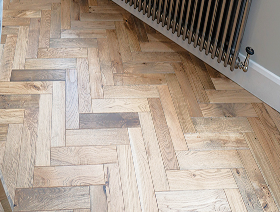
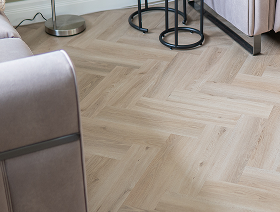
- Herringbone: The zigzag pattern of herringbone flooring creates visual rhythm, and many homeowners learn how to lay herringbone flooring before installing it.
- Parquet: Parquet flooring is one of the most iconic surfaces associated with Art Deco interiors. Small wood blocks are arranged in repeating geometric compositions, creating intricate patterns that instantly enrich a space’s visual richness.
Because parquet uses small wood blocks arranged in patterns, many designers explore parquet floor installation when planning geometric interiors.
Luxury Materials Used in Art Deco Flooring
Modern interiors often replace traditional solid wood with engineered wood flooring, offering a similar aesthetic with improved stability. Materials played a major role in defining the elegance and visual impact of Art Deco interiors. Designers of the period favoured surfaces that reflected light, emphasised contrast, and created a sense of craftsmanship. Many of these materials remain highly relevant today, although modern manufacturing methods now offer more practical and durable alternatives. The table below highlights some of the most recognisable Art Deco flooring materials and how they are interpreted in modern interiors.
| Material | Art Deco Look | Modern Alternative |
| Marble | Luxury contrast floors with dramatic veining and bold black-and-white layouts | Marble-look porcelain tiles offering similar elegance with easier maintenance |
| Parquet wood | Classic 1920s geometric wood flooring patterns used in grand interiors | Engineered wood flooring is designed for durability and stability |
| Terrazzo | Decorative floors made from stone chips embedded in polished cement | Modern terrazzo tiles and resin-based terrazzo surfaces |
These materials continue to shape contemporary luxury flooring trends, especially in homes inspired by modern Art Deco interiors. By combining traditional patterns with updated materials, designers can recreate the elegance of historic Art Deco spaces while meeting the practical needs of modern living.
Top Art Deco Flooring Ideas for Modern Homes
Art Deco interiors are known for bold visual structure, and flooring often becomes the design element that defines the entire space. In modern homes inspired by Art Deco design, floors are no longer just neutral surfaces. Instead, they introduce geometry, contrast, and luxury materials that shape the room’s identity. Some of the most effective Art Deco flooring ideas combine classic patterns with modern materials, allowing homeowners to recreate the elegance of the 1920s while maintaining contemporary practicality.
- Parquet geometric floors: Parquet geometric floors remain among the most recognisable Art Deco surfaces and are widely available in herringbone flooring collections.
- Black and white marble tiles: High-contrast marble floors were widely used in historic Art Deco buildings. The dramatic contrast between dark and light stone creates a bold visual foundation that defines the space.
- Chevron wood flooring: Chevron patterns create a strong directional layout, which is why homeowners often research chevron flooring installation before choosing this pattern.
- Terrazzo statement floors: Terrazzo surfaces combine stone chips with polished finishes to create decorative floors that feel both artistic and durable. Modern terrazzo designs allow for customised colour palettes while preserving the classic Art Deco aesthetic.
- Metallic inlay flooring: Metal accents such as brass or chrome can be integrated into flooring designs to create decorative borders or geometric inlays. These reflective details reinforce the luxurious character of modern Art Deco interiors.
Art Deco Flooring vs Modern Minimalist Flooring
While minimalist interiors have dominated design trends for years, the return of Art Deco interiors reflects a growing preference for spaces that feel expressive, structured, and visually distinctive. Flooring plays a key role in this contrast between the two styles.
| Feature | Art Deco | Minimalist |
| Pattern | Geometric patterns such as chevron, parquet, and zigzags | Simple, uniform surfaces |
| Materials | Marble, wood, terrazzo, metallic details | Concrete, vinyl, basic wood |
| Color palette | Bold contrast, such as black and white or rich tones | Neutral palettes like beige, grey, and white |
How to Add Art Deco Flooring to Your Home
Creating an Art Deco-inspired interior often begins with the floor. Because this design style relies heavily on geometry, contrast, and material richness, flooring becomes the foundation that shapes the entire space. Patterns are the visual signature of Art Deco interiors. Instead of plain flooring, the goal is to introduce structured layouts that create movement and symmetry across the space. Popular Art Deco flooring patterns include:
- Chevron layouts for dynamic movement
- Herringbone patterns for subtle texture
- Parquet geometric compositions for classic Art Deco character
These patterns work particularly well in entryways, living rooms, and open floor plans where the floor can visually anchor the entire interior.
Select Luxury Materials
Material choice plays a major role in achieving the authentic Art Deco look. The original interiors of the 1920s often featured materials that reflected light and emphasised contrast. Common materials used in Art Deco flooring designs include:
- Marble for bold contrast and dramatic visual impact
- Parquet wood for intricate geometric layouts
- Terrazzo for decorative yet durable surfaces
Today, modern alternatives such as engineered wood or porcelain marble-look tiles allow homeowners to recreate the same aesthetic while improving durability and maintenance.
Hire Professional Flooring Installers
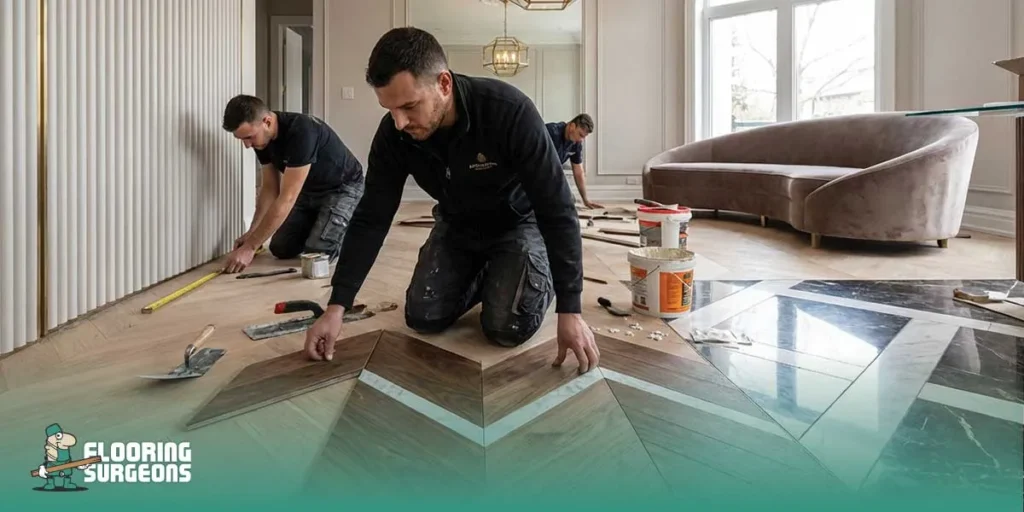
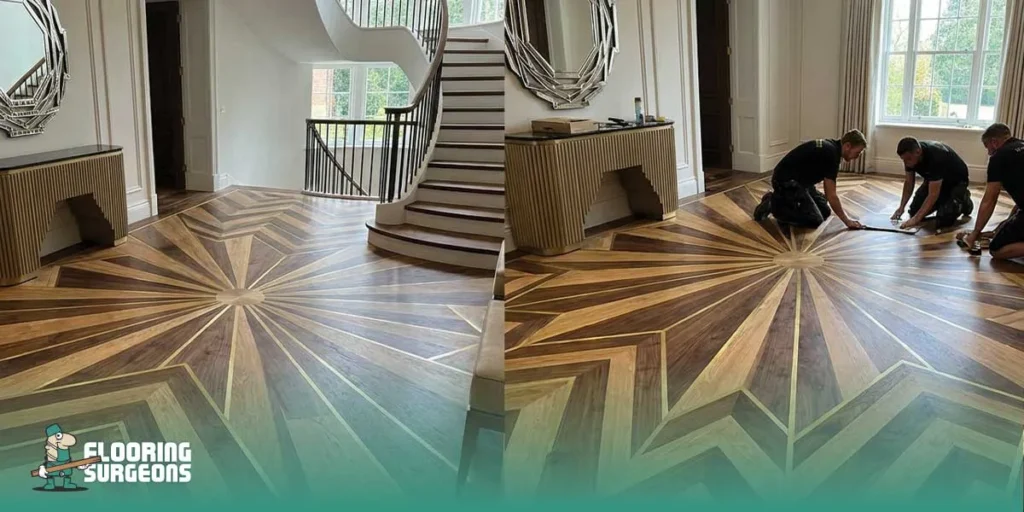
Geometric flooring requires precision. Patterns such as chevron or parquet rely on exact alignment to maintain symmetry and visual balance. Even small installation errors can disrupt the entire pattern. Professional installation ensures that Art Deco flooring patterns align perfectly and maintain their architectural rhythm throughout the space.
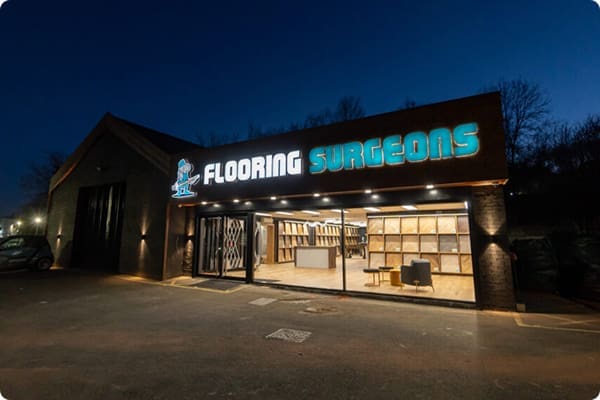
Experienced flooring specialists, such as the team at Flooring Surgeons, understand how to plan layouts, manage material transitions, and install complex patterns with precision. Working with skilled installers helps ensure that the final floor not only looks elegant but also performs well for years to come.
Final Thoughts
The return of Art Deco reflects a broader shift in interior design toward spaces that feel expressive, structured, and visually distinctive. From bold geometric patterns to luxurious materials, the style offers a powerful alternative to the neutral minimalism that has dominated recent years. Flooring plays a particularly important role in this revival. Whether through parquet layouts, marble tile compositions, or terrazzo surfaces, Art Deco-inspired floors help define a room’s overall atmosphere.
For homeowners looking to introduce this timeless design style, starting with flooring can be one of the most effective ways to do so. A carefully designed geometric floor pattern can instantly elevate an interior and create the architectural foundation that makes modern Art Deco interiors feel cohesive and memorable.
Geometric flooring patterns require precise installation. Even a small alignment error can disrupt the symmetry that defines Art Deco design. Professional installers ensure that patterns such as parquet, chevron, or herringbone align perfectly with the room’s layout. The team at Flooring Surgeons specialises in installing complex patterned floors, helping homeowners achieve clean lines, accurate symmetry, and long-lasting results.

Haniye Ayanmanesh
As an expert writer for Flooring Surgeons, I combine technical SEO knowledge with a practical understanding of flooring, producing content that helps users make confident decisions while supporting long-term organic growth.