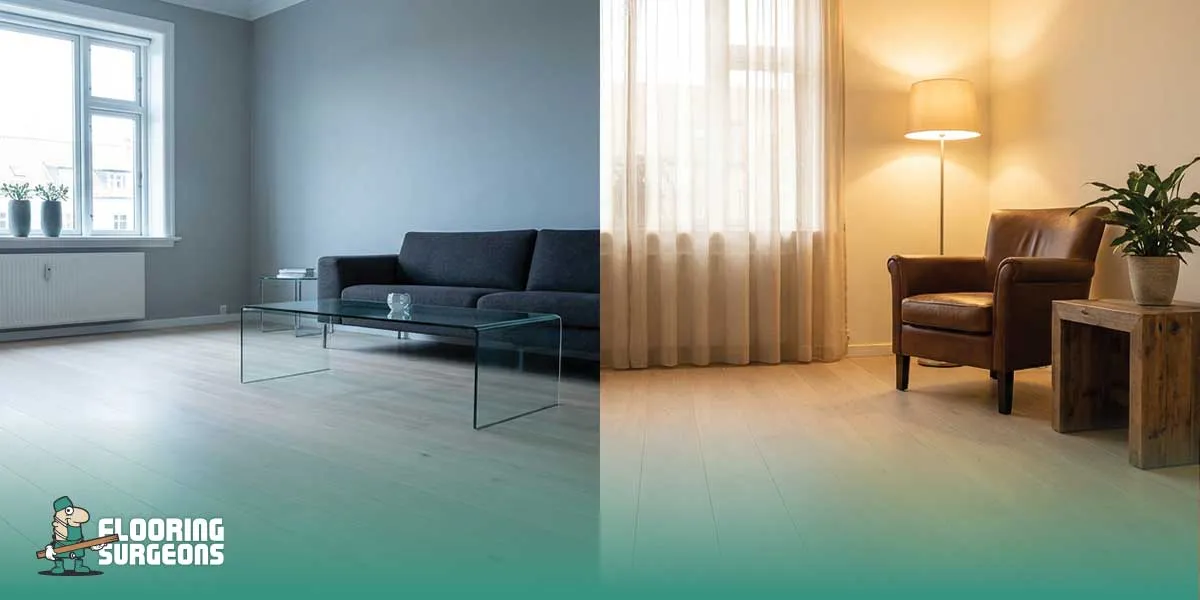
Neutral floors don’t always create neutral spaces because neutral isn’t a fixed colour; it’s a relationship. A grey, beige, oak, or light wood floor might be technically neutral, but the moment it interacts with lighting, wall colour, undertones, textures, and furniture, it stops being neutral and starts influencing the entire mood of the room. That’s why some spaces with neutral flooring feel calm and balanced while others feel cold, flat, or unexpectedly warm.
The real issue usually isn’t the floor itself. It’s the undertone (warm vs cool), the lighting direction, and the contrast level within the space. A cool grey floor in a north-facing room can amplify blue undertones, making a space feel sterile. A beige floor paired with low-contrast walls can make a room feel washed out. Even natural wood floors can shift dramatically depending on surrounding finishes.
So if you’ve ever wondered why your “neutral” floor doesn’t feel neutral at all, you’re not imagining it. Neutral flooring is one of the most powerful visual anchors in a room. It affects spatial perception, emotional warmth, and even how large or cohesive a space appears. And once you understand how these factors interact, you can intentionally design around them rather than fight them.
In this article, we’ll break down exactly why neutral floors behave differently in different spaces and how to make them work in your favour without replacing them.
Table of contents
What “Neutral Flooring” Really Means in Interior Design
In interior design, “neutral flooring” doesn’t simply mean beige, grey, white, or natural wood. It means a surface that doesn’t dominate the room’s colour hierarchy. That’s an important difference. A floor can be neutral in colour theory but still feel visually strong in a space. Why? Because neutrality isn’t just about hue. It’s about undertone, contrast level, saturation, and how the floor interacts with everything around it.
For example:
- A cool-toned grey floor carries blue or green undertones that can intensify in certain lighting.
- A warm beige floor may lean yellow or red, subtly warming the entire room.
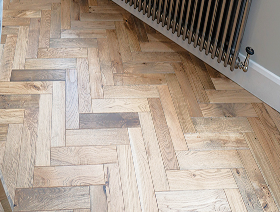
- Natural oak flooring often has golden undertones that shift depending on wall color and daylight exposure.
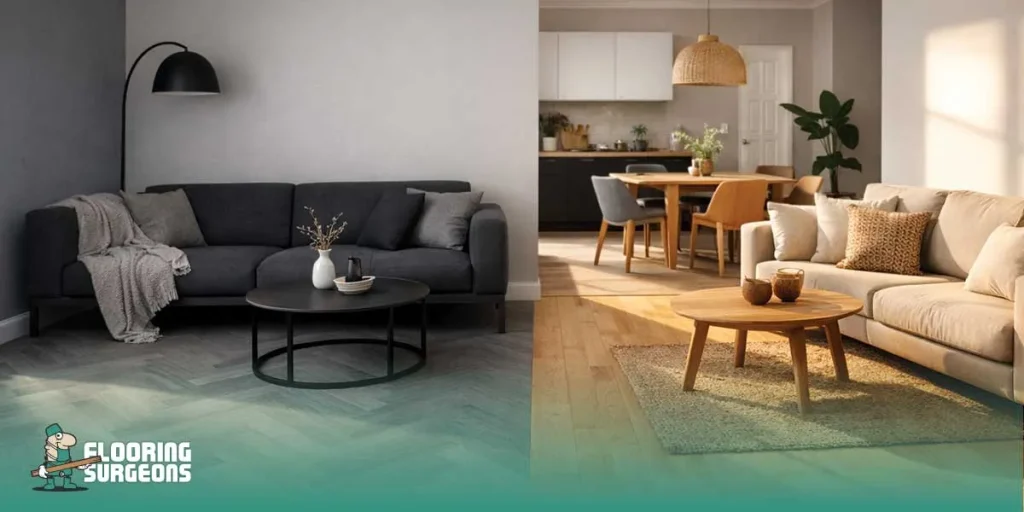
So when designers call something “neutral,” they usually mean it’s versatile, not invisible. Neutral flooring acts as a visual foundation. It sets the room temperature (warm or cool), influences perceived brightness, and affects how other materials interact with it. In fact, floors take up one of the largest continuous surfaces in a space, which gives them enormous influence over mood and balance.
This is why two rooms with the same “neutral” floor can feel completely different. Because neutrality isn’t a colour category, it’s a contextual role. And once you understand that role, you stop asking, “Is this floor neutral?” and start asking, “What is this floor doing to the space?”
Warm vs Cool Undertones: The Hidden Factor Most People Ignore
Most people look at flooring and see grey, beige, or wood. Designers look at undertones. Undertones are the subtle colour influences beneath the main colour. They are what make one grey feel icy, and another feel soft. They are what make one beige feel creamy, and another feel slightly orange. And they are often the real reason a neutral floor can change a room’s mood.
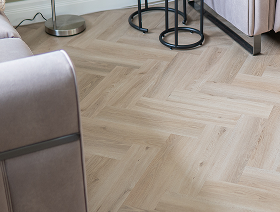
A warm undertone usually contains hints of yellow, red, or gold. These floors tend to create a sense of comfort, softness, and approachability. Natural oak, honey-toned timber, and some beige tiles fall into this category. A cool undertone contains hints of blue, green, or violet. These floors often feel modern, crisp, and minimal. Many contemporary grey floors and some pale washed woods carry cool undertones.
When the undertone of the floor clashes with wall colour, lighting, or furniture, the space starts to feel slightly off. Not dramatically wrong, just subtly uncomfortable. For example:
- A cool grey floor paired with warm cream walls can create a sense of tension.
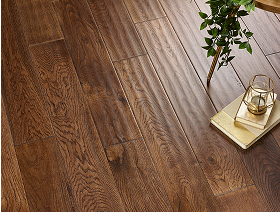
- A warm timber floor under cool white lighting can appear dull or muddy.
- A greige floor can shift in tone from warm to cool depending on surrounding finishes.
Undertones also become stronger under certain lighting conditions. North-facing rooms often amplify cool undertones. Warm artificial lighting can exaggerate yellow tones in timber flooring. This is why the same floor sample can look completely different in two different homes. Neutral floors are not temperature-free. They always lean slightly warm or cool. And that temperature influences everything layered on top of them.
If a space feels colder, flatter, or heavier than expected, the undertone mismatch is often the hidden cause. Understanding undertones lets you work with the floor rather than fight it. And once you identify whether your flooring leans warm or cool, styling decisions become much more intentional. Lighting is the filter through which we see colour.
Natural Light vs Artificial Light
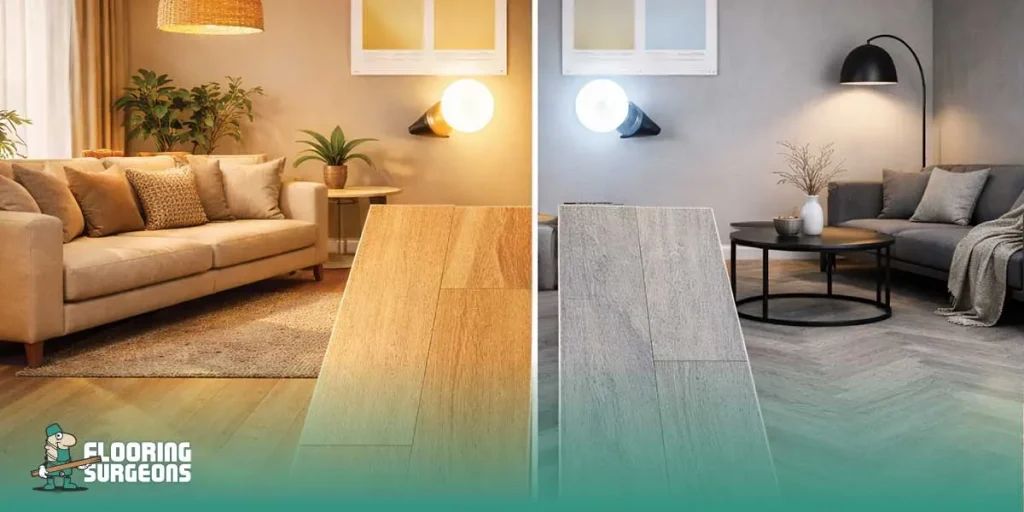
Natural light is dynamic. It changes throughout the day. Morning light tends to be cooler. Late afternoon light becomes warmer and more golden. This means your neutral floor will subtly shift tone from morning to evening.
Artificial lighting is more controlled but also more influential than most people realise. Cool white LED lighting can exaggerate blue undertones in grey flooring. Warm bulbs can intensify yellow tones in beige or timber floors. Even the brightness level affects how much contrast the floor creates in the room. If a space feels sterile at night but acceptable during the day, the artificial lighting temperature is often the reason. The floor is not changing. The light is changing how you perceive it.
North-Facing vs South-Facing Rooms
Room orientation plays a powerful role in how neutral flooring behaves. North-facing rooms receive cooler, indirect light. This often enhances cool undertones and can make grey or pale flooring feel colder than expected.
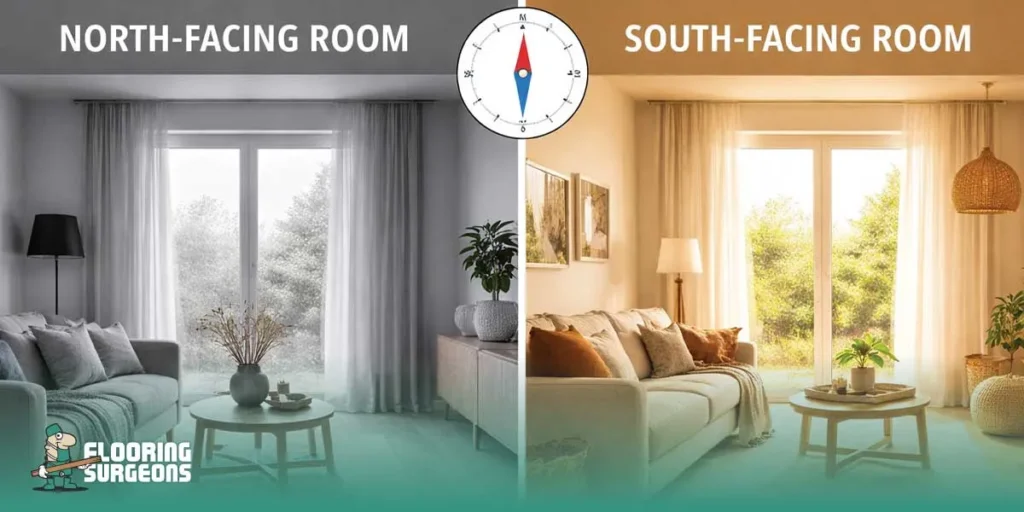
South-facing rooms receive warmer, more direct sunlight. Warm undertones become stronger, making beige or oak floors appear richer and more golden. East-facing rooms have soft morning warmth but cooler afternoons. West-facing rooms often feel warmer later in the day. If your neutral floor feels “off,” check the room orientation before blaming the material itself. Lighting direction can shift the emotional temperature of a space more than the flooring choice alone.
The Psychology of Neutral Floors In Rooms
Colour influences emotion. Even subtle colour does. Neutral floors are often labelled safe or timeless, but psychologically, they can elicit very different responses depending on tone and contrast. Cool-toned neutral floors tend to feel calm and modern. However, when paired with low contrast walls and minimal texture, they can also feel distant or sterile. The space may appear clean, but emotionally flat. Warm-toned neutrals usually feel inviting and grounded. But if everything in the room shares the same tonal range, the space can lack visual interest and feel monotonous.
Flatness often occurs when there is insufficient contrast or texture variation. A room with similar tones across the floor, walls, and furniture reduces visual stimulation. The brain reads it as quiet, but sometimes also as dull. On the other hand, too much contrast between a dark floor and very light walls can create a sense of heaviness or imbalance. Neutral flooring is not emotionally neutral. It subtly guides how relaxed, energised, or detached a space feels. Understanding that emotional layer allows you to design with intention instead of reacting to a vague sense that something feels wrong.
Visual Weight & Spatial Perception: Do Neutral Floors Make a Room Look Bigger?
Many people choose neutral floors to make a room feel larger. Sometimes that works. Sometimes it does not. Visual weight refers to how heavy or light a surface feels in a space. Darker neutral floors carry more visual weight. They ground the room, but can make it feel smaller if the contrast is high. Lighter neutral floors reflect more light and often create a more airy impression. However, size perception is not just about lightness. Contrast plays a major role. If the floor matches the walls in tone, the space may feel continuous and open. If there is a strong contrast between the floor and the walls, the room’s boundaries become more defined, visually shortening the height or width.
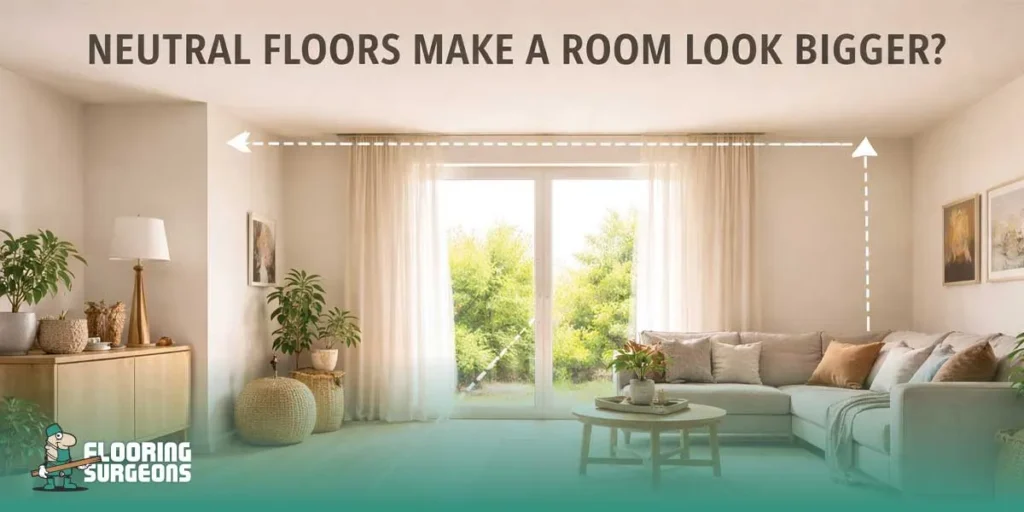
Floor plank direction also influences perception. Horizontal lines can widen a space. Vertical direction can elongate it. Even finishing matters. Matte surfaces absorb light and feel softer. Glossy surfaces reflect light and may increase brightness, but also highlight imperfections. Neutral floors can absolutely help a room feel larger. But only when they work in harmony with wall tone, lighting, and layout. The key is not choosing neutral to make a room bigger. The key is understanding how neutrality interacts with contrast and light. Flooring tone also affects vertical perception, and understanding how flooring influences perceived ceiling height adds another layer to spatial balance.
Grey Floors vs Beige Floors: Which Creates a More Balanced Space
Grey floors dominated interior design for over a decade. They felt modern, minimal, and safe. But design in 2026 is shifting toward warmth, softness, and natural influence. Grey floors typically lean cool. They pair well with crisp whites, black accents, and contemporary styling. However, in low-light conditions or north-facing rooms, they can feel sterile or slightly harsh. Beige and warm wood tones create a softer atmosphere. They align better with the growing preference for warm minimalism, earthy palettes, and organic interiors. These tones tend to feel more inviting and adaptable across seasons. You can explore the latest hardwood floor colour trends to see how warm tones and greige shades are replacing colder greys.
Balance in 2026 is less about modern contrast and more about harmony. That does not mean grey floors are wrong. It means they require more intentional layering to avoid feeling cold. If the goal is timeless warmth, beige and natural oak often strike a better balance. If the goal is sleek modern contrast, grey still performs well. The key is not the trend. It is the temperature of the entire space. Cool-toned greys are especially common in modern LVT flooring collections designed for contemporary interiors.
Texture, Contrast & Layering: Ingredients in Neutral Interiors
Neutral floors rarely fail on their own. They fail when everything around them is equally neutral and equally smooth. Texture is what prevents neutrality from feeling flat. A room with neutral flooring and smooth painted walls can feel unfinished if there is no variation in material. Contrast in texture adds depth without adding colour. Think linen, wool, matte ceramics, brushed metals, natural timber, woven rugs. Layering creates dimension.
Even within a neutral palette, layering different shades and materials keeps the space visually active. Contrast also matters. Not extreme contrast, but controlled variation. A slightly darker rug over a pale floor. Warm timber furniture over a cool-toned base. Soft fabrics against structured surfaces. Neutral interiors succeed when they are layered. Without layering, they feel empty. With layering, they feel curate

Why Minimalist Interiors Often Feel Unfinished with Neutral Floors
Minimalism reduces visual clutter. But when combined with neutral flooring, it can unintentionally remove depth as well. If walls, floors, and furniture all sit within the same tonal range, the eye has nowhere to rest. The space may look clean, but it can lack visual hierarchy. Minimalist interiors need intentional contrast even more than maximalist ones. That contrast can come from:
- Shadow and light variation
- Material texture
- Subtle shifts in undertone
- Sculptural furniture pieces
Without those elements, neutral floors in minimalist spaces can make the room feel incomplete rather than calm. Minimalism works best when it is layered, not stripped.
How to Warm Up Neutral Flooring Without Replacing It
Replacing flooring is expensive and disruptive. Fortunately, you rarely need to. Neutral floors can be adjusted through surrounding design decisions.

- Using Rugs for Contrast
Rugs are the fastest way to change how a neutral floor feels. A warm-toned rug over a cool grey floor instantly softens the space. A textured wool rug adds depth to a flat surface. Patterned rugs introduce movement without overwhelming the palette. Size matters. A rug that is too small can fragment the room. A properly scaled rug visually anchors the furniture and reduces the floor’s dominance.
- Choosing the Right Wall Colour
Wall colour interacts directly with flooring undertones. Cool grey floors often pair better with soft, warm whites than with stark whites. Warm timber floors benefit from muted earthy tones instead of overly yellow paint. The goal is not to match the floor exactly. It is to create temperature harmony. Testing large paint samples next to the floor is essential. Small swatches rarely reveal undertone shifts.
- Mixing Wood Tones
Many people fear mixing wood tones. In reality, variation often creates richness. A cool floor can be balanced with slightly warmer wood furniture. A warm oak floor can feel elevated with deeper walnut accents. The key is undertone alignment. Woods do not need to match, but they should not conflict in temperature. Contrasting wood tones add sophistication and prevent monotony. Many homeowners achieve a balanced neutrality with engineered wood flooring, which offers both stability and subtle warmth.
- Adding Biophilic Elements
Natural elements soften neutral floors more effectively than colour alone. Indoor plants, stone textures, woven baskets, and organic fabrics introduce subtle irregularity. This breaks the flatness that sometimes accompanies neutral surfaces. Biophilic design is particularly effective with cool-toned flooring because greenery naturally counterbalances sterility. Nature introduces warmth without overwhelming simplicity.
Are Grey Floors Going Out of Style? The 2025 Design Shift
Grey floors are not disappearing. They are becoming more selective. Design trends in 2025 lean toward warmth, tactility, and authenticity. Stark cool greys are less dominant than they were five years ago. Greige and warm grey variations are more common. The shift is less about abandoning grey and more about softening it.
Homes now favour layered neutrals over high-contrast monochrome schemes. The emphasis is on comfort rather than sharp minimalism. Grey floors still work, but they require thoughtful styling. Beige and natural wood tones are gaining popularity because they align with biophilic and warm minimalist trends. Style evolves. Balance remains the goal.
Neutral Floors in Open-Plan Homes: Common Styling Mistakes
Open-plan layouts amplify flooring impact because the surface extends across a larger area. Common mistakes include:
- Choosing a very cool tone in a low-light open space
- Failing to define zones with rugs or furniture
- Using identical tones across the kitchen, dining, and living areas
- Ignoring how cabinetry interacts with the floor undertone
In open-plan homes, flooring acts as a visual connector. If the undertone clashes with cabinetry or furniture, the imbalance spreads throughout the entire space. Zoning through rugs, varied textures, and controlled contrast prevents open layouts from feeling flat or echo-like. The larger the floor surface, the more intentional the layering must be.

Final Thoughts: Neutral Floors Aren’t Neutral — They’re a Design Decision
If you are unsure how your neutral flooring will interact with lighting and layout, expert guidance from Flooring Surgeons can help you choose a finish that truly complements your space. Neutral floors are often chosen for safety and versatility. But they are not passive. They set the emotional temperature of a room. They influence spatial perception. They shape contrast and hierarchy. When a neutral space feels off, the issue is rarely the colour alone. It is the interaction between undertone, lighting, texture, and contrast. The solution is not always replacing the floor. It is understanding what the floor is doing and designing around it intentionally. Neutral flooring is not a background element. It is the foundation.

Haniye Ayanmanesh
As an expert writer for Flooring Surgeons, I combine technical SEO knowledge with a practical understanding of flooring, producing content that helps users make confident decisions while supporting long-term organic growth.