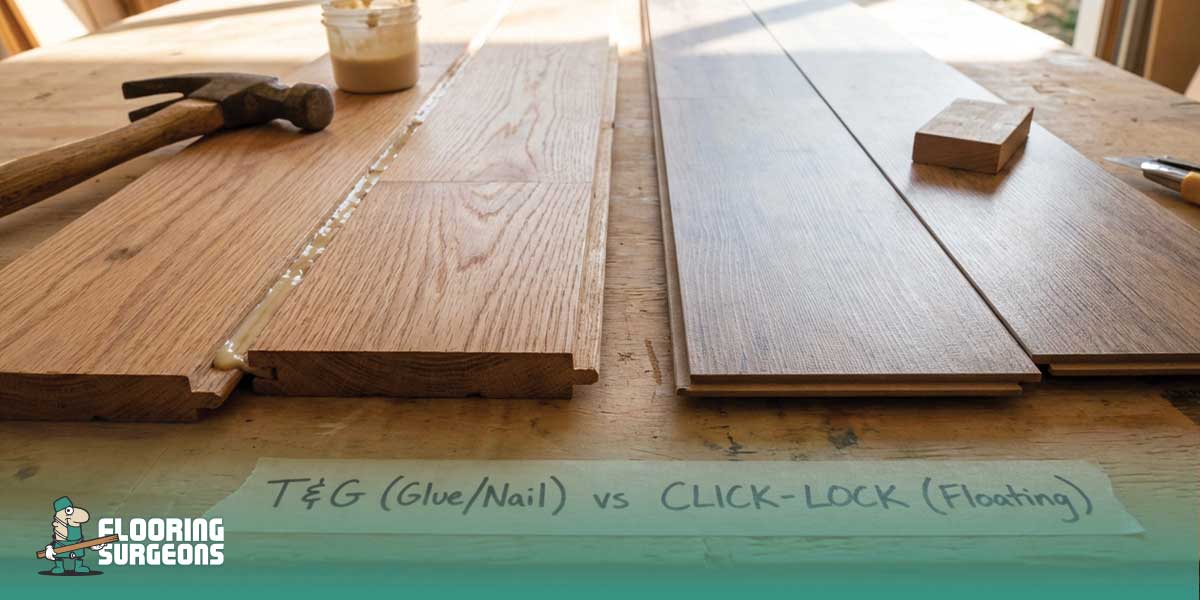
If you’re comparing click-lock vs tongue-and-groove flooring, the main differences are installation style and long-term performance. Click-lock flooring is easier to install, more DIY-friendly, and best suited for modern floating floors such as laminate, LVT, SPC, and engineered wood. Tongue-and-groove flooring offers a more traditional, rigid fit and is usually better for glue-down or nail-down installations where a solid, permanent finish is needed.
The right choice depends on your subfloor, moisture levels, room type, and whether you want a floating floor or a fixed installation. Click lock is usually the more practical option for most modern homes because it installs faster, handles movement well, and makes plank replacement easier. Tongue-and-groove can still be the better choice for premium wood floors, traditional interiors, and projects where long-term structural stability matters more than quick installation.
In this guide, we compare tongue-and-groove vs click-lock flooring across installation, durability, moisture resistance, underfloor heating, noise, repairability, and cost so you can choose the best flooring system for your home.
Table of contents
What Is Tongue and Groove Flooring?
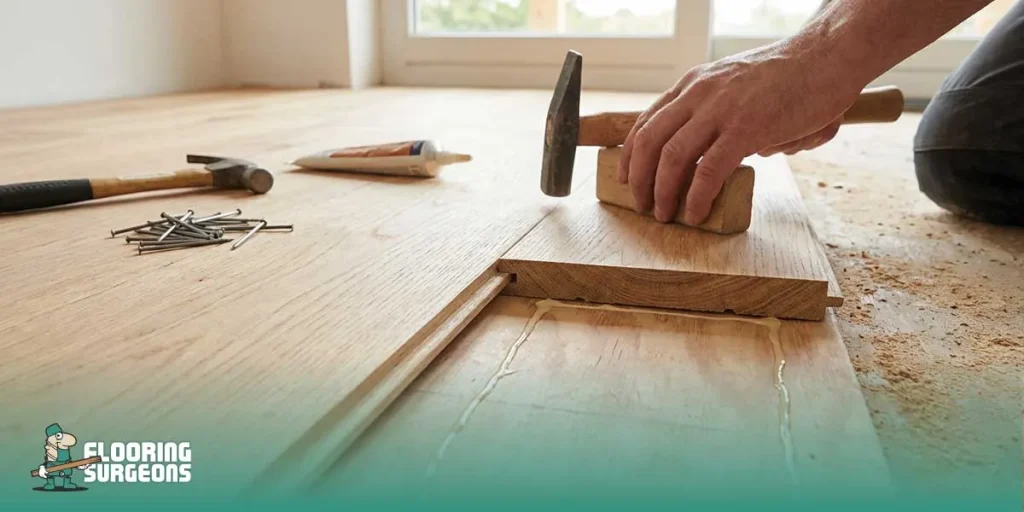
Tongue and groove flooring is a traditional flooring joint system where each plank has a small raised edge, called the tongue, and a matching recessed edge, called the groove. During installation, the tongue of one board fits into the groove of the next, creating a tight, stable connection.
Unlike click-lock flooring, tongue-and-groove flooring does not simply snap together. It usually needs to be glued, nailed, or stapled, depending on the flooring material and subfloor. This makes it less DIY-friendly but more suitable for fixed installations where strength and a solid underfoot feel are important.
Tongue and groove flooring is commonly used for hardwood flooring, engineered flooring, and traditional wood installations. It is a good choice when you want a long-lasting, seamless floor with strong structural stability, especially in rooms where a permanent glue-down or nail-down installation is preferred.
What Is Click Lock Flooring?
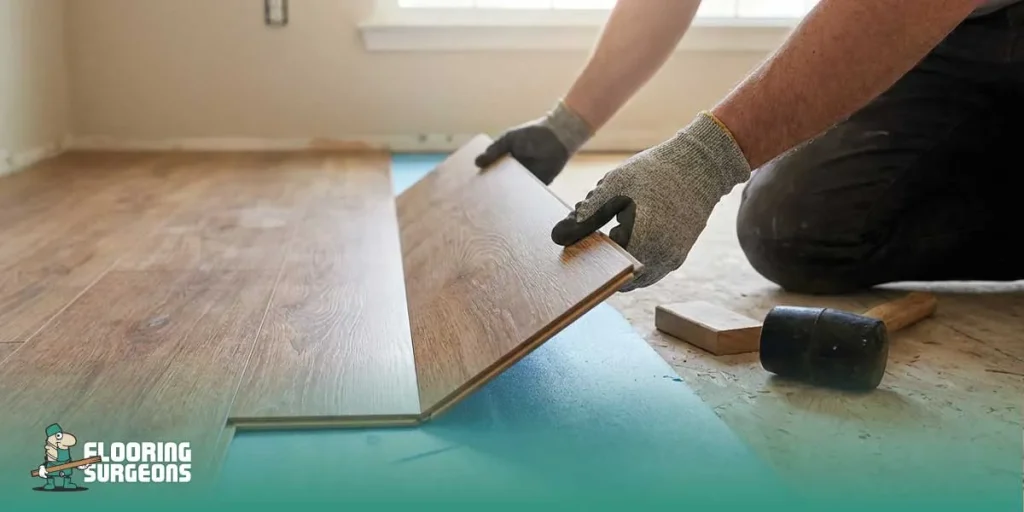
Click-lock flooring is a modern flooring installation system in which planks snap together using a built-in locking mechanism. Instead of being glued or nailed to the subfloor, each board clicks into the next, creating a stable floating floor that sits above the subfloor.
This system is widely used in laminate flooring, LVT, SPC, and engineered flooring because it is fast, clean, and DIY-friendly. The locking profile helps keep the planks tightly connected as the floor expands and contracts, reducing the risk of gaps over time.
Click-lock flooring is a practical choice for homeowners who want quick installation, easier plank replacement, and less mess during installation. It works especially well in apartments, rental properties, family homes, and modern renovation projects where convenience and long-term stability matter.
Tongue and Groove vs Click Lock: Key Differences
Tongue-and-groove vs click-lock flooring may look similar after installation, but the joint systems are completely different. Tongue-and-groove flooring uses a traditional tongue-and-groove connection that usually requires glue, nails, or staples. Click-lock flooring uses a mechanical locking system that snaps planks together and is primarily designed for floating floor installation.
These differences affect how easy the floor is to install, how well it handles movement, how resistant it is to gaps and moisture, and how simple it is to repair later. The table below compares key factors to help you choose the best flooring system for your home.
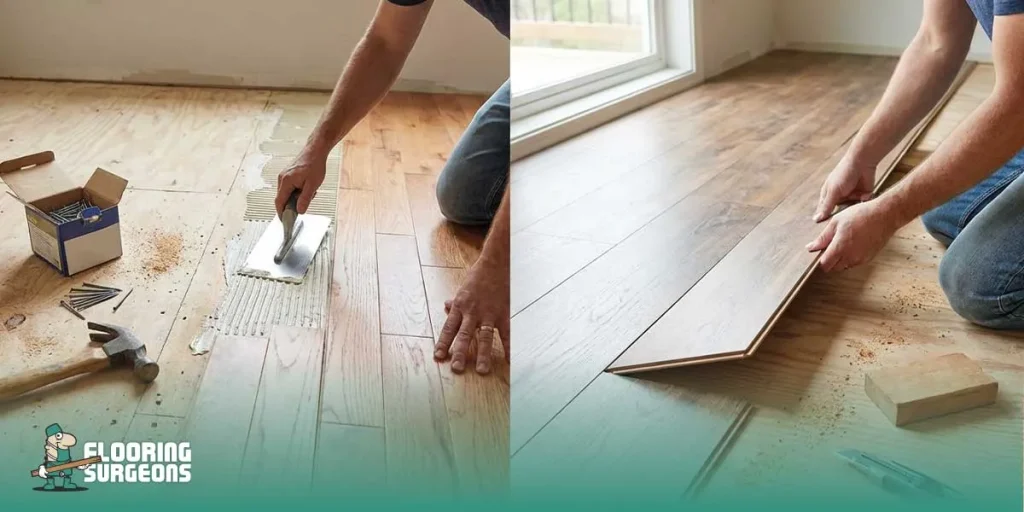
Full Comparison: Tongue & Groove vs Click Lock Flooring
| Feature / Factor | Tongue & Groove (T&G) | Click Lock Flooring |
| How It Connects | A tongue fits into a groove; it requires manual alignment | Planks lock together mechanically with a “click” action |
| Installation Method | Often glued or nailed; a floating installation is possible, but harder | Designed for floating floors; no glue or nails needed |
| Difficulty Level | More skilled installation; mistakes cause gaps | Extremely DIY-friendly; fast, clean installation |
| Speed of Installation | Slower — each joint must be aligned | Very fast — planks snap together |
| Water Resistance | Depends on product + glue seal | Stronger joint seal; better for spill-prone areas |
| Gap Prevention | More prone to seasonal gaps if not installed perfectly | The locking mechanism keeps the boards tighter over time |
| Repairability | Harder — glued planks must be cut out | Easier — sections can be unlocked and replaced |
| Subfloor Requirements | Needs a well-prepared, flat subfloor | More forgiving; works well as a floating system |
| Best For | Traditional wood installations, renovations, and structural flooring | Modern homes, DIY projects, LVT/laminate/SPC floors |
| Long-Term Stability | Very stable when glued or nailed | Excellent stability in floating installations |
| Noise Level | Quieter when glued down | Quieter depends on the underlay; floating floors may sound hollow |
| Cost of Installation | Higher due to labour | Lower — faster install, no adhesives |
| Common Materials | Engineered wood, hardwood | Laminate, LVT, SPC, engineered wood |
Installation Differences: Tools, Skill Level & Speed
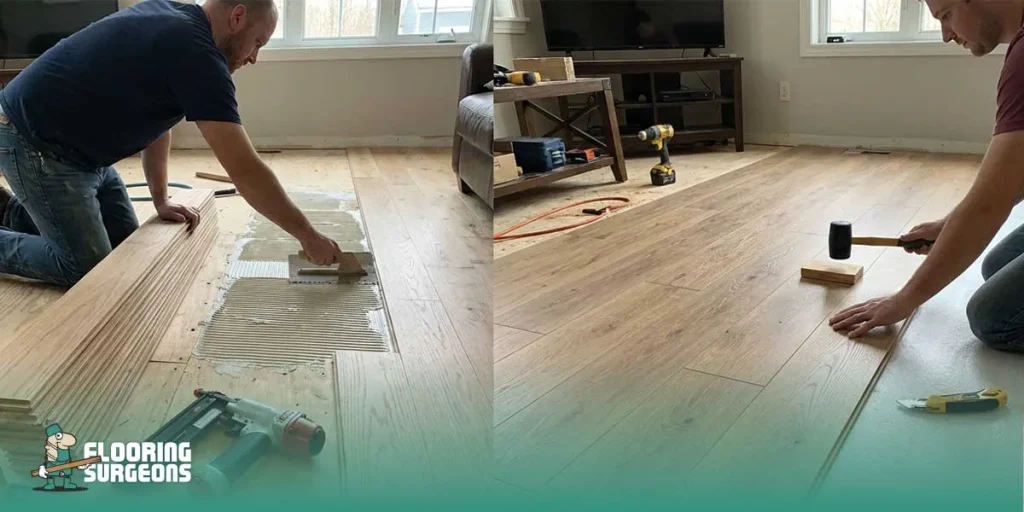
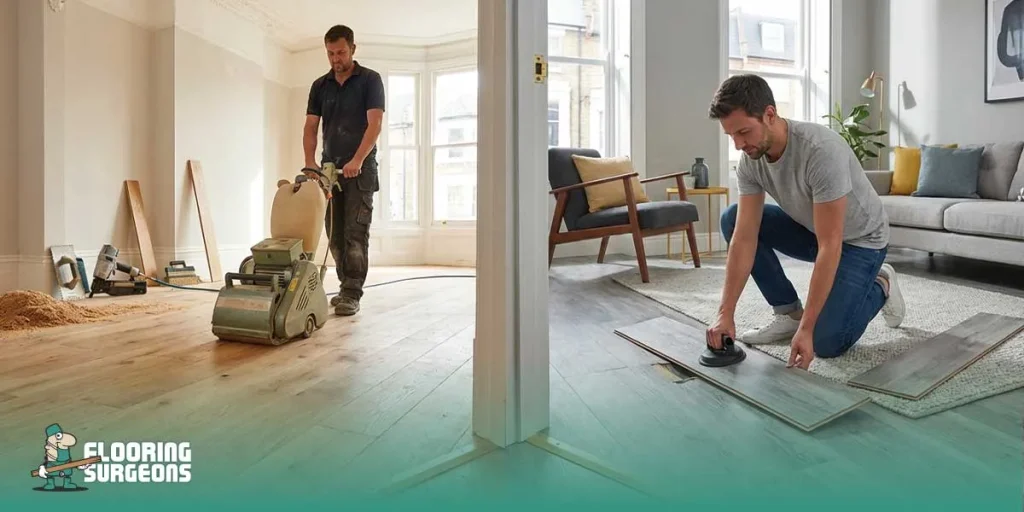
Installation is one of the biggest differences between click lock and tongue-and-groove flooring. Both systems can create a clean finished look, but they require different tools, skill levels, and fitting time. Tongue-and-groove flooring usually requires glue, nails, or staples, so it is slower and better suited to experienced installers. Click-lock flooring is faster, cleaner, and more DIY-friendly because the planks snap together without being fastened directly to the subfloor. For a step-by-step guide to fitting a floating floor, see our Install Laminate Flooring guide.
Tongue and Groove Installation
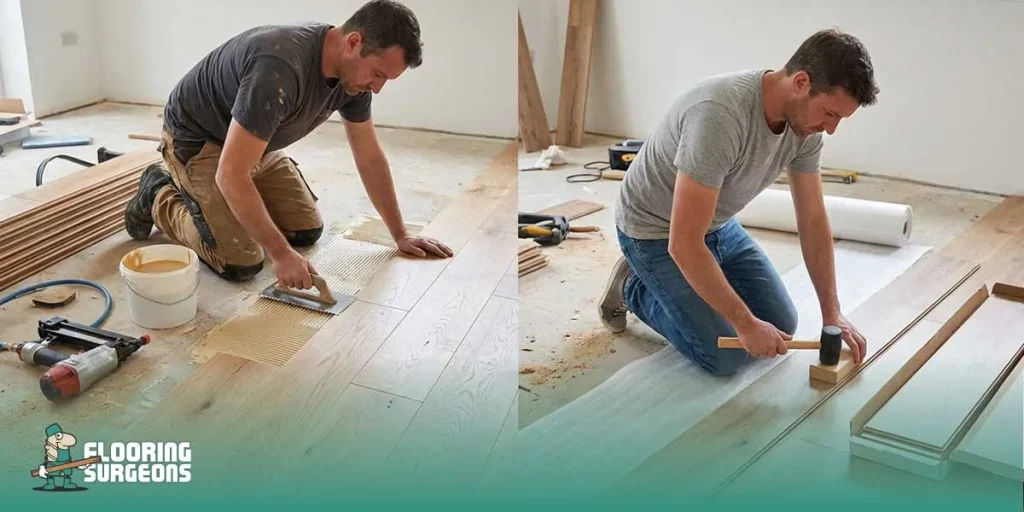
Tongue-and-groove flooring requires each plank to be fitted manually, then glued, nailed, or stapled, depending on the product and subfloor. Because the boards do not snap together automatically, installation requires more precision. Small alignment mistakes can lead to visible gaps, uneven joints, or squeaking.
This method usually needs tools such as a tapping block, mallet, flooring nailer, or adhesive. For that reason, tongue-and-groove installation is slower and better suited to professionals or experienced DIYers. The result can be very stable and long-lasting, but the process takes more skill and leaves less room for error.
Click Lock Installation
Click-lock flooring is much faster and easier to fit because the planks snap together with a built-in locking system. It does not usually require glue, nails, or staples, making it ideal for floating floor installation. Most homeowners can install click-lock laminate, LVT, SPC, or engineered wood using simple tools such as spacers, a rubber mallet, and a utility knife. It is cleaner, quicker, and easier to correct if a plank is positioned incorrectly.
Installation Speed Comparison
Click lock is usually the faster option. In many standard rooms, it can be installed in a day, whereas tongue-and-groove flooring often takes longer because each plank must be aligned and secured manually. If adhesive is used, drying time can also extend the project.
Durability & Stability: Which Joint Performs Better?
Durability in click-lock vs tongue-and-groove flooring depends not only on the plank material but also on how the joints handle pressure, movement, and daily wear. A strong flooring joint helps the floor stay tight, level, and gap-free over time.
Tongue and Groove Stability
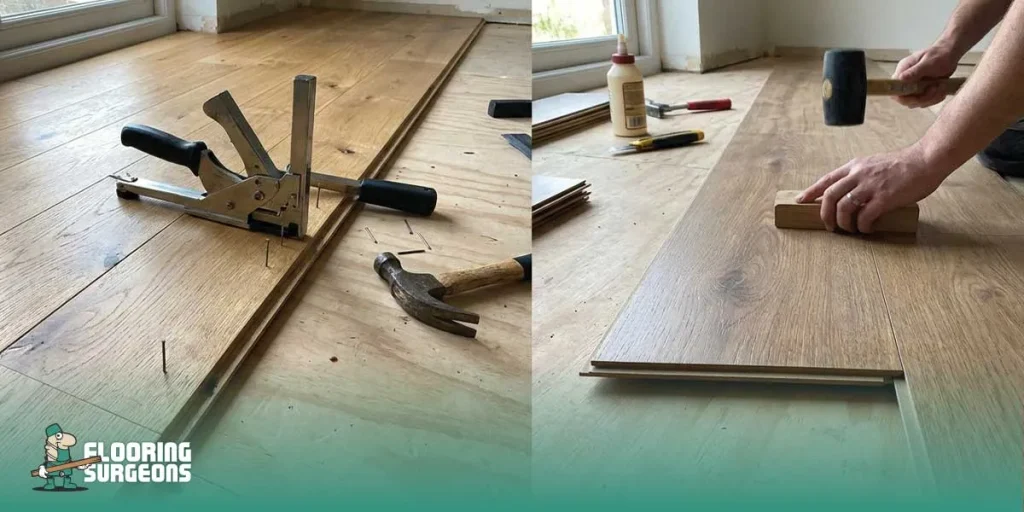
Tongue-and-groove flooring creates a solid, rigid surface when it is glued, nailed, or stapled correctly. Because the boards are fixed in place, the floor feels firm underfoot and resists vertical movement well. This makes it a strong option for hardwood flooring, engineered wood flooring, and permanent installations. However, its long-term stability depends heavily on installation quality. Poor alignment, weak adhesive, or an uneven subfloor can cause gaps, squeaks, or movement over time.
Click Lock Stability
Click-lock flooring uses a mechanical locking system that holds planks tightly together. Because it is designed as a floating floor, it can expand and contract as a single surface, helping reduce joint stress and seasonal gaps. For laminate, LVT, SPC, and modern engineered wood, click lock often performs better in terms of gap resistance and everyday movement. It is especially practical in homes where temperature and humidity change throughout the year.
Choose tongue-and-groove flooring if you want a firmly fixed, structural floor. Choose click lock flooring if you want a stable, flexible, and easier-to-maintain flooring system.
Water & Moisture Resistance in Real Homes
Moisture performance is an important factor when comparing click-lock vs tongue-and-groove flooring, especially in kitchens, hallways, ground floors, and busy family homes. The joint system affects how easily water can reach the seams and how well the floor handles spills, humidity, and damp shoes.
Tongue and Groove Moisture Resistance
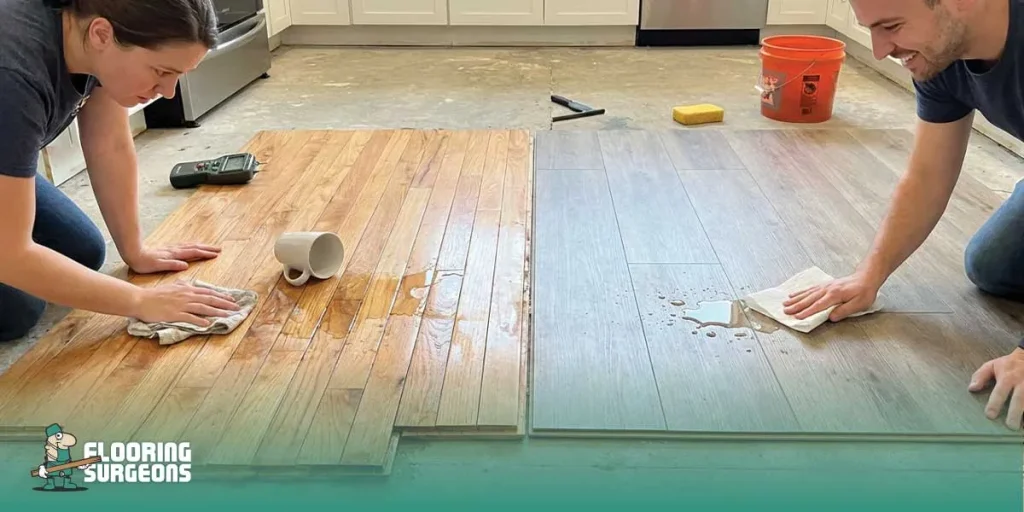
Tongue-and-groove flooring is not inherently water-resistant. Because the boards slide together without a mechanical locking seal, small gaps can allow moisture to enter between planks. When properly glued and sealed, tongue-and-groove wood flooring can better withstand everyday moisture, especially in engineered wood or glue-down installations. However, protection depends heavily on the quality of the installation. Poor sealing, uneven subfloors, or weakened adhesive can lead to swelling, cupping, edge damage, or gaps over time.
Click Lock Moisture Resistance
Click-lock flooring usually performs better in spill-prone areas because the locking system keeps the planks tightly connected. Many modern click-lock products, especially LVT, SPC, laminate, and rigid-core flooring, are designed with water-resistant cores and tight seams. This makes click lock a safer choice for kitchens, hallways, rentals, and homes with pets or children. It can handle everyday spills and humidity more consistently, as long as the product itself is water-resistant.
For bathrooms or other very wet areas, choose a waterproof-rated product such as SPC, rigid-core vinyl, or fully sealed engineered flooring rather than relying solely on the joint system.
Sound and Comfort: Tongue and Groove vs Click Lock
When comparing click-lock vs tongue-and-groove flooring, sound and underfoot comfort are often overlooked. The joint system and installation method affect how solid the floor feels, how much noise it makes, and how comfortable it is in daily use.
Tongue and Groove: Solid and Quiet Underfoot
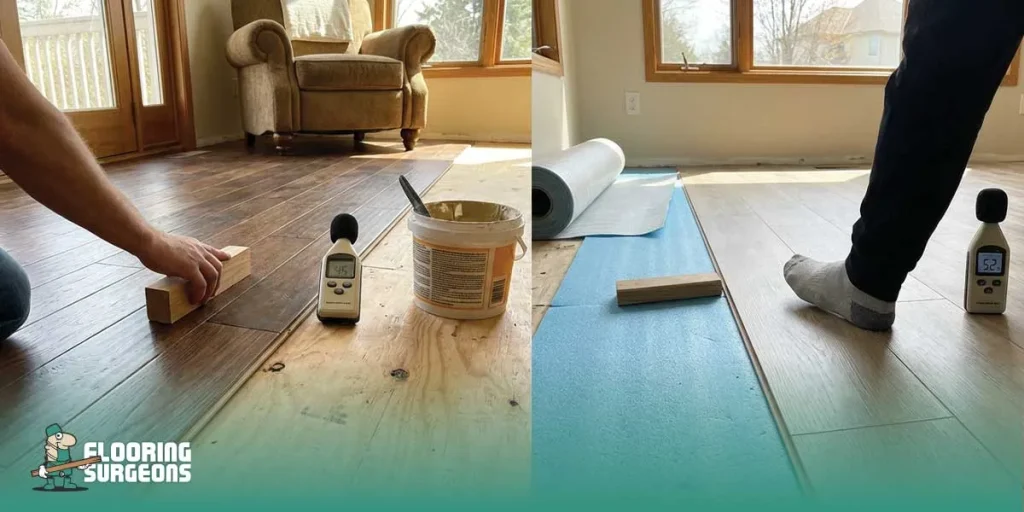
Tongue-and-groove flooring is usually glued or nailed down, so the boards sit firmly against the subfloor. This creates a dense, stable feel that is often associated with traditional hardwood flooring. Because the floor is fixed in place, it usually produces less hollow noise and feels more solid when walked on. This makes tongue-and-groove a good choice for bedrooms, living rooms, dining rooms, and premium wood flooring projects where a quiet, permanent feel matters.
Click Lock: Softer and More Cushioned
Click lock flooring is installed as a floating floor, usually over an underlay. This gives it a softer and more cushioned feel underfoot, especially with LVT, SPC, or laminate flooring. However, floating floors can sometimes sound slightly hollow if the subfloor is uneven, the underlay is low quality, or the planks are very thin. A good acoustic underlay can reduce this issue, making click-lock flooring much quieter and more comfortable.
For a solid, quiet, hardwood-style feel, tongue-and-groove flooring usually performs better. For flats, rentals, busy family homes, or rooms where comfort is more important, click lock flooring with a high-quality acoustic underlay is often the more practical choice.
Underfloor Heating: Tongue and Groove vs Click Lock
Underfloor heating is an important factor in click-lock vs tongue-and-groove flooring because heat can affect expansion, gaps, noise, and long-term stability. The best option depends on the flooring material, installation method, and underlay quality.
Tongue and Groove with Underfloor Heating
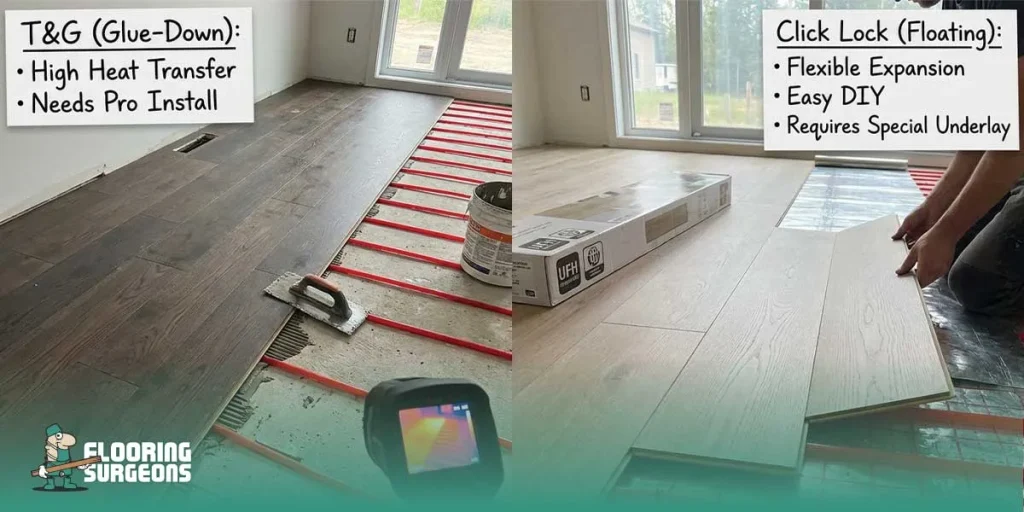
Tongue-and-groove flooring can work very well with underfloor heating, especially when installed as a glue-down engineered wood floor. Because the boards sit close to the subfloor, heat transfers efficiently, and the floor feels solid underfoot.
However, tongue-and-groove is more sensitive to heat-related expansion and contraction. If the floor is not properly acclimated or the temperature changes too quickly, it may lead to gaps, creaking, or movement. Nail-down tongue-and-groove is usually less suitable for underfloor heating than a glue-down installation.
Click Lock with Underfloor Heating
Click-lock flooring is often a practical choice for underfloor heating because it is installed as a floating floor and can expand and contract as a single surface. Modern click-lock LVT, SPC, laminate, and engineered wood products are often designed to work with UFH systems.
The key factor is the underlay. A thick or poor-quality underlay can reduce heat transfer, create cold spots, and make the system less efficient. For best results, use a low-tog, heat-resistant underlay approved for floating floors over underfloor heating.
Best Choice for Underfloor Heating
For engineered wood flooring, glue-down tongue-and-groove can offer excellent heat transfer, but it requires professional installation. For LVT, SPC, rigid core, and laminate flooring, click lock is usually the safer and easier option because it handles movement well and is easier to replace if needed.
Overall, choose tongue-and-groove if you want maximum heat transfer with a fixed wood floor. Choose click lock for easier installation, better movement control, and reduced risk in modern floating floor systems.
Repair and Maintenance: Tongue and Groove vs Click Lock Flooring
Repair and maintenance are important when comparing click lock vs tongue-and-groove flooring, because the joint system affects how easily damaged planks can be replaced and how long the floor can be restored over time.
Tongue and Groove: Durable but Harder to Repair
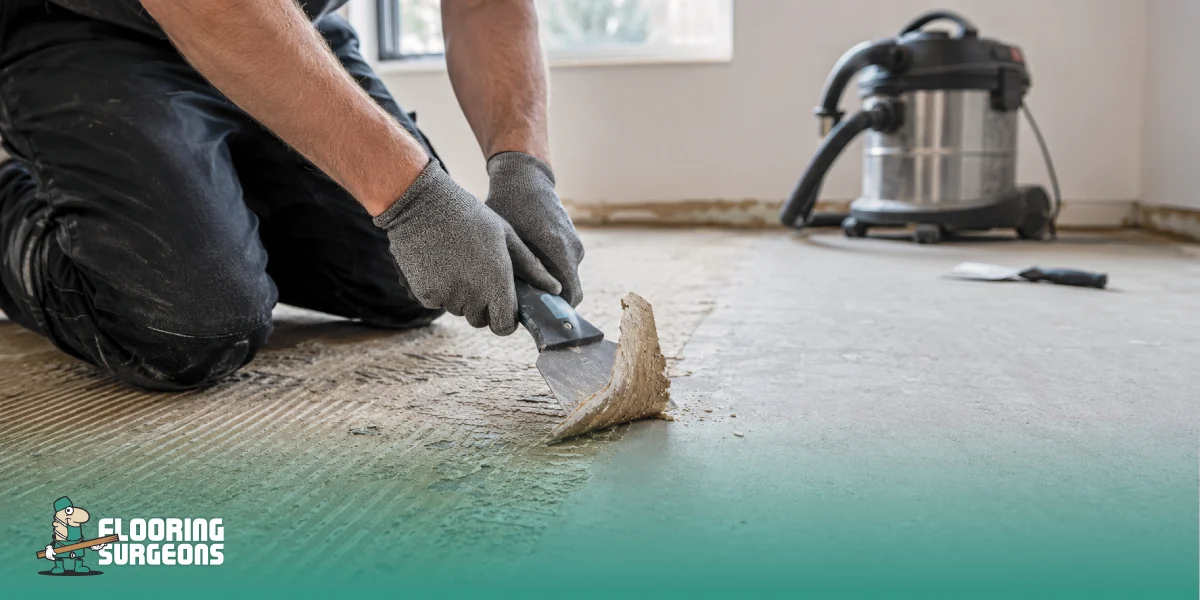
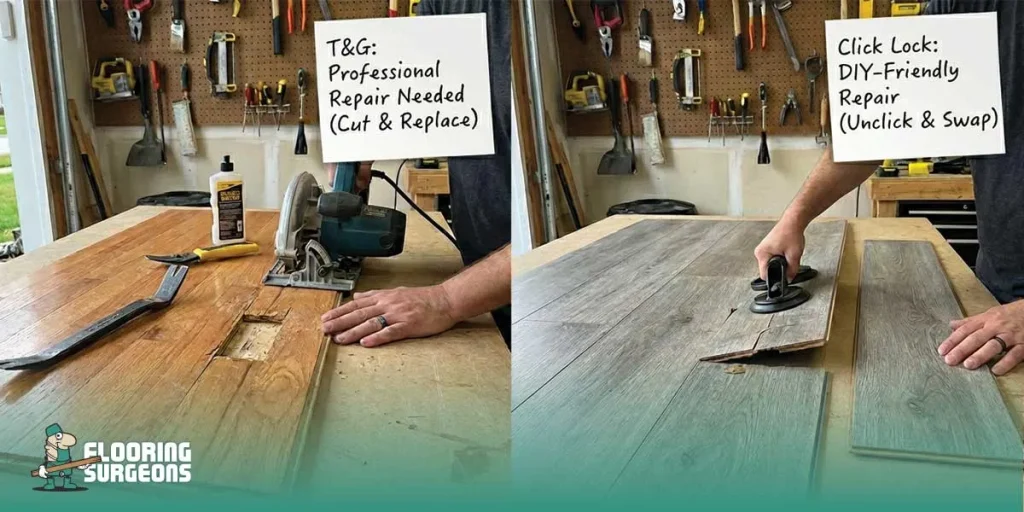
Tongue-and-groove flooring is strong and long-lasting, but repairs are usually more difficult. Because boards are often glued, nailed, or stapled in place, replacing a damaged plank may require cutting it out, removing adhesive or nails, and carefully fitting a new board.
This usually needs professional tools and experience. However, tongue-and-groove performs well for long-term maintenance, especially with hardwood or engineered wood flooring. These floors can often be sanded, refinished, and restored, which helps extend their lifespan for many years.
Click Lock: Easier to Replace and Maintain
Click-lock flooring is much easier to repair because it is usually installed as a floating floor. In many cases, boards can be unlocked from the nearest wall, the damaged plank replaced, and the floor clicked back together.
This makes click lock a practical choice for rentals, family homes, high-traffic areas, and spaces where scratches or damage are more likely. Click LVT, SPC, and laminate flooring are also easy to clean and maintain, although they usually cannot be refinished like real wood.
Repair and Maintenance Comparison Table
| Feature | Tongue & Groove | Click Lock |
| Plank Replacement | Difficult; requires cutting and pro skills | Very easy; unlock and replace |
| DIY Repair Friendly | Not ideal | Excellent |
| Refinishing Ability | High (wood/engineered) | Limited to moderate |
| Long-Term Appearance Renewal | Strong — can be sanded | Depends on material; LVT/SPC cannot be refinished |
| Best For | Long-term investment, premium wood floors | Rentals, family homes, quick repairs |
Choose tongue-and-groove flooring if you want a floor that can be sanded, refinished, and restored over the long term. Choose click lock flooring if you want simple plank replacement, lower repair costs, and easier day-to-day maintenance.
Cost Comparison: Tongue and Groove vs Click Lock Flooring
The cost difference between click-lock and tongue-and-groove flooring is not just about the price per square metre. You also need to consider installation, repair, and maintenance costs, as well as long-term value.
- Click-lock flooring is usually cheaper to install because it is faster, cleaner, and more DIY-friendly. The planks snap together without glue or nails, reducing labour time and making it a budget-friendly option for laminate, LVT, SPC, and floating floor projects.
- Tongue-and-groove flooring usually costs more to install because it requires more skill, time, and precision. Glue-down or nail-down installation is more labour-intensive, especially with hardwood or engineered wood flooring. However, it can offer better long-term value because many tongue-and-groove wood floors can be sanded, refinished, and restored instead of replaced.
When it comes to repairs, click-lock flooring is usually easier and cheaper to maintain because damaged planks can often be replaced individually. Tongue-and-groove repairs are more labour-intensive, but the ability to restore and refinish the floor can significantly extend its lifespan. For homeowners looking for expert advice on laminate, LVT, engineered wood, or floating floor installation, Flooring Surgeons can help you choose the right flooring system based on your budget, room type, and long-term needs.
Best Uses: Tongue and Groove vs Click Lock Flooring
Choosing between tongue-and-groove and click-lock flooring depends on how the room is used, the flooring material, and whether you need a fixed or floating floor system.
When Tongue and Groove Makes More Sense
Tongue-and-groove flooring is better for long-term, premium installations where stability, refinishing, and a solid underfoot feel matter most. It works especially well for solid wood flooring and engineered flooring in traditional homes, luxury renovations, living rooms, dining rooms, and spaces where a permanent glue-down or nail-down floor is preferred.
It is also a strong choice when you want a seamless wood appearance and the option to sand and refinish the floor later.
When Click Lock Makes More Sense
Click-lock flooring is better for fast, practical, and DIY-friendly projects. It is ideal for laminate flooring, LVT, SPC, rentals, spare rooms, apartments, and busy family homes where easy installation and simple plank replacement are important. For modern floating floors, click lock offers one of the best balances of durability, speed, and long-term convenience. If you are choosing a practical floor for everyday use, click-lock laminate flooring is often the more flexible option.
Tongue and Groove vs Click Lock: Pros and Cons
Both tongue-and-groove flooring and click-lock flooring have clear advantages, but they suit different projects. Tongue-and-groove is better for permanent, premium wood floors, while click-lock is usually the more practical choice for DIY floating floor installation, laminate, LVT, and SPC.
| Flooring Type | Pros | Cons |
| Tongue and Groove Flooring | Strong long-term stability Can be sanded and refinished Premium, seamless wood appearance Good for glue-down or nail-down installations | Higher installation cost Harder to repair or replace Less DIY-friendly Requires precise fitting |
| Click Lock Flooring | Easy DIY installation Fast floating floor fitting Simple plank replacement Ideal for laminate, LVT, SPC, and engineered wood | Usually cannot be refinished Needs a flat subfloor Can feel less rigid underfoot May sound hollow without quality underlay |
Conclusion
In most modern homes, click-lock flooring is the more practical choice because it is easier to install, faster to repair, and ideal for floating floors like laminate, LVT, and SPC. Tongue-and-groove flooring is better for premium wood floors, glue-down or nail-down installations, and projects where long-term stability and refinishing matter most.

Haniye Ayanmanesh
As an expert writer for Flooring Surgeons, I combine technical SEO knowledge with a practical understanding of flooring, producing content that helps users make confident decisions while supporting long-term organic growth.