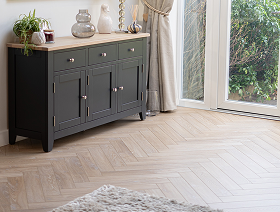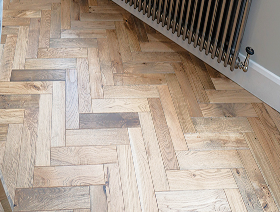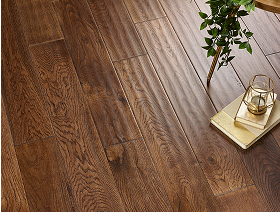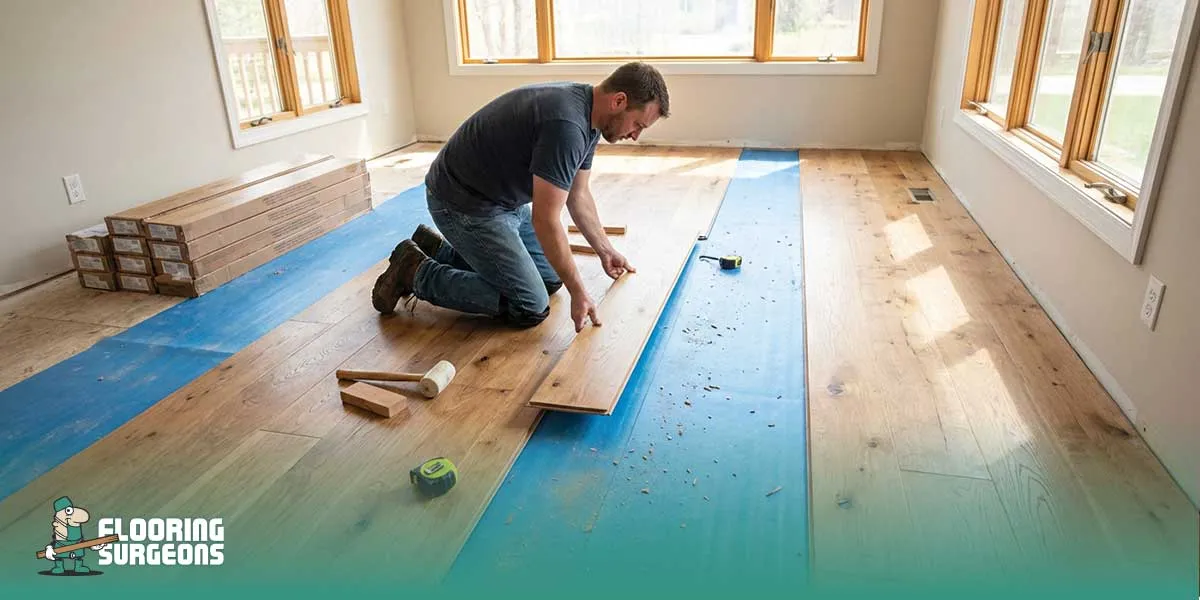
Floating hardwood floors appeal to many homeowners because they offer the look of real wood without the hassle of nails or glue. If you want real-wood style with easier installation and a lower upfront cost, floating hardwood flooring can be a practical option. However, it’s not the best choice for rooms with high moisture, uneven subfloors, or homes where maximum long-term stability is the priority.
One of the biggest advantages of a floating hardwood floor is convenience. The planks lock together quickly, installation is usually faster than glue-down hardwood, and the floor can naturally expand and contract with seasonal changes. At the same time, these benefits come with trade-offs. If the subfloor is uneven, the boards may flex or create hollow spots. In rooms with sharp humidity swings, the planks can expand, contract or lift at the joints over time.
Before choosing this installation method, it helps to understand the real pros and cons of floating hardwood floors, including durability, moisture performance, sound, underlay requirements, and how floating hardwood compares to glue-down and engineered wood flooring. The sections below break everything down in a clear, practical way so you can decide whether floating hardwood is the right fit for your home.
Table of contents
Types of Floating Floors Explained
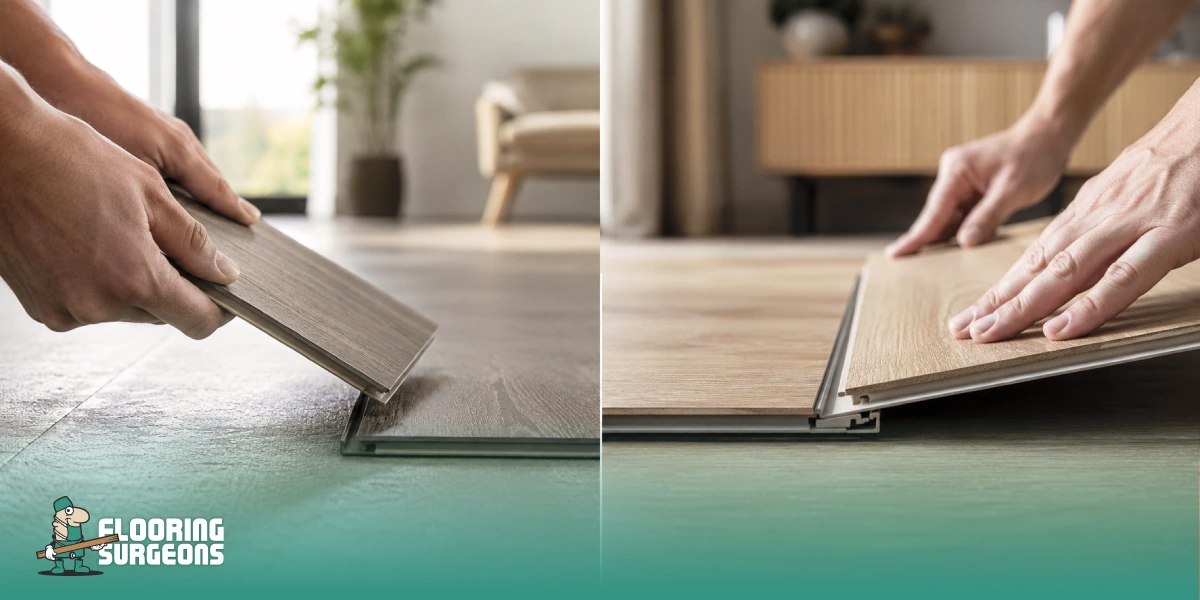
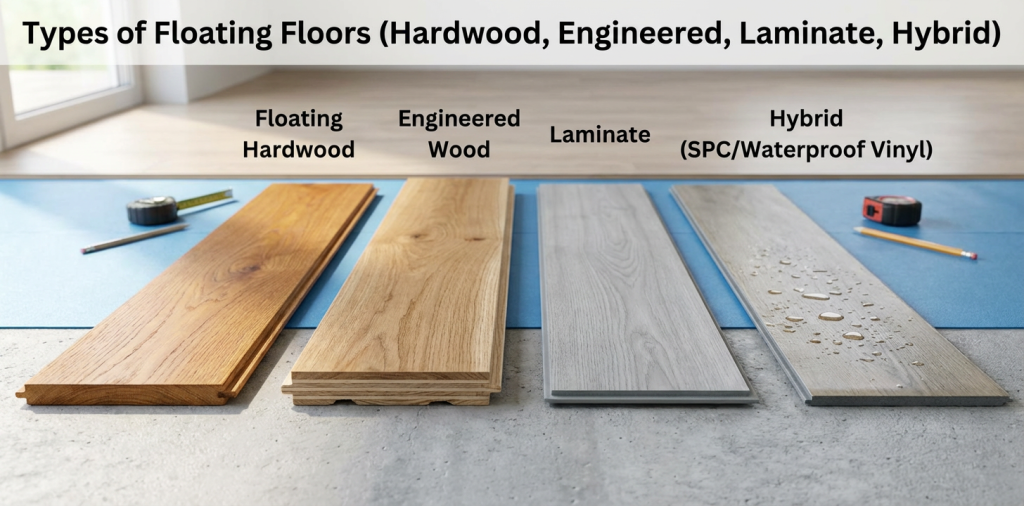
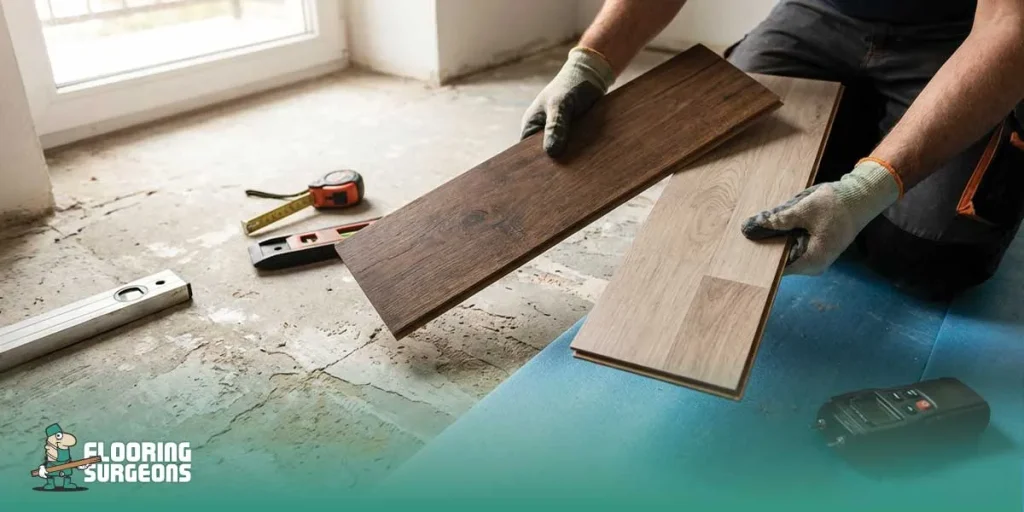
Floating floors come in several different styles, and each one performs differently once installed. The term “floating floor” refers to the installation method rather than the material itself. Instead of being nailed or glued to the subfloor, the planks click together and rest on top of it. This makes floating floor installation faster, cleaner and easier to repair compared to traditional fitting methods.
The main floating flooring types include hardwood, engineered wood, laminate and hybrid SPC flooring. Understanding the differences helps you choose the right option for your room, budget and moisture conditions.
Engineered Wood Floating Floors
Engineered wood flooring is one of the most stable wood-based floating floor options. It uses multiple cross-layered wood layers beneath a real wood veneer, helping the planks resist expansion and contraction more effectively than traditional floating hardwood.
Because of this stability, engineered floating floors perform well in homes with seasonal humidity changes or older subfloors. They also tend to feel quieter and more solid underfoot than laminate flooring. While engineered wood is still not fully waterproof, it generally handles small humidity fluctuations better than solid wood surfaces.
Laminate Floating Floors
Laminate flooring is one of the most common floating floor systems because it is affordable, durable and easy to install. The click-lock boards fit together quickly, making laminate a popular choice for rentals, hallways, living spaces and busy family homes.
Its protective wear layer makes it more resistant to scratches and dents than real wood flooring. However, standing water remains the main weakness. If moisture reaches the core material, the boards may swell, separate or become permanently damaged over time. This is one reason many homeowners now compare laminate flooring with hybrid SPC flooring before making a final decision.
Hybrid Floating Floors (SPC/ Waterproof Vinyl Click)
Hybrid flooring combines rigid cores, vinyl surfaces and click-lock installation systems to create a highly water-resistant floating floor. SPC flooring (stone plastic composite) is one of the most popular hybrid categories because it remains stable with humidity changes and handles daily spills better than wood-based floors.
Hybrid and waterproof vinyl flooring are commonly used in kitchens, bathrooms, utility rooms and ground-floor flats where moisture resistance matters most. Although they don’t fully replicate the texture of real wood, they offer a practical balance between durability, water resistance and low maintenance.
Quick Comparison of Floating Floor Types
To help you compare them at a glance, here’s a simple table:
| Type | Best For | Moisture Behaviour | Feel Underfoot | Not Ideal For |
| Floating Hardwood | Bedrooms, living rooms | Sensitive | Warm, natural | Kitchens, bathrooms |
| Engineered Wood | Older homes, mixed climates | Moderate resistance | Solid, stable | Wet areas |
| Laminate | High-traffic rooms, rentals | Weak against standing water | Firm, light | Bathrooms |
| Hybrid (SPC/Vinyl Click) | Kitchens, bathrooms, all living areas | Fully waterproof | Firm but stable | Rooms needing a real-wood look |
Floating Hardwood Floors Pros and Cons
Floating hardwood floors are popular with homeowners who want the look and warmth of real wood without the mess of glue or nails. Because the planks use a click-lock system, installation is usually faster and less invasive than traditional glue-down hardwood flooring.
Floating hardwood flooring works best in dry, stable indoor spaces such as bedrooms, living rooms and dining areas. It offers a more natural appearance than laminate or SPC flooring, but it also requires more care and is less suitable for moisture-prone rooms.
Pros of Floating Hardwood Floors
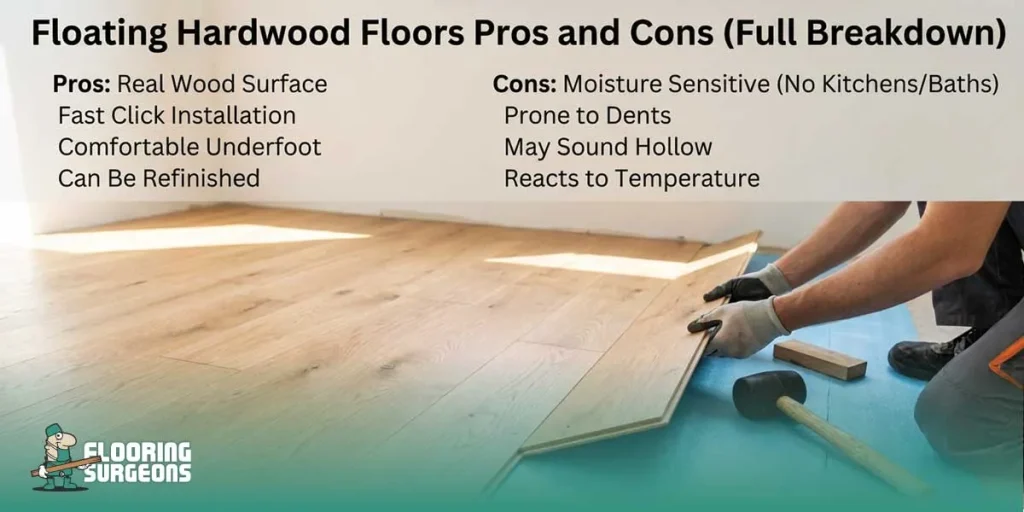
Many homeowners choose floating hardwood flooring because it offers:
- A genuine wood surface with natural grain variation
- Faster and cleaner installation
- Lower fitting costs than glue-down hardwood
- Softer comfort underfoot
- Easier plank replacement if damage occurs
- Possible light refinishing on some thicker veneer products
Floating hardwood floors are especially popular in spaces where comfort and appearance matter more than heavy-duty moisture resistance.
Cons of Floating Hardwood Floors
Floating hardwood floors are more sensitive to moisture than laminate or hybrid SPC flooring. They are also less practical for homes where moisture exposure, heavy wear or frequent spills are common.
Compared to fixed hardwood systems, floating floors generally require more maintenance and may not be the best choice for bathrooms, utility rooms, or homes with frequent humidity fluctuations.
Quick Pros and Cons of Floating Hardwood Floors
| Aspect | Pros | Cons |
| Comfort | Warm, natural feel | It can sound hollow without the right underlay |
| Installation | Fast click system; no glue | Needs a very flat subfloor to avoid bounce |
| Durability | Can be refinished if the veneer is thick enough | Scratches and dents are easier than laminate or SPC |
| Moisture | None of the water stress of the solid hardwood fitting | Not suitable for kitchens or bathrooms |
| Look & Style | Real wood grain and variation | Colour changes over time due to sunlight |
| Stability | Works well in heated rooms | Sensitive to humidity swings; can expand or lift |
If your home stays relatively dry throughout the year and you want the appearance of real wood without a complicated installation process, floating hardwood flooring can offer a good balance between style, comfort and installation convenience.
Common Floating Hardwood Problems After Installation
Floating hardwood floors often perform well at first, but some issues only become noticeable after months of daily use and seasonal changes. Most of these problems are related to moisture, seasonal movement, subfloor quality or long-term wear rather than manufacturing defects.
Seasonal Expansion and Movement
Because floating hardwood floors are not fixed directly to the subfloor, the entire floor surface naturally expands and contracts throughout the year. In some homes, this can lead to small winter gaps, slight movement underfoot or pressure build-up during humid months.
Hollow Sound and Soft Spots
One of the most common complaints about floating hardwood flooring is the hollow sound that can develop underfoot. If the subfloor is uneven or the underlay is poorly chosen, certain areas may flex slightly when walked on, creating tapping sounds or soft spots.
Moisture-Related Problems
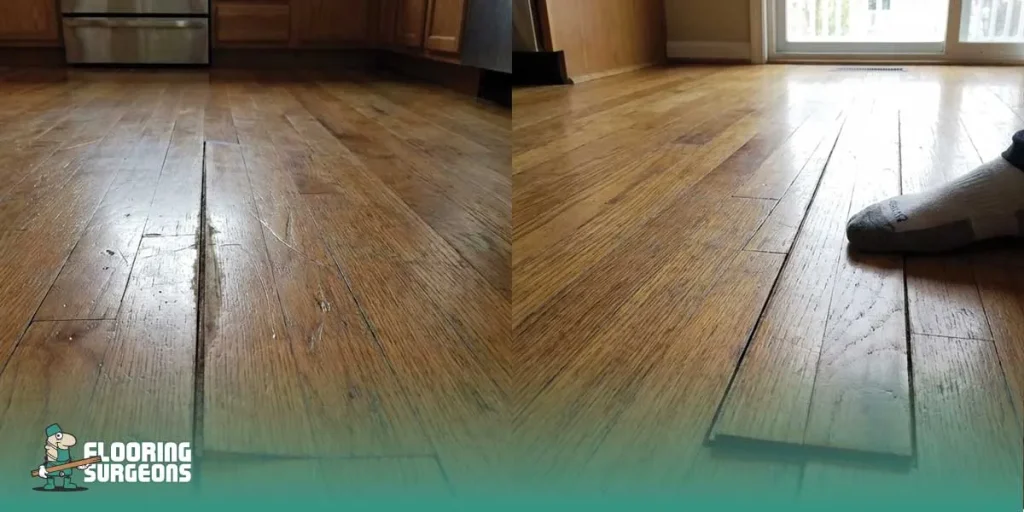
Real wood veneer reacts quickly to moisture and steam. Wet mopping, standing spills or long-term humidity exposure can cause swelling, lifting or stress around the plank joints. This is why floating hardwood flooring is usually avoided in bathrooms, utility rooms and other high-moisture spaces.
Scratches and Surface Wear
Unlike laminate or SPC flooring, floating hardwood uses a real wood surface that scratches and dents more naturally over time. Pets, chair movement and dropped objects can leave visible marks, especially on softer wood species or thinner veneer layers.
Subfloor Sensitivity
Floating hardwood floors depend heavily on a flat and stable subfloor. Even small imperfections underneath the planks can create pressure points that lead to creaking, joint stress or long-term movement problems.
Limited Refinishing Potential
Some floating hardwood floors can only be lightly refinished because the top veneer layer is relatively thin. Unlike traditional hardwood flooring, deep sanding is often not feasible, limiting long-term restoration options.
How Floating Hardwood Performs in Real Homes
Floating hardwood flooring can last for many years when the room conditions are stable and the installation is done correctly. Long-term performance depends heavily on humidity control, subfloor quality and the amount of daily traffic the room receives.
Durability and Stability
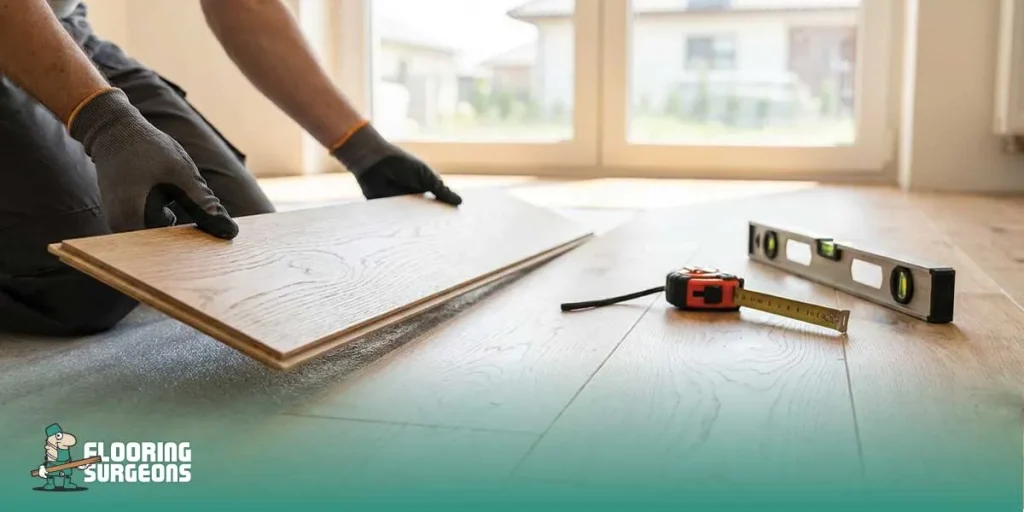
The click-lock system keeps the planks connected as a single floating surface, but real-world durability depends heavily on the quality of the materials beneath the veneer. The most important factors include:
- Veneer thickness, which affects wear resistance and refinishing potential
- Core density, which helps reduce flex and joint movement
- Even furniture weight distribution across the floor surface
In most homes, floating hardwood flooring handles normal daily use well, but heavy furniture concentration and constant damp conditions can shorten the lifespan of the click-lock joints over time. Floating hardwood generally performs best in bedrooms, living rooms and lower-moisture areas where indoor conditions stay relatively stable throughout the year.
Noise and Comfort
Because floating hardwood is not bonded directly to the subfloor, footsteps often sound lighter and slightly more hollow than glue-down hardwood flooring. This is especially noticeable in flats or rooms with poor acoustic insulation. Noise levels can usually be reduced by:
- Choosing a dense underlay designed for floating wood flooring
- Correcting uneven subfloor areas before installation
- Adding rugs in echo-prone spaces
- Selecting thicker planks or veneer layers
Floating hardwood typically feels warmer and softer underfoot than laminate flooring, although it usually sounds less solid than glue-down wood floors.
Moisture and Seasonal Movement
Moisture remains one of the biggest limitations of floating hardwood flooring. Seasonal humidity changes can cause visible plank movement over time, especially in rooms exposed to steam, spills or rapid temperature swings. Common issues include:
- Small winter gaps between planks
- Edge lifting caused by expansion pressure
- Swelling after standing, spills, or steam exposure
- Plank cupping in humid conditions
Rooms with frequent humidity changes or regular exposure to water usually require more water-resistant flooring options.
Subfloor Requirements for Floating Hardwood Floors
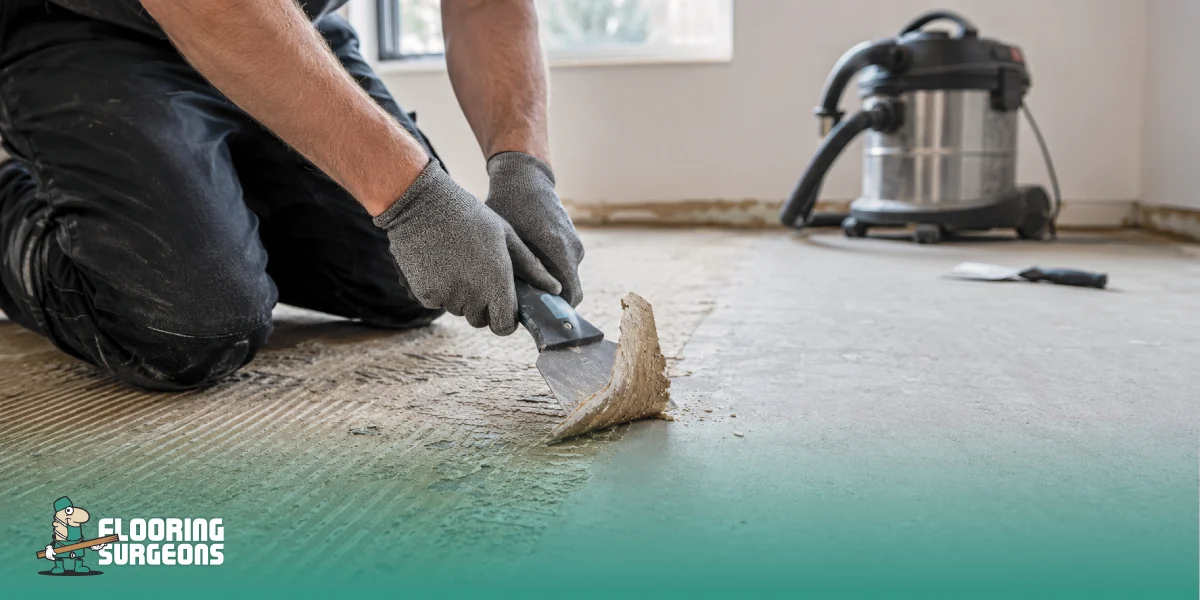
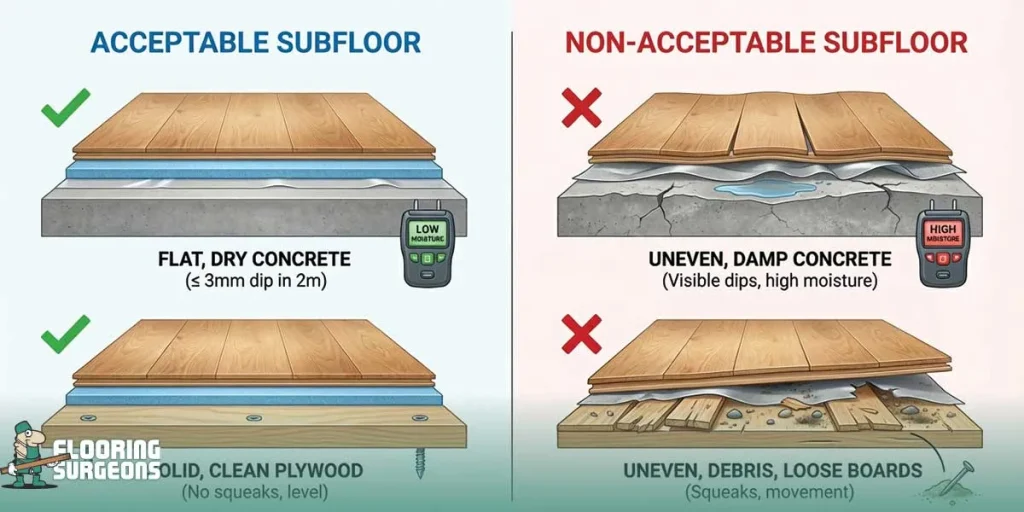
Subfloor preparation is one of the biggest factors affecting the long-term stability of floating hardwood flooring. Even small dips or uneven areas underneath the planks can lead to movement, creaking or joint stress over time. Your subfloor should be:
- Flat, with no major dips or height variation
- Dry and within the manufacturer’s moisture limits
- Clean and free from debris
- Solid, with no loose boards or cracked concrete
If the subfloor is poorly prepared, even high-quality floating hardwood can develop movement or noise problems later.
Best Underlay for Floating Hardwood Floors
The right underlay helps support the click-lock system and improves comfort underfoot. Underlay choice also affects how stable the floor feels during everyday use. A suitable underlay should:
- Support the plank joints without excessive softness
- Reduce the impact felt when walking across the floor
- Create a more stable feel underfoot
- Work specifically with floating engineered or hardwood flooring systems
However, underlay cannot fix major subfloor imperfections or solve moisture-related problems underneath the floor.
Floating vs Glue-Down Hardwood
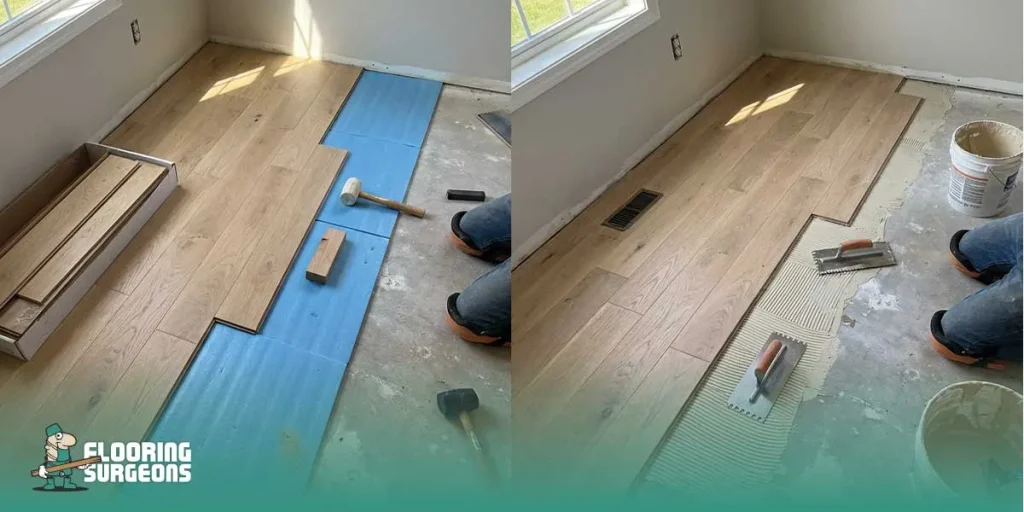
Floating and glue-down hardwood flooring may look similar on the surface, but they behave very differently once installed.
Floating Hardwood:
- faster and easier installation
- lower fitting costs
- simpler plank replacement
- softer underfoot but typically less solid-sounding than glue-down flooring
- more visible movement during humidity changes
Glue-Down Hardwood:
- Firmer and more solid feel
- Quieter footstep sound
- Better long-term stability
- More stable in rooms with mild humidity changes
- Requires professional installation
If installation speed, convenience and lower upfront cost matter most, floating hardwood is often the better option. Glue-down hardwood is usually the better choice for homeowners who prioritise long-term stability and a more solid feel underfoot.
Floating vs Glue-Down Hardwood: Quick Comparison Table
| Feature | Floating Hardwood | Glue-Down Hardwood |
| Sound | Slightly louder; can feel hollow without the right underlay | Quiet, firm, and solid underfoot |
| Moisture Performance | Sensitive to spills and humidity changes; needs stable conditions | More resistant to seasonal movement; better in kitchens and high-moisture areas |
| Durability | Suitable for moderate traffic; joints can weaken on uneven subfloors | Excellent long-term stability; handles heavy furniture better |
| Installation | Fast, clean, DIY-friendly; removes easily | Slower, professional fitting needed; permanent |
| Cost | Lower installation cost; mid-range material cost | Higher fitting cost; substantial long-term value |
| Repairs | Easier plank replacement | Repairs require tools and adhesive; more complex |
| Best For | Flats, bedrooms, living rooms, rentals | High-traffic homes, kitchens, and long-term projects |
Floating Hardwood vs Engineered Wood vs Laminate
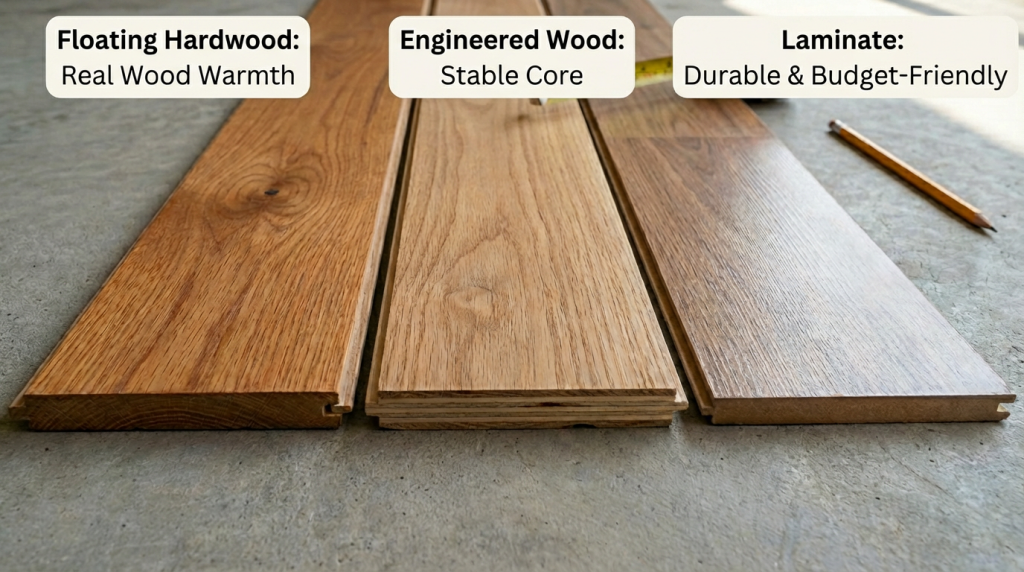
Floating hardwood, engineered wood and laminate flooring can all be installed using click-lock systems, which is why many homeowners compare them during the buying process. While they may look similar at first glance, they behave very differently in terms of durability, moisture resistance and long-term stability.
Floating hardwood offers the most natural wood appearance and texture, as its surface is made from real timber. However, it is also more sensitive to humidity changes and generally performs best in stable indoor environments.
Engineered wood flooring uses a layered construction beneath the real wood veneer, which helps reduce expansion and contraction throughout the year. For many homes, engineered wood offers the best balance between authentic wood appearance, stability and long-term performance.
Laminate flooring is usually the most budget-friendly and scratch-resistant option of the three. However, its printed surface feels less natural than real wood, and standing moisture can still damage the core material over time.
Quick Comparison: Floating Hardwood vs Engineered vs Laminate
| Flooring Type | Main Advantage | Main Limitation |
|---|---|---|
| Floating Hardwood | Most natural wood appearance and warmth | More sensitive to humidity changes |
| Engineered Wood | Better stability with real wood finish | Higher cost than laminate |
| Laminate Flooring | Affordable and scratch-resistant | Less authentic texture and poor water resistance |
If you’re still unsure how floating hardwood compares to other systems, our engineered wood vs laminate flooring guide helps you understand how each surface behaves under real daily use.
Best Rooms for Floating Hardwood Floors
Some spaces create more movement and moisture stress than floating hardwood flooring is designed to handle. These rooms are generally less suitable:
- Bathrooms
- Utility rooms
- High-moisture kitchens
- Rooms with regular steam or standing water exposure
In homes with heavier daily traffic or mild humidity variation, engineered wood flooring is often chosen because it provides a more stable real-wood surface over time.
Floating Hardwood Floor Cost and Long-Term Value
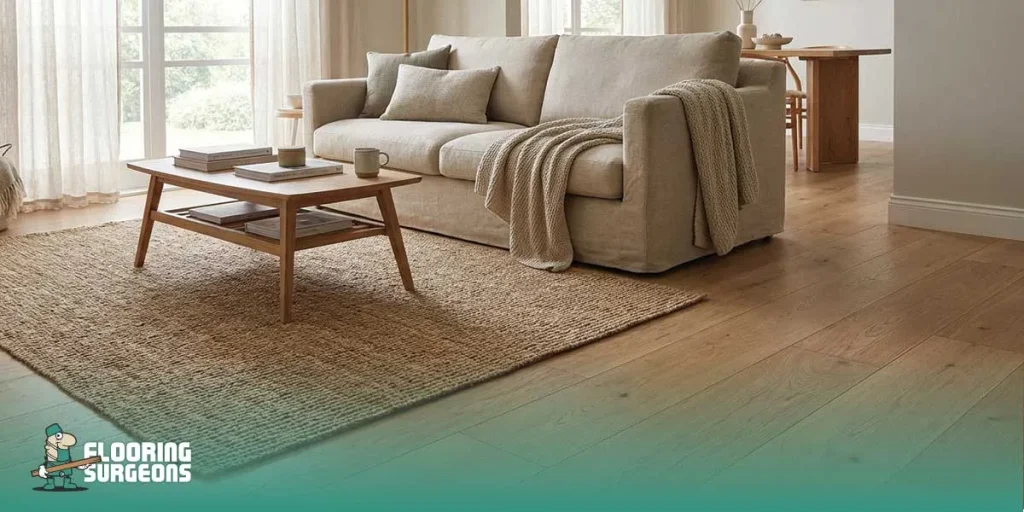
The cost of floating hardwood flooring depends on several factors, including wood species, veneer thickness, plank quality, underlay choice and the amount of subfloor preparation required before installation. Compared to glue-down hardwood, floating hardwood flooring is usually faster and less expensive to install because it does not require adhesives, extended drying times or specialised fitting equipment.
Floating Hardwood Cost Comparison
| Cost Factor | Floating Hardwood | Glue-Down Hardwood |
|---|---|---|
| Installation Cost | Lower | Higher |
| Installation Time | Faster | Slower |
| Subfloor Preparation | Still important | Important |
| Repair Difficulty | Easier plank replacement | More difficult repairs |
| Long-Term Stability | Moderate | Higher |
| Overall Value | Good in stable environments | Better for long-term heavy use |
Floating hardwood flooring can offer good long-term value when installed in dry, stable environments with proper subfloor preparation. However, in homes with frequent humidity fluctuations or moisture-related movement, long-term repair and maintenance costs may increase.
Maintenance and Lifespan of Floating Hardwood Floors
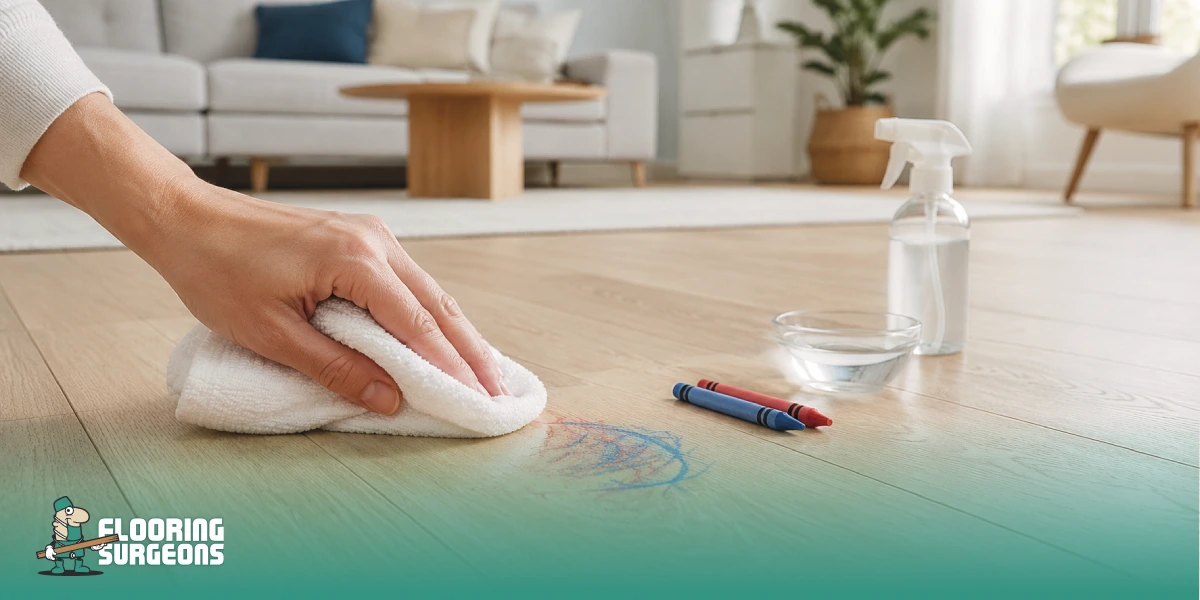
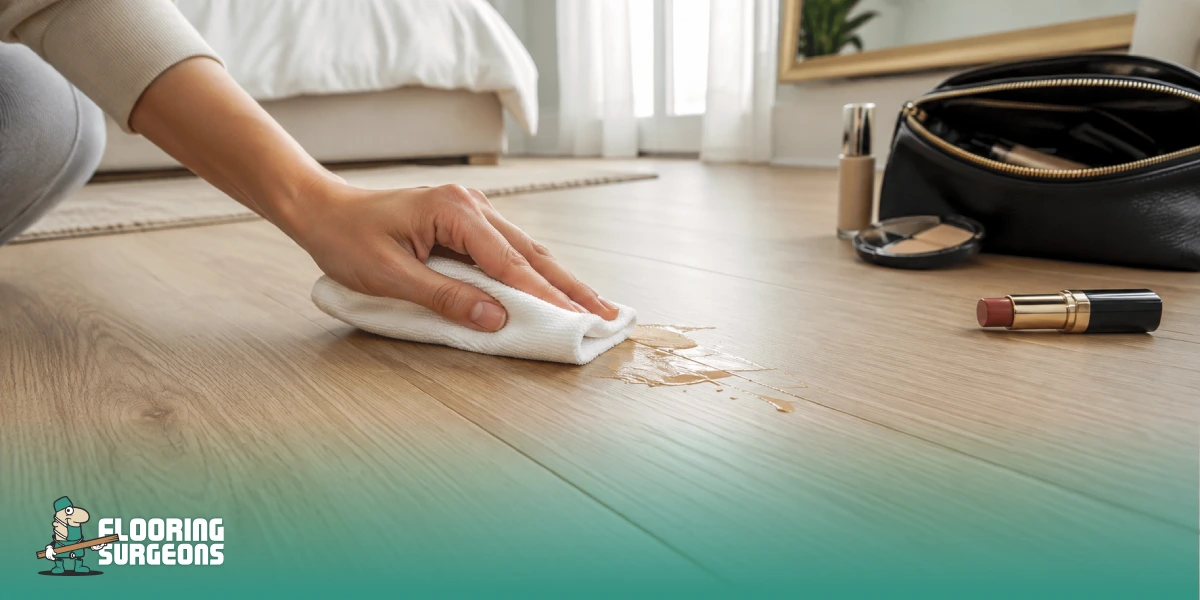
Floating hardwood floors can last for many years when they are installed correctly and used in stable indoor conditions. Because floating floors are not directly fastened to the subfloor, the click-lock joints absorb more movement over time, which can gradually affect long-term durability. Regular maintenance is relatively simple and mainly focuses on protecting the wood surface from wear, grit and excess moisture. To help floating hardwood flooring last longer:
- Keep the floor surface clean and free from grit.
- Use a gentle cleaner designed for wood flooring.
- Avoid wet mopping or excessive water exposure.
- Place protective pads under furniture legs.
- Maintain stable indoor humidity levels.
- Use a high-quality underlay designed for floating wood flooring.
Using protective pads under furniture and cleaning spills quickly can significantly reduce surface wear and joint stress over time.
Common Mistakes Homeowners Make With Floating Floors
Many problems with floating hardwood flooring are preventable. In most cases, issues such as movement, creaking, or joint stress are caused by installation mistakes or unsuitable room conditions rather than defects in the flooring itself. Some of the most common mistakes include:
- Installing floating hardwood over an uneven subfloor, which can lead to bounce, flex or joint gaps over time
- Using an underlay that is too soft for the click-lock system, reducing long-term stability
- Fitting floating hardwood in rooms with constant humidity changes or regular moisture exposure
- Leaving insufficient expansion gaps around the room perimeter, which can cause lifting or buckling
- Cleaning the floor with excessive water or wet mopping methods
- Dragging heavy furniture across the surface, which can stress or weaken the plank joints
Most long-term floating hardwood problems are caused by installation shortcuts or poor room suitability rather than the flooring product itself. At Flooring Surgeons, proper subfloor preparation, underlay selection, and installation planning are considered essential for achieving long-term performance of floating hardwood.

Haniye Ayanmanesh
As an expert writer for Flooring Surgeons, I combine technical SEO knowledge with a practical understanding of flooring, producing content that helps users make confident decisions while supporting long-term organic growth.