There is nothing more frustrating than stepping on your floor and feeling an annoying, loose edge beneath your feet. If your vinyl flooring is lifting at the edges, it is not just an aesthetic annoyance; if left untreated, it can allow moisture to seep underneath and potentially damage the subfloor. Whether the cause is heavy foot traffic, improper installation, or changes in humidity, spotting the issue early is the key to preventing a small problem from becoming a costly repair.
Fortunately, you often do not need to rip up the entire floor to fix it. With the right approach, you can stop vinyl flooring lifting at the edges and secure the affected areas before they start to peel or spread. In this guide, we will walk you through the most practical ways to repair the problem, explain when re-glueing vinyl floor edges is enough, and show you how to keep the floor stable for the long term.
Table of contents
Why Is Your Vinyl Flooring Lifting at the Edges?
If your floor is starting to peel, curl, or separate, there is usually more than one factor involved. In many homes, vinyl flooring lifting begins with a small weakness at the edge and worsens as people walk over it repeatedly. What looks like a minor cosmetic issue can quickly turn into a seam problem if the root cause is not fixed first.
One of the most common reasons is moisture. When water seeps beneath the planks or tiles, the adhesive can weaken and lose its grip. This is especially common in kitchens, hallways, entrance areas, and any room where spills are frequent. In these spaces, choosing a durable Luxury Vinyl Flooring option, can help reduce the risk of future edge problems.
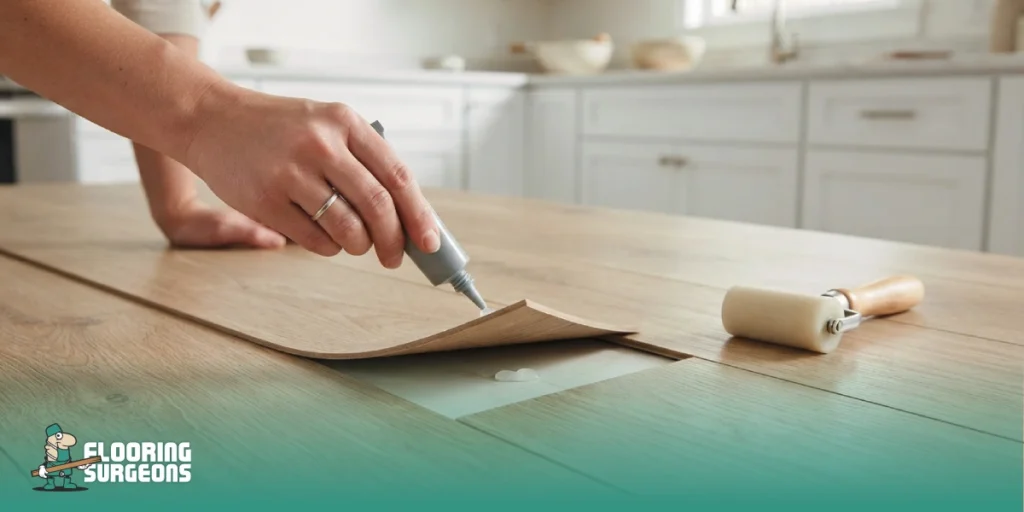
Poor subfloor preparation is another major cause. If the surface underneath is dusty, uneven, or still slightly damp during installation, the flooring may not bond properly from day one. Over time, that weak bond starts to show at the edges and corners first. Temperature changes can also play a part, especially if the material expands and contracts more than expected.
In some cases, the issue comes down to installation technique. Too little adhesive, incorrect rolling, or not allowing the floor to settle properly can all lead to edge movement later on. That is why, before you repair the visible damage, it is important to understand its cause.
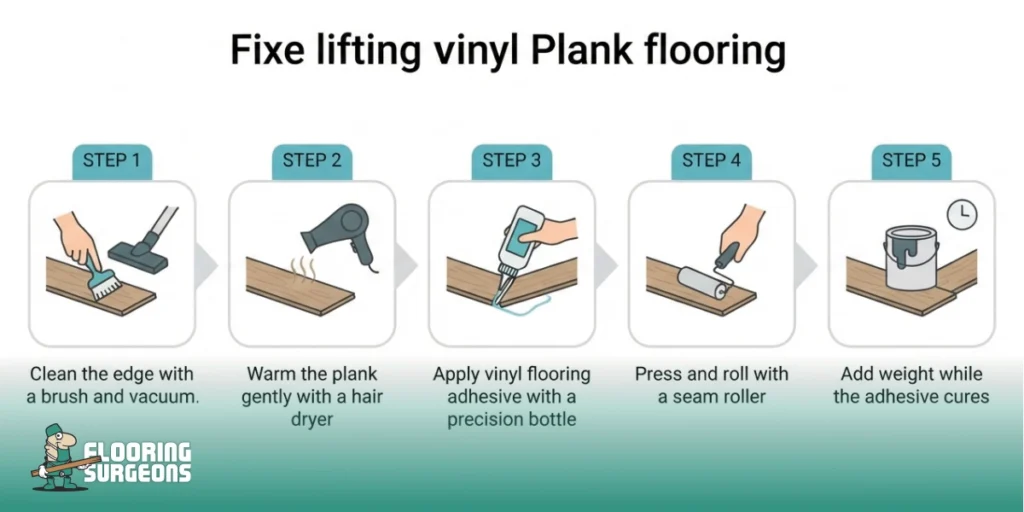
How to Fix Lifting Vinyl Plank Flooring Step by Step
Once you have identified the likely cause, you can move on to the repair itself. The good news is that fixing lifting vinyl plank flooring is usually straightforward if the plank is still in good condition and has not warped beyond repair.
Step 1: Clean the lifted area
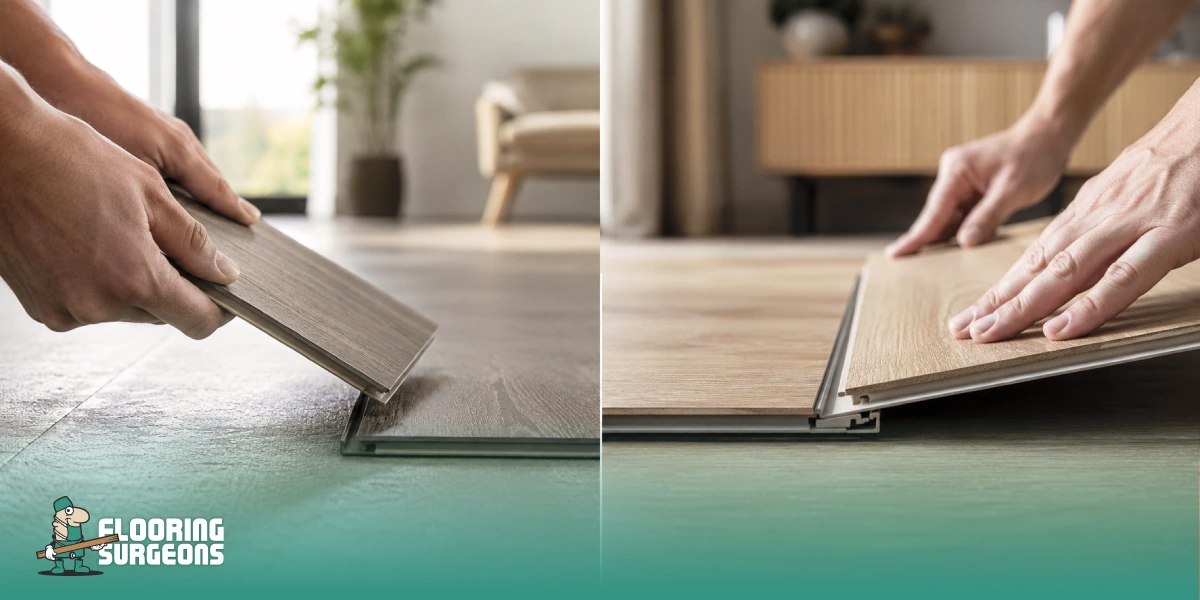
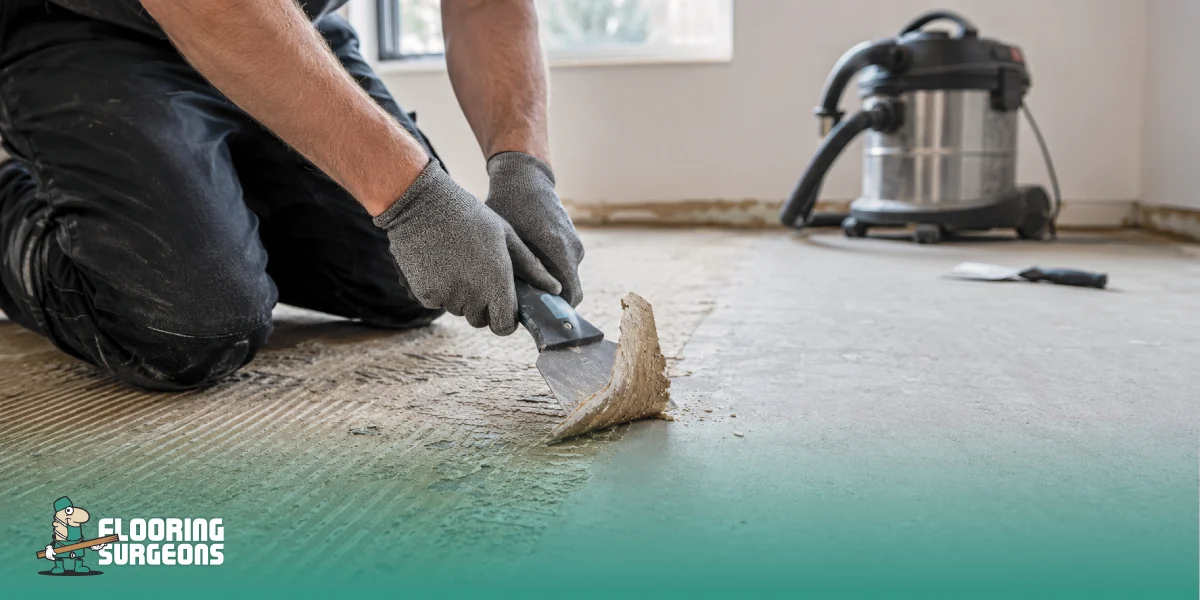
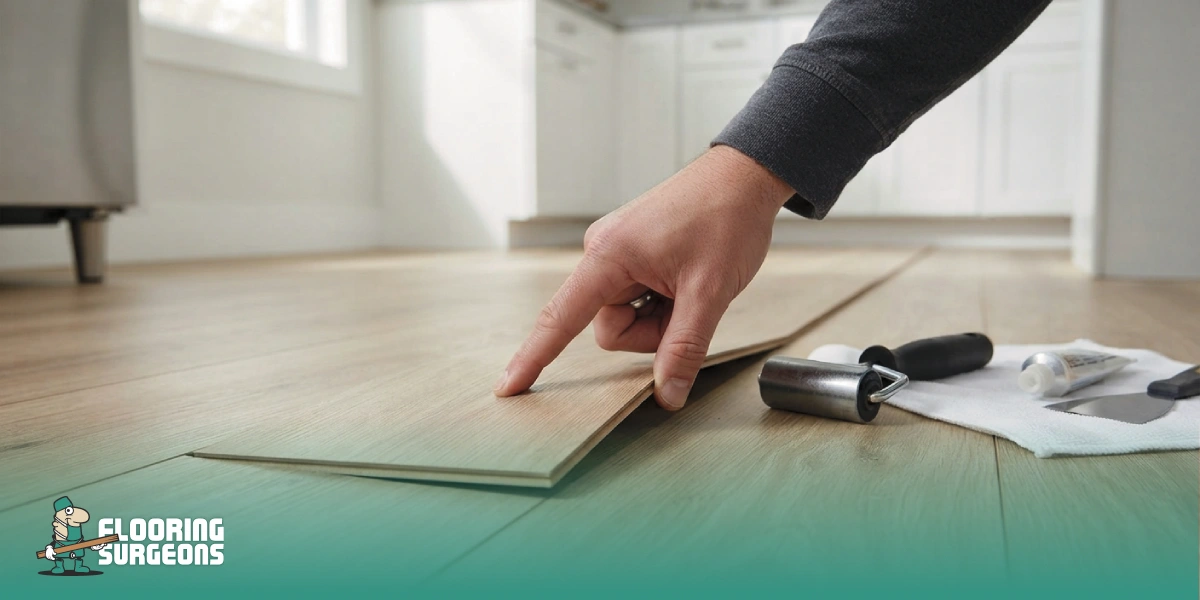
Start by gently lifting the loose edge just enough to remove dust, dirt, or dried adhesive underneath. A clean surface is essential if you want the repair to hold. Even a small amount of debris can stop the plank from bonding properly.
Step 2: Warm the plank carefully
If the vinyl feels stiff, use gentle heat from a hair dryer for a few seconds. This softens the material and makes it easier to flatten back into position without cracking the edge. Do not overheat it, especially with thinner vinyl products.
Step 3: Apply adhesive correctly
This is the most important part of the repair. When re-glueing vinyl floor edges, use a flooring adhesive designed for vinyl rather than a general household glue. Apply a small, even amount under the loose section, making sure it reaches the edge without overflowing onto the surface.
If you suspect the problem is spreading along the joints, you may need to glue down lifting vinyl flooring at the seams with a seam-friendly adhesive and apply firmer pressure across the joints.
Step 4: Press and roll the area
After applying the adhesive, press the plank down firmly by hand, then use a small roller if possible. This helps remove trapped air and improves contact between the vinyl and the subfloor.
Step 5: Add weight and let it cure
Place a flat, heavy object over the repaired section for the recommended drying time. Avoid walking in the area too soon, or the bond may fail before it fully sets.
If edge lifting occurred because the original fitting was rushed or the base was not properly prepared, it is worth reviewing How to Install Vinyl Flooring to prevent the same issue from recurring elsewhere in the room.
Professional Tips on How to Glue Down Lifting Vinyl Edges
A basic repair can solve many minor problems, but lasting results depend on doing the small details right. If you want to know how to properly glue down lifting vinyl edges, the goal is not just to stick the edge back down, but to create a bond that stays secure during daily use.
Here are a few practical tips:
- Use only a vinyl-compatible adhesive.
- Avoid over-applying glue, as excess adhesive can seep out and mark the surface.
- Always dry the area fully before repairing.
- Roll from the centre outward to push out trapped air.
- Check nearby seams, not just the visible lifted edge.
Quick-Reference: Vinyl Flooring Repairs
| Problem | Likely Cause | Best Fix |
| Slight edge curl | Weak adhesive or traffic | Clean, re-glue, press and weight |
| Lifting at seams | Joint stress or poor bond | Re-bond seam with proper adhesive and roller |
| Repeated edge lifting | Moisture or uneven subfloor | Repair cause first, then re-fix flooring |
| Warped or damaged plank | Water damage or heat distortion | Replace affected plank |
This is also the point where you should be realistic. If the vinyl has permanently curled, stretched, or hardened out of shape, adhesive alone may not be enough.
How to Prevent Vinyl Flooring from Lifting Up Again
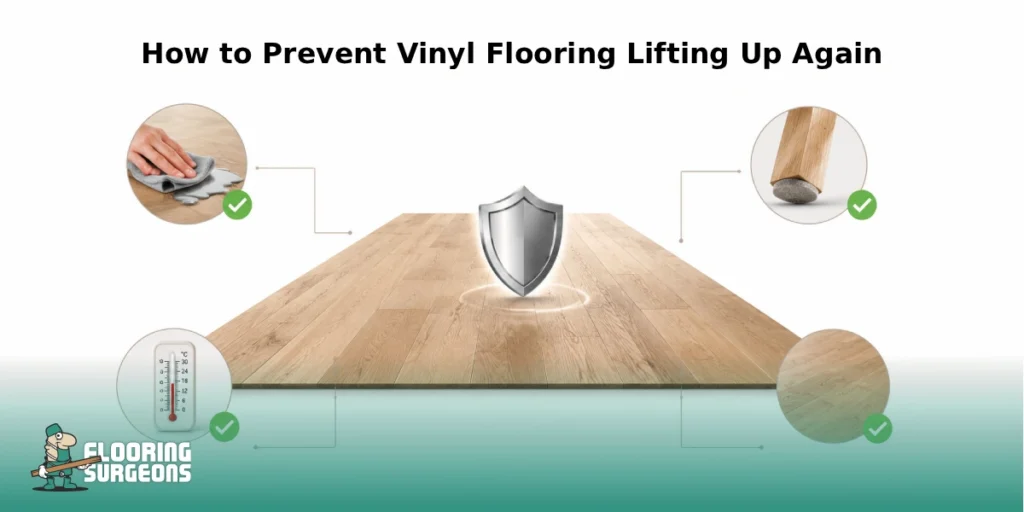
A repair is only part of the solution. To prevent the same issue from recurring, you need to reduce the conditions that caused it in the first place. Repeated vinyl flooring lifting up usually means there is an underlying moisture, installation, or product-quality issue that still needs attention.
Start by keeping the floor dry and wiping up spills quickly, especially around sinks, appliances, and doorways. Avoid dragging heavy furniture across the surface, and ensure the room temperature remains reasonably stable.
In busy or spill-prone rooms, choosing the right flooring makes a big difference. For family kitchens and similar spaces, Luxury Vinyl Flooring for Kitchen offers a more practical long-term solution because it is designed to handle moisture and daily wear more effectively.
Repair or Replace? Know When a Better Solution Makes Sense
Not every floor should be repaired. If only one edge has lifted and the plank is still flat, a local fix is usually enough. But if multiple boards are coming loose, the seams keep reopening, or moisture has already affected the base, replacement may save more time and money in the long run.
This is where homeowners often start comparing materials before reinvesting. If you are unsure whether to stay with vinyl or look at an alternative, our guide on Vinyl Flooring or Laminate Flooring can help you weigh durability, maintenance, and room suitability.
Conclusion: Keeping Your Floors Secure for Years
Fixing minor edge problems is a great way to extend the lifespan of your floor. However, the best defence against peeling and curling is starting with high-quality materials and professional-grade adhesives.
At Flooring Surgeons, we supply premium, durable flooring options designed to withstand heavy foot traffic and daily wear. Whether you are repairing an existing floor or looking to upgrade to a more stable option, choosing the right materials ensures your home remains beautiful and trip-free for years to come. Visit our collection to explore our range of moisture-resistant flooring options, or contact our team for expert advice on your next project.

Ana.Soltanpoor
I’m an SEO Specialist with a strong background in content management and organic search. I build data-driven content strategies by aligning user intent, search behavior, and SEO best practices to ensure every piece of content delivers clarity, relevance, and measurable organic performance.