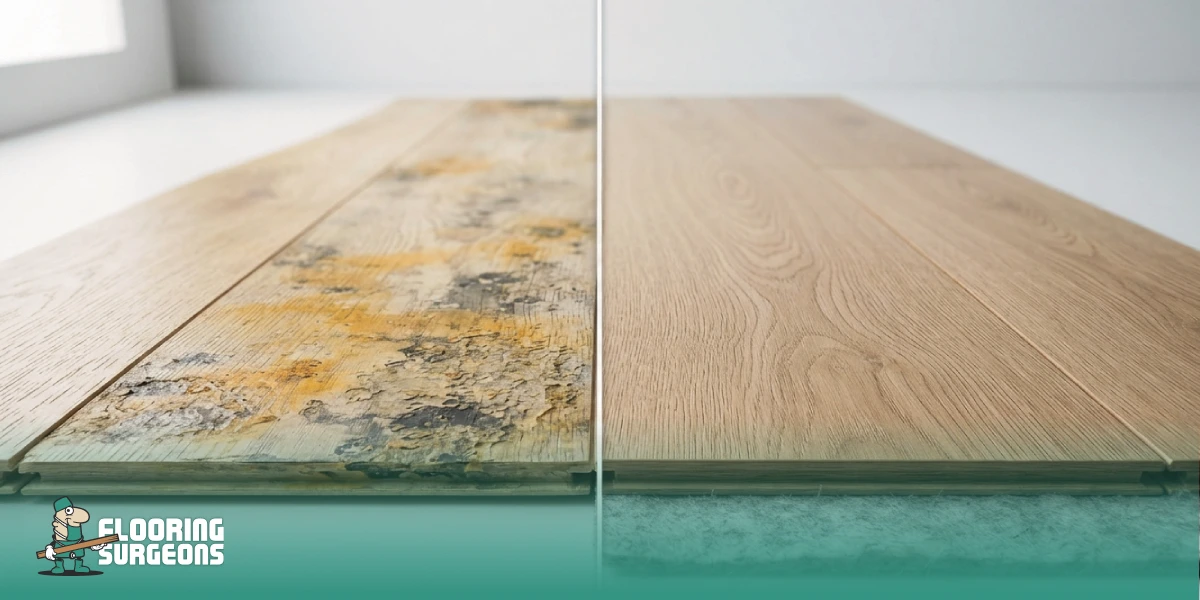
If you’ve noticed marks under a rug or you’re trying to protect your floor before buying one, the short answer is yes, rubber-backed rugs can damage vinyl flooring over time. The problem usually is not immediate scratching, but a chemical reaction that can leave stubborn stains, yellowing, or surface marking that is difficult to reverse.
This issue is especially relevant for homeowners with luxury vinyl plank (LVP), because vinyl is designed to be durable, water-resistant, and easy to maintain, yet it can still react badly to the wrong rug backing. In many cases, the cause is Plasticizer migration, where compounds in the rug backing interact with the vinyl surface and lead to discoloration.
In this guide, we’ll explain: Do rubber-backed rugs damage vinyl flooring? In practical terms, show you the warning signs to look for, and cover what kind of rug backing is safe for vinyl floors so you can protect your floor without compromising style or comfort.
Table of contents
Can You Put Rubber Mats on Vinyl Plank Flooring?
Usually, no. At least not for long-term use. If you’re asking, Can you put rubber mats on vinyl plank flooring?, the safest answer is to avoid direct rubber contact unless the flooring manufacturer clearly says it is safe.
Even durable Luxury Vinyl Flooring can react to certain rug or mat backings. The main risk is not scratching, but trapped moisture and material transfer that can affect the surface over time. For many homeowners with LVP, this damage may first appear as dull patches, staining, or slight surface changes that do not come off with normal cleaning.
Because some brands have strict floor warranty requirements, it is always best to use vinyl-safe alternatives rather than standard rubber-backed mats.
The Chemistry of Damage: Plasticizer Migration and Discoloration
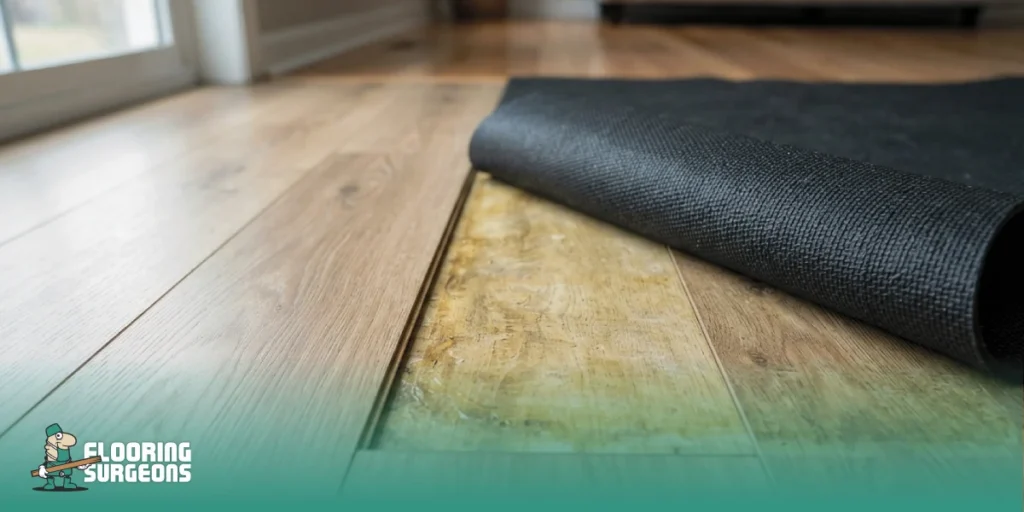
The real reason rubber-backed rugs can harm vinyl is a process called Plasticizer migration. Vinyl flooring contains plasticizers that help keep the material flexible, while some rug backings contain compounds that can react with that surface over time. When the two materials stay in contact for long periods, a chemical transfer may occur.
This reaction often shows up as discoloration, yellowing, dull patches, or stains that do not lift with normal cleaning. In many cases, homeowners mistake the mark for dirt, but the problem is actually within the surface layer of the floor rather than on top of it.
Heat, sunlight, humidity, and constant pressure can make the damage worse. That is why rugs placed in sunny rooms, entryways, or high-traffic spaces are more likely to leave visible marks if they remain in the same spot for too long.
In short, this is not just a cosmetic issue caused by dust or moisture alone. It is a material compatibility problem, which is why the damage can become permanent rather than something that can simply be wiped away.
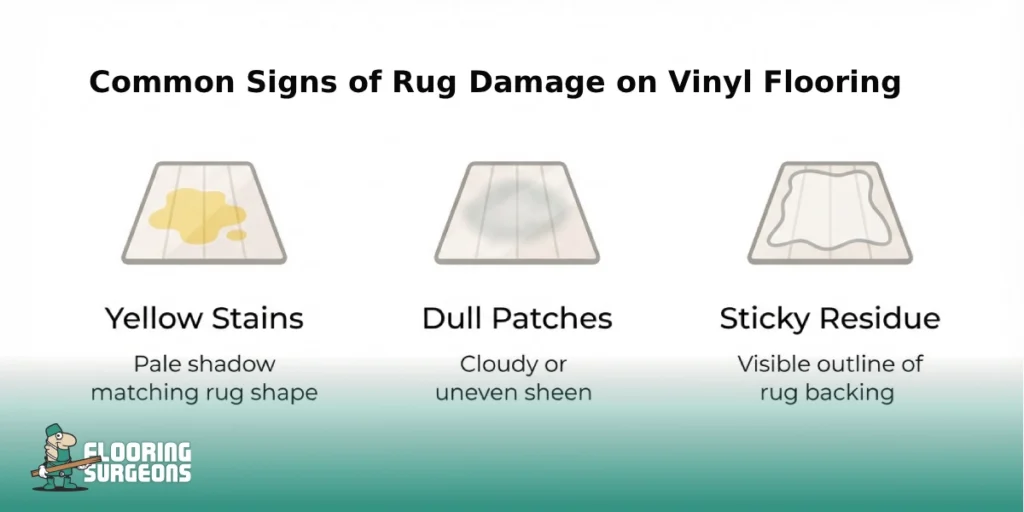
Common Signs of Rug Damage on Vinyl Flooring
Rubber-related damage on vinyl doesn’t always look dramatic at first. It often starts subtly, then becomes more noticeable the longer the rug stays in place, especially in warm or sunny areas.
Yellow stains on vinyl flooring from rugs
One of the most common warning signs is yellow stains on vinyl flooring from rugs. This can appear as a pale yellow “shadow” that matches the shape of the rug or runner. Importantly, it may remain even after you clean the area, because the staining is not just surface dirt.
Dull patches and uneven sheen (Discoloration)
Another giveaway is a change in shine: a patch that looks cloudy, muted, or uneven compared to the surrounding planks. This type of discoloration is often easiest to see when light hits the floor at an angle.
Sticky feel, residue, or a “ghost” outline
In some cases, you may notice slight tackiness, a film-like residue, or a visible outline where the rug used to sit. If the floor looks permanently “printed” by the backing pattern, that is usually a sign of prolonged contact and pressure.
If you spot any of these signs, the best next step is to remove the rug, let the area breathe, and avoid aggressive cleaners that could damage the wear layer. (We’ll cover safer prevention and cleaning steps later in the guide.)
What Kind of Rug Backing Is Safe for Vinyl Floors?
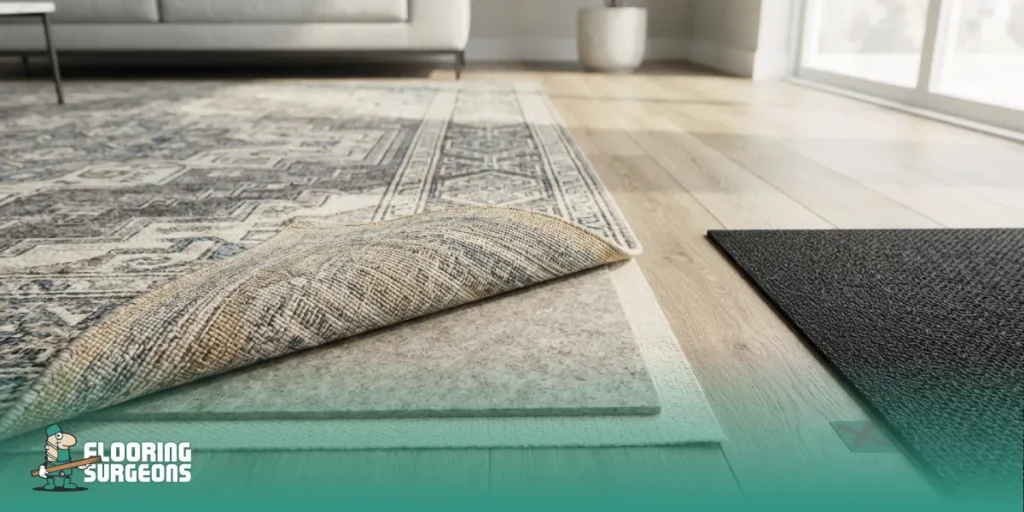
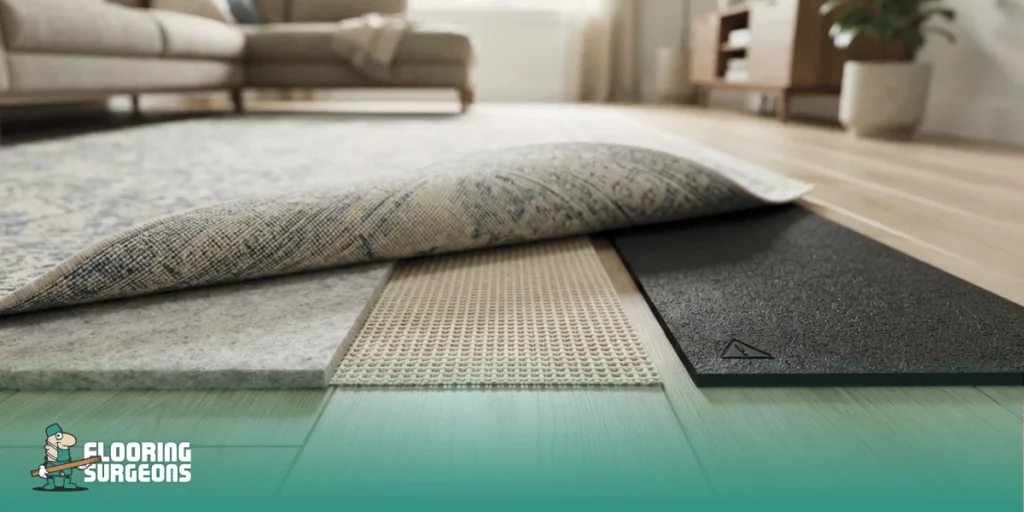
If you want to protect your floor without giving up comfort, the best choice is a breathable, non-reactive backing. When people ask, What kind of rug backing is safe for vinyl floors?, the safest options are usually felt, cotton, or other vinyl-friendly materials that do not trap moisture or transfer chemicals into the surface.
For many homes, non-slip rug pads made specifically for vinyl are a better option than standard rubber or latex-backed rugs. They help keep the rug in place while reducing the risk of staining or marking underneath. This matters even more in larger spaces where rugs stay in one position for long periods, such as rooms finished with Luxury Vinyl for Living Room designs.
By contrast, dense rubber, latex, and low-quality synthetic backings are more likely to cause long-term problems. If you want to avoid permanent marks, it is always worth checking that the rug pad is labelled as safe for vinyl before placing it on the floor.
Safe vs Unsafe Rug Backings for Vinyl Floors
Not all rug backings perform the same on vinyl. Some allow airflow and reduce the risk of marking, while others can trap moisture or react with the floor over time. If you want to keep your vinyl in good condition, choosing the right backing matters just as much as choosing the rug itself.
| Rug Backing Type | Safe for Vinyl? | Why |
| Rubber | No | May react with vinyl and cause staining or marking |
| Latex | Usually no | Can trap moisture and leave surface marks over time |
| PVC / synthetic non-breathable backing | No | Higher risk of chemical reaction and discolouration |
| Felt | Yes | Breathable, soft, and widely considered vinyl-friendly |
| Cotton | Yes | Less reactive and gentle on the floor surface |
| Natural fibre pads | Usually yes | Better airflow and lower risk of trapped moisture |
As a general rule, the safer choice is a breathable underlay that is clearly labelled for use on vinyl. That simple check can prevent stains, dull patches, and avoidable long-term surface damage.
How to Prevent Stains and Protect Vinyl Flooring
Prevention is far more effective than trying to remove a set-in stain. If you already have rugs in place, you don’t necessarily have to remove them, but you should take proactive steps to minimize the risk of damage.
First, try to move or rotate your rugs periodically. This allows the vinyl surface to breathe and prevents prolonged pressure in one specific spot, which is the primary catalyst for plasticizer migration. Keeping your floors dry is also essential; moisture trapped under a mat can accelerate any chemical reactions.
For regular maintenance, avoid harsh chemicals or abrasive scrubbers, as these can strip the protective finish and make your floors more susceptible to staining. You can follow our expert guide on how do you clean luxury vinyl flooring to ensure you are using a routine that cleans thoroughly without damaging the protective wear layer.
Finally, always check your manufacturer’s care guide. Adhering to specific floor warranty requirements is the best way to safeguard your investment. Some brands explicitly list which types of rug pads are approved for their products, and following these guidelines ensures you are fully protected.
Final Verdict: Protecting Your Vinyl Investment
In summary, while rugs add warmth and style to your home, the wrong backing can lead to permanent damage. To avoid yellow stains on vinyl flooring from rugs, it is best to prioritize breathable, vinyl-safe materials like felt or cotton over traditional rubber-backed options.
Choosing the right rug and following proper maintenance routines are the simplest ways to keep your floors looking new. At Flooring Surgeons, we believe that prevention is always easier and more cost-effective than repairing deep discoloration.

Ana.Soltanpoor
I’m an SEO Specialist with a strong background in content management and organic search. I build data-driven content strategies by aligning user intent, search behavior, and SEO best practices to ensure every piece of content delivers clarity, relevance, and measurable organic performance.