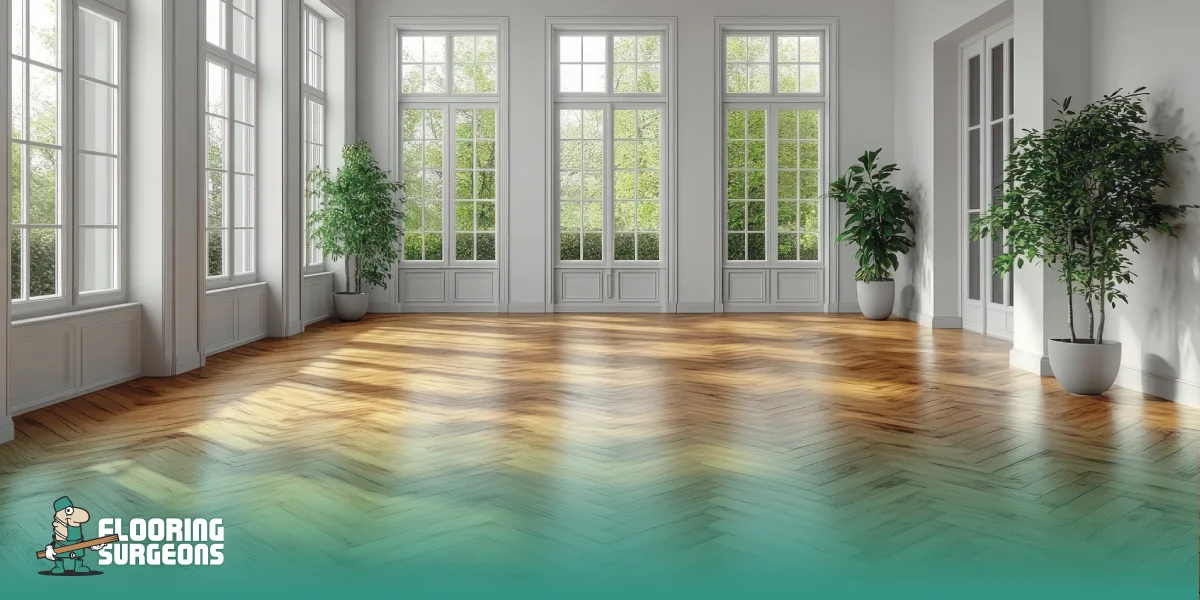
When you enter a room, your eye may be drawn to the colour of the walls or cabinets, or the furniture and lighting scheme. However, the direction of the flooring plays a big role in how cohesive the space feels. Keep reading to learn how the direction of hardwood flooring can completely transform the shape of your room.
Visual flow is the principle that explains how flooring can change the shape of a room. Simply put, your eye travels along the lines of the floorboards, making the room feel longer, wider, narrower, or more open than it is.
By manipulating the flow of your flooring, you can make a room seem more spacious, improve its proportions, or create better flow between two spaces. For instance, you can lay your flooring lengthwise to make a room feel longer. Or, you can lay flooring across a narrow room to make it feel more spacious. Even adding a pattern like chevron or herringbone creates movement and draws the eye in one direction.
In this guide, we’ll cover how things like flooring layout, plank direction, light placement, room size, and pattern play can all impact the visual flow of your room.
Table of contents
Why Flooring Direction Changes How a Room Looks
Floor direction is important because flooring dictates how your eyes naturally travel around the room. Floorboards, flooring planks, or repeat patterns will naturally draw your eye in one direction. That line creates a sense of continuity, making the room appear longer, wider, more open, or balanced – depending on how it’s installed.
Run flooriRun flooring planks lengthwise along the longest wall, and the room will feel longer and more stretched out. Flooring perpendicular to a narrow room will help to eliminate tunnel vision. When you’re working with small rooms, hallways, or open-plan spaces, the direction can have a big impact.
It’s a small change that makes a big difference. When done correctly, flooring direction can enhance a room’s proportions, complement the furniture layout, and make the space feel more intentional. Selecting a floor direction shouldn’t be done at random. Take into account the room’s shape, natural light sources, entranceways, and traffic flow.
Lengthwise Flooring Can Make a Room Look Longer
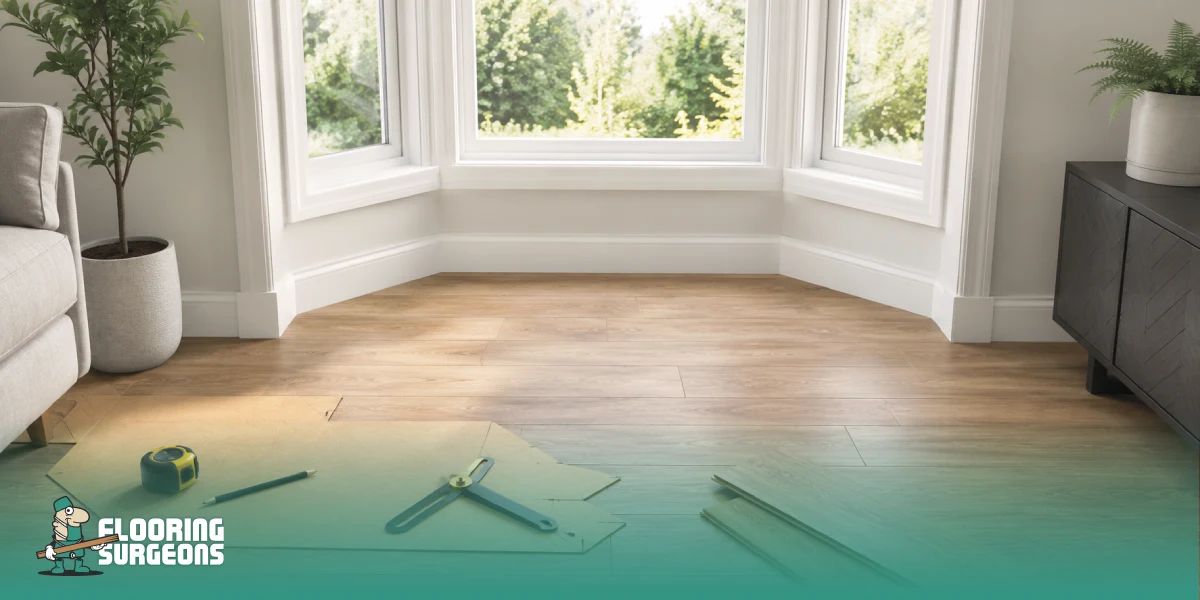
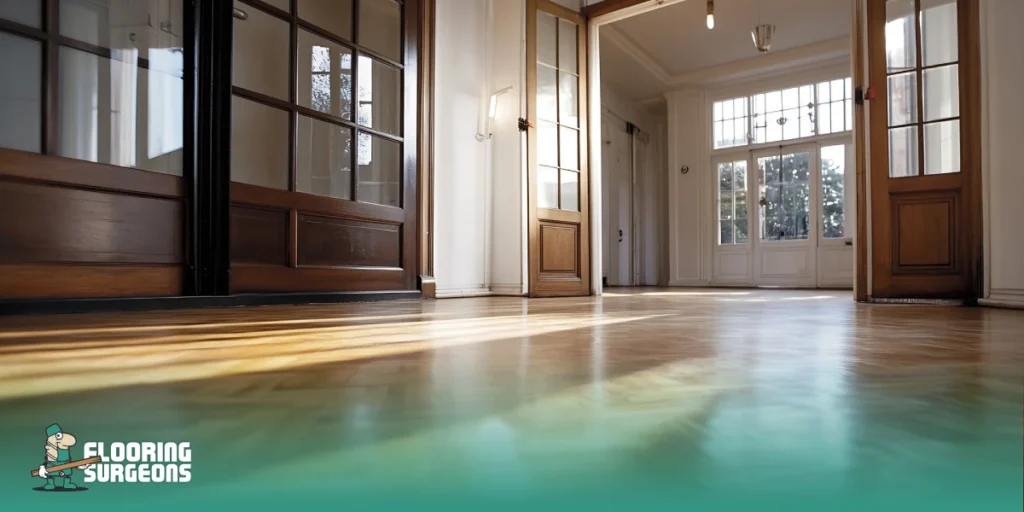
Installing flooring lengthwise is by far the most popular method for visually elongating your rooms. When your flooring boards run parallel with the longest wall, or lay out from your entry heading towards the back wall, it creates a force that leads your eye in that direction. Doing so creates a stronger illusion of depth throughout the space.
Lengthwise directionality can work fantastically in areas such as living rooms, bedrooms, and open concept rooms when you want your flooring to flow freely throughout. It can also help open up multiple areas of your home when the direction of the flooring flows from one room to another.
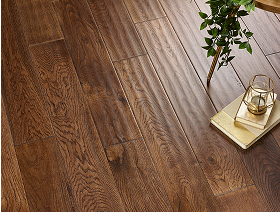
Typically, straight-plank laminate flooring is ideal for running lengthwise. The reason is that its straight lines help your eye travel lengthwise without being distracted by your floor pattern.
Widthwise Flooring Can Make a Room Look Wider
If your room is on the narrow side, you can always lay your flooring widthwise to make it feel less cramped. Running the boards side-to-side can give the illusion of width in rooms with little length. This layout can help minimize tunnel vision in elongated rooms such as bedrooms, hallways, and small living rooms.
Essentially, we take in our surroundings using our eyes. By placing laminate planks horizontally, our eyes travel from one side of the room to another. It makes the space feel wider and more proportionate rather than narrow and closed off.
Using this tip is great when installing laminate flooring for hallways. Since hallways are typically long and slender, a widthwise layout can help create the corridor effect. But don’t worry, your floors will still be functional.
Diagonal Flooring Can Make Small Rooms Feel More Open
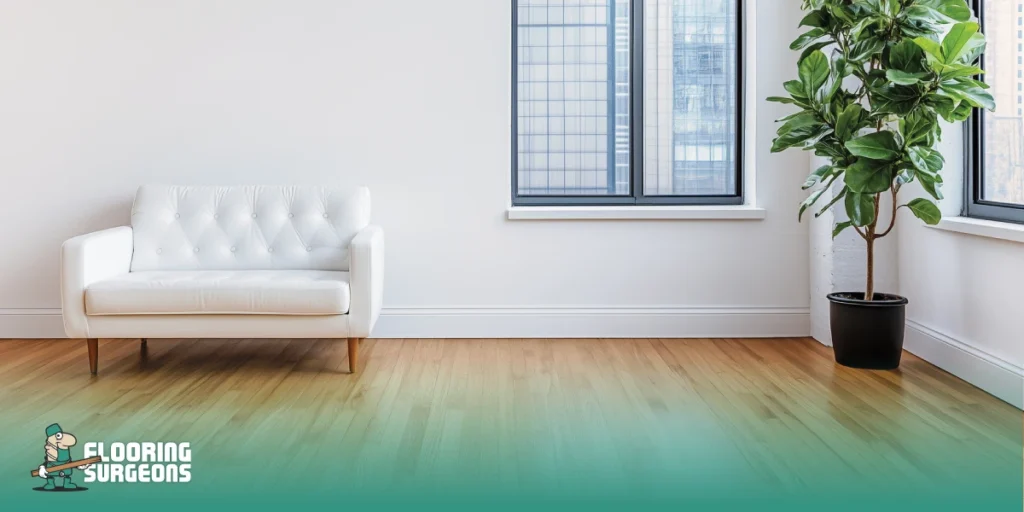
Installing flooring in a diagonal direction can open up a narrow or boxy room. When your flooring follows the walls, everything feels confined to the room’s square footage. But when your lines move diagonally, they direct your eye to the corners of the room. This allows for greater depth and direction.
A diagonal pattern is great for small bedrooms, living rooms, or even square rooms that feel too stiff. Anything that benefits from a little unpredictability or softer square footage can benefit from diagonal direction flooring.
Like any pattern, this one can get out of hand quickly. Remember that more cutting means more waste and a busier appearance. Diagonal direction floors are best used when you want to open up a room. If your goal is to make a small room look bigger through flooring, try installing it on an angle. But as with any direction, make sure it suits your room’s decor, furniture placement, and natural lighting.
Patterns Like Herringbone and Chevron Add Movement
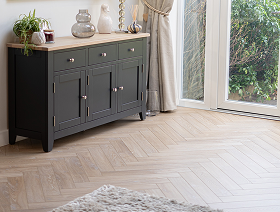
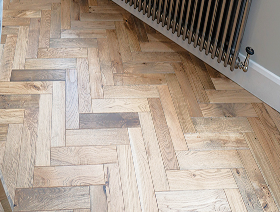
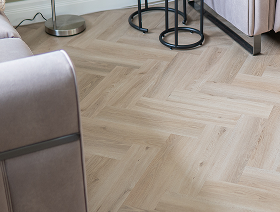
Patterned floors can create different room energies because they aren’t linear; they don’t send your eye on a straight path. Herringbone, chevron, and other patterns produce motion, rhythm, and direction. If you’ve got a bland space, floor patterning can help perk up the room.
Use chevron flooring if you want the eye to move forward when someone looks at your floors. It’s a V shape that helps direct attention and creates flow. Use it in long rooms for more movement, and in your feature space if you want a bold direction.
The last time you want to use patterned flooring is when you have a tiny room. Certain layouts can overwhelm a small floor, making it feel cluttered rather than open. Before you pick your funky layout, choose the right patterned flooring. Consider your room’s size, furniture, light source, and desired visual.
Flooring Direction, Plank Width and Lighting Work Together
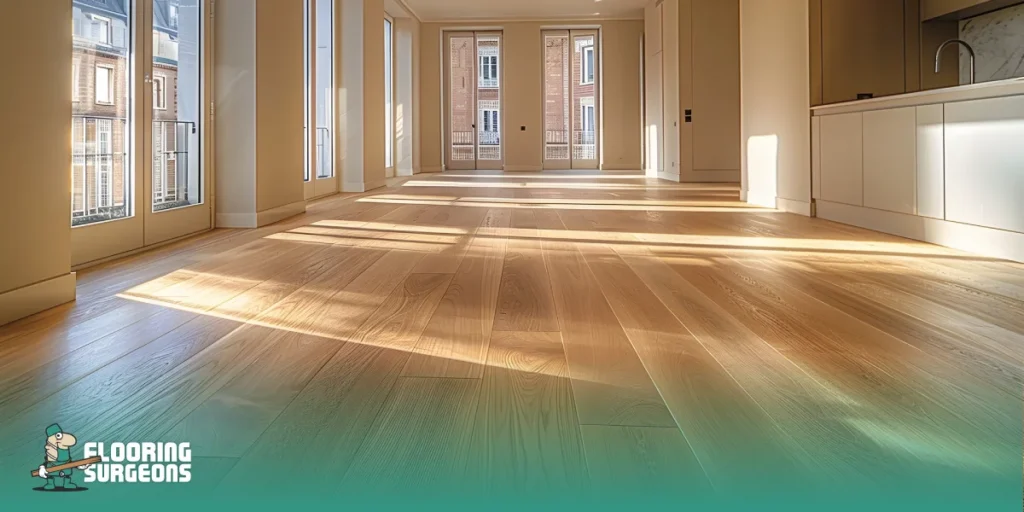
Choosing a flooring direction is important, but it isn’t the only factor that influences a room’s perception. Colour, plank width, natural lighting and amount of visible pattern all play a part. It’s possible for a room with correct directionality to still appear small if the flooring colour is too dark or busy, or if there are too many competing visual lines.
Lighter floors can often help a room feel more spacious. Light floors reflect more natural light, which can brighten a space. They also help minimize visual heaviness. Combine light laminate flooring with the correct plank direction. You’ll create the illusion of more space in small rooms, narrow hallways, and dark spaces.
Using wider floorboards also helps create a more serene feel, as fewer lines cross the room. Very narrow planks or busy patterns cause the eye to stop and start more as you scan the room, making a small space feel even smaller. Achieving the right combination of flooring layout, colour, plank width, and room shape is usually the key.
Best Flooring Direction by Room Type
| Room type | Best flooring direction | Visual effect |
| Narrow hallway | Across the width or along the walking path | Widthwise can make it feel wider, while lengthwise improves flow |
| Small bedroom | Toward the longest wall or natural light | Helps the room feel longer, calmer, and more open |
| Living room | Parallel to the longest wall | Creates a balanced look and smoother visual flow |
| Open-plan space | One consistent direction throughout | Makes connected areas feel larger and less broken up |
| Square room | Diagonal or lengthwise | Adds movement and reduces the boxy feeling |
| Feature area | Chevron or herringbone pattern | Creates direction, focus, and visual interest |
Common Mistakes When Choosing Flooring Direction
Lay out your flooring in the wrong direction, and your room could feel shorter, narrower or just off-balance. Learn from these popular mistakes to avoid the same layout blunders.
- Switching directions often: Flooring should flow through your home, and frequently changing the direction your flooring lies can make your home feel closed off and disjointed. Try to stick to one consistent direction as much as possible, especially when running flooring through multiple rooms.
- Blocking light: Many rooms benefit from laying flooring toward natural light. Running flooring away from windows can draw attention to joins or cast shadows. Take your front entrance and path of travel into consideration when you’re planning your flooring layout, too. (This is especially important for hallway layouts and open-concept rooms.)
- Crowding your space with pattern: Chevron, herringbone, and diagonal flooring can add a sense of movement to your space. In small rooms, too much pattern can make a small space feel even smaller.
Your flooring layout ideas should complement your room’s shape, not fight with it. Remember to take room proportions, furniture placement and your desired atmosphere into consideration when planning your flooring layout.
Final Thoughts
The psychology of how the direction of a room is down to optical illusion. Created by line, space and directional flow, the flooring size of the room remains the same; however, depending on your layout, the room can feel longer, wider, brighter or more spacious.
Rectangular rooms can appear more balanced when flooring is installed widthwise. Laying flooring parallel to the longest wall in your lounge or open-plan room can improve the flow. Diagonal floor layouts help to create movement and make smaller, square-shaped rooms feel less box-like.
Chevron flooring is another option that can create this effect. Direction plays a key role in how flooring can change a room’s perception. Here at Flooring Surgeons, we understand that choosing a floor goes beyond just picking a colour. The layout, direction, pattern, and plank size all contribute to defining a room. Why not experiment with a new floor layout and see how much of a difference a small change in direction can make?

Ana.Soltanpoor
I’m an SEO Specialist with a strong background in content management and organic search. I build data-driven content strategies by aligning user intent, search behavior, and SEO best practices to ensure every piece of content delivers clarity, relevance, and measurable organic performance.