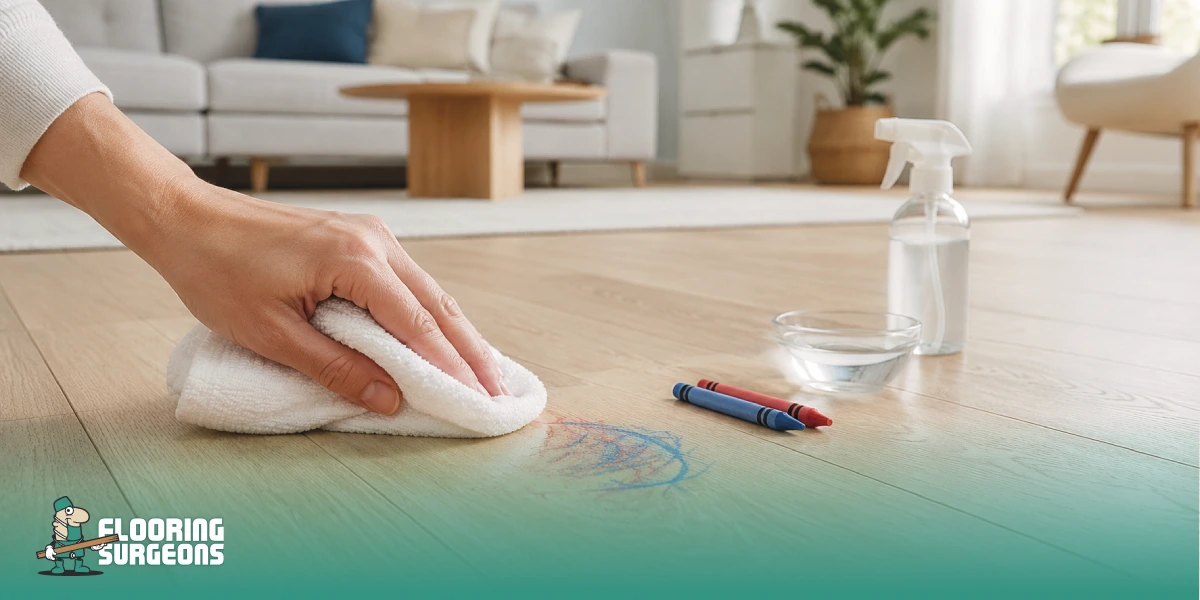
Crayon marks may look difficult to shift, but they can usually be removed without damaging the floor. The key is to work gently: lift off the wax first, use a mild cleaning solution and only move to a stronger treatment if colour remains. Because the wear layer on Luxury Vinyl Flooring can be scratched or dulled by harsh products, always check the manufacturer’s care instructions and test any cleaner in a hidden area before treating the stain.
What You’ll Need
Gather the following items before you begin:
- A plastic card or plastic scraper
- White microfibre cloths
- Warm water
- Mild washing-up liquid
- A pH-neutral LVT cleaner
- Isopropyl alcohol, if approved by the flooring manufacturer
- A clean, dry towel
Use white cloths so that no fabric dye transfers onto the floor. Avoid metal scrapers, stiff brushes and abrasive pads, even if the crayon has been there for some time.
Table of contents
How to Remove Crayon From LVT Flooring Step by Step
Begin with the mildest method. In many cases, fresh crayon can be removed with little more than a plastic card, diluted washing-up liquid and a soft cloth.
1. Check the Floor Care Instructions
Read the care guidance supplied with your flooring. Some manufacturers restrict the use of solvents, concentrated detergents or alcohol-based products. Test your chosen cleaner on an inconspicuous area. Allow the test patch to dry fully before checking for fading, dullness or a change in texture.
2. Lift Away the Crayon Wax
Hold a plastic card at a shallow angle and gently slide it beneath the wax. Work from the outside of the mark towards the centre to avoid spreading it. Do not use a knife, razor blade or metal scraper. These may cut through the protective wear layer and leave permanent scratches.
3. Clean the Area With Mild Soap
Add a small amount of washing-up liquid to warm water. Dampen a white microfibre cloth, wring it out thoroughly and wipe the mark using light, controlled movements. When cleaning plank luxury vinyl, keep water away from open joints and damaged edges. LVT may tolerate everyday spills well, but allowing liquid to sit around the seams is unnecessary.
4. Treat the Remaining Pigment
Once the wax has gone, a faint patch of colour may remain. Apply a pH-neutral LVT cleaner to the cloth according to its instructions, rather than pouring it directly onto the floor. If the manufacturer permits isopropyl alcohol, place a very small amount on a clean cloth and dab the affected area. Do not soak or scrub the surface. Stop immediately if the finish becomes dull, tacky or discoloured.
For wider guidance on product ingredients and household use, see Are Floor Cleaners Toxic? What you should know before choosing a stronger cleaner.
5. Rinse and Dry the Floor
Wipe the area with a separate cloth lightly dampened with clean water. This removes soap and cleaning-product residue, which can otherwise leave the floor looking cloudy. Dry the surface and the surrounding joints with a clean towel. Check the result in natural light once the floor is completely dry.
How to Get Crayon Off Vinyl Flooring Without Causing Damage
Knowing what not to use is just as important as following the cleaning steps. A strong solvent or abrasive pad might remove the colour quickly, but it could also permanently alter the finish.
| Avoid using | Why it may damage LVT |
| Metal blades or scrapers | They can cut or scratch the wear layer |
| Steel wool and abrasive pads | They may leave the finish dull or scuffed |
| Acetone or nail polish remover | These can discolour or soften some finishes |
| Undiluted bleach | It may affect the colour and surface coating |
| Steam cleaners or direct heat | Heat can affect joints, adhesive and plank stability |
| Excess water | Liquid may collect around seams and edges |
| Magic Eraser without a spot test | Its mild abrasive action may dull the finish |
WD-40, mineral spirits and homemade solvent mixtures should not be treated as universal LVT remedies. Use them only if the flooring manufacturer explicitly confirms that the product is compatible with the wear layer.
How to Remove Dried Crayon From LVT
An older mark may need more than one careful treatment. Start by placing a warm, damp cloth over the crayon for a short time. This may make the surface wax easier to lift with a plastic card. Next, repeat the mild-soap method. If the pigment persists, apply an approved LVT cleaner and allow it the recommended contact time. Avoid pressing harder or repeatedly scrubbing the same spot, as friction can change the sheen of the floor.
If you cannot clean crayon marks from vinyl plank flooring after two gentle attempts, stop and contact the manufacturer or a flooring specialist. A faint patch may be less noticeable than damage caused by repeated solvent use. For day-to-day care after the stain has been removed, follow a suitable routine for How Do You Clean Luxury Vinyl Flooring rather than applying stain-removal products during every clean.
Preventing a Crayon Stain on Vinyl Floor Surfaces
Place a washable craft mat beneath tables where children draw, and keep crayons away from uncovered floor areas when possible. Fresh marks should be dealt with promptly, before foot traffic spreads wax or pigment over a larger area. These precautions are particularly useful in family spaces fitted with Luxury Vinyl Flooring for Living Room settings. Although LVT is practical for busy homes, its surface still benefits from prompt cleaning and protection against scraping.
Removing Crayon Safely Without Harming Your LVT
The safest way to remove crayon from luxury vinyl flooring is to work in stages: lift the wax with plastic, clean the area with mild soap, treat remaining colour only with an approved product, then rinse and dry it thoroughly. If you are unsure about the floor’s finish or a stain does not respond to gentle cleaning, Flooring Surgeons can help you identify a suitable care method and avoid preventable damage.

Ana.Soltanpoor
I’m an SEO Specialist with a strong background in content management and organic search. I build data-driven content strategies by aligning user intent, search behavior, and SEO best practices to ensure every piece of content delivers clarity, relevance, and measurable organic performance.