Luxury hotel-style bedroom ideas work best when you build the “hotel feel” in layers: a calm colour palette, soft textures, warm lighting, and a floor that feels quiet and comfortable underfoot. Focus on symmetry, fewer but better accessories, and bedding that looks intentionally layered, not overstyled. If you want a bedroom that feels calm and expensive without overdoing the decor, these cosy bedroom flooring ideas are a good place to start.
In real hotel-style bedrooms, the sense of luxury usually starts from the ground up. Flooring, texture, and lighting work together to create warmth, silence, and balance long before you notice the bedding or accessories. A plush carpet, a soft rug over wood flooring, warm layered lighting, and a restrained colour palette do far more for a luxury hotel bedroom feel than statement furniture ever will.
This guide breaks down luxury hotel bedroom ideas the way hotels actually design them, not the way they’re often presented online. You’ll see how flooring choices influence the atmosphere, why some hotel bedrooms feel expensive with minimal decor, and how to recreate that same hotel-style bedroom experience in real UK homes with realistic layouts and light conditions. If you want a bedroom that genuinely feels like a luxury hotel, not just one that looks like it in photos, this is where the difference is made.
Table of contents
What Actually Makes a Bedroom Feel Like a Luxury Hotel?
A luxury hotel-style bedroom does not feel expensive because of one standout feature. It feels luxurious because every detail works together to create calm, comfort, and balance. The main elements are:
- Layered bedding: crisp sheets, a full duvet, pillows, and a simple throw
- Warm lighting: soft bedside lamps instead of harsh ceiling light
- Balanced layout: symmetry, clear spacing, and no visual clutter
- Soft flooring and texture: carpet, rugs, curtains, and fabrics that absorb sound and add warmth
In most homes, the hotel feel is lost when the room becomes too bright, too busy, or too hard underfoot. The goal is not to add more decoration, but to make the bedroom feel quieter, softer, and more intentional.

Start From the Floor: The Foundation of a Hotel-Style Bedroom
If one element decides whether a bedroom feels like a luxury hotel or just a well-decorated room, it is the floor. Before bedding, lighting, or accessories, flooring sets the mood, controls sound, and changes how comfortable the room feels the moment you walk in.
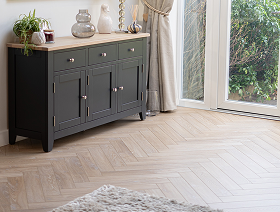
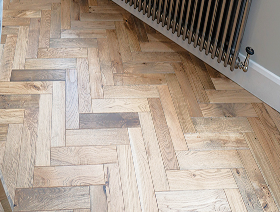
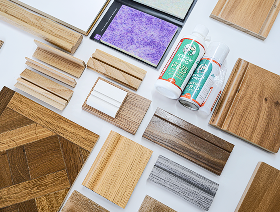
For a boutique-hotel look, herringbone flooring can instantly make a bedroom feel more refined without adding extra furniture. Carpet can also work well when the goal is warmth, softness, and acoustic comfort. The right bedroom flooring should help the room feel:
- quieter, by reducing echo and footstep noise
- warmer, especially when stepping out of bed
- softer, without looking heavy or bulky
- more balanced, by supporting the bed and furniture visually
- calmer, by reflecting light gently rather than harshly
This is why luxury hotel bedrooms rarely use flooring as an afterthought. If the floor feels cold, noisy, glossy, or visually busy, the rest of the room has to work harder to compensate. But when the flooring is right, the bedding, lighting, and textures feel more natural, and the whole bedroom becomes easier to style.

Carpet vs Wood Flooring in Luxury Hotel Bedrooms
When people picture a luxury hotel bedroom, they often imagine either a plush carpeted floor or a sleek wood surface. In reality, hotels don’t choose carpet or wood based solely on style. They choose based on how the room needs to feel, sound, and perform over time. The difference isn’t “carpet vs wood”. It’s how each option is used and why.
Why Many 5-Star Hotel Bedrooms Still Use Carpet
In large, high-end hotels, carpet remains the most common bedroom flooring for a reason. It controls sound, softens movement, and creates an immediate sense of calm the moment guests step inside. A well-chosen luxury bedroom carpet:
- Absorbs footstep noise and echo
- Feels warm and comfortable first thing in the morning
- Makes large rooms feel quieter and more intimate
- Ages evenly without drawing attention to wear paths
This is why many five-star hotels still carpet entire bedrooms, even when public areas use hard flooring. The goal isn’t decoration. It’s sleep quality, acoustic comfort, and emotional calm.
Why a Boutique Hotel Bedroom Often Uses Wood Flooring
Boutique and design-led hotels are more likely to use wood flooring in bedrooms, but almost never in isolation. Wood adds visual sharpness and works well in smaller, curated spaces, especially when the design leans modern or minimalist. However, there’s always a balancing layer. You’ll typically see:
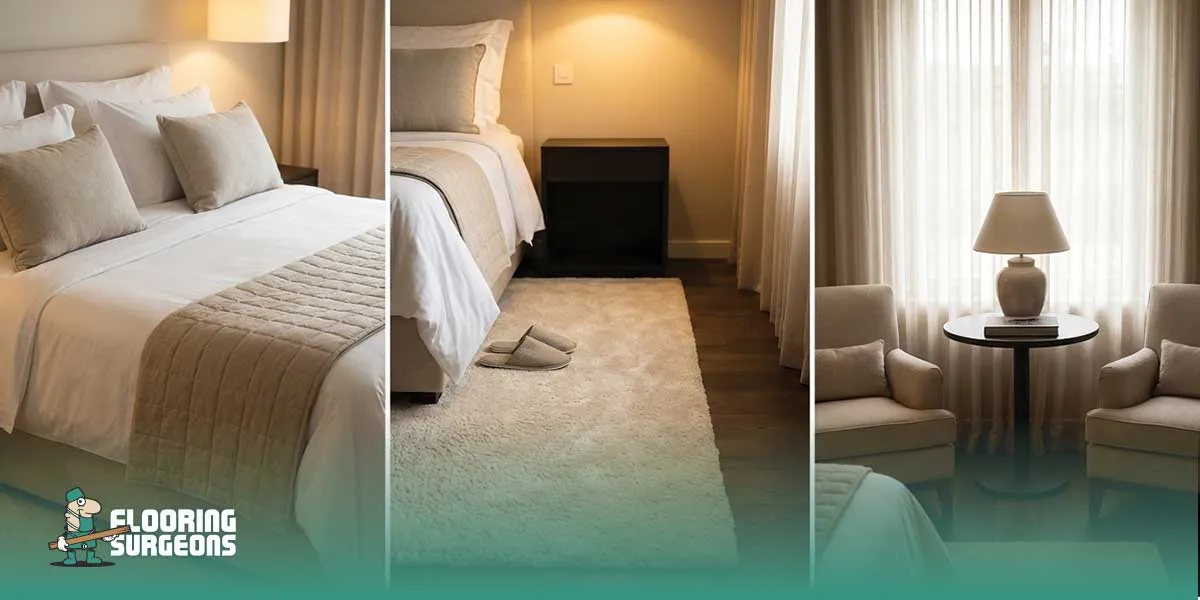
- Large rugs placed under and around the bed
- Soft textiles to offset sound and hardness
- Matte or lightly finished wood, not high-gloss
Without that balance, wood floors feel cold and noisy very quickly. Hotels know this, which is why exposed bedroom floors without rugs are rare in genuine luxury settings.

Why Luxury Hotels Use Carpet or Wood Flooring?
Hotels aren’t choosing between carpet and wood based on trends. They’re optimising for three things homeowners often overlook:
- Silence: Bedrooms must feel quiet, even in busy buildings. Carpet delivers this naturally. Wood needs help.
- Softness underfoot: Luxury bedrooms should feel gentle, not hard, especially around the bed.
- Light behaviour: Carpet diffuses light. Wood reflects it. Hotels choose finishes based on room size, lighting design, and desired mood.
This is why there’s no single “right” answer. There’s only the right choice for the feel you’re trying to create.
Carpet vs Wood Flooring for Hotel-Style Bedrooms at Home
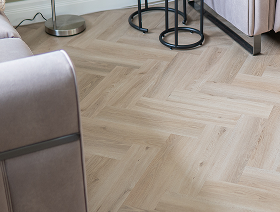
In UK homes, the same logic applies, but space and acoustics matter even more. For a practical hotel-style look, luxury vinyl flooring for the bedroom can also work well when paired with a large rug to add warmth, softness, and better sound control. Many homeowners aiming for hotel-style bedrooms get better results by:
- Using carpet for a full-room calm and warmth.
- Or pairing wood flooring with a large, soft rug that anchors the bed.
Hotel Bedroom Colour Palettes That Always Feel Expensive
Luxury hotel bedrooms rarely rely on bold colour. They feel expensive because the palette is calm, warm, and controlled. Instead of trying to impress with strong contrasts, hotels use colours that make the room feel balanced, quiet, and timeless. Most hotel bedroom colour palettes are built around warm beiges, soft greiges, muted taupes, and layered off-whites. These tones gently reflect light, reduce visual noise, and let flooring, bedding, curtains, and textures create depth.
Consistency is what makes the palette work. Walls, flooring, soft furnishings, and lighting should stay within the same colour family. Hotels usually avoid sharp whites, cold greys, and high-contrast feature walls because they can make bedrooms feel harsher and less relaxing. In real homes, the same rule applies:
- Use warm neutrals instead of cold or stark tones.
- Keep the contrast between walls, floors, and fabrics low.
- Let texture create interest instead of adding more colour.
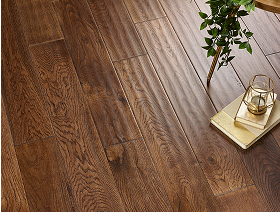
Warm-toned carpet can add softness and depth, while light wood flooring with a subtle grain keeps the room grounded without making it feel busy. The more restrained the palette is, the more expensive and hotel-like the bedroom feels. For homeowners who want a warmer wood look with better stability, engineered flooring for the bedroom can be a practical option for creating a calm, hotel-style finish.
Layered Bedding: The Visual Centrepiece of Hotel Bedrooms
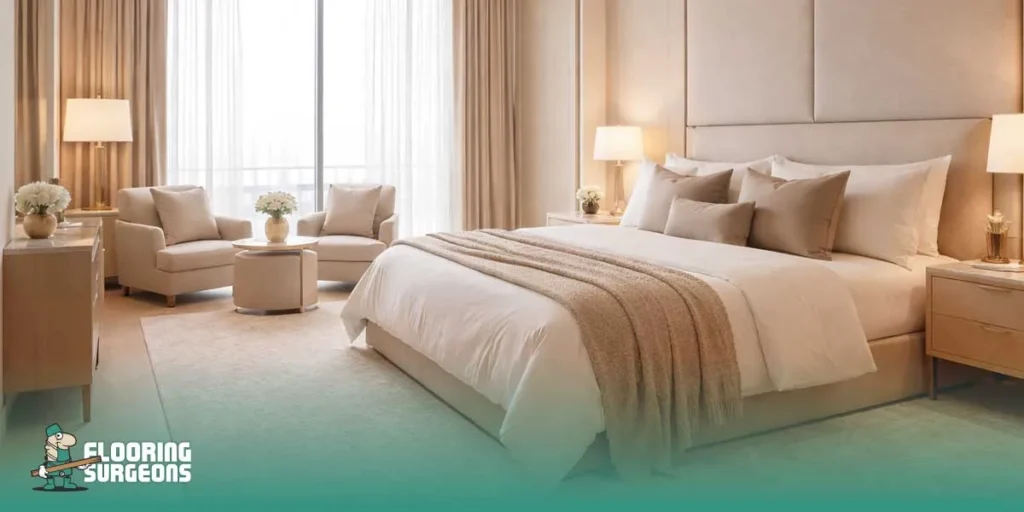
In luxury hotel bedrooms, the bed is the focal point. What creates that recognisable hotel look is not one expensive duvet, but the way each bedding layer works together. Hotels use layered bedding to add depth, shape, and softness while keeping the colour palette simple and calm.
What “Layered” Actually Means in Hotel Bedding
Layering is not about adding more items. It is about placing each layer in the right order, with a clear purpose. Most luxury hotels follow this structure:
| Bedding Layer | Purpose in Hotel Bedrooms | What It Adds Visually |
| Crisp fitted + flat sheet | Clean base layer | Sharpness and freshness |
| High-quality duvet | Main comfort layer | Volume without mess |
| Light quilt or coverlet | Controls shape | Structure and symmetry |
| Throw or runner (folded) | Accent layer | Depth and subtle contrast |
| 2–4 pillows (layered) | Vertical balance | Height and softness |
This approach keeps the bed full and inviting without making it look busy. That is why luxury hotel bedding usually avoids loud prints and relies on clean lines, neutral tones, and texture instead.
Why Hotels Avoid Overstyled Beds
One common mistake at home is adding too many cushions, throws, or decorative pieces. Hotels avoid this because every layer needs to have a purpose. Too many details can make the bed feel cluttered instead of luxurious. Hotels usually focus on:
- visual balance from the front
- easy, clean styling
- a bed that looks calm from every angle
A simple rule: if the bed takes too much effort to style every day, it is probably overdone.
Layered bedding works best when it feels structured but relaxed. Crisp sheets, a full duvet, a neat coverlet, and one folded throw are usually enough to create a calm, high-end hotel look.
Lighting That Instantly Creates a Hotel Atmosphere
Hotel-style bedroom lighting is less about brightness and more about warmth, placement, and control. Luxury hotels rarely rely on one strong ceiling light. Instead, they use softer lighting zones to create a calm, restful atmosphere.
The Lighting Formula Hotels Actually Use
Most hotel-style bedrooms follow a simple, repeatable structure:
| Lighting Zone | Typical Hotel Choice | Why It Works |
| Bedside | Matching table lamps or wall sconces | Creates symmetry and calm |
| Ambient | Soft ceiling or cove lighting | Gentle background glow |
| Accent | Lamps near chairs or dressers | Adds depth without brightness |
| Control | Multiple switches or dimmers | Adjusts mood instantly |
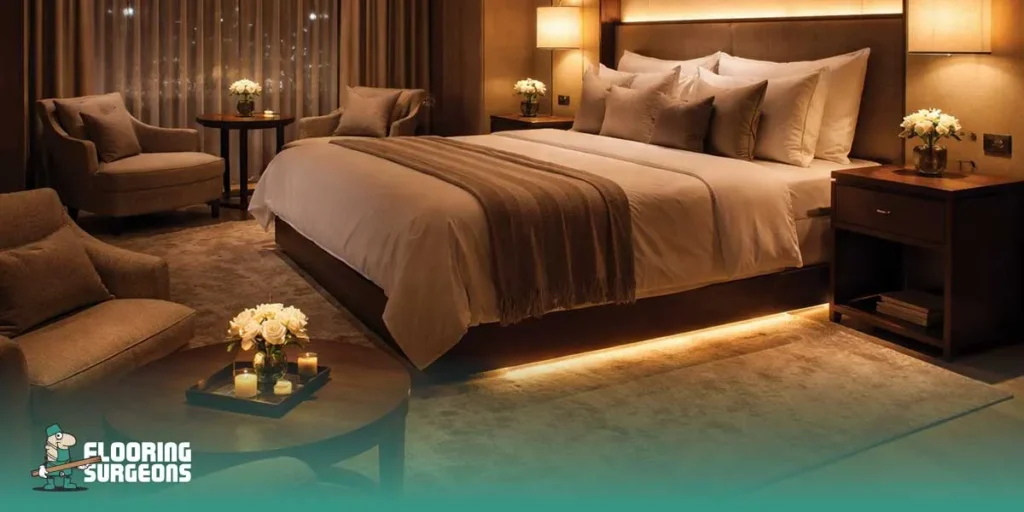
Warm light is key. Cold white bulbs can make a bedroom feel clinical, while warm lighting softens textures, flatters neutral colours, and makes bedding look more inviting. Avoid one bright overhead light. Use two or three softer light sources instead, especially around the bed. This creates the calm, layered atmosphere that makes hotel bedrooms feel luxurious.
Symmetry, Balance & Spacing: Why Hotel Bedrooms Feel Calm
Luxury hotel bedrooms feel calm because their layouts are simple, balanced, and easy on the eye. The bed is usually centred, furniture is placed with purpose, and nothing feels crowded or accidental. To create the same hotel bedroom layout at home, focus on:
- centred bed placement as the main visual anchor
- matching bedside lamps or tables for symmetry
- clear walking space around the bed
- balanced furniture on both sides of the room
- empty space instead of filling every corner
This works even in smaller bedrooms. A room does not need to be large to feel luxurious; it needs to feel ordered. When furniture, lighting, and flooring are balanced, the bedroom feels calmer, more spacious, and more hotel-like.

Luxury Bedroom Textures That Create a Hotel-Style Feel
Luxury hotel bedrooms feel expensive because the textures are soft, layered, and controlled. The furniture can be simple, but the surfaces need to feel warm, calm, and comfortable. For a hotel-style bedroom, focus on textures such as:
- soft carpet or a large rug underfoot
- cotton or linen bedding
- a padded or upholstered headboard
- thick curtains
- matte or natural finishes
The key is balance. Too many strong textures can make the room feel busy, while too many flat surfaces can make it feel cold. Hotels usually mix soft, matte, and structured materials so the bedroom feels calm without looking overstyled.
Flooring matters here, too. Carpet adds softness and absorbs sound, while wood flooring works best when paired with a large rug. This helps the room feel warmer, quieter, and more complete.
Luxury Hotel Style Bedrooms for UK Homes
Luxury hotel-style bedrooms do not depend on large rooms or perfect layouts. Most UK homes have smaller spaces, lower ceilings, and less natural light, which is why simple, balanced design choices usually work better than showroom-style decoration. In many UK bedrooms, the hotel feel comes from:
- warm neutral colours
- soft flooring or large rugs
- layered bedding
- warm lighting
- uncluttered layouts
Small bedrooms can still feel luxurious when the space is calm and well-balanced. Hotels rarely fill every corner, and the same approach works well in UK homes. Keeping furniture simple, leaving clear space around the bed, and reducing visual clutter often make the room feel larger and more relaxing.
The goal is not to recreate a five-star suite exactly. It is to borrow the elements that make hotel bedrooms feel warm, quiet, and comfortable in everyday living.

Common Mistakes That Ruin the Hotel Look at Home
Most hotel-style bedrooms fail because the room feels too busy, too bright, or too cluttered. The most common mistakes include:
- overdecorating surfaces with too many cushions, frames, and accessories
- using cold or harsh lighting instead of warm, layered light
- ignoring the floor, especially hard flooring without rugs or soft textures
- using too many contrasting colours that compete for attention
- filling every corner with furniture instead of leaving breathing space
Luxury hotel bedrooms feel calm because nothing fights for attention. Simple layouts, warm lighting, soft textures, and controlled colour palettes usually create a more expensive look than adding more decoration.

Final Touches That Make a Bedroom Feel 5-Star
Small details are often what separate a nice bedroom from one that feels genuinely hotel-like. The goal is not to add more décor, but to make the room feel calmer, softer, and more balanced. Simple hotel-style finishing touches include:
- Matching bedside lamps for symmetry
- Layered bedding with one soft throw
- Clear, uncluttered bedside tables
- One standout texture instead of too many materials
- Soft flooring or rugs to reduce noise and add warmth
If you want the hotel to look comfortable as well as stylish, the flooring matters just as much as the décor. Flooring Surgeons can help you choose bedroom flooring that feels warm, quiet, and easy to live with in the long term.

Haniye Ayanmanesh
As an expert writer for Flooring Surgeons, I combine technical SEO knowledge with a practical understanding of flooring, producing content that helps users make confident decisions while supporting long-term organic growth.