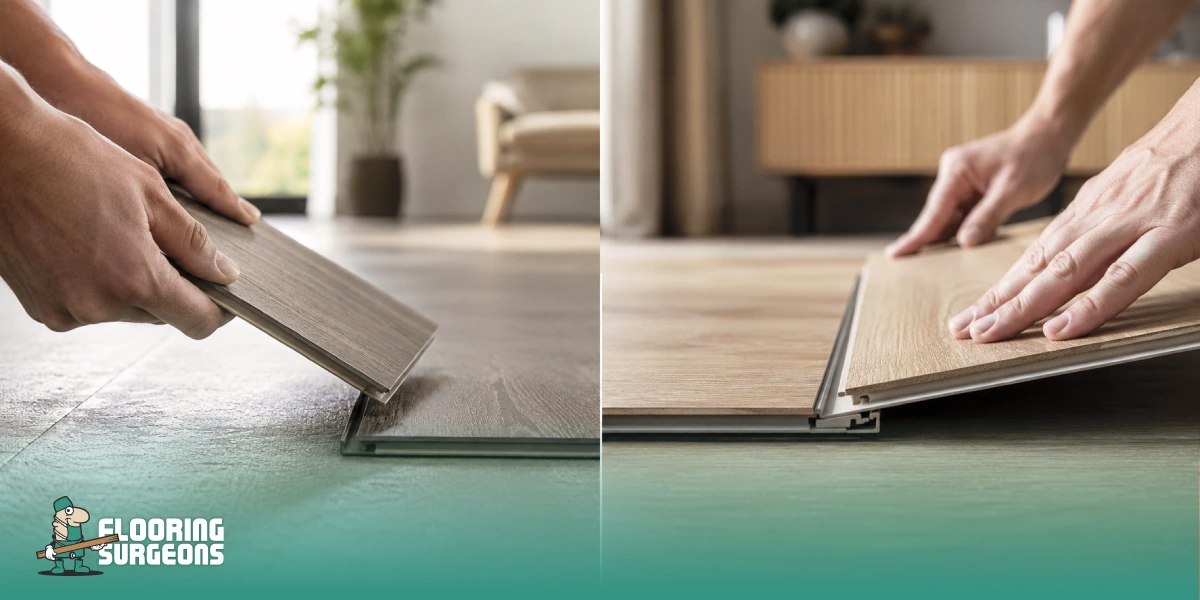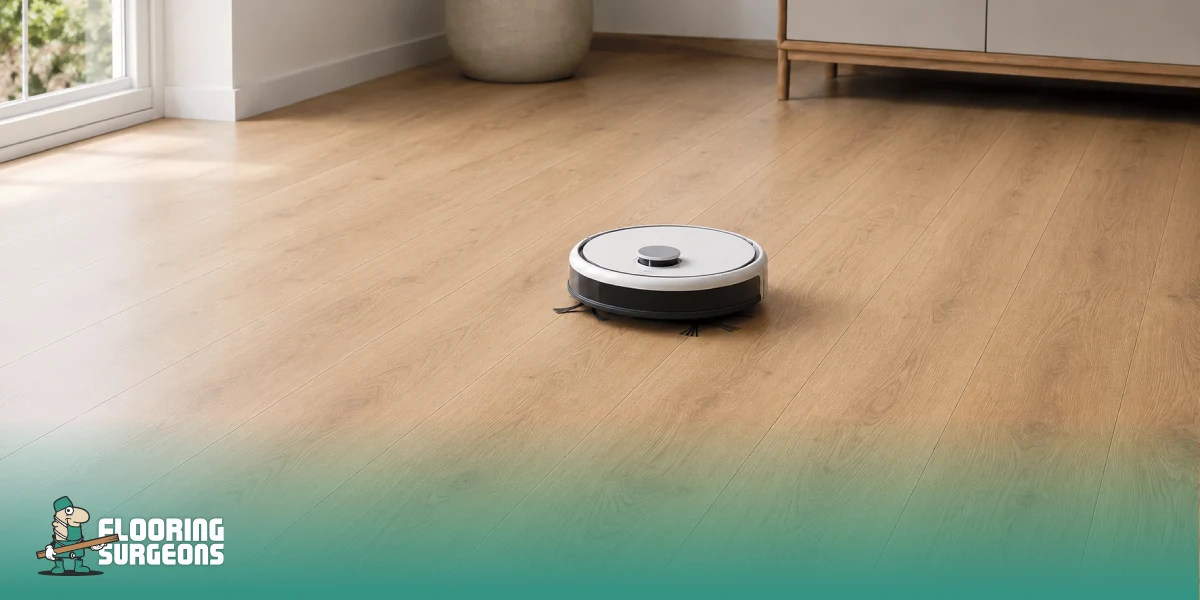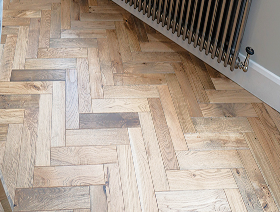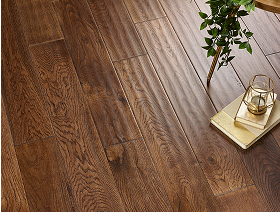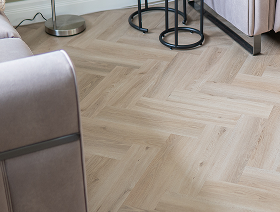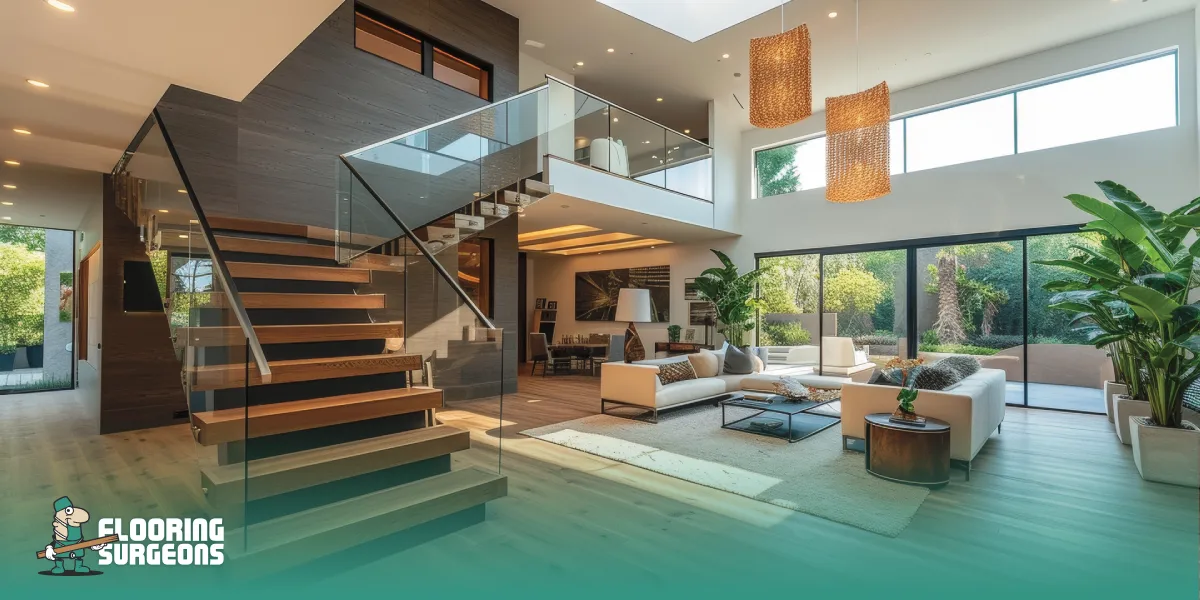
Flooring can have a major impact on how high or low a ceiling feels. Although there is no single colour that makes ceilings appear higher, certain factors can lessen the illusion of height. When it comes to flooring in low-ceiling rooms, lighter or medium-coloured floors, large-plank flooring, and minimal patterns tend to make ceilings seem higher. Busy patterns, high contrast and an excessive number of floor transitions can make ceilings feel lower. Here are some dos and don’ts that will help you create higher ceilings with flooring.
Table of contents
Flooring Choices That Help a Room Feel Taller Or Lower
| Flooring feature | Helps ceilings feel higher | Can make the room feel lower |
| Light-to-medium tones | Yes | No |
| Wide planks | Yes | No |
| Large-format tiles | Yes | No |
| Continuous flooring | Yes | No |
| Subtle patterns | Yes | No |
| Dark flooring with strong contrast | No | Yes |
| Busy patterns or small formats | No | Yes |
| Too many flooring changes | No | Yes |
How Flooring Can Make Ceilings Look Higher
The ambience of a room is determined by more than just its square footage. Flooring can help establish a room that feels airy and open, grounded and low, or nicely balanced. There are tricks of the trade that help increase the perception of height in rooms with average or low ceilings. Whatever the case may be, if your flooring is fighting the rest of your room, you’ve lost the battle.

Creating perceived height vs making a room feel bigger
Making a room feel wider does not necessarily make it feel taller. That is a key distinction. While some floors can make a space feel bigger by opening up the floor plan, they don’t always enhance the perceived height. If your objective is to improve the look of a low-ceiling room, think in terms of perceived floor-to-ceiling, not just wall-to-wall.
Flooring sets a room’s scale through contrast and visual flow
Flooring guides the eye as it scans a room. Aggressive contrast, repetitive small shapes or patches, and excessive visual stops make a room feel narrower and more confined. Large format flooring, subtle colour transitions, and visual flow allow the eye to remain calm, promoting a slightly greater sense of height. Visual simplicity tends to be flooring that elongates a room.
Floor colour works together with walls and rest of room
Floor colour is most important when considered alongside the rest of the room. A floor colour that clashes with your walls or creates too much contrast at the bottom of the room can make your ceilings feel shorter. Flooring that is more similar in colour to the walls tends to yield better results; you want the room to feel cohesive, not divided into distinct layers.

Flooring Mistakes That Make Ceilings Feel Lower
Certain floors can make ceilings feel shorter and create an oppressive atmosphere, even if they’re stunning on their own. There’s typically too much visual bulk and breaks at floor level in small-ceilinged rooms.
- Dark floors with high contrast: Dark floors make low ceilings feel even closer. This is particularly true if the walls are light. Dark floors create a sense of heaviness at the bottom of the room, making it feel lower.
- Busy patterns or small-format floors: Floor designs with small tiles or boards and repetitive patterns create visual lines in your flooring. This can make an already low ceiling feel cluttered and cramped.
- Too many flooring transitions from room to room: Floor transitions chop up the natural flow of a home. If you have a smaller home or multiple rooms that run together, too many flooring transitions can create an imbalance.
- Too much visual noise: Flooring with strong grain, high gloss finishes, extreme contrast, or busy layouts will draw attention to itself. This tends to make lower ceilings feel even worse. Avoid too much “visual noise” on your floor and keep things relatively simple and subtle.
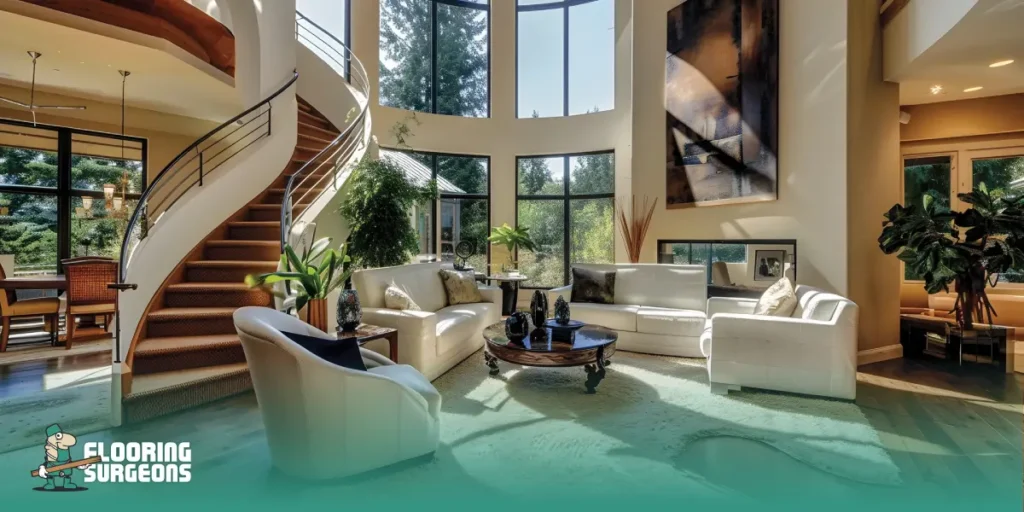
Choosing the Best Flooring for Low Ceiling Rooms
Materials can have a huge impact, but only if chosen correctly. Too many patterns, bold colours, or thick textures can crowd an already low-ceiling room. Flooring that leaves the space above it as simple, balanced, and easy on the eyes as possible is often ideal. Things like colour, board size, finish, and pattern play a role, but material also affects room busyness.
Laminate flooring
Opting for laminate flooring is usually a safe bet when decorating rooms with low ceilings. Laminate tends to come in lighter, creamy or medium tones and plays nicely in plain plank formats. Done right, it can give the room a clean, utilitarian base without weighing it down. If you choose a low-key finish and a simple board format, laminate flooring can make your room feel taller and more balanced.
Luxury vinyl flooring
Luxury vinyl flooring performs beautifully when you need a floor covering that is understated, durable and effortlessly livable. It’s perfect for homes where function is as important as style. If you have a room with low ceilings, an unobtrusive luxury vinyl pattern can prevent the floor from overwhelming the space and still lend the room a clean, contemporary style.
Engineered wood flooring
Engineered flooring would work well here, as long as you select warm-toned wood that isn’t overly dark or shiny. Engineered wood flooring can bring some warmth to the room while still helping it feel lighter. You want natural-looking tones rather than bold finishes. The proper hue will allow engineered wood floors to help relax the space and give it some personality without drawing more attention to the height of the ceiling.
Large-format tile
Large-format tile works well in modern applications where you want a less fragmented surface. Less grout means less visual noise, which typically translates to a more relaxing vibe. Soft colour and a satin finish will allow large-format tile to carry a clean aesthetic that works well in rooms with low ceilings.

How to Choose Flooring That Makes a Room Look Taller
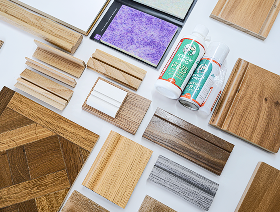
Selecting flooring for low ceilings doesn’t have to be trend-driven. In fact, low ceilings are typically better suited to a flooring that keeps the space visually serene. Even if a flooring looks great on the sample board, it can overwhelm the room once installed. Take note of the flooring’s tone, plank dimensions, pattern and how it lies against the walls and trim before you commit.
Keep the floor visually quiet
Bold floors can overwhelm rooms with low ceilings. Floors with a simple appearance, such as lighter or medium colours, wide boards and less surface texture, tend to leave more “visual space” and help the room feel more open.
Reduce contrast and unnecessary breaks
Floor-level contrast can create a choppy feel that visually “cuts off” the room, making it feel shorter. Try to eliminate unnecessary transitions between zones as well. Visual continuity is key in increasing perceived ceiling height.
Think about flow before style
A floor that allows the eye to move easily across it will almost always perform better than a floor that fights for attention. Less contrast, less texture and interruptions work best in low-ceiling rooms. We looked at this concept in greater detail in 10 Tips to Make a Small Room Look Bigger Through Your Flooring, focusing on layout and flooring surfaces. A modern living room with large windows offering a stunning city view. The room features a white sofa, a marble table, and stylish decor, creating a luxurious atmosphere.
Choosing Flooring That Makes Ceilings Look Higher
Lightweight, simple flooring that provides visual continuity is often ideal for rooms with low ceilings. Keep your floor light or medium in colour, use wide boards, or install large-format tile. You can also reduce the number of visual breaks in your floor. If you’re looking for suitable options, you can explore a range of light and space-enhancing flooring styles at Flooring Surgeons. Flooring should often do its job without drawing attention to itself, opening up a room.

Ana.Soltanpoor
I’m an SEO Specialist with a strong background in content management and organic search. I build data-driven content strategies by aligning user intent, search behavior, and SEO best practices to ensure every piece of content delivers clarity, relevance, and measurable organic performance.