Choosing the best underlayment for laminate flooring can feel confusing at first, so here is the simple answer most UK homeowners want right away: if you have a concrete subfloor, the safest option is an underlay with a built-in moisture barrier. If your subfloor is timber, a good foam or fibreboard underlay usually works best. And if noise, cold floors or comfort are your main concerns, an acoustic or thermal underlay is the more intelligent choice.
That quick overview covers the basics, but the right decision depends on a few key details inside your home. Things like subfloor condition, sound transfer between rooms, how warm the space feels underfoot and whether you have underfloor heating all influence which underlayment will perform well long-term. If you’re still comparing styles for your project, you can explore our laminate flooring collection while you’re choosing the right underlay. Many people only notice how crucial these points are after their laminate starts sounding hollow, feels uneven, or shows early signs of moisture problems.
This guide keeps everything clear and practical. You will learn how each type of underlay performs in real UK homes, how to compare options without getting lost in technical terms and how to match the product to your room so your laminate feels steady, warm and quiet for years. The goal is simple. By the time you finish this page, you should feel confident choosing the underlayment that genuinely fits your home, not just the one that looks good on a label.
Suppose you are planning a new laminate installation or upgrading an old one. In that case, this is where you can get a clear, straightforward explanation of what actually works in everyday UK conditions.
Table of contents
What Does Underlayment Do for Laminate Flooring?
Laminate flooring underlay is one of those things you rarely see but always feel. It sits quietly under the boards, yet it has a significant effect on how your floor sounds, how warm it feels and how well it holds up over time. Many UK homeowners only realise its value after a hollow sound appears, a cold draught creeps through the room or moisture from a concrete subfloor begins to cause trouble. This section breaks down the four jobs underlayment handles in a simple, practical way so you can recognise what your home actually needs.

Sound absorption
Laminate often produces more noise than anticipated, especially in flats or semi-detached homes where footsteps echo between rooms. A quality underlay reduces impact and dampens hollow sounds. Acoustic and cork variants excel, absorbing vibration rather than letting it pass through. If noise has been a challenge, a sound-focused underlay can make your laminate quieter and more stable right away.
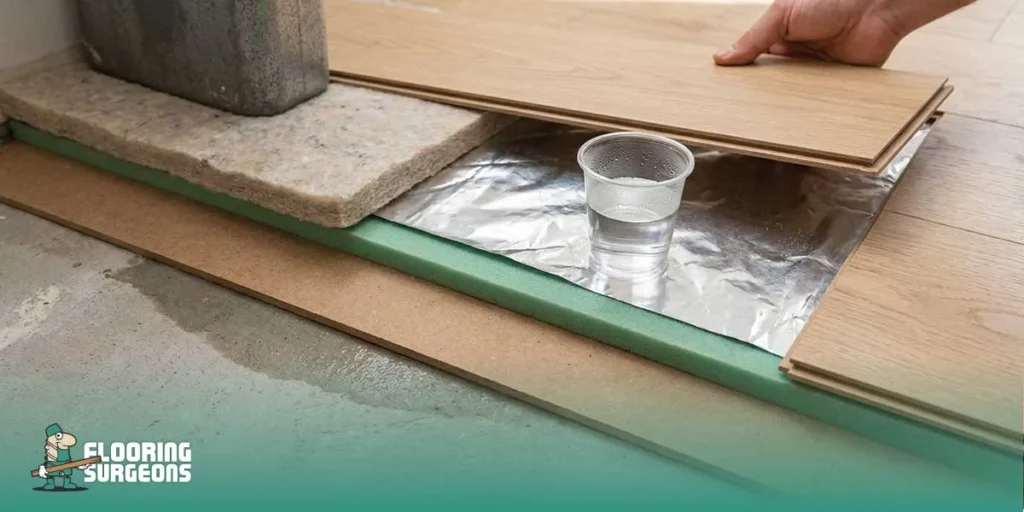
Moisture control
Laminate often produces more noise than anticipated, especially in flats or semi-detached homes where footsteps echo between rooms. A quality underlay reduces impact and dampens hollow sounds. Acoustic and cork variants excel, absorbing vibration rather than letting it pass through. If noise has been a challenge, a sound-focused underlay can make your laminate quieter and more stable right away.
Comfort
Even premium laminate feels firm without proper underlayment. High-quality foam or fibreboard adds cushioning, making surfaces softer and more comfortable, ideal for bedrooms or living areas. It levels minor subfloor imperfections and securely fastens boards. If your room feels cold or you want a gentler surface, a comfort-driven underlay provides a clear improvement.
Lifespan improvement
Often overlooked, the underlay significantly affects laminate longevity. With a stable, cushioned, moisture-resistant base, the locking system faces less stress, and boards stay level. Firmer underlays like fibreboard support heavy furniture and reduce joint pressure. Consider it the base of a structure: when solid, everything above performs better. Good underlay extends laminate lifespan by keeping floors quieter and steadier, and by minimising movement.
Key Factors You Must Consider Before Choosing an Underlay
Choosing underlayment gets easier once you pinpoint what matters in your home. Most UK homeowners focus on price or thickness, but real impact comes from conditions below: subfloor type, moisture, noise, warmth, and underfloor heating. Get these right initially, and your laminate will remain quiet, warm and stable for years.
In this section, we explore the key checks you should make before buying anything. Think of it as the part that stops the common mistakes. I’ve worked with homeowners from Leeds to Croydon, and the same problems keep popping up when the underlay is chosen too quickly. Hollow sounds. Cold floors. Moisture is creeping into the joints. Most of those issues are avoidable with upfront clarity.
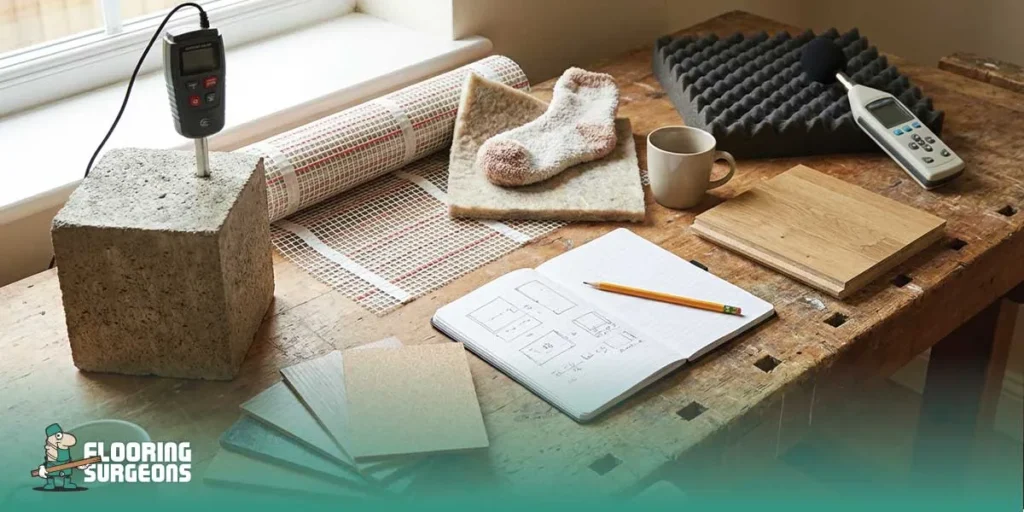
Here’s a simple way to think about it. Underlay isn’t just padding. It’s the layer that protects your laminate from whatever is happening underneath. The more closely you match the product to your home’s needs, the fewer surprises you’ll encounter later.
Before we look at each factor in detail, here’s a quick checklist you can skim. It helps you recognise what matters in your home and what doesn’t.
Quick homeowner checklist:
- Is your subfloor concrete or timber?
- Does the room feel cold underfoot?
- Do you hear footsteps on the floor?
- Any signs of damp or past moisture issues?
- Do you use underfloor heating?
- Is the floor slightly uneven?
- Do you want lower VOC options for better air quality?
Subfloor Type (Concrete vs Timber)
Your subfloor handles much of the work. Concrete and timber react differently under laminate; improper underlay can trigger noise or moisture issues sooner than expected.
If you’re on concrete, you’ll usually need an underlay with a moisture barrier. Concrete in UK homes holds damp for far longer than people think, especially in older buildings or ground-floor rooms. A foil-backed or DPM underlay blocks that moisture and protects the laminate joints.
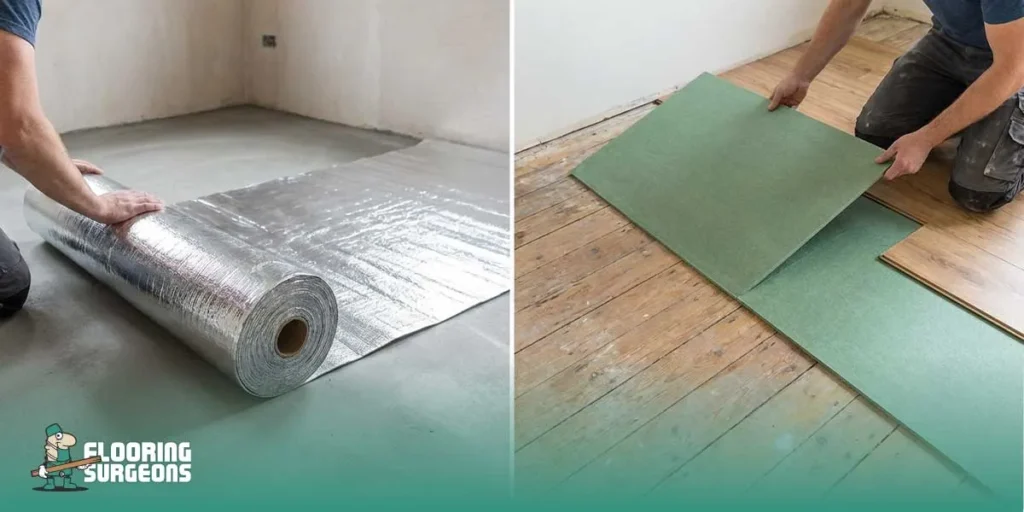
With timber subfloors, movement is the focus, not moisture. Foam or fibreboard underlay offers stability, evens small dips, and creates a firmer feel. Many users report their laminate was “too clicky” until switching to a firmer underlay, which usually resolves the issue promptly. To help you spot your subfloor quickly:
- Concrete feels hard and cold, usually grey and smooth.
- Timber subfloors look like boards or sheets of plywood.
- Suspended floors often come with a slight bounce.
Matching the underlay to this base is the simplest way to avoid long-term damage.
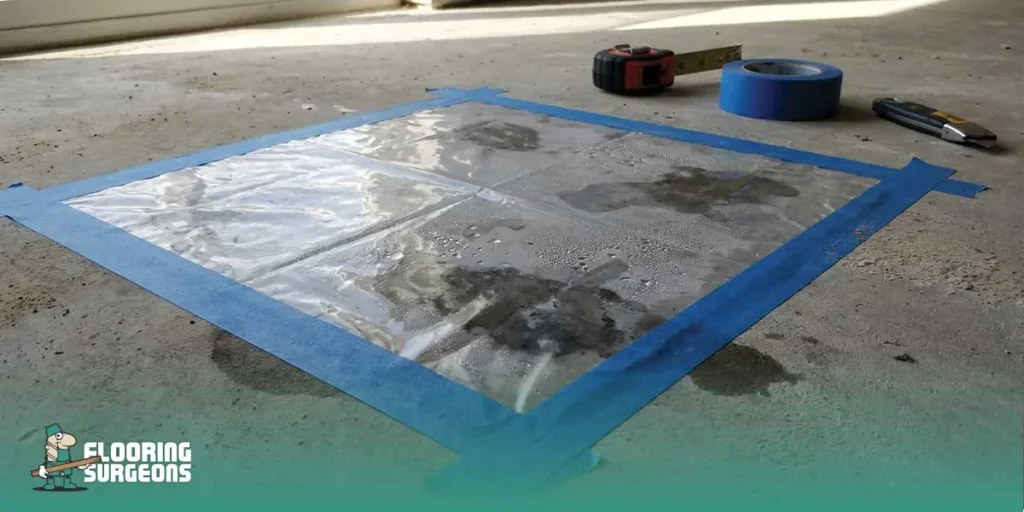
Moisture Levels and the Need for a Vapour Barrier (DPM)
Moisture lurks unseen beneath the laminate. It often lifts boards or swells edges months after installation. If you live in a ground-floor flat, an older terrace, or have a history of damp, assume moisture exists.
A DPM underlay creates a protective layer that stops moisture from rising through concrete. It’s essential for kitchens, hallways and basements with concrete slabs. If you skip this step, no brand of laminate will save you from issues later. For timber floors, moisture isn’t usually the main issue unless the house has poor ventilation or recent leaks. A breathable underlay is better in those cases.
Sound Reduction Ratings (dB Class)
If your home is a flat, semi-detached, or has busy upstairs rooms, sound reduction becomes crucial. Laminate produces more impact noise than carpet; underlay is key to a quieter room. Check dB ratings; higher numbers provide better acoustics. Cork and acoustic foam top the list for reducing footstep noise. In city flats or terraces with close neighbours, upgrading to acoustic underlay makes a marked difference. If your room echoes or feels hollow, this is the solution.
TOG Rating and Thermal Performance
TOG affects how warm the floor feels underfoot. Bedrooms, lofts, and north-facing rooms often benefit from an underlay with a slightly higher TOG rating. It adds gentle insulation and removes that cold shock you sometimes get with laminate on winter mornings.
If a room feels consistently cold or you’re working on a ground-floor concrete slab, thermal underlay is worth the upgrade. On the other hand, if you have underfloor heating, look for a low-TOG product so the heat passes through efficiently. We’ll cover that part next.
Underfloor Heating Compatibility
Not all underlays work with underfloor heating. If you choose one that traps heat, the system becomes less efficient and can cause laminate expansion.
You’ll want an underlay with low TOG, good breathability and a firm structure so the boards stay stable. Homes across the south of England, especially new builds, often use underfloor heating in living spaces. Choosing the wrong underlay in those homes can create warm spots or slow heating. Look for a product clearly marked for underfloor heating and always check the maximum TOG recommended by your flooring brand.
Compression Strength and Durability
Every day, pressure from furniture or heavy footfall affects how the laminate behaves over time. A quality underlay supports the locking system and reduces strain on the joints, especially in busy rooms like living areas and hallways.
Fibreboard underlay offers the best support for slightly uneven timber floors. For concrete, foam with high compression strength works well. This is one of those areas where paying a little more upfront protects the entire floor in the long term. If you’ve ever seen laminate start to dip near a sofa or dining table, weak underlay is often the reason.
Eco-Friendly and Low-VOC Underlay Options
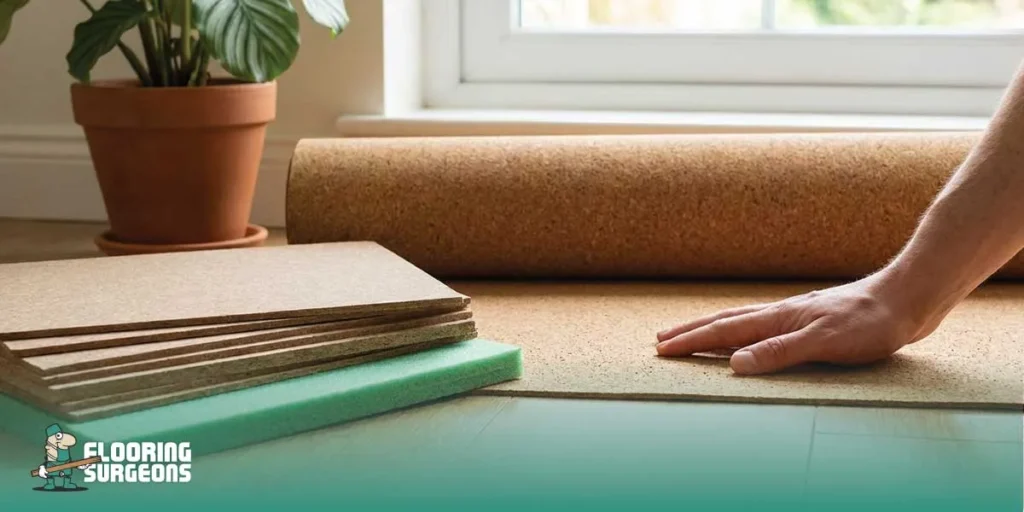
If you prefer lower-VOC materials or want a more eco-conscious choice, cork and recycled-fibre underlays are your best options. They offer good sound absorption and comfort without strong chemical smells.
Many families in the UK, especially those with children or pets, prefer these materials because they avoid the sharper scent that some foam underlays can emit during installation. Look for products labelled low-VOC or made from recycled content.
Types of Laminate Underlay (Pros, Cons and Best Uses)
Once you know what your home needs, choosing the right laminate flooring underlay becomes much simpler. If you want to compare products quickly, you can browse the different types of underlay available and match them to the options explained below. Each type has its own strengths, limitations, and ideal scenarios, and understanding these differences helps you avoid the common mistakes many UK homeowners make. Below, we break down the main options in a straightforward way so you can match the product to your room, subfloor and comfort expectations without overthinking it.
Foam Underlay
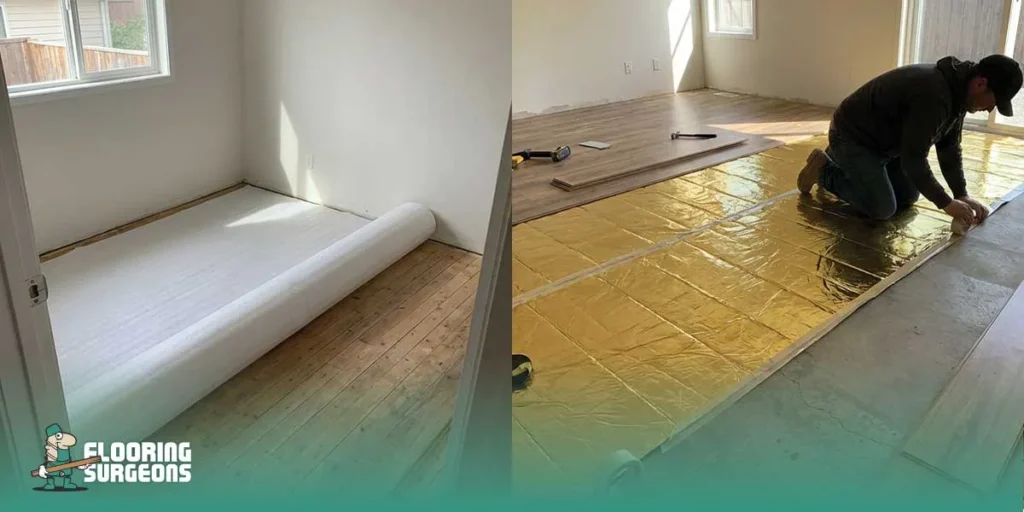
Foam underlay is the go-to choice for many DIY homeowners because it’s light, affordable and easy to install. If your subfloor is timber and fairly even, foam delivers good comfort underfoot and enough support for everyday rooms.
Pros:
- Soft feel and great for bedrooms or living spaces
- Simple to cut and fit
- Works well over clean, stable timber floors
Cons:
- Not suitable for concrete without a moisture barrier
- Limited sound reduction compared to cork
- Can lose shape in heavy traffic areas
Best for: Timber subfloors, guest rooms, rented homes and light daily use.

Foam and Foil Underlay (DPM Layer)
This is the standard solution for concrete subfloors across the UK. The foil backing or built-in DPM protects your laminate flooring from rising moisture, which is one of the biggest threats in ground-floor rooms. It still delivers cushioning but adds the safety layer that concrete requires.
Pros:
- Strong moisture protection
- Helps stabilise the laminate over concrete
- Still comfortable underfoot
Cons:
- Slightly more expensive than plain foam
- Not the best choice for principal sound reduction
Best for: Kitchens, hallways, basements and any room sitting on concrete. A must-have if your home has even a mild history of damp.
Fibreboard Underlay (Strength and Levelling)
Fibreboard underlay is perfect when you need structure rather than softness. It’s ideal for timber floors that have small dips or minor uneven spots. Each board adds firmness and reduces bounce, which helps your laminate flooring lock together more securely.
Pros:
- Excellent levelling ability
- Strong support for high-traffic rooms
- Reduces movement and hollow sounds
Cons:
- Not moisture-resistant
- Takes longer to install
- Feels firmer and less cushioned
Best for: Older UK homes with slightly uneven timber floors, dining rooms or hallways with heavy furniture and busy footfall.
Cork Underlay (Best Underlay for Sound Reduction)
If noise is your main issue, cork is the standout option. It naturally absorbs vibration, making it ideal for flats, upstairs bedrooms and shared walls in semi-detached homes. The sound improvement is often noticeable within the first few steps.
Cork Underlay Benefits
- Best acoustic performance
- Eco-friendly, low-VOC material
- Long-lasting and supportive
Cons:
- Higher cost
- Not ideal for rooms with potential moisture
Best for: Flats in busy cities, upstairs spaces, music rooms or any UK home where footstep noise has caused problems in the past.
Thermal Underlay for Cold Rooms
Thermal underlay is designed for warmth, making it a strong choice for north-facing rooms, loft conversions, and ground floors that always feel chilly. It adds insulation and prevents heat loss through the subfloor.
Pros:
- Warmer feel underfoot
- Great for bedrooms and colder rooms
- Adds comfort while improving energy efficiency
Cons:
- Higher TOG may not suit underfloor heating.
- Not moisture-resistant unless paired with foil
Best for: Homes with cold laminate floors, older properties and winter-prone areas across the UK.
Budget vs Premium Underlay Options
Budget underlay is tempting, especially for quick rentals or small projects, but it often lacks proper moisture control or long-term support. It works fine when the subfloor is perfect, and the room gets light use. Premium underlay, on the other hand, adds measurable improvements in sound reduction, comfort and lifespan. To help you compare:
Budget underlay is ideal when:
- You’re working on a secondary room.
- Your subfloor is already level and dry.
- Long-term noise and comfort aren’t priorities.
Premium underlay is worth it when:
- You want quieter floors.
- You’re installing laminate in a high-traffic area.
- You have concrete and need a built-in DPM.
- You want more substantial support to protect the laminate joints.
Laminate Underlay Comparison Table
| Type | Comfort | Sound Reduction | Moisture Protection | Durability | Cost Level |
| Budget Foam | Good | Low | Very low | Medium | Low |
| Foam + DPM | Medium | Medium | Very high | High | Medium |
| Fibreboard | Medium | Medium | Low | Very high | Medium |
| Cork | Medium | Very high | Low | High | High |
| Thermal | High | Medium | Medium | Medium | Medium to High |
Best Laminate Underlayment for Real Scenarios
Choosing underlayment becomes much clearer once you match it to a real situation in your home. Most UK homeowners run into the same issues again and again: concrete that holds moisture, timber floors that creak, upstairs rooms that echo, cold bedrooms, or underfloor heating that doesn’t work well with the wrong TOG rating. Below, you’ll find the straightforward recommendations that usually solve these problems without guesswork. Everything here is based on how the underlay performs in everyday UK homes, not just what the packaging claims.
Best Underlayment for Laminate Flooring on Concrete
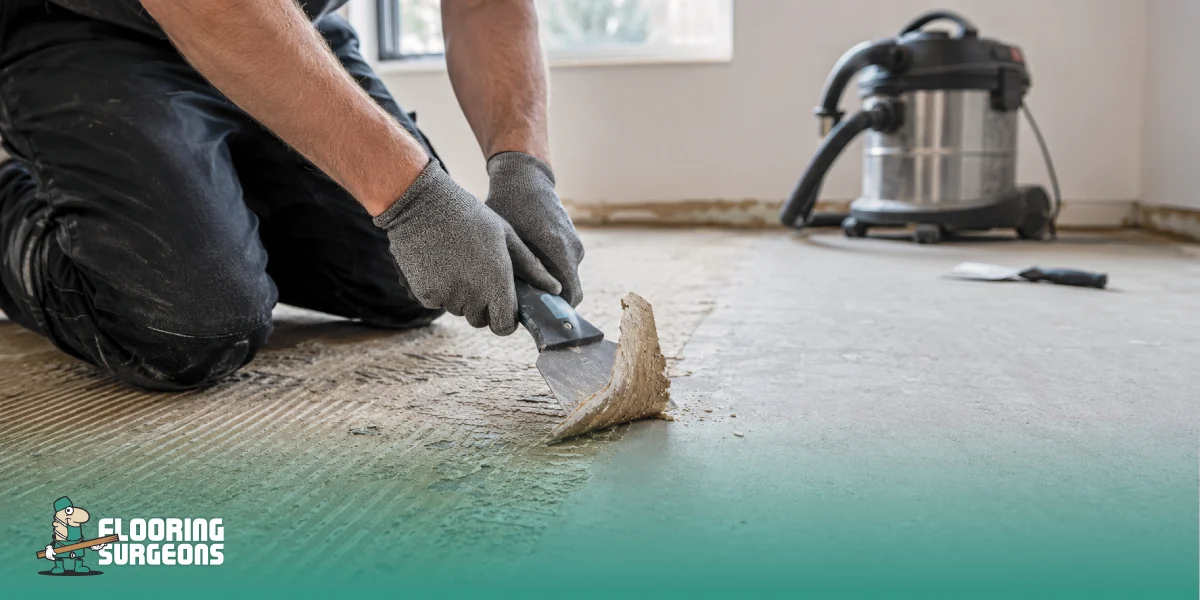
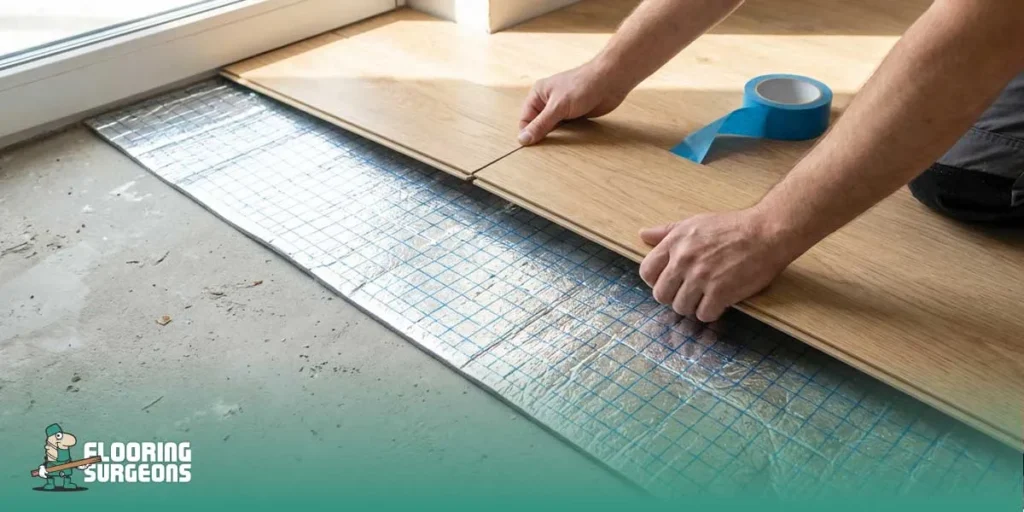
Concrete is the most demanding subfloor because it pulls moisture up from the ground, even when it appears dry. This is why the safest and most reliable option is foam underlay with a built-in DPM or foil backing. You can compare different moisture barrier underlay options to find the level of DPM protection that best fits your concrete subfloor. The moisture barrier is what protects the laminate joints long-term.
Why it works:
- Blocks moisture rising from the concrete slab
- Helps laminate sit level and stable
- Adds a comfortable amount of cushioning
Recommended for: Ground-floor rooms, kitchens, hallways, basements and older UK homes with any history of damp patches.
Avoid: Plain foam or fibreboard underlay on concrete. Both leave the laminate exposed to moisture and can cause swelling.
Best Underlay for Laminate Flooring Over Wooden Subfloors
Timber floors don’t need a moisture barrier, but they do need support. Timber moves, bounces, and sometimes dips in places, especially in older homes. The best match is foam or fibreboard underlay, depending on what the floor feels like underfoot.
Foam is best when:
- The timber is level and stable.
- You want a softer feel underfoot.
- You’re working in bedrooms or quiet spaces.
Fibreboard is best when:
- The subfloor has small, uneven spots.
- You want more substantial support for heavy furniture.
- You need a firmer, more stable laminate surface.
Homes in areas like Sheffield, Bristol and Manchester with older timber floors generally benefit from fibreboard because it firms up the room immediately.
Best Soundproof Underlay for Laminate Flooring
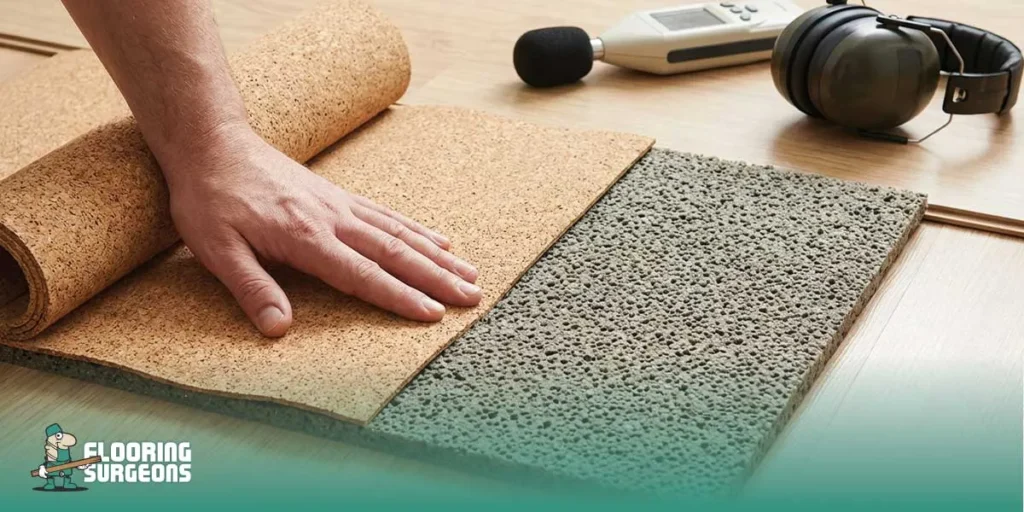
If noise is your biggest concern, go straight to cork underlay or a specialised acoustic foam. These options absorb vibration better than any standard foam layer, and they noticeably reduce footstep sounds.
Why these perform best:
- Cork has natural sound-absorbing properties.
- Acoustic foam dampens impact noise.
- Both reduce the hollow echo that can be created in the laminate.
Great for: Flats in busy UK cities, upstairs bedrooms, offices and any home where neighbours have complained about noise.
Best Underlay for Warmth
Cold rooms need a bit of help, especially north-facing spaces, ground floors and older properties. The best choice is thermal underlay, which improves insulation and makes the laminate feel noticeably warmer.
What it improves:
- Heat retention
- Underfoot comfort
- Energy efficiency in colder rooms
Top situations: Loft conversions, bedrooms, living rooms and draughty ground-floor areas. Just make sure you’re not using this over underfloor heating. Higher TOG stops heat flow.
Best Underlay for Underfloor Heating
Underfloor heating works best with an underlay that lets heat pass through easily. Look for low-TOG underlays specifically labelled for underfloor heating. These are usually thin, firm and breathable.
What matters most:
- A TOG low enough for your heating system
- A structure that won’t trap heat
- Good stability to support the laminate joints
This combination prevents hot spots and helps the room warm up evenly. Many new builds in the south of England use this system, and choosing the wrong underlay often leads to slow heating times and flooring movement.
What Thickness Underlay Is Best for Laminate?
Thickness is often misunderstood. A thicker underlay is not always better. The goal is to support the laminate, not make it bouncy.
Recommended thickness for most UK homes:
- 2–3 mm for laminate on underfloor heating
- 3–5 mm for standard foam or foil-backed underlay
- 5–7 mm for fibreboard when levelling is needed
Too thick an underlay can cause:
- Movement in the locking system
- Soft spots under furniture
- Hollow or unstable flooring
If you want better comfort, choose a better material rather than extra thickness.
Best Underlay for Laminate Flooring Based on Common Problems
Most homeowners don’t search for laminate flooring underlay by material. They search because something feels wrong: the floor sounds hollow, the room feels cold, the noise is annoying, or the subfloor isn’t perfect. This section gives you the quickest way to find the best underlay for laminate flooring based on the exact problem you’re dealing with. It skips the technical noise and focuses on real, everyday issues in UK homes.
If Your Floor Sounds Hollow
A hollow or echoey laminate floor usually means the underlay isn’t absorbing impact properly. This is one of the most common complaints after fitting laminate flooring on both timber and concrete subfloors.
Best fix: Cork underlay or acoustic foam underlay. Both are widely considered the best soundproof underlay for laminate flooring because they absorb vibration and reduce that empty, tapping sound under your steps.
Why it works:
- Helps laminate flooring feel more solid
- Reduces sound transfer between rooms
- Improves the acoustic feel instantly
Great for: Flats, upstairs landings and semi-detached homes where footsteps travel easily.
If Your Room Is Cold
Laminate is warmer than tiles, but it still loses heat quickly without the proper support. If you step onto the floor and feel a sharp coldness, your underlay isn’t providing enough insulation.
Best fix: A thermal underlay designed to boost warmth under laminate flooring.
What it improves:
- Heat retention
- Underfoot comfort
- Energy use in cold rooms
Best for: Loft conversions, north-facing bedrooms, and ground-floor concrete areas where laminate can feel cold even after installation.
If You Want Maximum Soundproofing
If noise is the main issue, don’t gamble with basic foam. You need an option explicitly designed to reduce impact and airborne sound.
Best fix: Cork underlay for natural acoustic performance or Premium acoustic foam for substantial impact reduction. These materials consistently show better results than standard laminate underlay when soundproofing is the priority.
Ideal for: Flats in London or Manchester, shared households, home offices and anyone who wants quieter laminate flooring without changing the boards.
If Your Subfloor Is Slightly Uneven
Uneven timber floors are prevalent across the UK, especially in older homes. Even a few dips can prevent laminate boards from locking properly, leading to movement and noise. If the timber beneath your laminate already creaks or shifts, it’s worth checking our guide to fixing a squeaky floor before installing your underlay.
Best fix: Fibreboard underlay. It adds structure, helps level minor imperfections and supports the locking system far better than foam.
Why it works:
- Levels small dips and bumps
- Prevents laminate movement
- Helps the floor feel firmer and more professional
Best for: Victorian terraces, older semis and any room with a slightly uneven timber subfloor.
If You Need the Cheapest Working Solution
If you’re working with a tight budget but still want something that performs reliably, the safest pick is the simplest one.
Best fix: Standard foam underlay (but only on dry timber subfloors)
Why it works:
- Lowest cost option
- Quick to install for DIY projects
- Adds enough comfort for spare rooms or rentals
Important: Avoid using plain foam on concrete. If you’re installing laminate flooring on concrete, you must choose a foam-and-foil underlay with a built-in DPM. It’s the minimum safe option to protect the boards from rising moisture.
Best for: Guest rooms, rentals, utility areas and short-term refurbishments.

How to Install Laminate Underlay Properly
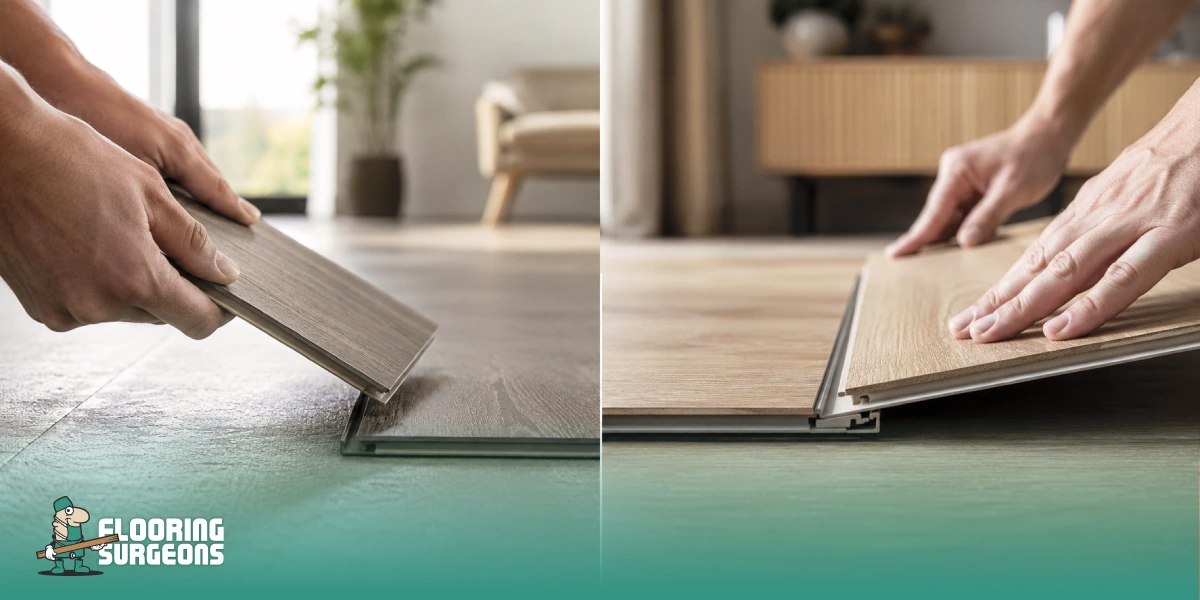
Fitting underlay isn’t complicated, but a few minor details make the difference between a quiet, stable laminate floor and one that creaks, shifts or wears out early. The idea is simple: lay each sheet tight and flat, tape every joint so the underlay can’t move, and always leave proper expansion gaps around the edges. Most problems start when homeowners overlap the underlay (you should never overlap unless it’s a foil DPM layer designed for it), skip tapelines, or push the material right against the wall.
These mistakes trap moisture, cause hollow spots, and make the laminate click system work harder than it should, leading to noise and long-term damage. Whether you’re working on concrete with a foil-backed DPM or on timber with foam or fibreboard, the rules are the same: keep the layout smooth, secure the joins, and leave space for the boards to breathe.
If you’ve read this far, you already know that choosing the best underlay for laminate flooring depends on your subfloor, your room, and what problems you’re trying to solve. Whether you want warmth, better soundproofing, help with uneven floors or the simplest budget option, the right underlay does more for your laminate than most people realise. If you’d like tailored guidance for your home, or want a quick check before you buy, you can get a free quote from Flooring Surgeons, and we’ll point you to the safest choice for your floor.

Haniye Ayanmanesh
As an expert writer for Flooring Surgeons, I combine technical SEO knowledge with a practical understanding of flooring, producing content that helps users make confident decisions while supporting long-term organic growth.