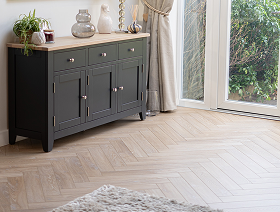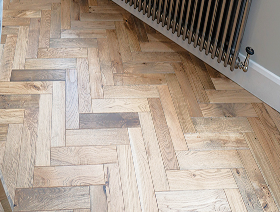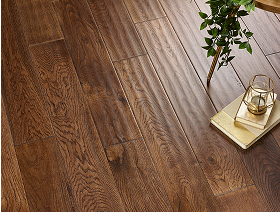
Anyone who has fitted a click floor knows that the locking mechanism can make a surprisingly big difference. Two floors may look almost identical once installed, yet one can take noticeably longer to put down simply because of the way the boards connect.
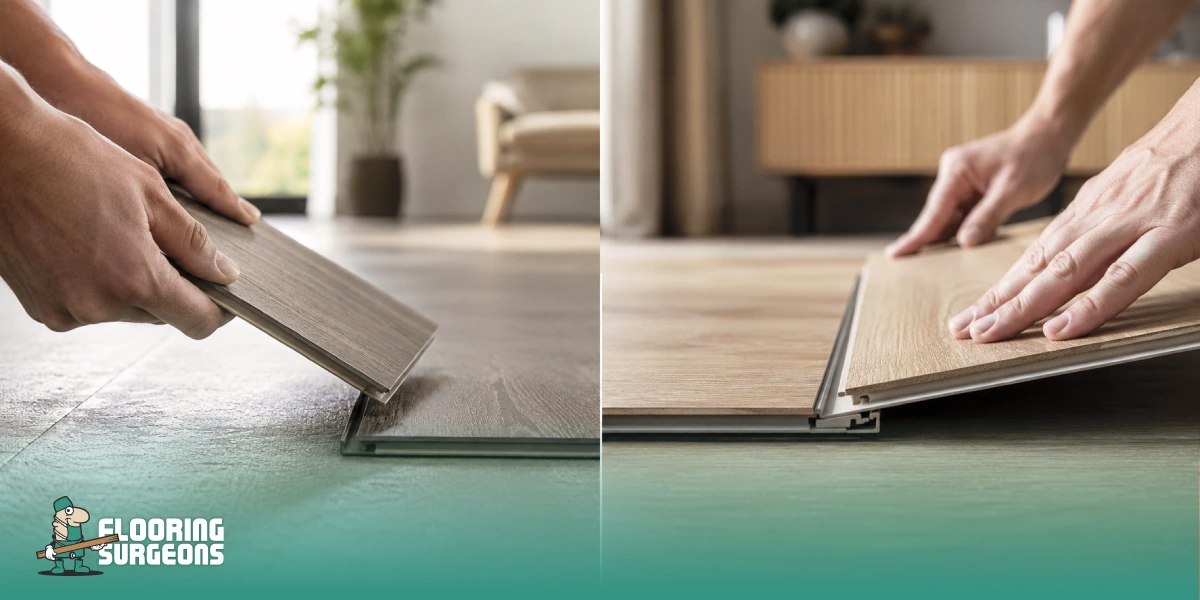
That is where 2G and 5G come in. Both create a secure mechanical joint without needing to glue each plank together, but the fitting movement is different. In general, 5G is the easier option for DIY installation because the board can be angled along its long side and then folded down to secure the short end. With 2G, a little more angling and positioning is normally involved.
Table of contents
5G vs 2G Locking System At A Glance
Before looking at the mechanisms in detail, here is the practical difference most people will notice during installation.
| Feature | 2G system | 5G system |
| Main fitting method | Angling | Angle and fold down |
| Short-edge fitting | Requires careful positioning | Locks as the plank is lowered |
| Installation speed | Usually a little slower | Usually quicker |
| Fitting alone | Possible, but can be awkward | Generally easier |
| DIY suitability | Good | Very good |
| Glue between boards | Normally not required | Normally not required |
| Main advantage | Simple, proven mechanical joint | Fast and convenient fitting |
It is worth remembering that both belong to the wider family of click-fit floors. If you are comparing mechanical joints with more traditional flooring connections, our guide to Tongue and Groove vs Click Lock Flooring looks at that difference separately.
How Does 2G Click Flooring Work?
A 2G locking system uses an angling action. The edge of one plank is inserted into the profile of the adjoining plank while the board is held at an angle. Once the edges are properly engaged, the board is lowered into position.
There is nothing particularly complicated about it, and experienced fitters are unlikely to find the system troublesome. The difference becomes more noticeable when you’re laying an entire room rather than connecting a single board. Repeatedly lifting, aligning and lowering planks takes time, and getting the short ends into position can require a little patience.
This type of connection is commonly encountered across products such as Laminate Flooring. As with any floating floor, the first rows matter: if they drift out of line, fitting the remaining boards becomes unnecessarily difficult.
How Does 5G Click Flooring Work?
The idea behind a 5G locking system is to make that short-end connection less fiddly.The long edge of the plank is engaged first. Instead of having to angle the short end into another board in the same way, the plank is folded towards the floor. A locking element in the joint engages as the board comes down. It is a small change in movement, but over a whole installation it can make a noticeable difference. You spend less time trying to hold several boards in the right position at once, which is particularly useful when working without a second person.
Variants of this type of locking technology are also found in modern Luxury Vinyl Flooring, including rigid click products where quick, repeatable plank connections are an important part of the fitting process.
Which Click Flooring Locking System Is Easier to Install?
For most DIY installers, 5G wins. That does not mean 2G flooring installation is difficult. It simply asks a little more of the person fitting it. Boards need to be positioned and angled correctly before the joint settles into place, and this can become awkward near walls, doorways or other areas where movement is restricted.
By comparison, 5G flooring installation has a more straightforward rhythm: engage the long edge, position the plank and fold it down. Once you have fitted a few rows, the process tends to become repetitive quite quickly. The advantage is even clearer when one person is doing the job. With larger boards, having to lift and reposition the plank while keeping neighbouring joints aligned can be cumbersome. This is worth thinking about when fitting products such as Engineered Flooring, where board dimensions and weight vary considerably between ranges.
Speed is another factor. Saving a few seconds on one plank does not sound important, but multiply that by every board in a medium-sized room and the difference starts to add up.
Does Easier Click Flooring Installation Mean a Better Floor?
Not necessarily, and this is where comparisons between 2G and 5G sometimes become misleading. A locking system tells you how the boards connect. It does not tell you whether the surface will resist scratches, whether the core is stable or whether the floor is appropriate for a kitchen, hallway or busy family home. A well-manufactured 2G joint can be extremely secure. Equally, choosing 5G does not make up for poor manufacturing tolerances or a badly prepared subfloor.
The condition of the floor underneath is particularly important. High spots, movement or debris can prevent joints from sitting properly regardless of how easy the locking mechanism is to use. Expansion gaps, acclimatisation requirements and underlay also need to follow the instructions for the particular product. In other words, use 5G versus 2G as one part of the buying decision, rather than treating it as a quality grade.
What Should You Check Before Laying Click Lock Flooring?
Start with the manufacturer’s instructions rather than assuming every click floor goes down in the same way. Check the required expansion gap and whether the flooring needs acclimatising before installation. Find out whether an underlay is necessary and, if so, which type is suitable. The subfloor should also be dry, clean and within the flatness tolerance specified for the product.
It is also worth dry-laying or planning the first few rows before getting too far into the room. Narrow cuts against the final wall are easier to avoid at this stage than once most of the flooring is already down. If you’re planning a vinyl project and want the fitting process rather than the locking-system comparison, the Complete Vinyl Click Flooring Installation Guide takes you through the installation in more detail.
So, Is 5G Better Than 2G for DIY Fitting?
If the two floors you are considering are otherwise similar, we would choose 5G when ease of installation is the deciding factor. The fold-down connection requires less manipulation at the short edge and is generally more comfortable to fit alone. There are still plenty of situations where a 2G product makes perfect sense. You may prefer its finish, construction, dimensions or price, and a competent installer should have no problem working with the system.
Generally, yes. A 5G floor uses a fold-down movement at the short edge, reducing some of the angling and repositioning required during installation.

Ana.Soltanpoor
I’m an SEO Specialist with a strong background in content management and organic search. I build data-driven content strategies by aligning user intent, search behavior, and SEO best practices to ensure every piece of content delivers clarity, relevance, and measurable organic performance.