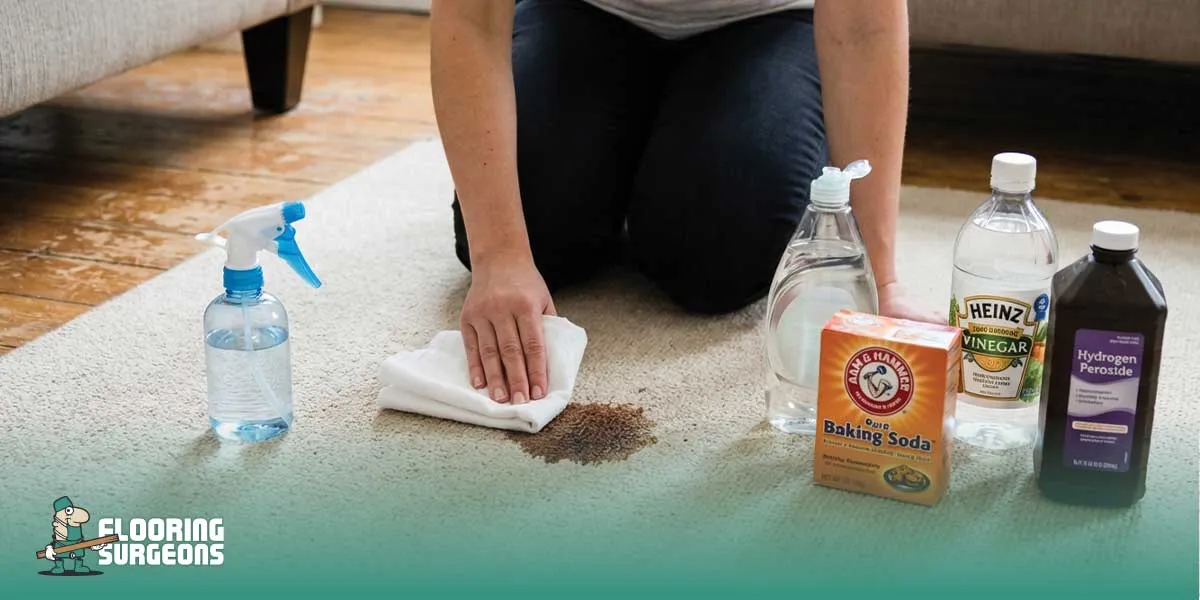
Most carpet stains can be removed if you act quickly and use the right method. The fastest way to get stains out of a carpet is to blot the spill immediately, avoid rubbing, start with a small amount of water, and then choose a cleaning method based on the type of stain.
Fresh stains often lift with simple blotting and water, while older or tougher stains may need dish soap, baking soda, white vinegar, hydrogen peroxide, or a carpet stain remover. The right choice depends on the stain, the carpet fibre, and how long the mark has been on the carpet.
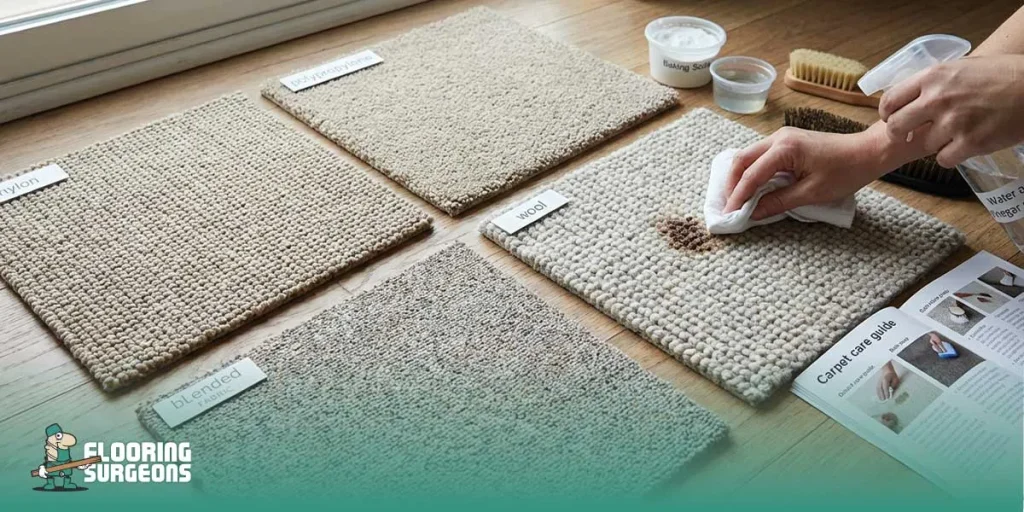
Carpet material also matters. Nylon, polypropylene, wool, and blended carpets can react differently to cleaning products, so using the wrong method may set the stain or damage the fibres. This guide explains how to safely remove stains from carpet, which homemade cleaners work, and what mistakes to avoid.
By the end, you’ll know how to deal with common carpet stains such as coffee, red wine, dirt, ink, pet stains, and old marks using practical methods that work in real homes.
Table of contents
How Do Carpet Stains Form? (Before You Try Removing)
Carpet fibres work a bit like tiny sponges. Once a spill lands on them, the liquid moves through the top layer and settles deeper into the backing if it isn’t lifted fast. This is why two stains that look the same on the surface can behave completely differently when you try to clean them. Before you choose any method, it helps to understand how stains form so you know why some lift easily, and others keep showing up again.
Why do some stains sink deeper?
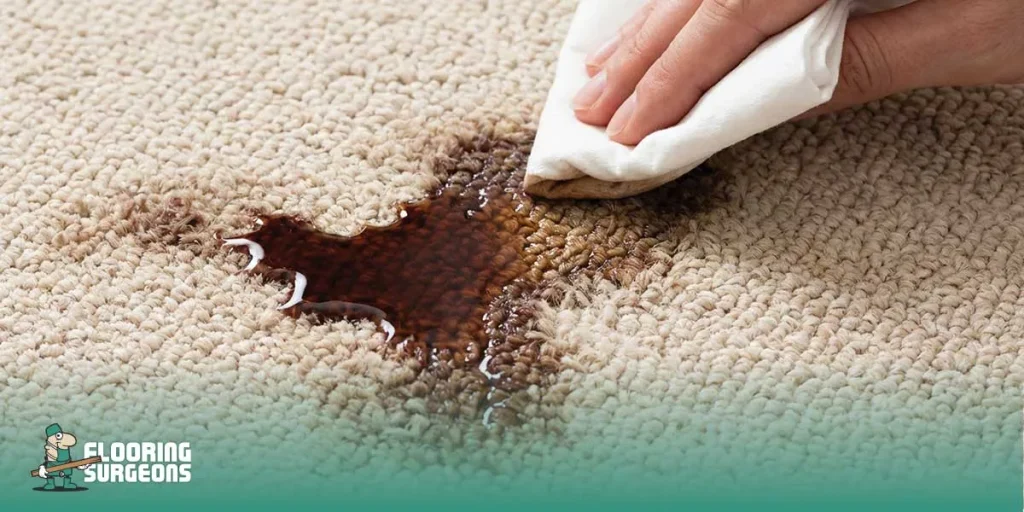
Some spills carry colour or oils that attach to carpet fibres in seconds. Drinks with strong dyes, greasy food, lotions and makeup tend to move through the pile quickly. Heat from the spill or from the room speeds this up. Carpets with open, looser fibres, such as older nylon or soft wool blends, also let liquid travel faster. When the spill reaches the backing material, normal blotting removes only the surface mark while the deeper part stays inside the carpet body. This is why stains that look small at first often spread once you start cleaning.
Why do stains come back (wicking vs soiling)?
A stain that disappears and then reappears later usually falls into one of two groups: wicking or soiling. Wicking occurs when the original spill travels to the carpet’s lower layers. Cleaning removes the top section, but the deeper part slowly rises back as the carpet dries. Soiling is different. It happens when leftover cleaning solution remains in the fibres, attracting dust. The mark looked clean right after washing, but turned dark again over the next few days.
Knowing which one you’re dealing with helps you decide whether to rinse more, blot more, or use a method that targets the carpet’s lower layers. These issues show how different carpets react to spills, and understanding carpet performance compared to other flooring types helps explain why some fibres stain more easily than others.
How to Remove Carpet Stains Step-by-Step
Most people panic when they see a spill on the carpet, but the truth is simple: most fresh stains come out easily if you follow the right order. This section gives you the exact steps you can rely on. Each one is quick, practical, and safe for almost every carpet type — and yes, it avoids the mistakes that usually make stains worse.
Step 1: Identify the stain
Before you touch the carpet, take a second to look at what you’re dealing with. Is the stain oily, coloured, dark, sticky, or does it have a smell? Knowing the type helps you choose the right method and prevents you from using something that pushes the stain deeper. Once you recognise what caused it, you’re already halfway to removing it cleanly.
Step 2: Lift, blot, never scrub
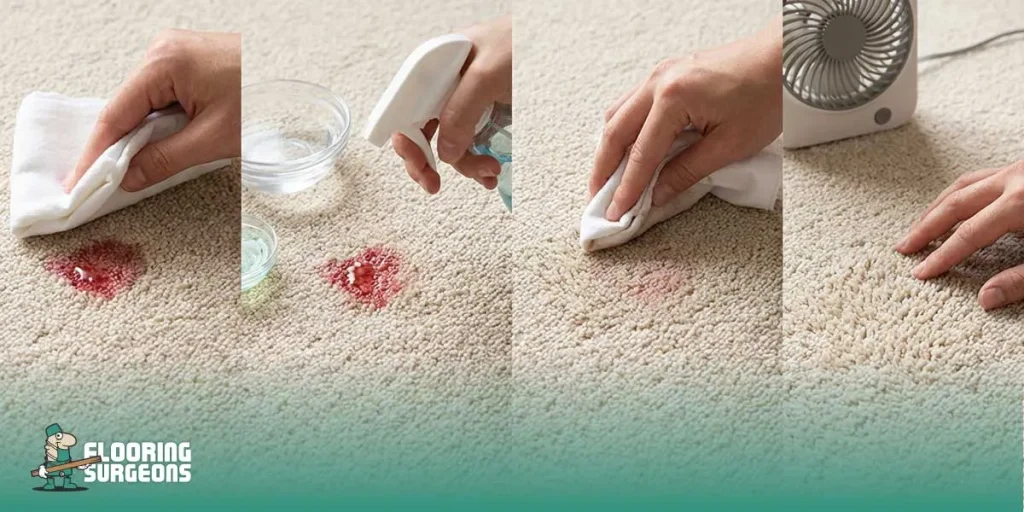
This is the rule that saves carpets. Place a clean white cloth on the stain and press, lift, press, lift. Do not scrub. Scrubbing shoves the stain deeper into the fibres and can permanently roughen the pile. Blotting pulls the stain upward instead of sideways. It may feel slow, but it’s precisely what keeps the mark from spreading.
Step 3: Apply the right cleaning method
Now that surface moisture is under control, choose the method that best matches the stain. Most everyday stains respond well to a mix of warm water and a tiny drop of washing-up liquid. Blood needs cold water only. Greasy stains do better with a mild dish soap solution. Food and drink stains often lift with diluted white vinegar. Work from the outside of the stain toward the centre so you don’t widen the mark. The goal is to loosen and lift, not to grind the mess into the carpet.
Step 4: Rinse and neutralise residue
A lot of stains come back because detergent gets left behind. Lightly dampen a clean cloth with plain water, then wipe the area to remove any leftover soap or vinegar. Then blot it dry with a separate cloth. This quick rinse prevents carpet fibres from attracting dirt later and prevents the faint “shadow stain” many people see the next day.
Step 5: Dry the carpet properly to prevent recurrence
Proper drying makes a much greater difference than people realise. If moisture remains in the fibres, the stain can reappear as the carpet wicks moisture upward. Use a dry towel to absorb the remaining moisture, fluff the fibres gently with your fingers, and let air circulate in the room. A fan helps too. When a carpet dries fully, the stain is far less likely to return.
How to Remove Tough or Old Carpet Stains
Old carpet stains act differently from fresh ones, so you need a slightly stronger approach to get them out. The good news is that most of them can be removed; you just need the proper prep, the right cleaner, and a little patience. This section walks you through practical steps for removing dried food, old drink spills, mystery marks, and stains that have been hiding in the carpet for months.
Why do old stains behave differently?
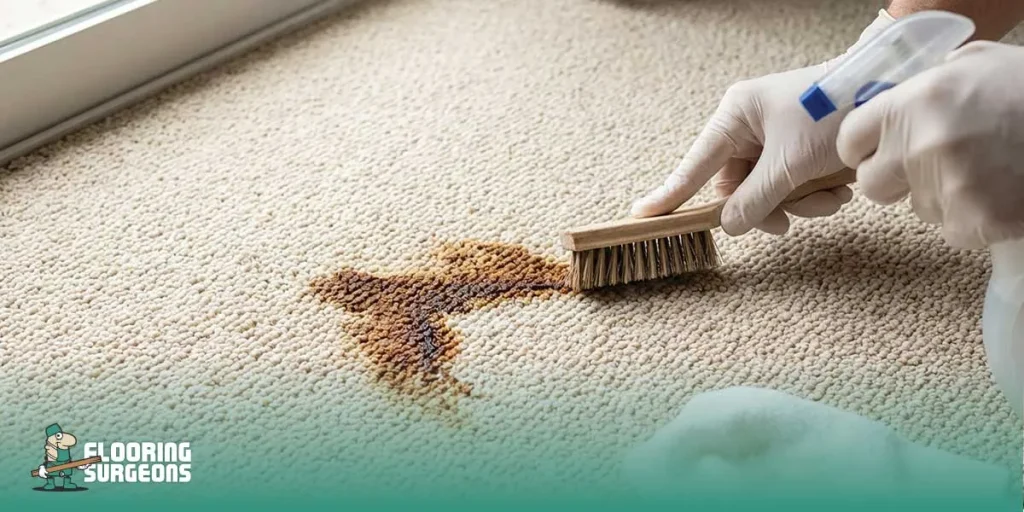
Old stains don’t come out easily because they’ve had time to sink deeper into the fibres and sometimes even bond with them. When liquid dries, it leaves a residue that clings to the carpet’s base. That’s why old stains look darker, feel stiffer, and keep showing through no matter how many times you wipe the surface. They’re not stubborn because they’re “strong”, they’re stubborn because they’re layered. Old stains often highlight the fundamental differences between carpet and laminate in real homes, especially when carpets absorb residue that more complex surfaces simply don’t hold.
How to loosen dried stains
Before you try removing an old stain, you need to soften it. This step makes everything else easier. Lightly mist the area with warm water and let it sit for a few minutes. This rehydrates the dried residue, allowing it to lift rather than break apart or spread. For greasy or sticky stains, add one small drop of mild dish soap to the water. Once the fibres soften, gently blot (don’t rub) to lift the loosened dirt. You’re not trying to clean the stain thoroughly yet, just preparing the area so the real treatment works better.
Best method for removing old stains
The best way to remove an old carpet stain is to work slowly with the right cleaner for the type of mark. Many old stains respond well to a simple mix: warm water, a little washing-up liquid, and a splash of white vinegar. This combination breaks down dried residue, cuts oils, and lightens discolouration at the same time. Apply the solution, let it rest for a few minutes, and blot from the edges inward. If the stain still lingers, repeat once more.
Old stains often need a second round because you’re lifting layers, not a single spill. For darker, long-set stains like coffee or wine, swap the vinegar mix for a carpet-safe oxygen cleaner; it brightens the fibres without bleaching them. In busy family areas, some homeowners compare carpet to laminate flooring for living room spaces, especially when they want a surface that is easier to clean and less likely to hold old stains.
Quick fixes when nothing else works
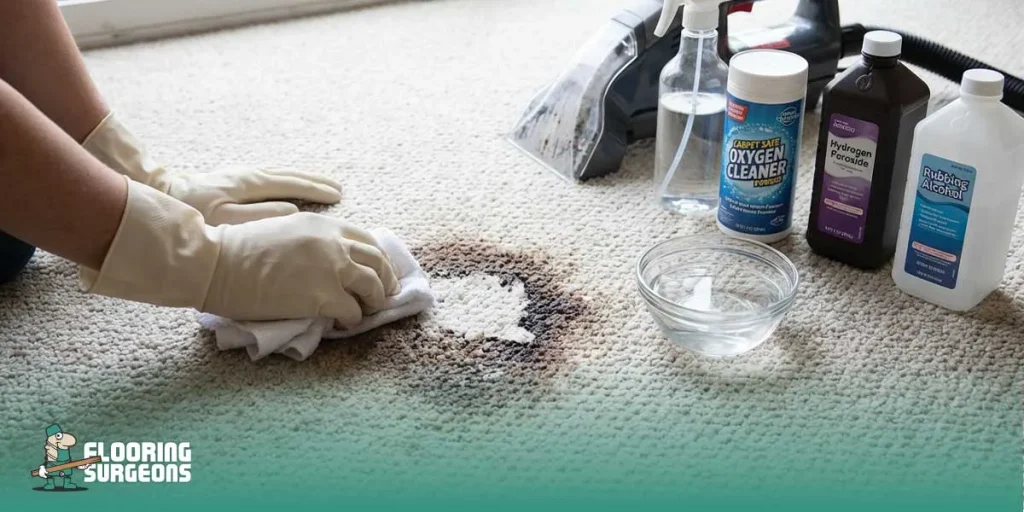
If you’ve tried the usual methods and the stain still won’t come out, you still have a few options. A small amount of diluted hydrogen peroxide (carpet-safe) can lighten deep-set marks, especially on light carpets. For oily stains, rubbing alcohol can break down the residue when used sparingly. And for mystery stains that don’t respond to anything, a carpet extractor or handheld wet vac can pull out whatever’s sitting deep in the backing. If even that doesn’t shift it, the stain is likely bonded to the carpet fibres; at that point, a professional clean or a targeted patch repair may save the day.
How to Remove Stains From Every Type of Carpet Material
Different carpet materials react differently to spills. If you treat them the same, you can damage the fibres or push the stain deeper. The steps below show you how to clean each material safely so the stain lifts without harming the carpet. These methods keep the fibres stable and reduce the risk of colour loss or texture changes.
How to remove stains from wool carpets
Wool carpets are sensitive to strong cleaners, so the safest approach is to blot gently with cool water first. This softens the stain without stressing the natural fibres. Mix a small drop of wool-safe detergent with water, apply it lightly, and blot again. Do not scrub, as wool stretches under pressure, which can make the stain spread sideways.
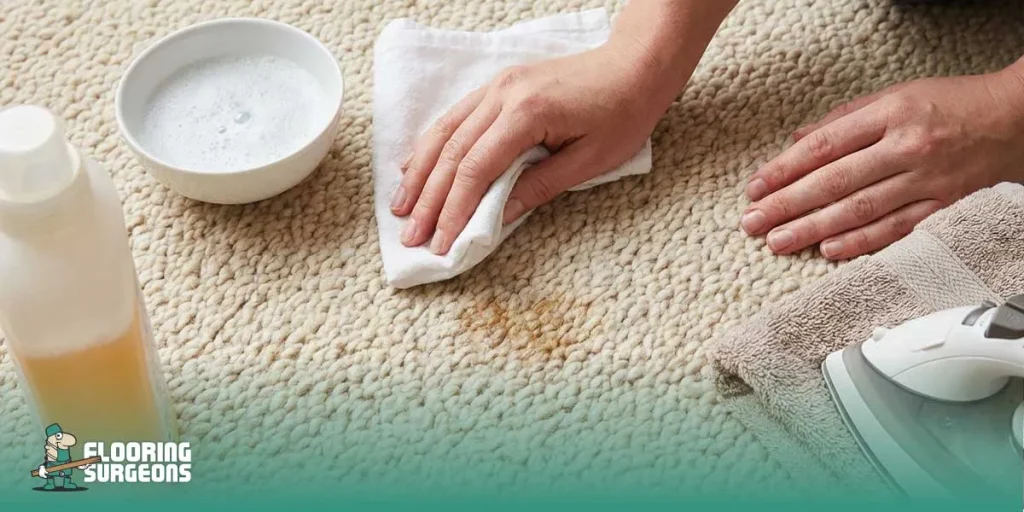
If the stain is oily, place a clean cloth over the area and apply light pressure with a warm iron to draw the oil into the fabric. Finish by blotting with plain water to remove residue. Wool responds well to slow treatment, so give the fibres time to relax between steps.
How to remove stains from nylon carpets
Nylon is strong and bounces back well, but it can hold stains if they are not lifted early. Start by blotting with warm water. For coloured stains like drinks or food, use a mild detergent mix. Nylon handles gentle agitation, so you can move the cloth in short circles without harming the pile.
If the stain has set, a small amount of white vinegar mixed with water helps release it from the surface. Nylon carpets dry fast, so finish by pressing a dry cloth on top to draw out any remaining moisture that could cause marks to return later.
How to remove stains from polypropylene carpets
Polypropylene repels water-based spills, so fresh stains often lift with simple blotting. For older or sticky stains, use a gentle dish soap mix. Polypropylene does not absorb liquid deeply, so avoid saturating the fibres. Apply the cleaner lightly and blot until the stain fades. This material can withstand slightly stronger products than wool or nylon, so oxygen-based cleaners work well on stubborn marks. Just test a small patch first to confirm there is no change in colour. Because polypropylene dries slowly, make sure the area is well ventilated after cleaning.
How to clean light coloured carpets safely
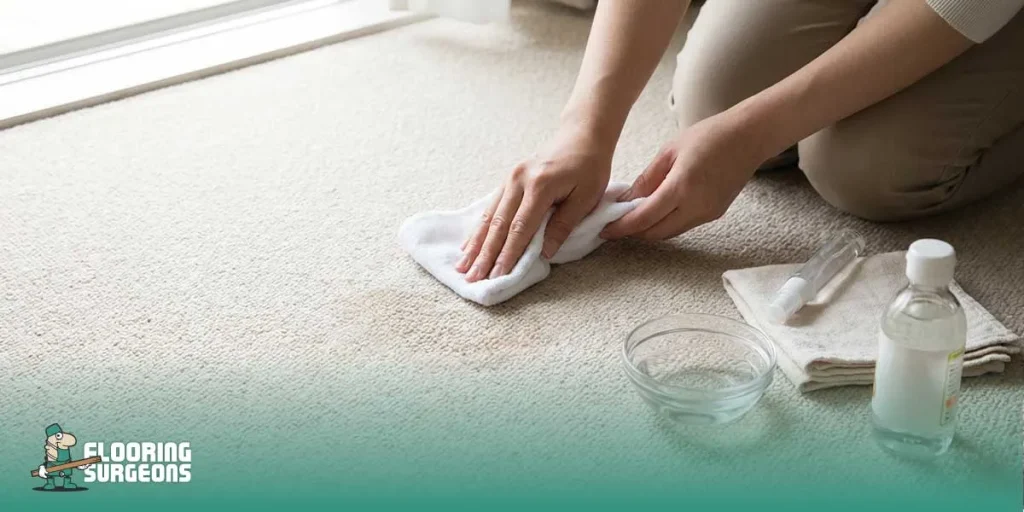
Light carpets show stains faster, and they also show cleaning marks if you use the wrong method. The safest approach is soft blotting with cool water, followed by a gentle cleaner that does not leave residue. Work from the outer edge inward so the stain does not spread into a larger ring. If the stain still shows, mix warm water with a small amount of white vinegar and blot again. This helps brighten the fibres without using harsh products. To finish, place a dry cloth over the area and add slight pressure. This lifts leftover moisture and stops marks from reappearing as the carpet dries.
This is one reason some homeowners compare carpet with luxury vinyl flooring in busy areas, especially when they want a surface that is easier to clean and less likely to absorb spills.
How to Remove Different Types of Carpet Stains
If you want fast, accurate stain removal, focus on the type of spill. Each stain behaves differently, so using the same method for all of them often makes the mark worse. The table below gives you the exact, short method for each stain based on what works in real homes. These steps keep the fibres safe while lifting the stain as cleanly as possible.
| Stain Type | What to Do First | Cleaning Method | What to Avoid |
| Red wine | Blot with a dry cloth right away | Apply cold water, blot again, then use a mix of water and a small amount of dish soap | Scrubbing, warm water |
| Coffee or tea | Blot fast to stop the stain from setting | Use warm water with a drop of mild detergent, blot from the outer edge inward | Rubbing the centre of the stain |
| Blood stains | Use cold water only | Blot with cold water, then apply a small amount of diluted detergent | Hot water (sets the stain deeper) |
| Pet stains and odours | Remove solids and blot liquids | Use an enzyme-based cleaner or a white vinegar mix to break down proteins | Using ammonia (can increase odour) |
| Grease and oil | Place a dry paper towel to absorb excess | Use a small amount of dish soap with warm water; blot until it lifts | Adding too much water |
| Ink and marker | Test a small patch first | Apply a little rubbing alcohol on a cloth and blot gently | Pouring alcohol directly onto the carpet |
| Vomit or sick stains | Remove solids and blot liquid | Use warm water with mild detergent; follow with a vinegar and water mix for odour | Scrubbing, as this pushes material deeper |
| Wax | Let the wax harden fully | Place a cloth over the wax and press a warm iron on top to lift the wax into the cloth | Scraping soft wax |
| Gum | Freeze the gum with ice in a bag | Once firm, lift gently with a spoon; follow with mild detergent | Pulling gum while soft |
| Mud and dirt | Let the mud dry first | Vacuum the dry soil, then clean with warm water and mild detergent | Rubbing wet mud (spreads it wider) |
Best Homemade Carpet Stain Removers
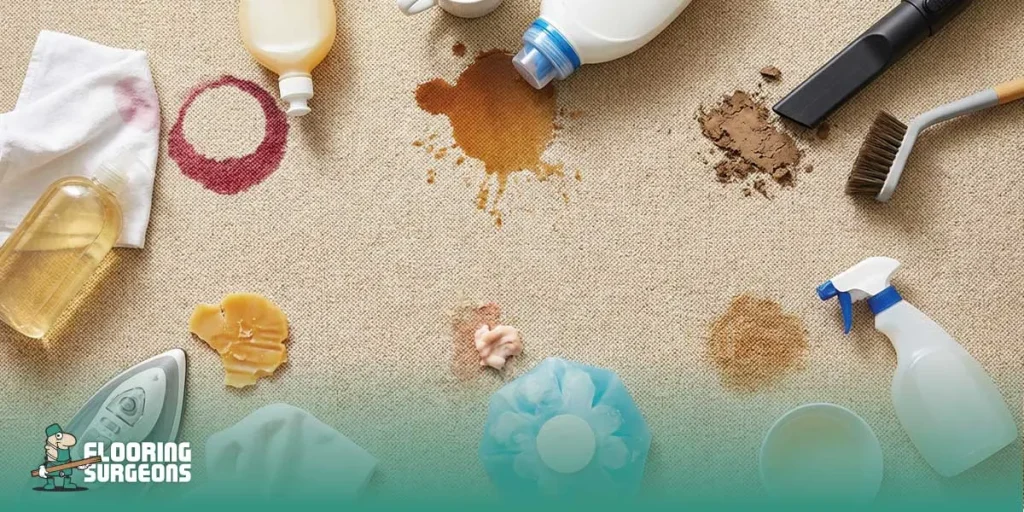
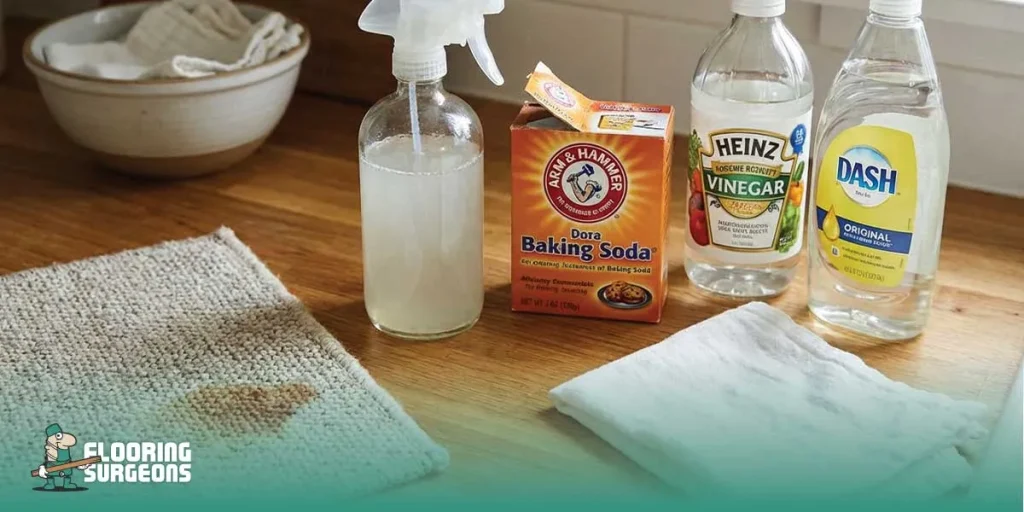
When you don’t want to spend money on commercial cleaners, or you need something right now, the best homemade carpet stain remover is usually made from ingredients you already have in your kitchen. These DIY mixes work well because they’re gentle on fibres, safe for most carpet types, and surprisingly effective on everything from fresh food spills to everyday marks. The key is knowing which mixture suits which stain, because even natural cleaners behave differently on wool, nylon, or polypropylene.
The formulas below are simple, quick to prepare, and cost almost nothing. They’re the same kinds of blends people use in real homes when they need a fast but safe solution, and they help you avoid harsh products that can damage fibres or make stains reappear later.
1. All-purpose DIY stain spray
Mix in a spray bottle:
- 250 ml warm water
- 1 teaspoon mild dish soap
- A splash of white vinegar
Spray lightly, blot, repeat if needed. Great for tea, coffee, mild food stains, and everyday marks.
2. Natural stain remover for wool carpets
Wool needs softer, non-alkaline solutions:
- Mix 250 ml of cool water with a tiny amount of wool-safe detergent.
- Use sparingly and always blot. Never use strong vinegar or baking soda on wool (can damage fibres).
3. Vinegar solutions
Vinegar works for: pet odours, food stains, and mild drink spills. Vinegar does NOT work for:
- blood
- ink
- tough grease
- Some dyes may lock the colour rather than lift it.
Only use on synthetic carpets unless tested first.
4. Homemade solutions are safe for pets and kids
If you want a cleaner without harsh chemicals:
- Warm water + a drop of mild dish soap
- Baking soda paste for odours (safe once dry)
- Diluted vinegar for light organic stains
Avoid ammonia; pets may interpret it as a “marking” smell.
Quick Guide to Homemade Stain Removers
| Problem | Best DIY Solution | NOT Safe For |
| Fresh food/drink stains | Warm water + dish soap | Wool (test first) |
| Pet odours | Vinegar + water | Carpets are sensitive to acidity |
| Mild grease | Dish soap + warm water | Over-wetting carpet |
| Wool stains | Wool-safe detergent + cool water | Vinegar, baking soda |
| Smells in fibres | Baking soda (dry, overnight) | Very damp carpets |
Best Commercial Carpet Stain Removers (UK Options)
Commercial cleaners help when DIY fails or the stain has been sitting for a while. The quick guide below helps you match the right cleaner to your issue.
- For fresh stains, look for enzyme-light or gentle surfactant-based sprays that lift spills before they set. Ideal for new wine, tea, juice, mud, and everyday marks.
- For old stains (dried or tough marks), choose oxygen-based cleaners or stain-lifting foams designed for deep penetration. These loosen dried residue and help revive older carpet areas without bleaching.
- For coloured carpets, use colour-safe formulas that clean without pulling pigment from the fibres. Avoid anything that mentions “brightening” unless you’re sure it’s dye-safe.
- For pet accidents, enzyme cleaners work best because they break down organic matter and neutralise odours thoroughly. These stop stains from coming back and prevent pets from re-marking areas.
For areas where spills are common, such as family rooms, hallways, or open-plan spaces, laminate flooring can be a more practical long-term option than carpet because it is easier to clean and less likely to hold stains.
Commercial Carpet Stain Removers by Situation
| Type of Stain | Best Product Style | Why It Helps | Avoid |
| Fresh stains | Gentle spray cleaners | Lift surface marks fast | Thick foams (may push stain deeper) |
| Old stains | Oxygen-based formulas | Break down dried residue | Bleach-based products |
| Coloured carpets | Colour-safe cleaners | Protect the dye while cleaning | Whitening agents |
| Pet accidents | Enzyme cleaners | Remove odour and proteins | Ammonia cleaners |
Common Carpet Stain Removal Mistakes to Avoid
Most stains become harder to remove because of the wrong cleaning steps, not the spill itself. Avoiding these mistakes keeps fibres safe and stops stains from coming back.
Why scrubbing ruins carpet fibres
Scrubbing feels like the quickest fix, but it pushes the stain deeper and frays the fibres. The result is a patch that looks worn even after you manage to lift the mark. Blotting protects the pile and keeps the damaged area as small as possible.
Using too much water
A carpet only needs a small amount of moisture to lift a stain. When you soak the fibres, the backing absorbs the water, pulling the stain downward. As it dries, the mark rises again, the classic “reappearing stain”. Light, controlled moisture always works better.
Using vinegar on the wrong materials
Vinegar can help with some organic stains, but it’s not safe for every carpet. Wool fibres react badly to firm acidity, and certain dyes lose brightness when exposed to it. Always test first or avoid vinegar altogether if you aren’t sure about the material.
Overusing soap
Soap that doesn’t rinse out thoroughly leaves a sticky film on the fibres. That residue grabs dust, pet hair, and dirt the moment the carpet dries, making the stain return even darker. Use small amounts of detergent and rinse with clean water to avoid build-up.
When to Call a Professional (Signs DIY Won’t Work)
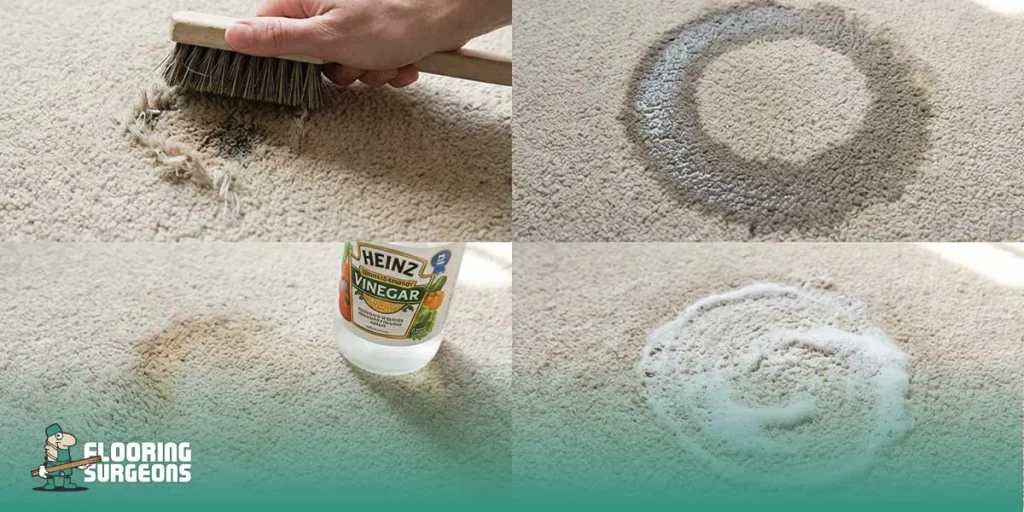
Some stains won’t lift because the issue goes deeper than the surface. If you notice any of the signs below, it’s time to bring in a specialist rather than repeat DIY attempts. Call a professional when:
- The stain keeps coming back after drying.
- There’s a strong odour you can’t neutralise.
- The mark covers a large area or has soaked into the underlay.
- The carpet is wool or part of a premium installation you don’t want to risk damaging.
- You see signs of mould, dampness, or fibre damage after cleaning.
When stains keep returning, or carpet fibres have been damaged over time, it may be worth considering low-maintenance flooring alternatives to carpet that can better withstand spills in busy areas. At Flooring Surgeons, we help homeowners choose practical flooring options that suit their lifestyle, room usage, and maintenance needs.

Haniye Ayanmanesh
As an expert writer for Flooring Surgeons, I combine technical SEO knowledge with a practical understanding of flooring, producing content that helps users make confident decisions while supporting long-term organic growth.