Flooring warranties often come with big claims: 15 years. 25 years. Lifetime. Waterproof. More durable than other products. While these flooring life expectancy claims can help you narrow down your choices, take them with a grain of salt. Reading those numbers as a promise of how your flooring will actually perform in the real world is a recipe for disappointment. For the most part, those numbers assume ideal circumstances: that certain warranty conditions are met and that the flooring is installed correctly. They don’t account for daily use in your active household.
Simple answer: Flooring packaging claims are helpful, but they don’t reflect real-world flooring lifespan. Moisture exposure, foot traffic, subfloor issues, cleaning practices, pets, furniture, or improper installation can drastically shorten your floor’s lifespan. Which is why it pays to know the difference between marketing and what works before you pick any floor covering.
Table of contents
What Flooring Packaging Claims Actually Mean
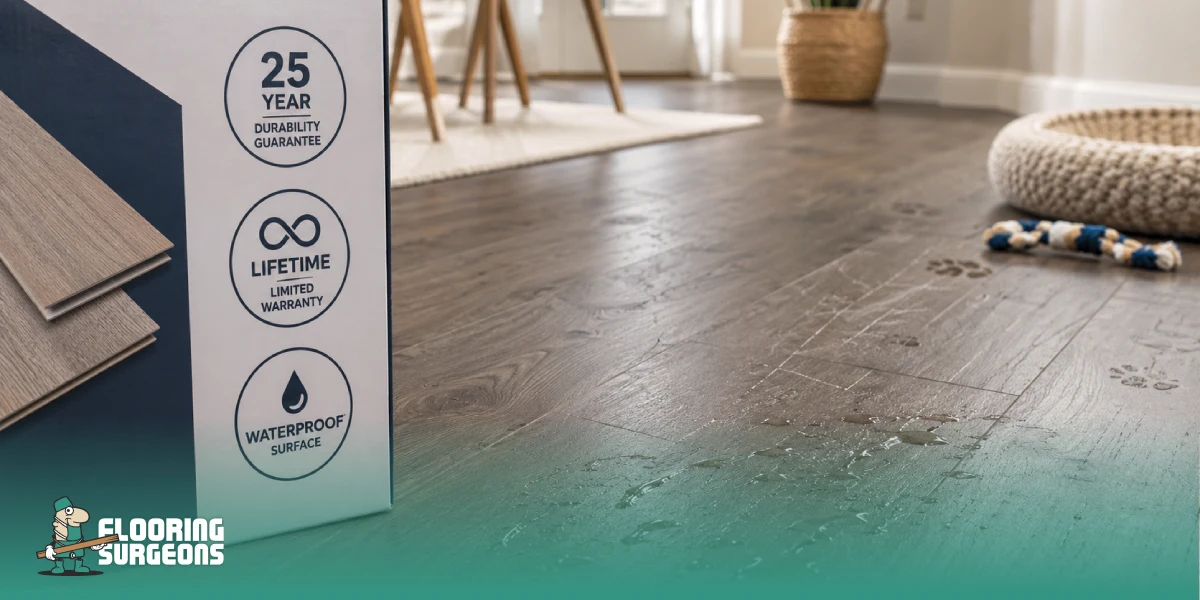
Flooring packaging claims should convey the product’s key attributes at a glance; they don’t always disclose completely the terms associated with those claims, such as “25-year warranty”, “lifetime residential warranty”, “waterproof”, “scratch-resistant” or “heavy-duty” may appear very straightforward, but each typically has a qualified definition in the warranty or product specification.
For instance, a lengthy warranty may only cover normal residential installation and use. Exclusions may include commercial environments, rental properties, improper installation, or water damage. Waterproof often means only that the floor’s surface is waterproof. It doesn’t mean water won’t eventually seep underneath the planks or damage the subfloor. Similarly confusing are flooring durability claims that hinge on the wear layer, thickness, AC rating, maintenance regimen, or proper installation.
Buyers should be aware of what flooring warranties cover before buying into a lengthy warranty period. Most warranties cover only certain situations and exclude typical problems.
Flooring Warranty vs Lifespan: Why They Are Not the Same
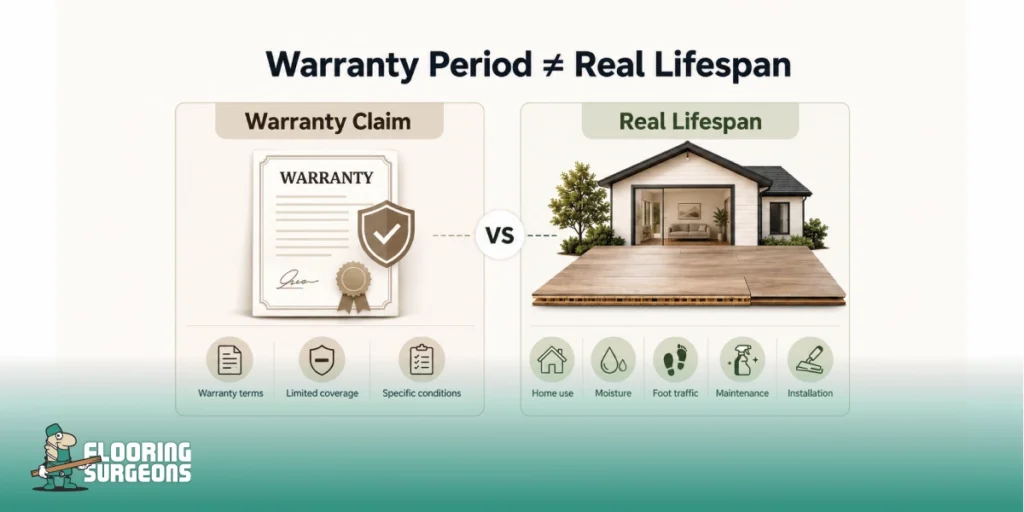
Misunderstanding warranties is probably the largest contributor to flooring lifespan claims becoming so muddy. Buyers often assume that a warranty period is an expected lifespan. Flooring warranty vs lifespan are two completely different concepts. A warranty states what the manufacturer will cover and under what conditions. Lifespan means how long you can expect your floor to perform well with daily use.
Flooring warranty claims may include manufacturer defects, structural delamination or wear-through during normal residential usage. Warranty claims may exclude damages due to improper installation, excessive moisture, improper subfloor preparation, harsh cleaners, furniture scratches or installation in a room not intended for that flooring.
That’s why a 25-year warranty doesn’t always translate into a floor that looks or performs like new after 25 years. The flooring can still function but may not look new, may lose surface protection, or may not feel comfortable much sooner, depending on how it’s installed and maintained. When evaluating flooring claims, buyers should look past the number on the box and read the fine print associated with the warranty.
Why Flooring Durability Claims Can Be Misleading in Real Homes
Marketing language about flooring durability can be quite impressive on a box. Words like “heavy- duty,” “waterproof,” “scratch-resistant”, and “built to last” sound great, but what they’re really describing is how the product performs in certain circumstances, not all possible circumstances within an actual household.
A flooring product can pass every test with flying colours and still have problems in real-world applications. Kitchens and bathrooms add moisture; mud on hallways’ floors; pets with claws; moving furniture; and an uneven subfloor can all shorten your floor’s life expectancy. Harsh cleaning chemicals will also take a toll. A good product can still fall short of its life expectancy if it is installed improperly or utilised in the wrong environment.
When choosing flooring, this is particularly critical in spaces where water or humidity are regularly present. Using a product like Waterproof Luxury Vinyl in moisture-susceptible spaces can often be relied on more than taking the word of waterproof or long-life claims made on the packaging. Flooring should go with your room…not the other way around.
Flooring Lifespan by Material: What Buyers Should Expect
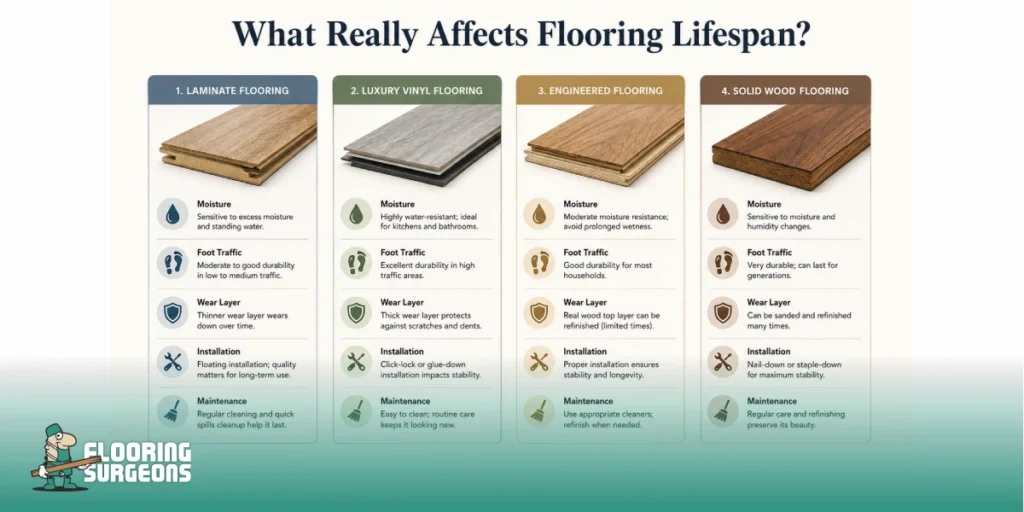
Flooring materials age differently, so flooring lifespans by material are among the most helpful things buyers can look up before believing what’s printed on the box. Long warranties sound nice, but actual flooring lifespan depends on the material used, room conditions, installation quality, and maintenance.
Laminate Flooring
Flooring lifespan claims are often made with laminate floors, particularly those labelled ‘heavy-duty’ or ‘ideal for high traffic homes’. Durability depends on thickness, AC rating, underlay, moisture and subfloor preparation.
Luxury Vinyl Flooring
Flooring often comes with Luxury vinyl that is branded with waterproof and Lifetime warranties. These are nice, but consumers should also consider the wear layer, click system, appropriate rooms, and whether it’s designed for kitchens, bathrooms, or heavy-traffic areas.
Engineered and Solid Wood Flooring
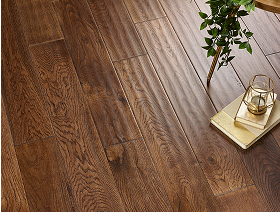
Engineered and solid wood flooring have long life expectancies; they tend to be more vulnerable to moisture, humidity fluctuation, surface damage and cleaning processes. Life expectancy can depend on the quality of the finish, maintenance, and whether they can be sanded and refinished.
Flooring Lifespan: Claims vs Reality
| Flooring Material | Common Packaging Claim | What Affects Real Lifespan |
| Laminate Flooring | 10–25 years / lifetime residential | AC rating, thickness, underlay, moisture exposure |
| Luxury Vinyl Flooring | Waterproof / long-lasting | Wear layer, click system, subfloor, room use |
| Engineered Flooring | 20+ years / durable wood surface | Veneer thickness, humidity, maintenance |
| Solid Wood Flooring | Decades of use | Sanding potential, finish type, moisture control |
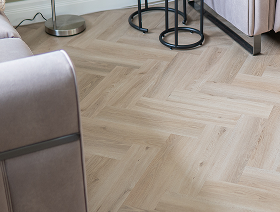
| Herringbone / Chevron Flooring | Premium design / long-lasting | Installation quality, pattern complexity, material type |
When considering high-traffic areas, technical specs like AC rating become much more important than generic packaging claims. That’s why comparisons to AC5 Laminate Flooring make more sense.
Product Details That Matter More Than a Lifespan Claim
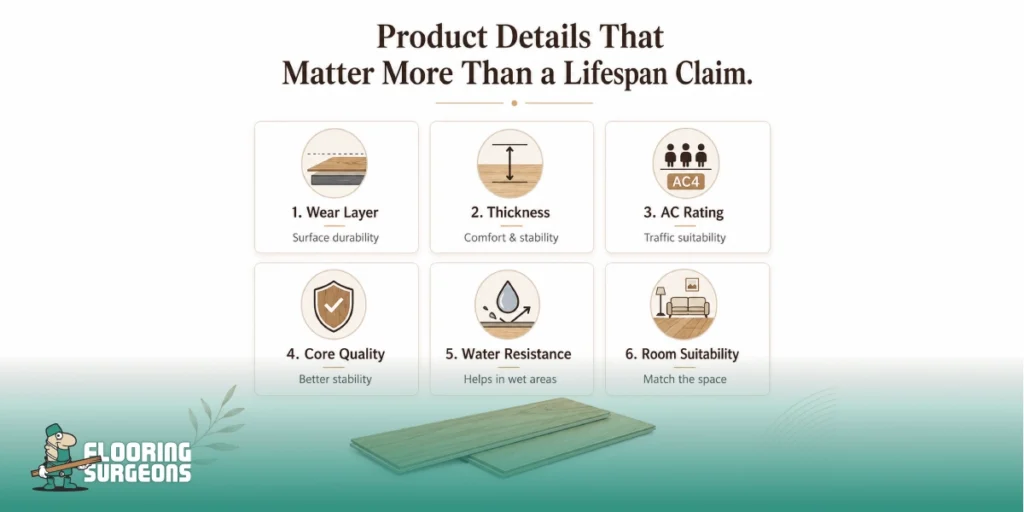
A flooring lifespan claim can be helpful, but shouldn’t be the sole factor shoppers consider. Oftentimes, product specifications are a better indicator of a floor’s quality, as they will dictate how the flooring will perform once installed.
Before believing any “long-lasting” or “high durability” marketing on a box, consumers should know:
- Density (wear layer): This measures how much wear and tear your surface can take from daily scratches, scuffs and visible wear.
- Thickness: While this can affect your floor’s comfort and stability, it should be weighed against other factors and information, not on its own. Features such as 12mm Laminate Flooring allow consumers to know an exact technical specification rather than an estimated life.
- AC Rating: For laminate flooring, the AC rating can indicate whether your product is intended for light, medium, or heavy traffic areas.
- Core quality: Dense cores may help increase stability, especially in high-traffic rooms/areas where you want the floor to withstand consistent pressure.
- Water resistance: Important in kitchens, bathrooms, entryways, and other rooms where spills or increased humidity may occur.
- Room Suitability: Just because a product is perfect for your bedroom, doesn’t mean it will work for your hallway, kitchen, or commercial space.
These factors paint a more realistic picture than generalised durability ratings for flooring. Rather than trusting just the number on the box, customers can compare technical specs to their intended use of the room.
Red Flags in Misleading Flooring Claims
While some flooring packaging claims may give consumers a quick sense of a product, others can make the floor seem like it will last longer than expected. If a flooring package boasts about how long it will last, check whether the claim is definite, quantifiable, and backed by warranty fine print.
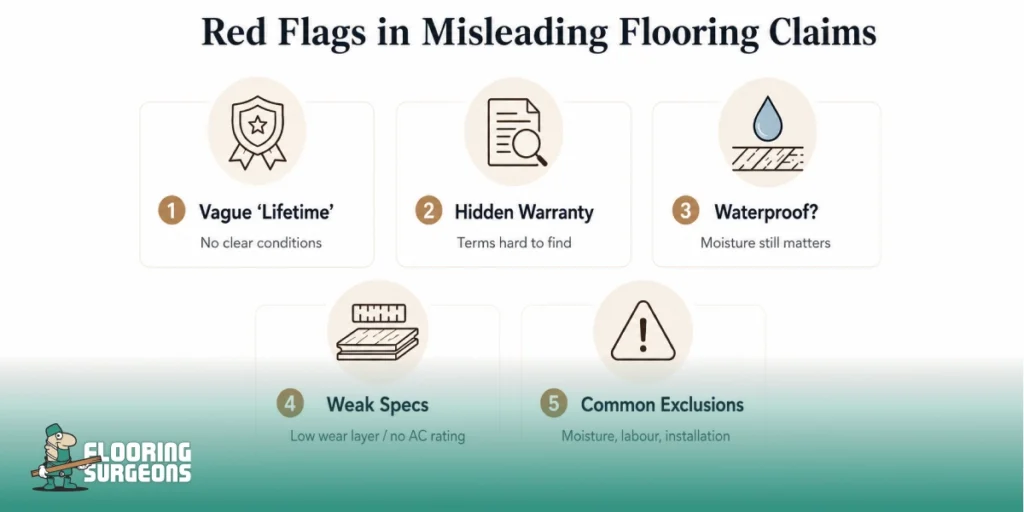
Common red flags include:
- Lifetime”, qualified by vague or no language: Any product claiming “Lifetime” should specify who it is covered for, what kind of use is included and what damages will cause it to be void.
- A warranty that’s difficult to find: Floor warranties advertised boldly on the packaging should have corresponding language easily available online or in-store. If you’re digging around to find it, consider that a red flag.
- “Waterproof” without explaining the installation’s effects: It’s true that most flooring is resilient to surface moisture. But water or moisture damage can still occur if moisture is present on the underside of the flooring material around joints, edges, or the subfloor.
- Long lifespan claims with weak specifications: If a floor has a low wear layer, undefined thickness or no AC rating, take their lifespan claims with a grain of salt.
- Exclusions for common flooring problems: Flooring warranties commonly do not cover damages from moisture, improper installation, labour costs, subfloor problems or rooms with high traffic/use.
These warning signs aren’t necessarily indicative of a poor product. What they do mean is that consumers should take fancy flooring claims with a grain of salt and compare the claim to the product’s actual specifications and proper usage.
How to Choose Flooring Based on Real-World Use
Flooring packaging will make claims, but the best way to avoid getting caught up in them is to start with the room you are shopping for. That product may claim it lasts forever, but if it doesn’t suit the intended use of that room, it won’t matter. A bedroom floor that sees little traffic will endure a whole lot longer than a high-traffic hallway or kitchen with lots of moisture.
In kitchens and bathrooms, you may care more about waterproofing, stable installation, and easy-to-clean factors than an overall “durability” rating. High-traffic areas like hallways, entrances, and living rooms may be more prone to foot traffic, scratches, and surface wear. Bedroom rooms might prioritise comfort and aesthetics over the most durable flooring. If you have kids or pets, you might care about flooring that can withstand spills, stains, and frequent cleanings.
This is why understanding the gap between flooring marketing and real-world use is so important before choosing a product based only on the promise printed on the box.
Conclusion: The Number on the Box Is Only a Starting Point
Flooring manufacturers’ life expectancy claims are useful. They should, however, never be considered a promise or guarantee. That number on the package is just a baseline. What your flooring warranty vs lifespan will actually be can vary widely based on factors like installation, room type, moisture levels, traffic patterns, your cleaning habits, and the product’s technical aspects.
Buyers need to dig a little deeper than what’s printed on the fancy gift box that comes with a flooring installation. At Flooring Surgeons, we recommend choosing your flooring based on how the floor will be used. Compare warranty information, product materials, and actual wear conditions. You’ll be on your way to a better flooring decision.

Ana.Soltanpoor
I’m an SEO Specialist with a strong background in content management and organic search. I build data-driven content strategies by aligning user intent, search behavior, and SEO best practices to ensure every piece of content delivers clarity, relevance, and measurable organic performance.