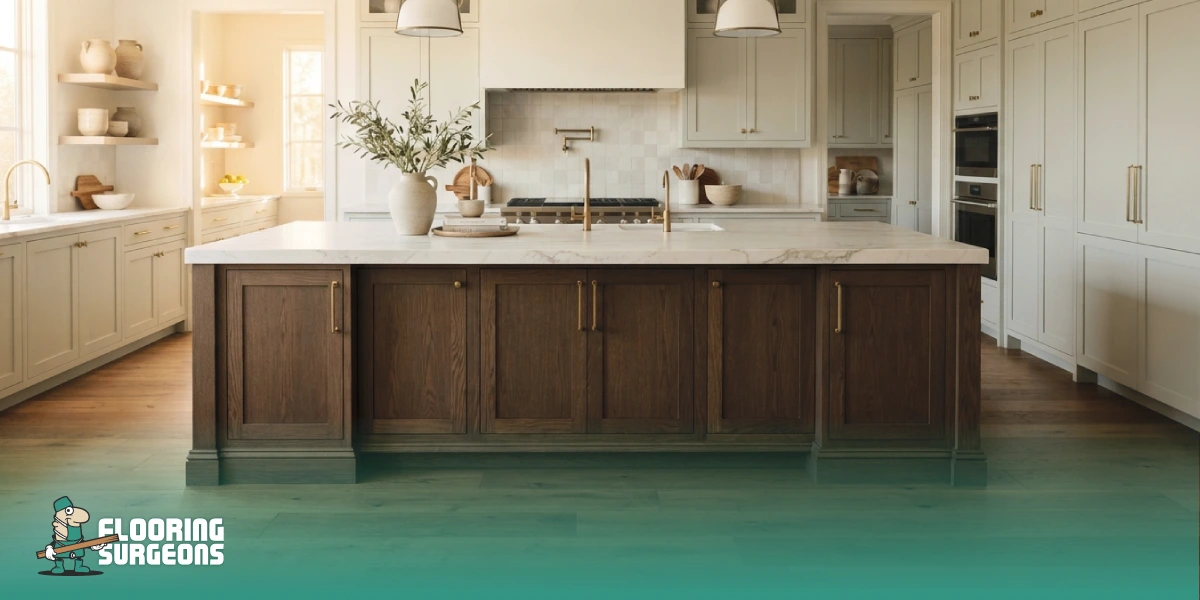
Are you renovating right now and wondering, “Can You Put Heavy Kitchen Islands on Floating Floors”? The answer is usually no, not if your kitchen island is built in place on the subfloor. Floating floors are great because they’re simple to install and look amazing. However, they are designed to expand and contract as one large movable panel.
One of the biggest regrets homeowners have is installing a heavy kitchen island on floating floors. Only a few months down the road, they are buckling, squeaking, or gaping. Installing a fixed island on a floating floor will cause this because the island prevents the floor from floating when temperatures change. Let’s dive into how this happens and what you can do to make sure your kitchen remodel goes smoothly, looks amazing, and stays warranty-worthy.
Table of contents
The Short Answer: Fixed vs Movable Islands
There seems to be some misunderstanding about installing a heavy kitchen island on floating-floor projects. The confusion lies with the difference between anchoring an island and furniture-style cabinetry. If you are planning a kitchen island in a floating-floor layout, you must first determine whether the island will be secured to the subfloor.
Most flooring manufacturers do not like anything super heavy that is permanently fastened down. An anchored island basically anchors your floor in place and defeats the movement of the “floating” floor system. However, if your island is mobile (think butcher block on casters) or furniture-grade (sit on the floor and not bolted to it), there is much less risk involved. Be sure to read your individual product’s warranty and installation guide, as always; the manufacturer’s instructions trump for your particular flooring.
Why Floating Floors and Heavy Kitchen Islands Don’t Mix
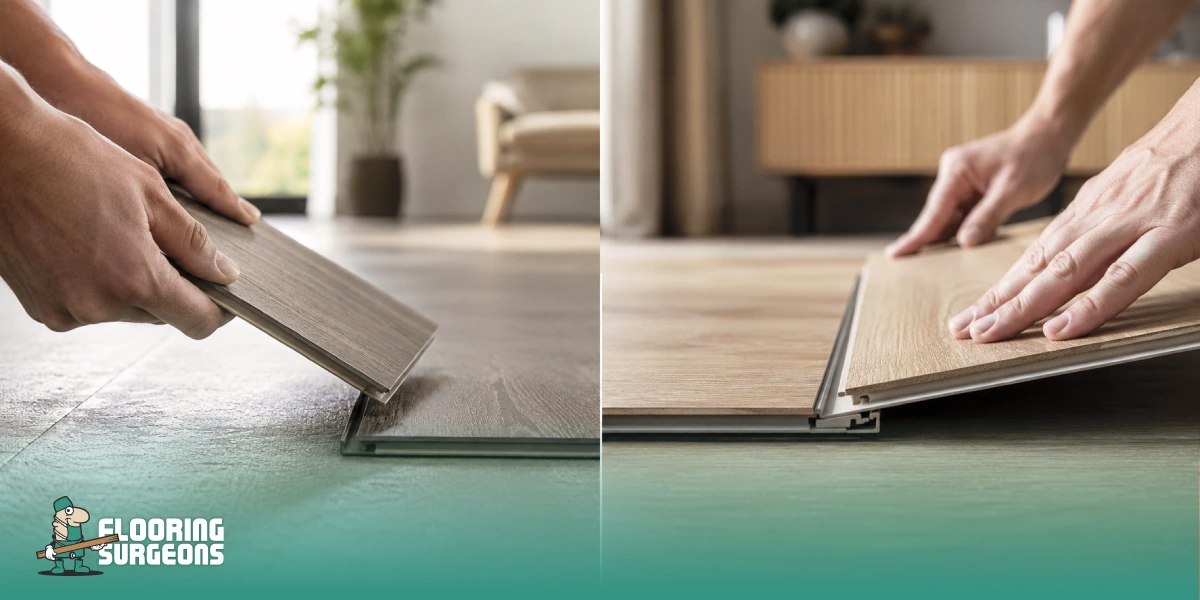
Floating floors are installed as a “floating” system. The flooring material is not glued, nailed or fastened to the subfloor. This allows the flooring to expand and contract with environmental changes without buckling.
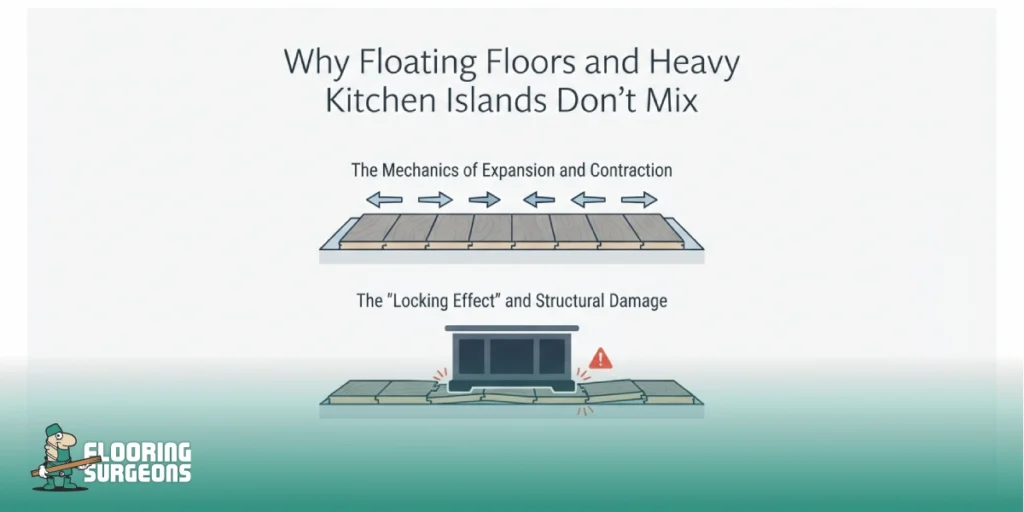
The Mechanics of Expansion and Contraction
Floating floors are made up of planks which lock together for a seamless floor. All floors expand and contract with changes in your home’s temperature and humidity. To learn more about the science behind floor movement, read our in-depth explanation here: How Flooring Reacts to Seasonal Expansion.
Installing something heavy on top of the floor, such as a stone countertop or built-in cabinets, is called pinning the floor. Pinning your floor prevents boards from expanding outwards, eliminating the main cause of failures.
The “Locking Effect” and Structural Damage
A common mistake is installing a floating floor under island cabinets, thinking the weight will hold it down. What actually happens is that you develop a “locking effect.” The rest of the floor expands with humidity, but stops short against the heavy island.
Since a floating floor under the kitchen island can’t expand and contract, the weight pushes down and causes the floor planks to buckle/tent or break the tongue (lock) off (pieces that click together). Manufacturers won’t warrant this type of damage, and it can be expensive to repair. If it’s not heavy enough to buckle, it may cause noisy gaps or squeaks you’ll never hear!
Comparison Table: Flooring Types for Kitchen Islands
To help you decide the best route for your renovation, use this table to understand how different materials behave under the weight of an island:
| Flooring Type | Installation Method | Suitable for Fixed Islands? | Key Advantage |
| Laminate | Floating | ❌ No | Budget-friendly & Realistic |
| Engineered Wood | Floating / Glue-down | ⚠️ Depends | Dimensional Stability |
| Luxury Vinyl (LVP) | Floating / Glue-down | ✅ Yes (Glue-down) | Waterproof & Durable |
| Solid Wood | Nail-down | ✅ Yes | Premium Durability |
Best Flooring Options for Kitchen Island Layouts
Building a massive island that will actually work can be disastrous if you start with the wrong material. So if you’re set on your big island, start with one of these tested materials.
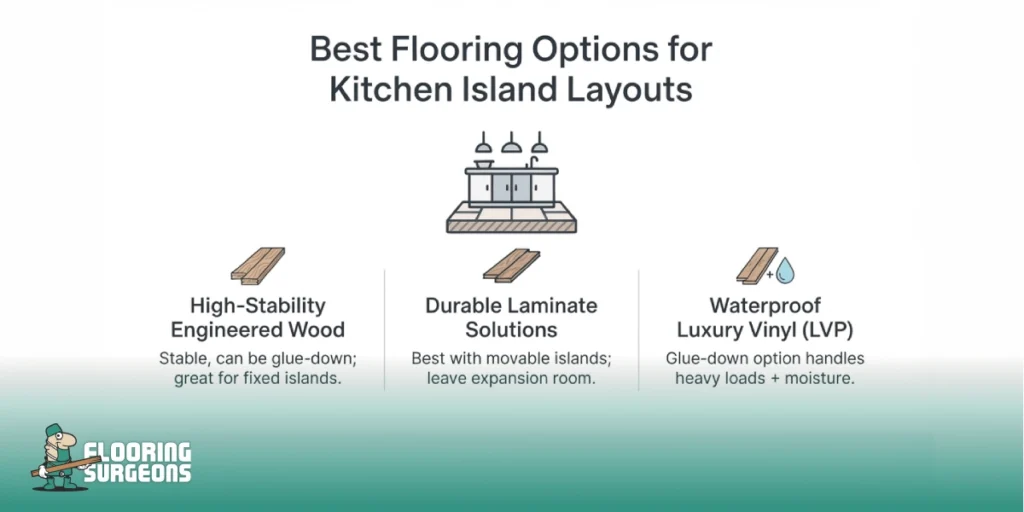
High-Stability Engineered Wood
For those who prefer the look of real wood but desire additional stability against movement from perimeter load, product selection is key. Engineered Flooring for Kitchen areas provides much greater dimensional stability than typical floating laminate when installed properly. Many Engineered floors can be glued down, eliminating the potential for “locking up” that can occur with most floating floors.
Durable Laminate Solutions
Laminate Flooring For Kitchen ideas are very common in homes with lots of hustle and bustle throughout the day, where things often get spilt and dropped. If you want to put a heavy island on laminate, do this only if you are using a non-anchored island or plan to install laminate flooring around the island cabinets. You never want to glue down an island on top of laminate. You need the floor to expand and contract under the island. If you glue it down, you trap the planks against the cabinets, which can crack the laminate’s wear layer and cause buckling when it shifts.
Waterproof and Heavy-Duty Luxury Vinyl
When dealing with fixed cabinetry, you want complete peace of mind that you can put your island right on top of your glue-down Luxury Vinyl Flooring for the kitchen without any expansion gaps. Because LVP withstands moisture and water damage, it’s the flooring product that professional contractors most often recommend for kitchen island flooring.
Essential Kitchen Flooring Considerations
Keep in mind that before you commit to your layout, a floor is only as good as its installation. A debate that often comes up when planning is whether the floor should run wall-to-wall or stop at the cabinet lines. If you are currently laying out your space, it helps to know whether you should install flooring under kitchen cabinets or stop at the plinths.
Whether it’s wood, laminate, vinyl or stone, bridging expansion gaps (or installing a fixed island on a floating floor without the flooring manufacturer’s approval) is the quickest way to void your warranty. So always err on the side of caution and consult a professional installer familiar with the movement required for the product you’ve selected.
Expert Recommendation: Plan for Longevity
To wrap up: installing a heavy kitchen island on floating floor surfaces may seem like a convenient choice when remodelling. However, it can cause irreversible damage to your floors if precautions are not taken. The “locking effect” caused by a fixed island on floating floor installations is a primary culprit for buckling, gapping, and ruined planks.
To ensure your kitchen remains as beautiful as it is functional, follow these three golden rules:
- Know your island type: If it’s anchored, choose a non-floating installation method.
- Follow the manual: Never ignore the manufacturer’s instructions regarding expansion gaps and weight limits.
- Consult the pros: When in doubt, always seek professional advice before the subfloor is even touched.
When deciding what floor to install in your home, Flooring Surgeons can help you through some of these choices. Deciding between luxury vinyl vs engineered wood? Flooring installers at Flooring Surgeons ensure your floor is installed accurately. We make sure your floors are installed with quality, durability, and consideration for how they will perform over the years. Don’t let a single installation error lead to a very expensive remodel. Trust the professionals with your next flooring job.

Ana.Soltanpoor
I’m an SEO Specialist with a strong background in content management and organic search. I build data-driven content strategies by aligning user intent, search behavior, and SEO best practices to ensure every piece of content delivers clarity, relevance, and measurable organic performance.