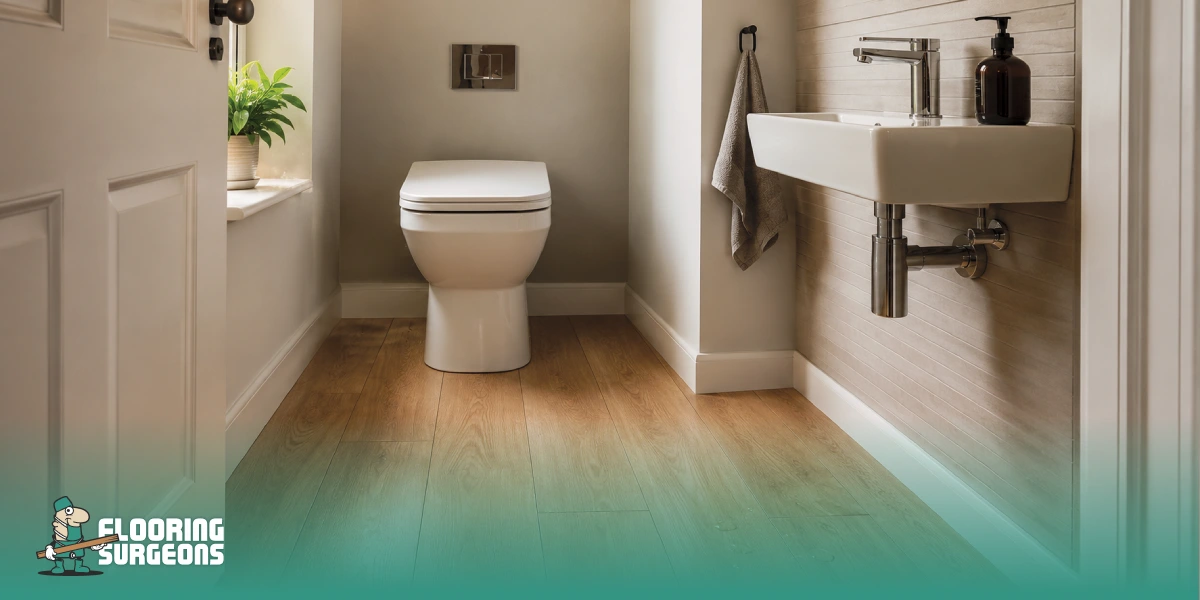
Yes, you can use laminate flooring in a downstairs toilet, but the product must be suitable for moisture-prone spaces and fitted correctly. A downstairs WC normally faces less humidity than a full bathroom because it has no shower or bath. However, splashes, condensation and hidden plumbing leaks can still damage an unsuitable laminate floor.
The safest decision depends on the room, subfloor and product specifications, not simply whether the packaging describes the flooring as water-resistant.
Table of contents
Is Laminate Suitable for a Downstairs Toilet?
If you are wondering whether laminate is suitable for a downstairs toilet, the answer is usually yes when the room contains only a toilet and hand basin. In this setting, occasional splashes are the main concern rather than the persistent moisture found in a family bathroom.
You should still check that the manufacturer approves the selected laminate flooring for downstairs toilet installations or other moisture-prone areas. Standard laminate designed for dry bedrooms and living rooms may swell if water reaches its fibreboard core.
Purpose-selected laminate flooring for bathrooms can provide better protection through treated edges, tighter click joints and a more moisture-resistant core. Even then, water should be wiped up promptly because water resistance does not necessarily mean the floor can tolerate flooding or long-term leaks.
If you are comparing several rooms and materials, this guide to the best flooring for a bathroom provides a broader overview of suitable options.
What Can Damage Bathroom Laminate Flooring?
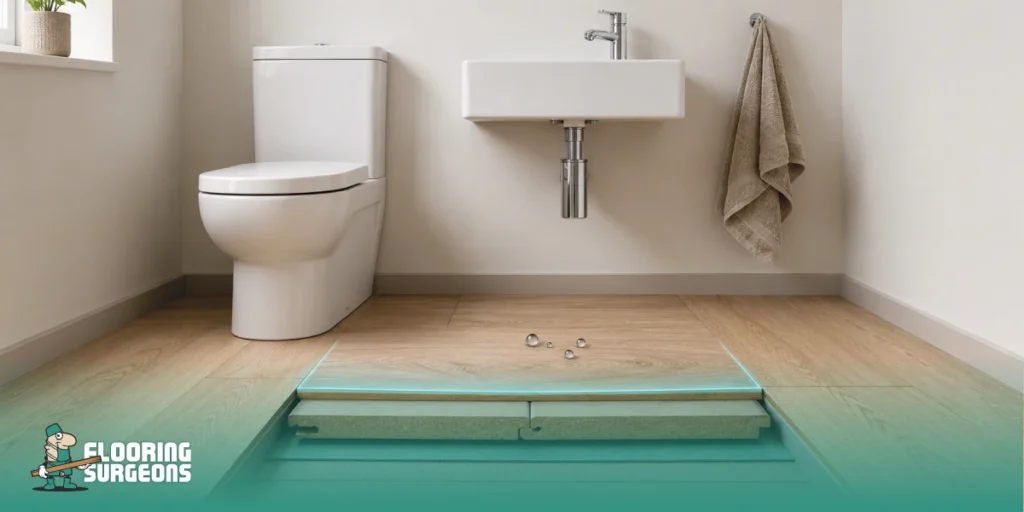
The greatest risk to bathroom laminate flooring is water entering through the joints or exposed cut edges. Once moisture reaches the core, boards may swell, lift or develop gaps that cannot be reversed through normal drying.
Common sources of damage include:
- Water splashed around the hand basin.
- A slow leak from the toilet inlet or waste connection
- Moisture trapped beneath a bathmat.
- Excess water used while mopping
- Unsealed cuts around pipes
- Damp rising through an unprotected concrete subfloor.
A small leak can be more harmful than an obvious spill because it may continue unnoticed beneath the boards. Check plumbing connections regularly and investigate any recurring damp smell, staining or movement in the floor.
Choosing the Best Flooring for a Downstairs Toilet
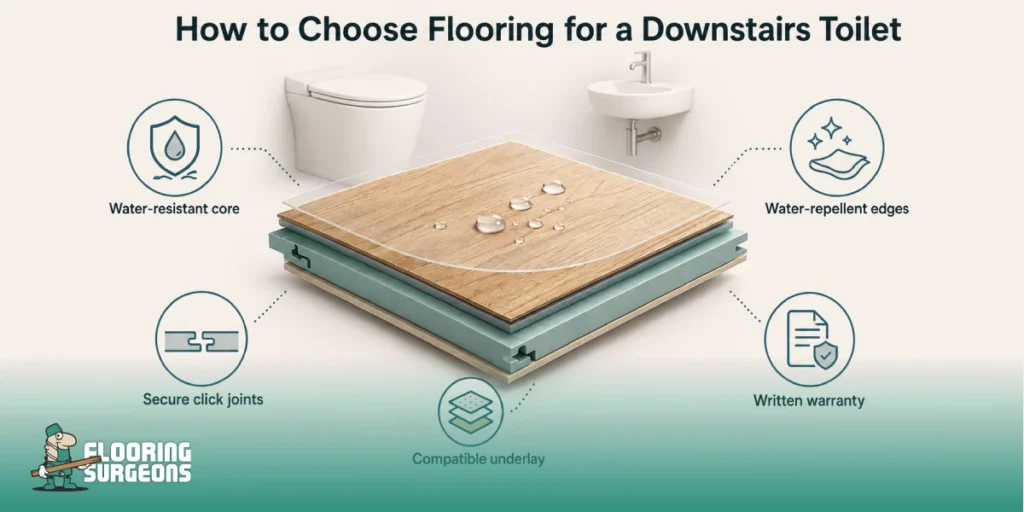
The best flooring for a downstairs toilet should tolerate everyday splashes, remain easy to clean and suit the amount of moisture the room is likely to experience. When selecting water-resistant laminate flooring for toilets, look for:
- Manufacturer approval for toilets, cloakrooms or bathrooms
- A protected, moisture-resistant core
- Water-repellent edges and secure click-lock joints
- Clear instructions for sealing the perimeter
- A durable wear layer
- Compatibility with the subfloor and underlay
- A written water-resistance warranty
A suitable range of waterproof laminate flooring may offer more protection than ordinary boards, but always read its technical information. “Waterproof” claims can carry time limits and installation conditions, so they should not be treated as permission to leave standing water on the floor. The appearance matters too, particularly when the downstairs WC connects directly to a hallway. Consistent flooring can make a small cloakroom feel less enclosed, provided the product is approved for both areas.
Laminate or Vinyl for Downstairs Toilet?
Choosing laminate or vinyl for downstairs toilet use depends mainly on moisture risk and the finish you prefer. Laminate often offers a convincing wood appearance and a firm feel underfoot. Vinyl is generally more forgiving where leaks or frequent splashes are likely.
| Factor | Water-resistant laminate | LVT or vinyl |
| Moisture tolerance | Varies by core, joints and warranty | Generally more tolerant of surface water |
| Appearance | Realistic wood texture | Wood, stone and tile effects available |
| Installation | Usually installed as a floating floor | Available in click and glue-down formats |
| Leak risk | Water may damage the inner core | Product itself is less vulnerable to water |
| Best suited to | Low-moisture cloakrooms | WCs with a greater risk of spills or leaks |
When moisture protection is the priority, Waterproof Luxury Vinyl can be a practical alternative. Its construction makes it a strong option for waterproof flooring for a downstairs toilet, although water can still pass around room edges or through poorly sealed penetrations.
How to Fit Laminate Around a Toilet
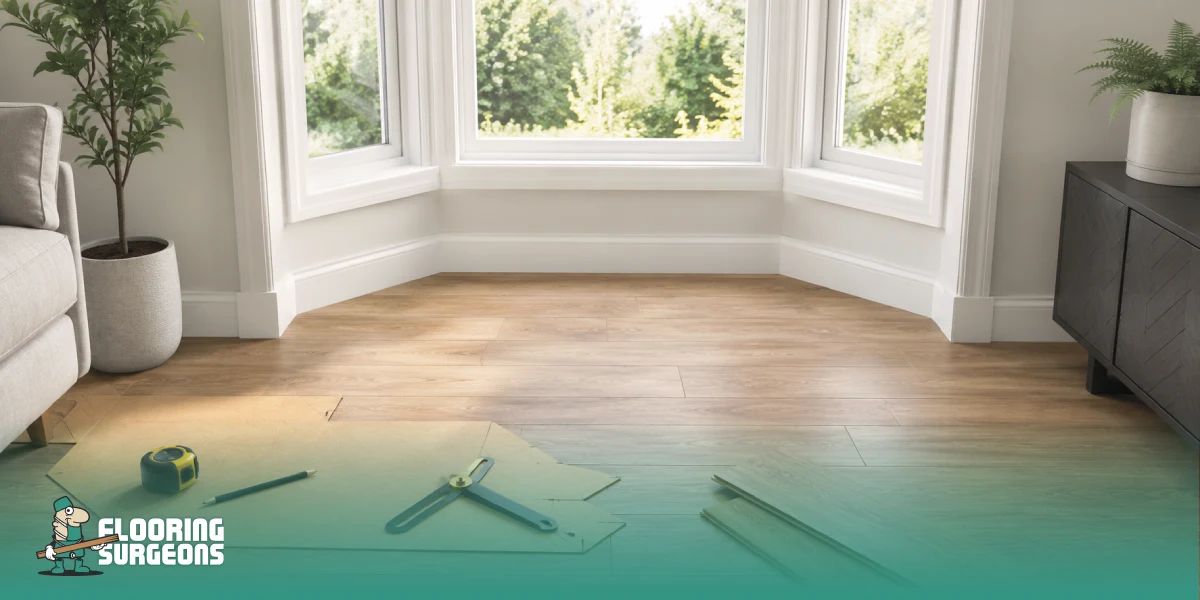
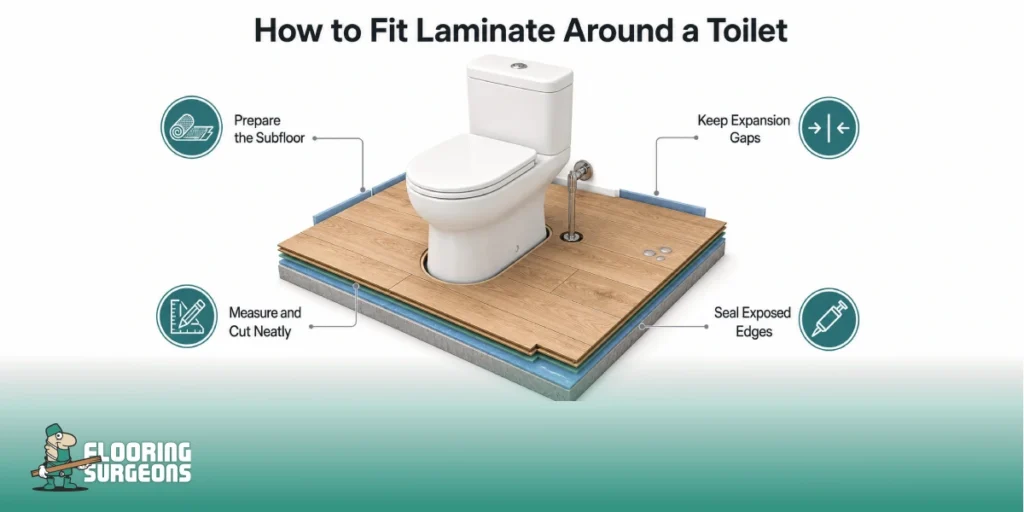
Understanding how to fit laminate around a toilet is important because inaccurate cuts and poorly sealed edges create weak points. First, ensure the subfloor is dry, level, clean and structurally sound. For a ground-floor WC with a concrete base, determine whether you need a damp proof membrane under your floor before installation. A membrane can help manage moisture coming from below, but it cannot protect laminate against spills or plumbing leaks from above.
Next, follow the flooring manufacturer’s instructions for acclimatisation and expansion gaps. Boards must not be fitted tightly against walls, pipes or fixed sanitaryware. Measure pipe positions carefully, make neat cuts and use compatible seals or pipe covers where specified. Avoid filling required expansion spaces with rigid material. The floor needs room to move naturally as temperature and humidity change.
Should Laminate Go Under a Toilet?
The question of whether laminate should go under a toilet does not have one universal answer. It depends on the flooring system, the type of toilet and the manufacturer’s installation requirements.
Some installers remove the toilet and fit flooring beneath it for a neater finish. However, securing sanitaryware through a floating floor can restrict movement or place pressure on the boards. It can also make future repairs more complicated.
Cutting the flooring neatly around the toilet avoids placing the unit directly on the floating surface, but the exposed edges must be protected carefully. If the toilet needs to be removed, a qualified fitter or plumber should check the connection height and reinstall the seals correctly.
Protecting Cloakroom Flooring from Moisture
Good maintenance can extend the life of cloakroom flooring and reveal leaks before serious damage occurs:
- Wipe up splashes as soon as possible.
- Use a well-wrung mop rather than soaking the floor.
- Avoid steam cleaners unless expressly approved by the manufacturer.
- Check the toilet and basin connections regularly.
- Do not leave damp mats on the floor.
- Maintain seals around pipes and exposed edges.
- Replace chipped or damaged boards promptly.
These precautions are particularly important for flooring for a downstairs toilet, where limited space means splashes can easily reach walls, thresholds and joints.
Final Verdict
So, can you put laminate flooring in a toilet? Yes, provided it is a downstairs WC without a shower, the subfloor is dry, and the chosen product is approved for moisture-prone rooms. Careful fitting around pipes, edges and sanitaryware is just as important as selecting the right boards.
For rooms with frequent spills, recurring plumbing problems or a history of damp, vinyl may provide greater peace of mind. Flooring Surgeons can help you compare suitable laminate and luxury vinyl options before you make a final decision.

Ana.Soltanpoor
I’m an SEO Specialist with a strong background in content management and organic search. I build data-driven content strategies by aligning user intent, search behavior, and SEO best practices to ensure every piece of content delivers clarity, relevance, and measurable organic performance.