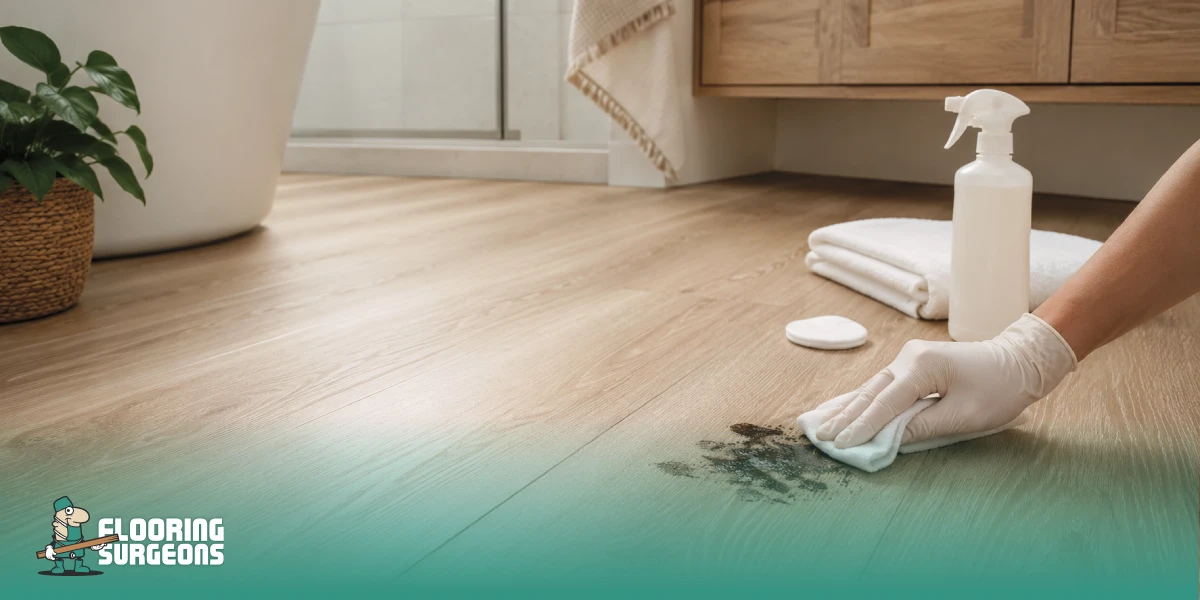
Hair dye is designed to hold onto colour, so a splash on vinyl needs quick attention. Start gently: blot the spill, clean it with warm water and a pH-neutral cleaner, then use a small amount of 70% isopropyl alcohol only if the mark remains. Do not jump straight to bleach, acetone or aggressive scrubbing. These methods may lighten the stain, but they can also leave a dull or discoloured patch. This guide explains how to remove hair dye from vinyl flooring without soaking the joints or damaging the protective surface.
Table of contents
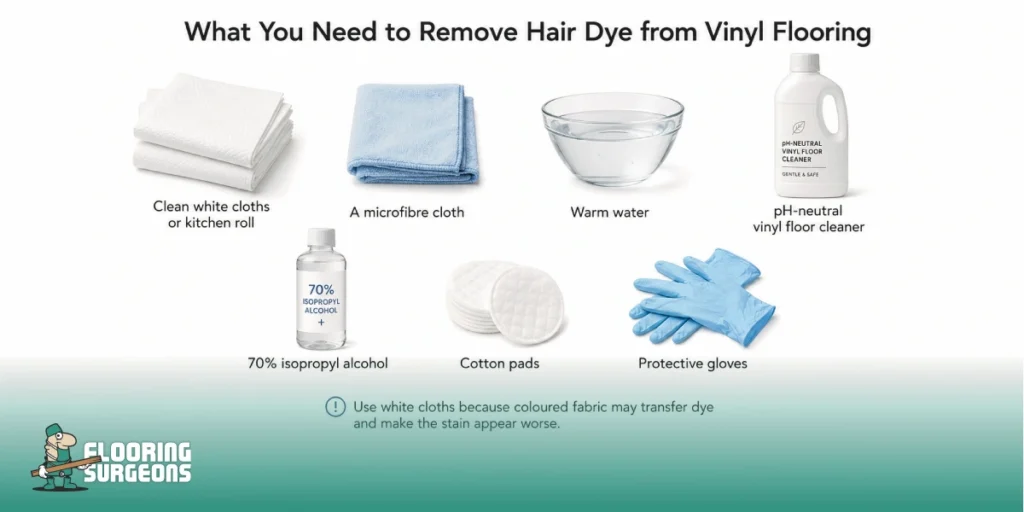
What You’ll Need for Cleaning Hair Dye From Vinyl Flooring
- Clean white cloths or kitchen roll
- A microfibre cloth
- Warm water
- pH-neutral vinyl floor cleaner
- 70% isopropyl alcohol
- Cotton pads
- Protective gloves
Use white cloths because coloured fabric may transfer dye and make the stain appear worse.
Before Cleaning a Hair Dye Stain on Luxury Vinyl Flooring
First, confirm what type of floor you have. Vinyl and laminate can look similar, but they may not respond to the same cleaner. If you have Luxury Vinyl Flooring, check the manufacturer’s care guidance before using any solvent.
Test each product behind a door or beneath a removable unit. Let the test patch dry, then look for colour changes, stickiness, softening or loss of sheen. Never pour cleaner directly onto the floor, especially near plank edges and joints.
How to Remove Hair Dye From Vinyl Flooring Step by Step
Hair dye stains on vinyl flooring can look alarming at first, but in most cases they can be removed if you act quickly and use the right method. The key is to work gently in layers: start with simple cleaning, then only move to stronger solutions if the stain does not lift. Avoid scrubbing too hard, as vinyl has a protective wear layer that can be damaged by friction or harsh chemicals.
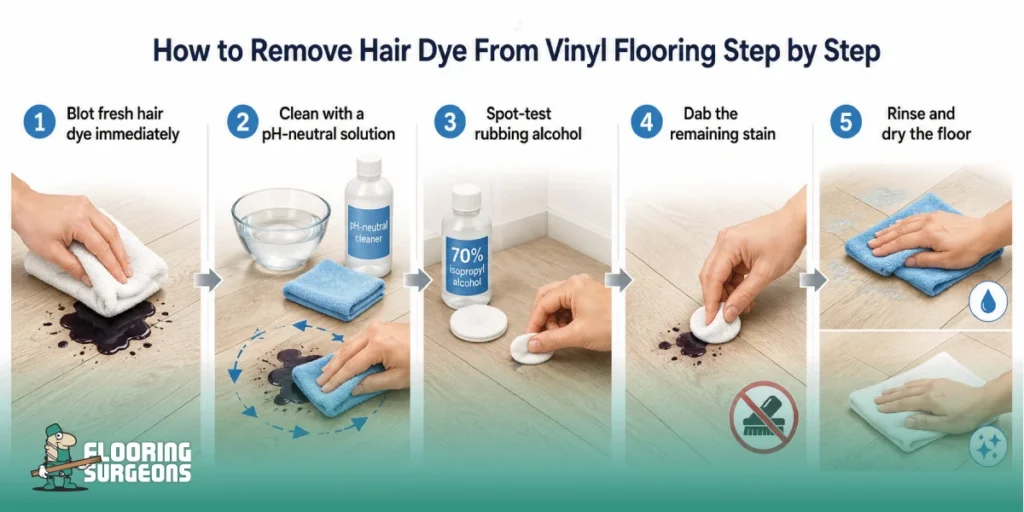
1. Blot fresh hair dye immediately
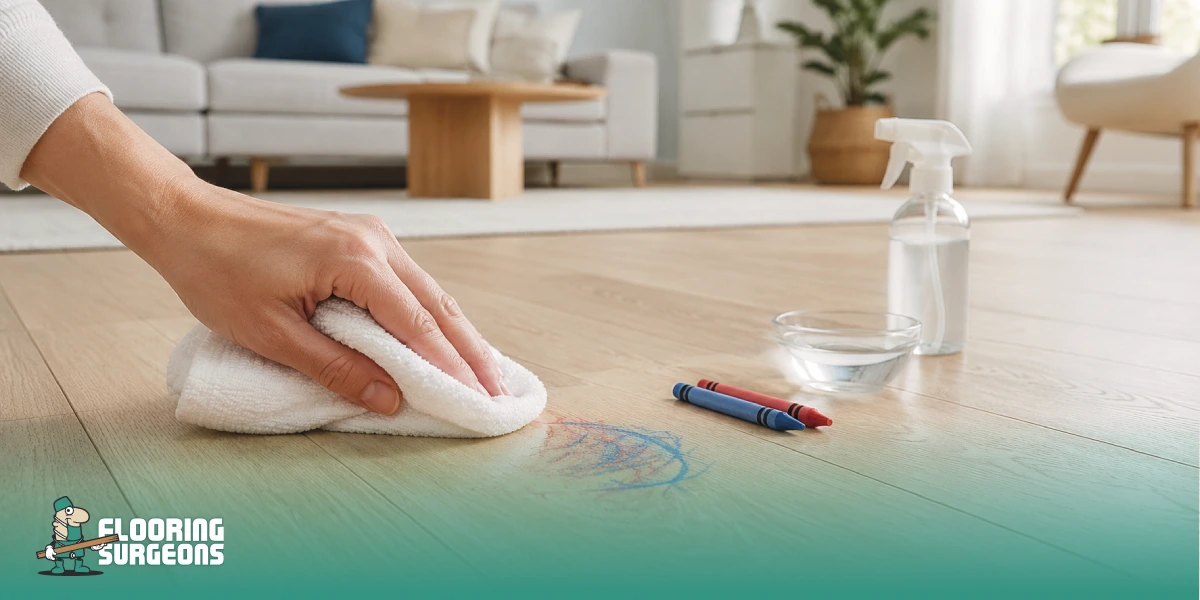
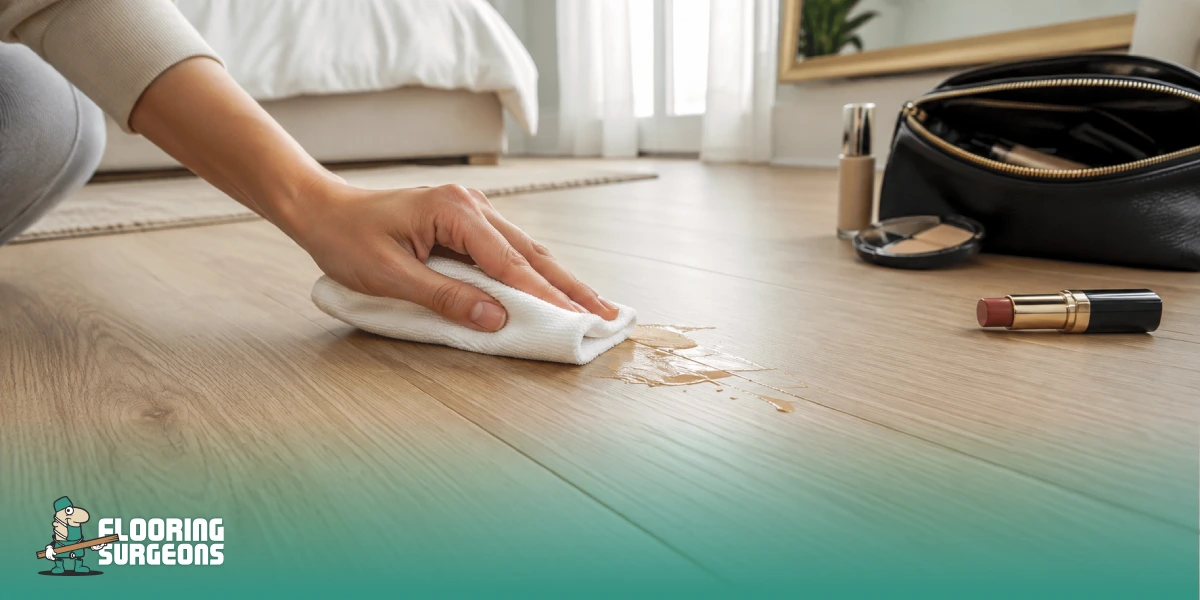
Lift excess dye with a dry white cloth. Press down and lift straight up rather than wiping sideways, which may spread pigment into the floor texture or joints. Keep changing to a clean part of the cloth until little or no colour transfers.
2. Clean with a pH-neutral solution
Dampen a microfibre cloth with warm water and a small amount of pH-neutral vinyl cleaner. The cloth should be moist, not dripping wet. Work from the outer edge of the stain towards the centre. This helps prevent the mark from spreading. Wipe the area again with a separate cloth dampened with clean water, then dry it fully.
3. Spot-test rubbing alcohol
If the mark remains, place a small amount of 70% isopropyl alcohol on a cotton pad. Do not pour it directly onto the vinyl. Test it in a hidden area and allow the spot to dry before continuing. Shaw’s vinyl care guidance permits isopropyl alcohol on a clean white cloth for marks that ordinary cleaning cannot remove. It also warns against abrasive cleaners and harsh chemicals.
4. Dab the remaining stain
Dab the mark for a few seconds without rubbing hard. As colour transfers, turn or replace the cotton pad. Work in short, controlled passes rather than soaking the area. Stop immediately if the surface becomes tacky, lighter or noticeably duller.
5. Rinse and dry the floor
Remove any alcohol residue with a clean, damp cloth. Follow with a little pH-neutral cleaner, wipe once more with clean water and dry the floor thoroughly.
For routine care after the mark has gone, see How Do You Clean Luxury Vinyl Flooring. Following a consistent cleaning method helps prevent detergent residue and reduces the temptation to use unnecessarily strong products.
How to Remove Dried Hair Dye From Vinyl Flooring
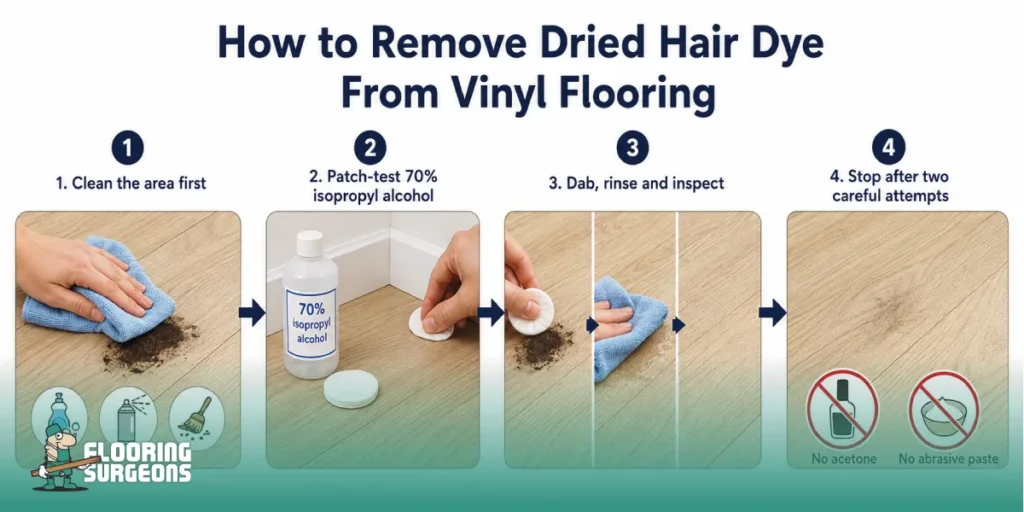
If you need to remove dried hair dye from vinyl flooring, patience matters more than force. Begin by cleaning the area to remove soap, hairspray or dirt sitting over the mark. Once the floor has dried, patch-test 70% isopropyl alcohol.
Dab the stain briefly, rinse the area and inspect the result after it has dried. You may repeat the process once, but do not keep increasing the strength of the solvent. If no pigment transfers to the cloth after two careful attempts, the dye may have affected the finish rather than simply sitting on top of it.
The question “How do you remove dried hair dye from LVP?” is often answered online with acetone or an abrasive paste. Either method can create a second problem by damaging the printed design or protective finish.
What Not to Use on Vinyl Flooring
Before trying a household cleaning hack, consider what it may do to the floor.
| Product or method | Possible result |
| Acetone or nail polish remover | Damage to the finish, printed design or coating |
| Bleach or ammonia | Fading, discolouration or surface damage |
| Baking soda or scouring powder | Fine scratches and a dull finish |
| Magic Eraser | A lighter or matt patch |
| Steam or excess water | Problems around joints, adhesive or plank edges |
Tarkett advises against using acetone, solvents and abrasive powders on vinyl flooring. Always follow the care instructions for your exact product rather than assuming every vinyl floor has the same chemical resistance.
For a clearer explanation of why harsh scrubbing can change the floor’s appearance, read The Science Behind Wear Layers in Modern Flooring. The wear layer protects the printed design beneath it, but it can still be scratched or chemically affected.
A common question is whether a Magic Eraser can damage vinyl flooring. It can leave a visibly duller or lighter patch, particularly when it is rubbed repeatedly over one small area. Manufacturers generally recommend soft cloths and non-abrasive cleaners instead.
The question of whether hair dye is removable from lino requires separate guidance. Linoleum and vinyl are different flooring materials, so the cleaning method in this guide should not automatically be applied to lino.
What If the Hair Dye Stain Will Not Come Out?
Stop cleaning when the treatment starts changing the floor rather than the stain. Warning signs include:
- A sticky or softened surface
- A fading printed pattern
- A lifted plank edge
- A dull patch visible from different angles
- No further dye transferring to the cloth
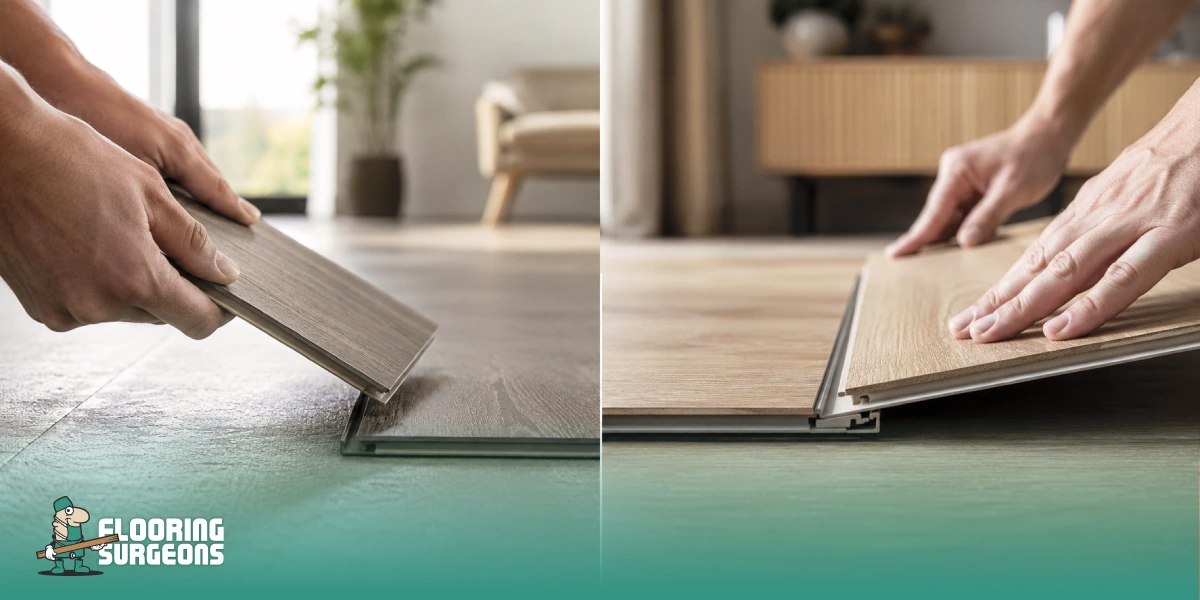
With Plank Luxury Vinyl, an individual damaged plank may sometimes be replaceable. Whether this is practical depends on the fitting method, the position of the plank and the availability of a matching spare.
Check the flooring warranty and speak to a professional before attempting to remove a fitted plank. A faint stain is often less noticeable than permanent damage caused by repeated solvent use.
How to Prevent Hair Dye Stains in a Bathroom
Cover the working area before opening the hair dye. Use a waterproof sheet with an absorbent white towel on top, and position the covering so that it does not create a trip hazard. Do not rely on a thin towel alone, as liquid dye may pass through it before you notice.
When choosing Luxury Vinyl Flooring for Bathroom projects, remember that water resistance does not make the surface immune to permanent pigments. Keep white kitchen roll and an approved floor cleaner nearby, and deal with splashes before they dry.
Final Thoughts
Knowing how to remove hair dye stains from vinyl flooring safely is mainly about restraint. Begin with blotting and a neutral cleaner, use rubbing alcohol only after a patch test, and stop before the floor’s finish starts to change.
Avoid acetone, bleach and abrasive tools unless the manufacturer of your exact flooring explicitly approves them. Stronger cleaning does not always produce a better result and may turn a small stain into permanent surface damage.
If the mark has become permanent or a plank needs replacing, Flooring Surgeons can help you identify the flooring type and choose the most sensible next step.

Ana.Soltanpoor
I’m an SEO Specialist with a strong background in content management and organic search. I build data-driven content strategies by aligning user intent, search behavior, and SEO best practices to ensure every piece of content delivers clarity, relevance, and measurable organic performance.