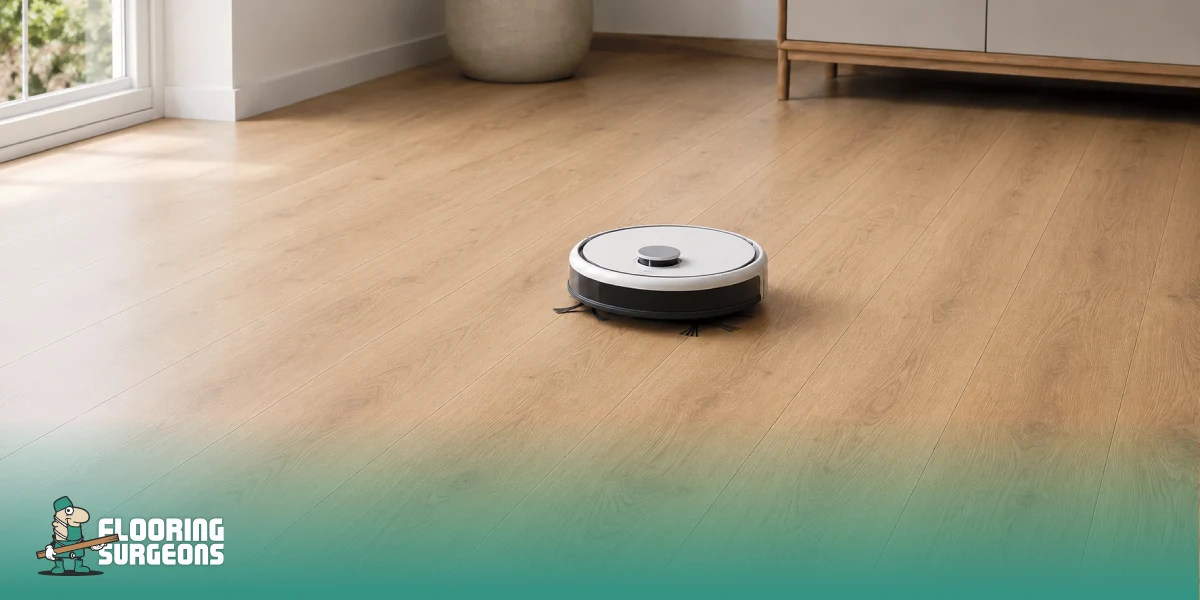
Robot vacuums take much of the effort out of everyday floor care, but not every hard floor reacts to them in the same way. Brushes, wheels and trapped grit can affect the surface, while mopping models introduce another concern: moisture.
The short answer is that robot vacuums are generally suitable for laminate, LVT and engineered wood. Vacuum-only cleaning carries the least risk. If the machine also mops, however, its water flow, brush type and cleaning solution need closer attention. The condition of the floor matters too. Open joints, lifted edges and a worn wood finish should be addressed before automated cleaning begins.
Table of contents
Are Robot Vacuums Safe for Laminate, LVT and Engineered Wood?
For the most part, yes. A well-maintained robot with soft brushes and clean rubber wheels should move over these floors without causing damage. Problems are more likely to arise when sharp debris becomes lodged beneath the machine or too much water is used during mopping.
Here is how the three surfaces compare:
| Floor type | Vacuum-only use | Mopping function | Main point to watch |
| Laminate | Generally safe | Use minimal water | Moisture entering the joints |
| LVT | Generally safe | Usually suitable with controlled moisture | Grit beneath wheels or brushes |
| Engineered wood | Generally safe | Depends on the surface finish | Standing water and fine scratches |
These are general guidelines. The care instructions supplied with the flooring and the robot should always take priority.
Robot Vacuum or Robot Mop: Does It Make a Difference?
A standard robot vacuum collects dust, hair and loose debris. A vacuum-mop model also passes a damp pad over the surface. This second function requires more care, particularly on wood-based flooring. Never assume that a “hard floor” setting is suitable for every material. Begin with vacuum-only mode and test the mop separately on a small, discreet area. Select the lowest effective water setting and check the floor when the cycle finishes. It should feel lightly cleaned, not wet.
Only use a solution approved by both manufacturers. Before pouring a product into the tank, it is worth reading Are Floor Cleaners Toxic, especially if children or pets regularly use the room. Steam functions should not be used on laminate or engineered wood unless the flooring manufacturer expressly permits them.
Can You Use a Robot Vacuum on Laminate Flooring?
Yes, provided the boards are in sound condition and the machine is properly maintained. In fact, regular vacuuming can help protect laminate by removing sand and grit before foot traffic drags it across the wear layer. The greater concern is moisture. A robot mop for laminate flooring should be set to its lowest practical water output. Do not use the mopping mode if the boards have open joints, raised edges or existing water damage. Wet pads should also be removed when cleaning ends rather than left resting on the floor.
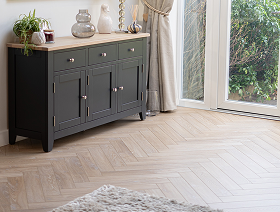
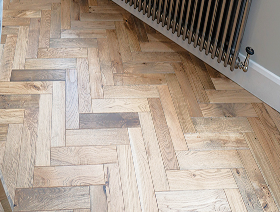
Product construction and water resistance can vary, so check the care information for your Laminate flooring before enabling automated mopping. Water-resistant boards still should not be treated as though they can tolerate puddles or repeated soaking.
Can You Use a Robot Vacuum on LVT Flooring?
LVT is usually one of the easiest hard surfaces to maintain with a robot cleaner. Its durable wear layer is designed for everyday use, and controlled damp cleaning is commonly suitable. That does not make the floor immune to damage, though. The best robot vacuum for LVT flooring will have non-marking wheels, a soft or rubber brush and adjustable water flow. Inspect the underside regularly. A tiny stone caught beside a wheel can be carried across several rooms and leave a visible mark.
Most types of Luxury Vinyl Flooring cope well with routine robot cleaning, but excess liquid should not be allowed to collect along walls, beneath furniture or around plank joints. Use a cleaning solution suitable for vinyl and never add more than the appliance manufacturer recommends. Installation can also influence maintenance. Click systems have multiple joints through which excessive moisture may travel, whereas glue-down LVT is fixed directly to the subfloor. Neither installation method needs large amounts of water to clean effectively.
Can You Use a Robot Vacuum on Engineered Wood Flooring?
A vacuum-only robot is normally suitable for engineered wood when it uses a gentle hard-floor brush. Although engineered boards are more dimensionally stable than many solid timber floors, their upper layer is still real wood and should be treated accordingly. When choosing a robot vacuum for engineered wood floors, look for soft rollers, smooth wheels and a mode that switches off vigorous scrubbing. Clean the wheels frequently and remove any grit from the brush housing.
Using a robot vacuum mop on wooden floors requires more judgement. A lacquered surface in good condition may tolerate very light damp cleaning, while an oiled, worn or damaged finish may need a different care routine. Because these requirements vary, consult the maintenance guidance supplied with your Engineered Flooring before switching on the mop. If water remains visible after the robot passes, the setting is too wet. Stop the cycle and dry the area, paying particular attention to board edges and joints.
Can Robot Vacuums Scratch Floors?
They can, but the robot itself is not always the direct cause. Scratches commonly develop when sand, small stones or hard fragments become trapped in a wheel, brush or mop pad. Dirty wheels may then drag that debris repeatedly across the same route.
Reduce the risk by:
- Checking the wheels and brushes before each major cleaning cycle
- Emptying the dust bin regularly
- Replacing worn or damaged components
- Picking up stones and larger debris before starting the robot
- Washing reusable mop pads after use
- Avoiding aggressive scrubbing modes on delicate finishes
A robot that runs more often may collect debris before it builds up, but frequency should reflect foot traffic, pets and how much dirt enters the home. This guide explains how often should you vacuum your floors without creating an unnecessary cleaning routine.
Choosing the Best Robot Vacuum for Hard Floors
The best machine is not necessarily the model with the strongest suction or the longest list of features. For hard flooring, safe contact with the surface and reliable moisture control are more important.
Look for:
- A soft brush or rubber roller suitable for hard floors
- Smooth, non-marking rubber wheels
- Adjustable water output
- A separate vacuum-only setting
- Mop lifting or removable mop pads.
- No-mop zones for vulnerable areas
- Easy access to the wheels and underside for cleaning
- Clear guidance on approved cleaning solutions
Accurate mapping is helpful because it prevents the machine from repeatedly scrubbing one area. It can also keep a damp mop away from damaged boards, untreated wood or rooms where wet cleaning is unsuitable.
How to Use a Robot Cleaner Without Damaging the Floor
Before the first full run, inspect the room and the machine. Remove cables, sharp objects and loose debris, then check the floor for damaged joints or lifted edges. Run the robot in vacuum-only mode first and listen for scraping or unusual wheel noise. If you intend to mop, test a low-moisture setting in a hidden area. Check the result after a few minutes. There should be no streaks of standing water and no liquid gathering at the joints. After each cycle, empty the bin, remove tangled hair and inspect the wheels. Do not park the robot with a wet pad attached. These small habits matter more than selecting the highest-priced machine.
Final Verdict
So, can a robot vacuum be used on laminate, LVT and engineered wood? In most homes, yes. Vacuum-only models are generally safe across all three surfaces when their wheels and brushes are kept clean. LVT usually handles controlled robot mopping well, while laminate and engineered wood require stricter moisture management.
The safest routine is simple: follow the floor’s care instructions, start with gentle settings and never ignore trapped grit or standing water. If you are selecting a new surface with automated cleaning in mind, Flooring Surgeons can help you compare flooring options and their maintenance requirements before you decide.

Ana.Soltanpoor
I’m an SEO Specialist with a strong background in content management and organic search. I build data-driven content strategies by aligning user intent, search behavior, and SEO best practices to ensure every piece of content delivers clarity, relevance, and measurable organic performance.