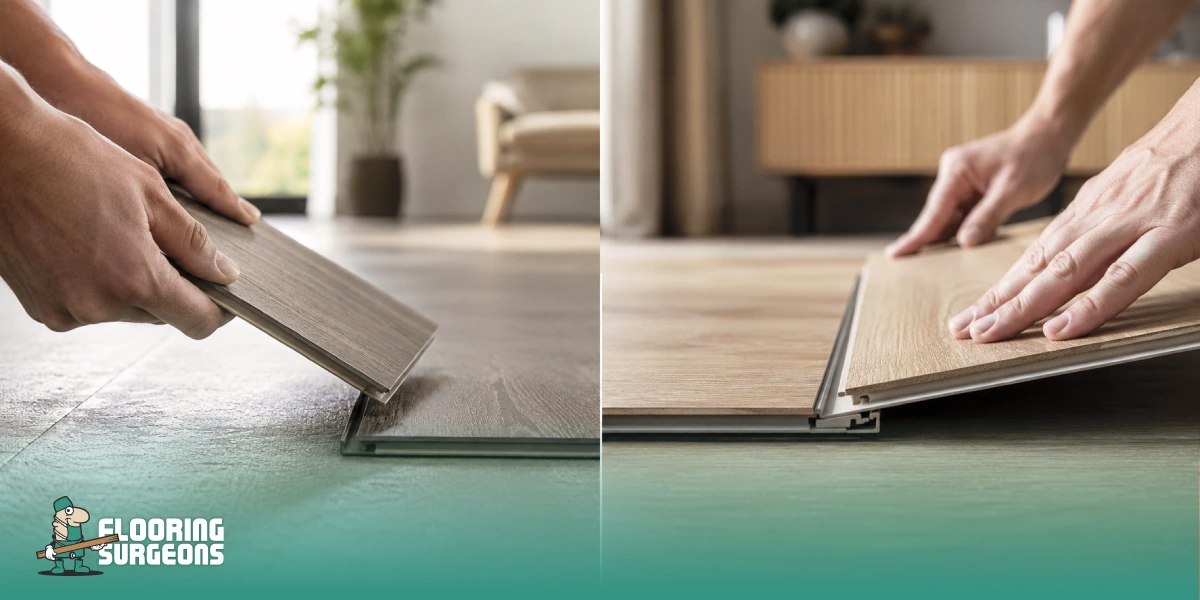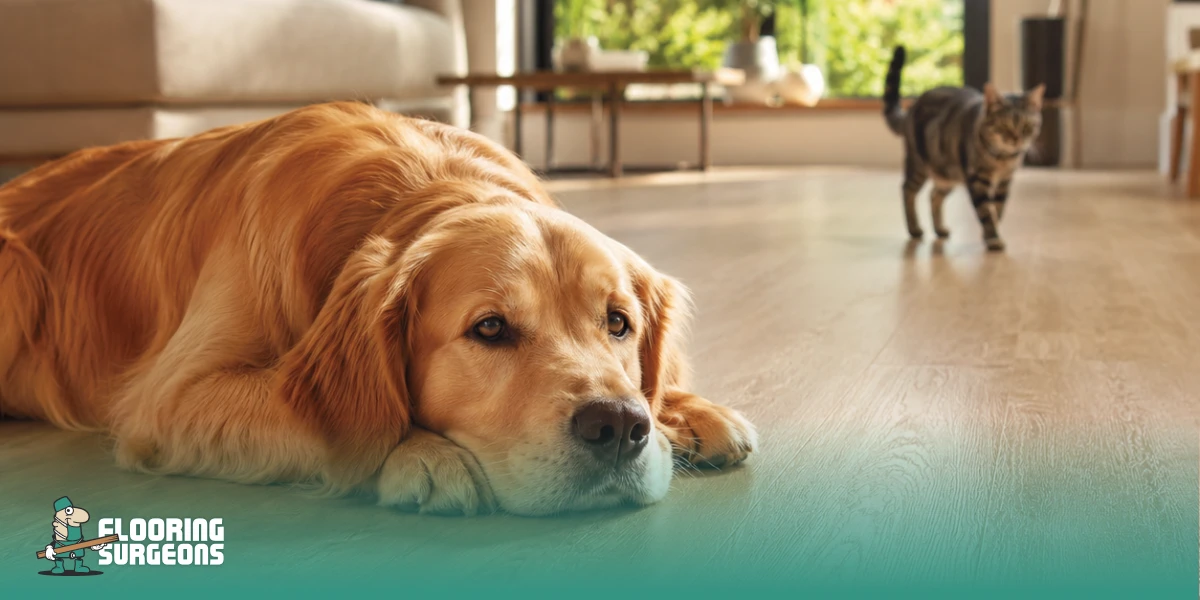
Can flooring affect pet anxiety? In many cases, absolutely. Floors that are slippery, loud, cold or difficult to maintain footing on can make pets feel insecure in their environment. Your dog may avoid areas he’s slid around on hardwood or tile floors. Your cat may tread more carefully on flooring that doesn’t provide him with enough traction.
Designers know it. Pet Owners know it. When pets feel stable underfoot, they walk with confidence. There are many reasons pets feel anxious, but flooring can be a frustrating trigger that pet parents notice day after day. Senior, anxious, and mobility-impaired pets are especially affected by poor flooring choices. Understanding how texture, traction, sound, and comfort impact your pet will help you make more educated flooring decisions to cultivate a peaceful, safe, pet-friendly home.
Table of contents
How Flooring Can Affect Pet Anxiety
Pet anxiety can sometimes stem from flooring, since pets need stability, balance, and confidence when navigating your home. Dogs and cats may begin to associate a slippery, noisy, or uncomfortable floor with feeling stressed. Dogs who have slipped before, older animals with weak joints, or skittish animals can be prone to this.
A lack of traction is an issue for some pets. Dogs and cats can struggle on smooth surfaces like polished hardwood floors, shiny tiles or slippery laminate flooring because their feet just can’t get a good grip. Pets may hesitate if they think they’re going to slip by, slowing down or stopping dead in their tracks. Some will learn to just avoid walking in areas where they slip. What began as a flooring issue can become a home anxiety problem for your pet every day.
Sound can factor into this too. Hard flooring can produce loud clicking noises from claws, which can irritate noise-sensitive pets. Surfaces may feel uncomfortably cold when lounging or playing, and abrupt transitions between flooring types may cause pets to pause as they enter a new room.
Design professionals and pet parents alike have observed that pets tend to act less anxiously when they perceive stability underfoot. Pets walk more softly on floors with greater grip, cushion, and quietness, allowing them to traverse the home confidently. As a result, flooring options for pet owners need to focus on attributes beyond style.
Why Slippery Floors Can Make Dogs and Cats Nervous
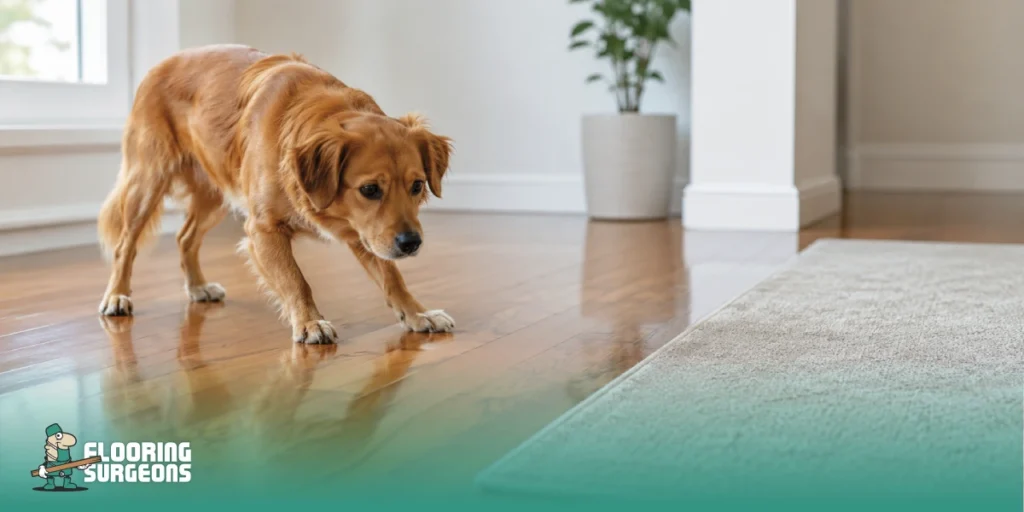
Slippery floors are another common way flooring can contribute to pet anxiety. Pets often can’t get sufficient traction under their paws, which makes even basic movements such as standing up, turning around, or walking through a hallway stress-inducing. Think slick hardwood, high-gloss tile, polished stone, or laminate floors.
Lack of Traction Can Reduce Pet Confidence
Traction and confidence go hand in hand with dogs and cats. When the ground feels insecure, they will hesitate, stop, or simply avoid that location. If your dog is scared of slippery floors, they will prefer walking on area rugs or carpeted areas rather than on wide expanses of hard flooring.
This fear can escalate after a single bad experience. If a dog slips while running across a surface or has trouble standing up from it, they will remember that experience and fear that surface.
Signs Your Pet May Be Afraid of Slippery Floors
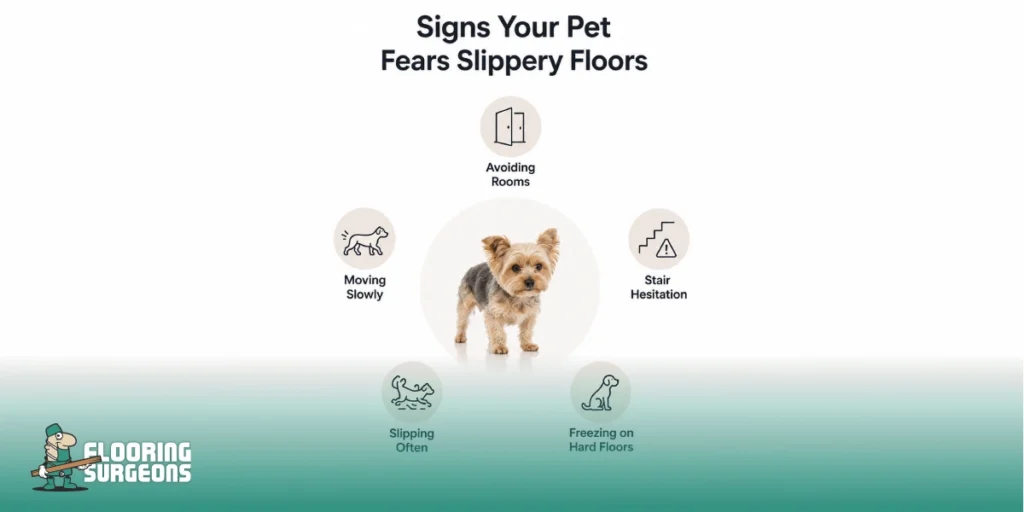
Owners sometimes notice subtle behavioural changes before they realise the floor is the issue. These can include:
- Avoidance of certain rooms altogether
- Moving cautiously, heavy-footed
- Slipping when joyful/giddy
- Hesitation to use stairs or walk down the hallway
- Freezing up on laminate, tile, etc.
How Better Grip Can Help
Pets may feel safer indoors with better traction. Textured surfaces, area rugs, hallway runners, and no-slip flooring for dogs can reduce slips and provide more confident support. Cats and dogs who feel secure on their feet will move around more easily and calmly.
What Designers Notice in Pet-Friendly Homes
When designing with pets in mind, owners consider factors beyond colour and aesthetic appeal. Flooring can impact how pets navigate their environment safely and comfortably. Beautiful flooring that is slippery under paw, noisy to walk on, or cold can create anxiety for nervous pets.
In pet-friendly interior design, ideal flooring often involves a good combination of traction, comfort, durability, and easy maintenance. Designers may suggest textured surfaces, matte finishes, or softer transitions between flooring surfaces to help pets feel more secure. Another thing designers consider is areas with heavy human and pet traffic, such as hallways, kitchens, entryways, and living rooms.
Homeowners shopping around may appreciate a handy resource like our Best Flooring for Pets guide, which details which flooring materials suit pets best based on comfort, ease of cleaning, and longevity.
Floor designers also understand that sometimes small additions can make a big difference in a pet’s everyday life. Throw rugs, hallway runners, and non-skid mats give pets more traction on hard flooring without redoing the flooring. These easy fixes can also come in handy if you have an older dog or pet with anxiety, injured/sore joints.
Flooring Factors That May Increase Pet Stress
Not all hard floors are stressors for pets. Hardwood floors, tile floors, laminate flooring, and stone can all fit into a pet-friendly home if you know what to look for. Often, the problem isn’t with the flooring itself, but with how it feels underneath your pet’s paws.
Some flooring features can make dogs and cats feel less secure:
| Flooring Feature | Why It May Stress Pets | Better Choice |
| High-gloss finish | Can feel slippery and reduce traction | Matte or textured finish |
| Very smooth surface | May cause slipping, hesitation, or avoidance | Slip-resistant flooring |
| Cold tile or stone | Can feel uncomfortable in resting areas | Rugs or warmer surfaces |
| Loud hard flooring | Claw sounds may bother noise-sensitive pets | Softer transitions or runners |
| Sudden floor changes | Pets may hesitate between rooms | Smooth transition strips |
Tiny things like these can matter greatly to anxious pets. If your dog slips once on a shiny floor, they may fear going across it again. Cats may not like walking across open areas with flooring they don’t feel good on.
Pet owners shouldn’t necessarily avoid these surfaces altogether. The intention is to select finishes with more traction, incorporate rugs in high-traffic areas, and avoid flooring that feels slippery or too loud underfoot. Pet-friendly flooring should complement your home’s aesthetic while keeping your pets happy, too.
Best Flooring Options for Anxious Pets
Style isn’t the only thing to consider when flooring for anxious pets. They need flooring that feels stable underfoot, allows comfortable movement, and won’t slip. Increased traction means fewer slipped paws, less anxious hesitation, and less stress for everyone, especially older dogs, skittish pets and pets with joint problems.
When it comes to flooring for pets, ideally, you want flooring that’s easy to clean, durable and comfortable to walk on. These options can be ideal when you find the right texture and finish.
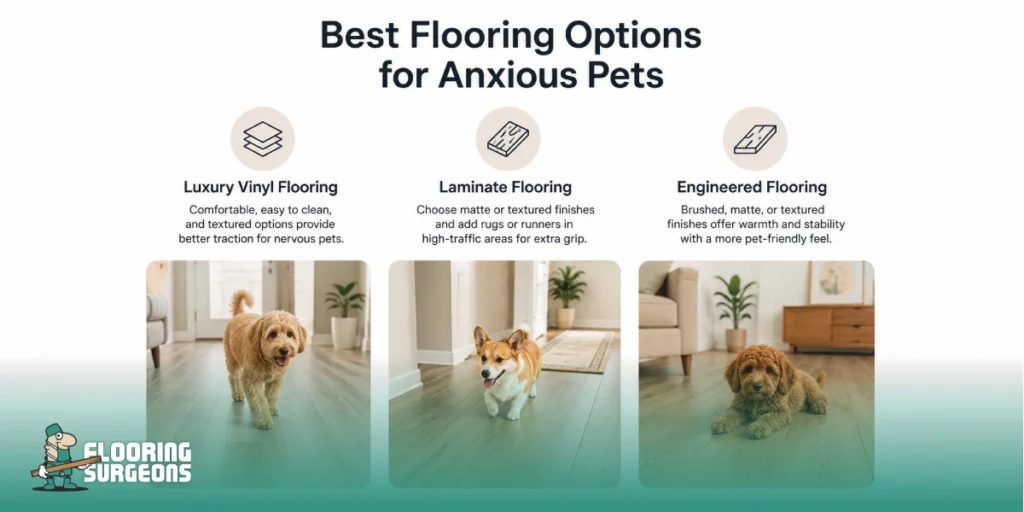
Luxury Vinyl Flooring
If you have pets, consider luxury vinyl flooring. Luxury vinyl is simple to clean, comfortable to walk on and can be easier on your pets than hard tile or stone. Textured luxury vinyl can provide your pet with more traction and help nervous dogs feel more secure on slick floors.
Laminate Flooring
Laminate flooring does work for homes with pets; however, the finish is key. If it’s super smooth or glossy, laminate flooring may feel slippery for your dog’s paws. Older dogs may have a hard time with this, too. Matte finish or textured laminate flooring is recommended. Throw down some rugs/runners in high traffic areas for more traction.
Engineered Flooring
Engineered flooring may also be preferable to solid wood floors for those who seek the look of wood without as much concern for expansion and contraction. Brushed, matte or textured finishes are preferable to glossy finishes for nervous pets. It can give your pet-friendly interior design a warmer, more inviting feel while still maintaining its overall flow.
Simple Ways to Make Floors Less Stressful for Pets
Flooring changes aren’t always necessary to make your home feel friendlier for nervous pets. Sometimes you can make small adjustments to increase traction, decrease sliding, and make your pets feel more secure on their feet.
Dog area rugs and runners are particularly useful in hallways, living rooms and near stairs. These products provide pets with a solid surface to walk on and help them feel more confident walking on slick floors. You can also put non-slip mats near food bowls, water bowls, doorways or anywhere else your pet seems unsure of himself.
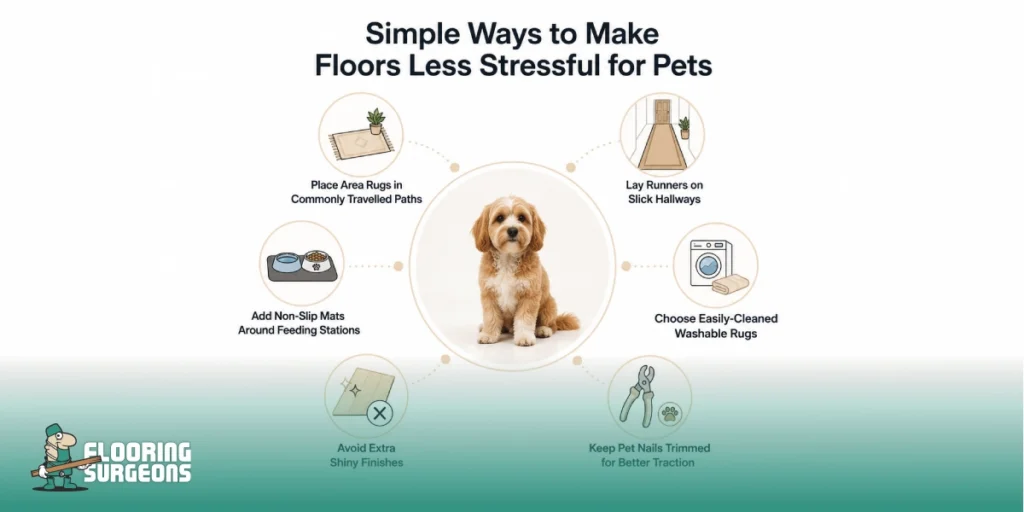
Floor safety can also be improved by pet parents through:
- Placing area rugs in commonly travelled paths
- Laying runners on slick hallways
- Adding non-slip mats around feeding stations
- Selecting easily-cleaned washable rugs
- Avoiding extra shiny floor finishes
- Maintaining pets’ nails trimmed to provide more traction
Floor improvements don’t necessarily require remodelling your whole house. Improved traction and softer pathways can help anxious animals feel more secure as they go about their daily business.
Final Thoughts: Can Flooring Really Affect Pet Anxiety?
Flooring can definitely play a role in pets’ anxiety. Pets can feel unsafe and worried on slippery flooring that makes a lot of noise when they walk or scratch. Flooring that creates discomfort is scary, too. Pet-friendly flooring helps improve traction and confidence when moving around the house. Flooring can make your dog or cat feel more at ease in your home. While quick fixes like adding rugs/runners and non-slip mats can help, permanent flooring chosen with your pets in mind goes a long way. Looking to make your space more comfy for your furry family members? Flooring Surgeons can help you choose flooring that suits your style, durability needs, and your pets’ everyday comfort.

Ana.Soltanpoor
I’m an SEO Specialist with a strong background in content management and organic search. I build data-driven content strategies by aligning user intent, search behavior, and SEO best practices to ensure every piece of content delivers clarity, relevance, and measurable organic performance.